Calgary Zoo List of Species On Exhibit 8/28/17

geomorph

Well-Known Member
15+ year member
This is an attempt to list every species on exhibit at Calgary Zoo during my visit on 8-28-17. I am arranging the list by the current visitor map by the named zones as they are encountered in a general clockwise route from the Alberta Plaza (North) Entrance. I am including species for which there is a sign on each exhibit. This is not intended to be a full account of the collection. Also, species on exhibit are sometimes moved, so some that were there one day may have disappeared from public view the next. This list may be of more interest to those already familiar with the zoo since I am not arranging the species by animal type. I will list each zone in a separate entry in the thread for clarity.


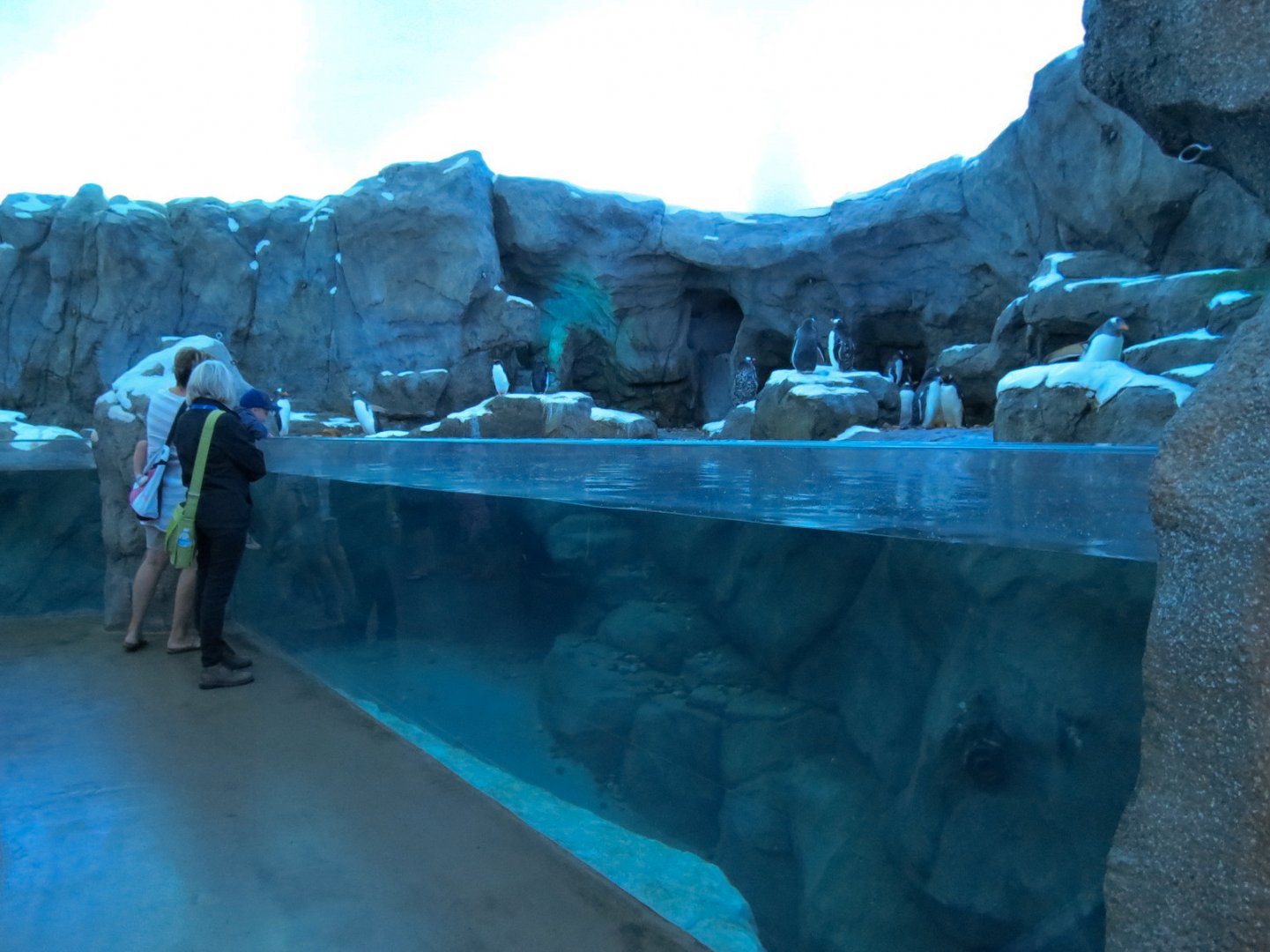
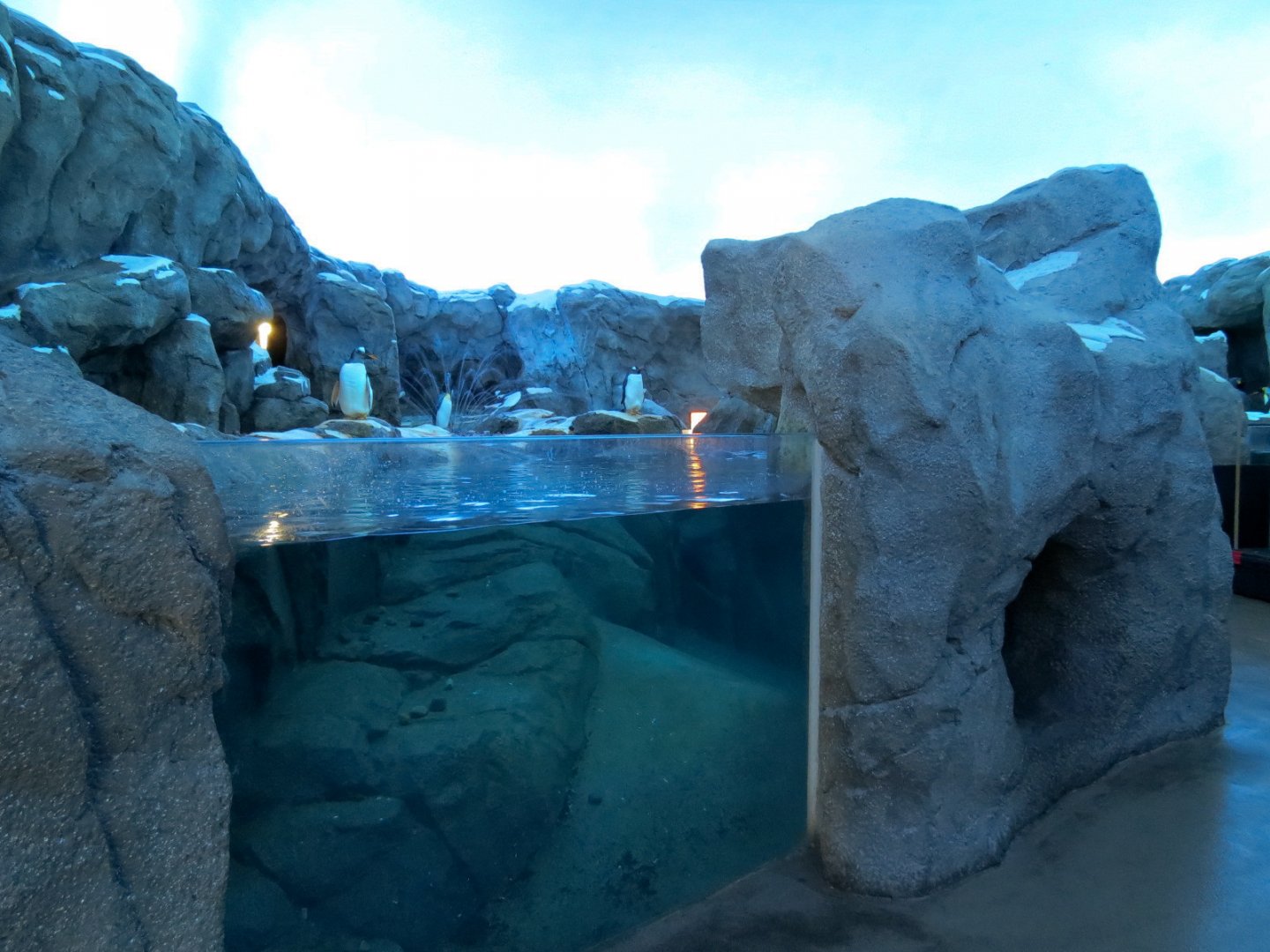
PENGUIN PLUNGE: (2 Exhibits)
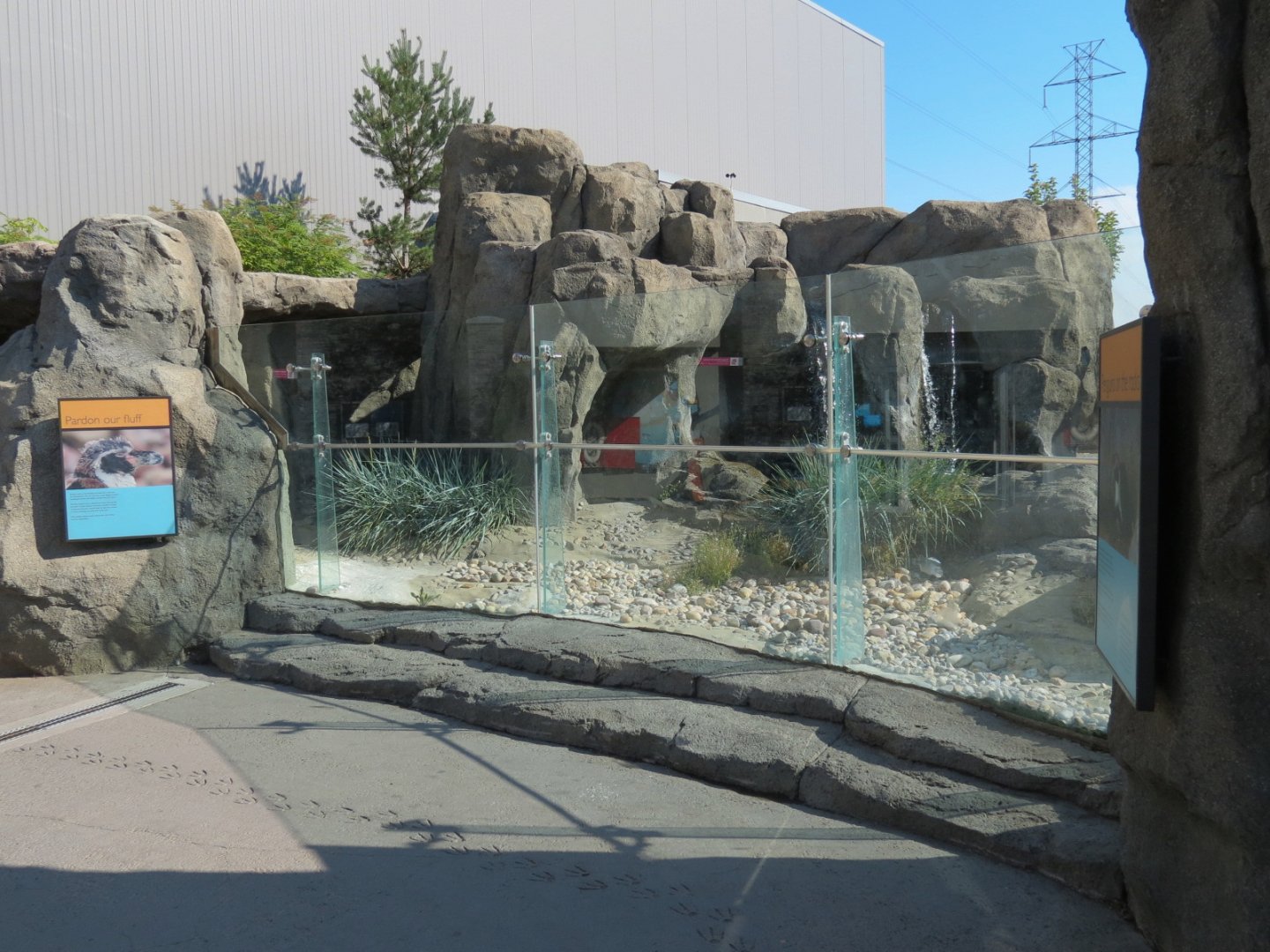
This is one of the newer exhibit complexes at the zoo and adjoins the main entrance.

Large outdoor yard with pool and burrows:
Humboldt Penguin

Indoor exhibit with underwater viewing:
Gentoo Penguin
King Penguin
Rockhopper Penguin


CANADIAN WILDS: (19 Exhibits)
This is the largest exhibit complex at the zoo and is encountered along a long winding loop path. All the exhibits are outdoors except where noted. I will list the exhibits as they are encountered in a clockwise direction from the main entrance.

Large-sized grassy yard:
Sandhill Crane

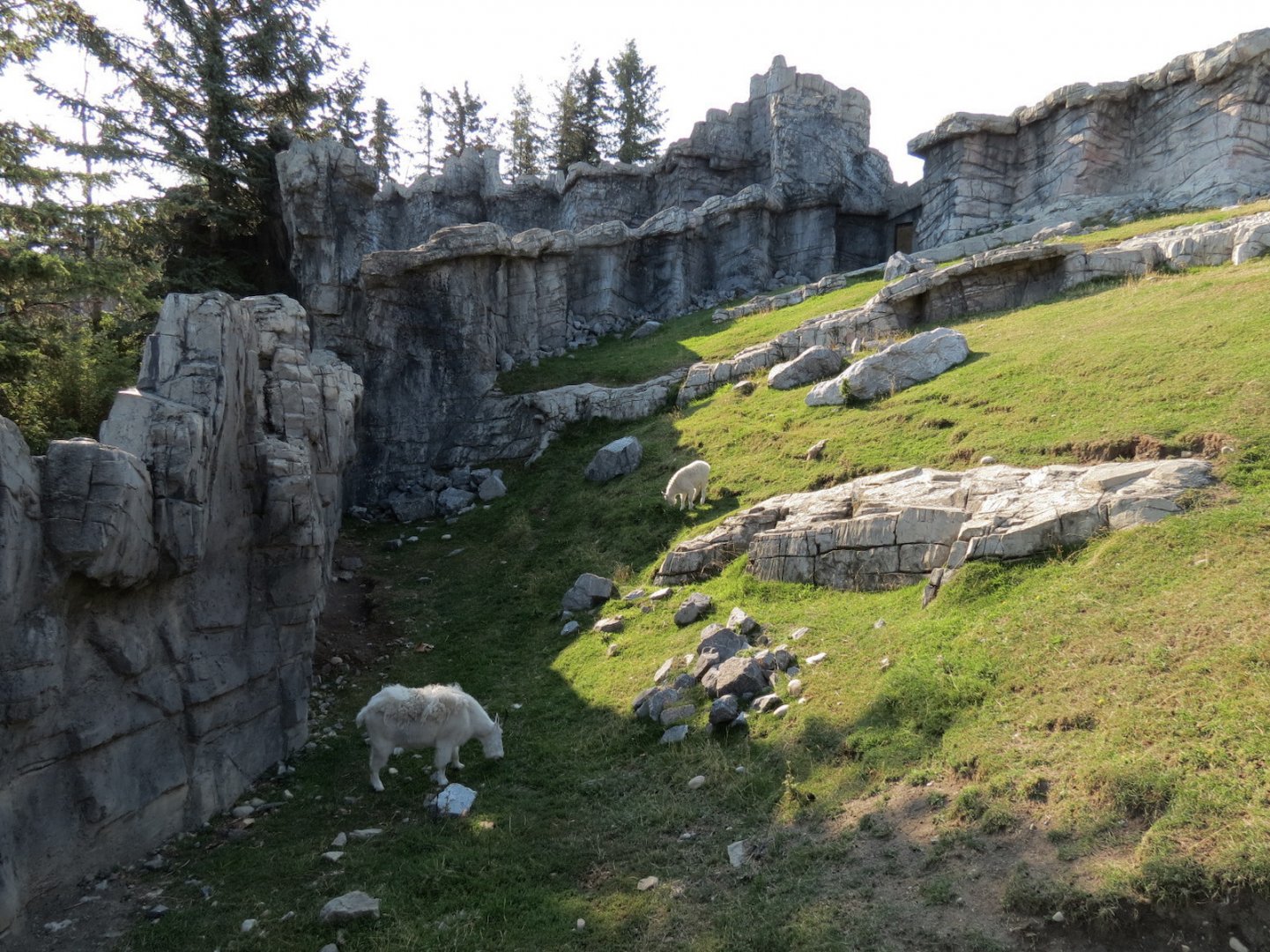
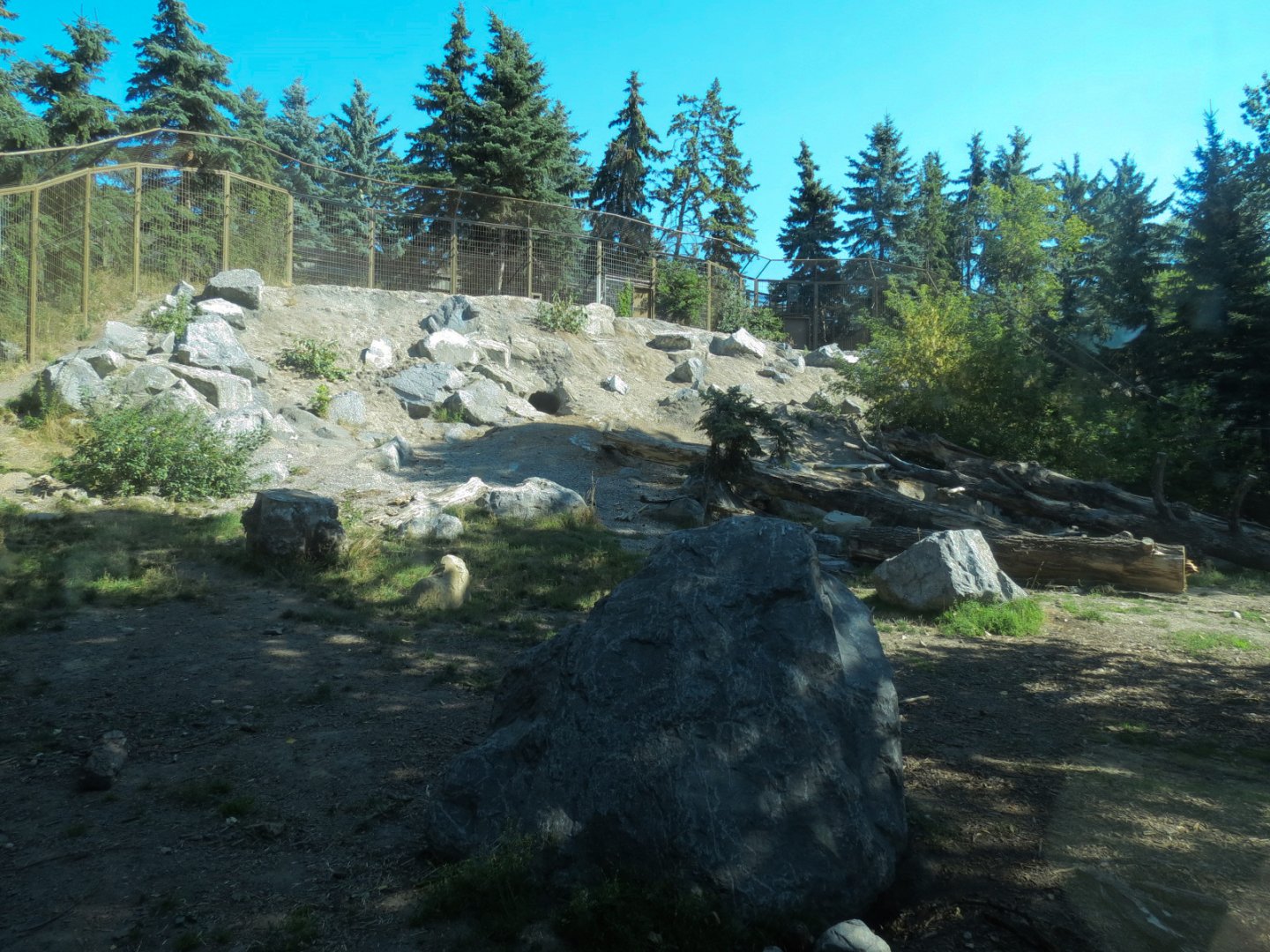
Large-sized steep rocky-walled yard:
Rocky Mountain Goat

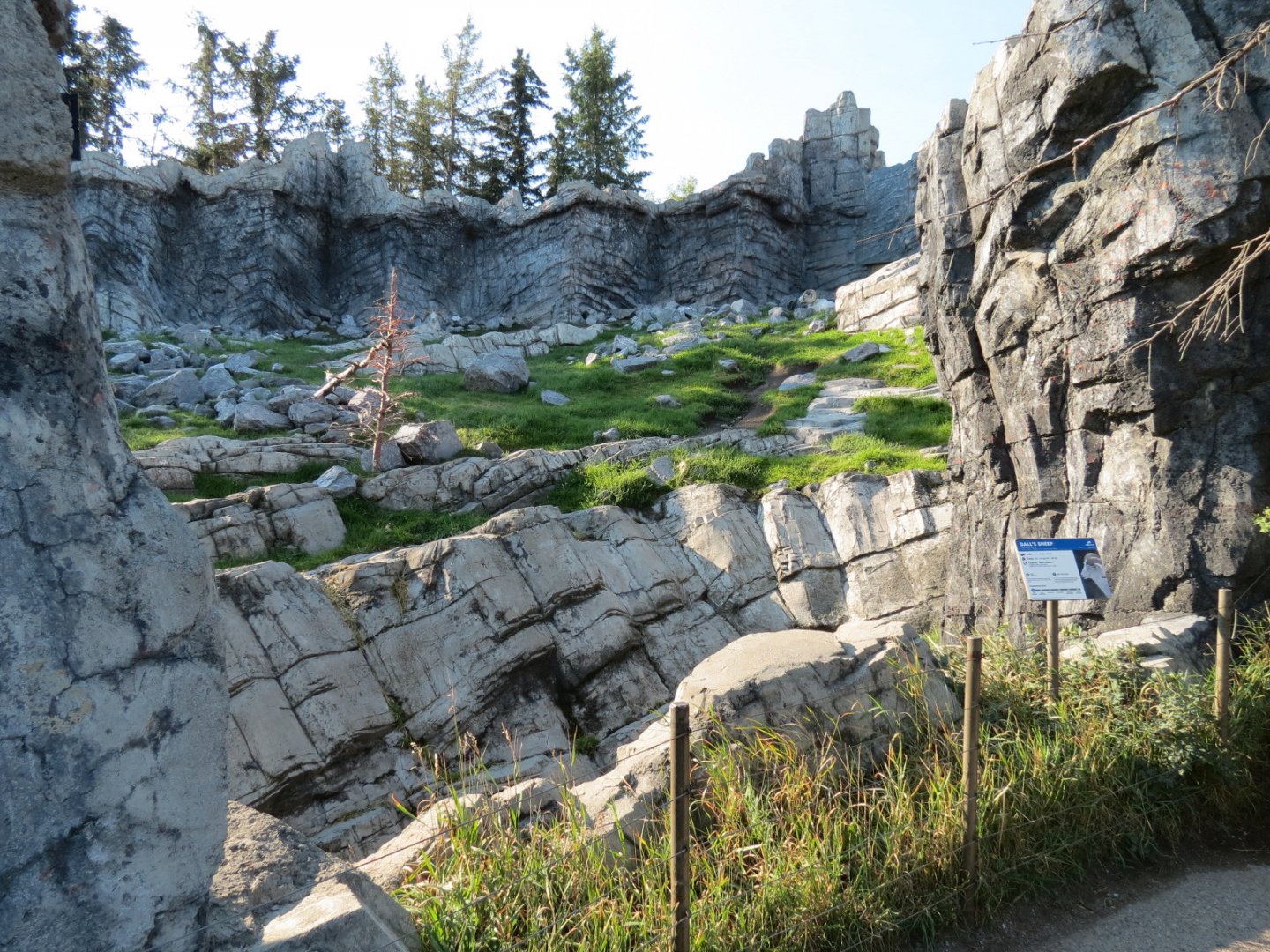
Large-sized steep rocky-walled yard:
Dall's Sheep

'Rocky Mountain Aviary', a large netted walk-through:
Barred Owl
Great Grey Owl
Rough-legged Hawk
Snowy Owl
Western Painted Turtle

Large-sized steep rocky-walled yard:
Bighorn Sheep

Large-sized fenced yard:
Woodland Caribou

Large-sized fenced yard:
Wood Bison

2 large-sized fenced yards that are combined to form 1 exhibit for:
Muskox

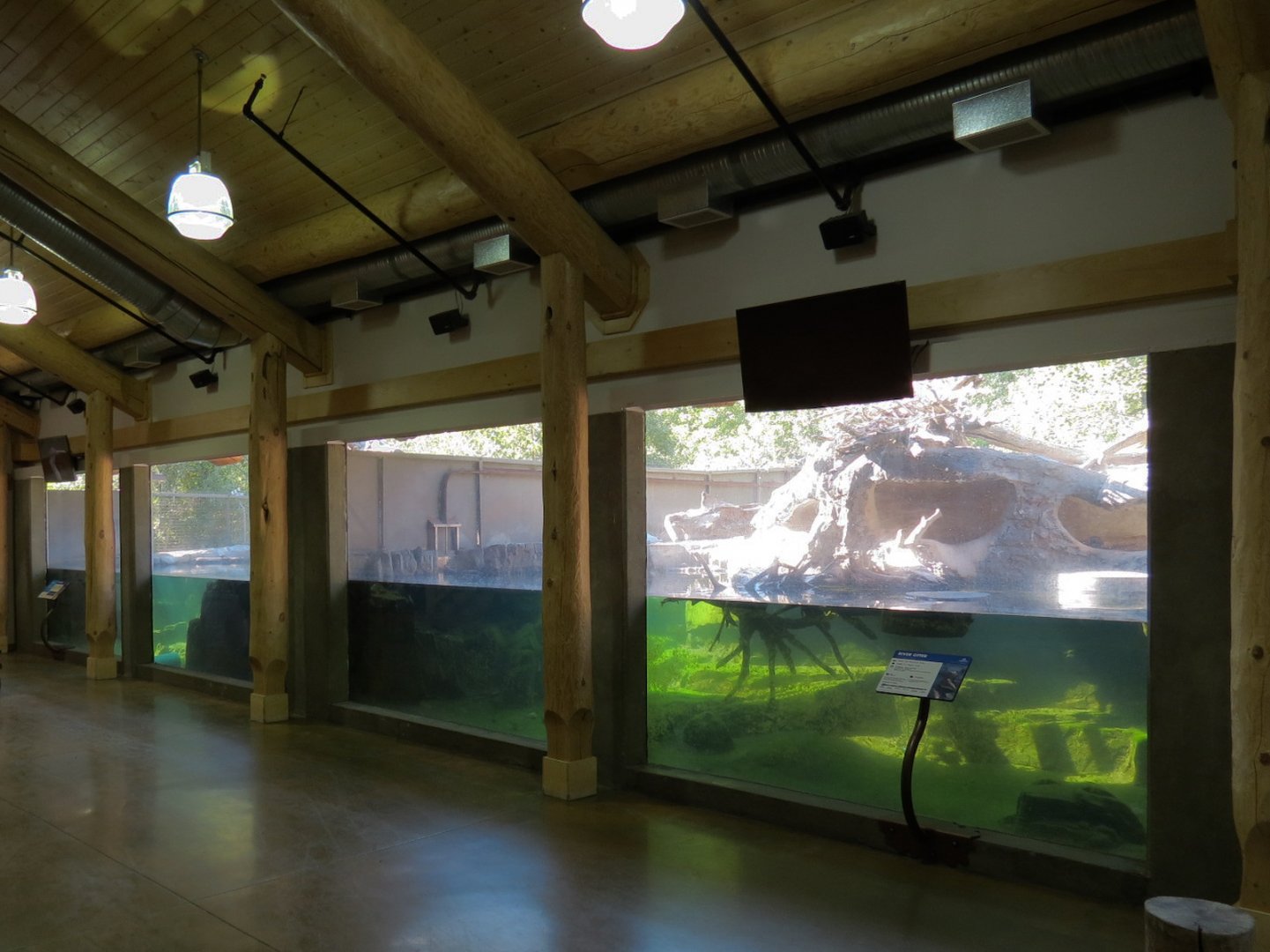
'Cequel Energy Lodge', a large log building with indoor viewing of 2 medium-sized outdoor exhibits for:
River Otter

Medium-sized pond yard:
Whooping Crane

'Nature Walk'. a large-sized walkthrough fenced yard with a perch area for:
Golden Eagle
Mule Deer

Large-sized fenced yard:
Elk

Large-sized fenced yard with viewing shelters with windows:
Grey Wolf

Large-sized fenced yard with viewing shelters with windows:
Grizzly Bear

Medium-sized low-walled yard:
Black-tailed Prairie Dog

Large-sized fenced yard with viewing shelters with windows:
Black Bear

2 adjacent medium-sized netted yards with viewing shelter with windows:

Cougar


DESTINATION AFRICA: (20 Exhibits)
This area is composed of 2 large exhibit buildings and their attached outdoor yards as well as a few outdoor exhibits. I will list them as they are encountered in a clockwise direction from the main entrance.

African Savanna Building:
This building of the following 7 exhibits has several all-indoor exhibits as well as several that have attached outdoor yards.

Medium-sized rocky indoor room enclosed with glass:
Rock Hyrax

Medium-sized indoor yard with railing-height glass enclosure:
Slender-tailed Meerkat

Medium-sized indoor yard with railing-height glass enclosure:
African Crested Porcupine

Medium-sized rocky indoor room enclosed with glass:
Egyptian Tortoise
Round-nosed Plated Lizard

Medium-sized indoor yard with large pool and underwater viewing connected to medium-sized outdoor yard:
Hippopotamus
Tilapia

2 small-sized indoor yards connected to each other as well as a medium-sized outdoor yard:
Red River Hog

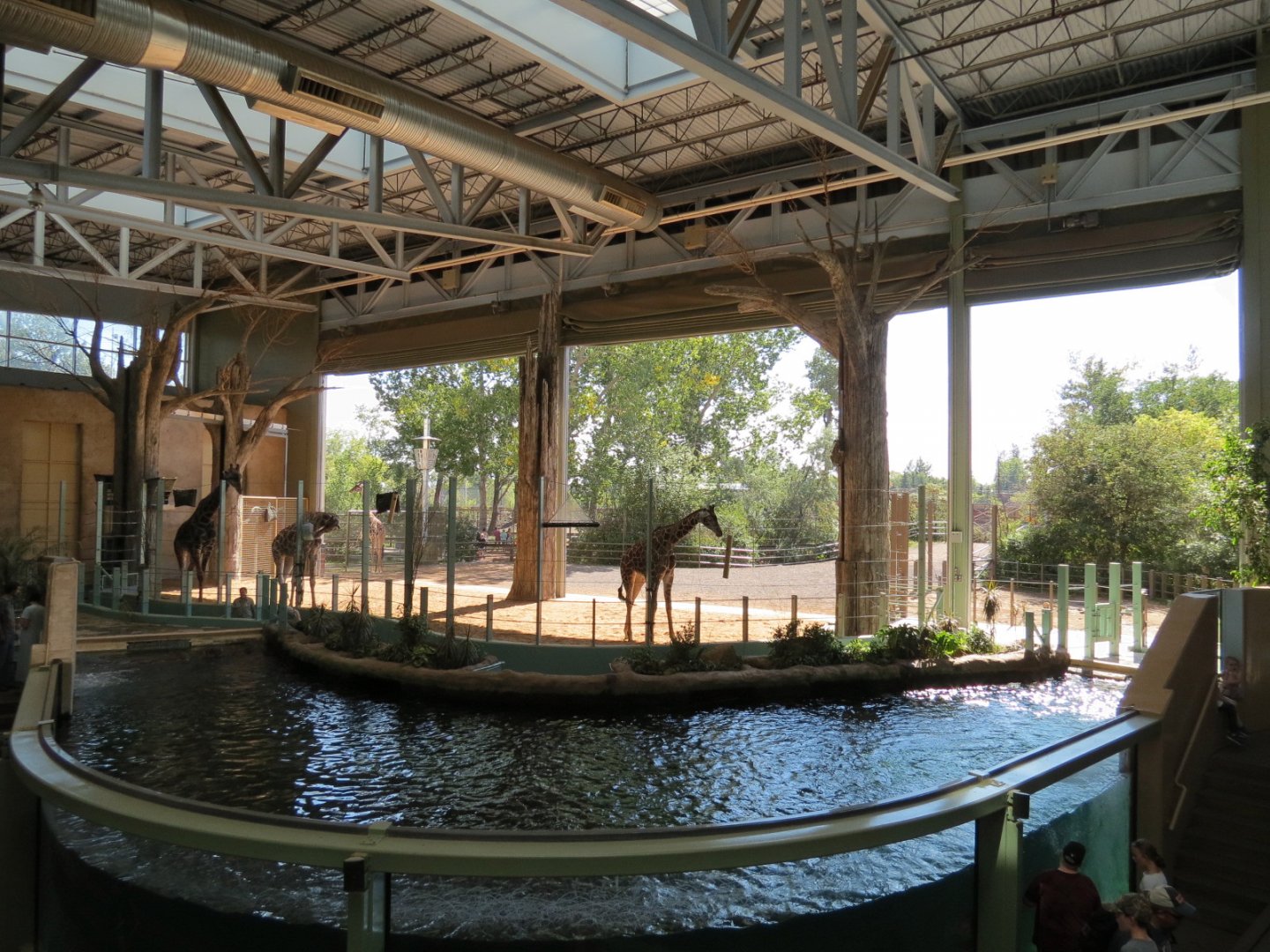
Medium-sized indoor yard connected to large-sized fenced outdoor yard:
African Crowned Crane
Giraffe (hybrid)
Hartmann's Zebra
Masai Giraffe
Ostrich
Reticulated Giraffe

Large-sized fenced outdoor yard with viewing shelter with windows:
African Lion

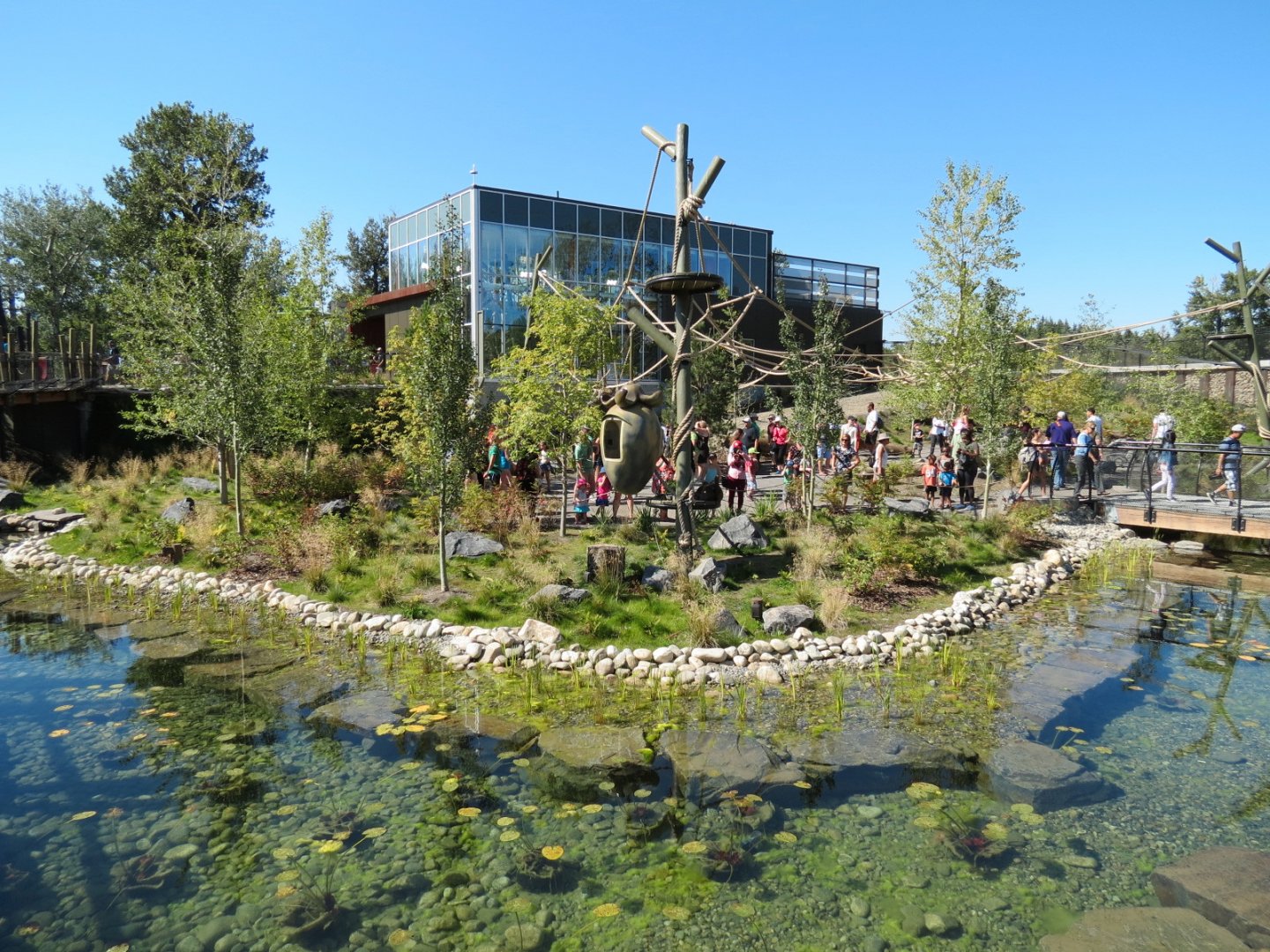
'Land of Lemurs', the zoo's newest exhibits, composed of 3 exhibits: 1 small-sized outdoor sheltered cage room, 1 large-sized outdoor fenced yard, and 1 large-sized outdoor fenced walkthrough yard:
Black-and-white Ruffed Lemur
Red-fronted Lemur
Ring-tailed Lemur

Rainforest Building:
This building of the following 9 exhibits has several all-indoor exhibits as well as a few that have attached outdoor yards.

2 medium-sized open-top tanks:
Rift Valley Cichlids

Medium-sized room exhibit enclosed with glass:
Dumeril's Boa
Malagasy Tree Boa

Medium-sized room exhibit enclosed with glass:
Leopard Tortoise
Panther Chameleon

Medium-sized yard enclosed with glass railing:
African Dwarf Crocodile

Large-sized indoor yard attached to large-sized outdoor yard:
Eastern Black-and-white Colobus
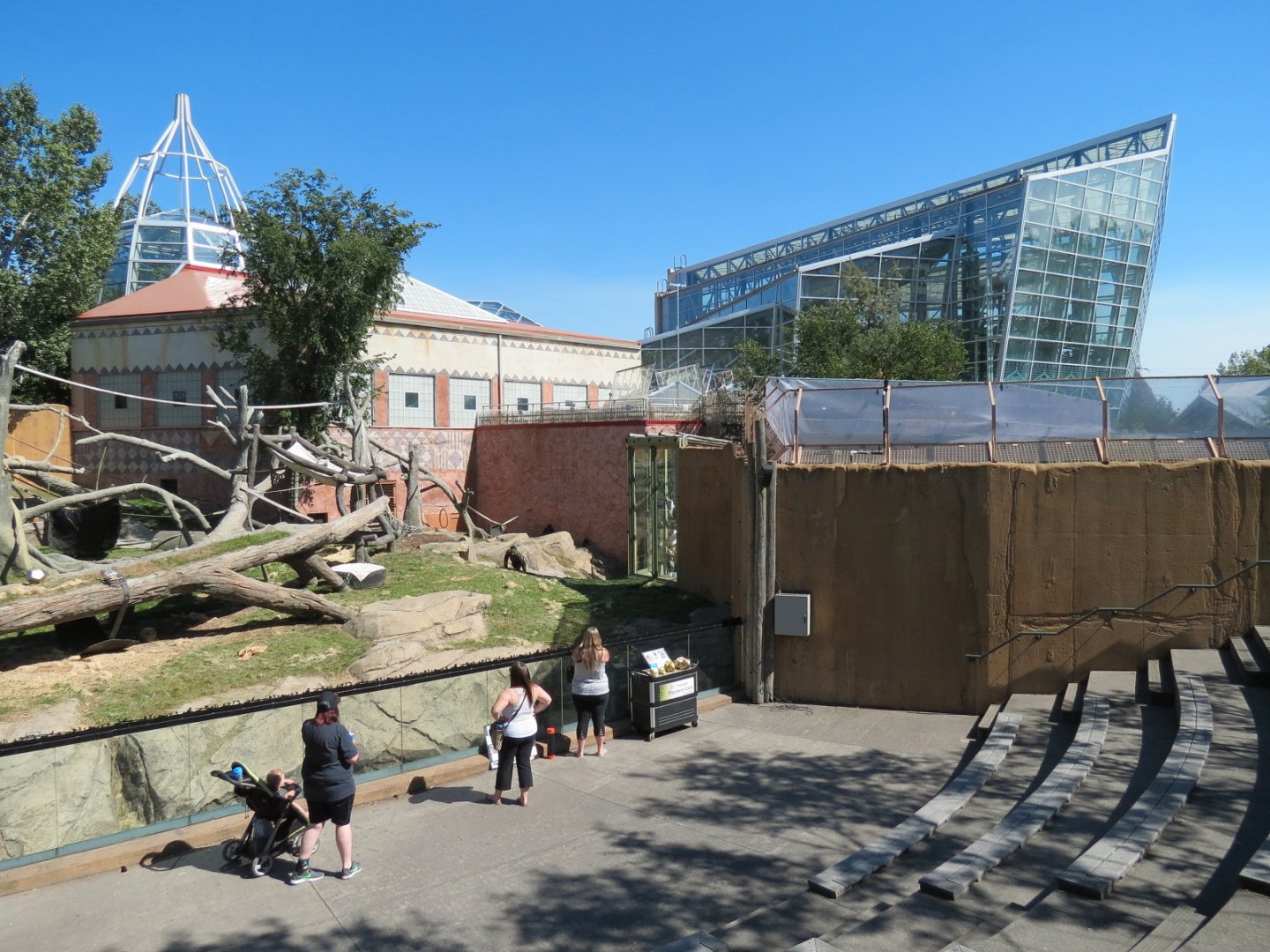
Western Lowland Gorilla

Small-sized outdoor fenced yard:
Leopard Tortoise

Medium-sized indoor room enclosed with glass attached to large-sized outdoor yard enclosed with glass viewing wall:
Mandrill

Large-sized aviary room with pond:
African Spoonbill
East African Mud Turtle
Golden-breasted Starling
Hadada Ibis
Hammerkop
Helmeted Guineafowl
Hottentot Teal
Southern Bald Ibis
Spur Winged Lapwing
Taveta Golden Weaver
White Faced Whistling Duck


DOROTHY HARVIE GARDENS: (6 Exhibits)
This area includes a small South American area of exhibits but it is not labeled as a distinct area on the zoo map.

Medium-sized fenced yard:
Chacoan Peccary

Large-sized fenced yard:
Alpaca
Greater Rhea

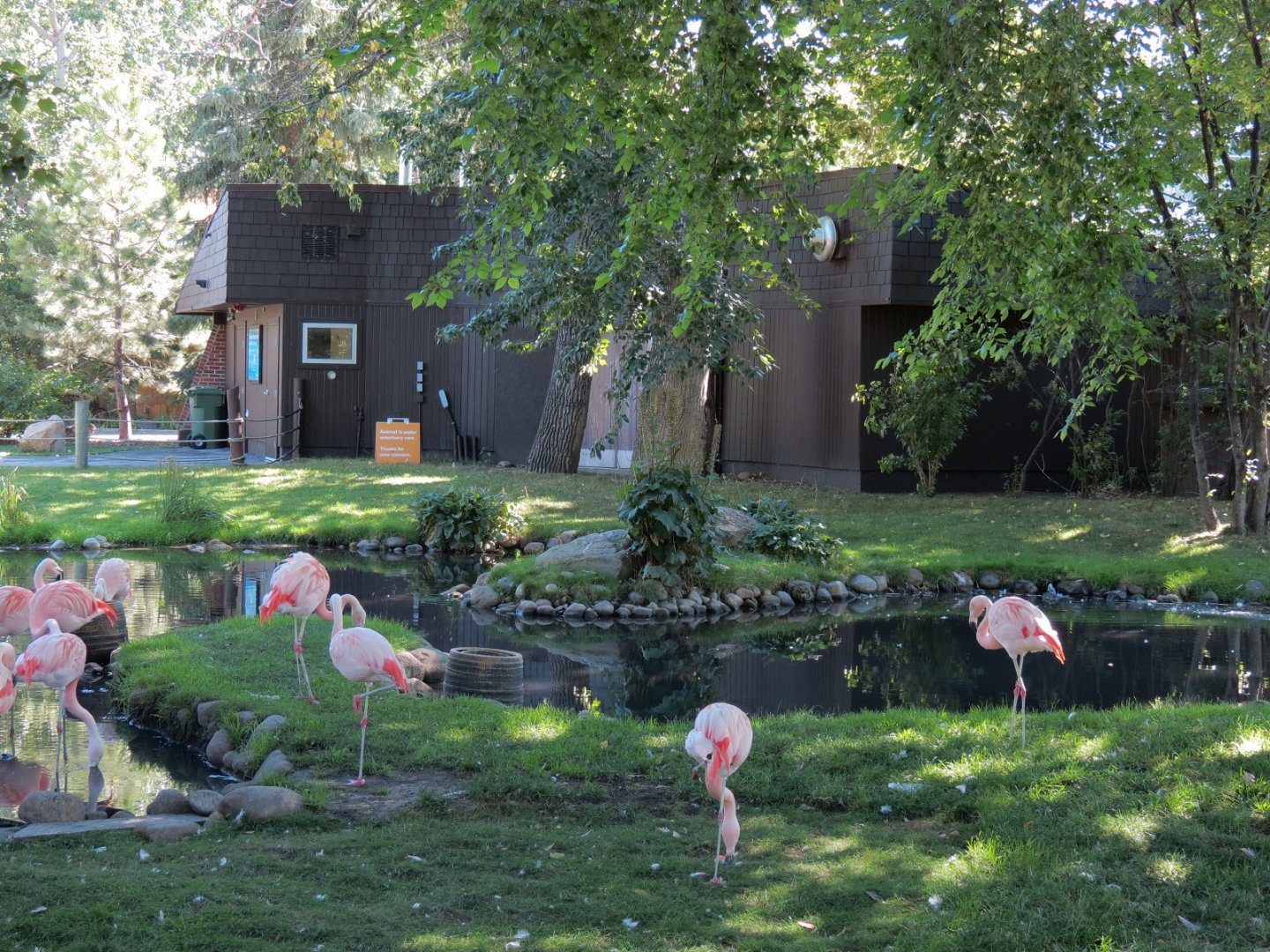
Large-sized fenced grassy yard with pond attached to indoor winter viewing building:
Chilean Flamingo

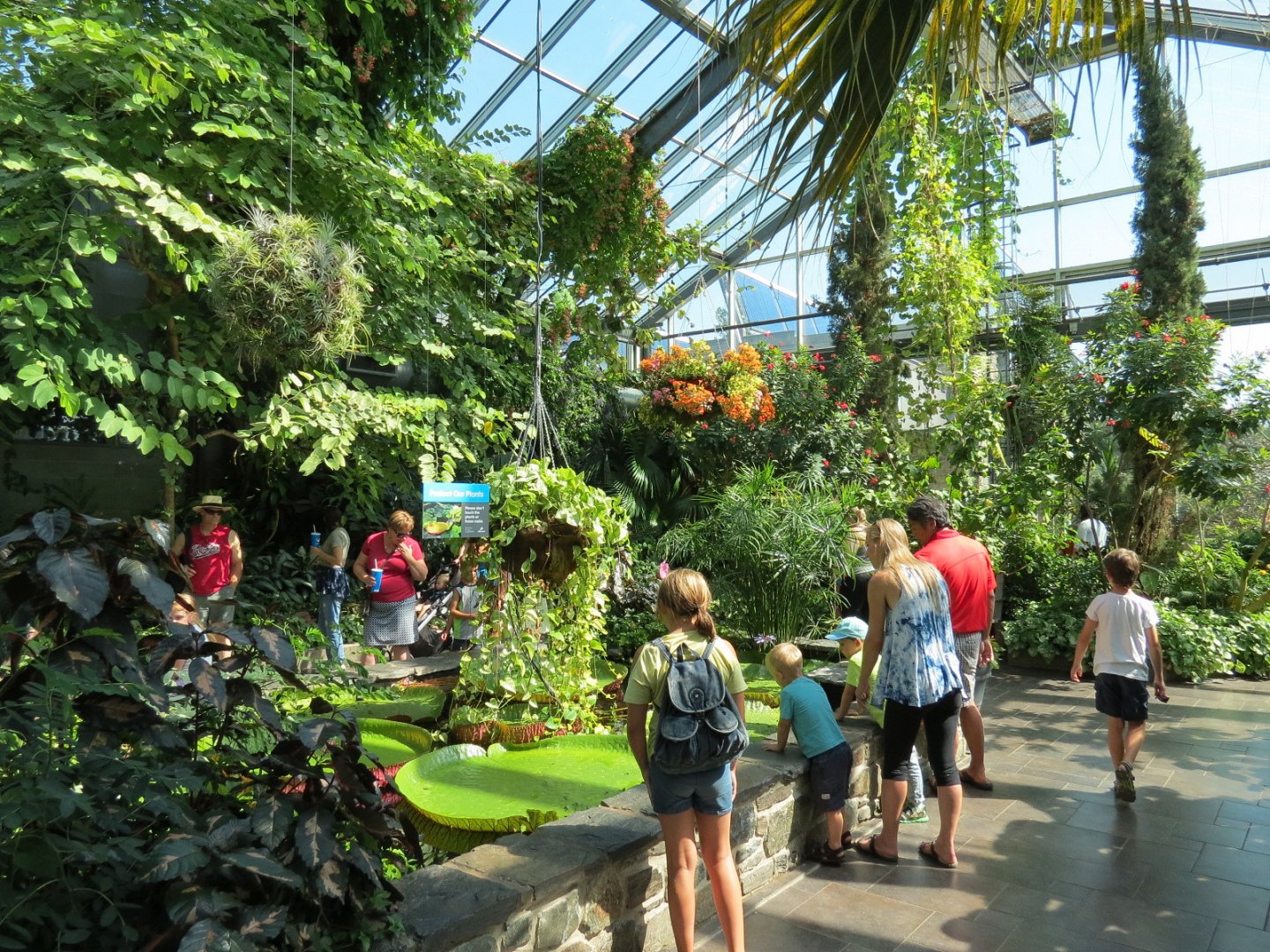
'Conservatory', a large-sized indoor room walkthrough exhibit with 2 small-sized chrysalis rooms enclosed with glass:
Asian Swallowtail
Atlas Moth
Banded Orange Heliconia
Black Swallowtail
Blue Clipper
Blue Morpho Butterfly
Blue Wave Butterfly
Common Sargeant
Common Mime
Cydno Longwing
Doris Longwing
Emerald Swallowtail
Glasswing Butterfly
Great Eggfly
Grecian Shoemaker
Green Longwing
Green Triangle
Julia Butterfly
King Swallowtail
Lebeau's Rothschildia
Malay Lacewing
Monarch Butterfly
Orange-barred Sulphur
Owl Butterfly
Pink Cattleheart
Postman Butterfly
Rusty-tipped Page
Sarah Longwing
Scarlet Mormon
Tiger Longwing
Tree Nymph
Variable Cracker
Wood Nymph
Zebra Longwing
Zebra Mosaic Butterfly


EURASIA: (10 Exhibits)
I will list the exhibits as they are encountered in a clockwise direction.

Large-sized cage:
Peafowl

Large-sized fenced yard with pond:
Japanese Serow

Large-sized cage:
Japanese Macaque

Medium-sized fenced yard:
Pot-bellied Pig
Siberian Musk Deer

Large-sized fenced yard with rocky mounds:
Alpine Ibex
Markhor

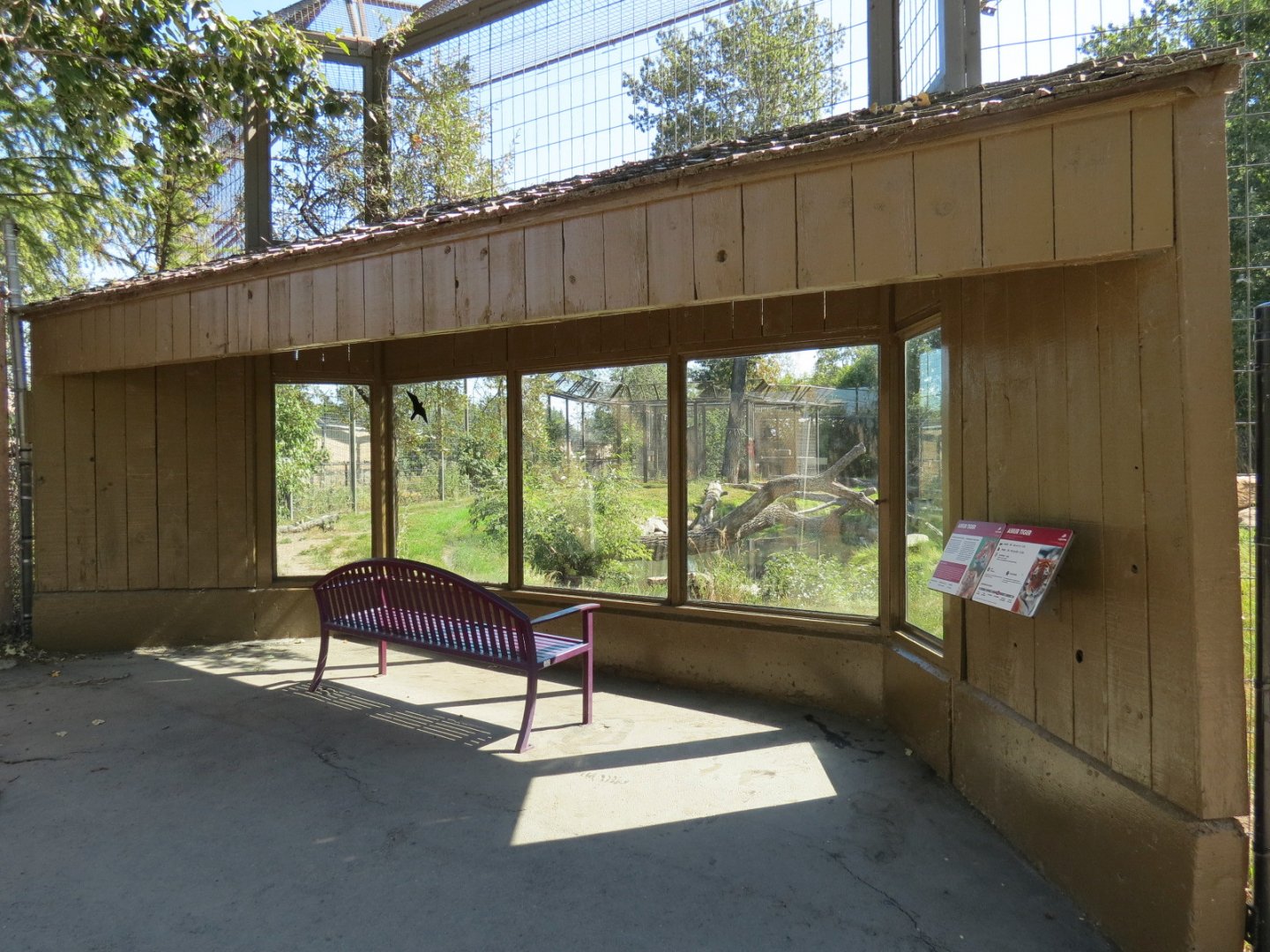
Large-sized fenced yard and pond with viewing shelters with windows:
Amur Tiger

Large-sized fenced yard:
Eurasian Wild Boar

Medium-sized cage:
Himalayan Monal

Medium-sized yard enclosed with railing-height glass and walls:
Red Panda

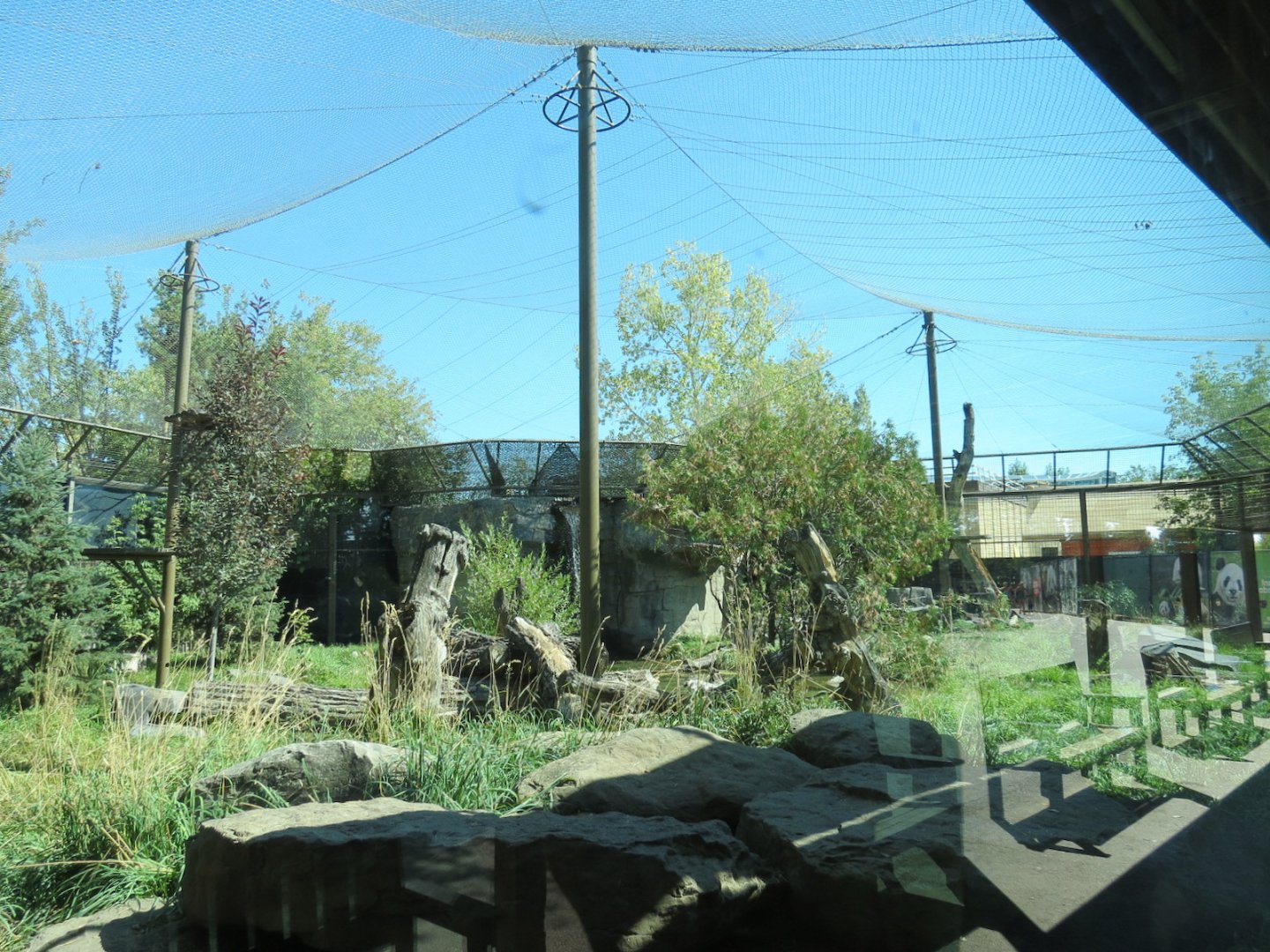
Large-sized yard enclosed with fence and netted canopy, with long viewing shelter with windows:
Snow Leopard


SUMMARY:

By my count, the total number of exhibits currently at Calgary Zoo is: 57

By my count, the total number of species in permanent exhibits with identification signs is: 115
The number of species I counted can be broken down into the following categories:
Mammals: 42
Birds: 27
Reptiles: 9
Amphibians: 0
Fish: 2
Invertebrates: 35
 
For such a large, popular zoo that will attract 1.6 million visitors next year with the addition of 4 Giant Pandas...there really aren't many animals there! The key to Calgary Zoo's success is that there is clearly a focus on charismatic megafauna and there are also 3 excellent areas: Penguin Plunge, Canadian Wilds and Destination Africa.

Also, the 20-Year Master Plan makes for great reading:

Calgary Zoo Master Plan
 
Yes for a mid-sized collection this zoo attracts a large crowd...for me the hoofstock collection was the biggest highlight and I had good viewing of most of them.
 
The Calgary Zoo holds considerably less species than it did less than 12 years ago. On January 1, 2006 the Calgary Zoo held 290 species of animals (According to their 2005 Annual Report)! That's more than two and a half times the species Geomorph recorded this summer! There are a few species currently held behind the scenes at the Calgary Zoo or at the Wildlife Conservation Centre that aren't on Geomorph's list.

In 2006, the Calgary Zoo's species totals were: 93 mammals; 109 birds; 29 reptiles; 11 amphibians; 12 fish; and 38 invertebrates.
The species on display and signed at the Calgary Zoo during Geomorph's visit this summer are the following percentages of 2006 holdings: 45% of mammals; 25% of birds; 31% of reptiles; 0% of amphibians; 17% of fish; and 92% of invertebrates.

Part of this significant reduction in the collection can be attributed to the flooding in 2013. When the rising Bow River flooded the Zoo Island (where most of the animal exhibits are located) the South American building (formerly Primates) and Australia/Creatures of the Night were significantly damaged and the animals were relocated elsewhere. However, almost a year earlier Australia/Creatures of the Night was in the process of closing. South America was scheduled to close in a few years. The floods just bumped up the dates.

The collection at the Calgary Zoo has been reduced so significantly in the past decade largely because of a significant change in practices following the CAZA/AZA review in 2010. The independent review was commissioned by the President of the Calgary Zoo in light of the high profile deaths of animals. The review criticized the housing and holding in Australia/Creatures of the Night and South America. The animal care staff felt a little overwhelmed and the collection plan for acquiring new animals was not rigorous enough. The Calgary Zoo implemented an Action Plan in response and has continued to make changes. The exhibit and holding spaces in Australia/Creatures of the Night and South America would have required substantial investments to improve animal welfare and work spaces. When these two buildings became severely damaged in the floods it further compromised them. Closing these buildings and relocating the animals was responsible for the majority of the decrease in the Zoo's collection.

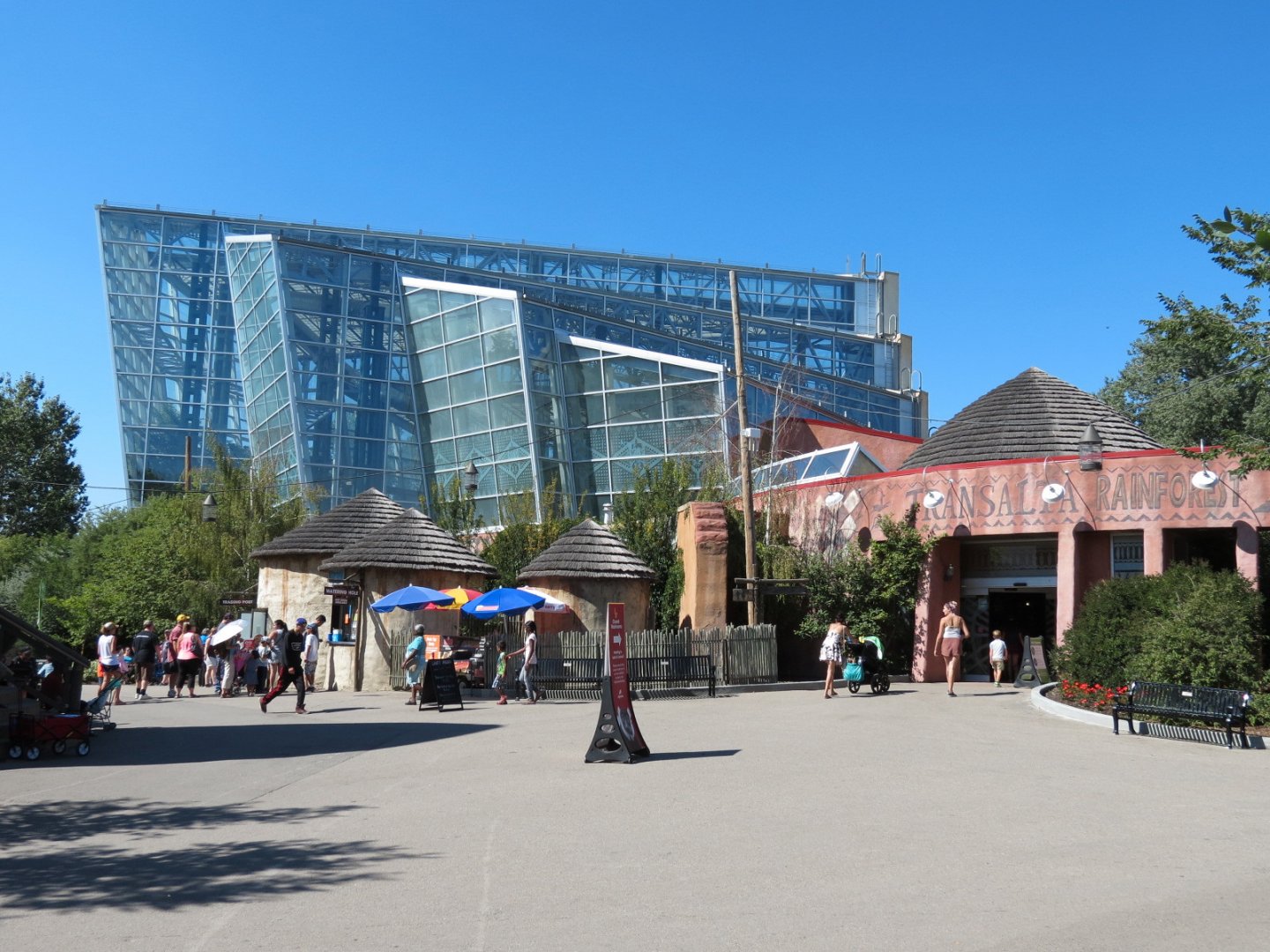
Since the 2010 review other exhibits have been evaluated with increasing scrutiny and that has further changed the collection. In the Transalta Rainforest the bats were replaced with panther chameleons because the bats didn't have sufficient space. Six years ago the Calgary Zoo had about 7 species of bat on display and two off display. Now they have no species of bats.

I applaud the Calgary Zoo for taking animal welfare seriously. I do miss seeing the diversity of animals they once had though. Hopefully new exhibits after the pandas can help diversify the collection a little.
 
DevinL, thank you for this historical information, I did not realize it had truly changed this much. The example of the bat enclosure is interesting, and I agree it must have been too small for them. The panther chameleon was certainly putting on a show front and center when I was there at that exhibit!
 
The key to Calgary Zoo's success is that there is clearly a focus on charismatic megafauna and there are also 3 excellent areas: Penguin Plunge, Canadian Wilds and Destination Africa.


All large US and Canadian zoos, including the Calgary Zoo, have a focus on charismatic megafauna; however, the Calgary Zoo has fewer species of charismatic megafauna than the average for the US and Canada’s top 50 zoos. There are now no elephants or rhinoceros at the Calgary Zoo and there are no plans to acquire any in the future. Minnesota Zoo is the only other top 50 zoo in Canada and the US with paid admission and without elephants or rhinoceros. The only species of non-human ape at the Calgary Zoo is gorillas. There are no polar bears or pinnipeds at the Calgary Zoo even though they have a 21-acre themed Canadian Wilds exhibit complex that was developed in several stages. Besides having a much bigger overall variety of animals, the Toronto Zoo also has more charismatic animals than the Calgary Zoo. The Calgary Zoo now has giant pandas, but the Toronto Zoo has all the other charismatic megafauna that the Calgary Zoo has plus: Sumatran tiger, white lion, cheetah, polar bear, orangutan, Indian rhinoceros, black rhinoceros, pygmy hippopotamus, and Aldabra tortoise.

Panda Passage (2018) is the first of the last four major exhibit developments at the Calgary Zoo to display a species of animal heavier than 20kg. Land of Lemurs (2017) displays three species of lemur. Penguin Plunge (2012) has four species of penguins, which are certainly mega-charismatic and large for birds, but not really megafauna. The Enmax Conservatory (2009) has butterflies in the peak season. Smaller scale renovations in the past few years brought Indian rhinoceros to the Calgary Zoo (2014), but that was temporary (2014-2016) and only required slight modifications of the elephant exhibit in Elephant Crossing (opened in 2007). In the past decade (2008-2018) the focus of major developments at the Calgary Zoo hasn’t been on charismatic megafauna except for Panda Passage.

I think the biggest key to the Calgary Zoo’s success has been close and interesting experiences with a variety of animals. The Calgary Zoo has an exceptional variety of walk-through exhibits, including: penguins at Penguin Plunge; birds of prey in the Jihad Shibley Rocky Mountain Aviary in Canadian Wilds; mule deer and golden eagles in the Canadian Wilds; lemurs in Land of Lemurs; a large variety of birds in the TransAlta Rainforest; and butterflies in the Enmax Conservatory. Destination Africa has significant facilities for year-round viewing of tropical charismatic megafauna. The indoor hippopotamus exhibit has underwater viewing. The giraffes have a prominent exhibit that’s visible from most of the African Savannah building. The gorillas in the TransAlta Rainforest are often close to the front of the large viewing windows. Daily changes to the gorilla exhibit keep the apes busy and more engaged with their surroundings. At Panda Passage the large viewing windows let you get closer to the giant pandas than you can get at the San Diego Zoo. Recently, the Calgary Zoo has added training walls to their tiger and grizzly bear exhibits for positive reinforcement presentations. These have been very popular, and both exhibits have amphitheater seating to accommodate many guests. Feeding presentations for other charismatic carnivores include: otters, snow leopards, lions, cougars, and Komodo dragons. The walk-through exhibits, close viewing of charismatic megafauna, and carnivore feedings, create memorable experiences with the animals at the Calgary Zoo and elevate the Zoo beyond some zoos with more impressive collections.
 
Minnesota Zoo is the only other top 50 zoo in Canada and the US with paid admission and without elephants or rhinoceros.

You posted a lot of interesting information and I generally agree with all of it...although it is fascinating to look at all of the major Canadian and American zoos and very few of them lack either rhinos or elephants. You mentioned Calgary and Minnesota, but there are three more notable zoos that also lack rhinos or elephants: Binder Park Zoo, Fort Wayne Children's Zoo and Arizona-Sonora Desert Museum.

If one were to look at the book America's Best Zoos (2008) and the 60 "best" zoos in the USA then a decade later there are only 4 out of those 60 that have no rhinos or elephants. Minnesota, Fort Wayne, Binder Park and ASDM are the 4 but there are good reasons for the lack of such iconic zoo species. ASDM naturally concentrates on flora and fauna from the Sonoran Desert, both Fort Wayne and Binder Park are only open for approximately 6 months of the year due to inclement weather in the winter, and Minnesota has legendary snowfalls in the colder months. Just like Calgary, those zoos have made smart choices to not keep rhinos and elephants locked in heated barns for months on end.

If one was to gaze back even 15-20 years then a lot more of the major American zoos had elephants. These zoos all phased out the animals for various reasons: Detroit, Woodland Park, Philadelphia, Brookfield, Lincoln Park, Nashville, San Francisco, Buffalo and Gladys Porter. Eventually neither Point Defiance or Bronx will have elephants, although an equal number of zoos have actually added elephants in top-notch, multi-acre habitats.
 
Of course, its not always a matter of having charismatic megafauna like elephants and rhinos, its how you present your animals. As mentioned before Calgary uses unique interactives like walkthroughs.
 
Calgary Zoo was my childhood zoo and I used to go there frequently, though I no longer live in the city.

The zoo used have much more megafauna in the past, they had a rhino, a couple of asian elephants, a polar bear and a male orangutan, but they were all moved to other zoos out of concerns for animal welfare. The elderly orangutan was kept in a small, indoor, dimly lit room, no larger than a large bedroom. The polar bear was in a small enclosure with water and spent the entire day pacing back and forth. The elephants were in a small enclosure that was part indoors and part outdoors, but due to the long Calgary winters, they had to spend 6 months of the year in the indoor section only which was basically just a concrete box the size of a school gymnasium. While, the lack of megafauna may have been a loss for the zoo's marketability, the enclosures they had for them were completely inappropriate for the animals of that size, and I think they made the right decision.

(There was a planned renovation of the Eurasia section for 2018 that was supposed to include an Orangutan family, but as of 2021, the project hasn't started construction yet)

Also, the Calgary Zoo has probably the best playground I've ever seen in my life. I used to go there as a kid and spend hours exploring that massive jungle gym structure.
 
Back
Top