ZooChat Big Year 2020

After a brief visit to Walkabout Creek Discovery Centre yesterday, I had some time to kill and decided to briefly look around the surrounding forest. A five minute look-around quickly became an afternoon of delightful bird-watching along one of the nearby trails - the five kilometre Araucania Walk.
Despite being midday and a humid 30-degree plus day, the birds showed surprisingly-well and I saw seven bird lifers in a few hours! The Crested Shrike-tit was the absolute highlight (Crested Shrike-tit (Falcunculus frontatus) - ZooChat). The family of Variegated Fairy Wrens darting through the bush thicket was also a lovely find.
I also managed to see my first mammal of the year (which just so happened to be a lifer).

Mammals
1.Swamp Wallaby Wallabia bicolor

2. Black Flying Fox Pteropus alecto

Birds
53. Lewin’s Honeyeater Meliphaga lewinii
54. Olive-backed Oriole Oriolus sagittatus
55. Bell Miner Manorina melanophrys
56. White-browed Scrubwren Sericornis frontalis
57. Eastern Yellow Robin Eopsaltria australis
58. Crested Shrike-tit Falcunculus frontatus
59. Variegated Fairy Wren Malurus lamberti

60. Brown Cuckoo Dove Macropygia phasianella
61. Yellow-faced Honeyeater Caligavis chrysops
62. Little Pied Cormorant Microcarbo melanoleucos
63. Australasian Darter Anhinga novaehollandiae
64. Red-browed Finch Neochmia temporalis
65. Spangled Drongo Dicrurus bracteatus
66. Grey Fantail Rhipidura albiscapa
67. Rufous Fantail Rhipidura rufifrons
68. Spectacled Monarch Symposiachrus trivirgatus
69. Brown Thornbill Acanthiza pusilla
70. Little Shrike Thrush Colluricincla megarhyncha
71. Bush Stone Curlew Burhinus grallarius

Herptiles
6. Lace Monitor Varanus varius

Invertebrates
21. Graphic Flutterer Rhyothemis graphiptera
22. Clearwing Swallowtail (Big Greasy) Cressida cressida
23. Lesser Wanderer Danaus petilia
24. Dead Leaf Grasshopper Goniaea australasiae
25. Wanderer (Monarch) Danaus plexippus

I saw two lifers today that were high on my 2020 wish list.
Birds
72. Sacred Kingfisher Todiramphus sanctus
73. Eastern Whipbird Psophodes olivaceus
74. Red-backed Fairy Wren Malurus melanocephalus
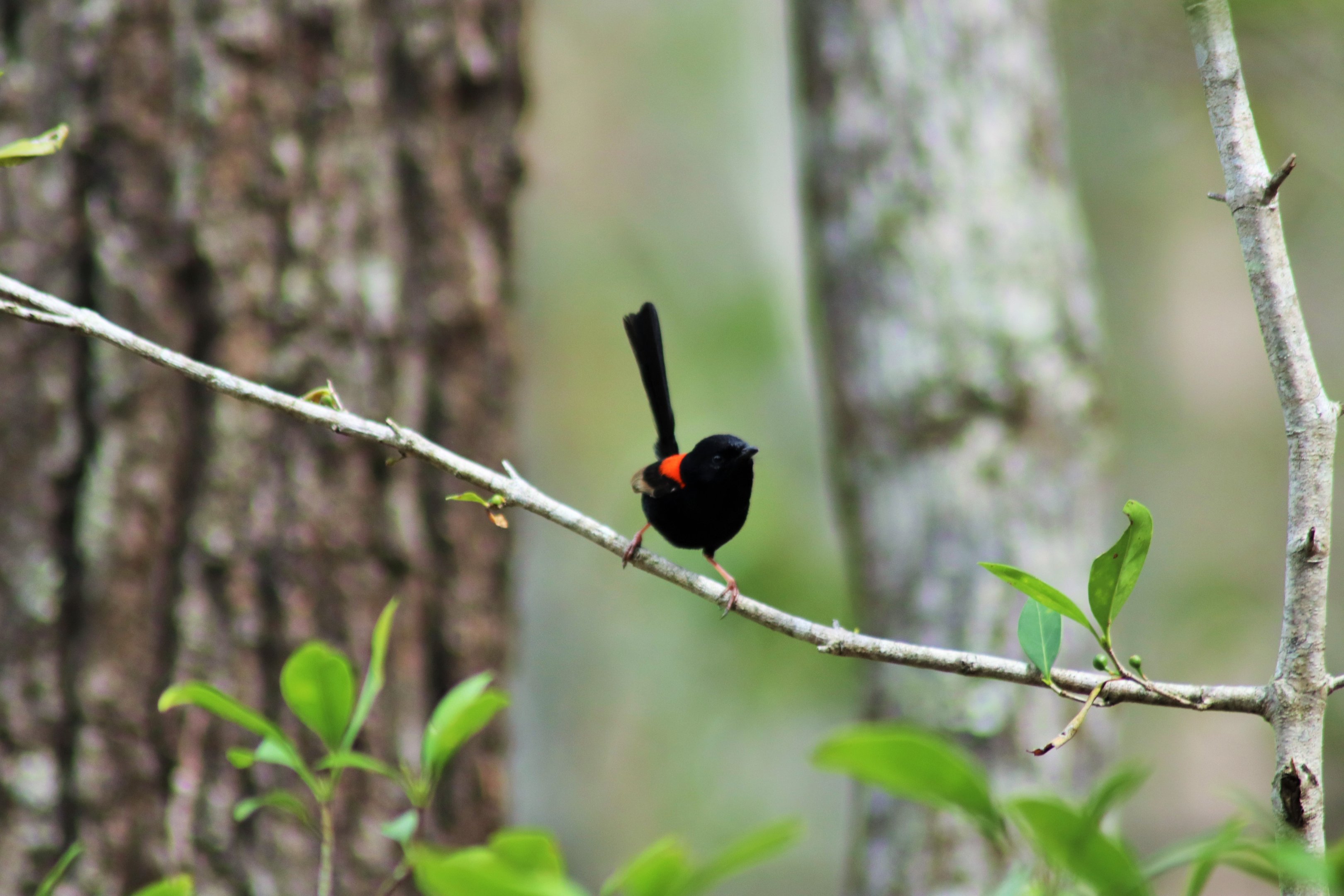


Invertebrates
26. Blue-banded Bee Amegilla cingulata
27. Daddy Long-legs Spider Pholcus phalangioides
28. St Andrew’s Cross Spider Argiope keyserlingi
29. Blue Tiger Butterfly Tirumala hamata
30. Bush Fly Musca vetustissima
31. Common Eggfly Hypolimnas bolina
 
Birds
41. Barn Swallow Hirundo rustica
42. Grey Jungle-fowl Gallus sonneratii
43. Great Tit Parus major
Reptiles
1. Peninsular Rock Agama Psammophilus dorsalis

 
Lifers aren't always where you expect them or what you expect!

Mammals:

4. Eastern Cottontail Sylvilagus floridanus
Fishes:
1. Banded Killifish Fundulus diaphanus
 
Birds
1. House Finch (Haemorhous mexicanus)
2. European Starling (Sturnus vulgaris)
3. American Robin (Turdus migratorius)
4. Cedar Waxwing (Bombycilla cedrorum)
5. Mourning Dove (Zenaida macroura)
6. Black Vulture (Coragyps atratus)
7. Northern Mockingbird (Mimus polyglottos)
8. White-throated Sparrow (Zonotrichia albicollis)
9. Northern Cardinal (Cardinalis cardinalis)
10. Carolina Wren (Thryothorus ludovicianus)
11. Fox Sparrow (Passerella iliaca)
12. Feral Pigeon (Columba livia)
13. Mallard (Anas platyrhynchos)
14. Canada Goose (Branta canadensis)

Mammals
1. Eastern Gray Squirrel (Sciurus carolinensis)

My bimonthly update:

Birds
15. Great Blue Heron (Ardea herodias)
16. Turkey Vulture (Cathartes aura)
17. Red-tailed Hawk (Buteo jamaicensis)
18. Tufted Titmouse (Baeolophus bicolor)
19. Carolina Chickadee (Poecile carolinensis)
20. Eastern Bluebird (Sialia sialis)
21. Yellow-bellied Sapsucker (Sphyrapicus varius)
22. Red-bellied Woodpecker (Melanerpes carolinus)
23. American Crow (Corvus brachyrhynchos)
24. Song Sparrow (Melospiza melodia)

In other news, my efforts to see Pileated Woodpecker have continued into the new year and remain as discouraging as before.
 
  • Like
Reactions: MRJ
MAMMALS
10 - Dusky Antechinus (Antechinus swainsonii)
11 - Little Red Flying-fox (Pteropus scapulatus)

BIRDS
123 - Pied Currawong (Strepera graculina)
124 - Striated Thornbill (Acanthiza lineata)
125 - Australian King-Parrot (Alisterus scapularis)
126 - White-browed Woodswallow (Artamus superciliosus)
127 - Jacky Winter (Microeca fascinans)
128 - Varied Sittella (Daphoenositta chrysoptera)
129 - Rufous Whistler (Pachycephala rufiventris)
130 - White-winged Triller (Lalage tricolor)
131 - Oriental Dollarbird (Eurystomus orientalis)
132 - White-throated Treecreeper (Cormobates leucophaea)
133 - Little Friarbird (Philemon citreogularis)
134 - Leaden Flycatcher (Myiagra rubecula)
135 - Grey Shrikethrush (Colluricincla harmonica)
136 - Weebill (Smicrornis brevirostris)
137 - Sacred Kingfisher (Todiramphus sanctus)

INVERTEBRATES
2 - Dainty Swallowtail (Papilio anactus)
3 - Yellow-striped Hunter (Austrogomphus guerini)
4 - Portuguese Millipede (Ommatoiulus moreleti)*
MAMMALS
12 - Short-beaked Echidna (Tachyglossus aculeatus)

BIRDS
138 - Emu (Dromaius novaehollandiae)
139 - Pacific Gull (Larus pacificus)
140 - Forest Raven (Corvus tasmanicus)
141 - Red-capped Plover (Charadrius ruficapillus)
-- Horsfield's Bronze-cuckoo (Chrysococcyx basalis) [heard]
142 - Caspian Tern (Hydroprogne caspia)
143 - Common Greenshank (Tringa nebularia)
144 - Striated Fieldwren (Calamanthus fuliginosus)
145 - Little Tern (Sternula albifrons)
 
Heavy smoke on the weekends in Sydney has kept me indoors so I haven't had a chance to go birding until recently. Hopefully, with the rains forecast for tonight and tomorrow, with any luck I'll be able to get out some more soon.

Birds
1. Pacific Black Duck
2. Feral pigeon
3. Crested Pigeon
4. Eastern Koel
5. Dusky Moorhen
6. Eurasian Coot
7. Australasian Swamphen
8. Black-fronted Dotterel
9. Little Pied Cormorant
10. Little Black Cormorant
11. White-faced Heron
12. Australian White Ibis
13. Straw-necked Ibis
14. Sulphur-crested Cockatoo
15. Red-rumped Parrot
16. Rainbow Lorikeet
17. Satin Bowerbird
18. Superb Fairywren
19. Bell Miner
20. Noisy Miner
21. Black-faced Cuckoo-shrike
22. Dusky Woodswallow
23. Grey Butcherbird
24. Australian Magpie
25. Willie Wagtail
26. Magpie-Lark
27. Australian Raven
28. Fairy Martin
29. Tree Martin
30. Common Starling
31. Common Myna

Mammals
1. European Rabbit

:p

Hix
 
Birds:
40. King Parrot (Alisterus scapularis)
41. Common Koel (Eudynamys scolopaceus)

Amphibians:
2. Cane Toad (Rhinella marina)

Fish:
5. Yellowfin Bream (Acanthopagrus australis)

Invertebrates:
1. European Honey Bee (Apis mellifera)
2. Monarch Butterfly (Danaus plexippus)
3. Mud Crab (Scylla serrata)
Birds:
42. Swamphen (Porphyrio melanotus)
43. Pacific Swift (Apus pacificus)
44. Little Black Cormorant (Phalacrocorax sulcirostris)
45. Australian Pelican (Pelecanus conspicillatus)
47. Little Pied Cormorant (Microcarbo melanoleucos)
48. Rufous Fantail (Rhipidura rufifrons)
49. Eastern Yellow Robin (Eopsaltria australis)
50. Scarlett Honeyeater (Myzomela sanguinolenta)
51. Brown Honeyeater (Lichmera indistincta)
52. Black Faced Cuckoo Shrike (Coracina novaehollandiae)
53. Red Footed Booby (Sula sula)
54. Scaly Breasted Lorikeet (Trichoglossus chlorolepidotus)
55. Black Kite (Milvus migrans)
56. Brahminy Kite (Haliastur indus)
57. Bush Turkey (Alectura lathami)
58. Cattle Egret (Bubulcus ibis)

Mammals:
3. Ringtail Possum (Pseudocheirus peregrinus)

Reptiles:
3. Eastern Water Dragon (Intellagama lesueurii)
4. Short Necked Turtle (Emydura macquarii)
 
This is going to be a conundrum. Do the Gippsland water dragons at Melbourne Zoo count? They derive from escaped individuals in the 80’s but have bred readily creating a population.

other than that

birds

49. Bell Miner
50. Willie Wagtail
 
Minutes after my last post flying overhead with its distinctive call. (52) also forgot one

Melbourne Zoo
51. Eurasian Tree Sparrow

Just outside melbourne Zoo

52. Little Lorikeet
 
This is going to be a conundrum. Do the Gippsland water dragons at Melbourne Zoo count? They derive from escaped individuals in the 80’s but have bred readily creating a population.
Yes they count. I've seen them at the zoo but I didn't actually know they were introduced in Melbourne. I just looked it up and they are well established, not just in the zoo grounds but in various other parts of the city.
 
Yes they count. I've seen them at the zoo but I didn't actually know they were introduced in Melbourne. I just looked it up and they are well established, not just in the zoo grounds but in various other parts of the city.

What sites did you find the information on. I can’t find much on them.

Okay then that leads to even more problems. Do I count the split between the Eastern and Gippsland water dragon. It’s not widely accepted but the Gippsland has slightly different structure as well as colouration.

Ima count it for now and I’ll change it if I need to later.

Herptiles

1. Gippsland Water Dragon (Intellagama howittii)
 
What sites did you find the information on. I can’t find much on them.

Okay then that leads to even more problems. Do I count the split between the Eastern and Gippsland water dragon. It’s not widely accepted but the Gippsland has slightly different structure as well as colouration.

Ima count it for now and I’ll change it if I need to later.

Herptiles

1. Gippsland Water Dragon (Intellagama howittii)
Informal sites (e.g. forums) regarding where and how long they have been present in the city, not scientific information.

I wasn't aware there was any split with the subspecies. I don't see how that could be justified.
 
Informal sites (e.g. forums) regarding where and how long they have been present in the city, not scientific information.

I wasn't aware there was any split with the subspecies. I don't see how that could be justified.

Im not going to start a lengthy discussion and considering I won’t be travelling up north this year I don’t think I’ll be seeing an Eastern Water Dragon anyway so it won’t matter in the big year side of things
 
Herptiles

1. Gippsland Water Dragon (Intellagama howittii)
You are claiming the Gippsland water dragon is a separate species? Never heard that before, separate subspecies, sure. (but subspecies are not counted here). What is your source?
 
What's the story behind this one? Aren't you well south of Red-footed Booby range, and why is it listed in the middle of a bunch of non-oceanic bird species?
Thought someone might ask about that :p

Bit of an interesting story. I saw it while I was swimming in my pool. I did not see it at the ocean but around 7kms inland.

My list really isn’t in order, some of those birds were seen as early as the 6th of January while others others were seen today, so that’s why it’s mixed in with a bunch of random birds, and also I didn’t see it out on the ocean.

I am well and truly within the range of red footed boobies.

I’ll explain the bird I saw, see if anyone agrees or disagrees on the ID (I’m not entirely certain on red footed booby, I just chose this as it was the best fit with the thought that I could always just change into later or remove it). For reference I saw the bird from directly below it and it was quite high up. It had very angular wings, like that of a frigate birds. It had a cream white belly and much darker wings. It had a yellow bill and a short tail that was slightly triangular. It was a decent size, bigger than a black kite. It was definitely a seabird.

@Dannelboyz you seem to have seen your fair share of seabirds, what’s your opinion?
 
Birds
41. Barn Swallow Hirundo rustica
42. Grey Jungle-fowl Gallus sonneratii
43. Great Tit Parus major
Reptiles
1. Peninsular Rock Agama Psammophilus dorsalis
Birds
44. Common Tailorbird Orthotomus sutorius
45. Coppersmith Barbet Psilopogon haemacephalus
46. Scaly-breasted Munia Lonchura punctulata
 
My exam schedule was finally open enough to be able to miss two half days, in which I went back to the long-tailed duck I saw in December and the dusky thrush I saw two weeks ago - Definitely the dusky thrush was one I felt like I really needed to enjoy as often as I could, and since today's views weren't exactly spectacular I might have to go back another time. Very likely my favourite ever bird in Belgium, so I'll have to enjoy it while it lasts!
The forests in which the dusky thrush currently continues to linger are also great for other birding, and thus got me another thrush that I managed to miss entirely last year, and my first good views ever of a pair of feeding red crossbills.

BIRDS:
85) Caspian gull, Larus cachinnans
86) Long-tailed duck, Clangula hyemalis
87) Ring-necked parakeet, Psittacula krameri
88) Northern goshawk, Accipiter gentilis
89) Woodlark, Lullula arborea
90) Mistle thrush, Turdus viscivorus
91) Eurasian bullfinch, Pyrrhula pyrrhula
92) Eurasian nuthatch, Sitta europaea
 
Back
Top