Um, it's been moved to another thread, I will write about the history before the one written above.
There were five species of deer lived in Korea peninsula, including the following.
- Manchurian wapiti
- Manchurian sika deer or Ussuri sika deer
- Siberian roe deer
- Chinese water deer
- Siberian musk deer
Among them, the
sika deer are virtually nonexistent in the wild in South Korea, and so are the
wapiti. Sometimes wild sika deer are seen, most of whom are exotic species that have escaped from farms or artificially released. So that is feral deer, not real wild deer.
Roe deer mainly inhabit Jeju Island, South Korea's largest island,
musk deer have very small populations living in Gangwon Province, the most mountainous and rugged area in South Korea. As such, the most common wild deer in Korea today are
water deer.

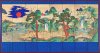
Korean deer folk paintings painted in the 19th-20th centuries.
In Korea, deer were considered one of the 10 things about long-lived.
And the white spots and stripe on back of the deer in this painting indicates that it was painted sika deer.
This art is a collection of the
National Palace Museum of Korea.
Back to the story of sika deer, although the sika deer were extinct in the South korea, but the population wasn't small. Korea also uses Chinese characters, the "鹿"(rock) which means just "almost all of kinds deer" today, but "鹿" meaning only "sika deer" historically in Korea.
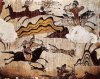
Joseon, a kingdom that existed on the Korean Peninsula from the 14th to the 20th century, operated a king-sponsored military training system & hunting called "gangmu." In that training, major prey was deer. Records show that dozens to hundreds of deer were caught at one time during the training.
The Joseon government required each province to pay tribute to the king. In this tribute, always contain deer meat and leather. For this reason, Joseon's local governments set up and operated farms that artificially raise sika deer, but the number of deer has decreased significantly due to deforestation, continued hunting, and the prevalence of rinderpest, since the 17th century.
Records after the Japanese Empire forcibly annexed Joseon to its colony using force(Aug 29 1910) show a significant decrease in sika deer. At that time, Japan did not have a separate conservation policy for wild animals, but designated animals that were banned from hunting, including female sika deer, and in its official record of the number of animals hunted recorded by the Japanese colony government,(1933-1943) 0-21 sika deer were caught each year while more than 2,000 roe deer and water deer were caught.

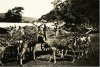
Sika deer at Yankovsky family's Deer Farm.
photo's source is
here.
Despite the situation, there were sika deer farms in the northern part of the Korean Peninsula. A typical example is the deer farm of the
Yankovsky(Янковский) family, which used to be Russians living in North Hamgyong Province, and when South Korea gained independence from Japan, the agriculture minister brought deer from North. But as is well known, Korea has split into South and North, and as mentioned above, the South has not been able to properly secure manchurian sika deer.
In addition,
Changgyeongwon, the forerunner of the Seoul Zoo, was established in 1909 by the Japanese Empire at Changgyeonggung Palace, which was originally Joseon's palace, for undermine the authority of the Joseon royal family, and originally, the zoo had manchurian sika deer and manchuria wapiti, but almost all animals at there died because Japan killed the zoo animals as the threat of defeat in the Pacific War intensified, and most of the surviving animals also died through the Korean War. So I think that old Changgyeongwon deer's bloodline not have been continue.
If you have anything you want to know, please ask more. The thread has been separated, so we can talk freely.



 I shall do so now.