Some news from my visit to Hamilton Zoo this morning:
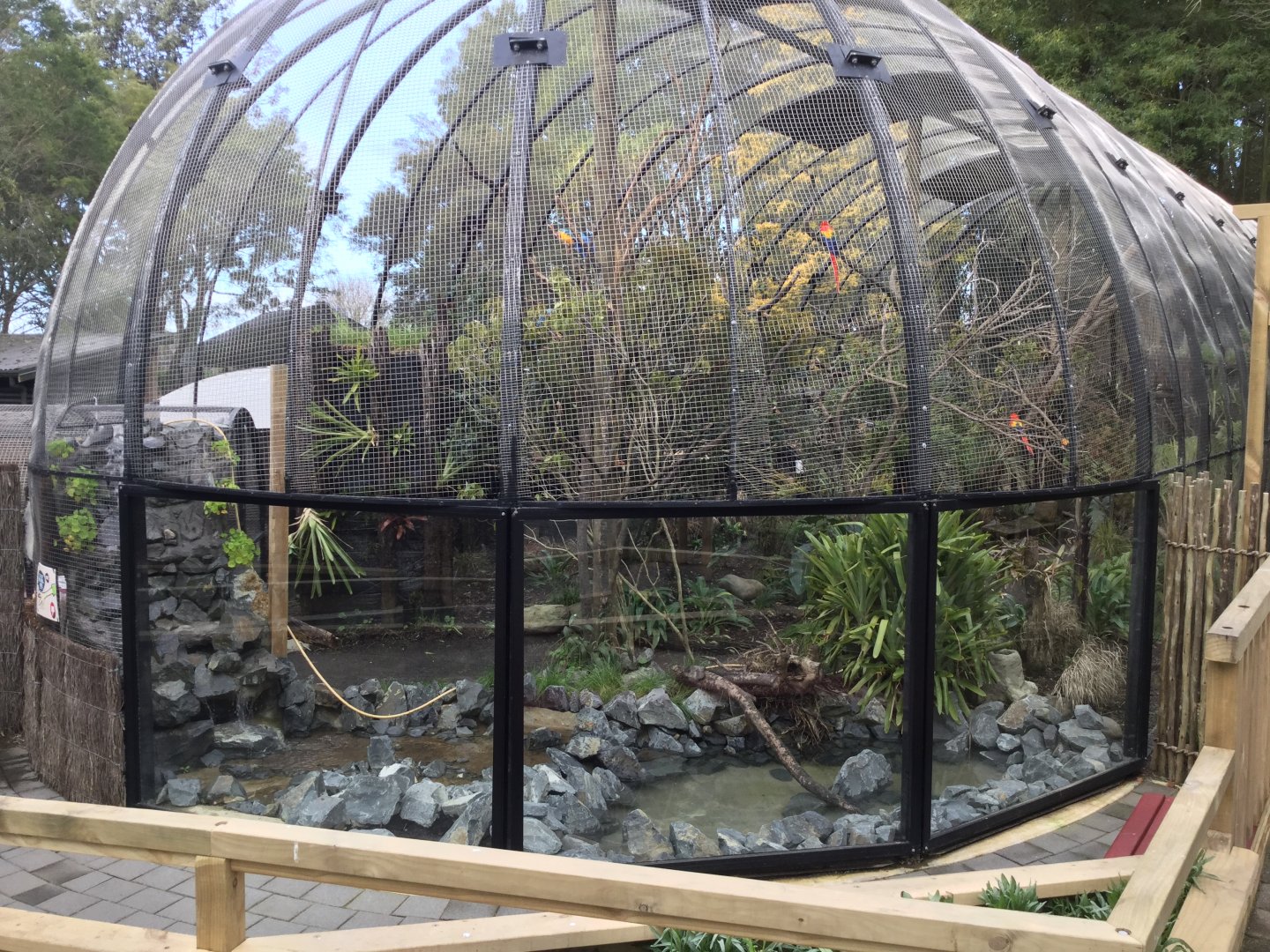
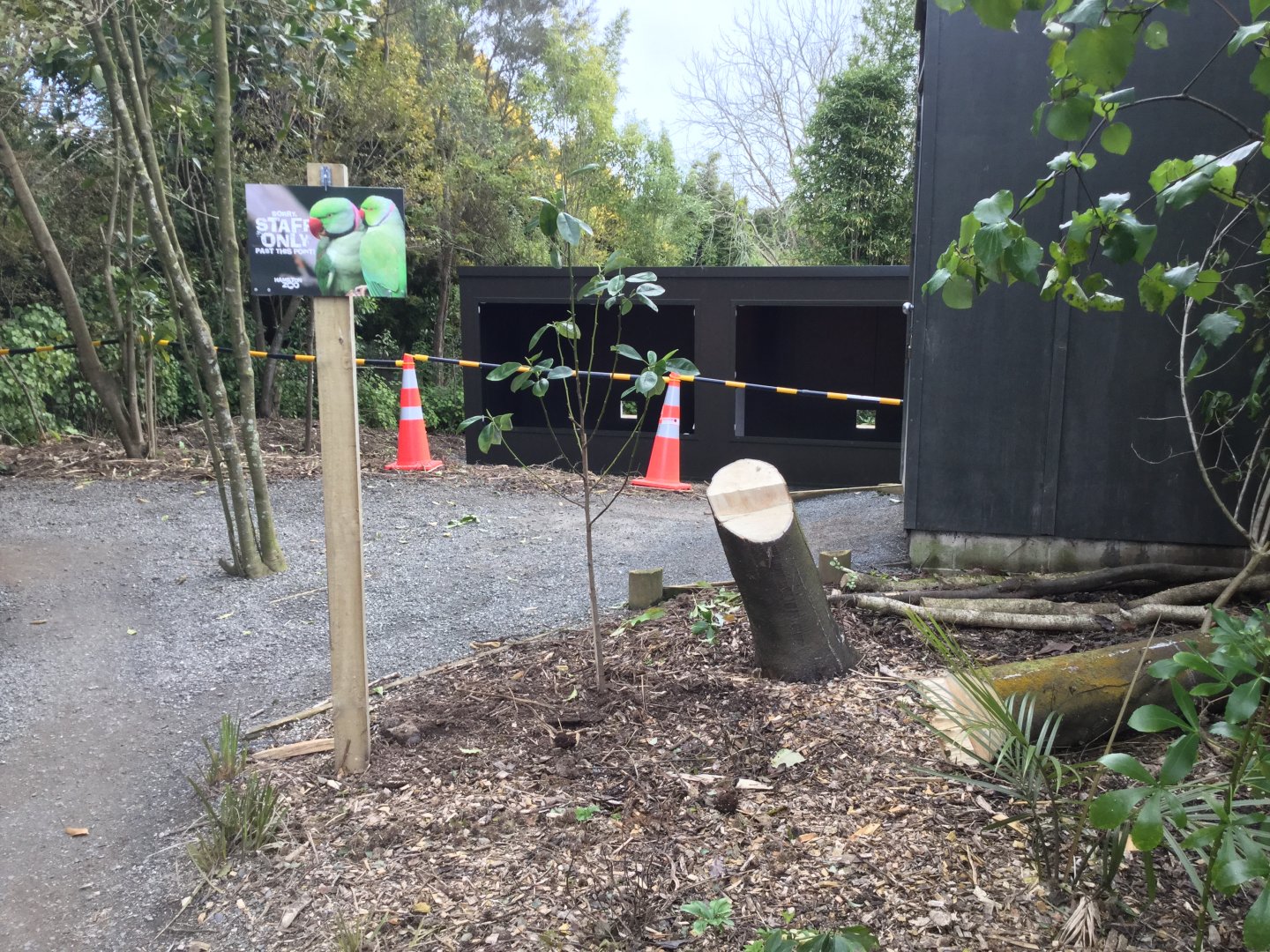
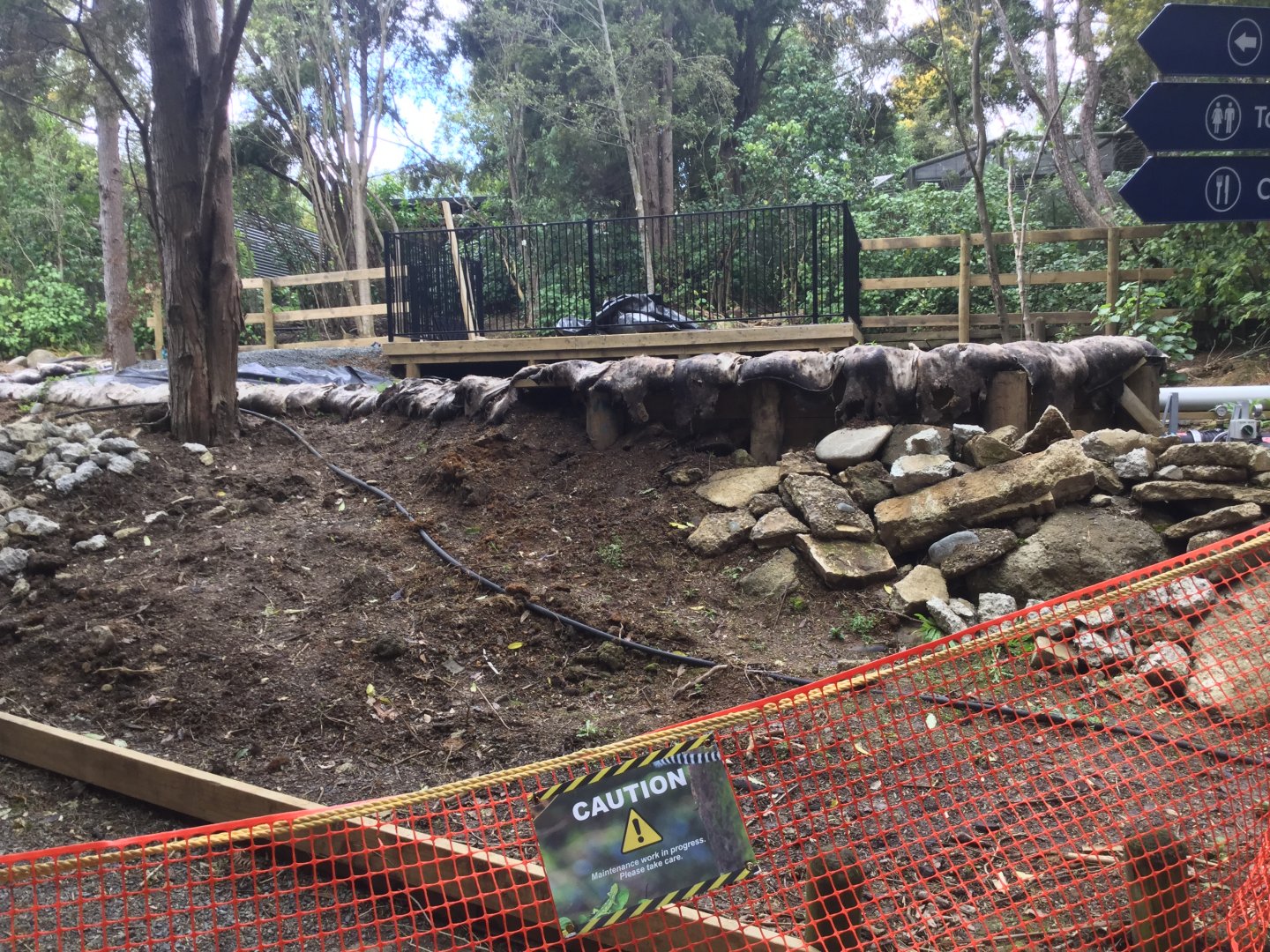
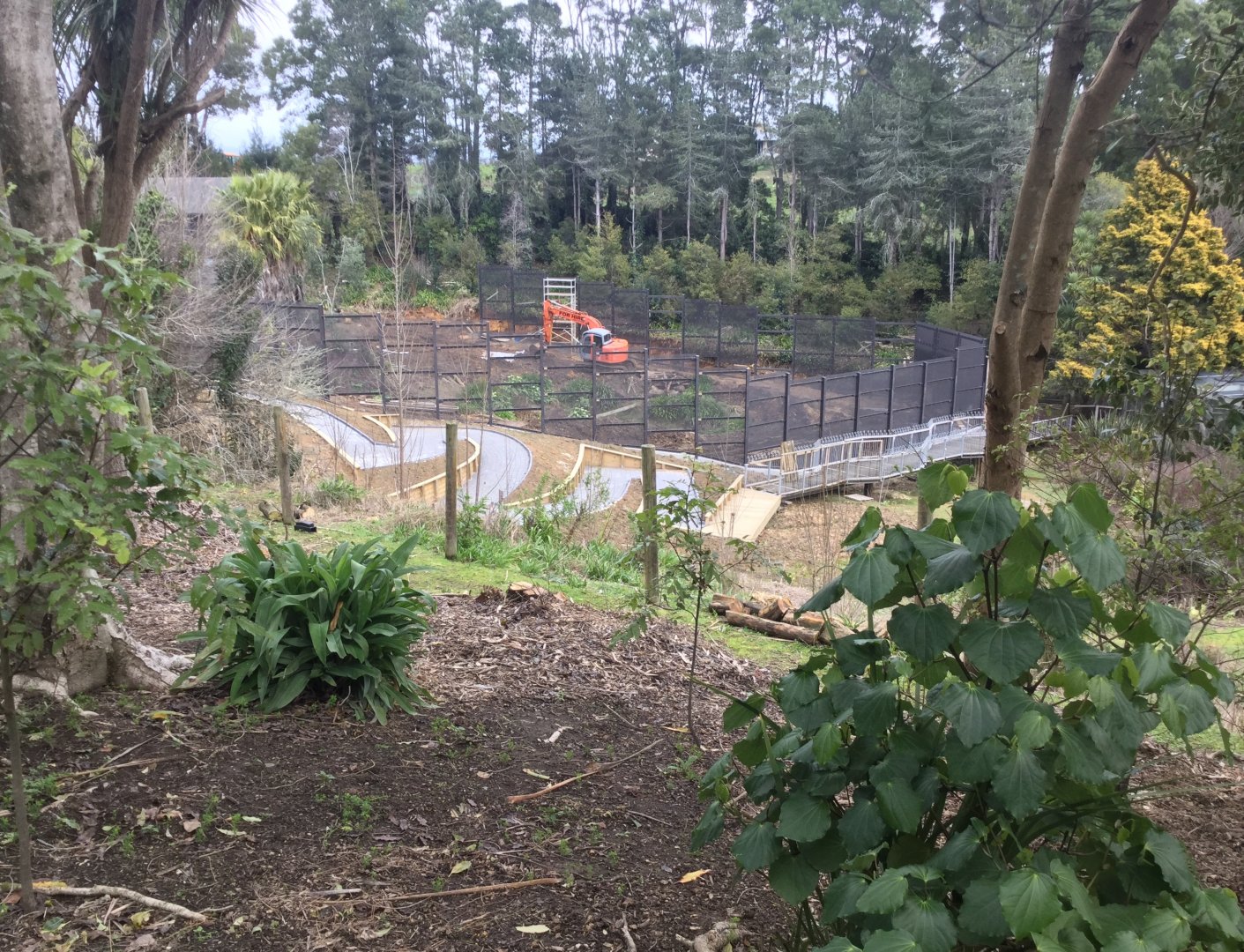
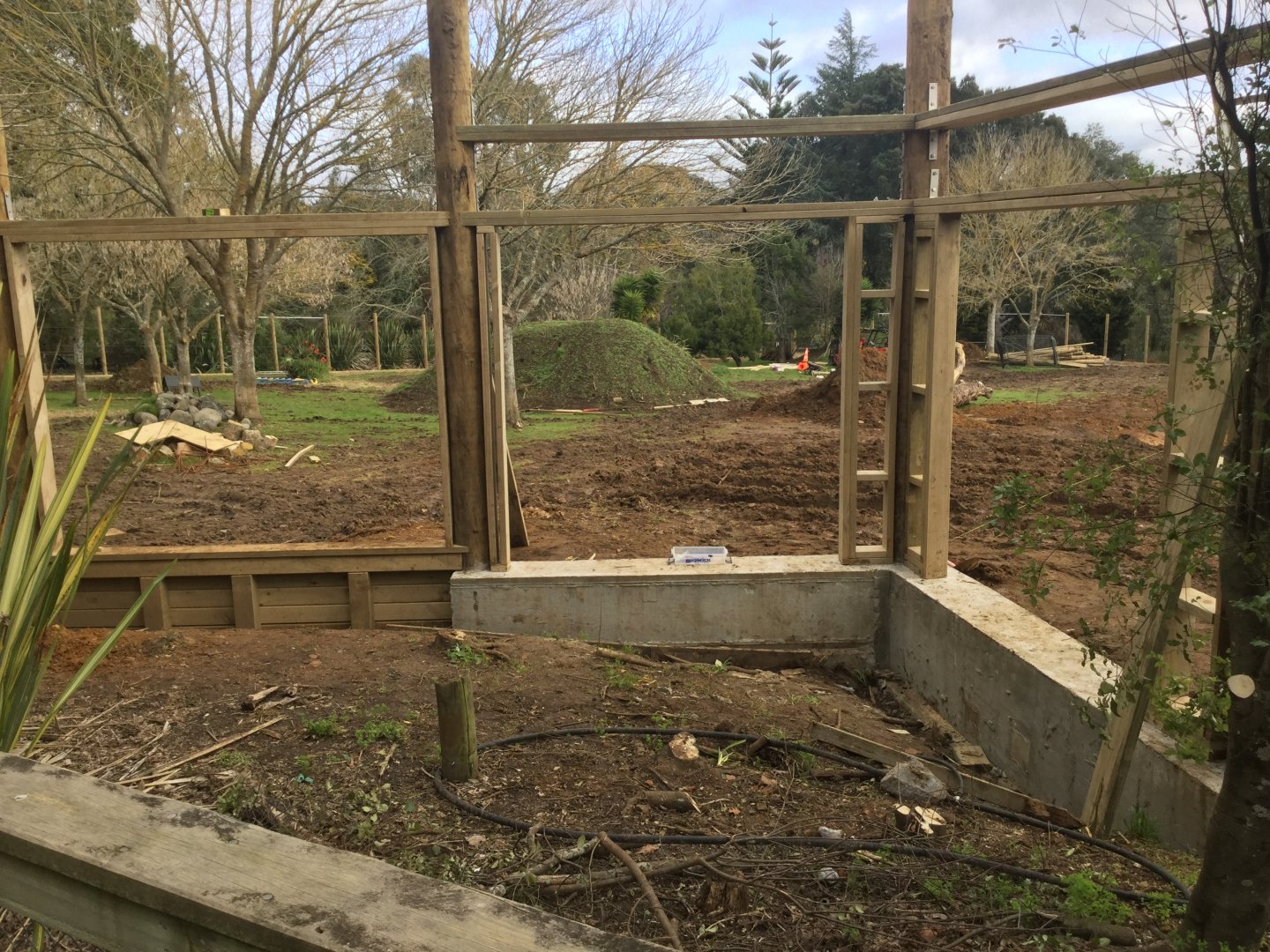
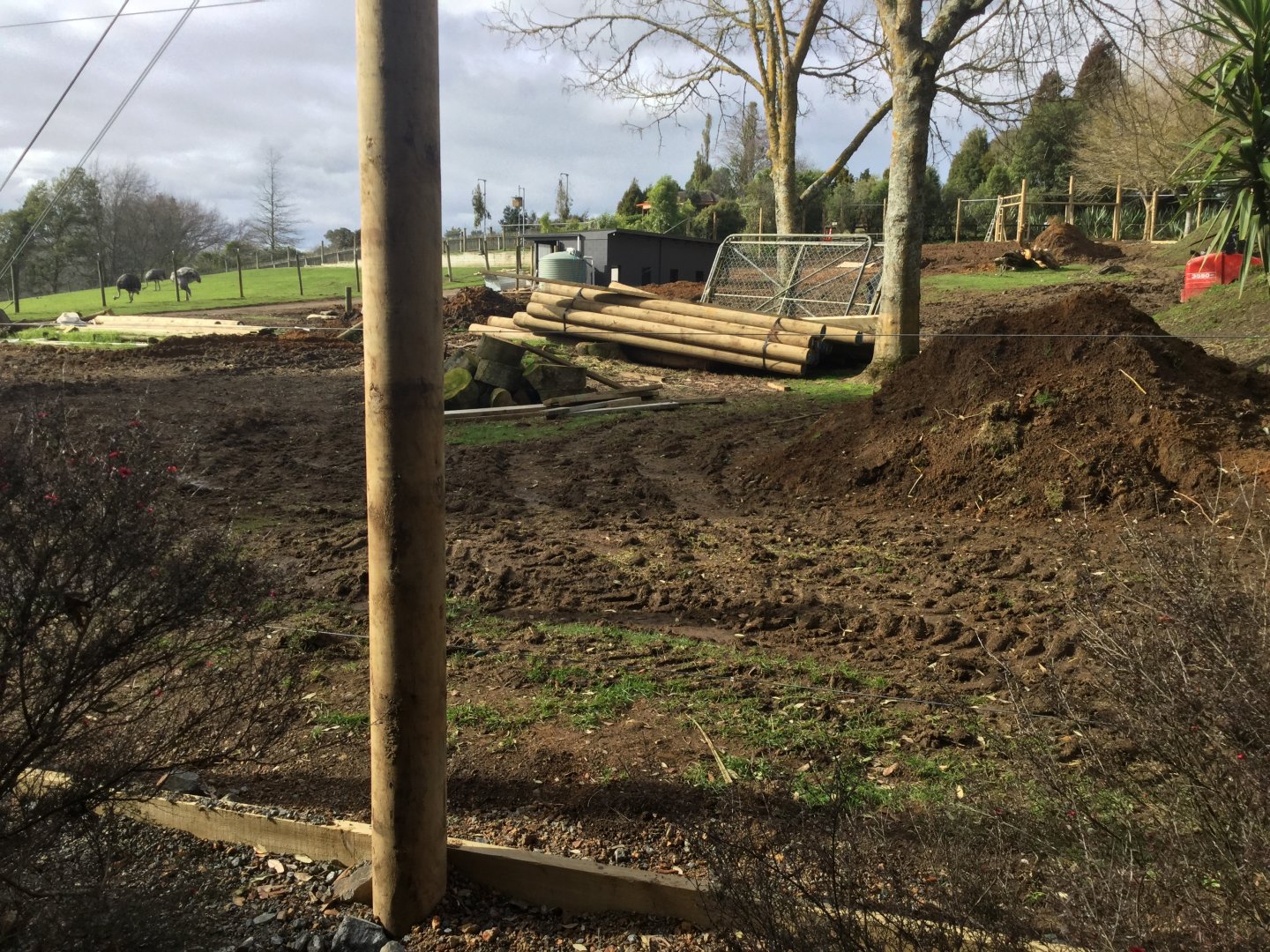
A new aviary is being built (see photo) and will be complete by the end of January. It is located near the entrance of the rainforest and will house South American birds, including the macaws. The aviary currently containing the Blue and gold macaw will then house African birds; while the aviary currently occupied by Scarlet macaws, will house Indo Pacific birds.
Samburu the Southern white rhinoceros will be exported to Halls Gap Zoo in the next couple of months. His mother, Kito, will deliver her fourth calf in April.
Sanda the Chimpanzee came into season last month for the first time since her daughter Chiku was born in February 2016. They hope she will fall pregnant soon. The outside Chimpanzee exhibit is to undergo a massive overhaul starting at the end of this month. The perimeter fence will be replaced with a non climbable wall that will allow the chimps to remain outside in all weather. The viewing bridge will be removed and replaced with a new viewing window; while the night house and lower viewing window will remain unchanged. The foot print of the outside exhibit will be decreased slightly. The chimps will be safely confined to the night house/indoor playroom during these renovations.
The two Plains zebra foals are now fully integrated with the other occupants of the savannah and are believed to be a male and female (though this has yet to be 100% confirmed). 2.2.2 Plains zebra were on exhibit today; with a seperate herd of 0.3 kept off display.
The old hillside Brazilian tapir exhibit currently contains goats and a single Fallow deer (a second herd of around 40 Fallow deer are housed with the North American bison). Goats also occupy the old Brolga exhibit (down from the savannah); and a small flock of Turkey occupy the old Cheetah exhibit. I’m hoping these filler species will be replaced with something more exciting in time.
The Siamang pair seem to have bonded (they were indifferent to each other on my last visit a year ago) and were singing a duet from the top of a very tall tree. They are related so the female (Kasih) is on contraception.
The Ring-tailed lemur troop welcomed a baby in October 2019; and three sets of triplets in recent weeks. This brings the troop to 22 (3.12.7).
I will be updating the gallery with a few photos and additional notes if anyone is interested.
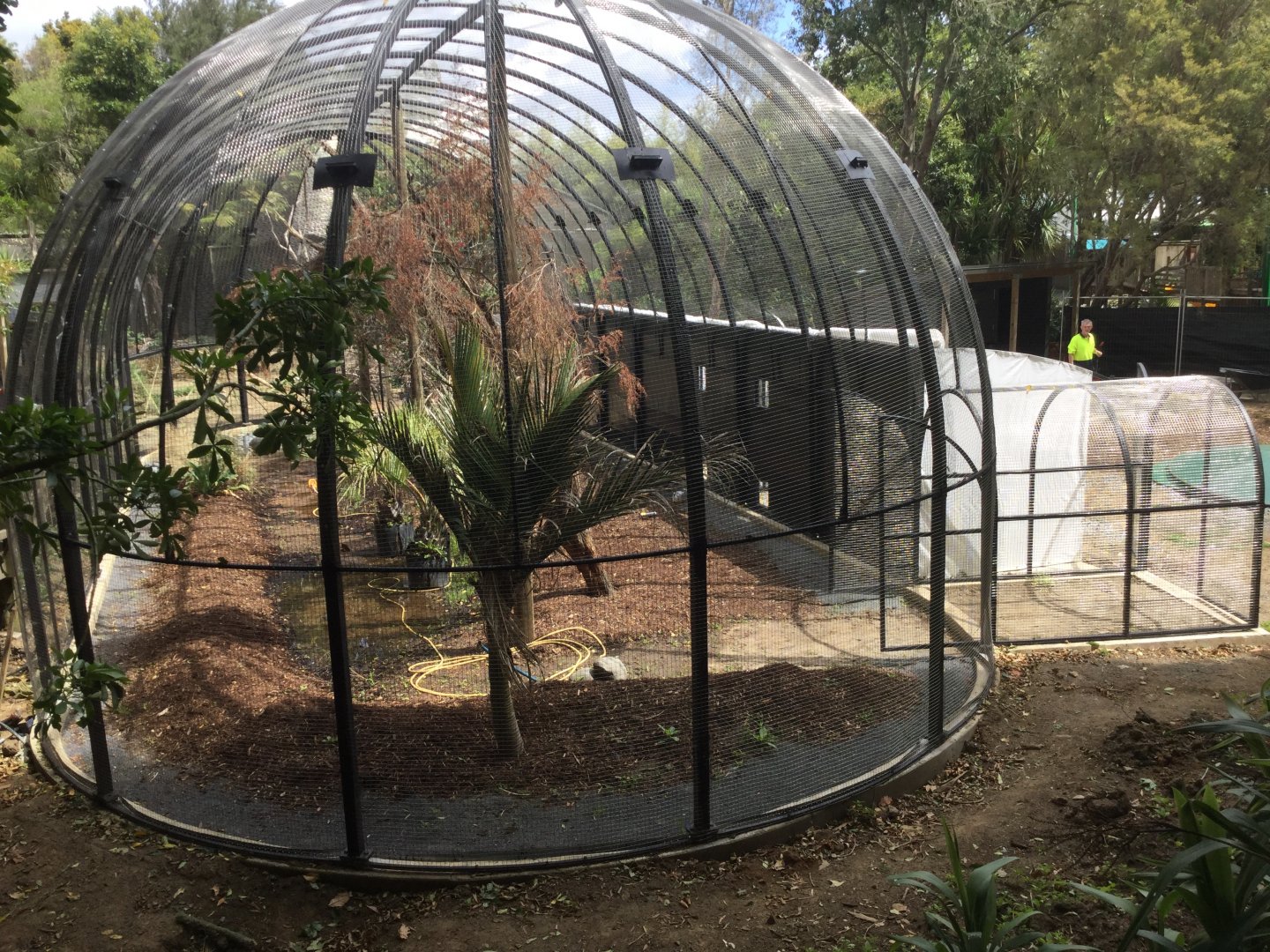
A new aviary is being built (see photo) and will be complete by the end of January. It is located near the entrance of the rainforest and will house South American birds, including the macaws. The aviary currently containing the Blue and gold macaw will then house African birds; while the aviary currently occupied by Scarlet macaws, will house Indo Pacific birds.
Samburu the Southern white rhinoceros will be exported to Halls Gap Zoo in the next couple of months. His mother, Kito, will deliver her fourth calf in April.
Sanda the Chimpanzee came into season last month for the first time since her daughter Chiku was born in February 2016. They hope she will fall pregnant soon. The outside Chimpanzee exhibit is to undergo a massive overhaul starting at the end of this month. The perimeter fence will be replaced with a non climbable wall that will allow the chimps to remain outside in all weather. The viewing bridge will be removed and replaced with a new viewing window; while the night house and lower viewing window will remain unchanged. The foot print of the outside exhibit will be decreased slightly. The chimps will be safely confined to the night house/indoor playroom during these renovations.
The two Plains zebra foals are now fully integrated with the other occupants of the savannah and are believed to be a male and female (though this has yet to be 100% confirmed). 2.2.2 Plains zebra were on exhibit today; with a seperate herd of 0.3 kept off display.
The old hillside Brazilian tapir exhibit currently contains goats and a single Fallow deer (a second herd of around 40 Fallow deer are housed with the North American bison). Goats also occupy the old Brolga exhibit (down from the savannah); and a small flock of Turkey occupy the old Cheetah exhibit. I’m hoping these filler species will be replaced with something more exciting in time.
The Siamang pair seem to have bonded (they were indifferent to each other on my last visit a year ago) and were singing a duet from the top of a very tall tree. They are related so the female (Kasih) is on contraception.
The Ring-tailed lemur troop welcomed a baby in October 2019; and three sets of triplets in recent weeks. This brings the troop to 22 (3.12.7).
I will be updating the gallery with a few photos and additional notes if anyone is interested.