Mixed species enclosures and other changes for Burgers Zoo

Getting rid of non-subspecific common chimpanzees is very difficult, so instead of changing the whole group at the same time they are slowly phasing out the non-subspefic and bringing in more west-Africans. They should receive a breeding male soon.

Well, that would still count as keeping their current group, or plan. They would only get a new enclosure, whatever their chimp plans are would still be kept
 
Would a mix of Sweet Shrimp, Alaskan King Crab and Opilio Crab work? Or would it be better to separate the Sweet Shrimp?
 
I believe we haven't discussed the island regions yet. So I'm going to post one of them before I head off to bed so that I can answer questions and stuff tomorrow

Islands (Africa).png

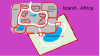
After walking around the first half of the lemur enclosure, you encounter the Madagascar / seychelles house.
The central bit is mainly made of rocks with terrariums, except for the middle part (with the water), which is a lower area for the free roaming birds.
You are immediately greeted by a semi-pit to your left, similar to the tortoise enclosure in the bush. The plants grow in a way to prevent escapes from the chameleon, while still being "open."
Cuvier's madagascar swifts (/ madagascar iguanas) greet you in the first terrarium.
In a multi-tier, rocky enclosure with lots of branches and a glass seperation between the animals and the visitors, live the fossa. This and the aye-aye enclosure are the only closed off enclosures.
On the other side of the fossa enclosure, live two of the tenrec species. I know that Europe's last highland streaked tenrec sadly passed away this year, but I really hope we'll be able to get it from somewhere else and maybe even start up a proper breeding programm.
The madagascar big headed turtle, the most endangered turtle in the world, lives in a small pond on the other side of the highland tenrec terrarium. They'll probably be joined by some of the free-roaming ibises in the water
After that is the seychelles part of the Islands house, Aldabra giant tortoises slowly walk or bathe in the semi-outside walkthrough enclosure. The path inside the house goes over the enclosure, the path outside goes through like a true walktrough.
Achrioptera fallax, the brilliantly blue stick insect lives together with the seychelles giant millipede in a smaller, but higher terrarium. (Achrioptera fallax are kept as pets and Blijdorp has Seychelles millipedes, so they should both be available).
The final two enclosures are a terrarium with Malagasy tree boas and a larger enclosure with Aye-ayes and giant rats.

Free-roaming animals in the house include: Seychelles bronze gecko, Seychelles giant day gecko, Seychelles skink, Merrem's madagascar swift, Madagascar giant day gecko, Blue Madagascar coucal, Madagascar blue-pigeon, Madagascar sacred ibis, and madagascar crested ibis from the bush.
 

Attachments

  • Islands (Africa).png
    Islands (Africa).png
    322.9 KB · Views: 27
One issue is the geckos. You would need attendants at the doors making sure geckos don’t run out. The doors would need to be well secured so the geckos don’t run under or above the doors. Otherwise this is a very good and well thought out exhibit. Keep up the good work
 
One issue is the geckos. You would need attendants at the doors making sure geckos don’t run out. The doors would need to be well secured so the geckos don’t run under or above the doors. Otherwise this is a very good and well thought out exhibit. Keep up the good work

The "outside" area isn't really outside, it's more like an aviary, but with nets small enough to hopefully prevent escapes. Similar to this guy: building large mesh cages | Tropical fish aquarium, Iguana cage, Cage
 
Obviously, but I'm guessing you're going to tell me none of it is possible and I should give up on my dreams
No, just that the point of Westcoastperson still stands. Burgers' Mangrove and Burgers' Bush demonstrate that it clearly is possible to house reptiles in a walk-through greenhouse. Wether attendees are necessary I don't know, maybe the difference in temperature would already make them hesitant (both the bush and Mangrove have this tunnel-like entrance so the animal isn't directly outside before any temperature drop is noticed)
 
No, just that the point of Westcoastperson still stands. Burgers' Mangrove and Burgers' Bush demonstrate that it clearly is possible to house reptiles in a walk-through greenhouse. Wether attendees are necessary I don't know, maybe the difference in temperature would already make them hesitant (both the bush and Mangrove have this tunnel-like entrance so the animal isn't directly outside before any temperature drop is noticed)

Fair enough, but there's plenty of room for that

Islands (Africa).png
There.
 

Attachments

  • Islands (Africa).png
    Islands (Africa).png
    324.8 KB · Views: 29
Alright, I've redesigned the new desert region, to fit properly with the staff paths

Desert.png

The new outside part includes a huge prairie dog walkthrough, and a saloon for close-up viewing to the raccoons, skunks and porcupines. The raccoon enclosure has rivers and streams, along with smaller standing water resevoirs. The opossums have an inside and an outside region, there is a small walkthrough in the inside part.
The kit foxes have a small bridge over the path where you can get another look to the prairie dogs.
Finally, theres an arid wild turkey enclosure with a walkover bridge
 

Attachments

  • Desert.png
    Desert.png
    572.6 KB · Views: 28
Alright, I've redesigned the new desert region, to fit properly with the staff paths

View attachment 465726

The new outside part includes a huge prairie dog walkthrough, and a saloon for close-up viewing to the raccoons, skunks and porcupines. The raccoon enclosure has rivers and streams, along with smaller standing water resevoirs. The opossums have an inside and an outside region, there is a small walkthrough in the inside part.
The kit foxes have a small bridge over the path where you can get another look to the prairie dogs.
Finally, theres an arid wild turkey enclosure with a walkover bridge
Might I suggest moving the turkey exhibit and path a little bit so that the stretch of kit fox exhibit under the bridge isn't so tight?
Also you could maybe make the saloon have an abandoned vibe with dilapidated walls and holes in the roof. That way the opossums having an area in the saloon wouldn't be as awkward as having opposums in a normal and clean saloon. You could also add reptile exhibits to the saloon.
 
Might I suggest moving the turkey exhibit and path a little bit so that the stretch of kit fox exhibit under the bridge isn't so tight?
Also you could maybe make the saloon have an abandoned vibe with dilapidated walls and holes in the roof. That way the opossums having an area in the saloon wouldn't be as awkward as having opposums in a normal and clean saloon. You could also add reptile exhibits to the saloon.

Desert.png

The kit fox enclosure actually goes over the path (the dark grey paths are underground).
I don't want to put reptiles in the saloon because they're already in the caves (there's another cave before you enter the current desert that I didn't put in because it goes under one of the other paths)

I was already planning to make the saloon abandoned
 

Attachments

  • Desert.png
    Desert.png
    579.2 KB · Views: 28
Alright then, since we haven't discussed this region yet

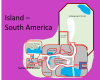
Islands (Souh America).png

You enter with a bridge over the cuban crocodile exhibit, to the right, there is a small wooden hut for some more close-up viewing and a cuban spotted toad enclosure.
There's an inside part for the galapagos tortoises based on the galapagos rock desert with cacti and sand, while the outside region is more grassy and bushy.
The rhino iguanas have a small cave and an "outside" region, it's still inside the greenhouse, but its open, and not in a cave.
The grand cayman blue iguanas are the real stars of the house, they have a two-tier enclosure, you can walk over a small pathway to a viewing hut to the upper tier.
The four-eyed opossums have an inside and an outside part too, both with aviary-like nets, there's an enclosure in an enclosure for cuban sliders and cuban gars.
The cuban hutias are in an enclosure similar to the aye-ayes in the African islands, with a glass seperation. If the opossums can go together with the hutias I'll do that instead of their semi-outside enclosure.
The cuban tree boa lives in a terrarium made in a tree stump, which I thought might be a cool idea.

Finally, there's a seperate, smaller house for the Netherlands antilles. American flamingos and Curacou brown-throated parakeets live in the outside aviary, and two large terrariums. One with green iguanas, saban anoles and lesser antillean iguanas, and one with aruba rattlesnakes
 

Attachments

  • Islands (Souh America).png
    Islands (Souh America).png
    607.7 KB · Views: 29
Alright then, since we haven't discussed this region yet

Wait, I forgot about the free-roamers

Free roaming lizards include: Western bearded anole, Western cliff anole, Jamaican giant anole, and the Giant ameiva
Free roaming birds include: Crested quail-dove, Lesser Antillean bullfinch, Cuban emerald hummingbird, Cuban Trogon, and the Cuban grassquit
And also there's cuban tree frogs
 
Does anyone know if the cuban hutia and the four-eyed opossum can go together?

I think they could but the opossums could pose a threat if the hutias ever decide to have babies. So they would have to be moved somewhere else during breeding season.
 
I think they could but the opossums could pose a threat if the hutias ever decide to have babies. So they would have to be moved somewhere else during breeding season.

Alright, I can make it so that it's possible to seperate it into two seperate enclosures
 
You guys are really quiet lately, nothing to add? No notes?

I'm working on finalising the uptated outback, I'll be uploading it as soon as I can
 
One with green iguanas, saban anoles and lesser antillean iguanas, and one with aruba rattlesnakes
Green iguanas compete with lesser Antillean iguanas, and they might even hybridize. I'd just house the lesser Antillean iguanas alone as they are already difficult to breed like that, and if you don't have a near perfect breeding setup you won't get any with the current small population both in- and ex-situ.

Cuban crocodiles are excellent bird hunters (they jump out of the water to get them). Unless their exhibit is netted those birds won't live long.

I don't recall that four-eyed opossums live on American islands. Are they a proxy for another species?

You know that the Caribbean islands are geographically part of North America? A more accurate description would be the Neotropical islands.
 
Last edited:
Back
Top