You are using an out of date browser. It may not display this or other websites correctly.
You should upgrade or use an alternative browser.
You should upgrade or use an alternative browser.
ZooChat Big Year 2021
- Thread starter Chlidonias
- Start date


BIRDS:
50 White-breasted Nuthatch - Sitta carolinensis
51 Brown Creeper - Certhia americana
BIRDS:
52 White-throated Sparrow - Zonotrichia albicollis
53 Canvasback - Aythya valisineria
54 Greater Scaup - Aythya marila
55 Pied-billed Grebe - Podilymbus podiceps
56 Mourning Dove - Zenaida macroura
57 Winter Wren - Troglodytes hiemalis

BIRDS:
52 White-throated Sparrow - Zonotrichia albicollis
53 Canvasback - Aythya valisineria
54 Greater Scaup - Aythya marila
55 Pied-billed Grebe - Podilymbus podiceps
56 Mourning Dove - Zenaida macroura
57 Winter Wren - Troglodytes hiemalis
BIRDS:
58 Northern Shoveler - Spatula clypeata
59 Lesser Scaup - Aythya affinis

I think I'm going to jump in and participate, I'll just start from now. I haven't seen anything so far I won't see again so no problems there.

d1am0ndback
Well-Known Member
Did some more local birding, highlights including a local rarity Purple Finch, and two difficult to find for the area LeConte's Sparrows. A surprise was an Evening Bat flying around in the daylight, a lifer for me.
Birds
36. Great-tailed Grackle - Quiscalus mexicanus
37. Lincoln's Sparrow - Melospiza lincolnii
38. Fox Sparrow - Passerella iliaca
39. Purple Finch - Haemorhous purpureus
40. Northern Mockingbird - Mimus polyglottos
41. Eastern Phoebe - Sayornis phoebe
42. American White Pelican - Pelecanus erythrorhynchos
43. Neotropic Cormorant - Phalacrocorax brasilianus
44. Herring Gull - Larus argentatus
45. American Coot - Fulica americana
46. Bufflehead - Bucephala albeola
47. Lesser Scaup - Aythya affinis
48. Northern Pintail - Anas acuta
49. Mallard - Anas platyrhynchos
50. Northern Shoveler - Spatula clypeata
51. LeConte's Sparrow - Ammospiza leconteii
Herptiles
2. Red-eared Slider - Trachemys scripta
Mammals
5. Evening Bat - Nycticeius humeralis
Pretty good birding the past few days in a variety of spots in North Texas. Most notable are a number of local rarities, such as Surf Scoter, Iceland Gull, and Grasshopper Sparrow (for this time of year). Also very notable would be the bizarre western birds hanging around which ordinarily do not exist in my region however this year can be found in surprisingly large flocks. These include Mountain Bluebird, Western Bluebird, Sage Thrasher, Ferruginous Hawk, and Sage Thrasher. Also notable is the Taiga subspecies of Merlin which is also quite rare for the area.
Birds
52. Sharp-shinned Hawk - Accipiter striatus
53. American Robin - Turdus migratorius
54. Belted Kingfisher - Megaceryle alcyon
55. Black-crowned Night-Heron - Nycticorax nycticorax
56. Snowy Egret - Egretta thula
57. Hooded Merganser - Lophodytes cucullatus
58. Surf Scoter - Melanitta perspicillata
59. Ring-necked Duck - Aythya collaris
60. American Wigeon - Mareca americana
61. Ross's Goose - Anser rossii
62. Barred Owl - Strix varia
63. Great Blue Heron - Ardea herodias
64. Lesser Black-backed Gull - Larus fuscus
65. Iceland Gull - Larus glaucoides
66. Least Sandpiper - Calidris minutilla
67. Gadwall - Mareca strepera
68. Savannah Sparrow - Passerculus sandwichensis
69. Song Sparrow - Melospiza melodia
70. White-crowned Sparrow - Zonotrichia leucophrys
71. Lark Bunting - Calamospiza melanocorys
72. Field Sparrow - Spizella pusilla
73. Eastern Bluebird - Sialia sialis
74. Killdeer - Charadrius vociferus
75. Ferruginous Hawk - Buteo regalis
76. Northern Harrier - Circus hudsonius
77. Brewer's Blackbird - Euphagus cyanocephalus
78. Spotted Towhee - Pipilo maculatus
79. Grasshopper Sparrow - Ammodramus savannarum
80. Mountain Bluebird - Sialia currucoides
81. Western Bluebird - Sialia mexicana
82. Sage Thrasher - Oreoscoptes montanus
83. Bewick's Wren - Thryomanes bewickii
84. Merlin - Falco columbarius
85. House Wren - Troglodytes aedon

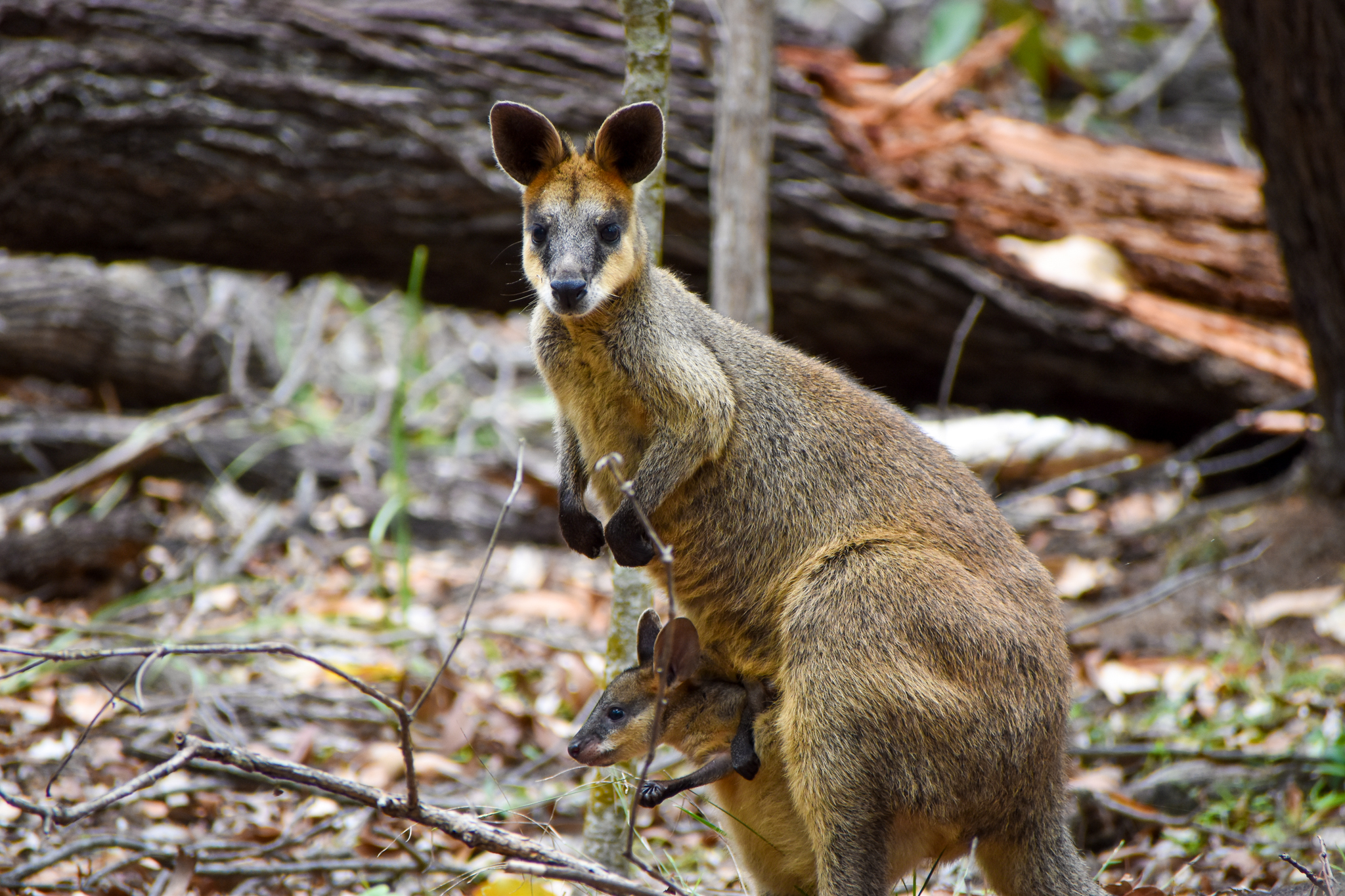
I went for a walk at a local park today to tick off a few common water birds. It is also home to a large camp of flying foxes where the three local species can be reliably identified in daylight. Whilst I was looking for the little reds among the larger bat species I was met with a delightful surprise – a Swamp Wallaby and her joey! This patch of park is fringed by dense suburbia close to a very busy road so I was surprised to see them there.A few more of the regulars.
Mammals
1. Black Flying Fox Pteropus alecto
Birds
40. Grey Butcherbird Cracticus torquatus
41. Pied Currawong Strepera graculina
42. Galah Eolophus roseicapilla
43. Sulphur-crested Cockatoo Cacatua galerita
44. Intermediate Egret Ardea intermedia
45. Tree Martin Petrochelidon nigricans
46. Pied Cormorant Phalacrocorax varius
47. Eastern Koel Eudynamys orientalis
Invertebrates
5. Zebra Blue Tarucus plinius
6. Common Crow Euploea core
7. Blue Tiger Tirumala hamata
8. Blue Triangle Graphium sarpedon
9. Green-headed Ant Rhytidoponera metallica
Mammals
2) Grey-headed Flying Fox Pteropus poliocephalus
3) Little Red Flying Fox Pteropus scapulatus
4) Swamp Wallaby Wallabia bicolor
Birds
48) House Sparrow Passer domesticus
49) Australasian Swamphen Porphyrio melanotus
50) Pacific Black Duck Anas superciliosa
51) Straw-necked Ibis Threskiornis spinicollis
52) Plumed Whistling Duck Dendrocygna eytoni
53) Australian Wood Duck Chenonetta jubata
54) Lewin’s Honeyeater Meliphaga lewinii
Herptiles
2) Eastern Water Dragon Intellagama lesueurii
3) Cane Toad Rhinella marina
Invertebrates
10) Variable Ladybird Coelophora inaequalis
11) Lemon Migrant Catopsilia pomona
12) Cabbage White Pieris rapae
13) Scarlet Percher Diplacodes haematodes
14) Blue Skimmer Orthetrum caledonicum
15) Cucumber Moth Diaphania indica
16) Orchard Swallowtail Papilio aegeus
While a bit late jumping in, the crisp sunny afternoon proved pretty productive for wildlife around my yard and nearby pond. Highlight was a lone Snow Goose hanging with the Canadas, they don't often turn up on my patch of the woods.
Mammals:
1. Mule Deer (Odocoileus hemionus)
Birds:
1. Canada Goose (Branta canadensis)
2. Spotted Towhee (Pipilo maculatus)
3. California Scrub-Jay (Aphelocoma californica)
4. Black Phoebe (Sayornis nigricans)
5. Anna's Hummingbird (Calypte annae)
6. Cedar Waxwing (Bombycilla cedrorum)
7. Ruby-crowned Kinglet (Regulus calendula)
8. Common Raven (Corvus corax)
9. European Starling (Sturnus vulgaris)
10. Brewer's Blackbird (Euphagus cyanocephalus)
11. European Collared-Dove (Streptopelia decaocto)
12. Lesser Goldfinch (Spinus psaltria)
13. Red-winged Blackbird (Agelaius phoencius)
14. White-crowned Sparrow (Zonotrichia leucophrys)
15. California Towhee (Melozone crissalis)
16. Northern Mockingbird (Mimus polyglottos)
17. Oak Titmouse (Baeolophus inornata)
18. Golden-crowned Sparrow (Zonotrichia atricapilla)
19. Turkey Vulture (Cathartes aura)
20. Acorn Woodpecker (Melanerpes formicivorus)
21. House Finch (Haemorhous mexicanus)
22. California Quail (Callipepla californica)
23. White-breasted Nuthatch (Sitta carolinensis)
24. Northern Flicker (Colaptes auratus)
25. Mallard (Anas platyrhynchos)
26. Song Sparrow (Melospiza melodia)
27. Pied-billed Grebe (Podilymbus podiceps)
28. Yellow-rumped Warbler (Setophaga coronata)
29. Ring-necked Duck (Aythya collaris)
30. Yellow-billed Magpie (Pica nuttalli)
31. American Goldfinch (Spinus tristis)
32. Bushtit (Psaltripus minimus)
33. Red-shouldered Hawk (Buteo lineatus)
34. American Robin (Turdus migratorius)
35. Snow Goose (Anser caerulescens)
36. Red-breasted Sapsucker (Sphyrapicus ruber)
37. American Coot (Fulica americana)
38. Killdeer (Charadrius vociferus)
39. Double-crested Cormorant (Phalacrocorax auritus)
40. Western Bluebird (Sialia mexicana)
41. Dark-eyed Junco (Junco hyemalis)
Invertebrates:
1. European Honeybee (Apis mellivora)
Uncountable:
-- Striped Skunk (smelled)
-- Belted Kingfisher (heard)
-- Nuttall's Woodpecker (heard)
-- Bewick's Wren (heard)
-- unidentified black beetle
Mammals:
1. Mule Deer (Odocoileus hemionus)
Birds:
1. Canada Goose (Branta canadensis)
2. Spotted Towhee (Pipilo maculatus)
3. California Scrub-Jay (Aphelocoma californica)
4. Black Phoebe (Sayornis nigricans)
5. Anna's Hummingbird (Calypte annae)
6. Cedar Waxwing (Bombycilla cedrorum)
7. Ruby-crowned Kinglet (Regulus calendula)
8. Common Raven (Corvus corax)
9. European Starling (Sturnus vulgaris)
10. Brewer's Blackbird (Euphagus cyanocephalus)
11. European Collared-Dove (Streptopelia decaocto)
12. Lesser Goldfinch (Spinus psaltria)
13. Red-winged Blackbird (Agelaius phoencius)
14. White-crowned Sparrow (Zonotrichia leucophrys)
15. California Towhee (Melozone crissalis)
16. Northern Mockingbird (Mimus polyglottos)
17. Oak Titmouse (Baeolophus inornata)
18. Golden-crowned Sparrow (Zonotrichia atricapilla)
19. Turkey Vulture (Cathartes aura)
20. Acorn Woodpecker (Melanerpes formicivorus)
21. House Finch (Haemorhous mexicanus)
22. California Quail (Callipepla californica)
23. White-breasted Nuthatch (Sitta carolinensis)
24. Northern Flicker (Colaptes auratus)
25. Mallard (Anas platyrhynchos)
26. Song Sparrow (Melospiza melodia)
27. Pied-billed Grebe (Podilymbus podiceps)
28. Yellow-rumped Warbler (Setophaga coronata)
29. Ring-necked Duck (Aythya collaris)
30. Yellow-billed Magpie (Pica nuttalli)
31. American Goldfinch (Spinus tristis)
32. Bushtit (Psaltripus minimus)
33. Red-shouldered Hawk (Buteo lineatus)
34. American Robin (Turdus migratorius)
35. Snow Goose (Anser caerulescens)
36. Red-breasted Sapsucker (Sphyrapicus ruber)
37. American Coot (Fulica americana)
38. Killdeer (Charadrius vociferus)
39. Double-crested Cormorant (Phalacrocorax auritus)
40. Western Bluebird (Sialia mexicana)
41. Dark-eyed Junco (Junco hyemalis)
Invertebrates:
1. European Honeybee (Apis mellivora)
Uncountable:
-- Striped Skunk (smelled)
-- Belted Kingfisher (heard)
-- Nuttall's Woodpecker (heard)
-- Bewick's Wren (heard)
-- unidentified black beetle

.....wha.........???.............. . . . .. ... .. . ..While a bit late jumping in, the crisp sunny afternoon proved pretty productive for wildlife around my yard and nearby pond. Highlight was a lone Snow Goose hanging with the Canadas, they don't often turn up on my patch of the woods.
Mammals:
1. Mule Deer (Odocoileus hemionus)
Birds:
1. Canada Goose (Branta canadensis)
2. Spotted Towhee (Pipilo maculatus)
3. California Scrub-Jay (Aphelocoma californica)
4. Black Phoebe (Sayornis nigricans)
5. Anna's Hummingbird (Calypte annae)
6. Cedar Waxwing (Bombycilla cedrorum)
7. Ruby-crowned Kinglet (Regulus calendula)
8. Common Raven (Corvus corax)
9. European Starling (Sturnus vulgaris)
10. Brewer's Blackbird (Euphagus cyanocephalus)
11. European Collared-Dove (Streptopelia decaocto)
12. Lesser Goldfinch (Spinus psaltria)
13. Red-winged Blackbird (Agelaius phoencius)
14. White-crowned Sparrow (Zonotrichia leucophrys)
15. California Towhee (Melozone crissalis)
16. Northern Mockingbird (Mimus polyglottos)
17. Oak Titmouse (Baeolophus inornata)
18. Golden-crowned Sparrow (Zonotrichia atricapilla)
19. Turkey Vulture (Cathartes aura)
20. Acorn Woodpecker (Melanerpes formicivorus)
21. House Finch (Haemorhous mexicanus)
22. California Quail (Callipepla californica)
23. White-breasted Nuthatch (Sitta carolinensis)
24. Northern Flicker (Colaptes auratus)
25. Mallard (Anas platyrhynchos)
26. Song Sparrow (Melospiza melodia)
27. Pied-billed Grebe (Podilymbus podiceps)
28. Yellow-rumped Warbler (Setophaga coronata)
29. Ring-necked Duck (Aythya collaris)
30. Yellow-billed Magpie (Pica nuttalli)
31. American Goldfinch (Spinus tristis)
32. Bushtit (Psaltripus minimus)
33. Red-shouldered Hawk (Buteo lineatus)
34. American Robin (Turdus migratorius)
35. Snow Goose (Anser caerulescens)
36. Red-breasted Sapsucker (Sphyrapicus ruber)
37. American Coot (Fulica americana)
38. Killdeer (Charadrius vociferus)
39. Double-crested Cormorant (Phalacrocorax auritus)
40. Western Bluebird (Sialia mexicana)
41. Dark-eyed Junco (Junco hyemalis)
Invertebrates:
1. European Honeybee (Apis mellivora)
Uncountable:
-- Striped Skunk (smelled)
-- Belted Kingfisher (heard)
-- Nuttall's Woodpecker (heard)
-- Bewick's Wren (heard)
-- unidentified black beetle

.....wha.........???.............. . . . .. ... .. . ..
What?

Pretty sure it's him showing how surprised he is about the amount of species you saw.What?

At Gordon Rolfe Reserve
Mammals
2. Koala Phascolarctos cinereus
Birds
43. Straw-necked ibis Threskiornis spinicollis
44. White-eared honeyeater Nesoptilotis leucotis
45. New Holland honeyeater Phylidonyris novaehollandiae
At Moonlit
Birds
46. Yellow-faced honeyeater Caligavis chrysops
Invertebrates
5. Blue ringtail Austrolestes annulosus
Mammals
2. Koala Phascolarctos cinereus
Birds
43. Straw-necked ibis Threskiornis spinicollis
44. White-eared honeyeater Nesoptilotis leucotis
45. New Holland honeyeater Phylidonyris novaehollandiae
At Moonlit
Birds
46. Yellow-faced honeyeater Caligavis chrysops
Invertebrates
5. Blue ringtail Austrolestes annulosus

Mammals:Mammals:
1. Grey-headed Flying Fox (Pteropus poliocephalus)
Birds:
28. Grey Fantail (Rhipidura albiscapa)
29. Topknot Pigeon (Lopholaimus antarcticus)
30. White-faced Heron (Egretta novaehollandiae)
31. Spangled Drongo (Dicrurus bracteatus)
32. Pacific Black Duck (Anas superciliosa)
33. Red-browed Finch (Neochmia temporalis)
34. Osprey (Pandion cristatus)
35. Pale-headed Rosella (Platycercus adscitus)
36. Willie Wagtail (Rhipidura leucophrys)
Reptiles:
3. Common Garden Skink (Lampropholis guichenoti)
4. Eastern Brown Snake (Pseudonaja textilis)
Amphibians:
1. Cane Toad (Rhinella marina)
Fish:
2. Yellowfin Bream (Acanthopagrus australis)
3. Silver Grunter (Mesopristes argenteus)
4. Sea Mullet (Mugil cephalus)
2. Eastern Grey Kangaroo (Macropus giganteus)
3. Common Ringtail Possum (Pseudocheirus peregrinus)
Birds:
37. Cattle Egret (Bubulcus ibis)
38. White-bellied Sea Eagle (Haliaeetus leucogaster)
39. Galah (Eolophus roseicapilla)
40. Australian Pelican (Pelecanus conspicillatus)
41. Little Tern (Sternula albifrons)
42. Crested Tern (Thalasseus bergii)
43. Silver Gull (Chroicocephalus novaehollandiae)
44. Little Pied Cormorant (Microcarbo melanoleucos)
45. Straw-necked Ibis (Threskiornis spinicollis)
46. Brahminy Kite (Haliastur indus)
47. Dollarbird (Eurystomus orientalis)
48. Chestnut-breasted Mannakin
49. Little Wattlebird (Anthochaera chrysoptera)
50. Little Corella (Cacatua sanguinea)
51. Australasian Swamphen (Porphyrio melanotus)
52. Australasian Darter (Anhinga novaehollandiae)
53. Little Black Cormorant (Phalacrocorax sulcirostris)
Fish:
5. Lyretail Wrasse (Thalassoma lunare)
6. Moses Perch (Lutjanus russelli)
7. Sawtail Surgeonfish (Prionurus microlepidotus)
8. Indo-Pacific Sergeant Major ( Abudefduf vaigiensis)
9. Stripey (Microcanthus strigatus)
10. Summer Whiting (Sillago ciliata)
11. Swallowtail Dart (Trachinotus coppingeri)
12. Butter Bream (Monodactylus argenteus)
13. Convict Tang (Acanthurus triostegus)
Invertebrates:
1. St. Andrew’s Cross Spider (Argiope keyserlingi)
2. European Honey Bee (Apis mellifera)

Identified the raptor seen at Chat Alley as a juvenile. And a lifer.Had a big day yesterday (Saturday), leaving home at Midnight in order to be at Round Hill in Central NSW at dawn. Then visited the Bridge over Booberoi Creek, Chat Alley, Liberty Park in Lake Cargelligo and the Treatment Works, then finished off with the West Wyalong Wetlands (where I saw an Echidna go for a swim) before driving back home again, arriving at 21:30. Ended up with a couple of Lifers, too.
Birds
Round Hill Nature Reserve - Whoey Tanks
24. Common Bronzewing
25. Diamond Dove
26. Bar-shouldered Dove
27. Horsfield's Bronze Cuckoo
28. Australian (Mallee) Ringneck
29. Spotted Bowerbird
30. White-fronted Honeyeater
31. Spiny-cheeked Honeyeater
32. Singing Honeyeater
33. White-fronted Chat
34. Striped Honeyeater
35. Noisy Friarbird
36. Inland Thornbill
37. Yellow-rumped Thornbill
38. Southern Whiteface
39. Grey Shrike-thrush
40. Olive-backed Oriole
41. Masked Woodswallow
42. White-browed Woodswallow
43. Willie Wagtail
44. Australian Raven
45. Red-capped Robin
Booberoi Creek
46. Little Eagle
47. Sulphur-crested Cockatoo
48. White-plumed Honeyeater
49. Apostlebird
Chat Alley
50. Straw-necked Ibis
51. Orange Chat
52. Zebra Finch
53. Australasian Pipit
- plus a raptor still to be identified
Liberty Park
54. Black-fronted Dotterel
55. Silver Gull
56. Australian Pelican
57. White-faced Heron
58. Australian White Ibis
59. Black Kite
60. Sacred Kingfisher
61. Yellow-throated Miner
62. Blue-faced Honeyeater
63. White-breasted Woodswallow
64. Common Starling
65. House Sparrow
Lake Cargelligo Wastewater Treatment Plant
66. Grey Teal
67. Pink-eared Duck
68. White-headed Stilt
69. Masked Lapwing
70. Red-kneed Dotterel
71. Australasian Darter
72. Yellow-billed Spoonbill
73. Little Corella
74. White-winged Fairy-wren
75. Australian Reed Warbler
76. Little Grassbird
West Wyalong Wetlands and Wastewater Treatment Ponds
77. Magpie Goose
78. Musk Duck
79. Australian Grebe
80. Little Pied Cormorant
81. Little Black Cormorant
82. Laughing Kookaburra
83. Little Friarbird
84. White-winged Chough
plus, while driving through the countryside:
85. Bluebonnet
86. Wedgetail Eagle
Mammals
1. European Rabbit
2. Red Fox
3. European Hare
4. Echidna
Hix
Birds
87. Spotted Harrier
And a correction, the Little Eagle (#46) was actually a young Whistling Kite going through a moult.

Hix

2. White-tailed Deer (Odocoileus virginianus)
Mammals: 2
Birds: 6
Mammals: 2
Birds: 6
3. Snowlfea

Mammals:Mammals:
3. Muskrat, Ondatra zibethicus
Birds:
21. White-Breasted Nuthatch, Sitta carolinensis
22. Northern Cardinal, Cardinalis cardinalis
23. Red-Bellied Woodpecker, Melanerpes carolinus
24. Mourning Dove, Zenaida macroura
25. Black-Capped Chickadee, Poecile atricapillus
26. Tundra Swan, Cygnus columbianus
27. Downy Woodpecker, Dryobates pubescens
I'm very surprised that I've now seen a Coyote and Muskrat before a Raccoon - definitely not complaining about it though.
4. American Red Squirrel, Tamiasciurus hudsonicus
Birds:
28. Eastern Phoebe, Sayornis phoebe
29. Red-Breasted Nuthatch, Sitta canadensis
30. Dark-Eyed Junco, Junco Hyemalis
31. Common Raven, Corvus corax
32. Cooper’s Hawk, Accipiter cooperii
33. House Finch, Haemorhous mexicanus
34. Red-Tailed Hawk, Buteo jamaicensis

3. Snowlfea
Which species of the snowflea did you get? Since there are multiple going by this common name. It's usually helpful to put the scientific names behind the common names for these reasons. Also don't forget to make sure you put ''invertebrates'' above to avoid confusion.
Hypogastruna nivicolaWhich species of the snowflea did you get? Since there are multiple going by this common name. It's usually helpful to put the scientific names behind the common names for these reasons. Also don't forget to make sure you put ''invertebrates'' above to avoid confusion.
20. White-breasted Nuthatch