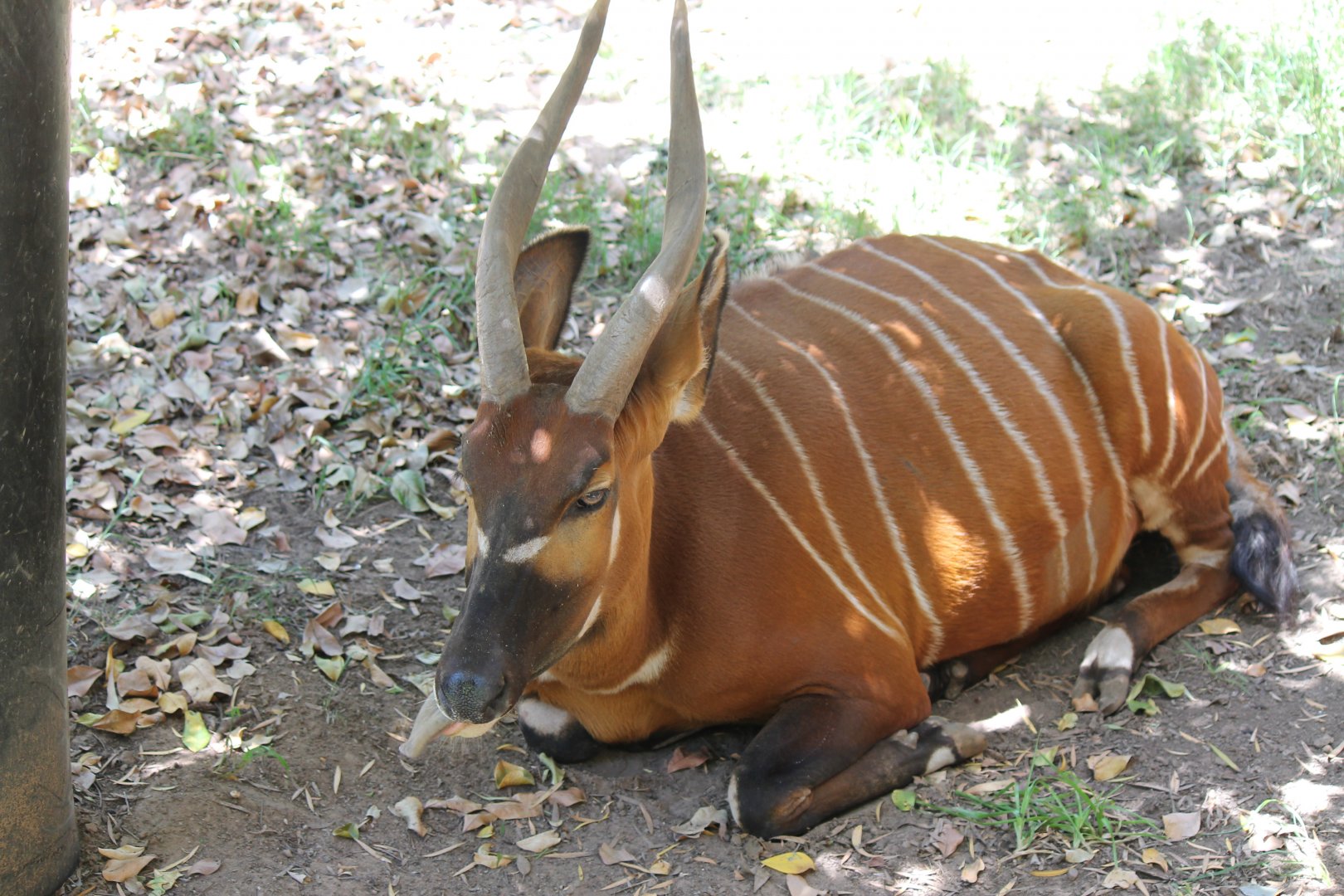
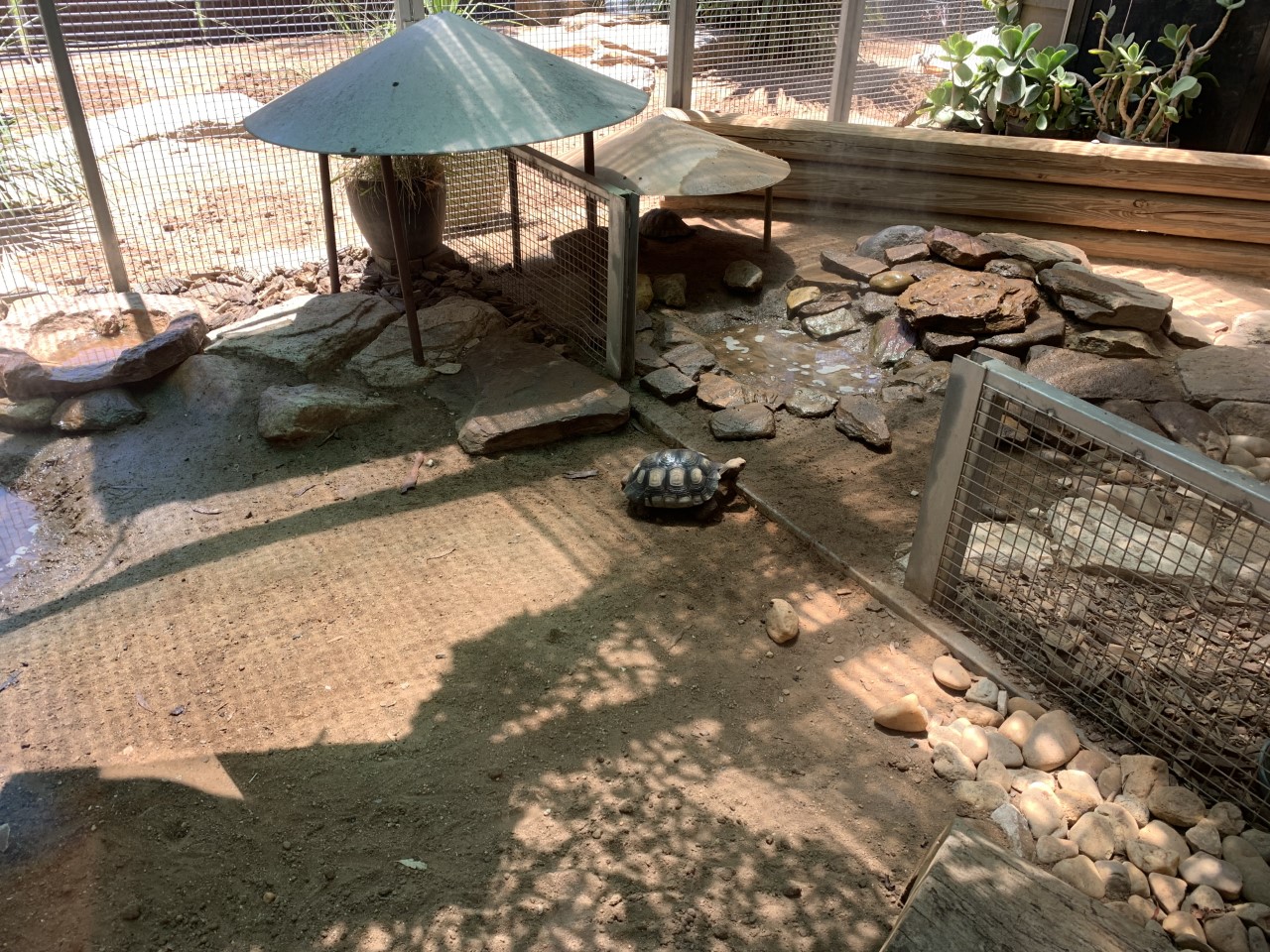
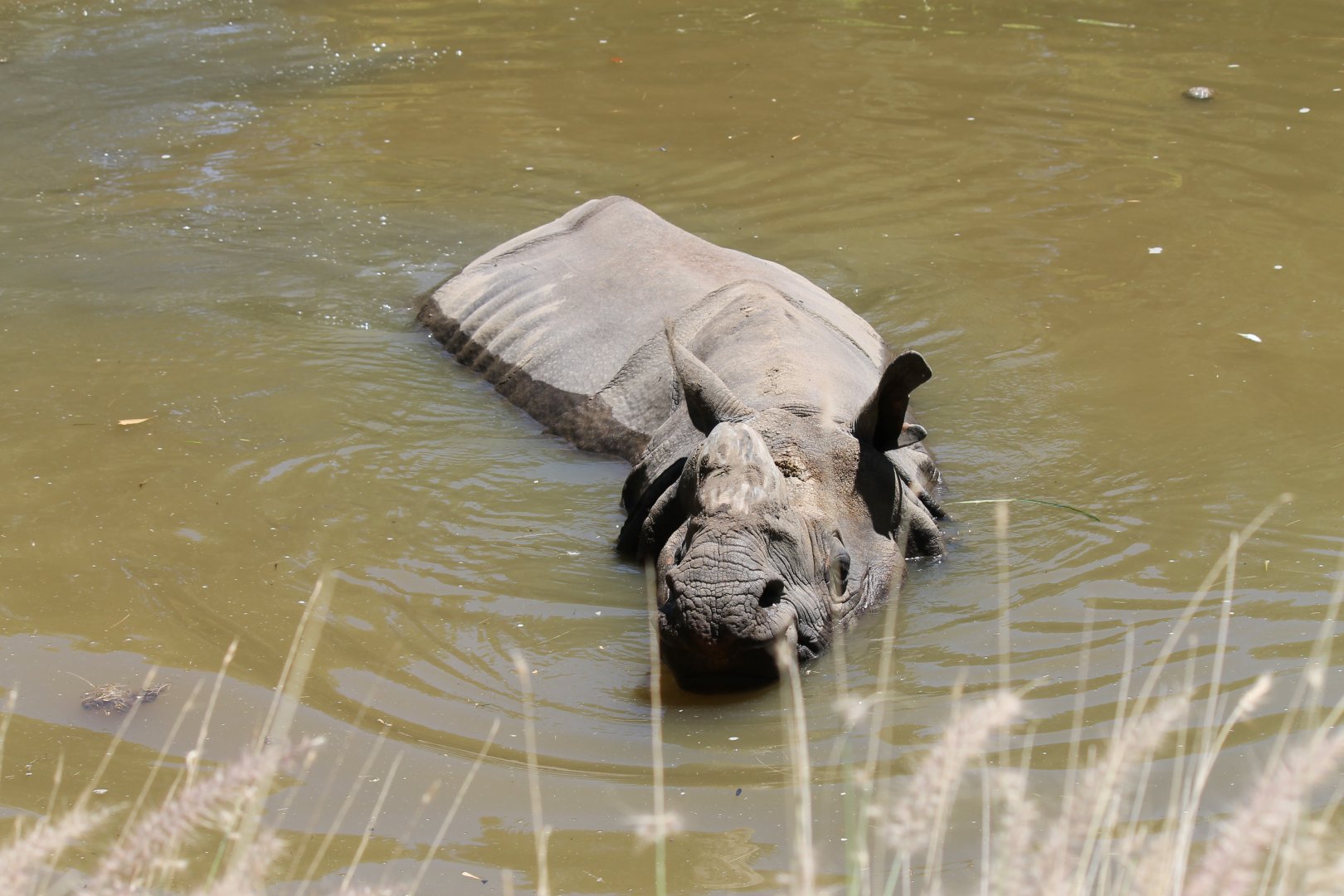
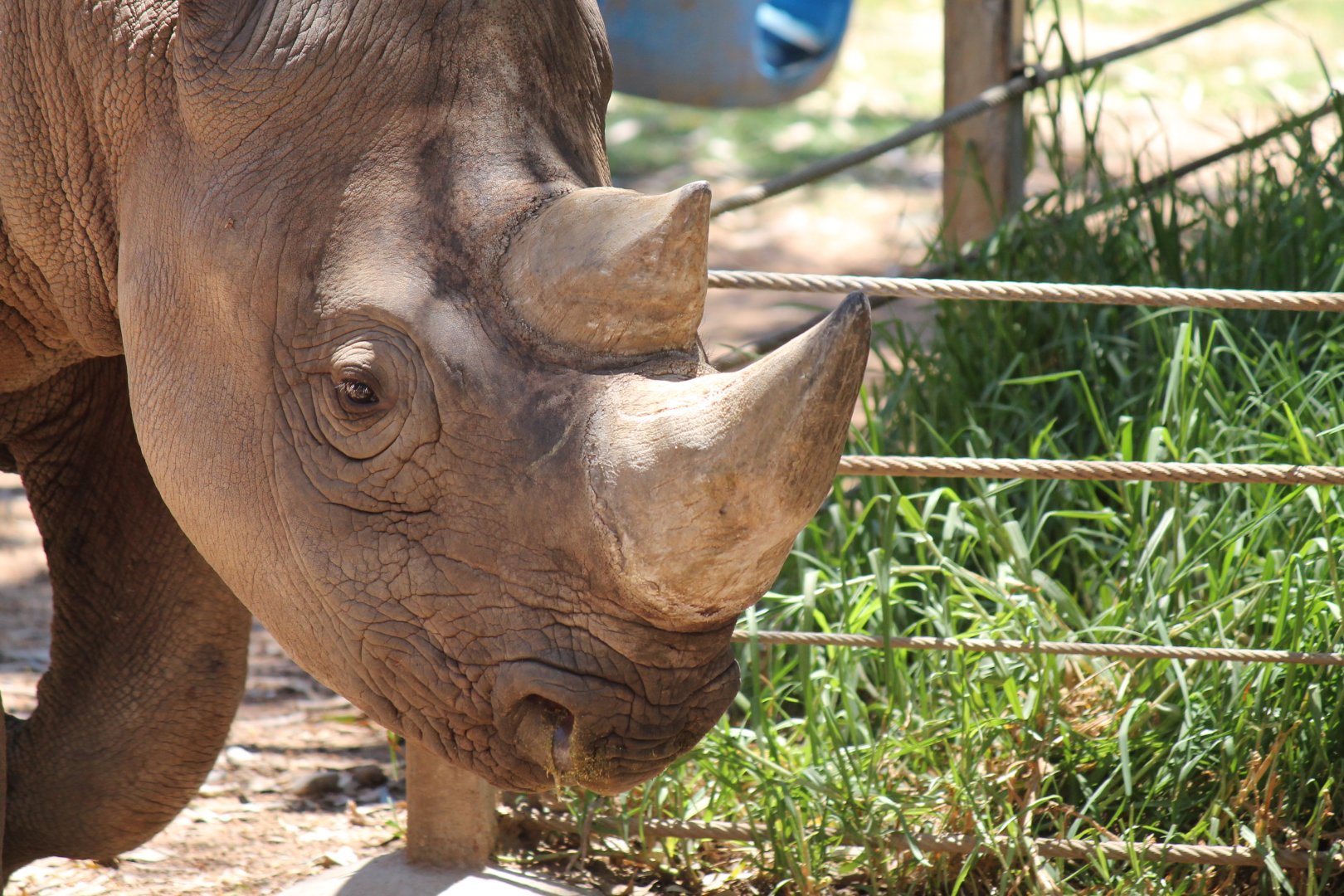
28.06.2020. I was inspired by @WhistlingKite24's great reviews to have a go at writing my own for TWPZ. It isn't nearly as good as the ones WhistlingKite does, and may be a little tainted by my childhood nostalgia for TWPZ. I thought it might also be interesting to document a zoo visit during Covid times.
Taronga Western Plains Zoo is a large, open range zoo with a 5.5 kilometre loop road that allows visitors to use their own vehicle to drive around the zoo. Carts and bikes are also available for hire, or visitors can choose to walk. I decided to drive for convenience and comfort on a cold day. The road is a one-way loop, with plenty of parking areas.
The zoo site is naturally a semi-arid environment, with red, sandy soil and many native trees such as ironbark, cypress and eucalypts remaining in and around the exhibits.
TWPZ reopened on 1st June 2020, after a Covid shutdown. I visited on the first sunny weekend I was able to, anticipating that a second wave could likely force closures again. My ticket was purchased online for a specific date so that visitor numbers could be monitored. For the month of June, TWPZ was offering a 25% discount on entry to encourage visitors to come back to the zoo. My ticket for this visit cost $36.
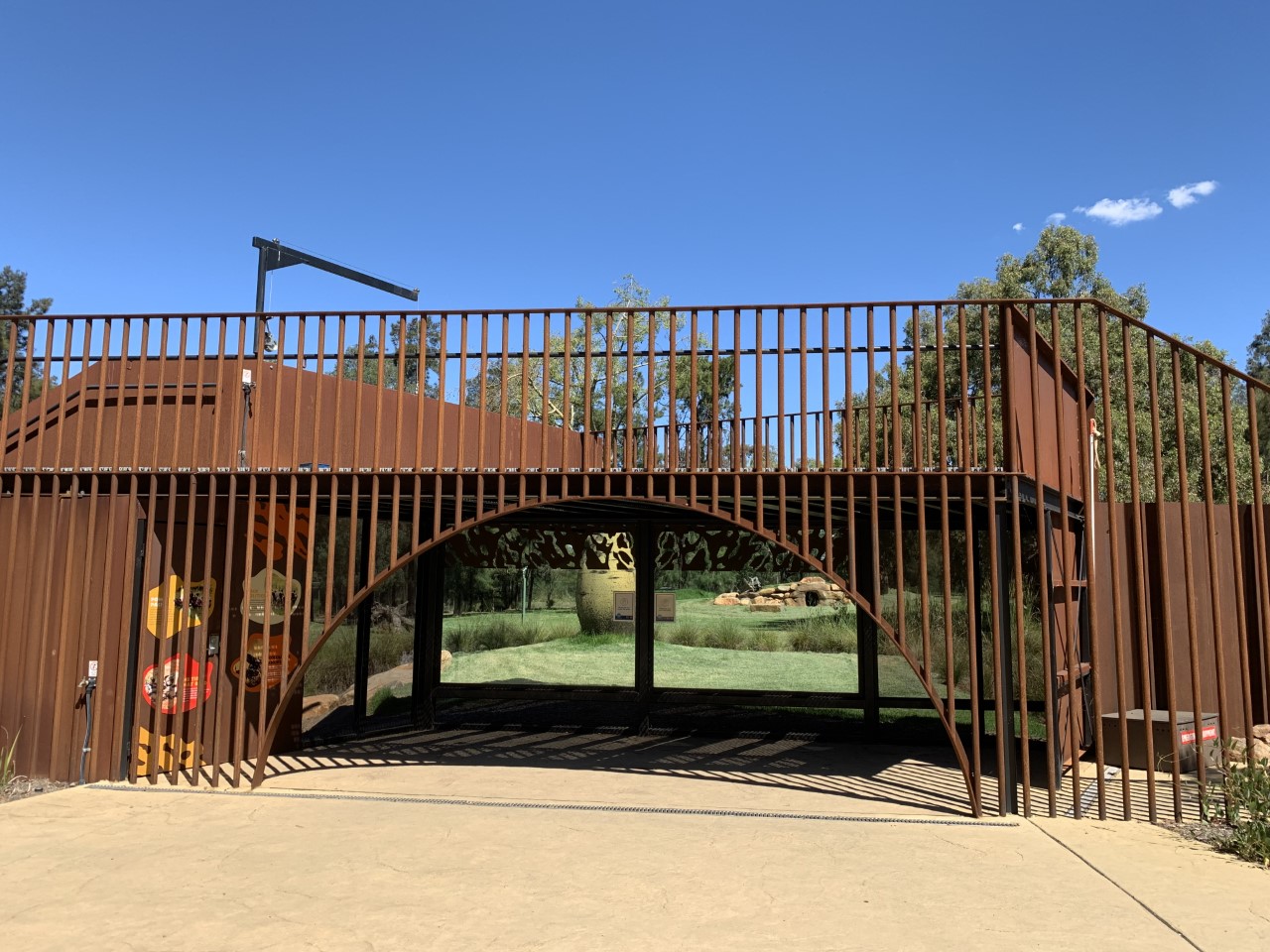
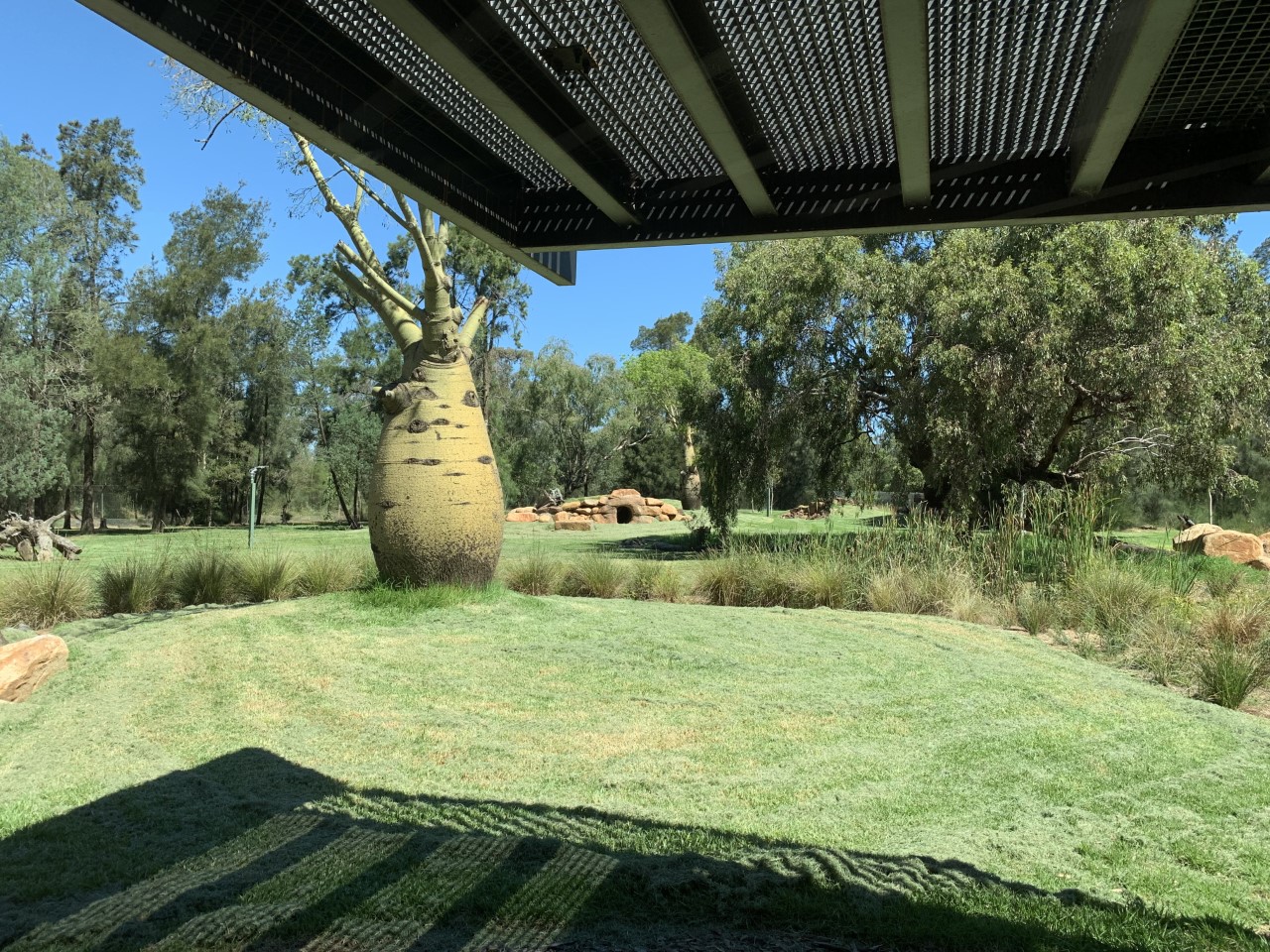
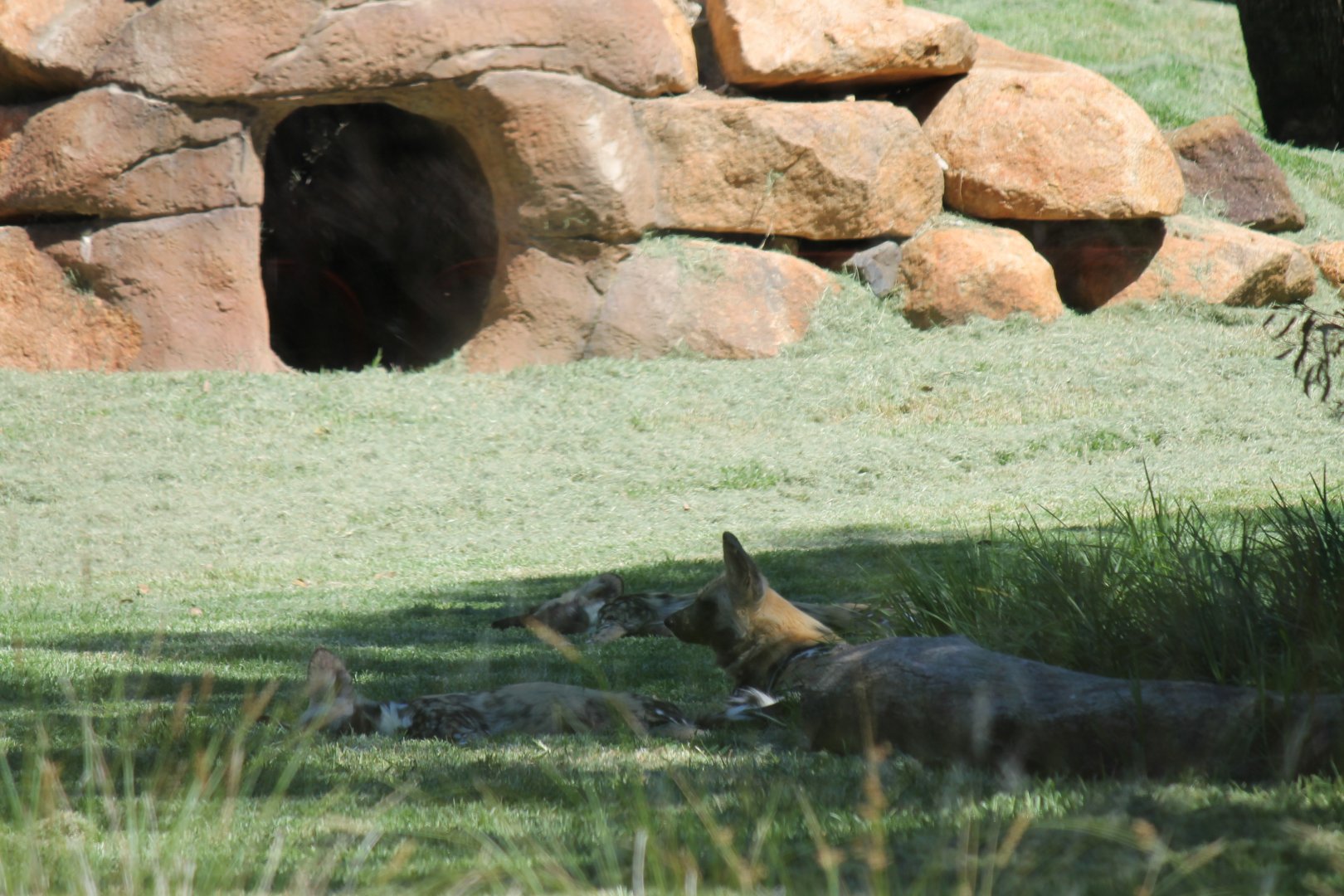
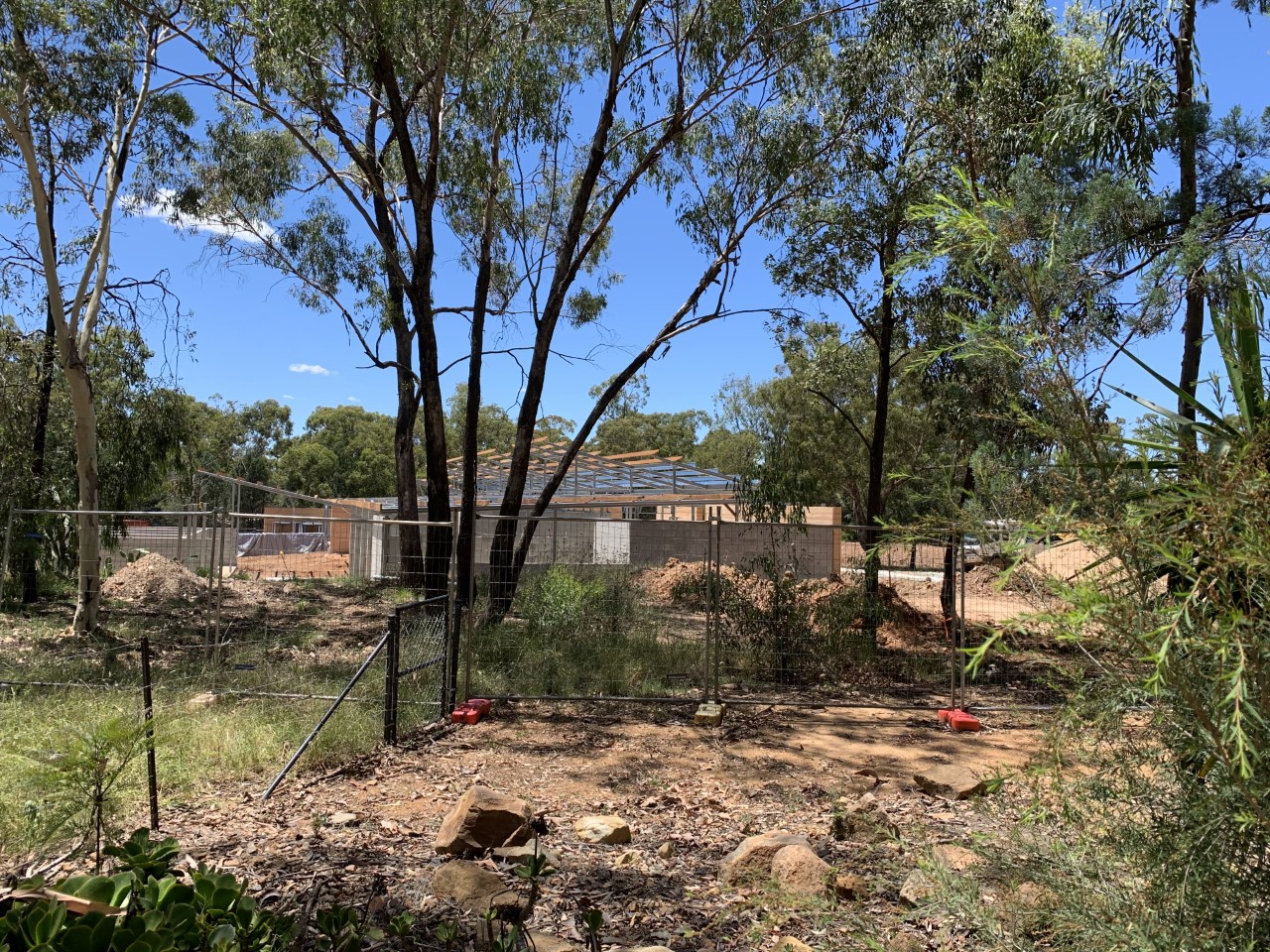
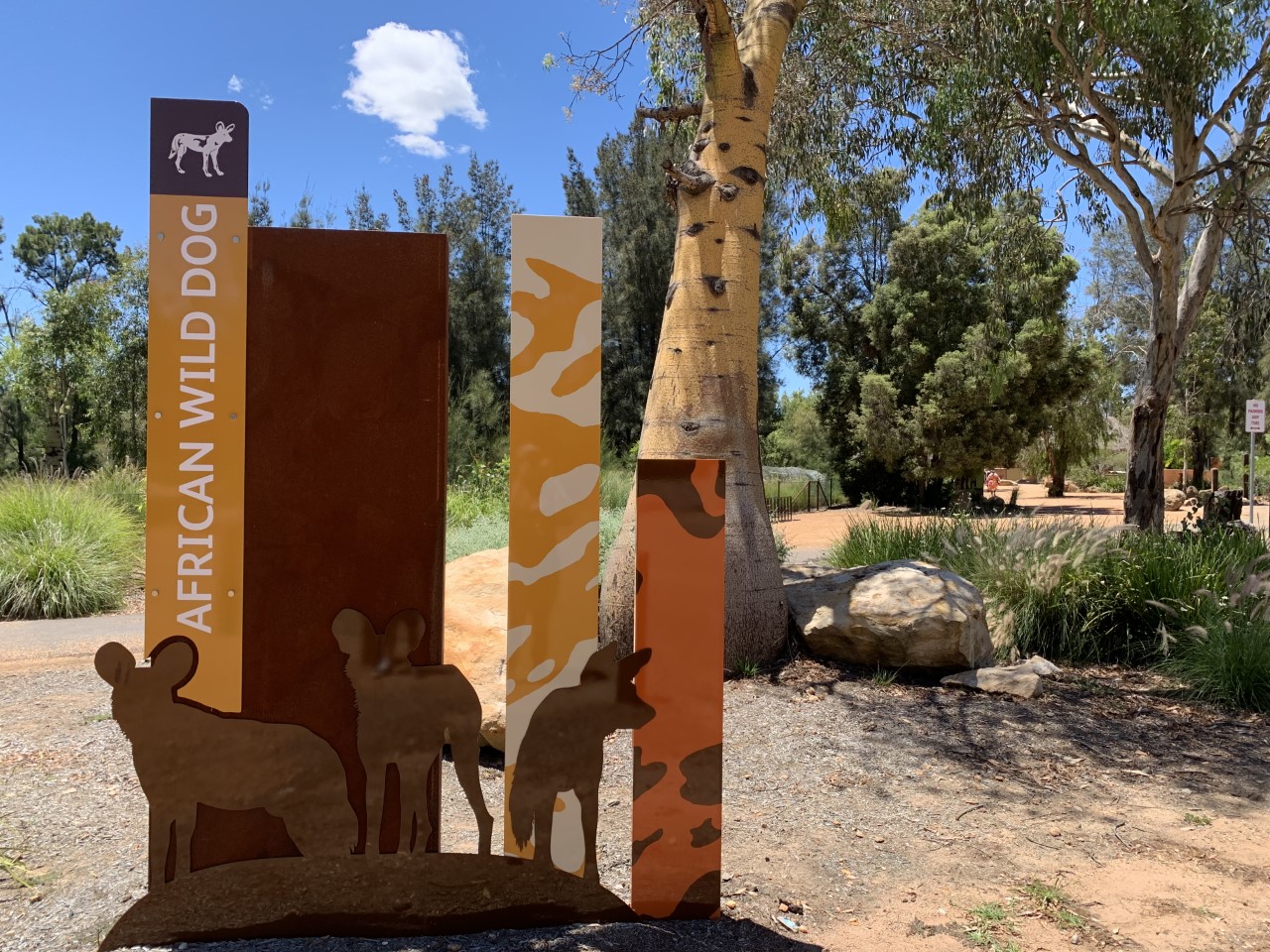
On arrival at the ticket check point, I was given a map that had a few alterations to the one available on the website because of Covid. Most notably the species in the walk-throughs had been removed, as well as the African Wild Dogs because their exhibit was under renovation.
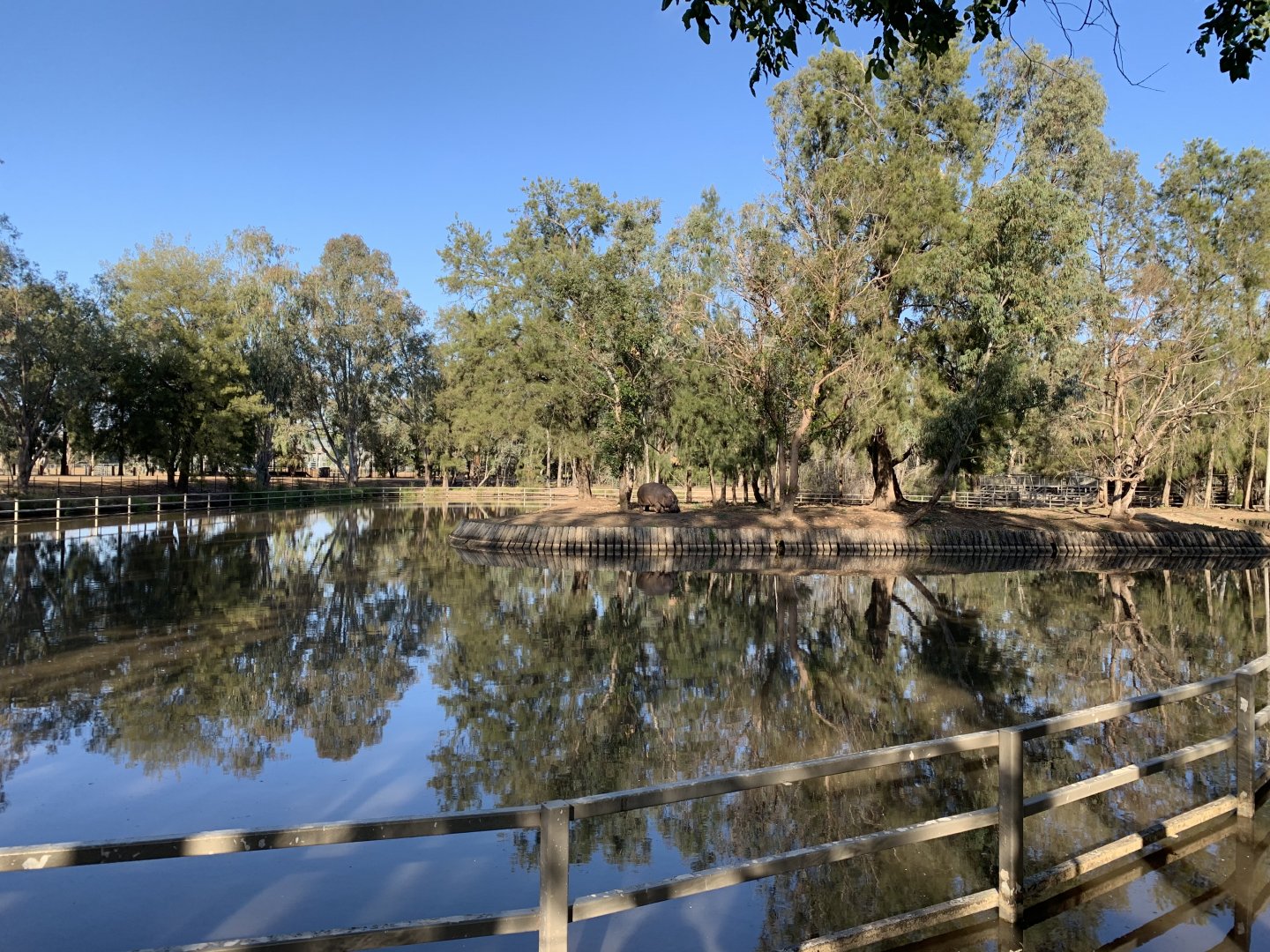
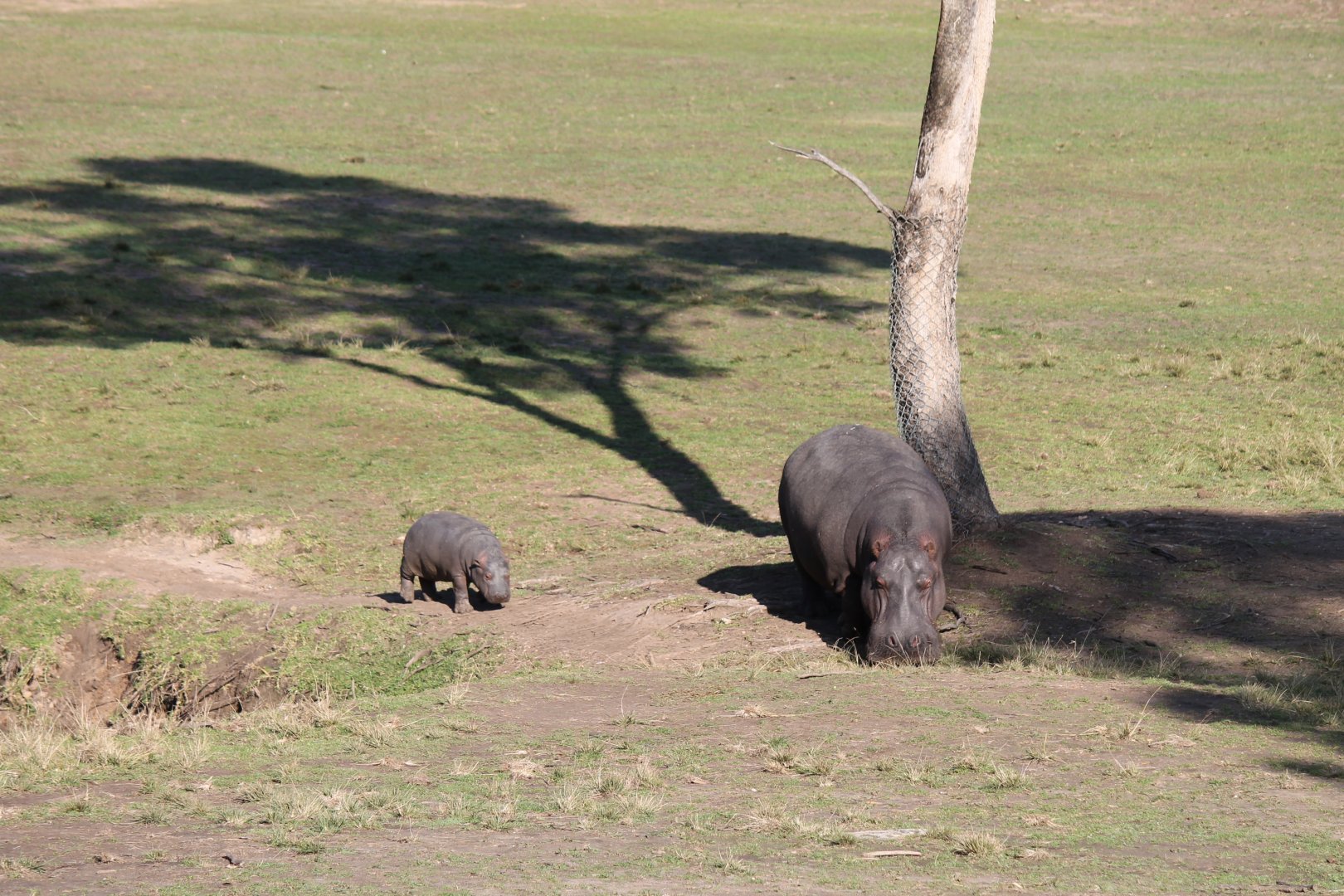
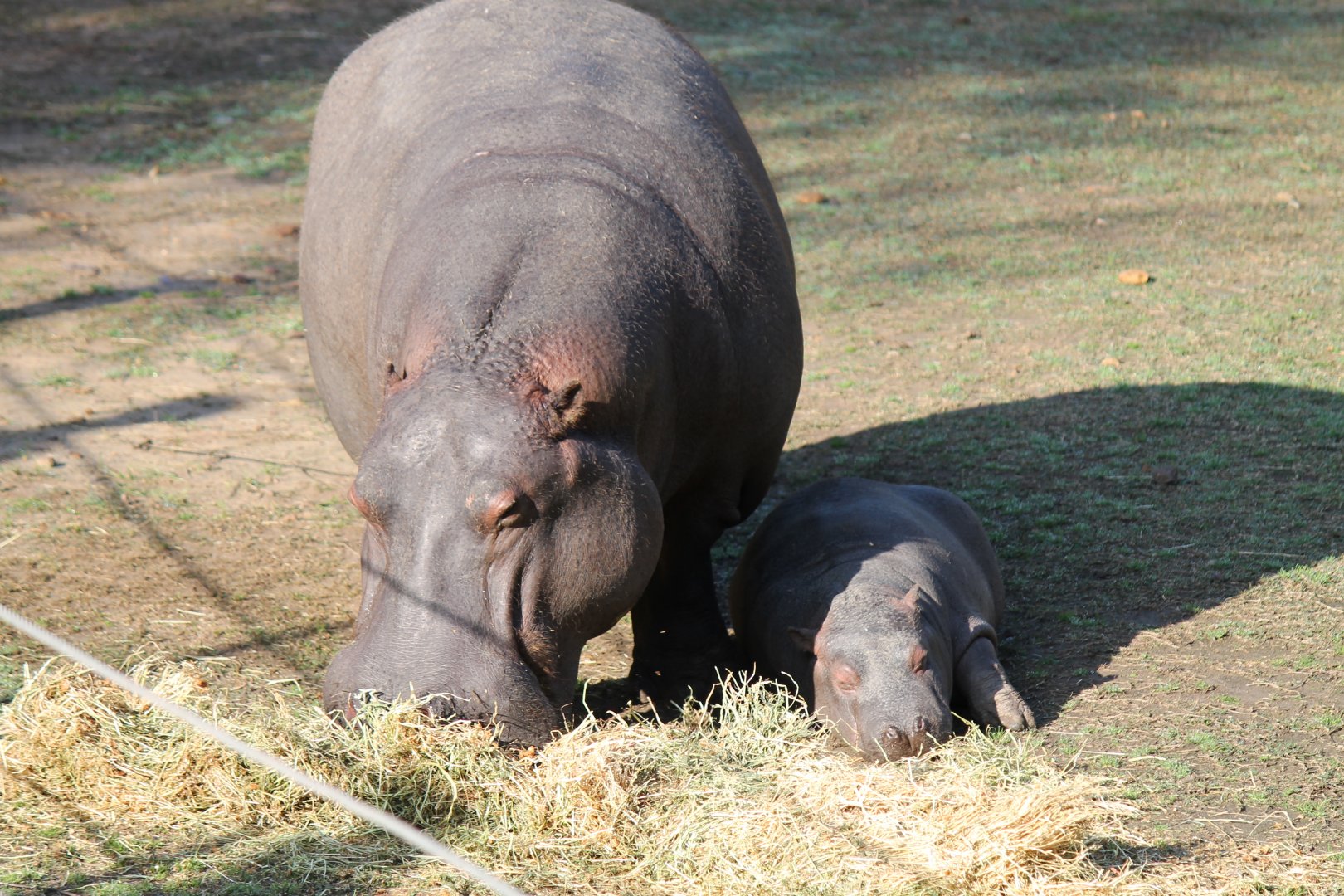
Arriving shortly after the gates opened, I opted to skip the first few exhibits and begin at the Common Hippopotamus. The birth of Kani in April was one of my main reasons for visiting. There were three enclosures for hippos. One was an inland surrounded by a large waterhole, one was a small beach, and the other was a large paddock. There was one hippo on the island and one on the beach. I watched these for a while until Kani and his mother, Cuddles, emerged from the night quarters into the large paddock. Cuddles led Kani over to the fence where a keeper threw them a few biscuits of hay. Cuddles ate her breakfast while Kani snuggled down for a snooze in the sun. This was the perfect time to get great views of the hippos, and to skip the crowd.
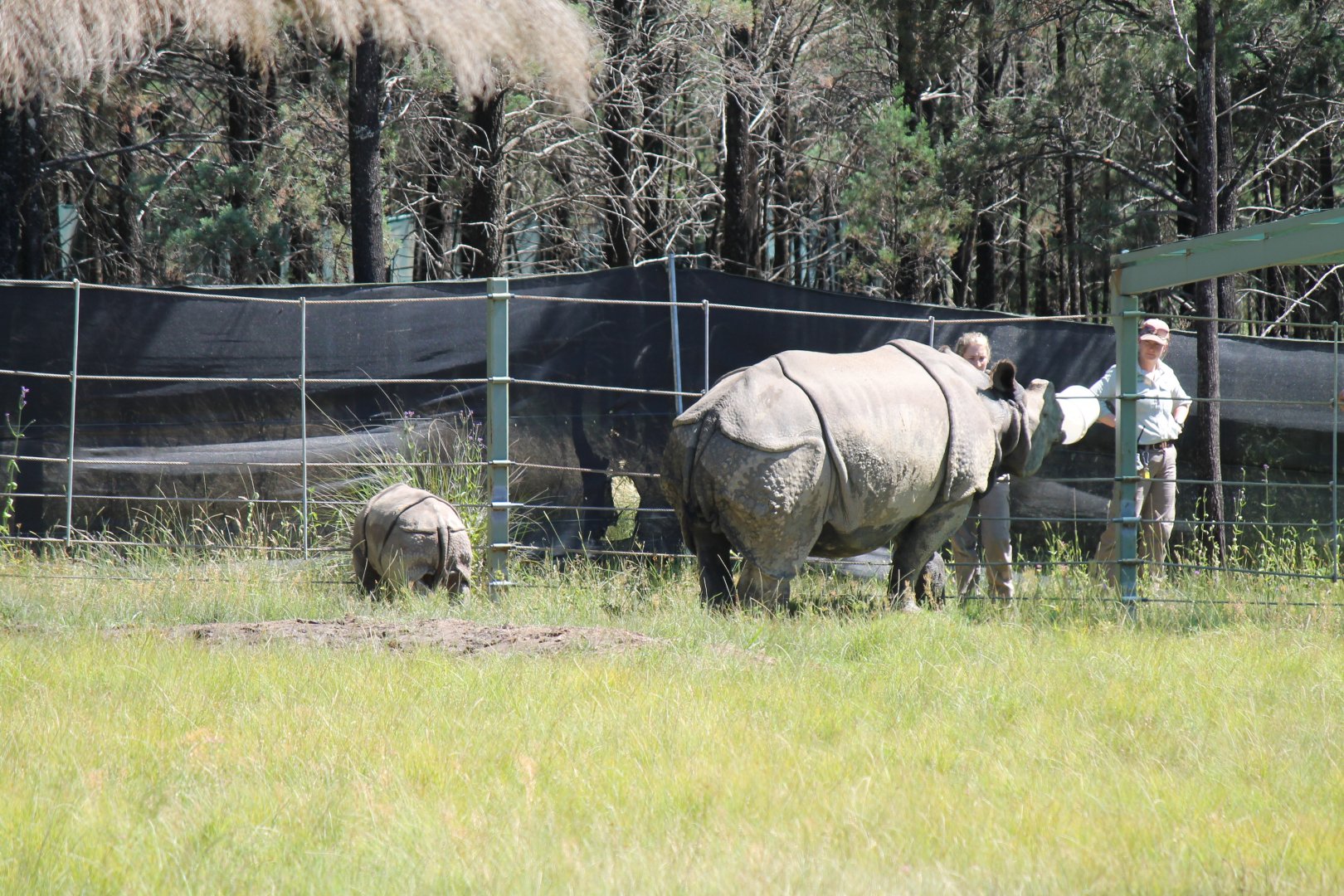
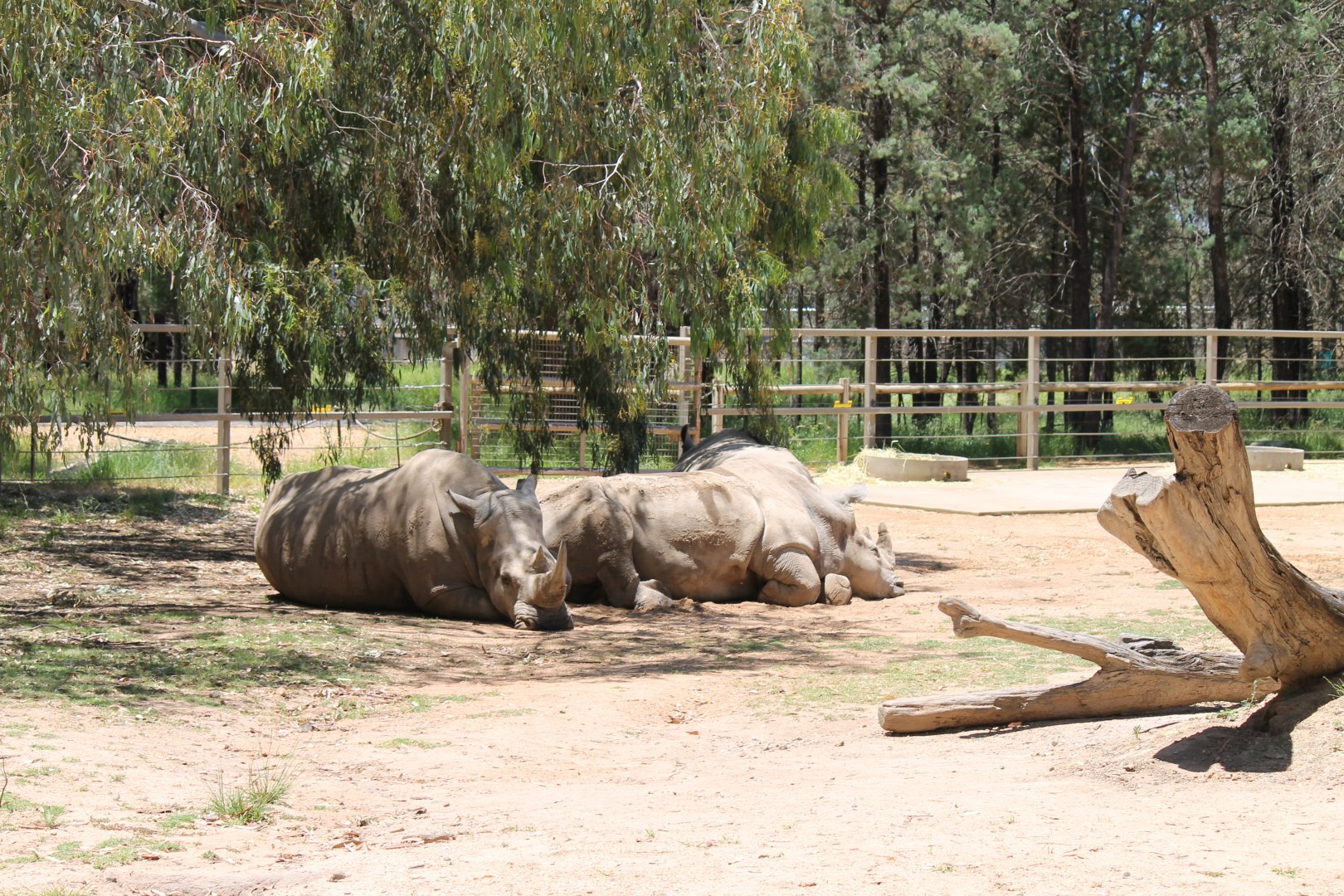
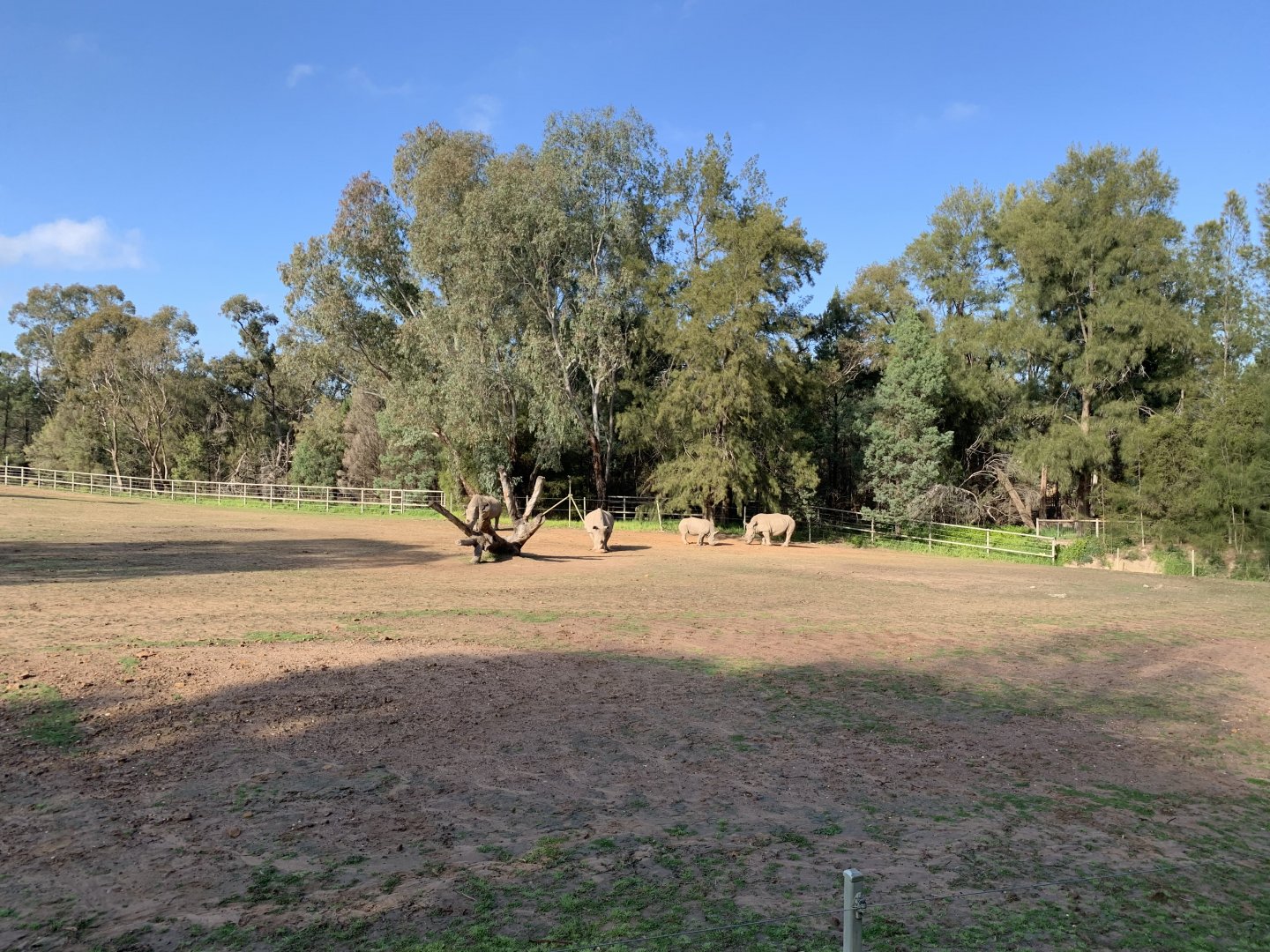
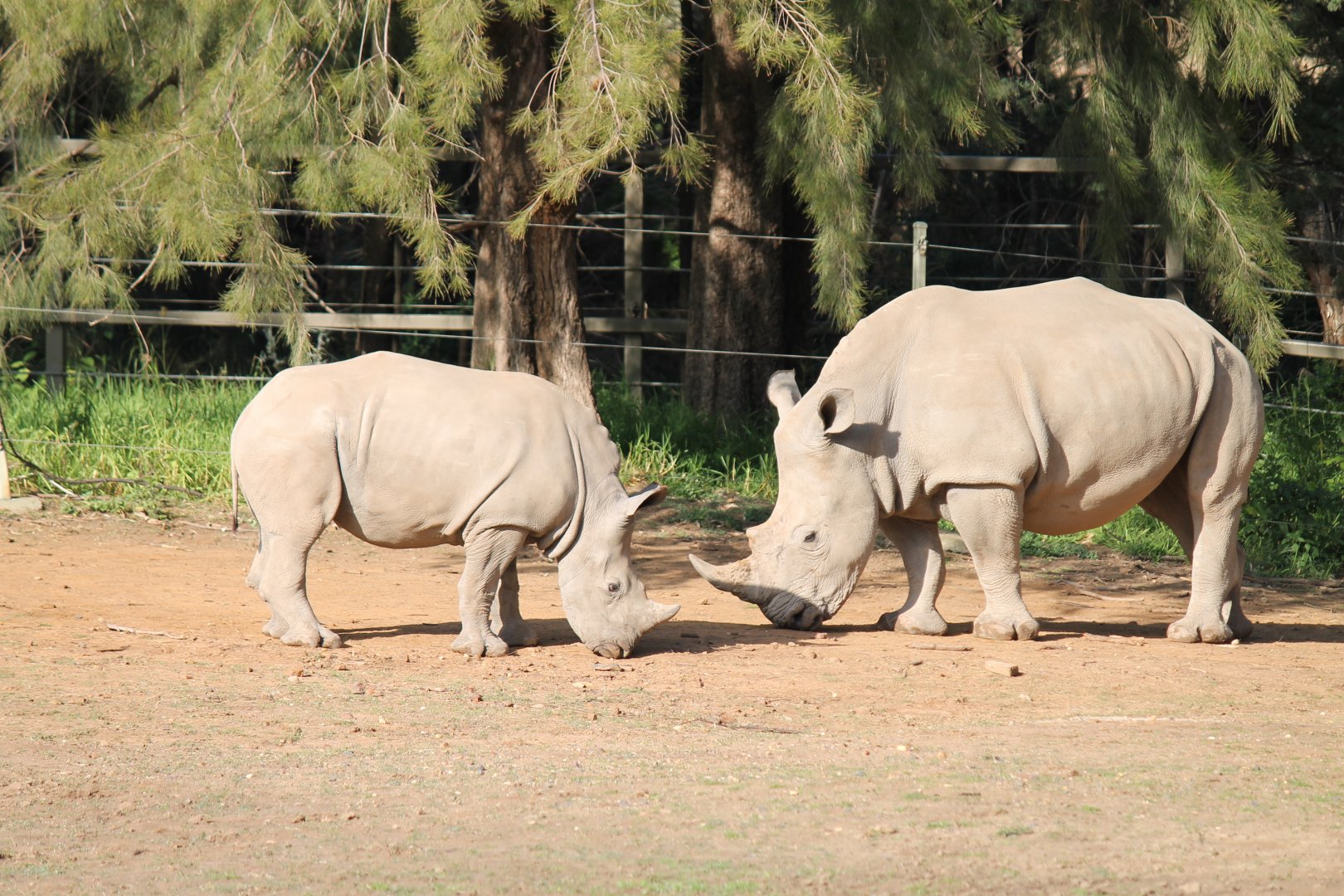
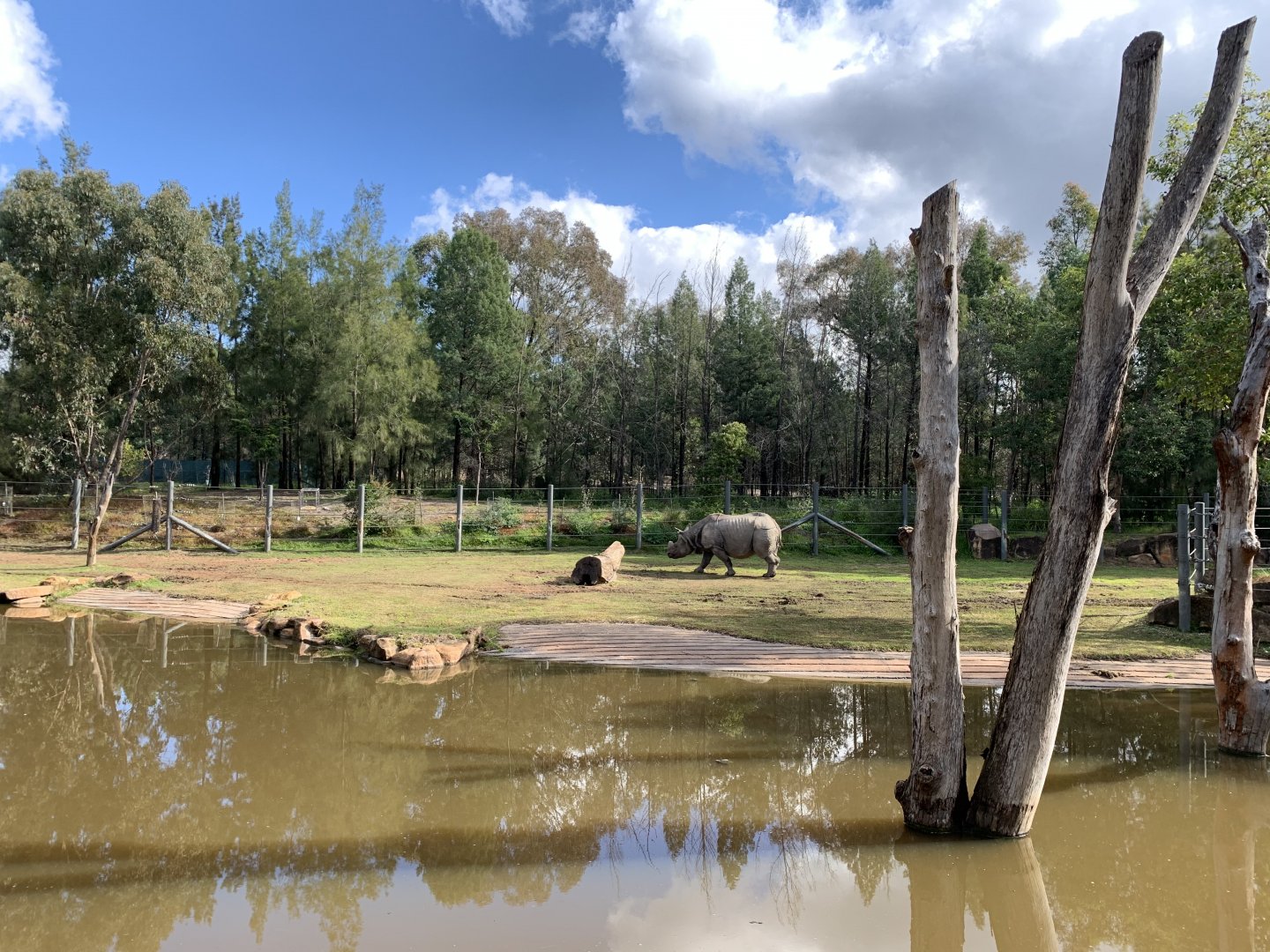
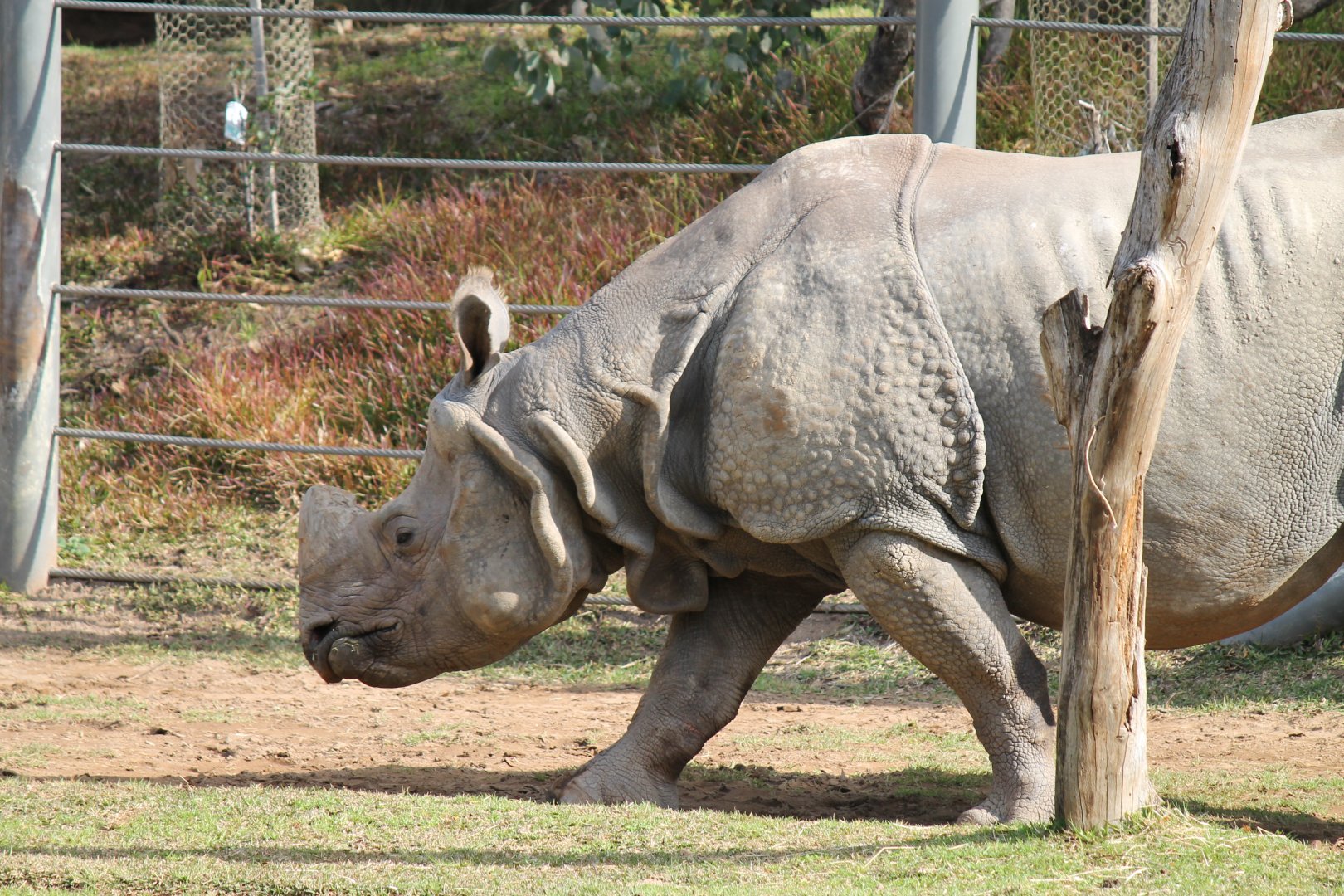
 I drove to the next parking area near the White Rhinoceros paddock. This large, open paddock held 4 rhino. Juvenile rhino, Meeka, was learning how to use her horn, by play fighting with one of the adults, while a curious Willie Wagtail watched on.
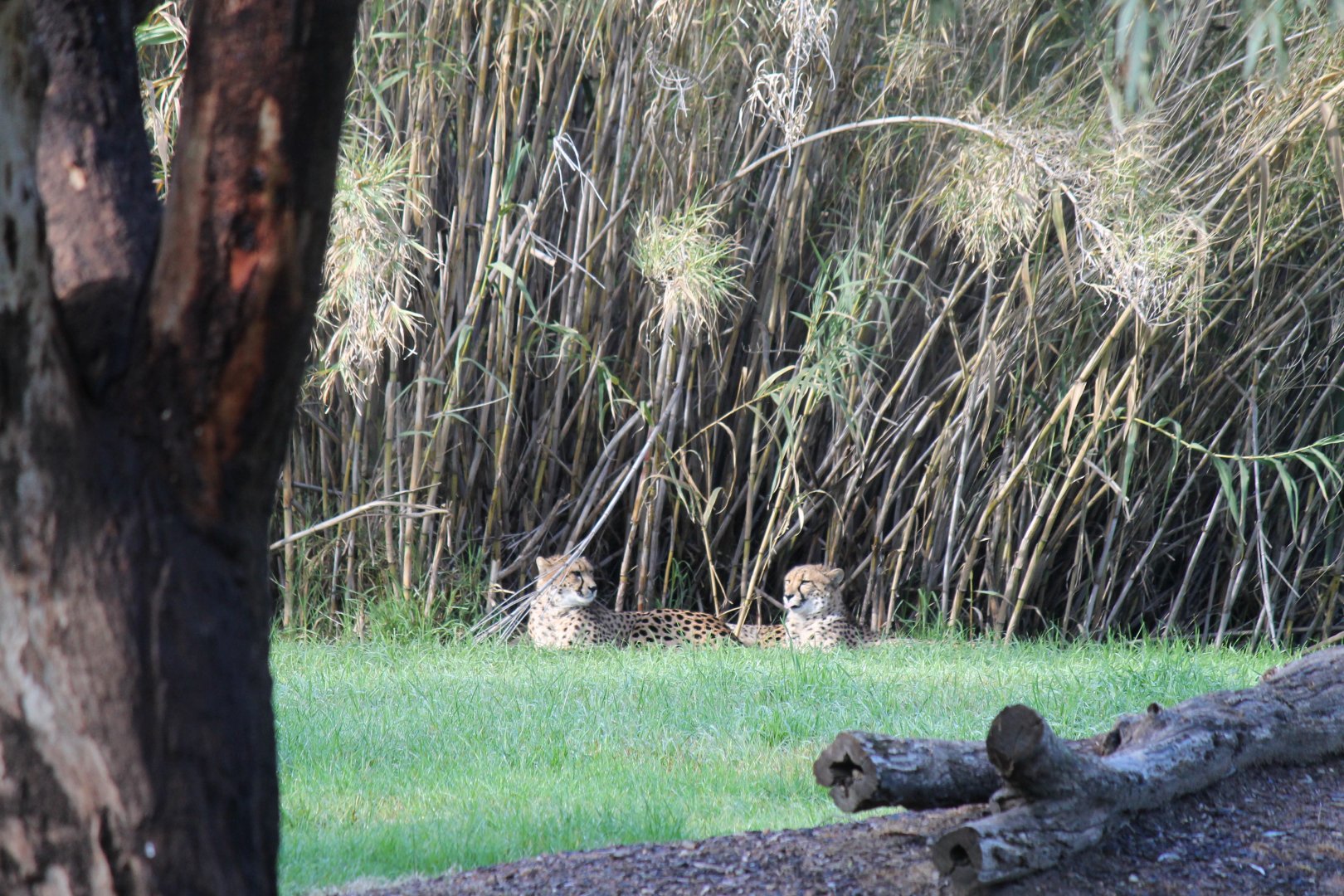
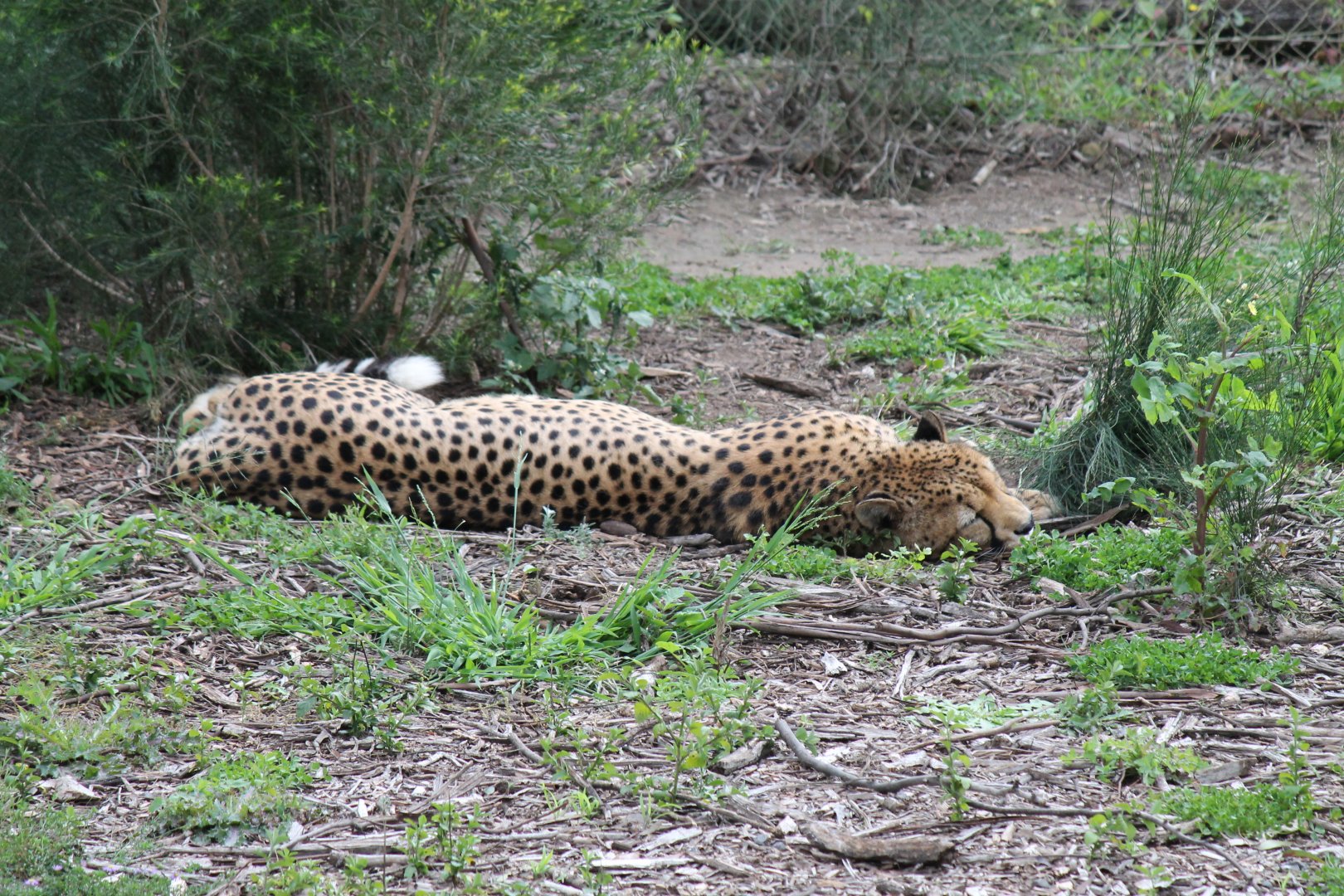
 Across a small bridge, the path lead to the Cheetah exhibit. This exhibit held 3 cheetah which were resting near the bamboo stand on the far side of the exhibit. The other main reason for my visit was to see the King Cheetah. All three of the cheetah in this exhibit were spotted.
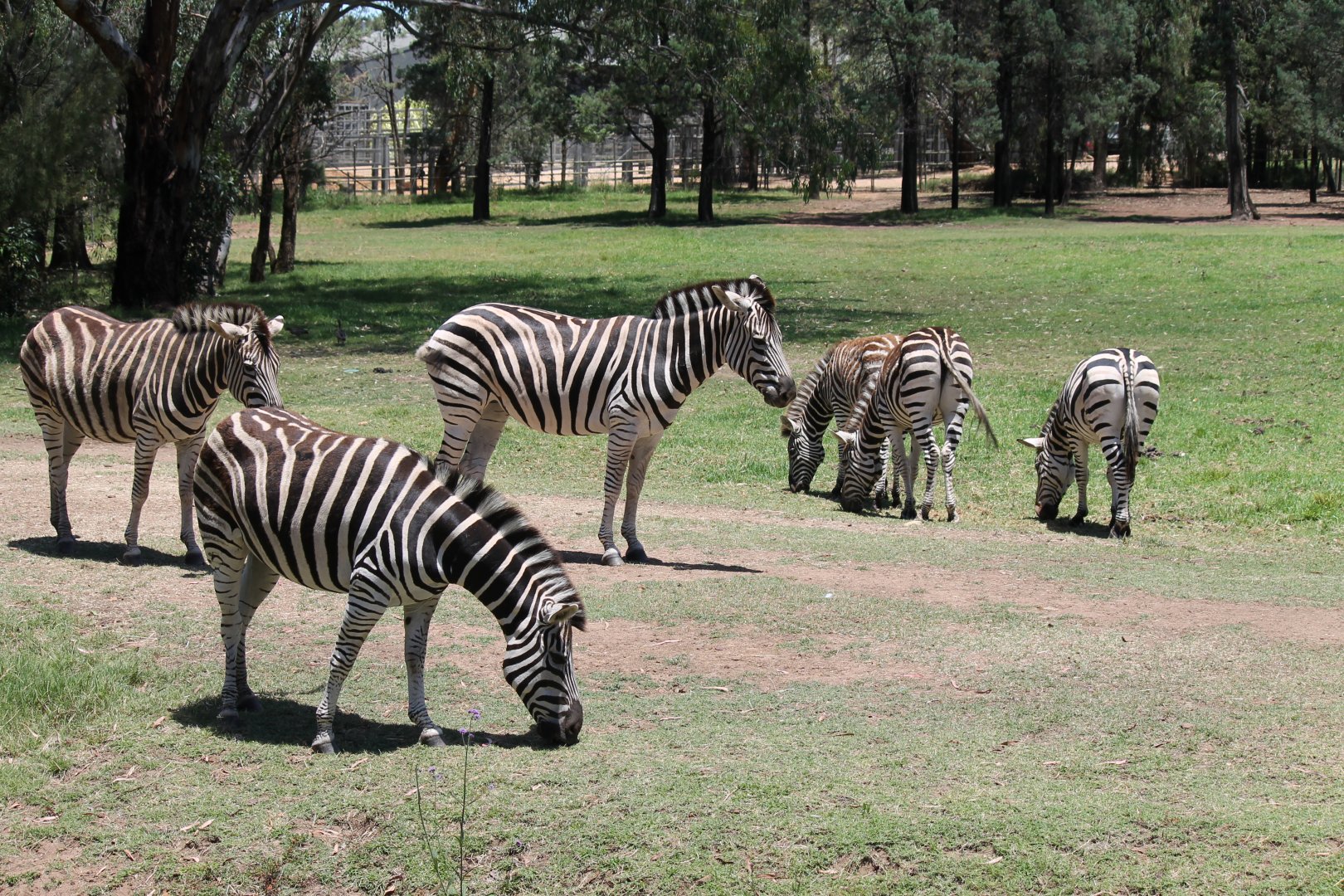
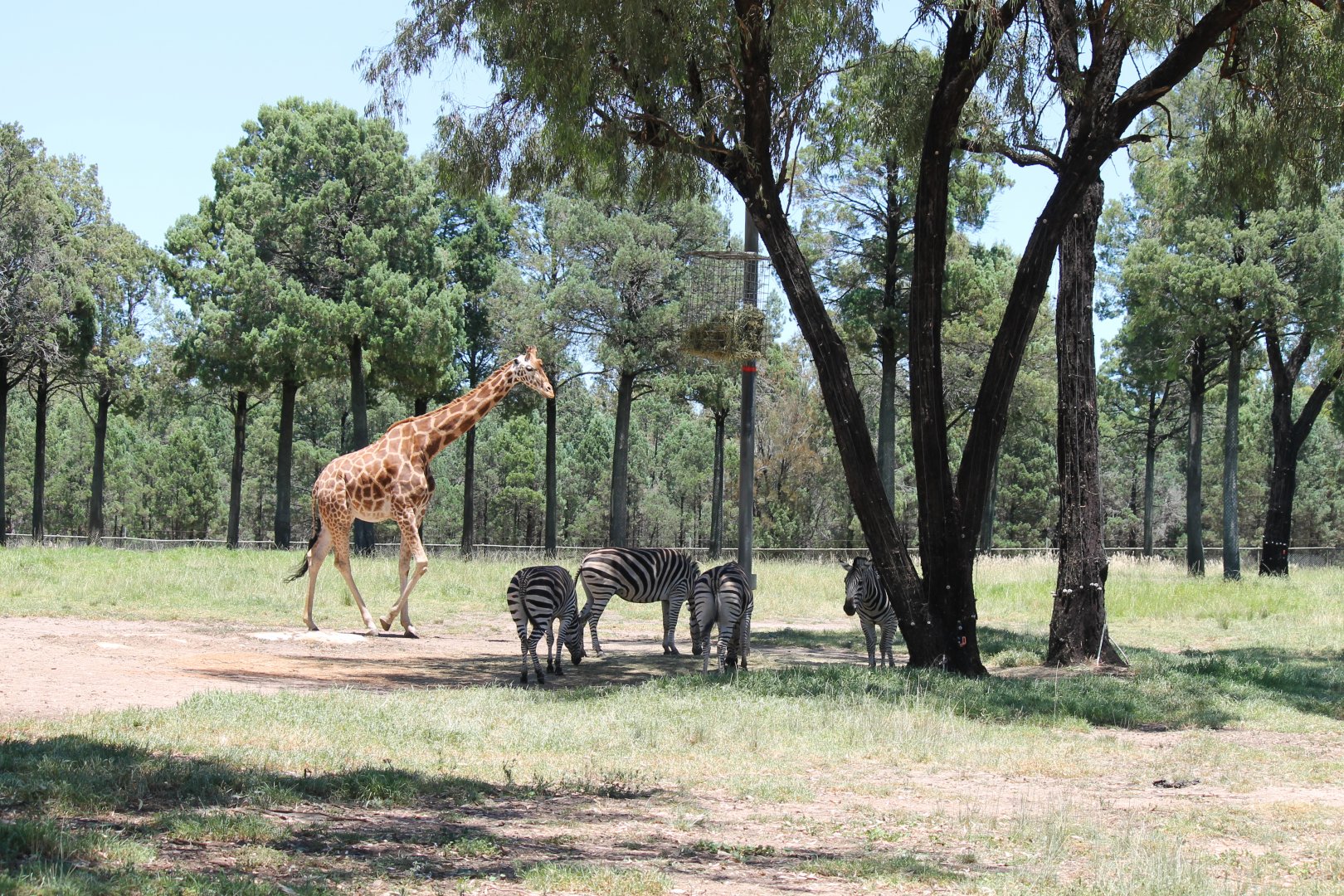
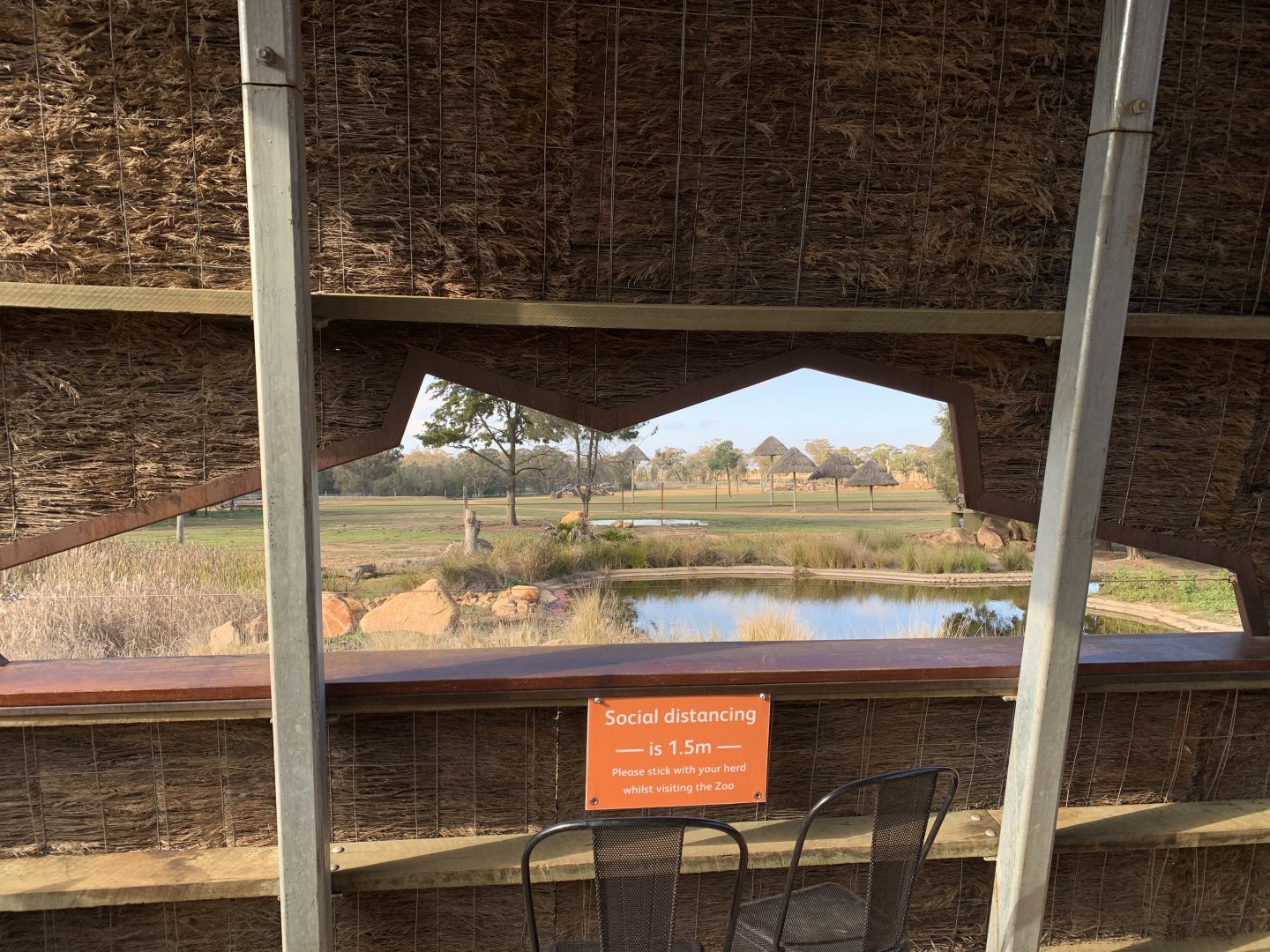
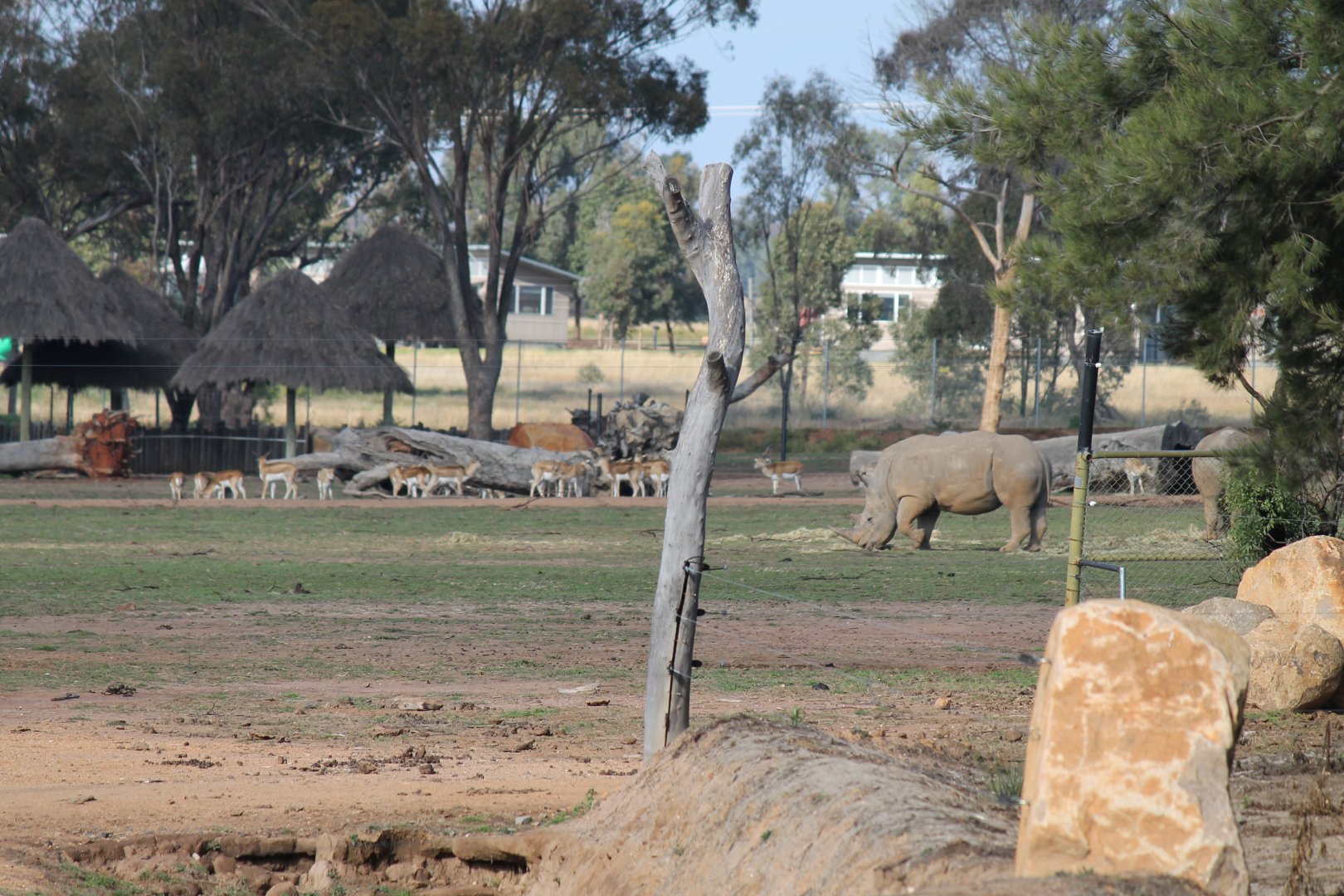
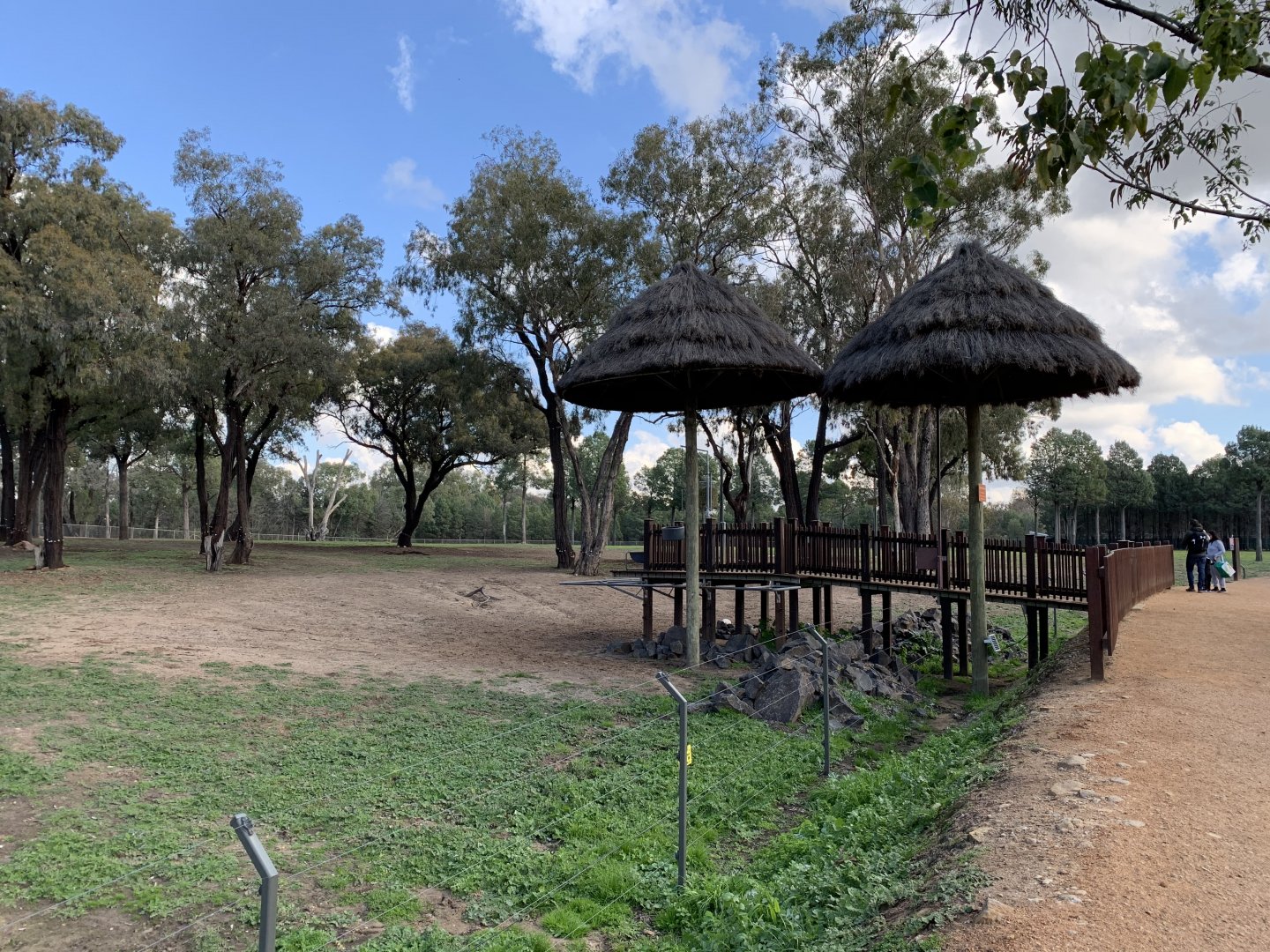
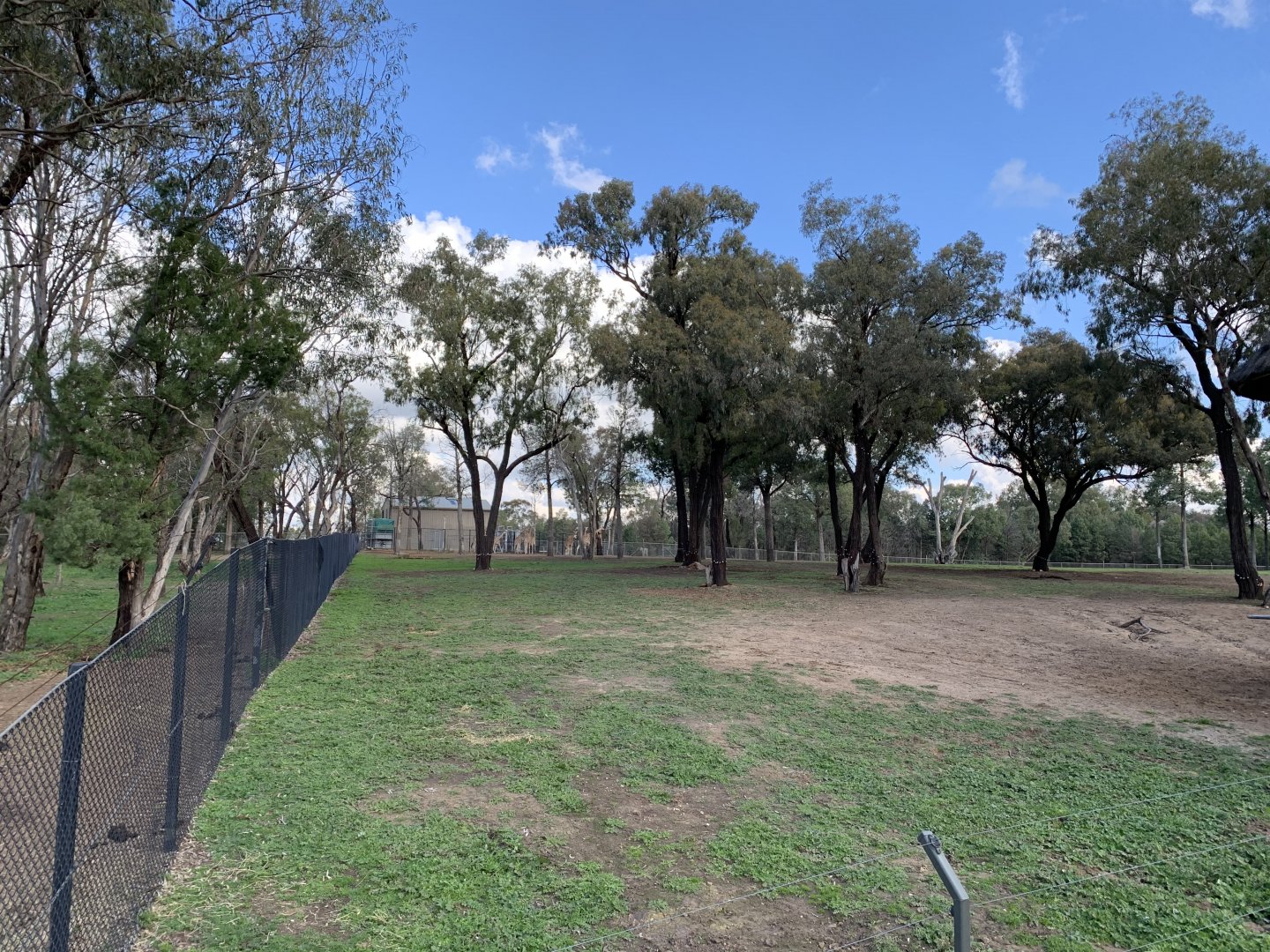
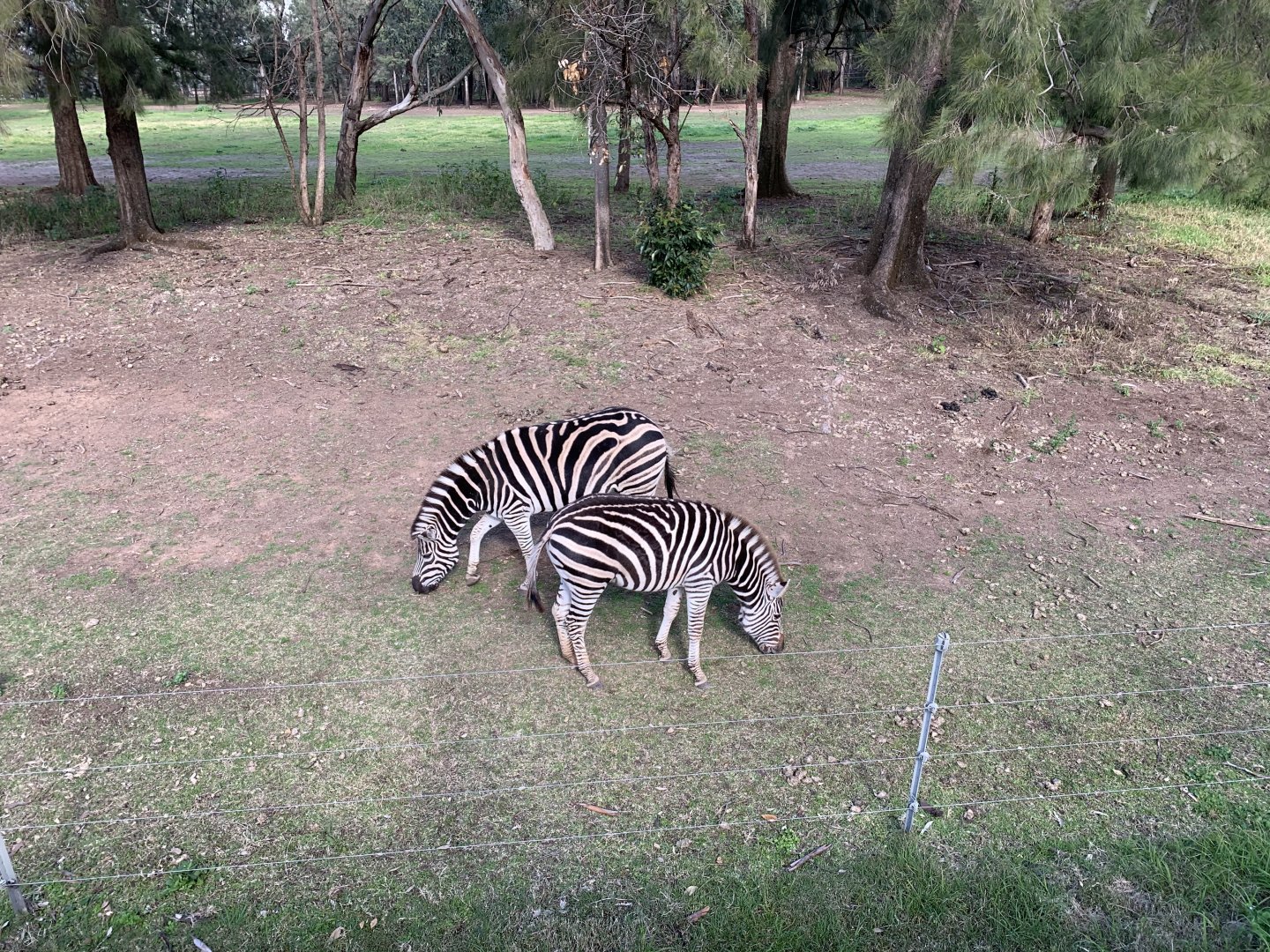
Continuing on foot, there was the viewing area for the savannah, which was a large, mixed exhibit containing White Rhinoceros, Eland, Ostrich, Giraffe, Plains Zebra and Blackbuck. Adjacent to the savannah was the Zoofari lodge which was visible from the viewing hide. The area immediately in front of the viewing hide was quite unattractive. There was a small, muddy waterhole, service roads and trees partially blocking the view. Usually there is a vehicle that drives guests out onto the savannah for an extra $20, but it was not running due to Covid restrictions. All of the keeper talks were also cancelled.
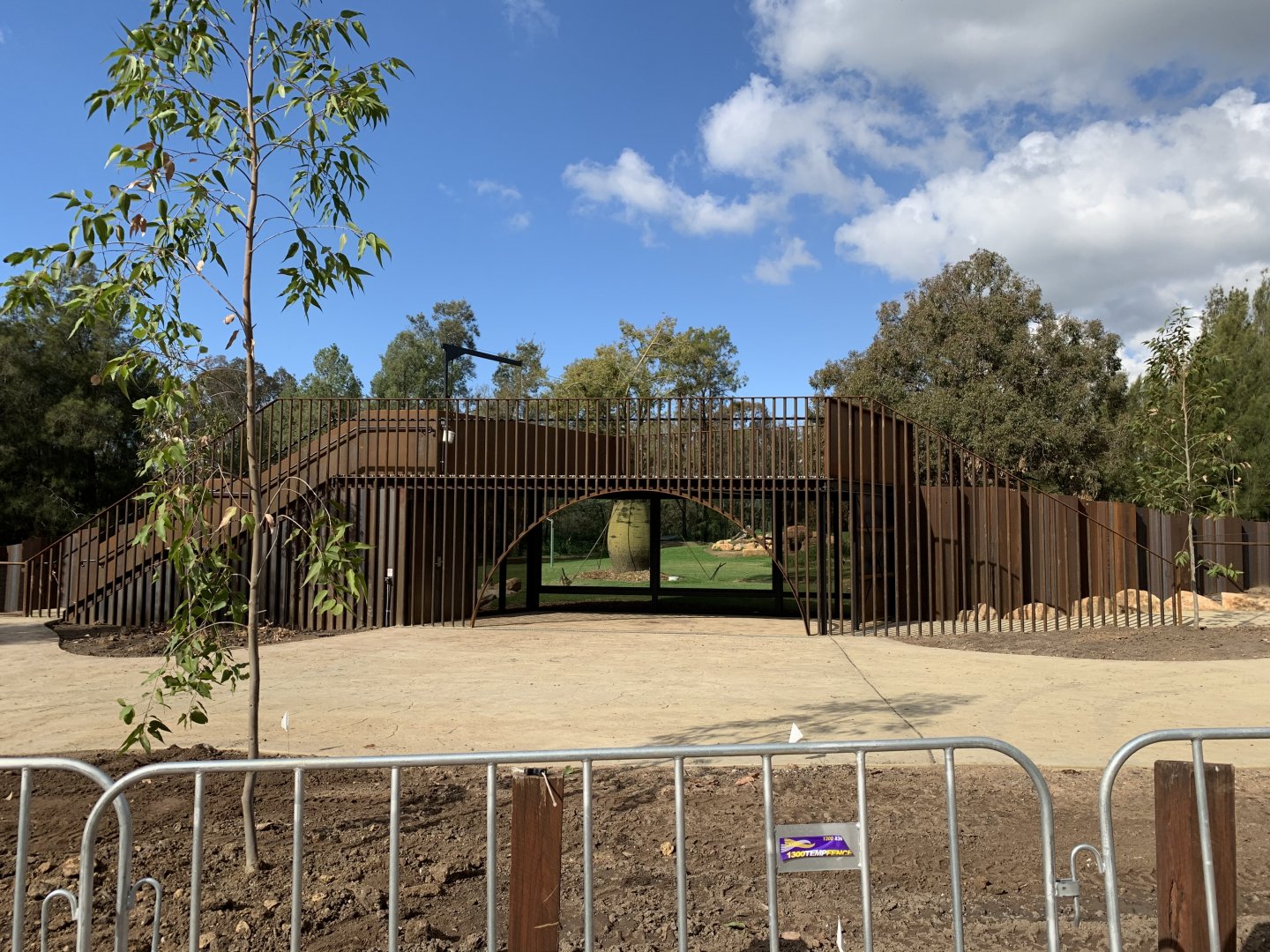
There was a viewing tower behind the hide that visitors could climb for a better view of the savannah.
 Near here were the elephant enclosures. They used to hold African Elephants, but are now home to Asian Elephant. There were several separate yards where the elephants could be viewed. Two young male elephants were playing with enrichment items, including a food container suspended from a tree, and a ball.
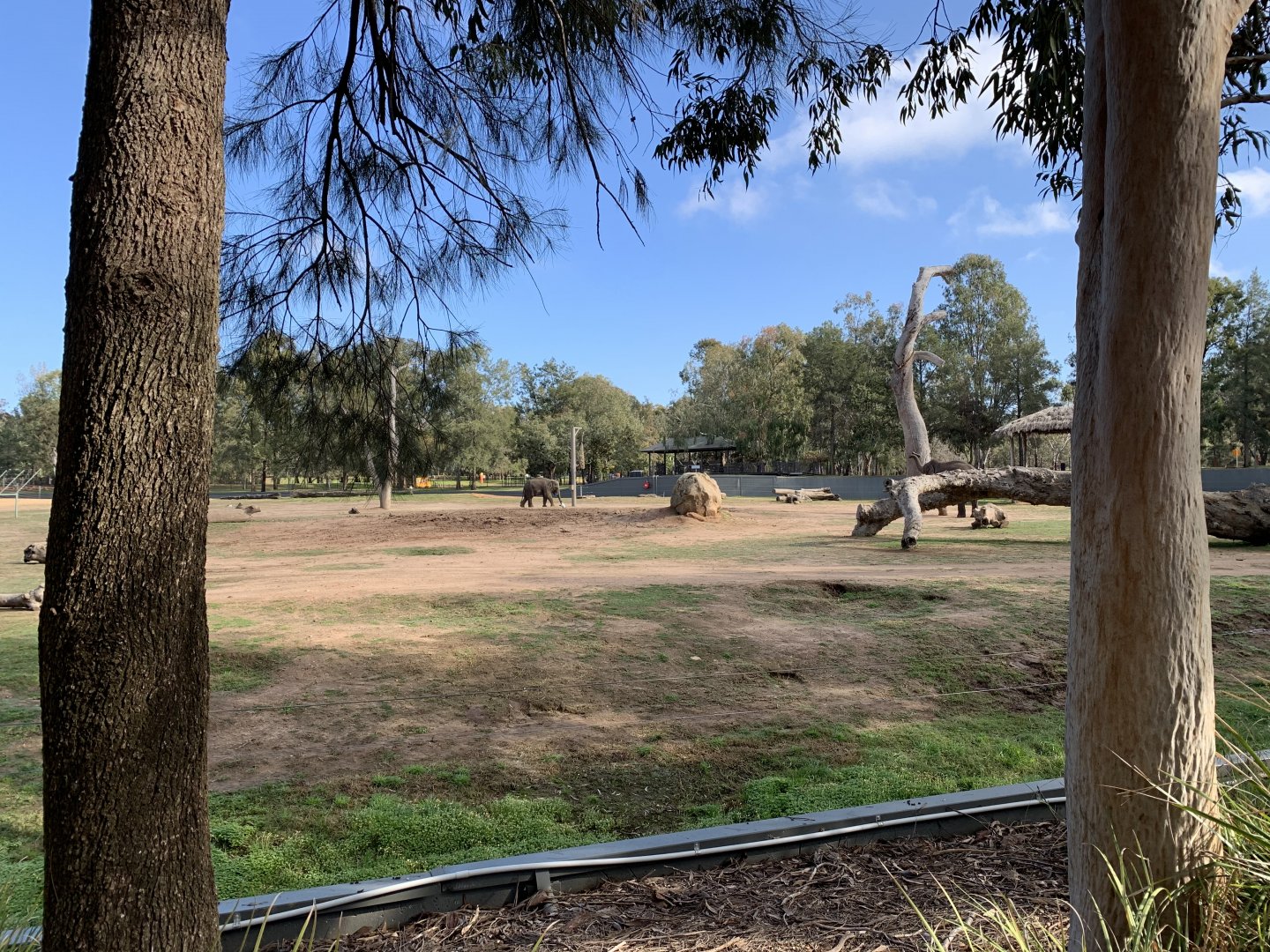
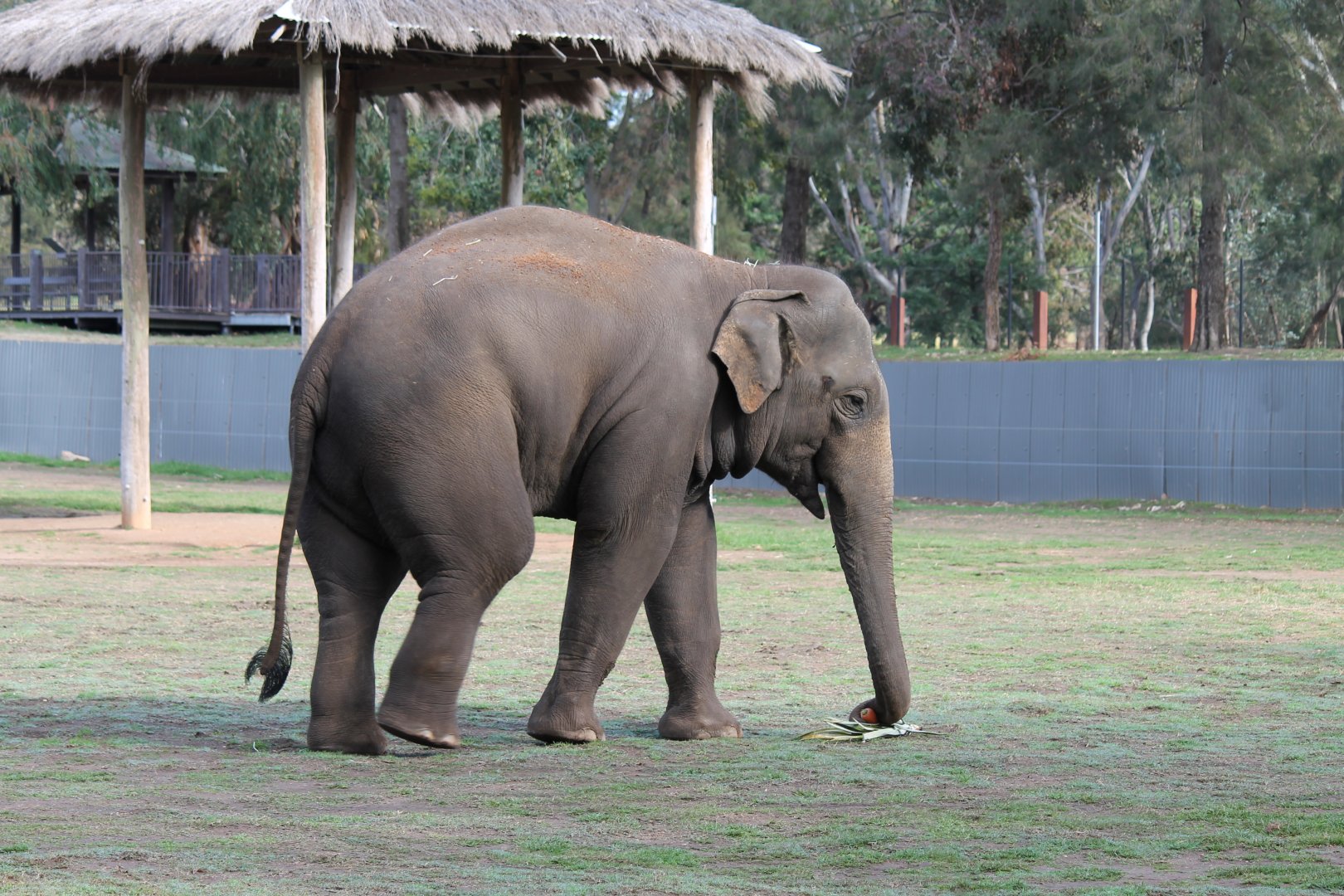 I walked back past the cheetah and the rhino to my vehicle, and drove past a few more exhibits to the new Waterhole precinct. I planned to do a second lap of the zoo circuit, so I wasn't worried about skipping a few things and returning later. By doing this I hoped to beat the crowds.
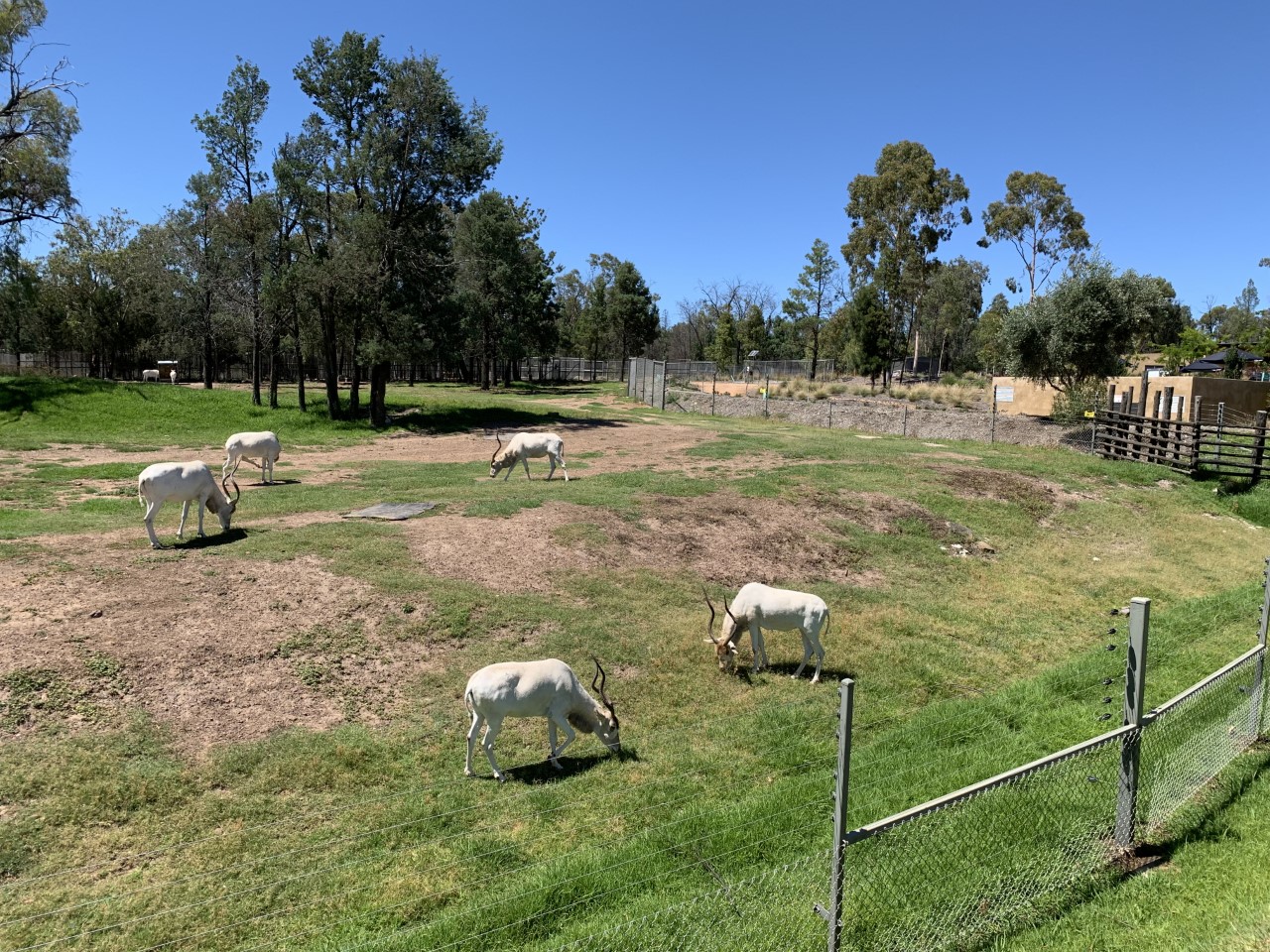
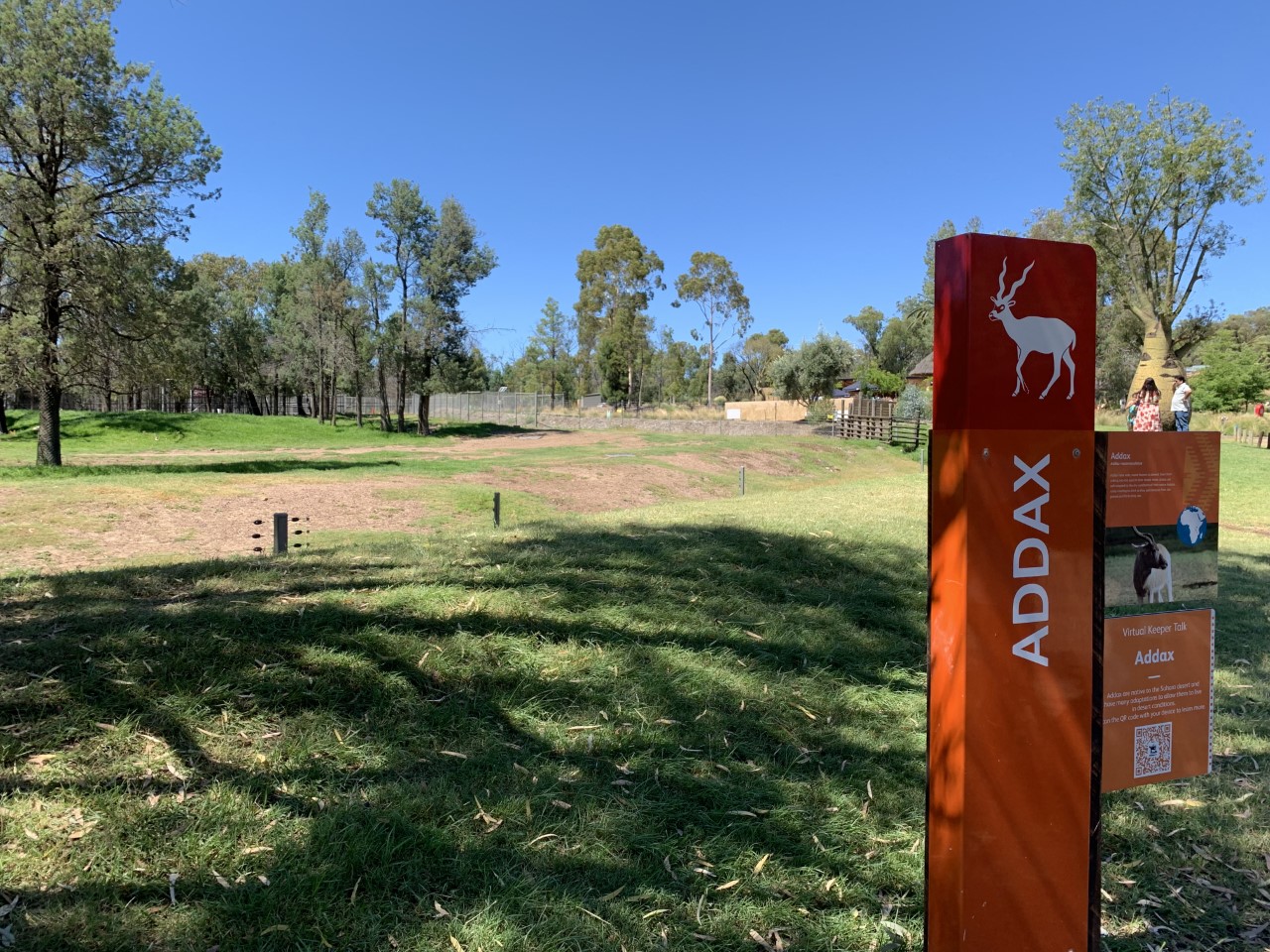
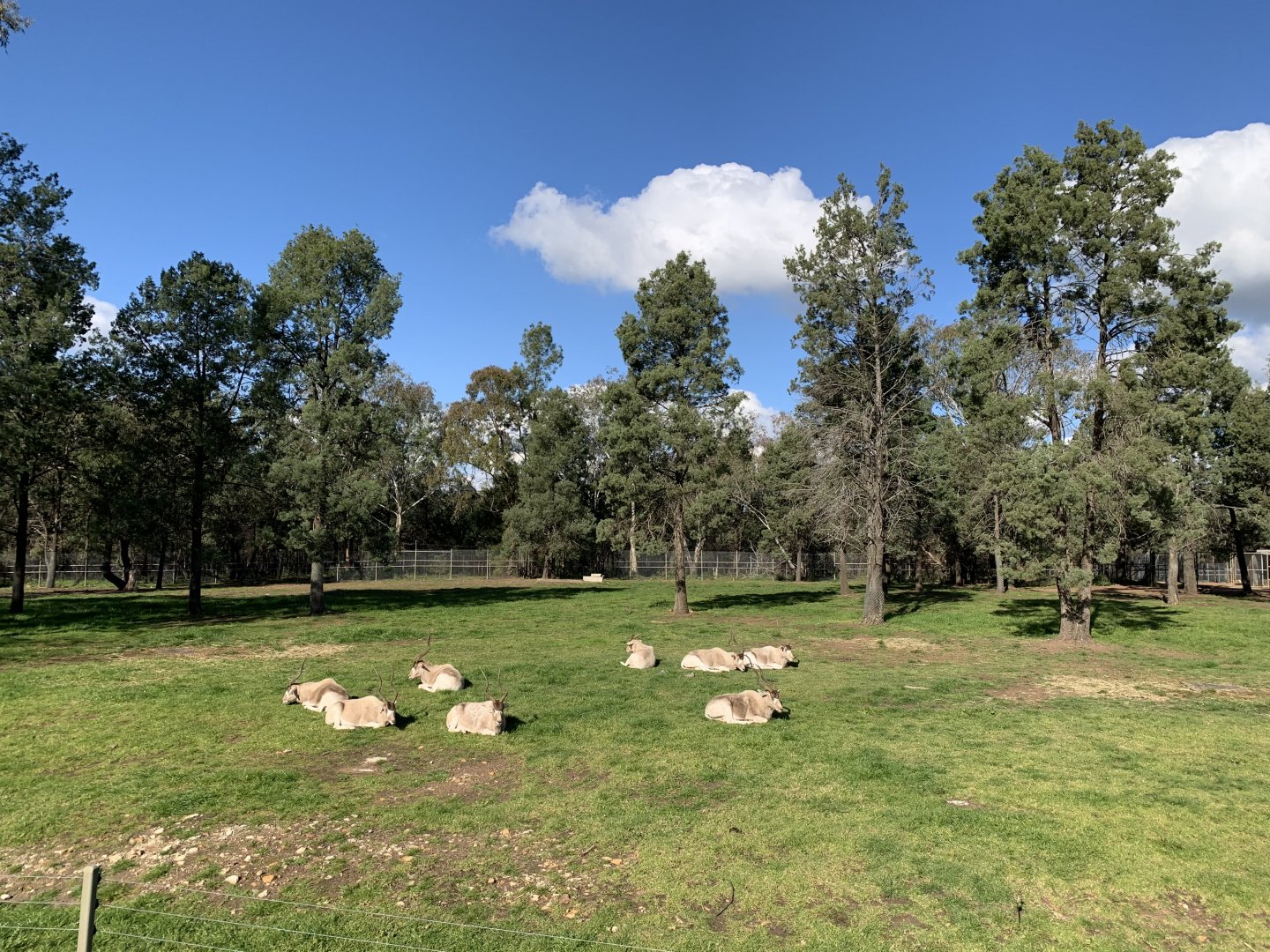
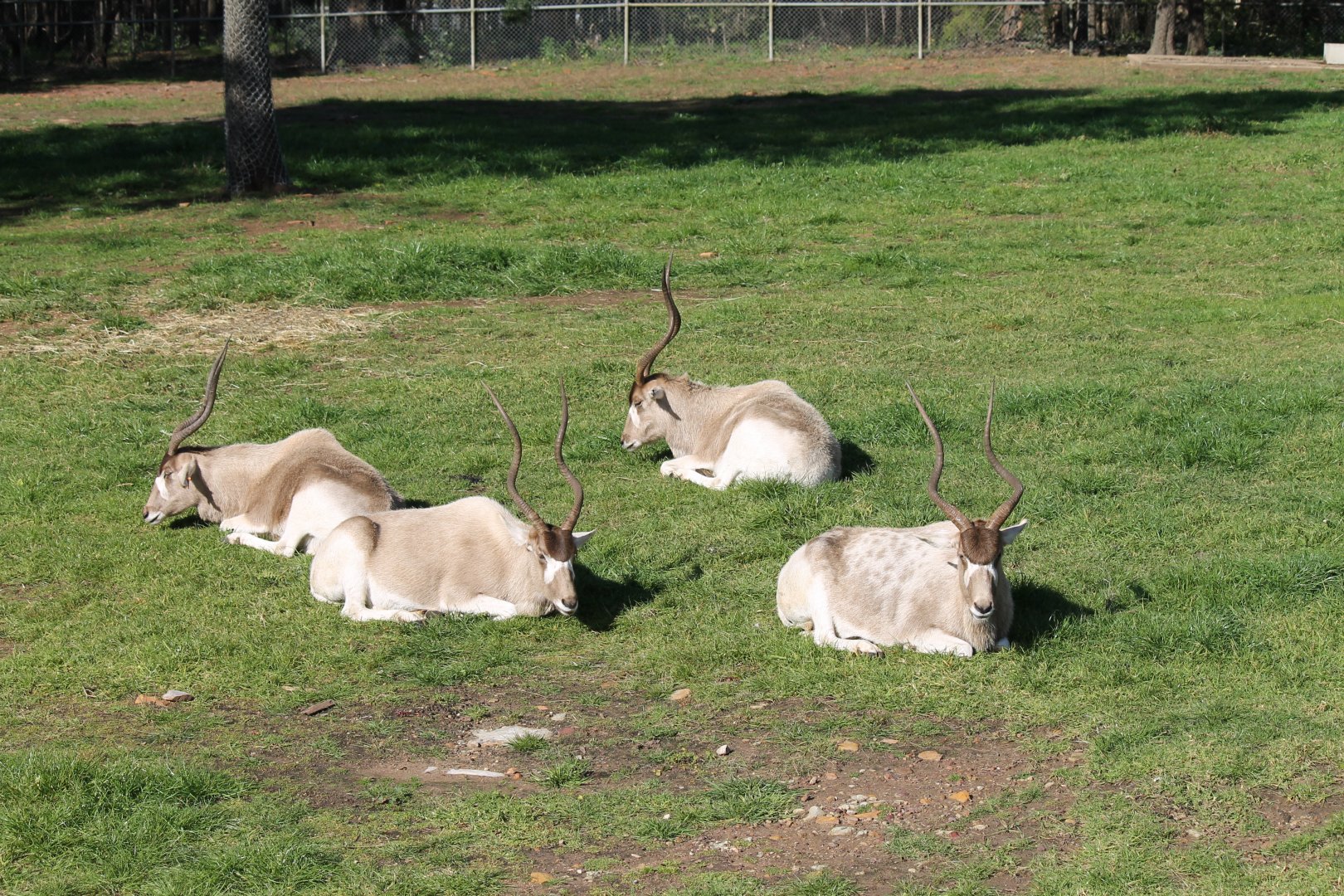
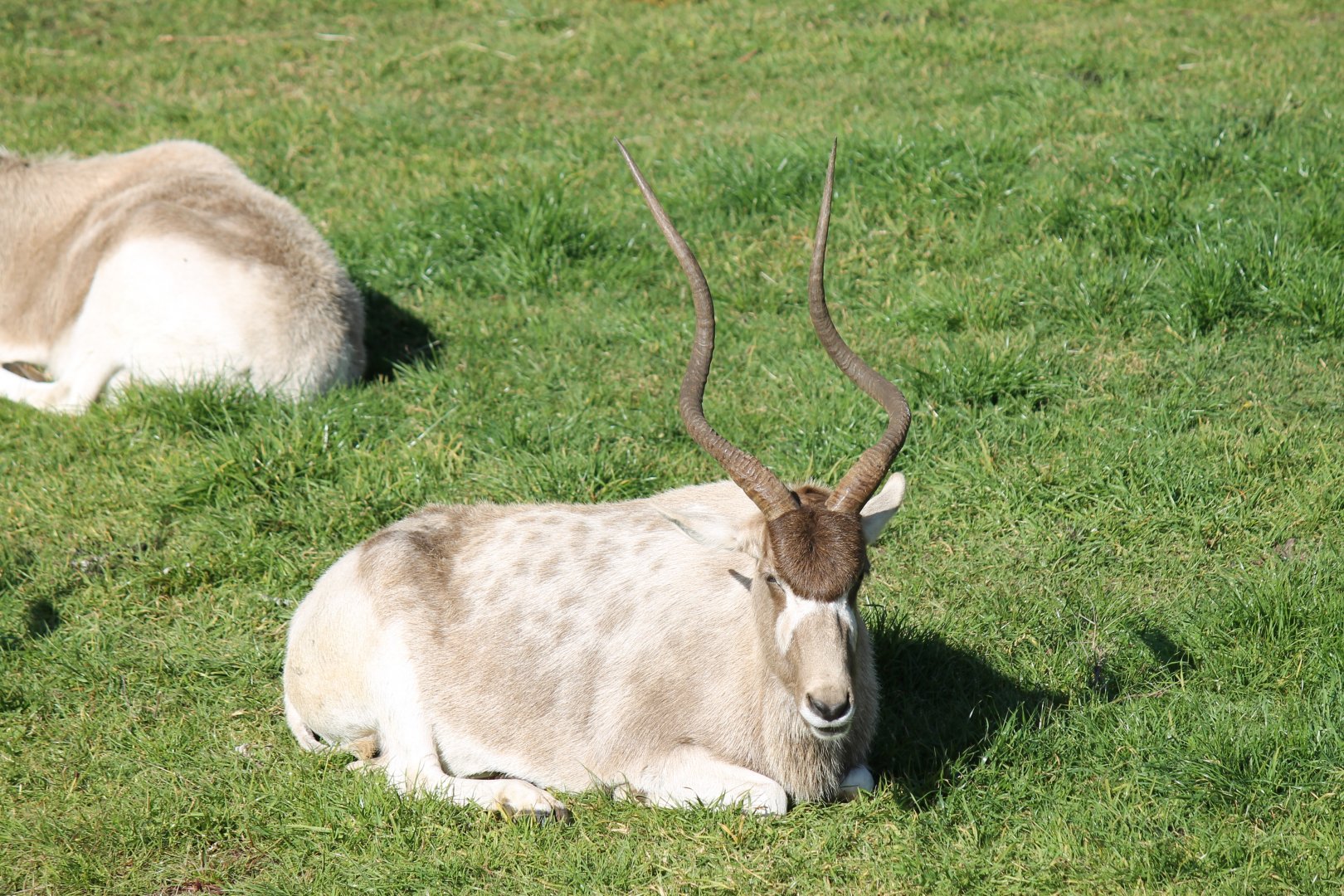
A large car park has been installed to service this area. Across the road from here was a paddock for Addax. It used to be the old Bantang and Sambar exhibit. The adjoining paddock closest to the Waterhole precinct was empty, but looks as though it will probably be developed further. Judging from the map, I assume it will hold zebra.
A path led up to the Waterhole precinct, lined by mature palms trees that were imported as part of the landscaping. There is a water playground, that will be great in summer, but was not running on a cold, midwinter day.
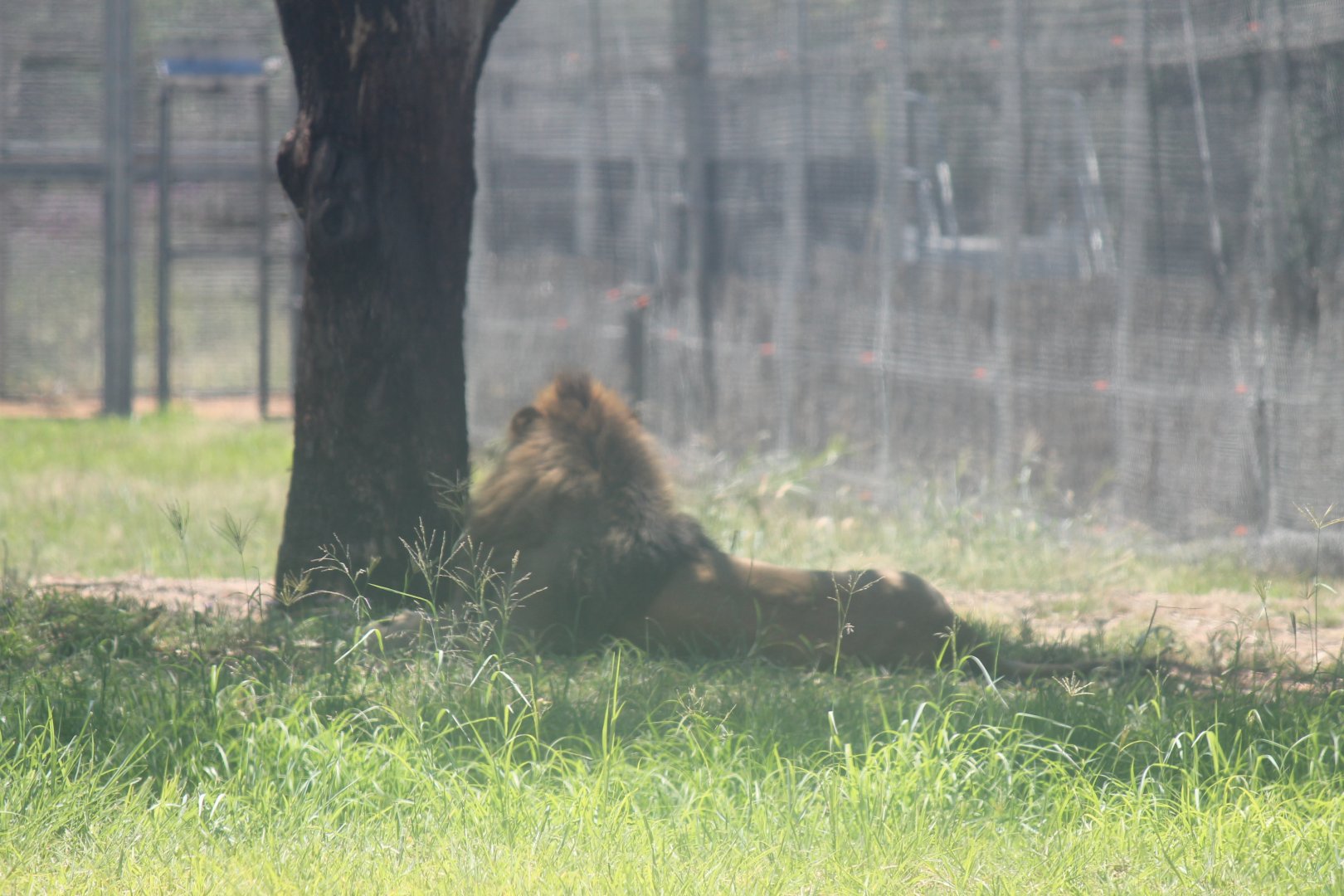
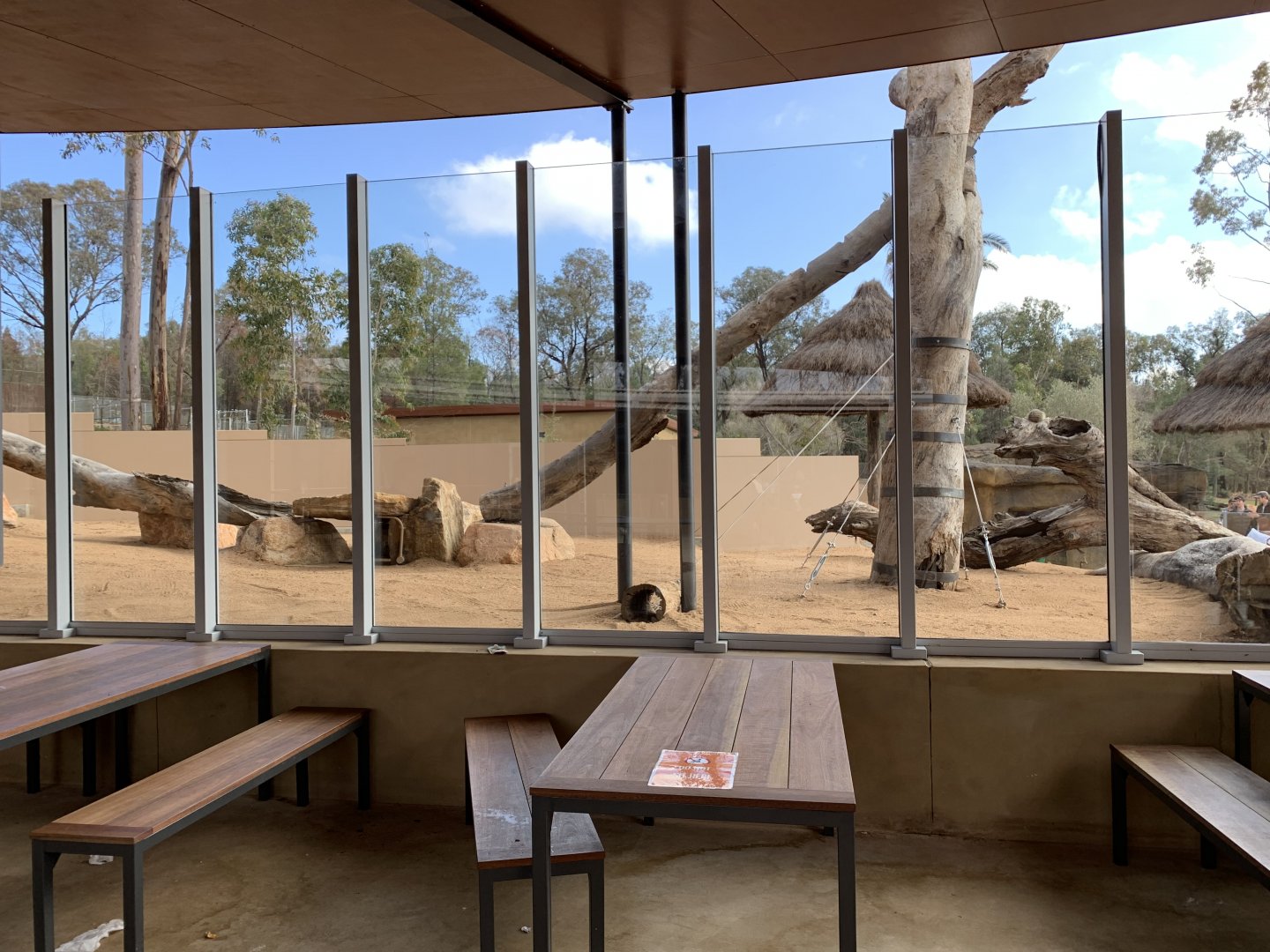
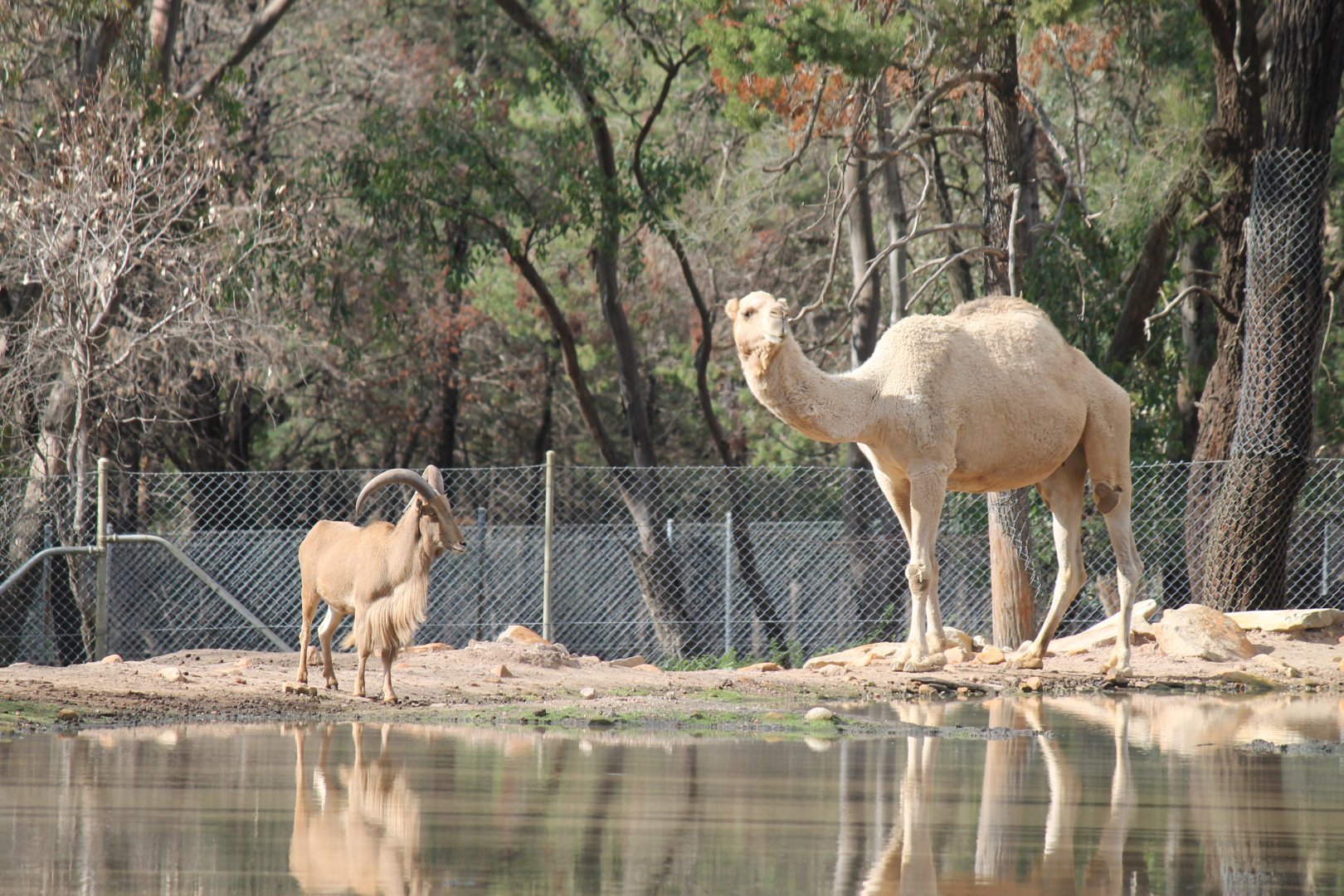
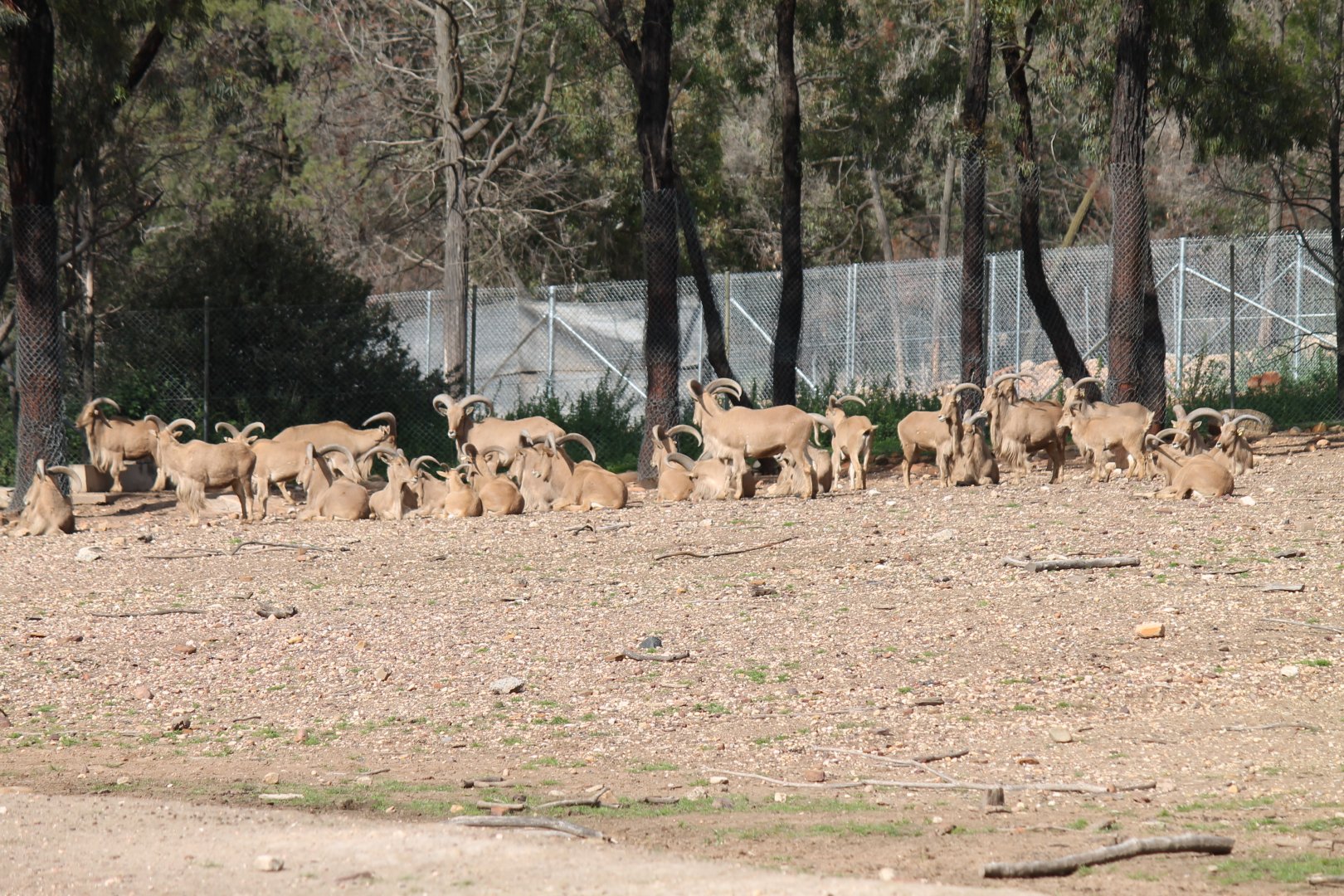
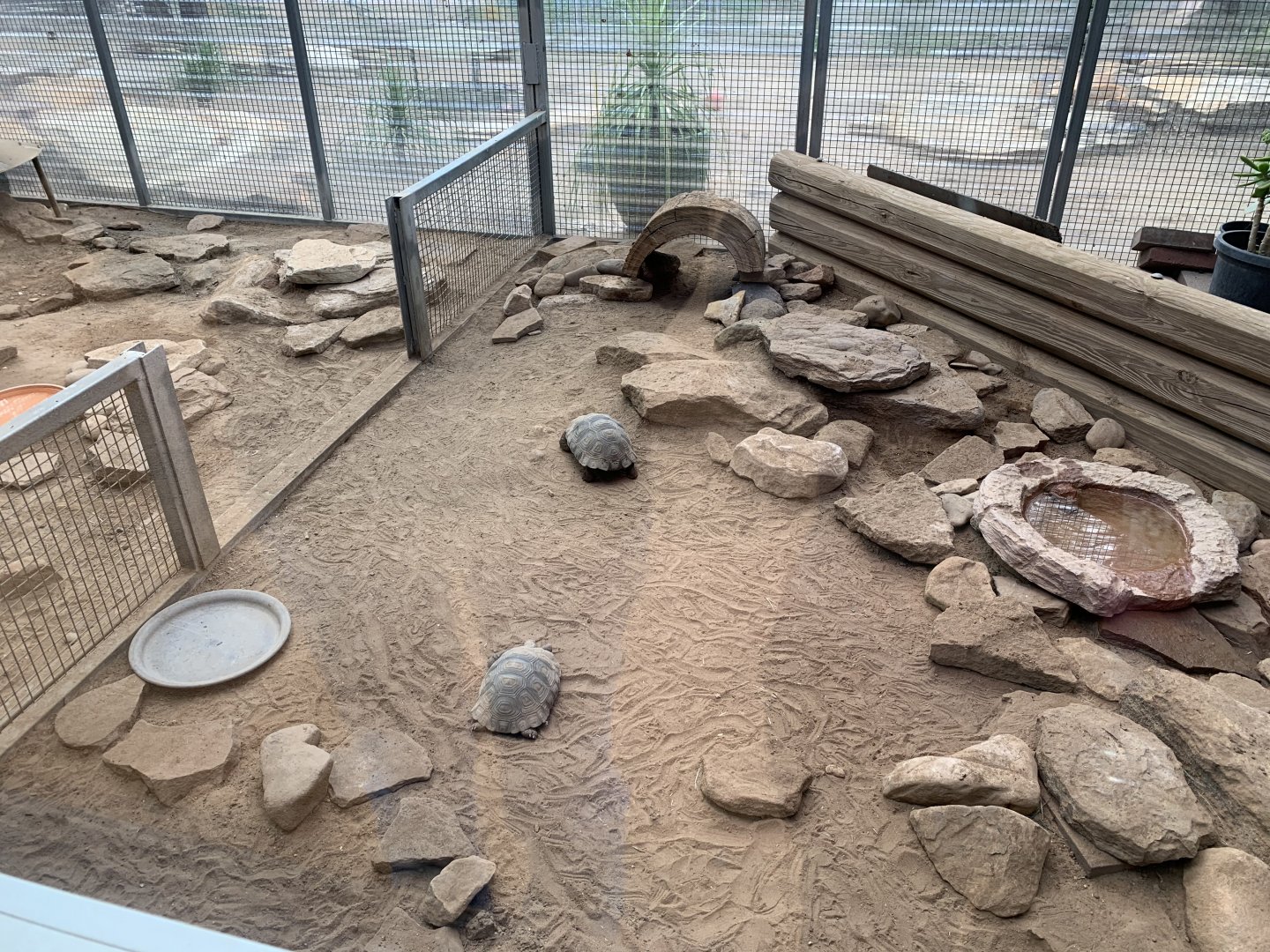
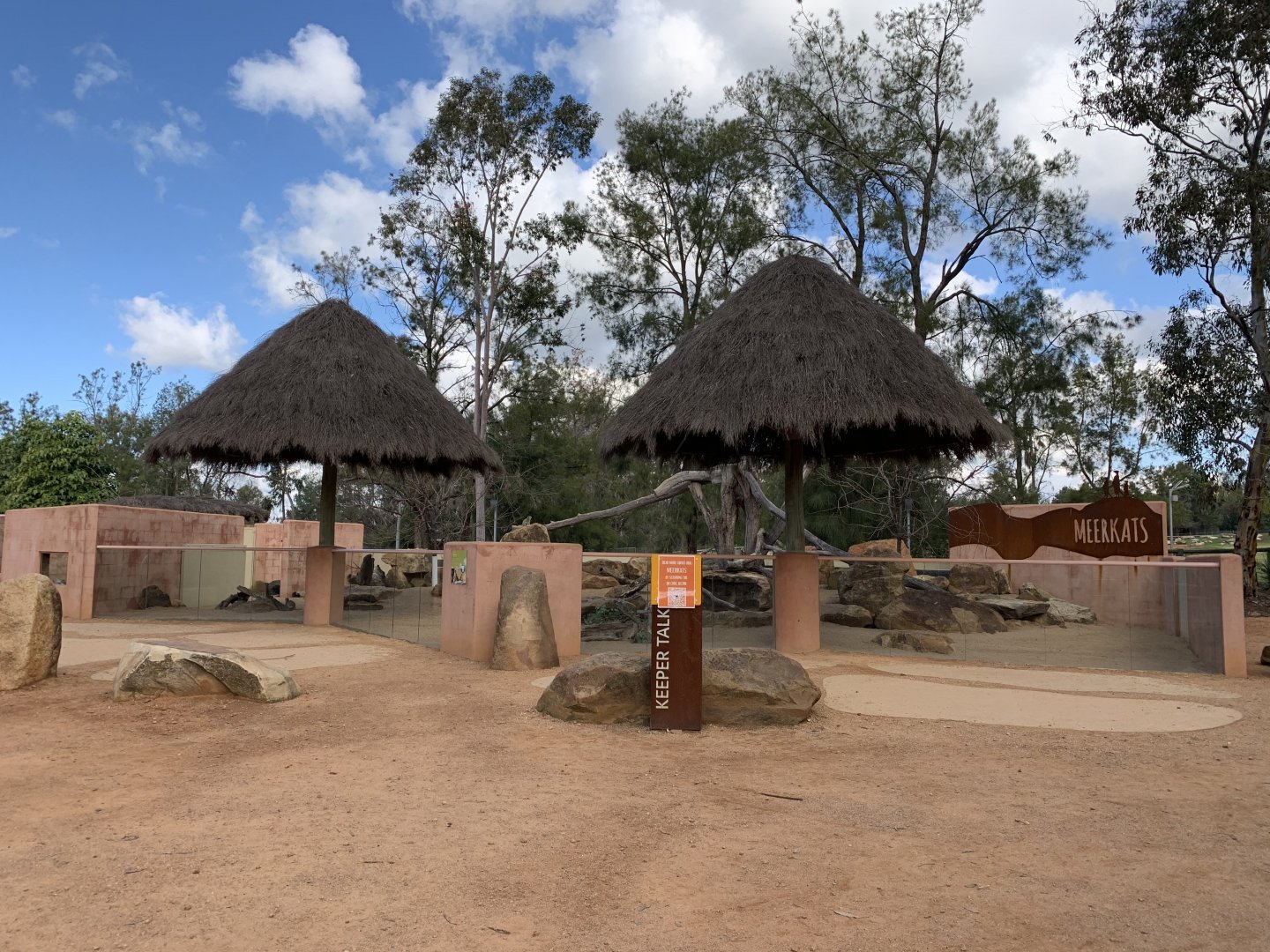
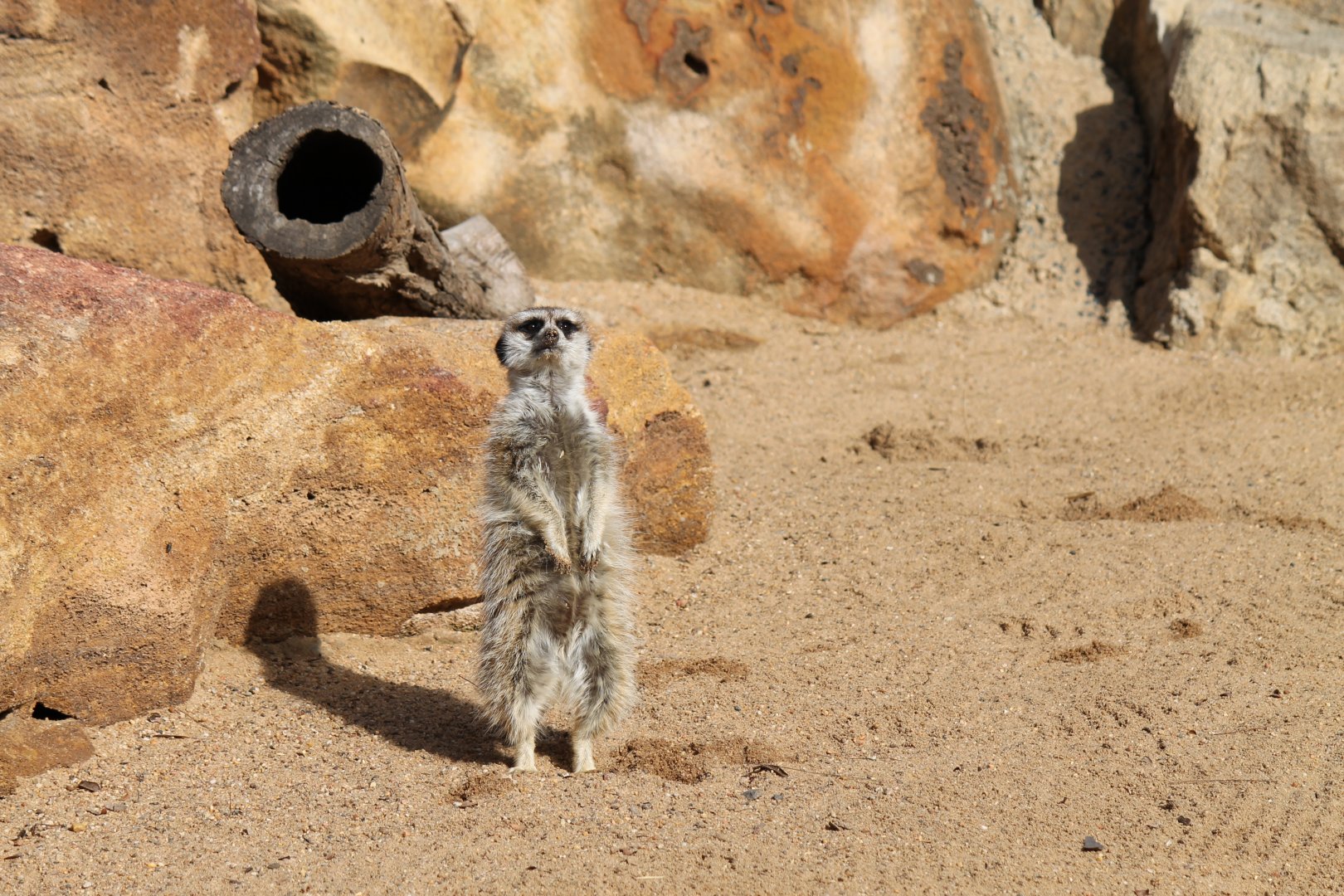
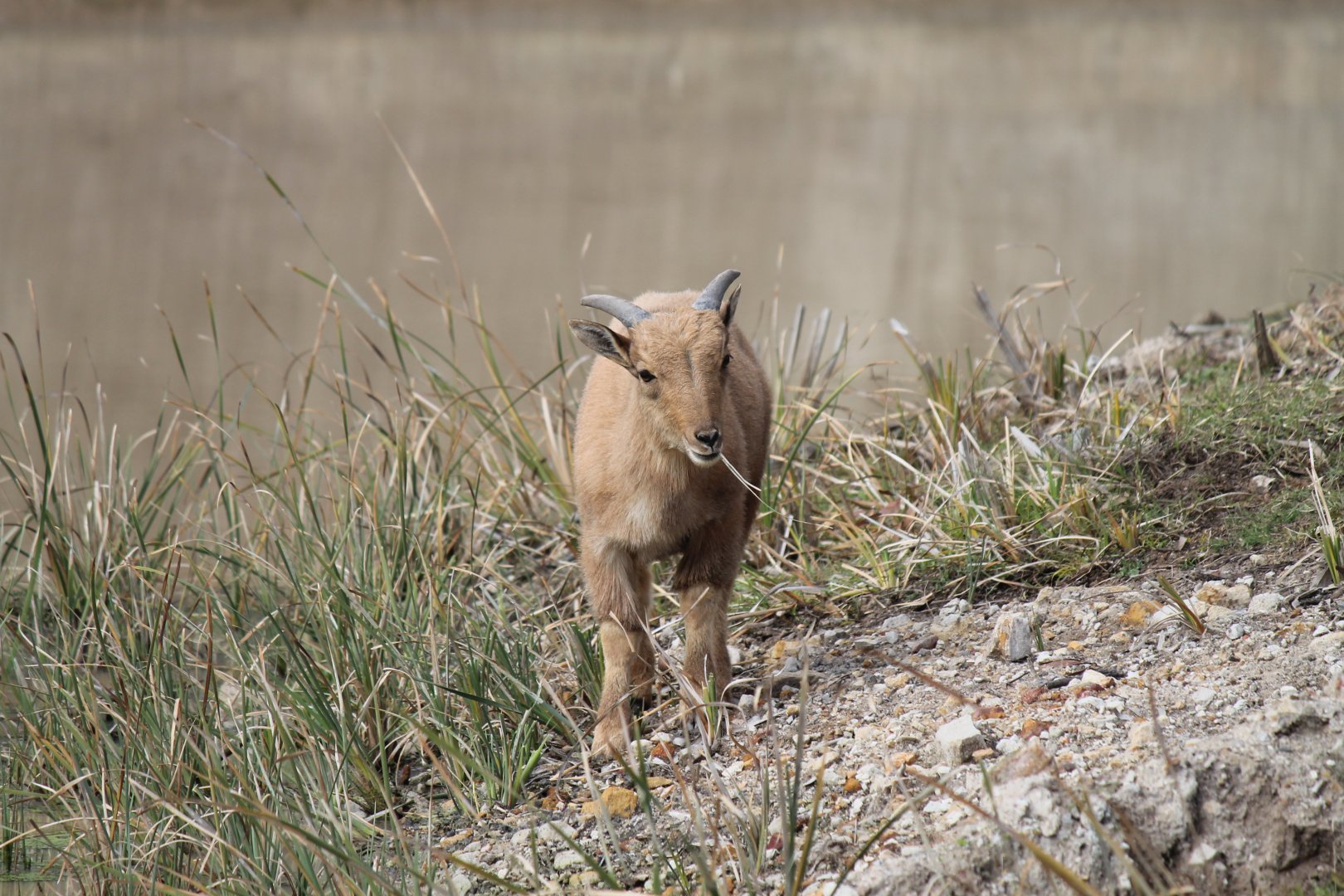
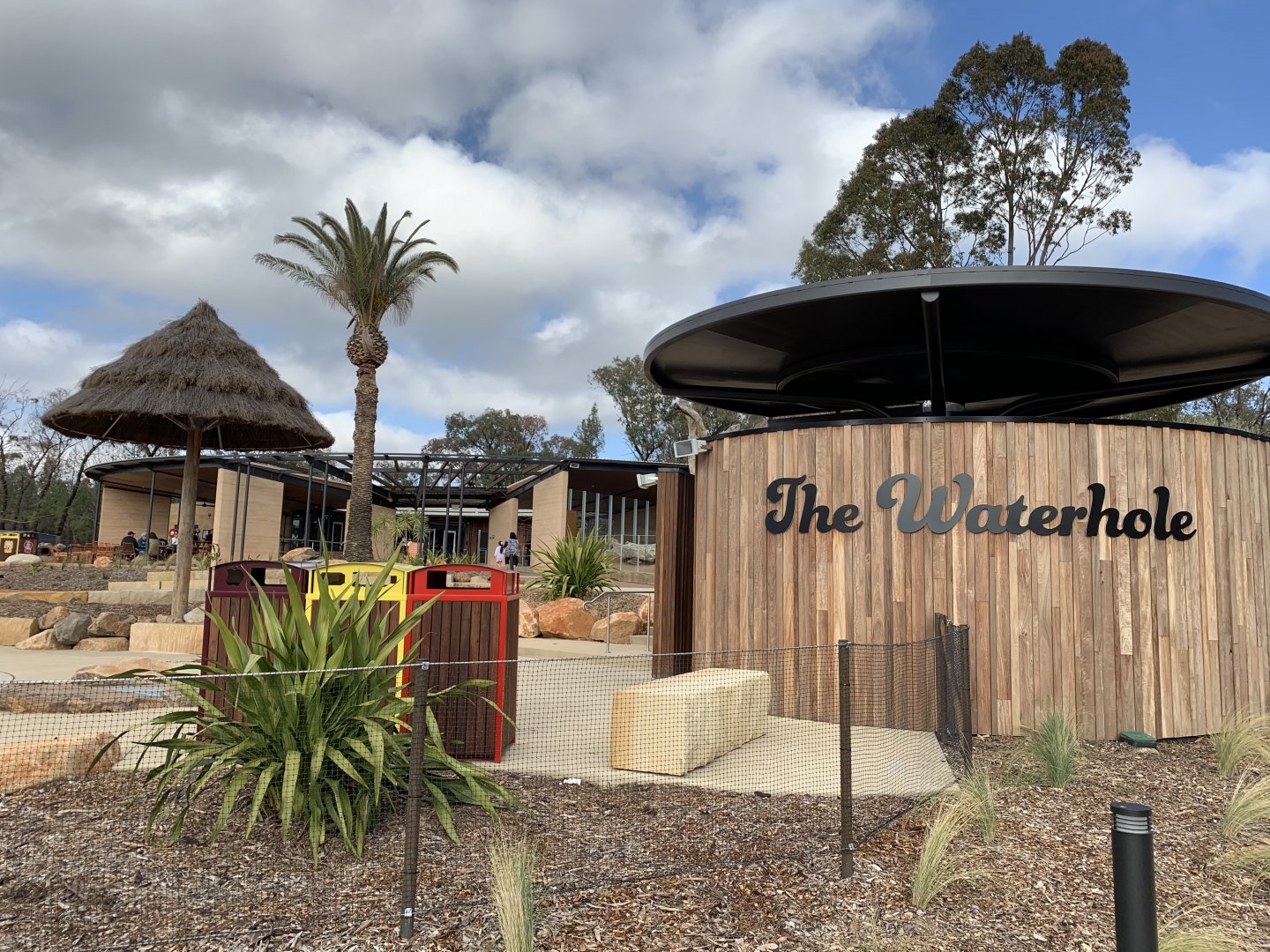 There was an exhibit for Meerkat, with a short tunnel and a clear viewing dome so visitors could pop up in the middle of the exhibit. This was quite popular with the children. There was also a small exhibit for Leopard Tortoise which I didn't see. The meerkat exhibit formed one wall of the eating area for the cafe, so visitors could sit right by the glass and eat their meal. There was a deck with tables that looked across a moat to an exhibit for Barbary Sheep. This is the old lion exhibit. I don't know if the sheep are the final species they intend to exhibit here, but they are doing quite a bit of damage to the trees. I'm surprised that there was no protection on the trees like in other exhibits, unless the intention is to eventually remove the trees and renovate the entire thing. Due to Covid, I chose not to eat at the cafe, but plenty of other visitors were.
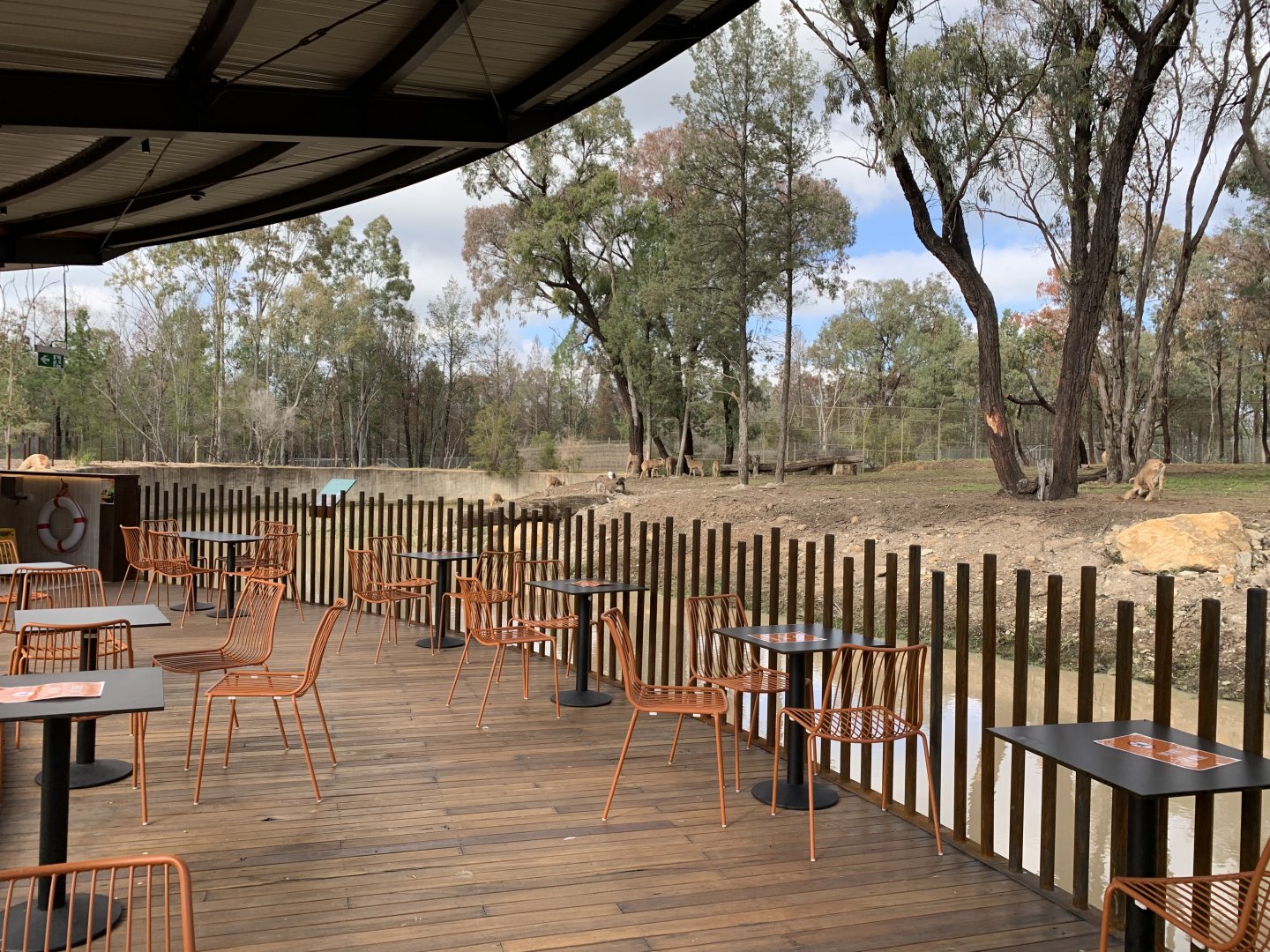
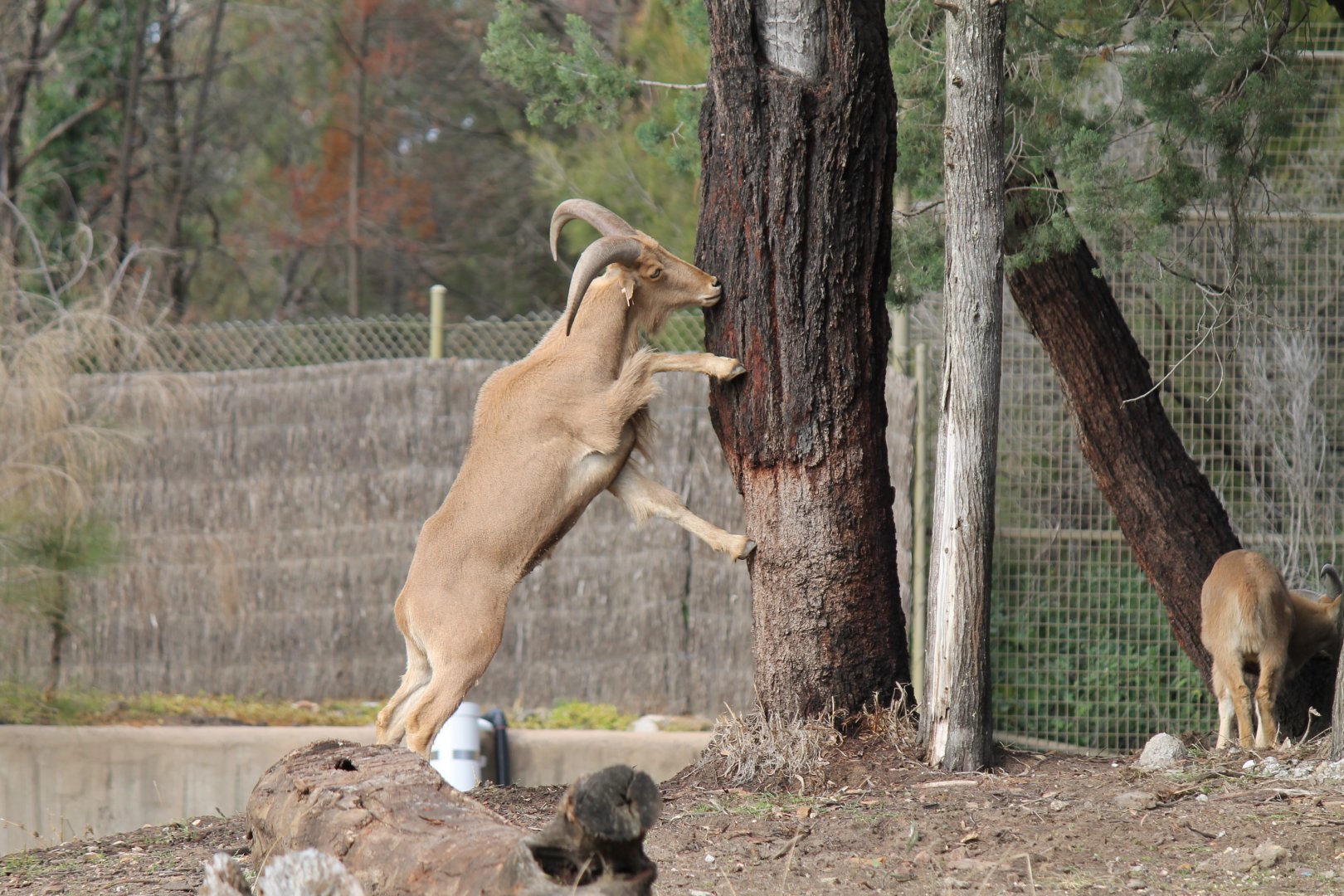 On the other side of the Waterhole precinct, was an exhibit for Blackbuck. This herd was entirely female animals. The exhibit was a long paddock with lots of native cypress trees. I believe this exhibit originally held nilgai, and later plains zebra.
On the opposite side of the road, there was access to the Asian forest exhibits. I visited those later in the day.
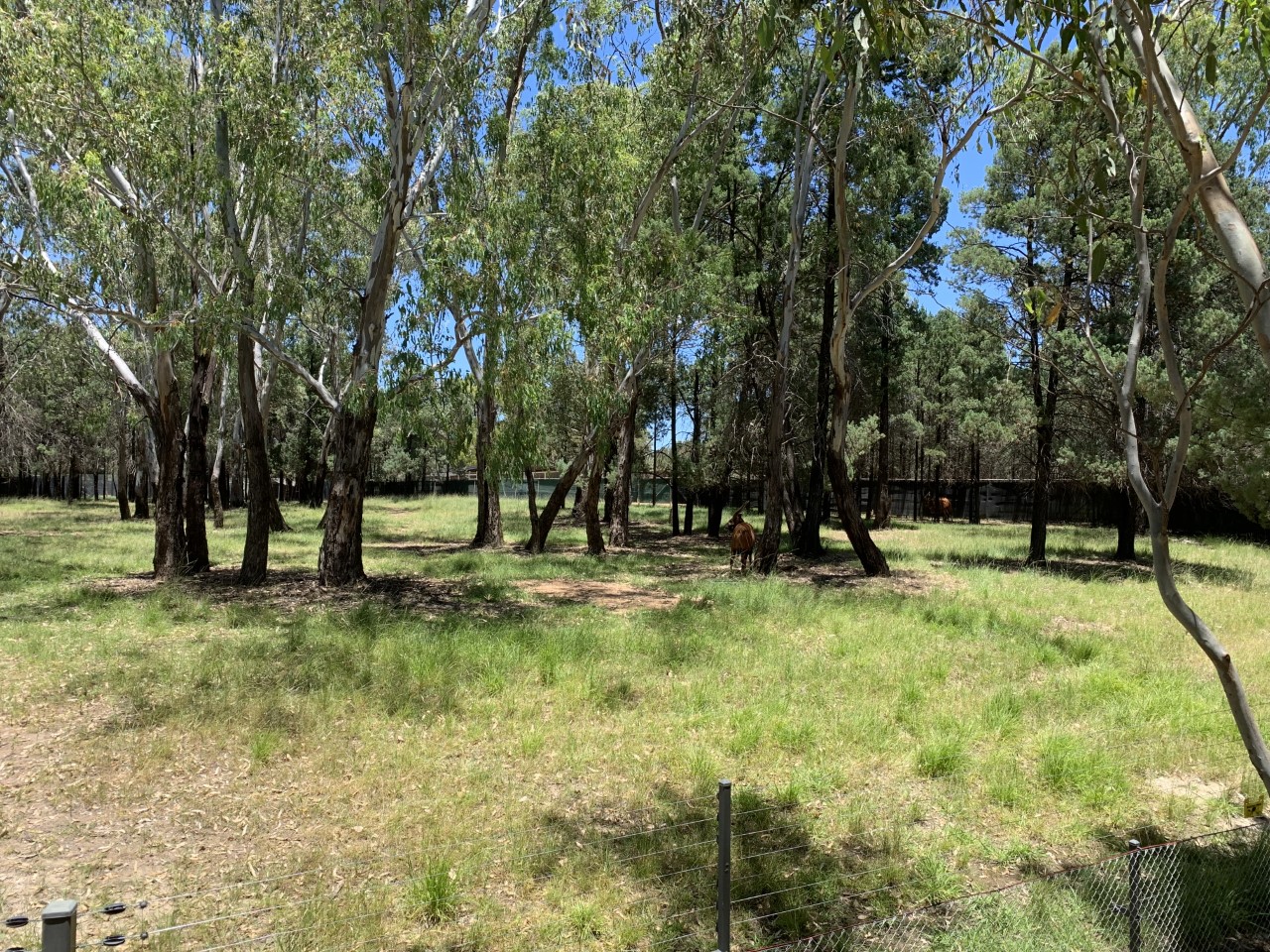
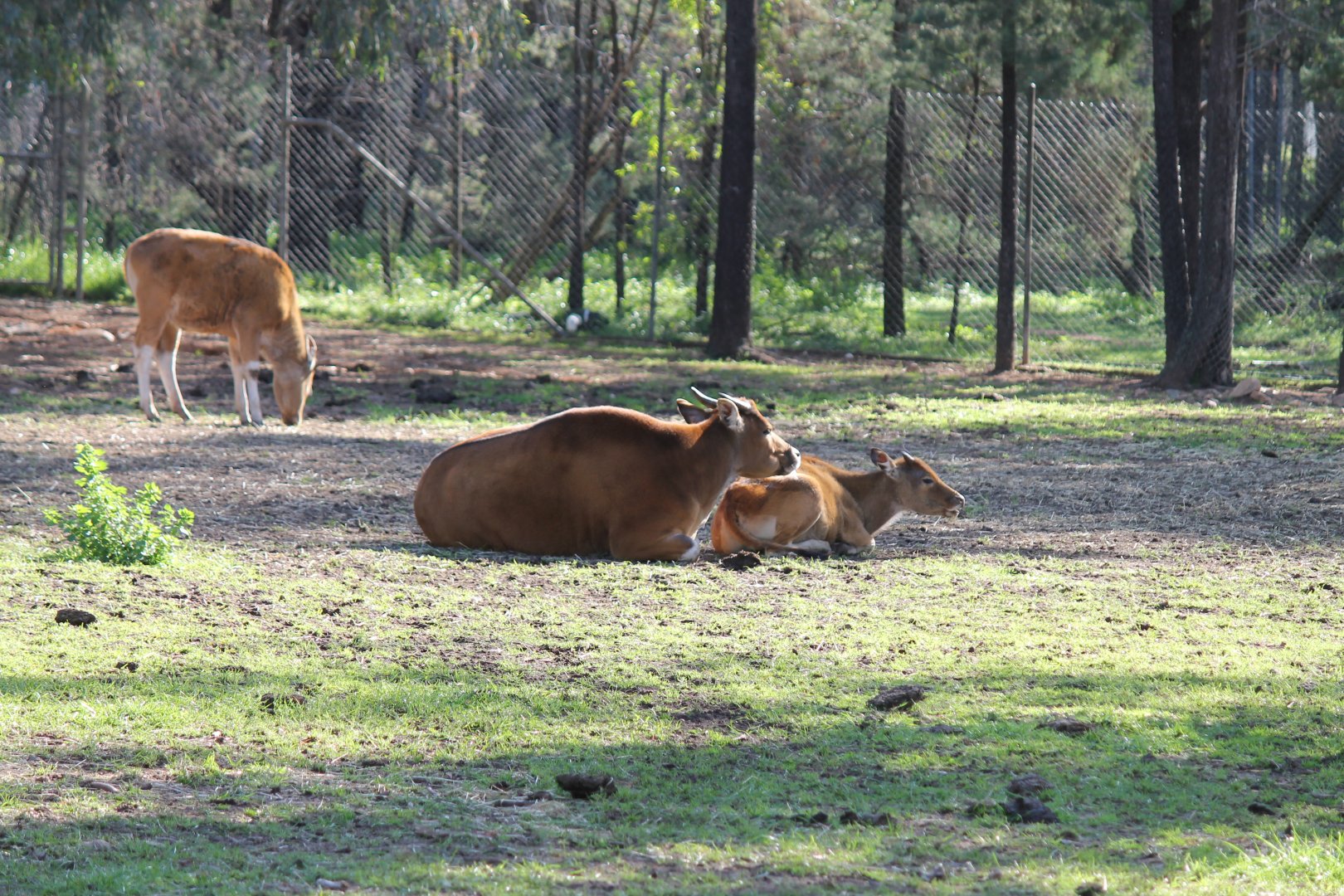
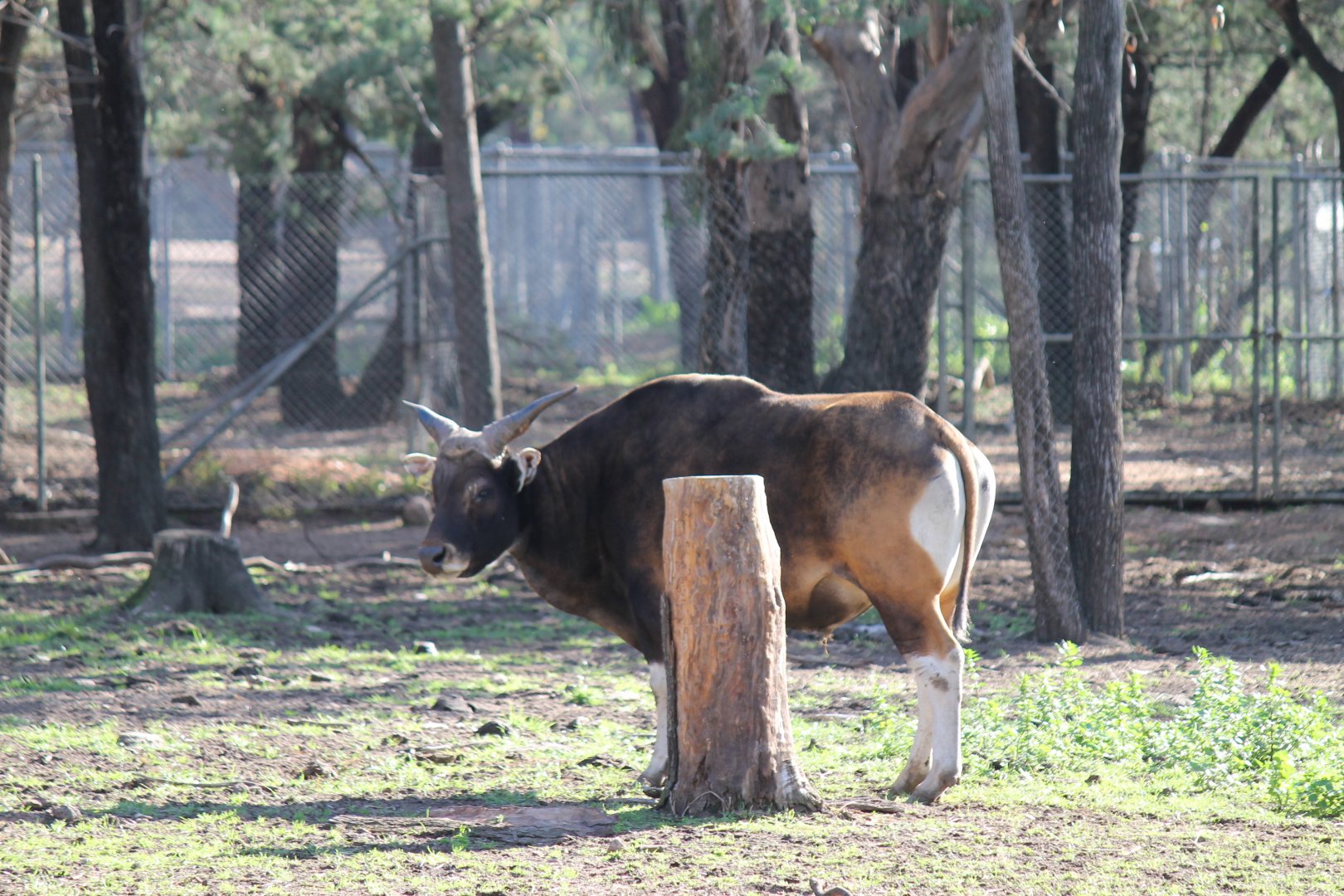
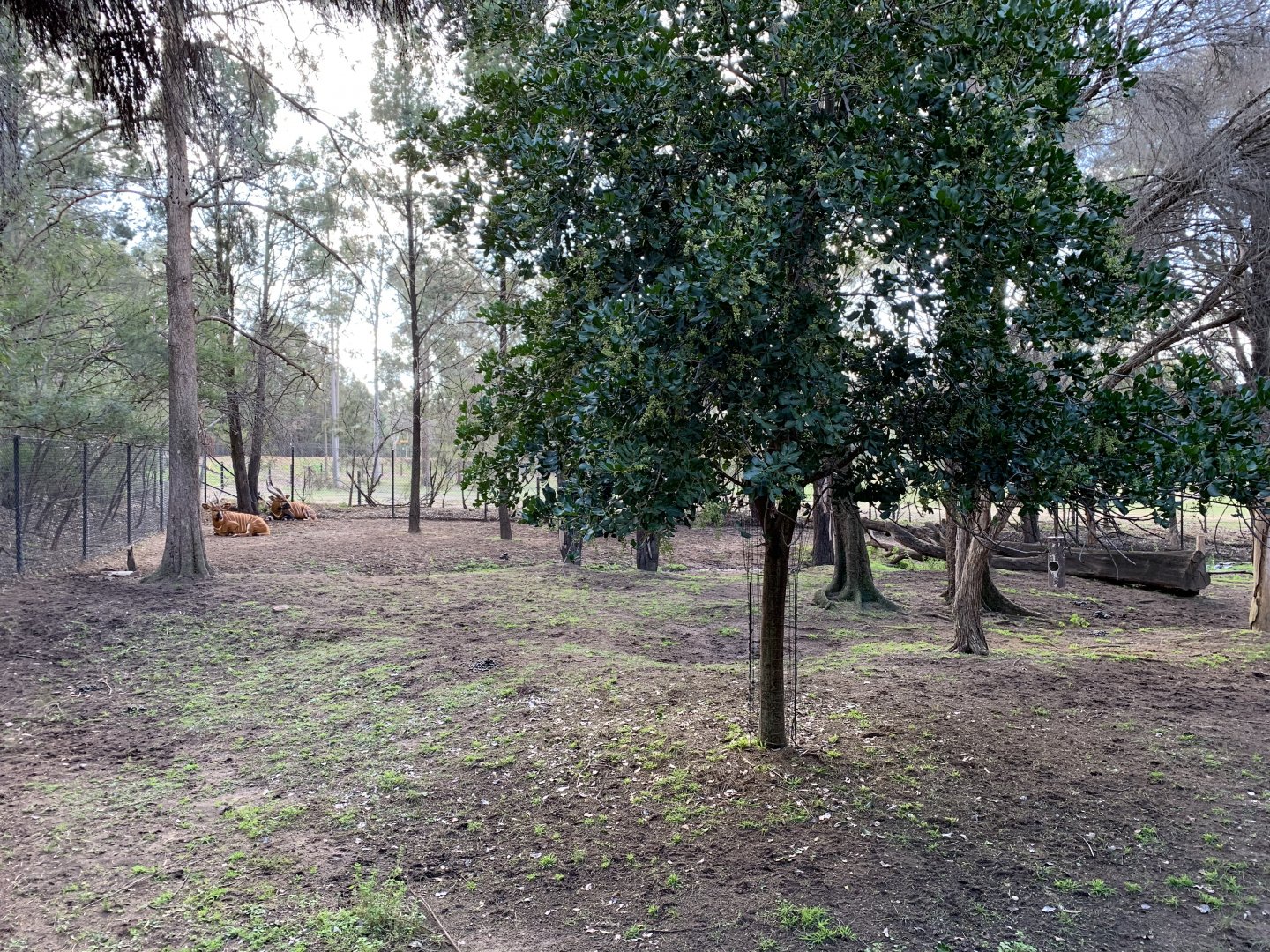
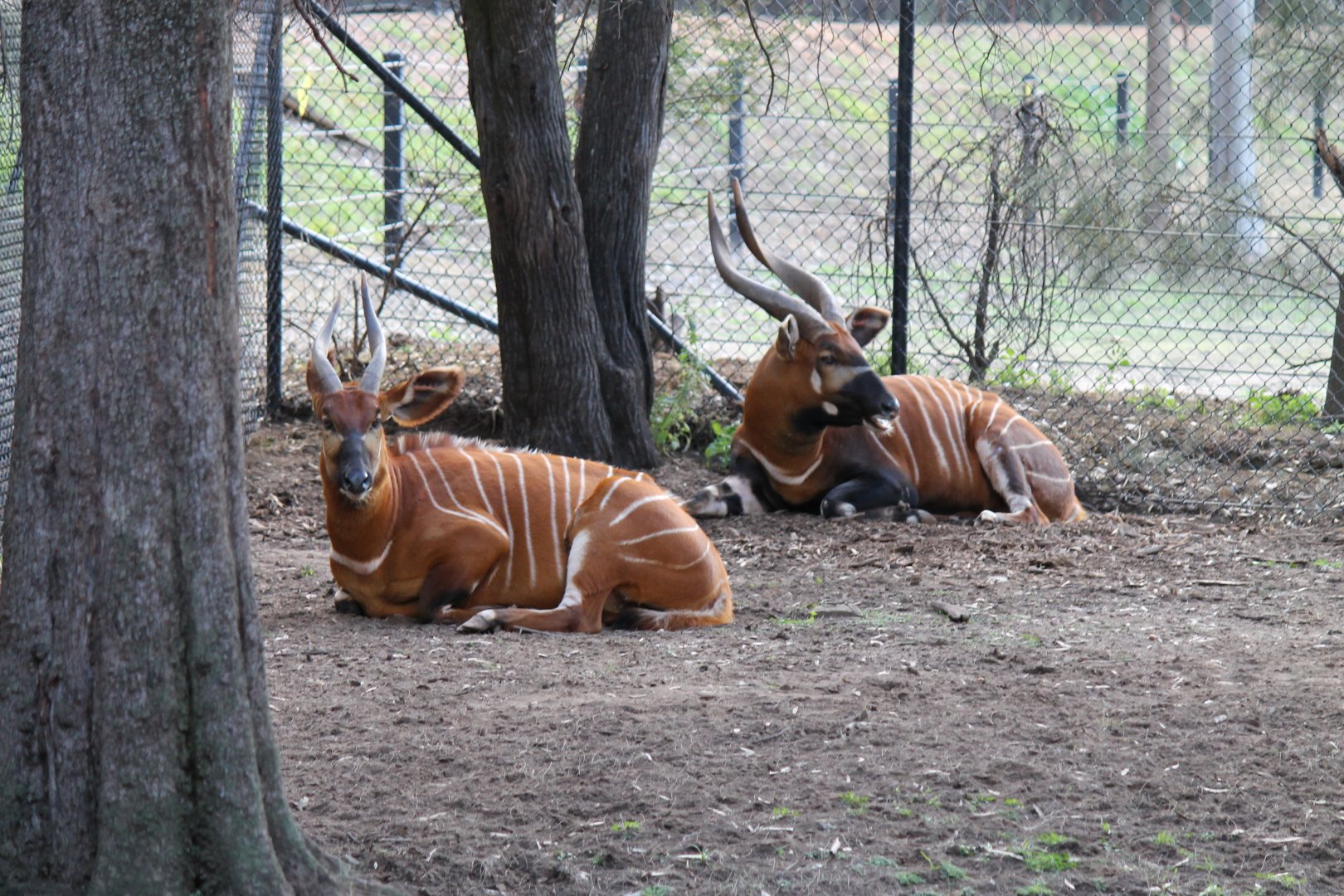
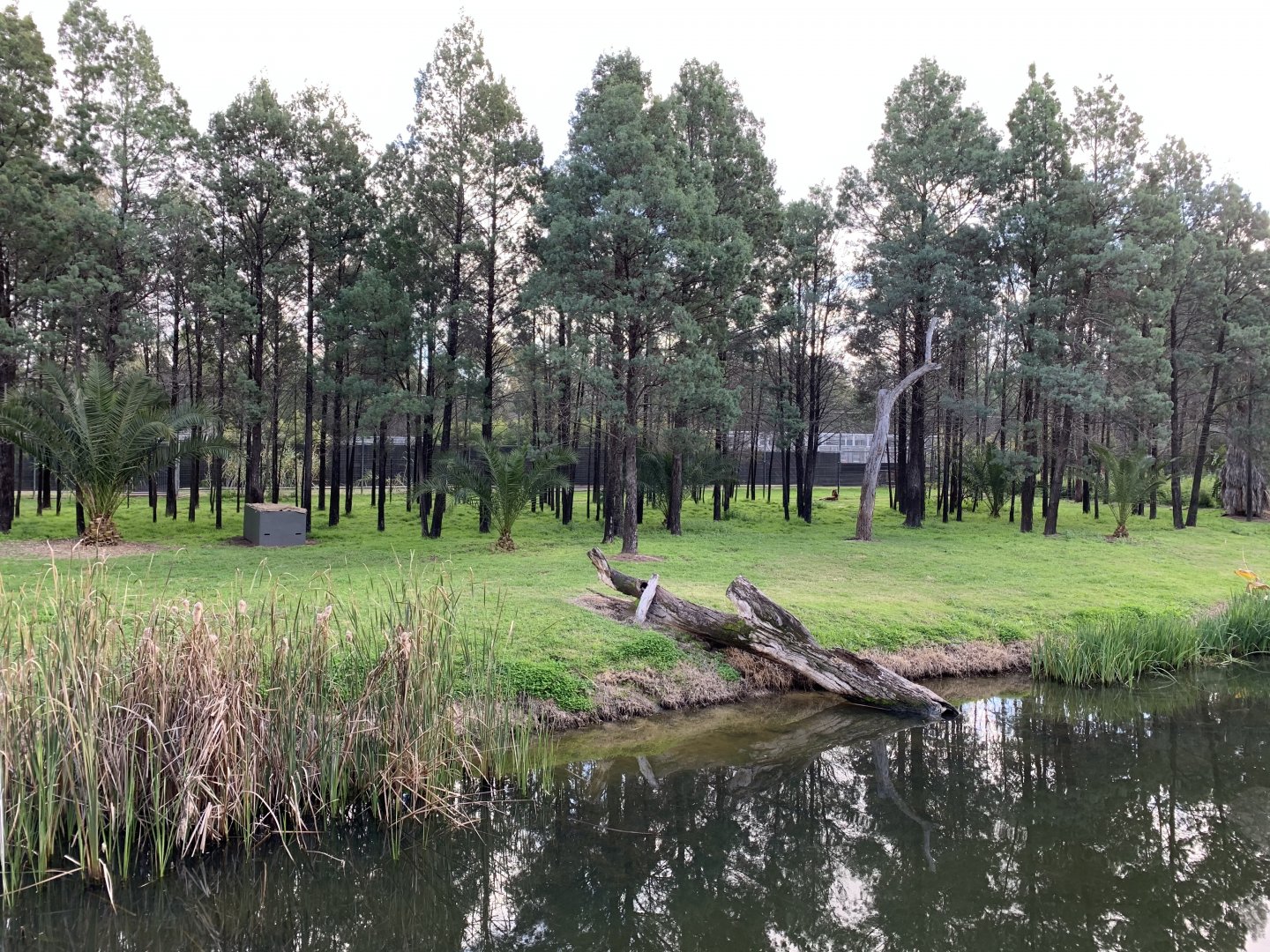
Continuing to drive along the main loop, there were large exhibits for Banteng, and male Blackbuck.
Taronga Western Plains Zoo is a large, open range zoo with a 5.5 kilometre loop road that allows visitors to use their own vehicle to drive around the zoo. Carts and bikes are also available for hire, or visitors can choose to walk. I decided to drive for convenience and comfort on a cold day. The road is a one-way loop, with plenty of parking areas.
The zoo site is naturally a semi-arid environment, with red, sandy soil and many native trees such as ironbark, cypress and eucalypts remaining in and around the exhibits.
TWPZ reopened on 1st June 2020, after a Covid shutdown. I visited on the first sunny weekend I was able to, anticipating that a second wave could likely force closures again. My ticket was purchased online for a specific date so that visitor numbers could be monitored. For the month of June, TWPZ was offering a 25% discount on entry to encourage visitors to come back to the zoo. My ticket for this visit cost $36.
On arrival at the ticket check point, I was given a map that had a few alterations to the one available on the website because of Covid. Most notably the species in the walk-throughs had been removed, as well as the African Wild Dogs because their exhibit was under renovation.
Arriving shortly after the gates opened, I opted to skip the first few exhibits and begin at the Common Hippopotamus. The birth of Kani in April was one of my main reasons for visiting. There were three enclosures for hippos. One was an inland surrounded by a large waterhole, one was a small beach, and the other was a large paddock. There was one hippo on the island and one on the beach. I watched these for a while until Kani and his mother, Cuddles, emerged from the night quarters into the large paddock. Cuddles led Kani over to the fence where a keeper threw them a few biscuits of hay. Cuddles ate her breakfast while Kani snuggled down for a snooze in the sun. This was the perfect time to get great views of the hippos, and to skip the crowd.
Continuing on foot, there was the viewing area for the savannah, which was a large, mixed exhibit containing White Rhinoceros, Eland, Ostrich, Giraffe, Plains Zebra and Blackbuck. Adjacent to the savannah was the Zoofari lodge which was visible from the viewing hide. The area immediately in front of the viewing hide was quite unattractive. There was a small, muddy waterhole, service roads and trees partially blocking the view. Usually there is a vehicle that drives guests out onto the savannah for an extra $20, but it was not running due to Covid restrictions. All of the keeper talks were also cancelled.
There was a viewing tower behind the hide that visitors could climb for a better view of the savannah.
A large car park has been installed to service this area. Across the road from here was a paddock for Addax. It used to be the old Bantang and Sambar exhibit. The adjoining paddock closest to the Waterhole precinct was empty, but looks as though it will probably be developed further. Judging from the map, I assume it will hold zebra.
A path led up to the Waterhole precinct, lined by mature palms trees that were imported as part of the landscaping. There is a water playground, that will be great in summer, but was not running on a cold, midwinter day.
On the opposite side of the road, there was access to the Asian forest exhibits. I visited those later in the day.
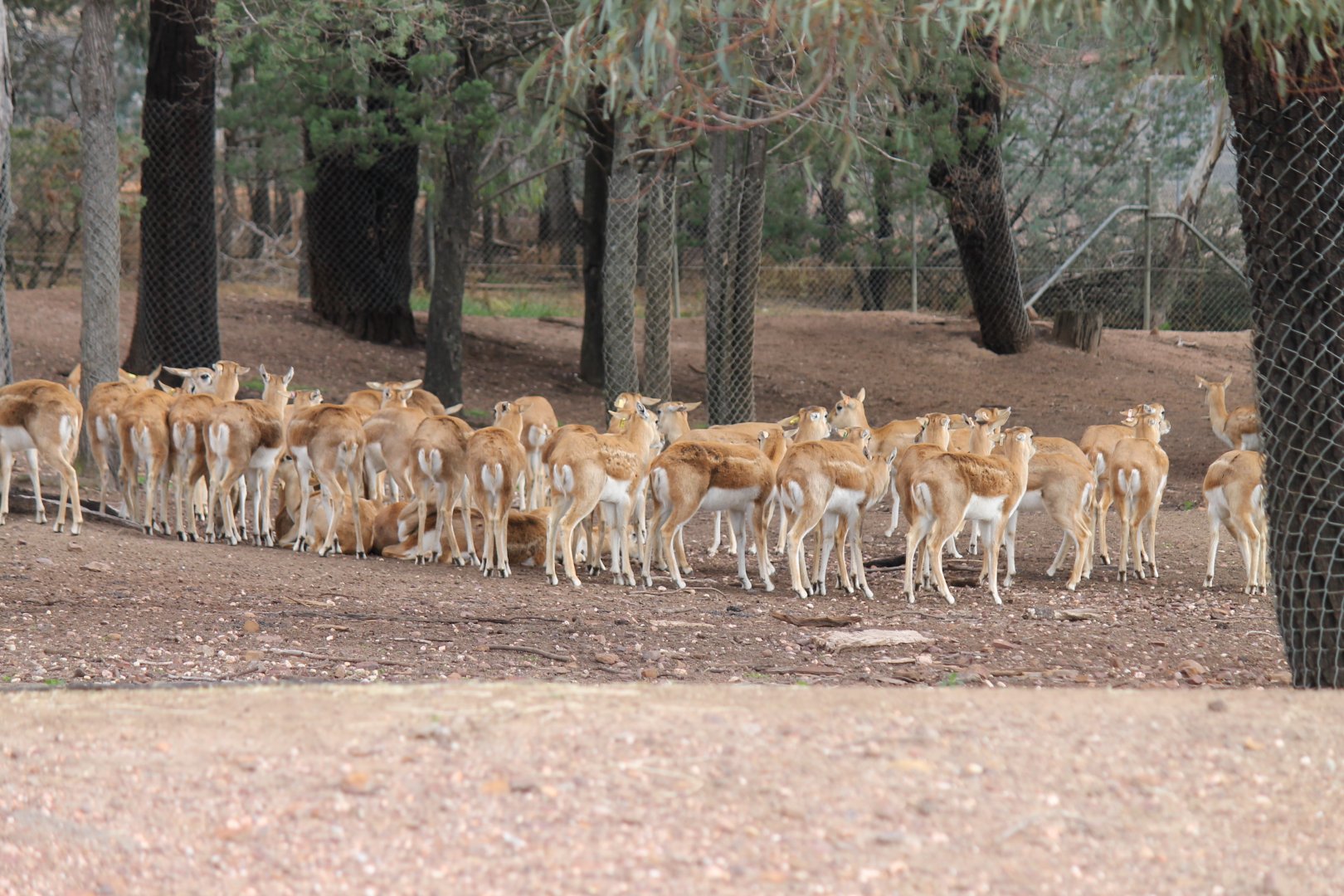
Continuing to drive along the main loop, there were large exhibits for Banteng, and male Blackbuck.
Last edited:
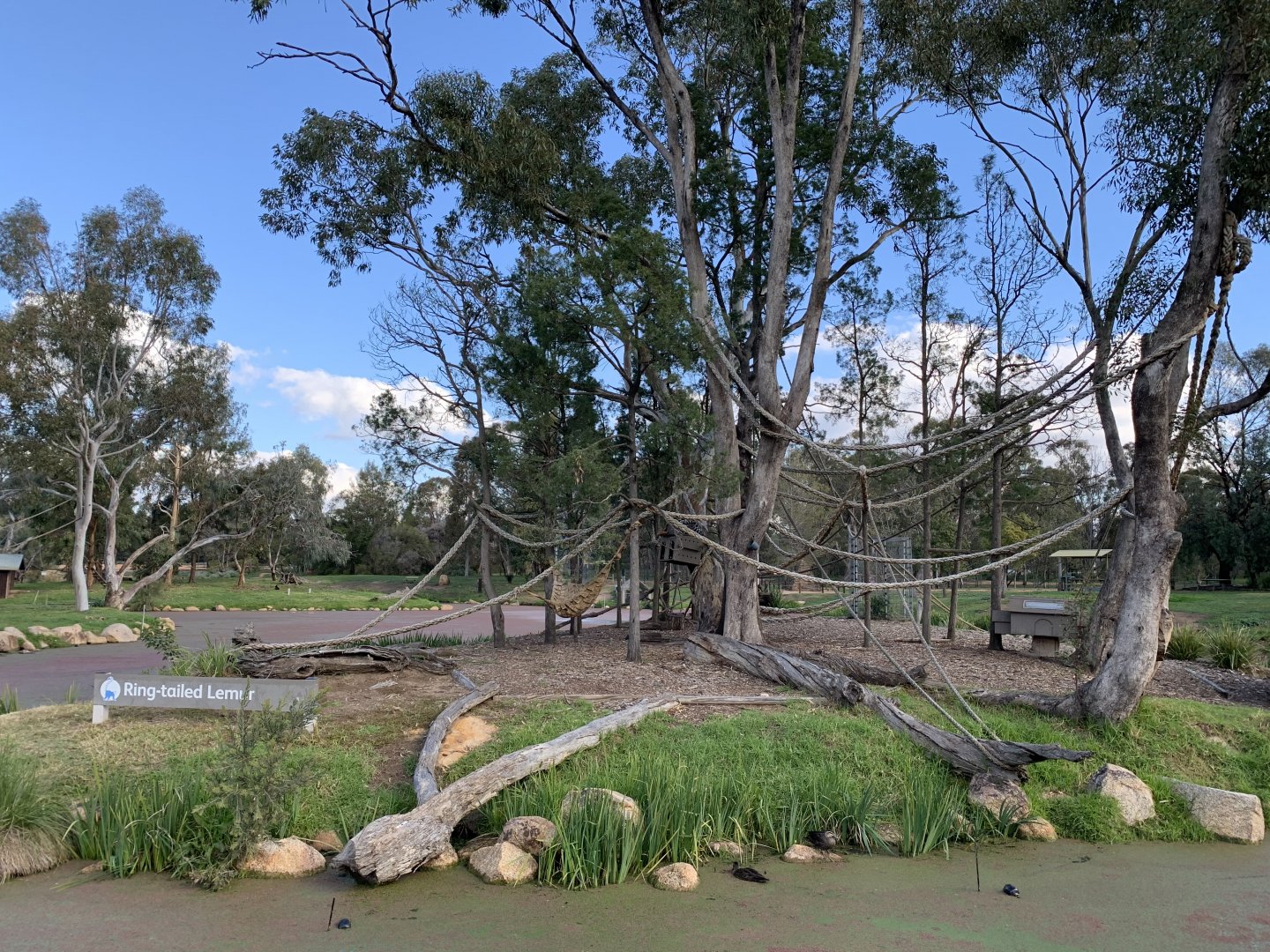
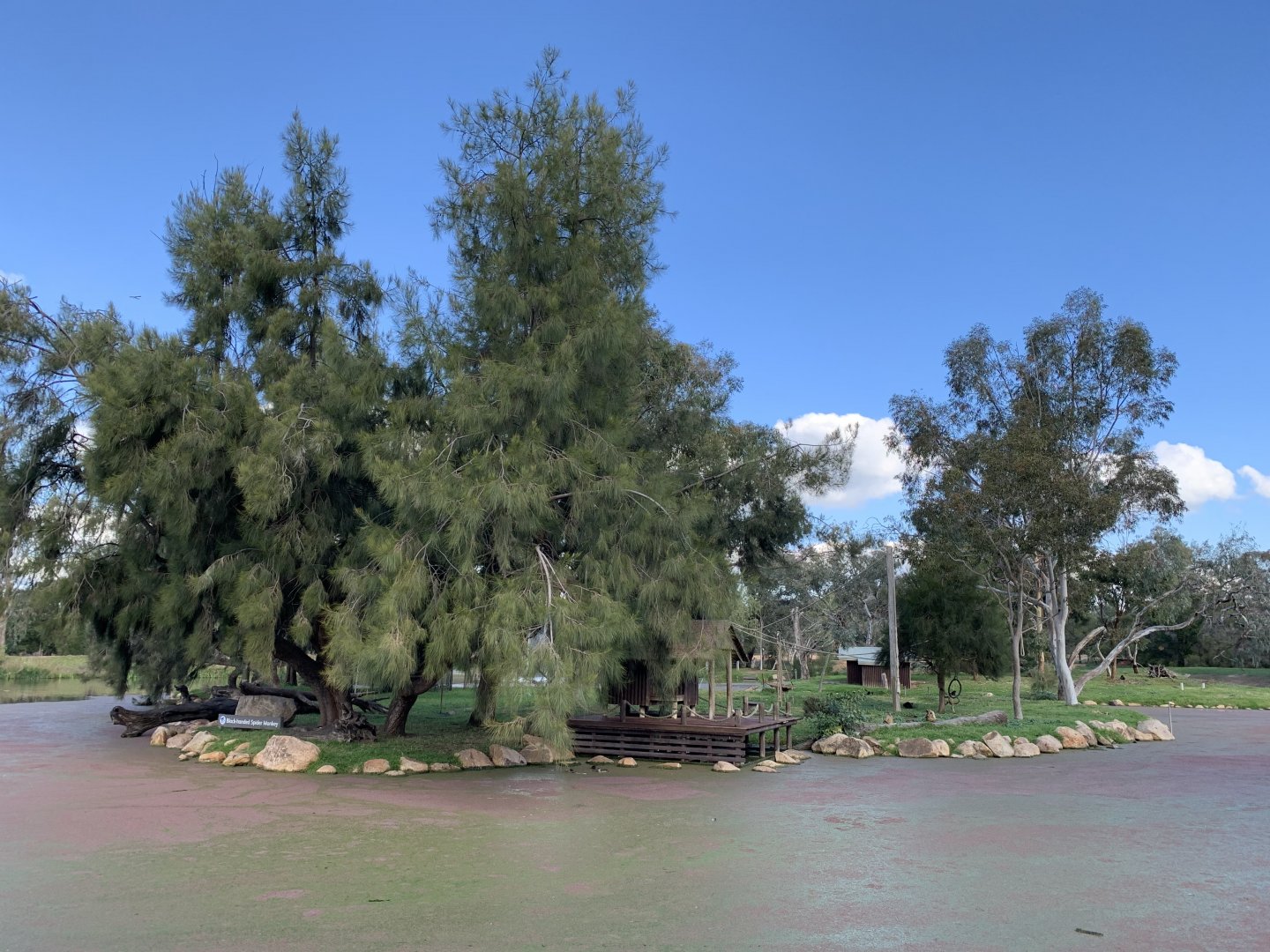


 I'm wondering why they don't display them?
 I'm going to visit them again at least one more time after they open this year.