Zoochat Big Year 2022

I had a bit of a slack start to the year, but a quick trip to the ACT and then Kosciuszko National Park got the lists going...

Mammals:

1. House Cat (Felis catus)
2. Brown Hare (Lepus europaeus)
3. Eastern Grey Kangaroo (Macropus giganteus)
4. European Rabbit (Oryctolagus cuniculus)
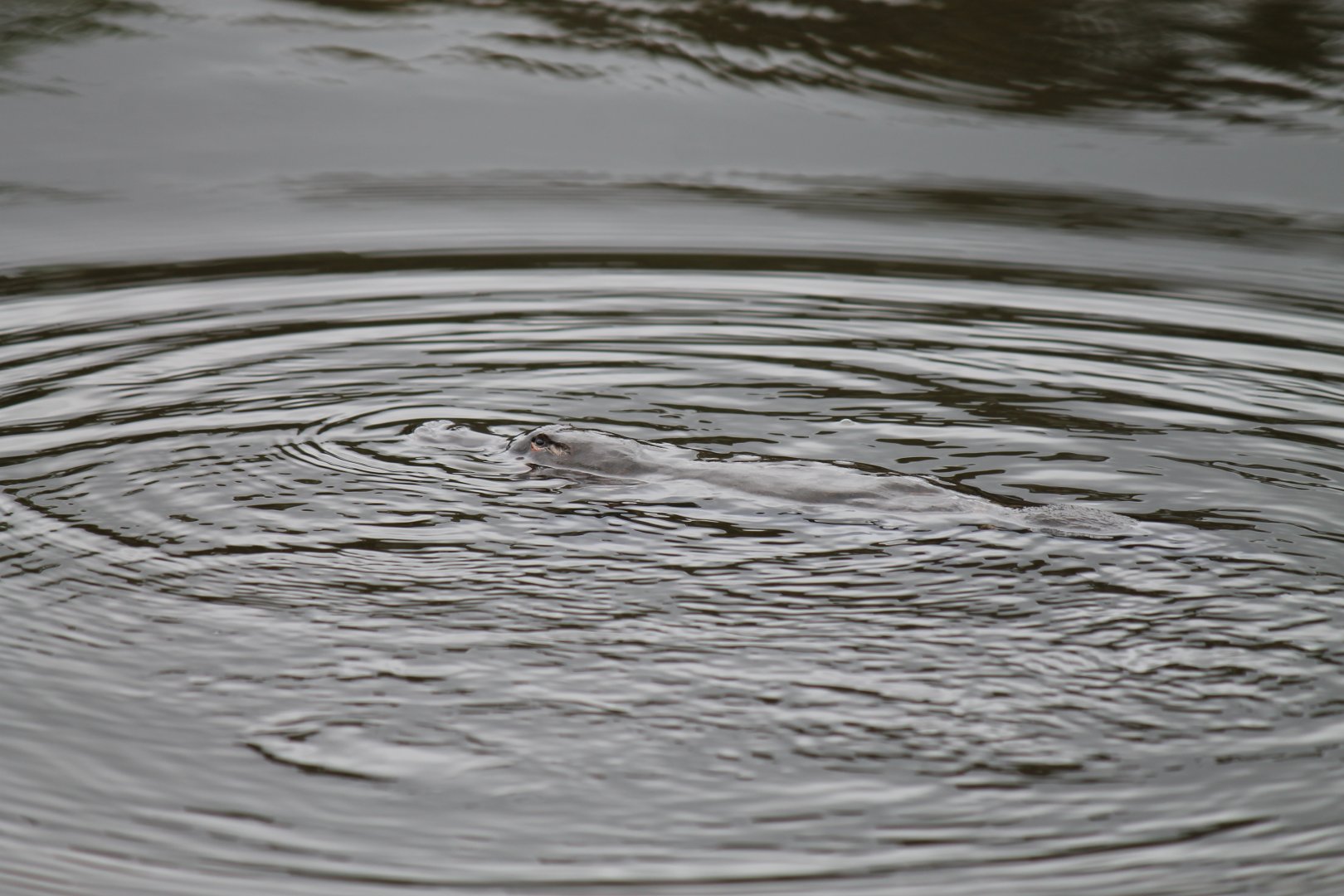
5. Platypus (Ornithorhynchus anatinus)
6. Brumby (Equus ferus caballus)

Birds:

1. Black Swan
2. Musk Duck
3. Eurasian Coot
4. Australasian Swamphen
5. Little Pied Cormorant
6. Sulphur-crested Cockatoo
7. Australian Magpie
8. Australian Shelduck
9. Australasian Shoveller
10. Pacific Black Duck
11. Grey Teal
12. Masked Lapwing
13. Silver Gull
14. White-faced Heron
15. Hardhead
16. Crested Pigeon
17. Pacific Koel
18. Dusky Moorhen
19. Latham's Snipe
20. Australasian Darter
21. Royal Spoonbill
22. Galah
23. Red-rumped Parrot
24. Superb Fairywren
25. Red Wattlebird
26. White-plumed Honeyeater
27. White-browed Scrubwren
28. Black-faced Cuckooshrike
29. Willie Wagtail
30. Grey Fantail
31. Magpie-lack
32. Golden-headed Cisticola
33. Australian Reed Warbler
34. Silvereye
35. Common Myna
36. Red-browed Finch
37. Laughing Kooaburra
38. Sacred Kingfisher
39. Yellow-tailed Black-cockatoo
40. Gang-gang Cockatoo
41. White-throated Treecreeper
42. Yellow-faced Honeyeater
43. White-eared Honeyeater
44. White-naped Honeyeater
45. Brown Thornbill
46. Golden Whistler
47. Flame Robin
48. Eastern Yellow Robin
49. Welcome Swallow
50. Brown Falcon
51. Yellow-rumped Thornbill
52. Little Raven
53. Spotted Pardelote
54. Pied Currawong

Reptiles:

1. Eastern Snake-necked Turtle (Chelodina longicollis)
2. Red-bellied Black Snake (Pseudechis porphyriacus)
3. Cunninghams's Skink (Egernia cunninghami)
4. Eastern Brown Snake (Pseudonaja textilis)

Invertebrates:

1. Leopard Slug (Limax maximus)
 
Managed to see another bird of prey flying over the garden and spotted a typical urban bird from the car while going to the hairdressers:

39. Common kestrel Falco tinnunculus
40. Feral pigeon Columba livia

I have seen another new bird recently, flying over the garden during the early morning. Both of the new mammals I spotted recently were also in the garden - the stoat was particularly good, as I didn't see any at all last year. I also identified my first invertebrate, active in the window frame of my bedroom.

41. Greylag goose Anser anser

4. Stoat Mustela erminea
5. Reeve's muntjac Muntiacus reevesi

1. Harlequin ladybird Harmonia axyridis
 
Went to do some birding last Sunday that turned out to be very gull-focused with quite some ring reading (8 Lesser black-backed from Norway, 1 from the UK and 2 Audouin's gulls from Spain) but also a Common gull (scarce species here) and most importantly a Great black-backed gull while scanning a gull group at Aghroud beach!

Great black-backed gulls are a tough species to see in Morocco. There's a tiny breeding population at Khnifiss Lagoon where most people (including me) see them but there are also a few wintering individuals each year on the Atlantic coast, mostly juveniles (like this one). They're so scarce as a wintering species that they used to be a committee species until 2019 so I'm very happy I found one (and just in general, they're a terrific species, so huge compared to the other gulls here):


16/01/2022 (Estuaire du Tamri, Morocco [#81-82], Plage d'Aghroud [#83-84])
BIRDS:
81 - Common house martin, Delichon urbicum
82 - Eurasian crag-martin, Ptyonoprogne rupestris
83 - Northern gannet, Morus bassanus
84 - Great black-backed gull, Larus marinus
----
19/01/2022 (Agadir, Morocco)
BIRDS:
85 - Black redstart, Phoenicurus ochruros

I also forgot to list a few butterflies from the 2nd of January:

02/01/2022 (Champs d'Aghorimze, Morocco)
INVERTEBRATES:
1 - Common yellow swallowtail, Papilio machaon
2 - Clouded yellow, Colias croceus
3 - Red admiral, Vanessa atalanta
 
Today's plan was a spin around Pleasley Pit Country Park (where I'd been tipped off to a big finch flock), then to Lound (where Smew and American Wigeon were on site as well as a number of site regulars I was missing) via a lunch stop to watch the feeders and the lake at Carburton car park to hopefully pick up Marsh Tit. I located the flock but couldn't pick out anything but a lovely big number of siskins - though I did pick up a bonus finch on the way back to the car in the form of linnet. By the time I was setting off to Carburton, someone had reported a Ring-necked Duck on the lake, meaning the car park was busy, but also that there was a Ring-necked Duck, and Marsh Tit did eventually appear. The American Wigeon was not playing at Lound in the afternoon but nonetheless a good number of additions to take me past 80.

Birds:
73. Eurasian Siskin - Spinus spinus
74. Common Linnet - Linaria cannabina
75. Ring-necked Duck - Aythya collaris
76. Marsh Tit - Poecile palustris
77. Great White Egret - Ardea alba
78. Common Shelduck - Tadorna tadorna
79. Little Egret - Egretta garzetta
80. Smew - Mergellus albellus
81. Red-crested Pochard - Netta rufina

:)
 
62) Banded Dotterel Charadrius bicinctus

Today, for the third time this month, I went north to the Waikanae Estuary. As I have mentioned before, I usually only go up there once or twice a year because it takes ages to get there. However, on Friday a Black Tern Chlidonias niger was spotted there amongst a roost of White-fronted Terns Sterna striata. The Black Tern is a Eurasian and American species for which this would be the first New Zealand record. I was working Friday and Saturday - quite a lot of people went up there on Saturday and saw it. I potentially could have made it up there after work on Saturday, but in the event it wasn't seen after 5pm on that day so I wouldn't have seen it even if I had gone.

Instead I went up on Sunday morning (today). There were a few other birders already there, but the tern flock was much reduced from yesterday and the Black Tern was not present. I stayed for about five hours before giving up on any hope that it would return to that spot today (and then it took me three hours to get home because of transport cancellations and hold-ups!). The tern didn't show up after I left thankfully - well, thankfully for me at least, perhaps not for the people who stayed longer.

At least I could add Banded Dotterel to the year list.
 
Birds
33. Silvereye (Zosterops lateralis)

Inverts
9. Gibson Cockroach (Drymaplaneta semivitta)
Around a week back caught the bus up to the Mangere Waterworks, this time armed with a pair of binocs and the correct tide timetable for Mangere, arriving there at around the peak of high tide. Arriving around the Creamery Road entrance, the previous mudflats and the like had completely filled up, with the lake seemingly overflowing with grey teal, a nice lifer and a species which I couldn't see properly on my last trip here. Also saw a pair of pied stilt on the shoreline.

Moving up to the lagoon, which was sort of fenced off the last time I went, instead of rushing to the waterworks, I went up to visit the shellbanks to try and tick of some lifer waders. Reaching the first bit of bank with shaders on it was a subpar viewing, although it was sort of interesting seeing the spectacle of just a writing grey mass of birds, and I got to see one flock flying, it wasn't really anything. Because they stay so far back and my binocs didn't have that much zoom, so the only real bird that I could pick out and id from the mass was a godwit, I'm certain there were probably knots and other waders in those flocks, I just couldn't see well enough so not counting anything. Walking further up to the next set of shellbanks, I heard a soft pipping next to me, swiftly turning around I was awarded with superb sightings of an NZ Dotterel! Even allowing me to walk almost right next to it on the bit of coastal heath straggle hidden behind a boring plain of mown grass surrounding the entire path, it stationed itself upon. Although it's a shame I can't count it on my year list it by far made up for the abysmal sighting of them back in Whangarei.

Walking all the way up to the final shellbank where the bird hide is located, I made probably the best discovery of the whole trip, as I was walking I'd always thought the gulls were looking a little odd, and when I reached that bank the realisation finally hit me after seeing a juvenile up close, I was seeing Black-Billed Gulls! At first I was worried I was seeing aberrant long beaked red bills, and they didn't really look all that unique, until seeing an adult soar past my head. An absolutely striking colouration, a long deep black bill with deep crimson legs and the beautiful eye ring that characterizes NZ gulls, although the features I focused on and which finally made me happy to count them were shared by the much commoner red billeds, they simply looked better on the black billed, but that probably has to do with the perceived rarity factor. Getting to the bird hut, I was still not able to pick out the shorebirds and it was really quite poor and dissatisfactory since the viewing benches and windows were weird, with the benches being on weird angles, and the place which has an actually nice window having no benches forcing you to ty and crouch/kneel in a weird way which still yields no birds seen. By far the greatest thing I saw there was a welcome swallow nest, with three small chicks all jumbled up and within arm's reach.

I'm almost certain that a few silvery birds I saw on the way to the waterworks were chaffinch but considering they were such poor sights of what would've been a lifer for me, they go uncounted. Also on the way to the waterworks I was dive bombed by pied stilts, again! So I think the stilts here just really hate humans or something, as I was casually walking on the path so I'm almost certain I wasn't in range to disturb them, but it makes for great viewing and photo opps., as 5 or so hover in the air and dive right past you. Also saw a trio of pied shags fishing in the culvert pipes, great seeing them hovering around in the flow of the pipes and constantly dipping down and resurfacing always in view.

Arriving in the waterworks I was able to immediately tick off black swan and dabchick, also saw a ruddy tinged really weird looking duck but it may have been a scaup. Spent a solid 10 or so minutes trying to find a shoveler but it was unsuccessful by this point it'd been a few hours and my feet were giving out so I decided to call it quits and exited, seeing a roosting NZ scaup on my way out which nicely decided to give walkaway views. After returning home I discovered I got a quite nasty sunburn on the entirety of the nape of my neck, totally my fault for deciding not to wear a hat or apply sunscreen before going out to bird at the middle of noon, but after a couple of days it's entirely healed up. Overall I'd say the trip was at least better than my last visit, and I'd like to try and visit here again when it's low tide, to get to see some shorebirds foraging also really want to try and get out there at around Feb-June as I really want to find myself a wrybill.

Birds
33. Pied Stilt (Himantopus leucocephalus)
34. Grey Teal (Anas gracilis)
35. Bar-tailed Godwit (Limosa lapponica)
36. Black-Billed Gull (Chroicocephalus bulleri)
37. European Goldfinch (Chloris chloris)
38. Black Swan (Cygnus atratus)
39. NZ Dabchick (Poliocephalus rufopectus)
40. NZ Scaup (Aythya novaeseelandiae)

Inverts
10. Passionvine Hopper (Scolypopa australis)
 
Mammals:

5. Red Fox (Vulpes vulpes)

Birds:

14. Song Sparrow (Melospiza melodia)
15. Northern Cardinal (Cardinalis cardinalis)
16. Mourning Dove (Zenaida macroura)

Invertebrates:

1. Great Black Wasp (Sphex pensylvanicus)
2. Brown Marmorated Stink Bug (Halyomorpha halys)

Mammals: 5
Birds: 16
Invertebrates: 2
Total: 23
Birds:

17. Red-bellied Woodpecker (Melanerpes carolinus)
18. Carolina Chickadee (Poecile carolinensis)

Mammals: 5
Birds: 18
Invertebrates: 2
Total: 23
 
also saw a ruddy tinged really weird looking duck but it may have been a scaup
My initial thought would be Grey Teal. They often get stained a rust colour by the water (and can then look similar to Chestnut Teal).

After returning home I discovered I got a quite nasty sunburn on the entirety of the nape of my neck, totally my fault for deciding not to wear a hat or apply sunscreen before going out to bird at the middle of noon
Similar to me yesterday - despite wearing a bush hat and a shirt for sun protection I still got bad burns on my neck and face. I think it was actually from the sun reflecting back upwards off the sand, because I was standing on the beach for five hours.
 
Last edited:
Would this have been a lifer for you?

Also how many species of this namesake genus have you seen?
Yes, Black Tern would be a lifer. The Eurasian population is from western Asia, so outside of my travel areas.

There are only four species in the genus Chlidonias, and I have seen all the other three. The Black-fronted Tern C. albostriatus is endemic to New Zealand - I haven't seen one for years because I live in Wellington now where they are only seen rarely, but I used to see them regularly when I lived in the South Island. The Whiskered Tern C. hybridus and White-winged Black Tern C. leucopterus I have seen hundreds of in Asia, and I have also seen both species in New Zealand. My user-name is because the day before I joined Zoochat I had seen a Whiskered Tern in Christchurch, so it was just the first thing in my head when I had to choose a name.
 
Back
Top