Zoochat Big Year 2022

62) Banded Dotterel Charadrius bicinctus

Today, for the third time this month, I went north to the Waikanae Estuary. As I have mentioned before, I usually only go up there once or twice a year because it takes ages to get there. However, on Friday a Black Tern Chlidonias niger was spotted there amongst a roost of White-fronted Terns Sterna striata. The Black Tern is a Eurasian and American species for which this would be the first New Zealand record.
how oftene do new zeland record first contry records? here in sweaden we get normely 2-4 every year gone azume a lot fewer for new zealand. i now you had the first mainland red foted bobby last year?
 
Spent today at one of my most frequent birdy days out Frampton Marsh (and spotting distant seals at sister site Freiston Shore). Nothing exceptionally rare about, though turnstone is a site first for me. As ever for Frampton though, just hundreds of birds - a flock of around 20 Whooper Swans probably the highlight of the day.

Birds:
82. Peregrine Falcon - Falco peregrinus
83. European Greenfinch - Chloris chloris
84. European Stonechat - Saxicola rubicola
85. Ruff - Calidris pugnax
86. Dunlin - Calidris alpina
87. Ruddy Turnstone - Arenaria interpres
88. European Golden Plover - Pluvialis apricaria
89. Brent Goose - Branta bernicla
90. Western Marsh Harrier - Circus aeruginosus
91. Eurasian Curlew - Numenius arquata
92. Whooper Swan - Cygnus cygnus
93. Eurasian Sparrowhawk - Accipiter nisus
94. Eurasian Oystercatcher - Haematopus ostralegus

Mammals:
7. Common Seal - Phoca vitulina

:)
 
Birds:

1. Black Swan
2. Musk Duck
3. Eurasian Coot
4. Australasian Swamphen
5. Little Pied Cormorant
6. Sulphur-crested Cockatoo
7. Australian Magpie
8. Australian Shelduck
9. Australasian Shoveller
10. Pacific Black Duck
11. Grey Teal
12. Masked Lapwing
13. Silver Gull
14. White-faced Heron
15. Hardhead
16. Crested Pigeon
17. Pacific Koel
18. Dusky Moorhen
19. Latham's Snipe
20. Australasian Darter
21. Royal Spoonbill
22. Galah
23. Red-rumped Parrot
24. Superb Fairywren
25. Red Wattlebird
26. White-plumed Honeyeater
27. White-browed Scrubwren
28. Black-faced Cuckooshrike
29. Willie Wagtail
30. Grey Fantail
31. Magpie-lark
32. Golden-headed Cisticola
33. Australian Reed Warbler
34. Silvereye
35. Common Myna
36. Red-browed Finch
37. Laughing Kooaburra
38. Sacred Kingfisher
39. Yellow-tailed Black-cockatoo
40. Gang-gang Cockatoo
41. White-throated Treecreeper
42. Yellow-faced Honeyeater
43. White-eared Honeyeater
44. White-naped Honeyeater
45. Brown Thornbill
46. Golden Whistler
47. Flame Robin
48. Eastern Yellow Robin
49. Welcome Swallow
50. Brown Falcon
51. Yellow-rumped Thornbill
52. Little Raven
53. Spotted Pardelote
54. Pied Currawong
A quick walk around the neighbourhood yesterday.

Birds:

55. Australian Wood Duck
56. Noisy Miner
57. Common Starling
58. Eastern Rosella
59. Rainbow Lorikeet
60. Common Blackbird
61. Australian White Ibis
62. House Sparrow
 
how oftene do new zeland record first contry records? here in sweaden we get normely 2-4 every year gone azume a lot fewer for new zealand. i now you had the first mainland red foted bobby last year?
I guess you could say "one or two per year" on average.

Looking at the reports, in 2013 and 2014 there were accepted records of Buff-breasted Sandpiper and Dusky Woodswallow.

Over 2015 and 2016 there were Northern Fulmar, Herald Petrel, Red-footed Booby, Laughing Gull, and Magpie-Lark.

Over 2017 and 2018 there were Macquarie Island Shag and Cox's Sandpiper (which is a naturally-occurring hybrid).

Over 2019 and 2020 there were Collared Petrel, South Polar Skua, and Rose-crowned Fruit Dove.

However, new records aren't necessarily of birds actually arriving in New Zealand that year. For example, the Macquarie Island Shag record is from specimens collected in the Auckland Islands in 1901 which were only recently "discovered" (see Over-looked for a century: Macquarie Island shag added to the New Zealand list | Te Papa’s Blog).
 
I got quite lucky during the course of my holidays, probably because I chose to spend summer in the Maule region, a transition zone between the Mediterranean sclerophyll scrub of central Chile and the temperate forests from the south. During my excursion to the high Andes I even managed to cross the frontier for a while and spotted some nice lifers in Argentina.

Also caught glimpse of two rare lizard species endemic to the Andes and that were only described in the past decade.

Birds:
  1. Chimango caracara, Milvago chimango
  2. Chilean swallow, Tachycineta leucopyga
  3. House sparrow, Passer domesticus
  4. Austral thrush, Turdus falcklandii
  5. Southern lapwing, Vanellus chilensis
  6. Feral pigeon, Columba livia
  7. Eared dove, Zenaida auriculata
  8. California quail, Callipepla californica
  9. American kestrel, Falco sparverius
  10. Picui ground dove, Columbina picui
  11. Austral blackbird, Curaeus curaeus
  12. Tufted tit-tyrant, Anairetes parulus
  13. Monk parakeet, Myiopsitta monachus
  14. White-crested elaenia, Elaenia albiceps
  15. Neotropic cormorant, Phalacrocorax brasilianus
  16. Cattle egret, Bubulcus ibis
  17. American black vulture, Coragyps atratus
  18. Great egret, Ardea alba
  19. Turkey vulture, Cathartes aura
  20. House wren, Troglodytes aedon
  21. Red-gartered coot, Fulica armillata
  22. Brown-hooded gull, Chroicocephalus maculipennis
  23. Snowy egret, Egretta thula
  24. Harris's hawk, Parabuteo unicinctus
  25. Burrowing parrot, Cyanoliseus patagonus
  26. Black-faced ibis, Theristicus melanopis
  27. Rayadito, Aphrastura spinicauda
  28. Black-chinned siskin, Spinus barbatus
  29. Shiny cowbird, Molothrus bonariensis
  30. Striped woodpecker, Dryobates lignarius
  31. Yellow-billed pintail, Anas georgica
  32. Chilean mockingbird, Mimus thenca
  33. Chilean flicker, Colaptes pitius
  34. Green-backed firecrown hummingbird, Sephanoides sephaniodes
  35. Dark-bellied cinclodes, Cinclodes patagonicus
  36. Andean condor, Vultur gryphus
  37. Mountain caracara, Phalcoboenus megalopterus
  38. Andean gull, Chroicocephalus serranus
  39. Rufous-banded miner, Geositta rufipennis
  40. Blue and white swallow, Notochelidon cyanoleuca
  41. Rufous-collared sparrow, Zonotrichia capensis
  42. Creamy-rumped miner, Geositta isabellina
  43. Greater yellow finch, Sicalis auriventris
  44. Black-winged ground dove, Metriopelia melanoptera
  45. Buff-winged cinclodes, Cinclodes fuscus
  46. Cinereous ground-tyrant, Muscisaxicola cinereus
  47. Gray-hooded sierra finch, Phrygilus gayi
  48. Yellow-billed teal, Anas flavirostris
  49. Variable hawk, Geranoaetus polyosoma
  50. Austral parakeet, Enicognathus ferrugineus
  51. White-throated treerunner, Pygarrhichas albogularis
  52. Black-crowned night heron, Nycticorax nycticorax
*Plus Chucao tapaculo (Scelorchilus rubecula), Magellanic tapaculo (Scytalopus magellanicus) and Diuca finch (Diuca diuca) heard only.

Reptiles:
  1. Elegant tree iguana, Liolaemus lemniscatus
  2. Chilean tree iguana, Liolaemus chiliensis
  3. Southern grumbler, Pristidactylus torquatus
  4. Garín's lizard, Liolaemus carlosgarini
  5. Lobo's rock lizard, Phymaturus loboi
  6. Slender tree iguana, Liolaemus tenuis
  7. Schroeder's tree iguana, Liolaemus schroederi
  8. Northern painted tree iguana, Liolaemus septentrionalis

Amphibians:
  1. Four-eyed frog, Pleurodema thaul
  2. Hugo's spiny-chest frog, Alsodes hugoi
Invertebrates:
  1. Housefly, Musca domestica
  2. White butterfly, Mathania leucothea
  3. European earwig, Forficula auricularia
  4. Common carpet beetle, Anthrenus scrophulariae
  5. Common green lacewing, Chrysoperla carnea
  6. Jumping spider, Menemerus semilimbatus
  7. Western honey bee, Apis mellifera
  8. Buff-tailed bumblebee, Bombus terrestris
  9. Rooster wasp, Sphex latreillei
  10. Adonis ladybeetle, Hippodamia variegata
  11. Argentine ant, Linepithema humile
  12. Common black butterfly, Auca coctei
  13. Blue darner, Rhionaeschna diffinis
  14. Chilean scorpion, Bothriurus chilensis
  15. Chilean recluse spider, Loxosceles laeta
  16. Bronze tarantula, Euathlus manicata
  17. Green scarab, Hylamorpha elegans
  18. Black horsefly, Scaptia lata
  19. Water strider, Aquarius chilensis
  20. Common house mosquito, Culex pipiens
  21. Golden carpenter ant, Camponotus chilensis
  22. Puya butterfly, Castnia eudesmia
  23. Blue damselfly, Antiagrion gayi
  24. Burrito, Rhyephenes humeralis
  25. Pallid-winged grasshopper, Trimerotropis pallidipennis
  26. Red damselfly, Oxyagrion rubidum
  27. Red thynnid wasp, Elaphroptera scoliaeformis
  28. Chilean lady, Vanessa terpsichore
  29. European drone fly, Eristalis tenax
 
Birds
26: American Goldfinch
Spinus tristis
Invertebrates
8: Long-Bodied Cellar Spider Pholcus phalangioides
 
  • Like
Reactions: MRJ
I made probably the best discovery of the whole trip, as I was walking I'd always thought the gulls were looking a little odd, and when I reached that bank the realisation finally hit me after seeing a juvenile up close, I was seeing Black-Billed Gulls!
I have to be a pain and say that black-billed gulls were probably the easiest "rarity" that I have ever had. After the ZAA conference in Wellington a few years back I took a few days to see some NZ wildlife parks. First day I drove from Wellington via Mt Bruce to spend the night at Taupo on Lake Taupo. As I drove into town beside the lake I kept my eyes peeled for gulls, and the first one I saw perched on a bollard, I pulled over. Tick, it was a black-billed gull, and my motel was pretty much opposite.
 
I have to be a pain and say that black-billed gulls were probably the easiest "rarity" that I have ever had. After the ZAA conference in Wellington a few years back I took a few days to see some NZ wildlife parks. First day I drove from Wellington via Mt Bruce to spend the night at Taupo on Lake Taupo. As I drove into town beside the lake I kept my eyes peeled for gulls, and the first one I saw perched on a bollard, I pulled over. Tick, it was a black-billed gull, and my motel was pretty much opposite.
Well, my impression were that they only really occurred around Taupo/Rotorua and bits of the South Island, so I was really surprised seeing them in Auckland, and only an hour or so of public transport from my house. Of course I've done a bit more digging and they occur all over NZ, but it was a rarity that I had no expectations of finding so, I think that's what made it really stand out to me.
 
  • Like
Reactions: MRJ
Heard enough stories of me not being able to find birds? How about one where I did find birds but couldn't find mammals!

This weekend I went to visit a friend, who is also a wildlife enthusiast, and he lives close to a famous Dutch nature area called the Planken Wambuis. So naturally we went there. According to what I've read about the place, there should be a lot of good forest birds there as well as some larger mammals like deer and boar. We started just before sunrise and found a good observation spot, but there was a lot of fog again so we couldn't see anything! After a while we started walking around the area but we saw very few birds and even fewer mammals. There were lots of people around and they kept saying they had seen wild boar! We never managed to find one and after several hours were we didn't see a lot we gave up.

On my way back home however I went past the city of Wageningen. I was a bit disappointed that I hadn't seen much wildlife at all so I stopped there to visit some owl roosts. The botanical garden is a fantastic base of operation as I knew three roosts of three owl species within walking distance from there. I also knew another one out of town for Tawny Owl which I went to first because that individual is far more reliable than the one in the botanical garden. Then I realised I would almost drive past a pond where a Ferruginous Duck had been hanging out for a few weeks now, so I checked that out as well. When I first arrived at the pond I quickly saw a few Smews which was great, but not my target species. I tried another vantage point. Nothing. Another point. Nothing. Another one? Nothing. One more try? Oh look, there's the Ferruginous Duck! It was tucked away between the reed beds and did not come out so the views were rather poor, but it was unmistakably a Ferruginous Duck so I was happy nonetheless.

Then I approached the owl roost and somewhat surprisingly I immediately saw a Tawny Owl! In the Netherlands there are two distinct colour morphs, grey and brown. This owl was of the brown morph which I think is the more beautiful one so that was good, and also the owl the frequents the roost in the botanical garden is a grey one. Then I went to the botanical garden and first visited an owl roost just outside of it, and already from quite a distance I could see a Long-eared Owl sitting there! They're very reliable but usually it takes some more work because the like to sit a dense fir tree. After a walk through the botanical garden I went to the second roost for Tawny Owl, but when I approached it I saw that the dead tree in which the owl could sometimes be seen had fallen down since my last visit! Naturally I didn't see the grey Tawny Owl so I was very glad I saw the brown one before. The last owl roost was a huge willow in which I had seen Little Owl in the past. However in the last two years or so I had not seen him or her anymore so I was doubtful I would see an owl there. Still I wanted to try (because trying and failing is better than not trying at all!) and when I approached the tree there was in fact a teeny tiny Little Owl sitting there, looking all grumpy. Sometimes I can actually find what I am looking for!

The botanical garden in Wageningen is also a great place to visit, even without the owls, and I thoroughly recommend a visit if you are in the area. The botanical collection is not to sniffed at, if you care for such things, but also it is a great place for birders. There are always lots of birds and they tend to be very bold, often hardly reacting when people walk past. Even shy species like Bullfinch! It was very very busy with people when I visited but still there were finches and nuthatches and tits and woodpeckers all over the show, including several very neat species. Best of all was a small tree with no less than seven Hawfinches in it! Again, a great place to check out if you are in the area.

Birds
104. Mistle Thrush, Turdus viscivorus
105. Ferruginous Duck, Aythy nyroca
106. Tawny Owl, Strix aluco
107. Coal Tit, Periparus ater
108. Long-eared Owl, Asio otus
109. Hawfinch, Coccothraustes coccothraustes
110. Little Owl, Athene noctua
111. Eurasian Bullfinch, Pyrrhula pyrrhula
112. Common Firecrest, Regulus ignicapilla

My user-name is because the day before I joined Zoochat I had seen a Whiskered Tern in Christchurch, so it was just the first thing in my head when I had to choose a name.

Totally understandable, Whiskered Tern is a species that leaves an impression! Incredible bird, one of my favourites for sure.
 
Last edited:
Might as well add my hat into the ring, finally going on some long-delayed foreign holidays this year (hopefully).

Mammals
  1. Brown rat
  2. House mouse
  3. Grey squirrel
  4. Reeve's muntjac
  5. European rabbit

Birds
  1. Reed bunting
  2. European goldfinch
  3. Common linnet
  4. European greenfinch
  5. Meadow pipit
  6. Pied wagtail
  7. House sparrow
  8. Dunnock
  9. European stonechat
  10. European robin
  11. Eurasian blackbird
  12. Redwing
  13. Song thrush
  14. Mistle thrush
  15. Common starling
  16. Eurasian blackcap
  17. Long-tailed tit
  18. Eurasian skylark
  19. Great tit
  20. Eurasian blue tit
  21. Carrion crow
  22. Eurasian jackdaw
  23. Common magpie
  24. Ring-necked parakeet
  25. Common kestrel
  26. Eurasian green woodpecker
  27. Great spotted woodpecker
  28. Common buzzard
  29. Great cormorant
  30. Herring gull
  31. Black-headed gull
  32. Eurasian coot
  33. Common moorhen
  34. Collared dove
  35. Common woodpigeon
  36. Tufted duck
  37. Mallard
  38. Egyptian goose
  39. Mute swan
  40. Eurasian nuthatch
  41. Goldcrest
  42. Coal tit
  43. Eurasian jay
  44. Stock dove
  45. Eurasian wren
  46. Greylag goose
  47. Lesser black-backed gull
  48. Common gull
  49. Red kite
  50. Great northern diver
  51. Great crested grebe
  52. Little grebe
  53. Common goldeneye
  54. Eurasian wigeon
  55. Gadwall
  56. Canada goose
  57. Grey wagtail
  58. Great black-backed gull
  59. Common chaffinch
  60. Common chiffchaff
  61. Pallas's warbler
  62. Common kingfisher
  63. Eurasian sparrowhawk
  64. Grey heron
  65. Common snipe
  66. Northern lapwing
  67. European golden plover
  68. Goosander
  69. Smew
  70. Common pochard
  71. Northern shoveller
  72. Little egret
  73. Common redshank
  74. Eurasian curlew
  75. Grey plover
  76. Eurasian oystercatcher
  77. Pied avocet
  78. Eurasian teal
  79. Common shelduck
  80. Brent goose
  81. Sanderling
  82. Ruddy turnstone
  83. Common firecrest
  84. Hume's leaf warbler
  85. Shorelark
  86. Peregrine falcon
No reptiles or amphibians as yet.
 
I have seen another new bird recently, flying over the garden during the early morning. Both of the new mammals I spotted recently were also in the garden - the stoat was particularly good, as I didn't see any at all last year. I also identified my first invertebrate, active in the window frame of my bedroom.

41. Greylag goose Anser anser

4. Stoat Mustela erminea
5. Reeve's muntjac Muntiacus reevesi

1. Harlequin ladybird Harmonia axyridis

I have added another five birds since my last update. The first two were on local walks - the dove is an increasingly common resident around here (in fact, there's one in my garden right now) while the siskin is not an annual bird in my area, so is something of a treat.

The other three birds I picked up from the grounds of Colchester Zoo today - the African paddock had multiple individuals of both pied and grey wagtails, which was lovely to see.

42. Stock dove Columba oenas
43. Eurasian siskin Spinus spinus
44. Lesser black-backed gull Larus fuscus
45. Common gull Larus canus
46. Pied wagtail Motacilla alba yarrelli
 
60 Red-shouldered Hawk - Buteo lineatus

Birds:
61 Eurasian Collared-Dove - Streptopelia decaocto
62 Golden-crowned Kinglet - Regulus satrapa
63 Yellow-rumped Warbler - Setophaga coronata
64 Northern Pintail - Anas acuta
65 Sandhill Crane - Antigone canadensis
 
I guess I'll not just list lifers, but also species that are new for me in Europe.

Took some inspiration from @Vision and popped over to Belgium and the NL. Actually got every species I'd planned to find plus one extra with the owl. It is quite nice to have those days where you don't miss out on half of what you're looking for :)

IJzermonding (westside), Nieuwpoort, Belgium (04, 05, 06)
Asper-Station, Gavere, Belgium (07)
Lazarusstraat, Rumst, Belgium (08)
Landbouwweg, Dordrecht, NL (09)
Alblasserbos-Kortland, Alblasserwaard, NL (10)
Achterwaterschap, Alblasserwaard, NL (11)


Birds
04. Grey Plover (Pluvialis squatarola)
05. Ross's Gull (Rhodostethia rosea)
06. Northern Gannet (Morus bassanus)
07. Eurasian Eagle-owl (Bubo bubo)
08. Ring-billed Gull (Larus delawarensis)
09. Bohemian Waxwing (Bombycilla garrulus)
10. Dusky Warbler (Phylloscopus fuscatus)
11. Western Swamphen (Porphyrio porphyrio)


I feel like this might be the year of the gull or the warbler. We'll see...
Bislicher Insel, Wesel

Mammals
02. European Hare (Lepus europaeus)

Birds
12. Red-breasted Goose (Branta ruficollis)


Finally!
 
Got quite a few added in, but missing a good handful I should have by now. Red-shouldered Hawk, Great Blue Heron, Great Egret, and Song Sparrow so far elusive. The Great Horned owl pair I'm hearing about every other night, but not got eyes on them yet.

Other than that not bad though, already with two reptile species (the lizard still hibernating and chanced across it), and a snail I'm still trying to ID. A California Vole collecting nesting material out of my lawn was an interesting surprise. I've got a Red-breasted x Red-naped Sapsucker hybrid hanging around as well.

Mammals:

2. California Vole (Microtus californicus)

Birds:

46. Anna’s Hummingbird (Calypte anna)
47. Bewick’s Wren (Thyromanes bewickii)
48. Belted Kingfisher (Megaceryle alcyon)
49. Red-breasted Sapsucker (Sphyrapicus ruber)
50. Lesser Goldfinch (Spinus psaltria)
51. White-throated Sparrow (Zonotrichia albicollis)
52. Mute Swan (Cygnus olor)
53. Greater White-front Goose (Anser albifrons)
54. American Wigeon (Mareca americana)
55. Lincoln’s Sparrow (Melospiza lincolnii)

Reptiles:

1. Western Pond Turtle (Actinemys marmorata)
2. Western Fence Lizard (Sceleporus occidentalis)

Invertebrates:

2. European Honeybee (Apis mellifera)
3. Pillbug (Armadillum vulgare)

2-55-2-0-0-3

Well I'm still missing all five bird species I mentioned in my last update, but I've added three mammals and caught up with an elusive mega-rarity for a wild lifer!

Mammals:

3. Western Gray Squirrel (Sciurus griseus)
4. California Ground Squirrel (Otospermophilus beecheyi)
5. Botta’s Pocket Gopher (Thomomys bottae)

Birds
:

56. Mourning Dove (Zenaida macroura)
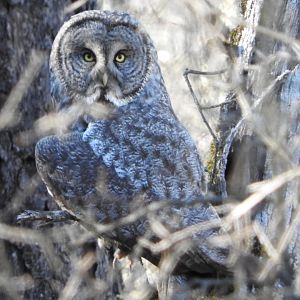
57. Great Gray Owl (Strix nebulosa) - wild lifer

Invertebrates
:

4. Bordered Plant Bug (Largus succinctus)
5. Common Bluebottle (Calliphora vomitoria)

5-57-2-0-0-5

 
Around a week back caught the bus up to the Mangere Waterworks, this time armed with a pair of binocs and the correct tide timetable for Mangere, arriving there at around the peak of high tide. Arriving around the Creamery Road entrance, the previous mudflats and the like had completely filled up, with the lake seemingly overflowing with grey teal, a nice lifer and a species which I couldn't see properly on my last trip here. Also saw a pair of pied stilt on the shoreline.

Moving up to the lagoon, which was sort of fenced off the last time I went, instead of rushing to the waterworks, I went up to visit the shellbanks to try and tick of some lifer waders. Reaching the first bit of bank with shaders on it was a subpar viewing, although it was sort of interesting seeing the spectacle of just a writing grey mass of birds, and I got to see one flock flying, it wasn't really anything. Because they stay so far back and my binocs didn't have that much zoom, so the only real bird that I could pick out and id from the mass was a godwit, I'm certain there were probably knots and other waders in those flocks, I just couldn't see well enough so not counting anything. Walking further up to the next set of shellbanks, I heard a soft pipping next to me, swiftly turning around I was awarded with superb sightings of an NZ Dotterel! Even allowing me to walk almost right next to it on the bit of coastal heath straggle hidden behind a boring plain of mown grass surrounding the entire path, it stationed itself upon. Although it's a shame I can't count it on my year list it by far made up for the abysmal sighting of them back in Whangarei.

Walking all the way up to the final shellbank where the bird hide is located, I made probably the best discovery of the whole trip, as I was walking I'd always thought the gulls were looking a little odd, and when I reached that bank the realisation finally hit me after seeing a juvenile up close, I was seeing Black-Billed Gulls! At first I was worried I was seeing aberrant long beaked red bills, and they didn't really look all that unique, until seeing an adult soar past my head. An absolutely striking colouration, a long deep black bill with deep crimson legs and the beautiful eye ring that characterizes NZ gulls, although the features I focused on and which finally made me happy to count them were shared by the much commoner red billeds, they simply looked better on the black billed, but that probably has to do with the perceived rarity factor. Getting to the bird hut, I was still not able to pick out the shorebirds and it was really quite poor and dissatisfactory since the viewing benches and windows were weird, with the benches being on weird angles, and the place which has an actually nice window having no benches forcing you to ty and crouch/kneel in a weird way which still yields no birds seen. By far the greatest thing I saw there was a welcome swallow nest, with three small chicks all jumbled up and within arm's reach.

I'm almost certain that a few silvery birds I saw on the way to the waterworks were chaffinch but considering they were such poor sights of what would've been a lifer for me, they go uncounted. Also on the way to the waterworks I was dive bombed by pied stilts, again! So I think the stilts here just really hate humans or something, as I was casually walking on the path so I'm almost certain I wasn't in range to disturb them, but it makes for great viewing and photo opps., as 5 or so hover in the air and dive right past you. Also saw a trio of pied shags fishing in the culvert pipes, great seeing them hovering around in the flow of the pipes and constantly dipping down and resurfacing always in view.

Arriving in the waterworks I was able to immediately tick off black swan and dabchick, also saw a ruddy tinged really weird looking duck but it may have been a scaup. Spent a solid 10 or so minutes trying to find a shoveler but it was unsuccessful by this point it'd been a few hours and my feet were giving out so I decided to call it quits and exited, seeing a roosting NZ scaup on my way out which nicely decided to give walkaway views. After returning home I discovered I got a quite nasty sunburn on the entirety of the nape of my neck, totally my fault for deciding not to wear a hat or apply sunscreen before going out to bird at the middle of noon, but after a couple of days it's entirely healed up. Overall I'd say the trip was at least better than my last visit, and I'd like to try and visit here again when it's low tide, to get to see some shorebirds foraging also really want to try and get out there at around Feb-June as I really want to find myself a wrybill.

Birds
33. Pied Stilt (Himantopus leucocephalus)
34. Grey Teal (Anas gracilis)
35. Bar-tailed Godwit (Limosa lapponica)
36. Black-Billed Gull (Chroicocephalus bulleri)
37. European Goldfinch (Chloris chloris)
38. Black Swan (Cygnus atratus)
39. NZ Dabchick (Poliocephalus rufopectus)
40. NZ Scaup (Aythya novaeseelandiae)

Inverts
10. Passionvine Hopper (Scolypopa australis)
Unexpected lifer whilst walking along Musik Point.

Birds
41. Chaffinch (Fringilla coelebs)
 
  • Like
Reactions: MRJ
I have added another five birds since my last update. The first two were on local walks - the dove is an increasingly common resident around here (in fact, there's one in my garden right now) while the siskin is not an annual bird in my area, so is something of a treat.

The other three birds I picked up from the grounds of Colchester Zoo today - the African paddock had multiple individuals of both pied and grey wagtails, which was lovely to see.

42. Stock dove Columba oenas
43. Eurasian siskin Spinus spinus
44. Lesser black-backed gull Larus fuscus
45. Common gull Larus canus
46. Pied wagtail Motacilla alba yarrelli

I decided that today I would go for a much longer walk than normal and it certainly paid off, with several excellent and unexpected sightings. First were two Cetti's warblers, often very skulking birds you hear rather than see, both in the open on short riverbank vegetation.

At the end of the walk, where the freshwater river meets the highest tidal section, I spotted an extremely tame water rail - at times I was probably no more than two metres from it and when a dog walker went past the bird continued feeding with very little reaction.

And then, after arriving home, found a pair of bullfinches in the garden (around here, they are definitely not a regular garden species).

47. Common coot Fulica atra
48. Little egret Egretta garzetta
49. Cetti's warbler Cettia cetti
50. Common teal Anas crecca
51. Little grebe Tachybaptus ruficollis
52. Western water rail Rallus aquaticus
53. Goldcrest Regulus regulus
54. Eurasian bullfinch Pyrrhula pyrrhula

Looking back through my 2021 list, by this time last year I was only on 39 birds - well on course to do a lot better than that this time around.
 
Back
Top