Enclosure Size Versus Animal Behaviour

Dabhidh

Well-Known Member
Have there been any studies done on zoo or wildlife park enclosure size versus animal behaviour? I ask because I am curious to know if anyone has done a study on what size an enclosure has to be. For example to stop an animal inside pacing around the perimeter looking for ways to get out.

Has anyone ever tried to create a very large secure enclosure, e.g. over 10 acres, to examine the effect it has on the animal's behaviour?

I am aware of the high cost of enclosing an animal considered dangerous. But before considering the cost of that, the question as to whether it is a worthwhile thing to do needs to be answered. My guess is that a very large enclosure would see significant benefits to an animal's wellbeing.

There is a wildlife park near where I live and animals such as tigers and wolves get enclosures of around an acre (that my guess not a fact). But is does not seem enough to me looking at their behaviour.
 
I assume from your location you mean Highland Wildlife Park? I believe predators pacing can not just be a sign of stress but also territorial behaviour, someone more knowledgeable than me can add to that I assume.

If you want to see a zoo with very large enclosures I would recommend looking at the gallery for Parque de le Naturaleza de Cabarceno in Spain. :)
 
Often what is in an enclosure is as important as its size. An interesting and enriched space that stimulates an animal and its natural behaviours can be better than a space that is big without much in it.

Big cats spend a great deal of time sleeping and don’t necessarily use all the space available to them if they have a very large enclosure. I believe that is the experience with the Wuppertal lion enclosure for example.
 
Have there been any studies done on zoo or wildlife park enclosure size versus animal behaviour? I ask because I am curious to know if anyone has done a study on what size an enclosure has to be. For example to stop an animal inside pacing around the perimeter looking for ways to get out.

Has anyone ever tried to create a very large secure enclosure, e.g. over 10 acres, to examine the effect it has on the animal's behaviour?

I am aware of the high cost of enclosing an animal considered dangerous. But before considering the cost of that, the question as to whether it is a worthwhile thing to do needs to be answered. My guess is that a very large enclosure would see significant benefits to an animal's wellbeing.

There is a wildlife park near where I live and animals such as tigers and wolves get enclosures of around an acre (that my guess not a fact). But is does not seem enough to me looking at their behaviour.

There are quite a few studies you might want to look at this one which suggests that while enclosure size is a factor other habitat and enrichment activities contribute just as significantly to animal welfare and behaviour - using Amur tigers as a sample species Can Zoos Ever Be Big Enough for Large Wild Animals? A Review Using an Expert Panel Assessment of the Psychological Priorities of the Amur Tiger (Panthera tigris altaica) as a Model Species

or this one which again suggests factors go beyond enclosure size Effects of Enclosure Complexity on the Behavior of Lions, Tigers, and Lynx at the John Ball Zoo

both of these might suggest that if you simply created a massive unfulfilling space it might be worse than creating a well sized space with enrichment and areas to encourage / support natural behaviours.
 
I do mean the Highland Wildlife Park which is 260 acres in size. I'm a member of the Scottish Zoological Society and have been there several times. My first visit to a zoo though was in 1982. It was Edinburgh Zoo which is 82 acres in size. I unfortunately remember the big cats, hyenas, etc. continually pacing back and forth in small enclosures. It did not look right. And more recently in the Highland Wildlife Park I've seen the tigers walking the perimeter. It did not look nearly as bad as Edinburgh in 82, but it still made me wonder what size of enclosure would stop that? You can see videos of this sad type of behaviour online

I've been to the Cabarceno website now Mayki - it looks good and the tigers have an enclosure of over 7 acres which seems quite a lot. It shows it can be done too! And I agree enrichment is important as well Shirokuma.

What I have looked for on the web is standards or guidelines about the minimum space required for each different type of animal. But I can't seem to find any meaningful ones. Some do exist, but they are not specific enough to recommend, for example a minimum of 5 acres for a tiger. Instead they cover things like provision of shelter, feeding schedules, etc.

Standards get created when there is evidence for a need for them. And when it comes to enclosures, the improved behaviour that extra space provides would surely be that evidence? I'm sure someone must have already looked into this, but where? Many enclosures still seem to small. Zoos and parks cannot re-create the wide open spaces of the wild, but they can make the effort to have bigger spaces than they have.

And I think a supportive public would very much back them on that. Many zoo customers, like me, I suspect do not like seeing the animals in small spaces.
 
To apply a possibly inappropriate adage to the studies in this area I’d suggest it is not so much about size as what you do with it.
I do mean the Highland Wildlife Park which is 260 acres in size. I'm a member of the Scottish Zoological Society and have been there several times. My first visit to a zoo though was in 1982. It was Edinburgh Zoo which is 82 acres in size. I unfortunately remember the big cats, hyenas, etc. continually pacing back and forth in small enclosures. It did not look right. And more recently in the Highland Wildlife Park I've seen the tigers walking the perimeter. It did not look nearly as bad as Edinburgh in 82, but it still made me wonder what size of enclosure would stop that? You can see videos of this sad type of behaviour online

I've been to the Cabarceno website now Mayki - it looks good and the tigers have an enclosure of over 7 acres which seems quite a lot. It shows it can be done too! And I agree enrichment is important as well Shirokuma.

What I have looked for on the web is standards or guidelines about the minimum space required for each different type of animal. But I can't seem to find any meaningful ones. Some do exist, but they are not specific enough to recommend, for example a minimum of 5 acres for a tiger. Instead they cover things like provision of shelter, feeding schedules, etc.

Standards get created when there is evidence for a need for them. And when it comes to enclosures, the improved behaviour that extra space provides would surely be that evidence? I'm sure someone must have already looked into this, but where? Many enclosures still seem to small. Zoos and parks cannot re-create the wide open spaces of the wild, but they can make the effort to have bigger spaces than they have.

And I think a supportive public would very much back them on that. Many zoo customers, like me, I suspect do not like seeing the animals in small spaces.

There are standards in some countries and in U.K. and Ireland which you are highlighting as having no standards enclosures do have mandated minimums.
https://assets.publishing.service.g...data/file/69596/standards-of-zoo-practice.pdf

I’d argue minimum isn’t good enough really and I don’t think areas should be designed to be simply compliant but there are standards.
 
Last edited:
Standards get created when there is evidence for a need for them. And when it comes to enclosures, the improved behaviour that extra space provides would surely be that evidence? .
A huge empty yard does not result in improved behavior. Your assumptions are wrong. (This just restates the fact that other posters have made)

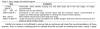
While there are a small number of studies (some already linked above) they have rarely translated into standards because size of enclosure is not a fundamental measure of good husbandry... for all the reasons already stated. So there are standards for holding areas and in some cases population mix. AZA Animal Care Manuals may discuss exhibit size (as in the excerpt for sun and sloth bears here) or they may discuss exhibit complexity or, as with otters, land:water ratios. But they make the point that enclosure size is a starting point for designing an enclosure that ensures animal welfare, not the end point..
.upload_2022-4-20_12-56-33.png
 

Attachments

  • upload_2022-4-20_12-56-33.png
    upload_2022-4-20_12-56-33.png
    33.7 KB · Views: 39
Last edited:
Thanks Lofone.

So, as I thought, some work has already been done.

But their conclusion was increase enrichment and don't worry too much about space. That conclusion does seem very convenient. I am all for enrichment. But the phrase "They would say that wouldn't they" does also come into my head.

I would prefer to see a study which compares enriched enclosures of different sizes. Surely the bigger the size, the more enrichment can be included.

And one of the studies does accept that small habitat size does impoverish an animal's welfare.

It would be interesting to study the behaviour of the tigers in the Highland Wildlife Park (1 acre) to those in Cabarceno (7 acres) to get a comparison.
 
I do mean the Highland Wildlife Park which is 260 acres in size. I'm a member of the Scottish Zoological Society and have been there several times. My first visit to a zoo though was in 1982. It was Edinburgh Zoo which is 82 acres in size. I unfortunately remember the big cats, hyenas, etc. continually pacing back and forth in small enclosures. It did not look right. And more recently in the Highland Wildlife Park I've seen the tigers walking the perimeter. It did not look nearly as bad as Edinburgh in 82, but it still made me wonder what size of enclosure would stop that? You can see videos of this sad type of behaviour online

I've been to the Cabarceno website now Mayki - it looks good and the tigers have an enclosure of over 7 acres which seems quite a lot. It shows it can be done too! And I agree enrichment is important as well Shirokuma.

What I have looked for on the web is standards or guidelines about the minimum space required for each different type of animal. But I can't seem to find any meaningful ones. Some do exist, but they are not specific enough to recommend, for example a minimum of 5 acres for a tiger. Instead they cover things like provision of shelter, feeding schedules, etc.

Standards get created when there is evidence for a need for them. And when it comes to enclosures, the improved behaviour that extra space provides would surely be that evidence? I'm sure someone must have already looked into this, but where? Many enclosures still seem to small. Zoos and parks cannot re-create the wide open spaces of the wild, but they can make the effort to have bigger spaces than they have.

And I think a supportive public would very much back them on that. Many zoo customers, like me, I suspect do not like seeing the animals in small spaces.
I cannot contribute much to the discussion that the far more knowledgeable folks before me have already said. I especially cannot comment on the issue of pacing in Carnivora you seem very interested in.
However I think you are massively underestimating the nuance of building a good exhibit. Let me give you an analogy: let us say you were to check into a hotel with a relatively small but well furnished room with a comfortable bed, bathroom etc. You may dislike how cramped it is but at least it will be comfortable. On the other hand, if the room was the size of an indoor stadium, but had not even the most basic furnishings, you would likely be much more infuriated. Even if it was well furnished, it would be very difficult for staff to clean and therefore be dirty.
Similarly, zoos have to strike a balance between size and furnishings for their inmates. Not to mention that many species utilise space in a 3-dimensional fashion, so an enclosure should often have height to it, an aspect sometimes ignored.
I also find it interesting that you appreciate Cabarceno so much: while I have never visited, I have seen discussions on this forum that criticise the fact that Cabarceno used to keep several solitary big cats, such as tigers and jaguars, in unnaturally large groups.
 
The fact is that more research is looking at animal welfare and behavior including variables of enclosure size, complexity, social interactions, environmental factors, behavior in the wild, 3dimensional usability of enclosures as appropriate, etc. rather than focusing on enclosure size alone. That is where the unfounded assumption that "size = welfare" flounders.
https://www.thezooscientist.com/papers-animal-welfare

Look instead at studies such as this
Effects of the Environment on the Behaviour of Lowland Gorillas in Zoos
 
Last edited:
Hi Junklekitteb,

I agree with what you have said - having a good exhibit is very important. Having enrichment is very important. And I have never been to Cabarceno, but I was impressed when I read their tiger enclosure was over 7 acres, which seemed big. I also have my reservations about keeping big cats in unnaturally large groups if they are solitary in the wild. It doesn't seem right.

I simply think we can do better re space. Where I live I think we can have more space in our wildlife park.
 
Thanks Lofone.

So, as I thought, some work has already been done.

But their conclusion was increase enrichment and don't worry too much about space. That conclusion does seem very convenient. I am all for enrichment. But the phrase "They would say that wouldn't they" does also come into my head.

I would prefer to see a study which compares enriched enclosures of different sizes. Surely the bigger the size, the more enrichment can be included.

And one of the studies does accept that small habitat size does impoverish an animal's welfare.

It would be interesting to study the behaviour of the tigers in the Highland Wildlife Park (1 acre) to those in Cabarceno (7 acres) to get a comparison.

It’s hard to devalue a detailed study based on your view that any answer you don’t like is ‘convenient’ tbh I’d go with the research.

The studies all suggest that enclosure size is a factor they all contend with real evidence that it is not the only factor.
 
The fact is that more research is looking at animal welfare and behavior including variables of enclosure size, complexity, social interactions, environmental factors, behavior in the wild, 3dimensional usability of enclosures as appropriate, etc. rather than focusing on enclosure size alone. That is where the unfounded assumption that "size = welfare" flounders.
https://www.thezooscientist.com/papers-animal-welfare

Look instead at studies such as this
Effects of the Environment on the Behaviour of Lowland Gorillas in Zoos
It's interesting to see how many new exhibits eschew the usage of moats for glass windows/netted over habitats, as netting allows for three-dimensional usage of the habitat rather than two-dimensional usage of the habitat. For example, whenever I see the lemurs out and about at Brandywine Zoo's Madagascar habitat, the black-and-white ruffeds will sometimes hang from the mesh roof. Brachiating primates and agile cats in general benefit from the usage of netted over habitats, and as much as I *prefer* the usage of moats/unobstructed viewing, there is a clear benefit that is well-acknowledged within the zoo design community.
 
Hi Zooplantman,

Thanks for the study info. Obviously a lot of work has gone into the area of zoo and park animal welfare. I do worry about the use of formula and statistics when it comes to animal welfare. We are talking about the feelings and wellbeing of animals after all. Could we apply formula and stats to the feelings of humans? As one study in your link says "Animal welfare is a growing public concern that has the potential to undermine the social license of zoos and aquariums".

I am not assuming that size = welfare but I do think size is part of welfare. It is a variable just like the other variables you mention.

Let me put my questions in another way. How big does an enclosure have to be for an animal to think that it is not enclosed? Or trapped? And how does an animal that is enclosed feel about being enclosed? Nothing I have read in the studies so far addresses these questions.

What are the (non financial) arguments against giving zoo animals more space?
 
It’s hard to devalue a detailed study based on your view that any answer you don’t like is ‘convenient’ tbh I’d go with the research.

The studies all suggest that enclosure size is a factor they all contend with real evidence that it is not the only factor.

I wouldn't say I was devaluing it, more questioning it. From a financial perspective it does seem convenient. Bigger enclosures would be more expensive.

And I'd agree with you that size is not the only factor.
 
Quite some good points have already been made here. You could also turn it around, enclosure furnishing is important, but useless if not enough space is available. It doesn't really help the argument to place a large barren enclosure against a small well-structured enclosure. It is much more interesting to see how much difference size makes between structured enclosures only. There is naturally a minimum enclosure size for each species which differs between species and for which body size can be quite a misleading predictor. Whether every species also has a maximum enclosure size is doubtful, for an anemone fish there is, but for species that roam wide, I don't think there is a maximum size that is smaller than most zoos as a whole.

I was musing on somewhat related thoughts during my visit to the excellent Alpenzoo in Innsbruck, Austria.

To start with the European adder open air terrarium:
full

This is clearly an attractive and well-furnished enclosure that gives the inhabitants a lot of variation in vegetation, temperature and hiding spots. It is also far larger than 99% of viper terraria in zoos worldwide, it would estimate it to be 5 square metres for several snakes of 50-70 centimetres in length. Most zoos would find a 90x50 centimetre tank, or even smaller, acceptable for a smallish and slow snake, given it provides enough structure. But the snakes here used the full extent of the enclosure during my visit and were more active than any other viper I have seen for such a prolonged viewing. So obviously a normally "lazy" species greatly benefits from all the space it gets and it did result in a number of enthusiastic visitors that would not have appreciated the snake if it were kept in a "regular" reptile house.

The second example is the new pine marten enclosure
full

It consists of two such cages and while nicely furnished and attractive to look at, I find it impossibly small for such a small carnivore. Their size doesn't reflect that these animals have huge home ranges and spend a lot of time foraging, which means running and probing for hours on end. For such a species size is of the essence (and there needs to be structure too). The same goes for species like polar bears and leopards (but also highly migratory birds like red-billed quelea) which also have gigantic home ranges and for which many zoos find it nearly impossible to get rid of stereotypic behaviour. Part of the natural behaviour of such species is to walk (almost for the sake of walking), so a lot of space is always necessary combined with enrichment/structure to stimulate them to use it. I have been told that the lion enclosure in Wuppertal, though too large from a visitor standpoint, does enable the lions to show some behaviour that they cannot in other zoos. Whether an enclosure must enable a species to show every natural behaviour is almost a different question, birds of prey can not do their elaborate courtship flights in captivity, but still seem perfectly fine at raising chicks.
 
Well, for one thing, the larger the exhibit, the more difficult it can be to manage an animal, especially if you need to get your hands on it for veterinary or husbandry purposes. Catching a rhea out of acre pen is a lot simpler than catching one out of a 50 acre safari park. Sure, you can use training and exhibit design (i.e., incorporating catch pens) to facilitate the process, but sometimes something happens and you just need to get the animal ASAP for its own good.

Another trade off is the number of animals/species you can accommodate. A major reason for the decline in species diversity in zoos is that we are giving animals bigger enclosures. The space at the National Zoo in DC that once housed African and Asian elephants, giraffe, Nile and pygmy hippo, Indian rhino, and capybara now just houses Asian elephants. They needed more space, and they got it at the expense of the other animals. That in itself isn't bad - we should be providing as much space as the animals need or would benefit from. But if we're trying to maintain sustainable populations of a variety of species for conservation purposes, the more space you donate to X is the less that's available for Y and Z.

Having more, smaller enclosures also provides more flexibility with management. It's easier to separate individuals that are no longer compatible, govern reproduction, segregate parents and offspring, etc, if you have several smaller habitats (which could, ideally, be conjoined as needed) rather than one big field.

Again, not saying that size isn't very important. It's just that there are trade offs, and I don't think you could simply dismiss those concerns as being financial in motivation
 
How big does an enclosure have to be for an animal to think that it is not enclosed? Or trapped? And how does an animal that is enclosed feel about being enclosed? Nothing I have read in the studies so far addresses these questions.
I believe that you have not read studies addressing these questions because the questions cannot be studied. How do you determine that an animal "feels enclosed" let alone specify what it feels about it? How is this measured?
Simple logic suggests that for an animal not to "think" it is enclosed it must never encounter a barrier. As soon as it finds a wall or a moat it can go no further. That can happen in a 20 sq. m enclosure or at the edge of a 10ha enclosure.
Does a lion in the Gir forest "feel enclosed" when it encounters a hunter or a road of speeding trucks?How exactly does it feel about that?
I could get snarky and ask whether the lion that feels enclosed blogs about it or posts bad reviews on social media. But I won't do that.
Instead I will point out that a growing concern in zoo design is to give animals choices as to where they will be. And that is not about enclosure size as such.
 
Last edited:
Hi Zooplantman,

Thanks for the study info. Obviously a lot of work has gone into the area of zoo and park animal welfare. I do worry about the use of formula and statistics when it comes to animal welfare. We are talking about the feelings and wellbeing of animals after all. Could we apply formula and stats to the feelings of humans?
You are welcome for the link.
But do I understand that on the one hand you want to see studies, on the other hand you are suspicious of studies whose conclusions do not match your expectations and on the (rare) third hand you don't feel that animal welfare can be studied?
 
Back
Top