Animals You've Seen That Few Zoochatters Have Seen

There is only 200 not the rarest but best I can contribute have you seen one ?

I've seen dozens. They are everywhere. There are far, far more than 200. There's 176 holders on ZTL, which is for european zoos. Places can hold more than one. That number doesn't include the hundreds in the USA or elsewhere in the world. They're also not a subspecies, not even a subspecies, and are a waste of space that could better hold actual subspecies that are endangered.
 
If anything, I am largely of the opinion that, ideally, [but not probable] no more white tigers should be allowed to exist, as they are a waste of space that could be used for more conservationally important animals. But, we should also allow good life to the white tigers that we have bred into existence.
 
My local zoo (Axe Valley Wildlife Park) has a Potto. Zootierliste shows only two other U.K. zoos holding the species. The same collection exhibits Rakali, South African Shelduck and Black Francolin, all of which are more numerous in the private sector than in zoos here in the U.K.
 
My local zoo (Axe Valley Wildlife Park) has a Potto. Zootierliste shows only two other U.K. zoos holding the species. The same collection exhibits Rakali, South African Shelduck and Black Francolin, all of which are more numerous in the private sector than in zoos here in the U.K.

Axe Valley has some species we don't have at all in the USA, or only have one or two holders, that I would love to see! Just the first page of photos has Finlayson's squirrel, raccoon dog, egyptian mongoose, australian water rat, swinhoe's striped squirrel, and jaguarundi (and european polecat; I believe all of ours are just domestics).
 
Yes it isn’t great for the Bengal tiger Species that they are trying to breed them in some zoos but they can’t be released into the wild due to it being difficult for them to catch prey

The tigers you've seen will be highly inbred cross-breeds between multiple tiger subspecies. They are not Bengal Tigers and they should not be let loose into the wild.

~Thylo
 
Some more rarer species that I have seen. Apart from the Palm Civet, I'm not sure if the inescts have been seen by any other zoochater.

Banded Palm Civet (Hemigalus derbyanus)
Broad Nosed Weevil (Aphrastus griseus)
Garganus plant bug (Garganus fusiformis)
Beet Petiole Borer (Cosmobaris scolopacea)
Scutellatus Plant bug (Orthops scutellatus)
Dirt colored seed bug (Pseudopachybrachius basalis)
Black and Yellow Soldier beetle (Trypherus frisoni)
Sneaky Elf Firefly (Pyropyga decipiens)
Red and Black Soldier beetle (Podabrus tomentosus)
 
I'm new to this discussion but I just read all 55 pages out of interest. Such an impressive lists! @Giant Eland probably knows how much I hate him for that, haha!
I know this is an old comment, but I just wanted to inform you that the captive population is not really Ducula pistrinaria. The original birds are hard to trace back but they are most likely a subspecies of Ducula aenea. My bet is on sylvatica.

Considering the fact that I'm only doing this for a few years, here are a few examples of rare species that most of you will probably not have seen before. I know these are random, not mammals only, but I would be very interested in seeing how many you guys have. I chose 50 random and less occurring species, all of them were photographed in captivity.

1) Toucan barbet (Semnornis ramphastinus ramphastinus)
2) Emperor shrimp (Zenopontonia rex)
3) Dragon mantis (Stenophylla lobivertex)
4) Long-nosed elephant-trunkfish (Campylomormyrus numenius)
5) Thick-billed weaver (Amblyospiza albifrons albifrons)
6) White-fronted manakin (Lepidothrix serena)
7) Madagascar blind burrowing skink (Grandidierina fierinensis)
8) Large bamboo rat (Rhizomys sumatrensis)
9) Red-naped ibis (Pseudibis papillosa)
10) Enigmatic leaf turtle (Cyclemys enigmatica)
11) Oren's tilefish (Hoplolatilus oreni)
12) Key deer (Odocoileus virginianus clavium)
13) Yellow hawkfish (Paracirrhites xanthus)
14) Striped brook snake (Pseudoxyrhopus quinquelineatus)
15) Blue Mauritius angelfish (Centropyge debelius)
16) Bearded leatherjacket (Anacanthus barbatus)
17) Rufous treepie (Dendrocitta vagabunda)
18) South-east Australian short-beaked echidna (Tachyglossus aculeatus aculeatus)
19) Western red-legged thrush (Turdus plumbeus cf. rubripes)
20) Grey-headed imperial-pigeon (Ducula radiata)
21) Red treefrog (Leptopelis rufus)
22) Confusing egg-eating snake (Dasypeltis confusa)
23) Mimic octopus (Thaumoctopus mimicus)
24) Small-billed tinamou (Crypturellus parvirostris)
25) New Zealand forest gecko (Mokopirirakau granulatus)
26) Capuchin barbler (Phyllanthus atripennis)
27) Flat-headed perch (Rainfordia opercularis)
28) Collared laughingthrush (Trochalopteron yersini)
29) Network wobbegong (Orectolobus reticulatus)
30) Japanese long-legged centipede (Thereuopoda clunifera)
31) Bornean peacock-pheasant (Polyplectron schleiermacheri)
32) Javan ferret-badger (Melogale orientalis)
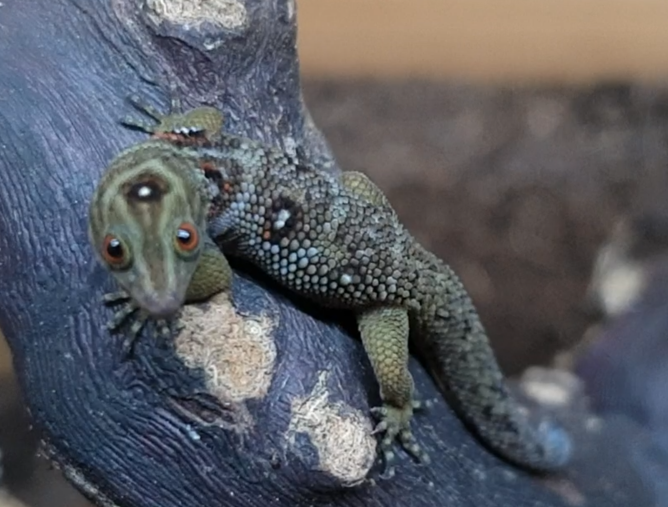
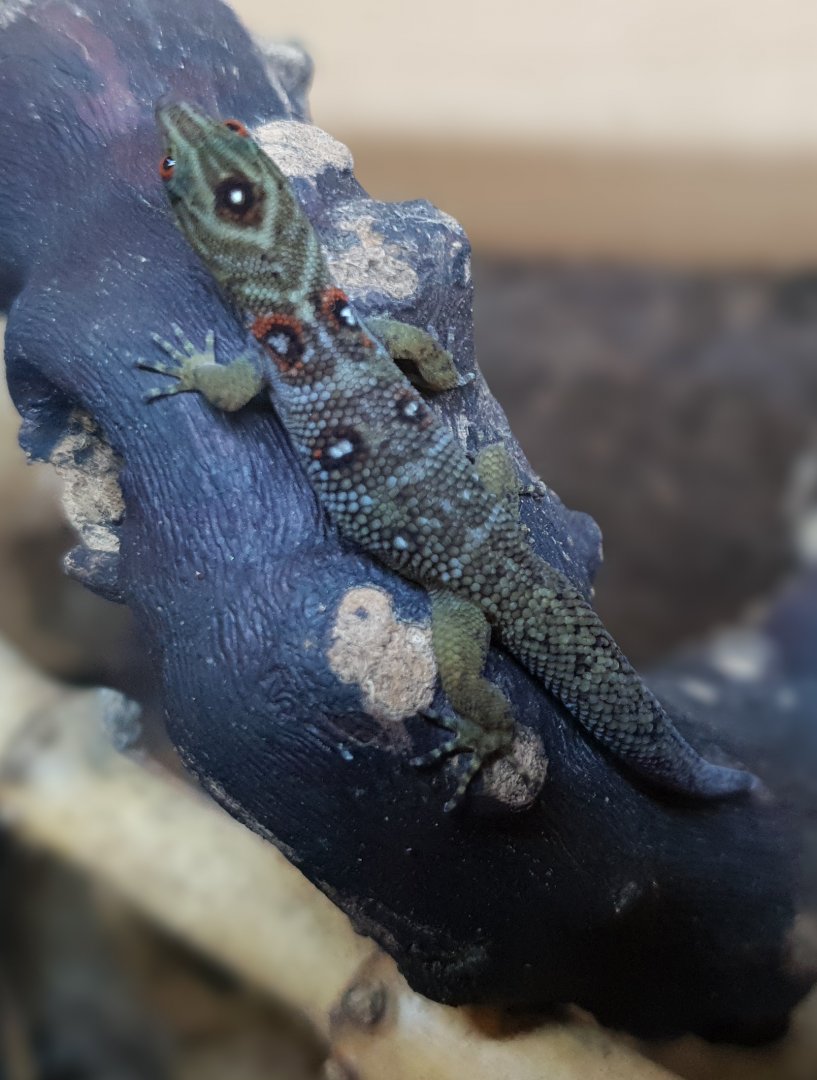
33) Union Island gecko (Gonatodes daudini)
34) Masked angelfish (Genicanthus personatus)
35) Steller's eider (Polysticta stelleri)
36) Red-headed barbet (Eubucco bourcierii aequatorialis)
37) Imperial amazon (Amazona imperialis)
38) Thekla's lark (Galerida theklae)
39) Green thornytail iguana (Uracentron azureum)
40) Rough-throated leaf-tailed gecko (Saltuarius salebrosus)
41) Bicolor basslet (Lipogramma klayi)
42) Tanzanian montane dwarf chameleon (Trioceros sternfeldi)
43) Cocopeel angelfish (Centropyge cocosensis)
44) Rosa's round ray (Heliotrygon rosai)
45) Pethiyagoda's crestless lizard (Calotes pethiyagodai)
46) Red-and-white giant flying squirrel (Petaurista alborufus castaneus)
47) Roseate tern (Sterna dougalli)
48) French Guianan red and black curtain web spider (Harmonicon oiapoqueae)
49) Himalayan bulbul (Pycnonotus leucogenys)
50) Dongola small-spotted genet (Genetta genetta dongolana)

I'm very curious to see more lists! Sidenote: Does anyone have an idea how often bobbit worms (Eunice aphroditois) are kept in captivity with the intention of keeping them? (so not as a pest).
 
Last edited:
This one I've seen! Certainly not common in zoos, but I suspect a lot of zoochatters may have seen it since there's a handful of US Zoos keeping the species.
I was not aware of that, thanks! They are very rare or possibly absent in Europe. I have replaced number 49 with a worthy new species :)
 
'm very curious to see more lists! Sidenote: Does anyone have an idea how often bobbit worms (Eunice aphroditois) are kept in captivity with the intention of keeping them? (so not as a pest)

Can't think of a single facility to deliberately house this species
 
25) New Zealand forest gecko (Mokopirirakau granulatus)

18) South-east Australian short-beaked echidna (Tachyglossus aculeatus aculeatus)
Considering the number of Aussie and NZ people on this website assume these have been seen fairly regularly.
Also I didn't know there were any breeding pops of nz forest geckos in Europe, private breeder I assume?

Although where'd you see the union gecko and blind skink? Also how much do you know of the husbandry of the blind skink?
 
Union dwarf gecko's are kept in very small numbers in the private sector in small numbers and I've seen them already even offered in a specialized herp-shop :

 
Back
Top