I’m not going to quote posts, too much work, but to answer some questions:
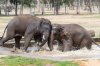
Yes, bulls in musth *can* still be housed with other bulls, however this entirely depends on the personalities of all the animals involved, and the pre-existing relationships between them. They also generally still need to be housed alone at night, just as a safety precaution. Just off the top of my head, Luka at Osnabruk was able to share space with a number of younger bulls during his musth cycle, and at least 3 of the bulls at Denver can still be housed in social groups during their cycles.
In regards to “can bulls pull each other into musth cycles?” Well no…but also yes. This is one that seems to vary a bit from animal to animal, with no real rhyme or reason as to why. Some will come into musth like clockwork, at the same time every year for the same amount of time every year. Others will come into it irregularly, for variable amounts of time each time. Certain other bulls, will almost never have a musth cycle, without external events triggering it. For instance, prolific breeding bull Johnson at African lion safari in Canada, will rarely enter a full musth cycle, however can be brought in if multiple cows are cycling at the same time. Another bull, Thisiam at Knies Kinderzoo, went for several years without entering a musth cycle, however upon the transfer of a second mature bull to the facility, both of them *immediately* went into prominent musth cycles, and both males showed a marked increase in mounting and breeding behaviour towards the cows (both bulls were also able to be housed with cows for the duration of their musth cycles).
And lastly, for whether additional adult bulls can provide stimulation to encourage breeding or not to each other, once again, this is a case by case basis. Like the above mentioned example with Thisiam, yes, the addition of a second male *did* stimulate an increase in breeding behaviour. However in other cases, housing two adult males at the same facility has resulted in the dominant bull suppressing the subdominant male to the point the sub males fertility drops or even flatlines. Yet with others, there will be two mature males housed together, and both of them are equally successful as breeders. As a general rule (especially with Asian elephants), housing multiple breeding bulls at one facility won’t necessarily increase the odds of the bulls breeding the cows, but it usually won’t hurt anything, either.