Animal Stereotypes That You Hate

…some of which I didn’t even know had bad reputations (looking at you, camel).
The camel did not surprise me. Did you see the llama post earlier?
… a perpetually angry, armored juggernaut of a rhinoceros, complete with steaming nostrils and a cross-popped vein…
“Armored juggernaut”? Like Dürer’s Rhino?

Note: I do not actually have the book at the moment.
 
The fact that everyone assumes the screech of an "eagle" in a movie is ACTUALLY an eagle when it's a red-tailed hawk.

Then there's your classic "lions are the king of the jungle" when they don't live in the jungle AT ALL, and that "monkeys love bananas" when typically bananas don't grow near most monkeys.
 
Last edited by a moderator:
Magpies kill more people (or more specifically, cause more deaths) than cassowaries. Again though - like cows, humans are much more likely to come into contact with magpies than they are with cassowaries.

I also dislike the magpie stereotype (which is largely true though - they genuinely are feared here in Australia - for very good reason), having grown up in regional areas where we actually had a great relationship with the local magpies and they would regularly come caroling at our back door and never swoop us. They are beautiful birds with amazing songs - but they can also be terrifying and actually dangerous.
The Australian magpie swoops only for a period of 2 or 3 weeks during the time when the nestling have hatched until they begin ti fledge. Obviously they do this to protect their defenceless progeny. If they perceive you as a predator or a threat then they may swoop you. The easy way round this is to show them you are not a threat. If your encounter is in an area you frequent often take time to befriend them during the time they are not hatching eggs or rearing nestling. This does not have to be an elaborate or time consuming activity.You can simply acknowledge them as you walk by. Say hello. Wave. Give them a treat if you like. (You can actually do this when when they are in the midst of hatchlings/ nestling but it takes more time and patience to convince them you're not a danger) Australian magpies have facial recognition. They also have an amazing communication system that spans generations and geographical spread. It's worth the small effort, not only to avoid being swooped, but also to be a part of their humorous intelligent, beautifully natured community
 
The Australian magpie swoops only for a period of 2 or 3 weeks during the time when the nestling have hatched until they begin ti fledge. Obviously they do this to protect their defenceless progeny. If they perceive you as a predator or a threat then they may swoop you. The easy way round this is to show them you are not a threat. If your encounter is in an area you frequent often take time to befriend them during the time they are not hatching eggs or rearing nestling. This does not have to be an elaborate or time consuming activity.You can simply acknowledge them as you walk by. Say hello. Wave. Give them a treat if you like. (You can actually do this when when they are in the midst of hatchlings/ nestling but it takes more time and patience to convince them you're not a danger) Australian magpies have facial recognition. They also have an amazing communication system that spans generations and geographical spread. It's worth the small effort, not only to avoid being swooped, but also to be a part of their humorous intelligent, beautifully natured community

Spoken like someone who has never ridden a bike anywhere in Australia. :rolleyes:

It's practically impossible to "befriend" a magpie you never see as you ride past on your commute to work or while exercising.

It's not as if there are only one or two of them - there's thousands all nesting at different times in different locations - so while an individual may only swoop for a few weeks, the swooping season starts in early August and doesn't finish until November.

As I previously mentioned - we were able to befriend the magpies living on my parents' property and they never swooped us, but it is simply not possible to befriend all of them along your walking or cycling route.

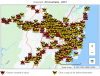
From the website MAGPIE ALERT! For Aussies to Share Swooping Magpie Attacks Across Australia ... here was the map of reported attacks in 2021 across Sydney.

Red marks are attacks that resulted in injury.

upload_2022-8-27_8-33-12.png

To be clear - I love magpies, but they really are quite dangerous, even if only for a few weeks a year. I've had magpies draw blood when attacking and one nearly caused me to crash my bike at high speed - that one was particularly vicious and had a very nasty reputation - the council had to destroy it because it had injured so many people and was swooping for months on end.

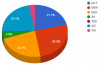
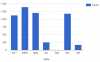
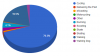
Some statistics from the 2021 season - noting that COVID lockdowns did restrict the number of people commuting to work during the peak spring season.

Note also that these are only attacks reported to the Magpie Alert website - thousands more would go unreported.

Magpie swooping attack percentages across Australia by State 2021

upload_2022-8-27_8-39-30.png


Magpie swooping attack total figures across Australia by State 2021

upload_2022-8-27_8-40-28.png

Magpie swooping attack counts each week 2021

upload_2022-8-27_8-40-50.png


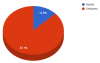
Magpie swooping attack percentages by Activity 2021

upload_2022-8-27_8-41-14.png

Magpie swooping attack percentages by Injury 2021

upload_2022-8-27_8-41-35.png
 

Attachments

  • upload_2022-8-27_8-33-12.png
    upload_2022-8-27_8-33-12.png
    212.5 KB · Views: 56
  • upload_2022-8-27_8-39-30.png
    upload_2022-8-27_8-39-30.png
    19.6 KB · Views: 56
  • upload_2022-8-27_8-40-28.png
    upload_2022-8-27_8-40-28.png
    7.8 KB · Views: 57
  • upload_2022-8-27_8-40-50.png
    upload_2022-8-27_8-40-50.png
    19.6 KB · Views: 54
  • upload_2022-8-27_8-41-14.png
    upload_2022-8-27_8-41-14.png
    25.3 KB · Views: 56
  • upload_2022-8-27_8-41-35.png
    upload_2022-8-27_8-41-35.png
    13.7 KB · Views: 53
Magpie swooping attack percentages by Activity 2021

upload_2022-8-27_8-41-14-png.570494

Apparently they really hate bicycles! Is there any insight as to why this seems to be their main target?
 
Apparently they really hate bicycles! Is there any insight as to why this seems to be their main target?

This page offers a good explanation: Why do magpies swoop? - Australia's Science Channel

A bike is around the size of a large (threatening) mammal. Cyclists move quickly (as do predators), so they’re perceived as a bigger threat by the Magpies than something that’s slow and predictable in it’s movements.

“If you put yourself inside the mind of a male magpie, a fast-moving large predator comes in their territory, they dive-bomb and it goes away so they’re very successful. And each year the same thing happens and they successfully drive away dozens of bicycles every year so in that sense there’s no particular reason for them to think it’s an unsuccessful strategy.”
 
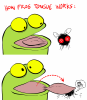
Frogs are commonly (and incorrectly) depicted as having chameleon tongues.
Here’s a bad photoshop showing what I mean:
upload_2022-8-26_18-47-56.jpeg
And here’s a helpful infographic on how they actually work (courtesy of Bogleech):
upload_2022-8-26_18-48-55.png
 

Attachments

  • upload_2022-8-26_18-47-56.jpeg
    upload_2022-8-26_18-47-56.jpeg
    105 KB · Views: 56
  • upload_2022-8-26_18-48-55.png
    upload_2022-8-26_18-48-55.png
    260.1 KB · Views: 54
This page offers a good explanation: Why do magpies swoop? - Australia's Science Channel

A bike is around the size of a large (threatening) mammal. Cyclists move quickly (as do predators), so they’re perceived as a bigger threat by the Magpies than something that’s slow and predictable in it’s movements.

“If you put yourself inside the mind of a male magpie, a fast-moving large predator comes in their territory, they dive-bomb and it goes away so they’re very successful. And each year the same thing happens and they successfully drive away dozens of bicycles every year so in that sense there’s no particular reason for them to think it’s an unsuccessful strategy.”
Also they have difficulty easily recognising individual faces. Put that together with speed and the fact that a human on a bike is not necessarily recognisable to them as a human form, a cyclist is a highly threatening entity.
 
Spoken like someone who has never ridden a bike anywhere in Australia. :rolleyes:

It's practically impossible to "befriend" a magpie you never see as you ride past on your commute to work or while exercising.

It's not as if there are only one or two of them - there's thousands all nesting at different times in different locations - so while an individual may only swoop for a few weeks, the swooping season starts in early August and doesn't finish until November.

As I previously mentioned - we were able to befriend the magpies living on my parents' property and they never swooped us, but it is simply not possible to befriend all of them along your walking or cycling route.

From the website MAGPIE ALERT! For Aussies to Share Swooping Magpie Attacks Across Australia ... here was the map of reported attacks in 2021 across Sydney.

Red marks are attacks that resulted in injury.

View attachment 570485

To be clear - I love magpies, but they really are quite dangerous, even if only for a few weeks a year. I've had magpies draw blood when attacking and one nearly caused me to crash my bike at high speed - that one was particularly vicious and had a very nasty reputation - the council had to destroy it because it had injured so many people and was swooping for months on end.

Some statistics from the 2021 season - noting that COVID lockdowns did restrict the number of people commuting to work during the peak spring season.

Note also that these are only attacks reported to the Magpie Alert website - thousands more would go unreported.

Magpie swooping attack percentages across Australia by State 2021

View attachment 570491


Magpie swooping attack total figures across Australia by State 2021

View attachment 570492

Magpie swooping attack counts each week 2021

View attachment 570493


Magpie swooping attack percentages by Activity 2021

View attachment 570494

Magpie swooping attack percentages by Injury 2021

View attachment 570495
Ýes. Cyclists represent roughly between 35-40 % of the population. Yet their "swoopee" status ammounts to around 70%. A cyclist is a highly threatening entity to a magpie. Speed combined with difficulty recognising facial features, or even human form, all amount to an A grade threat to their newly hatched family
 
The camel did not surprise me. Did you see the llama post earlier?

“Armored juggernaut”? Like Dürer’s Rhino?

Note: I do not actually have the book at the moment.
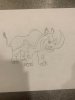
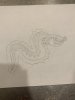
A05AB4E9-ACA6-4C37-8344-B42E4A006D83.jpeg 54BF919C-32B0-4B04-B4B6-87393FF9F2A0.jpeg
Sorry for the late response, but here are the promised jugger-noceros and zap-happy electric eel.
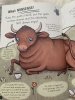
And in case you were wondering how sickeningly sweet some of the “good” spreads are, here’s the bull…
C127AB52-BEBC-4F3C-99F1-4427D25B6CB7.jpeg
Now do you see why I would’ve preferred the “monster” approach for bad spreads if this is what the good ones look like?
 

Attachments

  • A05AB4E9-ACA6-4C37-8344-B42E4A006D83.jpeg
    A05AB4E9-ACA6-4C37-8344-B42E4A006D83.jpeg
    50 KB · Views: 55
  • 54BF919C-32B0-4B04-B4B6-87393FF9F2A0.jpeg
    54BF919C-32B0-4B04-B4B6-87393FF9F2A0.jpeg
    51.1 KB · Views: 55
  • C127AB52-BEBC-4F3C-99F1-4427D25B6CB7.jpeg
    C127AB52-BEBC-4F3C-99F1-4427D25B6CB7.jpeg
    107.8 KB · Views: 54
Orcas are addressed as “killer whales” in their bad spread before being called orcas in the good spread (the word “bully” shows up a lot in their bad spread).

They had a fearsome reputation prior to the 60's - known as the killers of the sea, hence the name killer whales. Folklore told of a creature that attacked humans at every opportunity they could get - but of course we now know this is untrue. There has only ever been one recorded incident where an Orca has injured a human in the wild.

Seaworld even called them 'killer whales' for a period of time, but have resorted to 'orcas' over recent years. Orca is actually part of their scientific name; so technically their right name is the Killer Whale. But the fearsome nature that name gives is obviously not what most deem an accurate representation of this species.
 
This page offers a good explanation: Why do magpies swoop? - Australia's Science Channel

A bike is around the size of a large (threatening) mammal. Cyclists move quickly (as do predators), so they’re perceived as a bigger threat by the Magpies than something that’s slow and predictable in it’s movements.

“If you put yourself inside the mind of a male magpie, a fast-moving large predator comes in their territory, they dive-bomb and it goes away so they’re very successful. And each year the same thing happens and they successfully drive away dozens of bicycles every year so in that sense there’s no particular reason for them to think it’s an unsuccessful strategy.”

Despite this, they still swoop walkers or even joggers a lot too. I've been swooped multiple times whilst just going for a walk.

Many cyclists here in Australia actually wear helmets with little spikes on top of them, and some stores have actually started selling such helmets. Although they don't prevent an attack, they prevent injury. Those talons on those magpies can be deadly.
 
And isn’t “Killer Whale” a mistranslation of a word meaning “Whale Killer”?

Yes, that too. It started off as whale killer, and over time was mistranslated into killer whale, giving people them a false reputation of killers of the sea for many centuries. Of course it took just one man (Ted Griffen) and one whale (Namu) to unearth the truth of their actual rather docile nature.
 
Nearly every reconstruction of prehistoric proboscideans depicts them with ears like an Asian Elephant. I know ears don’t fossilize and all, but if some prehistoric proboscideans were larger than modern elephants, wouldn’t it make sense for them to have ears like an African Elephant that can cool down their massive bodies?
 
It’s been said already, but any reference to an animal being ‘ugly’ just annoys me so much. At Bristol Zoo a couple of weeks ago I overhead someone telling their kids about how ugly the Utilia spiny-tailed iguana was, which first of all makes no sense as there’s no reason for any organism adapted to its ecological niche to conform to arbitrary human standards of attraction, and second of all it just encourages the person’s child to take up those absurd beliefs as well. It genuinely annoyed me way more than it should’ve to hear it.
 
Back
Top