Brookfield Zoo Brookfield Zoo Former Species

As an early Christmas gift, I was able to get my hands on some old Brookfield zoo guidebooks. After reading through them I have discovered even more former residents of Brookfield's seemingly never ending list of species that they have held through the years. There is a ton of new information here and some of this is genuinely mind blowing to me.

First thing I want to talk about is the Tropic World. The guidebook dates back to when the building was still under construction and lists several planned residents. I'm not sure if all of these species made the final cut, but I imagine at least some of these were included when the exhibit first opened. Species listed for South America include brocket deer, agouti, and a crocodilian species in the main exhibit (no idea how that last would have worked out). A cave for fruit bats was also in the plan at some point. Species listed for Asia included siamang, lar gibbon and crab-eating macaque. This is what I am most speculative of, as having two species of gibbon in the same exhibit sounds like an accident waiting to happen. There were no other previously unknown species listed for Africa.

Then there was an exhibit called "Arctic Mountain" which was another mock-rock mountain for dall sheep. It was located East of the old Children's Zoo - where Wild Encounters is now - and there was also a pond for a variety of waterfowl. I used to think dall sheep were exhibited on the old Sheep Ridge behind the Bear Grottos, which was actually home to the male Siberian ibex while the females were on the main island.

Then there are the birdhouses - something I definitely under researched on my opening post. There were four different bird exhibits back then including the Perching Bird House, Aquatic Bird House, Parrot House, and Pheasant Row. Here are some much longer lists of the former residents of these buildings. It's worth noting that the larger stork and crane species in the Aquatic Bird House were only held there in the winter and could be found with the hoofstock during the warmer months.

Perching Bird House:
Allen’s Hummingbird
Anna’s Hummingbird
Bell Bird
Billed Tree Pie
Blue-cheeked Barbet
Blue Magpie
Blue-spotted Dove
Bronze-winged Pigeon
Common Crowned Pigeon
Crested Quail Dove
Crested-winged Pigeon
Dayal Bird
Emerald Hummingbird
Emperor Starling
Fairy Bluebird
Glit-Crested Hummingbird
Green Catbird
Ground Hornbill
Hunting Crow
Laughing Jackass
Macklot’s Pitta
Noisy Pitta
Piping Crow
Ruby-topaz Hummingbird
Ruddy Quail Dove
Satin Bowerbird
San Blas Jay
Sapphire Hummingbird
Sclater’s Crowned Pigeon
Shama Hoopoes
Sickle-billed Bird of Paradise
Six-plumed Bird of Paradise
Speckled Pigeon
Spur-winged Geese
Sulphur Toucan
Superb Bird of Paradise
Toco Toucan
Wandering Tree Pie
Wattled Starling
White-bellied Pigeon
White-brested Toucan
White-crowned Pigeon
White-necked Raven
Wonga-wonga Pigeon
Wood Hoopoes
Wood Warbler

Aquatic Bird House:
American Avocet
American Flamingo
Australian Pelican
Black-crowned Heron
Black-necked Swan
Blue Crane
Blue Gallinules
Brolga
Brown Pelican
Cattle Egret
Coreopsis Goose
Chilean Flamingo
Crested Screamer
Demoiselle Crane
Egyptian Goose
Galapagos Albatross
Gray-winged Trumpeter
Helmeted Guinea Fowl
Horned Screamer
Jungle Fowl
Magpie Goose
Maned Goose
Mandarin Duck
Marabou Stork
Orinoco Goose
Peacock Pheasant
Piping Guan
Saddle-billed Stork
Secretary Bird
Shoebill Stork
Vulturine Guinea Fowl
Wattled Crane
White-faced Screamer

Parrot House:
Amazon Parrot
Barnard’s Parakeet
Bare-eyed Cockatoo
Blue-winged Parakeet
Bourke’s Parakeet
Crimson Rosella
Derbyan Parakeet
Hooded Parakeet
Hyacinth Macaw
Kea
Lear’s Macaw
Pale-headed Rosella
Pileated Parakeet
Port Lincoln Parakeet
Red-sided Eclectics Parrot
Slender-billed Cockatoo
Sulphur-crested Cockatoo
Stanley Rosella
Swain Son’s Lorikeet
Yellow-bellied Parakeet
Yellow-bellied Rosella

Pheasant Runs:
Amherst Pheasant
Brush Turkey
Elliot Pheasant
Golden Pheasant
Impeyan Pheasant
Palawan Peacock Pheasant
Soemmering Pheasant
Swinhoe Pheasant
Reeves Pheasant
White-crested Kaleege

Now this part caught me completely off guard. I didn’t know very much about the now defunct Reptile House so you can imagine my surprise to find there was a mixed species Galapagos habitat with Galapagos penguins, Galapagos tortoises, marine iguanas and several other tortoise species! An exhibit that is certainly impossible to pull off today, but wow would I have loved to see this.

Reptile House:
African Spitting Cobra
Australian Black Snake
Blotched King Snake
Diamond Python
Egyptian Boa
Egyptian Cobra
Galapagos Land Iguana
Galapagos Penguin
Gould’s Monitor
Green Anaconda
Green Mamba
Hood Island Tortoise
Horned Viper
Indefatigable Island Tortoise
Indian Rock Python
Jerboa
King Cobra
Masked Cobra
Prairie Rattlesnake
Puff Adder
Sand Viper
Sea Iguana
Spectacled Cobra
Spotted Sand Boa
Tiger Snake
Timber Rattlesnake

With that, here are a few more updates to my first list.

Hoofstock Yards (Includes existing Hoofstock Row, and the former Small Antelope and Giraffe Houses):
Caama Hartebeest
Dorcas Gazelle
Fringe-eared Oryx
Giant Eland
Grant’s Gazelle
Greater Kudu
Isabella Gazelle
Lesser Kudu
Mongalla Gazelle
Musk Ox
Nile Bushbuck
Pronghorn
Roan Antelope
Thomson's Gazelle
Vaughan’s Cob
White-bearded Wildebeest
Yak


Primate House:
Bonneted Monkey
Brown Lemur
Brown Stump-tailed Monkey
Chimpanzee
Debrazza Monkey
Diana Monkey
Drill
Gelada
Grivet
Green Monkey
Guinea Baboon
Hamadryas Baboon
Lion-tailed Macaque
Mona Monkey
Moor Monkey
Mustached White-nosed Monkeys
Patas Monkey
Pigtail Macaque
Sooty Mangabey

Small Mammal House:
American Flying Squirrel
Gambian Giant Rat
Gray Squirrel
Jungle Cat
Lowland Paca
Masked Palm Civet
Raccoon Dog
Ringtail
Two-spotted Civet

Australia House:
Bennet’s Cassowary
Black-striped Wallaby
Brush-tailed Possum
Dingo
One-wattled Cassowary
Rat Kangaroo
Swamp Wallaby
Tasmanian Devil

Illinois Exhibit:
American Badger
Bay Lynx
Gray Squirrel
Opossum
Striped Skunk
Woodchuck

Pachyderm House:
White Rhino

Seal Rock:
Northern Elephant Seal (During the winter, the elephant seals were exhibited in the Pachyderm House.)

Big Cat Grottos:
Cougar

Bear Grottos:
Asian Black Bear


Small Antelope house must have been unique building. Do you know how long it was open for the public and how many/which spieces were held there? Was there any outdoor parts? I have seen pictures only of the fasade.
 
Small Antelope house must have been unique building. Do you know how long it was open for the public and how many/which spieces were held there? Was there any outdoor parts? I have seen pictures only of the fasade.
The building still exists and is actually still in use. There is a large circular paddock for nyala and crowned crane, as well as two smaller yards for gerenuk and kirk's dik-dik. I'm not sure when it exactly the interior closed to the public, although I estimate it was sometime around when Habitat Africa opened. After skimming through a few of my guidebooks, some of the species held here back in the day included addax, lesser kudu, defassa waterbuck, nile lechwe, grant's gazelle, Vaughan's kob, black-backed duiker, water chevrotain and warthog.
 
The building still exists and is actually still in use. There is a large circular paddock for nyala and crowned crane, as well as two smaller yards for gerenuk and kirk's dik-dik. I'm not sure when it exactly the interior closed to the public, although I estimate it was sometime around when Habitat Africa opened. After skimming through a few of my guidebooks, some of the species held here back in the day included addax, lesser kudu, defassa waterbuck, nile lechwe, grant's gazelle, Vaughan's kob, black-backed duiker, water chevrotain and warthog.
I believe I read once the Aardvark building is the former Small Antelope House, although most maps from the 40s - 80s refer to that area as 'African Scenes' instead.
 
The building still exists and is actually still in use. There is a large circular paddock for nyala and crowned crane, as well as two smaller yards for gerenuk and kirk's dik-dik. I'm not sure when it exactly the interior closed to the public, although I estimate it was sometime around when Habitat Africa opened. After skimming through a few of my guidebooks, some of the species held here back in the day included addax, lesser kudu, defassa waterbuck, nile lechwe, grant's gazelle, Vaughan's kob, black-backed duiker, water chevrotain and warthog.

Thank you @pachyderm pro ! Seems like it was not used only for small taxa. I found also a picture in the book Brookfield Zoo and the Chicago Zoological Society (Images of America), showing that the biggest antelope species also lived in the house.

small antelope house.PNG
 

Attachments

  • small antelope house.PNG
    small antelope house.PNG
    616 KB · Views: 76
Hamill Family Play Zoo has previously held additional lemur species, although verifying this information has been difficult.

In early 2016, they held Mongoose lemur there, as mentioned in this article about a feast honoring a local figure.

I feel fairly certain they had a ruffed lemur at some point as well but I only have vague memory to suggest this.
 
Recently found a 1986 newspaper article that discussed the status of various species in Tropic World, including many birds. Also interesting is it notes that as of that year, all then fourteen primate species in the building save the orangutan had bred in the exhibit.

Tropic World:

Prevost's Squirrels
Toco Toucan
Scarlet Ibis
African Roller
Spoonbills
Bali Mynas

Also a guidebook from during the building's construction suggested brocket deer, agouti, unspecified crocodilians and crab-eating macaques were intended alongside the aforementioned spectacled langurs and other species exhibited there until much more recently.
 
I recently did some diving through Brookfield Zoo's older websites for a zoo project I am working on and found the zoo listed Jaguar, Sooty Mangabey and Slender Loris SSP's on their website in May 1999. The mangabey were likely in Tropic World, but I'm not sure where the slender loris was held (Small Mammal House isn't listed on the website at that time) or the pygmy slow loris for that matter, and the Jaguar surprised me quite a bit.

I noticed this version of the website suggests sloth bears were at Bear Grottos, so perhaps the Jaguar were in the current sloth bear exhibit?

Also confirmed the former presence of Mongoose lemur and Black lemur in the collection, the former via the zoo's old website and both again via ZooLex.
 
I noticed this version of the website suggests sloth bears were at Bear Grottos, so perhaps the Jaguar were in the current sloth bear exhibit?

Correct. This video features the black jaguar, along with quite a few other species the zoo no longer houses:
 
Correct. This video features the black jaguar, along with quite a few other species the zoo no longer houses:

Thank you so much for sharing this! I have been looking for pictures of the Small Mammal House and anything of penguins in Be A Bird for years. Never thought to scrub YouTube.
 
Thank you so much for sharing this! I have been looking for pictures of the Small Mammal House and anything of penguins in Be A Bird for years. Never thought to scrub YouTube.
There is some additional footage of Small Mammal House in the video I posted to this thread, if it helps as well as a number of other closed exhibits, though sadly not Be a Bird, which only whets my appetite to watch the video @MeiLover has kindly shared!
 
According to a Facebook post, flamingos left the zoo in 1997:
Hi Anna, The Zoo had flamingos until 1997. At that time we had 6 birds and it was decided that they'd be happier in larger flocks.

The post is not visible when opened, but was indexed by Google. They were held at the formal pool, as depicted here, although I think that info is established earlier in the thread.
 
As an early Christmas gift, I was able to get my hands on some old Brookfield zoo guidebooks. After reading through them I have discovered even more former residents of Brookfield's seemingly never ending list of species that they have held through the years. There is a ton of new information here and some of this is genuinely mind blowing to me.

First thing I want to talk about is the Tropic World. The guidebook dates back to when the building was still under construction and lists several planned residents. I'm not sure if all of these species made the final cut, but I imagine at least some of these were included when the exhibit first opened. Species listed for South America include brocket deer, agouti, and a crocodilian species in the main exhibit (no idea how that last would have worked out). A cave for fruit bats was also in the plan at some point. Species listed for Asia included siamang, lar gibbon and crab-eating macaque. This is what I am most speculative of, as having two species of gibbon in the same exhibit sounds like an accident waiting to happen. There were no other previously unknown species listed for Africa.

Then there was an exhibit called "Arctic Mountain" which was another mock-rock mountain for dall sheep. It was located East of the old Children's Zoo - where Wild Encounters is now - and there was also a pond for a variety of waterfowl. I used to think dall sheep were exhibited on the old Sheep Ridge behind the Bear Grottos, which was actually home to the male Siberian ibex while the females were on the main island.

Then there are the birdhouses - something I definitely under researched on my opening post. There were four different bird exhibits back then including the Perching Bird House, Aquatic Bird House, Parrot House, and Pheasant Row. Here are some much longer lists of the former residents of these buildings. It's worth noting that the larger stork and crane species in the Aquatic Bird House were only held there in the winter and could be found with the hoofstock during the warmer months.

Perching Bird House:
Allen’s Hummingbird
Anna’s Hummingbird
Bell Bird
Billed Tree Pie
Blue-cheeked Barbet
Blue Magpie
Blue-spotted Dove
Bronze-winged Pigeon
Common Crowned Pigeon
Crested Quail Dove
Crested-winged Pigeon
Dayal Bird
Emerald Hummingbird
Emperor Starling
Fairy Bluebird
Glit-Crested Hummingbird
Green Catbird
Ground Hornbill
Hunting Crow
Laughing Jackass
Macklot’s Pitta
Noisy Pitta
Piping Crow
Ruby-topaz Hummingbird
Ruddy Quail Dove
Satin Bowerbird
San Blas Jay
Sapphire Hummingbird
Sclater’s Crowned Pigeon
Shama Hoopoes
Sickle-billed Bird of Paradise
Six-plumed Bird of Paradise
Speckled Pigeon
Spur-winged Geese
Sulphur Toucan
Superb Bird of Paradise
Toco Toucan
Wandering Tree Pie
Wattled Starling
White-bellied Pigeon
White-brested Toucan
White-crowned Pigeon
White-necked Raven
Wonga-wonga Pigeon
Wood Hoopoes
Wood Warbler

Aquatic Bird House:
American Avocet
American Flamingo
Australian Pelican
Black-crowned Heron
Black-necked Swan
Blue Crane
Blue Gallinules
Brolga
Brown Pelican
Cattle Egret
Coreopsis Goose
Chilean Flamingo
Crested Screamer
Demoiselle Crane
Egyptian Goose
Galapagos Albatross
Gray-winged Trumpeter
Helmeted Guinea Fowl
Horned Screamer
Jungle Fowl
Magpie Goose
Maned Goose
Mandarin Duck
Marabou Stork
Orinoco Goose
Peacock Pheasant
Piping Guan
Saddle-billed Stork
Secretary Bird
Shoebill Stork
Vulturine Guinea Fowl
Wattled Crane
White-faced Screamer

Parrot House:
Amazon Parrot
Barnard’s Parakeet
Bare-eyed Cockatoo
Blue-winged Parakeet
Bourke’s Parakeet
Crimson Rosella
Derbyan Parakeet
Hooded Parakeet
Hyacinth Macaw
Kea
Lear’s Macaw
Pale-headed Rosella
Pileated Parakeet
Port Lincoln Parakeet
Red-sided Eclectics Parrot
Slender-billed Cockatoo
Sulphur-crested Cockatoo
Stanley Rosella
Swain Son’s Lorikeet
Yellow-bellied Parakeet
Yellow-bellied Rosella

Pheasant Runs:
Amherst Pheasant
Brush Turkey
Elliot Pheasant
Golden Pheasant
Impeyan Pheasant
Palawan Peacock Pheasant
Soemmering Pheasant
Swinhoe Pheasant
Reeves Pheasant
White-crested Kaleege

Now this part caught me completely off guard. I didn’t know very much about the now defunct Reptile House so you can imagine my surprise to find there was a mixed species Galapagos habitat with Galapagos penguins, Galapagos tortoises, marine iguanas and several other tortoise species! An exhibit that is certainly impossible to pull off today, but wow would I have loved to see this.

Reptile House:
African Spitting Cobra
Australian Black Snake
Blotched King Snake
Diamond Python
Egyptian Boa
Egyptian Cobra
Galapagos Land Iguana
Galapagos Penguin
Gould’s Monitor
Green Anaconda
Green Mamba
Hood Island Tortoise
Horned Viper
Indefatigable Island Tortoise
Indian Rock Python
Jerboa
King Cobra
Masked Cobra
Prairie Rattlesnake
Puff Adder
Sand Viper
Sea Iguana
Spectacled Cobra
Spotted Sand Boa
Tiger Snake
Timber Rattlesnake

With that, here are a few more updates to my first list.

Hoofstock Yards (Includes existing Hoofstock Row, and the former Small Antelope and Giraffe Houses):
Caama Hartebeest
Dorcas Gazelle
Fringe-eared Oryx
Giant Eland
Grant’s Gazelle
Greater Kudu
Isabella Gazelle
Lesser Kudu
Mongalla Gazelle
Musk Ox
Nile Bushbuck
Pronghorn
Roan Antelope
Thomson's Gazelle
Vaughan’s Cob
White-bearded Wildebeest
Yak


Primate House:
Bonneted Monkey
Brown Lemur
Brown Stump-tailed Monkey
Chimpanzee
Debrazza Monkey
Diana Monkey
Drill
Gelada
Grivet
Green Monkey
Guinea Baboon
Hamadryas Baboon
Lion-tailed Macaque
Mona Monkey
Moor Monkey
Mustached White-nosed Monkeys
Patas Monkey
Pigtail Macaque
Sooty Mangabey

Small Mammal House:
American Flying Squirrel
Gambian Giant Rat
Gray Squirrel
Jungle Cat
Lowland Paca
Masked Palm Civet
Raccoon Dog
Ringtail
Two-spotted Civet

Australia House:
Bennet’s Cassowary
Black-striped Wallaby
Brush-tailed Possum
Dingo
One-wattled Cassowary
Rat Kangaroo
Swamp Wallaby
Tasmanian Devil

Illinois Exhibit:
American Badger
Bay Lynx
Gray Squirrel
Opossum
Striped Skunk
Woodchuck

Pachyderm House:
White Rhino

Seal Rock:
Northern Elephant Seal (During the winter, the elephant seals were exhibited in the Pachyderm House.)

Big Cat Grottos:
Cougar

Bear Grottos:
Asian Black Bear

For the Vaughan's Cob, do you mean White-eared kob (Kobus leucotis)? I know that Brookfield Zoo used to keep them in the past. Mongalla gazelle (Eudorcas albonotata)? I am not going to lie, I am a bit skeptical of that one... Are you sure those animals were not Thomson's gazelle (Eudorcas thomsonii) or perhaps Red-fronted gazelle (Eudorcas rufifrons)?
 
  • Like
Reactions: JVM
Black-footed cat, red panda, and gerenuk have all recently left the collection, or otherwise been confirmed they will not be returning, as covered in the news thread.
 
Seems a good thread to ask this question in. In 1994 would there have been any other spider monkeys other than red-faced?
 
I remember that for a short while when I was a very small child seeing a kiwi in the perching bird house. I don't think I am getting this confused with another zoo from my childhood because I remember those weird round viewing windows and this exhibit in particular being dark with the viewing portal being mostly obscured to give the animal more privacy. I am sure it didn't last long as I believe kiwi are notoriously fickle creatures and demand a certain amount of quiet and lack of disturbance to really thrive and that building has always been anything but that. I don't know when it was, though. It had to have been sometimes in the 1980s.
You are correct. It was a smaller exhibit inside of the Aquatic Birds House and located on the south side of the large open area (to the left if you were looking at the large free-flight area and opposite side of where the penguin exhibit was). It was a short walkthrough exhibit and I do recall the round windows, too.
 
  • Like
Reactions: JVM
Small Antelope house must have been unique building. Do you know how long it was open for the public and how many/which spieces were held there? Was there any outdoor parts? I have seen pictures only of the fasade.
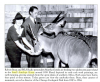
We went to the zoo a lot in the late 70s/early to mid-80s and I don't remember it ever being open to the public during that time. I actually don't remember seeing the main doors of the building ever being open, but there was a smaller side door on each side of the main entrances doors that were open sometimes during the summer. (You really couldn't see inside the building though and what you could see appeared to be keeper access hallways.) During that time, I believe it may have served as an off-exhibit area for smaller antelopes and may have been indoor housing for the antelopes that had access to the outdoor yards. I also recall that at one point BZ had an off-exhibit otter breeding colony in there. That sounds strange, but I specifically recall reading that in a year-end report or some other BZ publication back in the 80s.
 
Last edited:
Follow up on my own post - I was looking through some old guidebooks and one from 1980 said the building was not open to the public and that it was used for off-exhibit antelope breeding. The 1974 guidebook didn't say it was not open to the public, so it's safe to say that it closed between 1974 and 1980.
 
  • Like
Reactions: JVM
As an early Christmas gift, I was able to get my hands on some old Brookfield zoo guidebooks. After reading through them I have discovered even more former residents of Brookfield's seemingly never ending list of species that they have held through the years. There is a ton of new information here and some of this is genuinely mind blowing to me.

First thing I want to talk about is the Tropic World. The guidebook dates back to when the building was still under construction and lists several planned residents. I'm not sure if all of these species made the final cut, but I imagine at least some of these were included when the exhibit first opened. Species listed for South America include brocket deer, agouti, and a crocodilian species in the main exhibit (no idea how that last would have worked out). A cave for fruit bats was also in the plan at some point. Species listed for Asia included siamang, lar gibbon and crab-eating macaque. This is what I am most speculative of, as having two species of gibbon in the same exhibit sounds like an accident waiting to happen. There were no other previously unknown species listed for Africa.

Then there was an exhibit called "Arctic Mountain" which was another mock-rock mountain for dall sheep. It was located East of the old Children's Zoo - where Wild Encounters is now - and there was also a pond for a variety of waterfowl. I used to think dall sheep were exhibited on the old Sheep Ridge behind the Bear Grottos, which was actually home to the male Siberian ibex while the females were on the main island.

Then there are the birdhouses - something I definitely under researched on my opening post. There were four different bird exhibits back then including the Perching Bird House, Aquatic Bird House, Parrot House, and Pheasant Row. Here are some much longer lists of the former residents of these buildings. It's worth noting that the larger stork and crane species in the Aquatic Bird House were only held there in the winter and could be found with the hoofstock during the warmer months.

Perching Bird House:
Allen’s Hummingbird
Anna’s Hummingbird
Bell Bird
Billed Tree Pie
Blue-cheeked Barbet
Blue Magpie
Blue-spotted Dove
Bronze-winged Pigeon
Common Crowned Pigeon
Crested Quail Dove
Crested-winged Pigeon
Dayal Bird
Emerald Hummingbird
Emperor Starling
Fairy Bluebird
Glit-Crested Hummingbird
Green Catbird
Ground Hornbill
Hunting Crow
Laughing Jackass
Macklot’s Pitta
Noisy Pitta
Piping Crow
Ruby-topaz Hummingbird
Ruddy Quail Dove
Satin Bowerbird
San Blas Jay
Sapphire Hummingbird
Sclater’s Crowned Pigeon
Shama Hoopoes
Sickle-billed Bird of Paradise
Six-plumed Bird of Paradise
Speckled Pigeon
Spur-winged Geese
Sulphur Toucan
Superb Bird of Paradise
Toco Toucan
Wandering Tree Pie
Wattled Starling
White-bellied Pigeon
White-brested Toucan
White-crowned Pigeon
White-necked Raven
Wonga-wonga Pigeon
Wood Hoopoes
Wood Warbler

Aquatic Bird House:
American Avocet
American Flamingo
Australian Pelican
Black-crowned Heron
Black-necked Swan
Blue Crane
Blue Gallinules
Brolga
Brown Pelican
Cattle Egret
Coreopsis Goose
Chilean Flamingo
Crested Screamer
Demoiselle Crane
Egyptian Goose
Galapagos Albatross
Gray-winged Trumpeter
Helmeted Guinea Fowl
Horned Screamer
Jungle Fowl
Magpie Goose
Maned Goose
Mandarin Duck
Marabou Stork
Orinoco Goose
Peacock Pheasant
Piping Guan
Saddle-billed Stork
Secretary Bird
Shoebill Stork
Vulturine Guinea Fowl
Wattled Crane
White-faced Screamer

Parrot House:
Amazon Parrot
Barnard’s Parakeet
Bare-eyed Cockatoo
Blue-winged Parakeet
Bourke’s Parakeet
Crimson Rosella
Derbyan Parakeet
Hooded Parakeet
Hyacinth Macaw
Kea
Lear’s Macaw
Pale-headed Rosella
Pileated Parakeet
Port Lincoln Parakeet
Red-sided Eclectics Parrot
Slender-billed Cockatoo
Sulphur-crested Cockatoo
Stanley Rosella
Swain Son’s Lorikeet
Yellow-bellied Parakeet
Yellow-bellied Rosella

Pheasant Runs:
Amherst Pheasant
Brush Turkey
Elliot Pheasant
Golden Pheasant
Impeyan Pheasant
Palawan Peacock Pheasant
Soemmering Pheasant
Swinhoe Pheasant
Reeves Pheasant
White-crested Kaleege

Now this part caught me completely off guard. I didn’t know very much about the now defunct Reptile House so you can imagine my surprise to find there was a mixed species Galapagos habitat with Galapagos penguins, Galapagos tortoises, marine iguanas and several other tortoise species! An exhibit that is certainly impossible to pull off today, but wow would I have loved to see this.

Reptile House:
African Spitting Cobra
Australian Black Snake
Blotched King Snake
Diamond Python
Egyptian Boa
Egyptian Cobra
Galapagos Land Iguana
Galapagos Penguin
Gould’s Monitor
Green Anaconda
Green Mamba
Hood Island Tortoise
Horned Viper
Indefatigable Island Tortoise
Indian Rock Python
Jerboa
King Cobra
Masked Cobra
Prairie Rattlesnake
Puff Adder
Sand Viper
Sea Iguana
Spectacled Cobra
Spotted Sand Boa
Tiger Snake
Timber Rattlesnake

With that, here are a few more updates to my first list.

Hoofstock Yards (Includes existing Hoofstock Row, and the former Small Antelope and Giraffe Houses):
Caama Hartebeest
Dorcas Gazelle
Fringe-eared Oryx
Giant Eland
Grant’s Gazelle
Greater Kudu
Isabella Gazelle
Lesser Kudu
Mongalla Gazelle
Musk Ox
Nile Bushbuck
Pronghorn
Roan Antelope
Thomson's Gazelle
Vaughan’s Cob
White-bearded Wildebeest
Yak


Primate House:
Bonneted Monkey
Brown Lemur
Brown Stump-tailed Monkey
Chimpanzee
Debrazza Monkey
Diana Monkey
Drill
Gelada
Grivet
Green Monkey
Guinea Baboon
Hamadryas Baboon
Lion-tailed Macaque
Mona Monkey
Moor Monkey
Mustached White-nosed Monkeys
Patas Monkey
Pigtail Macaque
Sooty Mangabey

Small Mammal House:
American Flying Squirrel
Gambian Giant Rat
Gray Squirrel
Jungle Cat
Lowland Paca
Masked Palm Civet
Raccoon Dog
Ringtail
Two-spotted Civet

Australia House:
Bennet’s Cassowary
Black-striped Wallaby
Brush-tailed Possum
Dingo
One-wattled Cassowary
Rat Kangaroo
Swamp Wallaby
Tasmanian Devil

Illinois Exhibit:
American Badger
Bay Lynx
Gray Squirrel
Opossum
Striped Skunk
Woodchuck

Pachyderm House:
White Rhino

Seal Rock:
Northern Elephant Seal (During the winter, the elephant seals were exhibited in the Pachyderm House.)

Big Cat Grottos:
Cougar

Bear Grottos:
Asian Black Bear

This post brought back tons of memories about my many trips to BZ growing up. I wanted to add some additional information about Arctic Mountain. I was always intrigued by it, but there's very little out there about it (information- and photo-wise). It was Kodiak Island years ago and then it was renamed Arctic Island at some point. Aside from the Dall Sheep on the main portion of the exhibit, there was also a small bear cage (yes, it was a cage) that was built into the backside of the exhibit. I don't recall what type of bear was housed in it, but I'll check my old photos in case I have snapped a pic on a field trip. There was also a reindeer paddock on the backside that was about 5' below ground level and had a few concrete structures in it that looked like big, rough tables that seemed to serve as protection from the sun (I think they were supposed to look like rockwork and they looked similar to the ones that were found on Ibex Mountain).
 
  • Like
Reactions: JVM
Hopping on the trend with a comprehensive list of species formerly kept by Brookfield. Brookfield has such a long history and alongside that a long list of species that have come and gone throughout the years. This list is far from complete, so anyone who may know any additional information please contribute. I tried to label when species were removed or at the very least around the time they were removed.

*Current Exhibits

Habitat Africa! The Savannah:

Aardvark (Until 2016)
Ostrich (Until 2012)
Milky Eagle Owl (Until Circa 2005)
Trumpeter Hornbill (Until Circa 2012)
Waterbuck (Until 2018)
Warthog (Until 2018)

Habitat Africa! The Forest:
African Rock Python (Until 2021)
Blue Duiker (Until 2012)
Congo Forest Buffalo (Until 2010)
Royal Antelope (Until 2018)
West African Gaboon Viper (Until 2020)

Hoofstock Row:
Pere David's Deer (Unsure When Removed)

Australia House:

Cassowary (Until 2014)
Kangaroo Rat (Unsure When Removed)
Tree Kangaroo (Unsure When Removed)
Various Finch Species (Until Circa 2016)

Pachyderm House:
African Bush Elephant (Until 2010)
Asian Elephant (Until Circa 1993)
Baird's Tapir (Until 2017)
Indian Rhino (Unsure When Removed)
Malayan Tapir (Unsure When Removed)
Nile Hippo (Until 2012)
Pygmy Hippo (Until 2021)

Deserts Edge/Clouded Leopard Rainforest (Formally known as Predator Ecology Exhibit:
Black-backed Jackal (Unsure When Removed)
Canadian Lynx (Until Circa 1990)
Caracal (Until 2019)
Fennec Fox (Until Circa 2015)
Margay (Until Circa 1990)
Mohol Bushbaby (Until 2019)
Ocelot (Until Circa 1990)
Pallas Cat (Until Circa 1990)
Rock Hyrax (Until 2019)
Sand Cat (Until Circa 1990)

Cat Grottos:
Jaguar (Unsure When Removed)

Living Coast:
Brown Pelican (Unsure When Removed)
Vampire Bat (Until 2014)

The Swamp:
American Alligator (Until 2012)

Tropic World:
Black-crested Mangabey (Until 2018)
Cotton-top Tamarin (Until 2018)
Mandrill (Until Circa 2013)
Red-faced Spider Monkey (Until 2016)
Tufted Capuchin (Until Circa 2013)
Nile Monitor (Unsure When Removed)
Northern Tree Shrew (Until 2017)

Pinniped point:
Northern Fur Seal (Until Circa 2004)
Pacific Walrus (Until Circa 2004)

*Former Exhibits

Children's Zoo:

Northern Raccoon
North American Porcupine
Red-Tailed Hawk
Turkey Vulture
Various Domestic Livestock

Baboon Island:
Aoudad
Nile Crocodile
Olive Baboon
Rhesus Macaque
Sun Bear

Bear Grottos:
American Black Bear
Andean Bear
Giant Panda

Ibex Island/Dall Sheep Ridge
Siberian Ibex
Dall Sheep

Small Mammal House:
Cuscus
Degu
Dwarf Lemur
Golden-Headed Lion Tamarin
Greater Grison
Green Acouchi
Leopard Cat
Short-Eared Elephant Shrew
Springhass
Sugar Glider
Tarsier

Small Mammal Grotto:
Arctic Fox

Illinois Exhibits:
American Mink
Bobcat
Red Fox
Coyote

Aquatic Bird House/Perching Bird House:
Flamingo
King Penguin
Kiwi
Southern Rockhopper Penguin

BZ also had cheetahs back when I was in grade school (late 70s/early- to mid-80s). There was an exhibit called Cheetah Run and it was located outside the east door of the Lion House. It wasn't too big of an exhibit and it was basically just a piece of land with some greenery, a few trees and was surrounded by a chain-link fence. I believe it was taken down when they began building the new pinniped exhibit.

Also, Baboon Island was also home to rock hyraxes and monitor lizards, both of which shared the Island at the same time as the baboons. The BZ guidebook with this information was from before 1980, so I can't pinpoint the precise time period this co-habitation took place.
 
  • Like
Reactions: JVM
Back
Top