Zoochat Big Year 2023

Went out to Motutapu a month or so back in search of Shore Plover, but I dipped, although I didn't get any new year things, did finally succeed in seeing a buff-banded rail in the mangroves, which was quite cooperative, dashing in and out of the mangrove 'scrub', every 5 minutes or so, so still quite a nice trip.

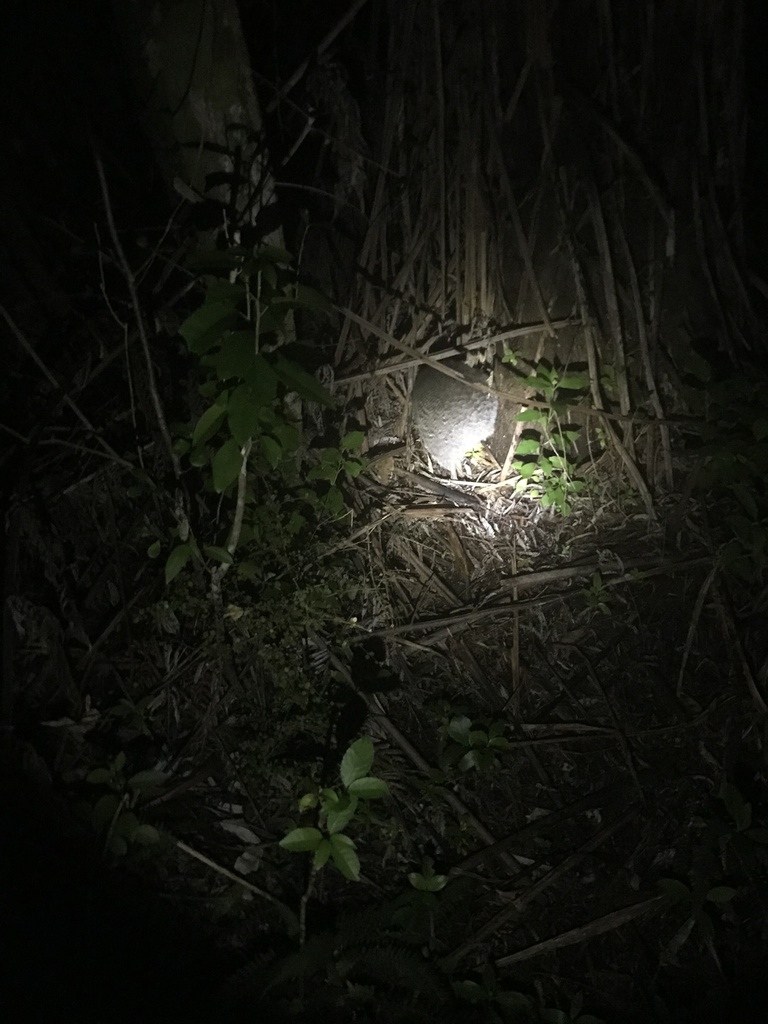
Week or so after that, I headed out to Tiri-tiri Matangi again, (third time this year i know :p), again in search of petrels and whatever dastardly creatures of the night I could find. First day wasn't too eventful, most of it was searching for Auckland Green Geckos (if you haven't hear dof these, search them up!!), which have definitely been established/released recently?-ish, but I didn't know anything about locales, so I just spent the day slowly scanning manuka/kanuka shrubs as that's what they're found on usually (as although mainly insectivorous, they'll also feed on nectar, which these shrubs provide). So I basically just did that to pass the time, until night finally came, yet once again I'm still cursed with petrels.. (May've seen like 2? really fast and brief silhouettes, but no clear sightings). Although there was a lot of little-penguins that came ashore onto the beach, and thus would be in your path as you walked around, sprinting off into the surf, entirely hunched backs, like little goblin rockets. Stumbled across a few tuatara, but most of them were still too fast to dash off into their burrows so no real good views sadly : (. Highlight of the night was coming across a kiwi foraging super close to me on the Wattle-Track, unfortunately I was only in position to see it's posterior as it foraged, and when i shifted to the side, to try see it's face better, I got one good look as it realised I was there, before shooting up the small slope and into the ferns.
large.jpg

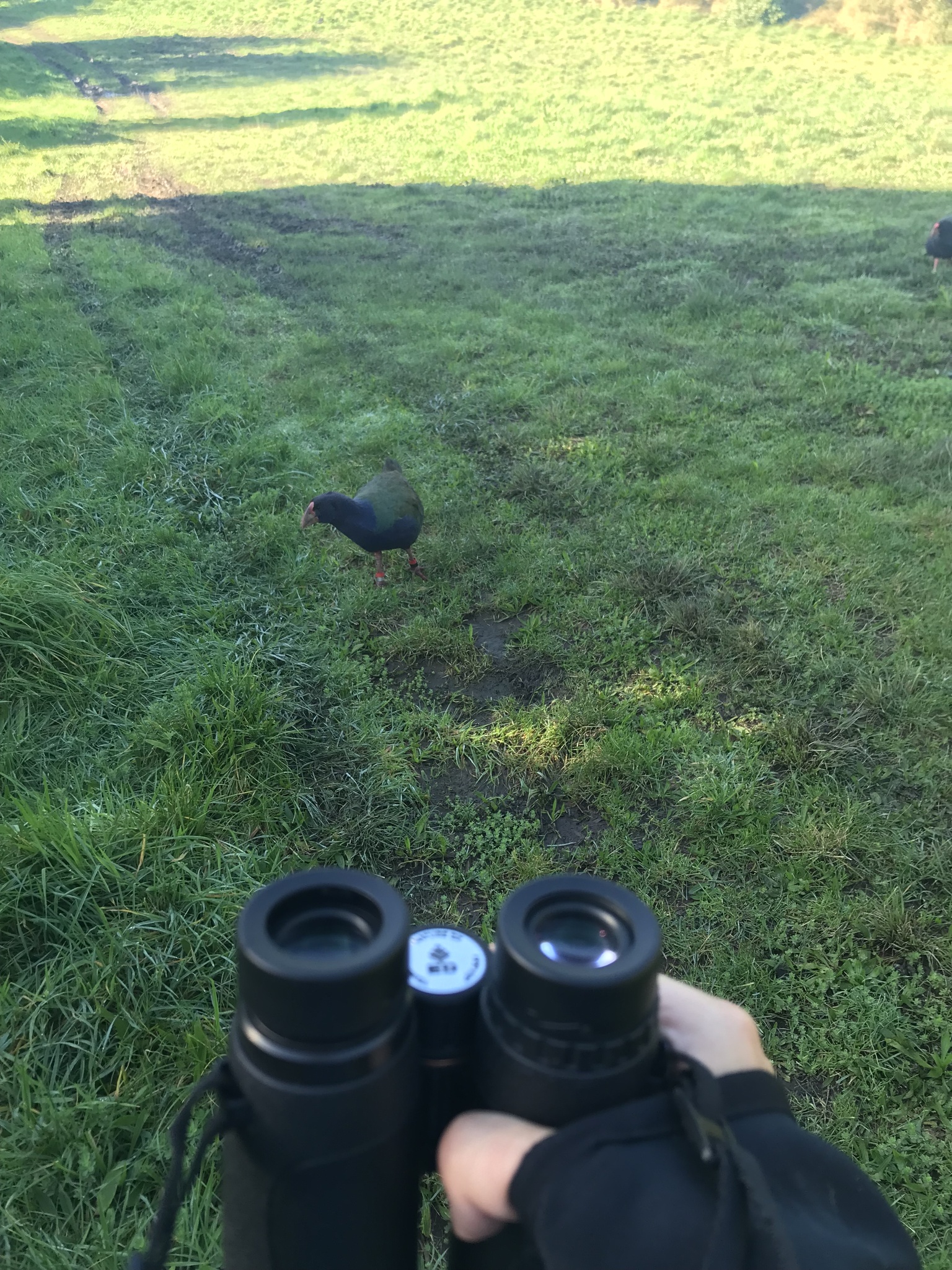
Next morning, had a small side quest in mind, to try see all the takahes on the island (there's only six, two pairs with a chick each), as I'd already seen the ones by the Lighthouse real well, so I thought I'd give a shot if I could see the ones on the East Coast Track/the north of the island as well. Here I saw my two fernbirds of the trip, seemed to have pretty good luck with them just by the lighthouse 'early' in the morning, you hear them and see them quite well as they'll crawl around in the bushes, dopily, yet hurriedly flying form one patch to the next. Thus, walked my way to the very tip of the island, (a Maori pa site? Well it was signed as such but I saw no trace, just a nice view on a cliff to the sea beyond). And on my way back had a run in with the other takahe family so that was that done.
original.jpg

super obliging!
After that did mostly the same as the previous day, just methodically searching for green geckos, didn't stumble into any, but did manage as a very nice surprise to come upon a male (assuming from lack of visible ovipositor) Wetapunga! Although I've heard they're usually not all that concealed, this one was nestled very deeply into the manuka branches, so it was quite hard to get good views of it and would not have came across it unless I was searching for geckos I don't think, so that was a nice bonus. Also located a pair of titipounamu through their cheeping right by the toilet-blocks just before the ferry came, which was great as they're always fun to see.

No real story behind the barbary doves, I'd simply walked down to the beach right by where I live, and was a bit shocked to see a flock of 5 of them milling around. I spent quite a bit of time deliberating between whether I should tick them off or not, (although they are established here, I still just felt weird about their provenance, not from observing them, but rather just because it felt weird to see them so close to where I live). Eventually tough I decided to count them, as I've seen them before in this area, (and I think they're sometimes recorded on eBird), as well as them showing no traits of previous captivity (eg. rings, heavy wearing to feathers, etc), as far as I could tell.

Birds:
111. Barbary Dove (Streptopelia risoria)

INVERT TALLY: 41
Insects:
32. Wetapunga (Deinacrida heteracantha)

Another collation of a few random trips over the past few months, it’s all quite lengthy, I was intending to get this out before my Tutukaka pelagic but that’s since passed, so I’ll post the write-up for that and a few of my other trips this month, as soon as possible.

First two trips were in late August after my mock exams, where I went out to Ambury and Tiritiri respectively. Whilst I didn’t get anything ‘new’ at Ambury it was still a good day, had some nice views of skylarks sulking around in the grass, and one of them taking a sand bath. Although I did see banded dotterels at the site for the first time (a good sized flock all in breeding plumage), as well as good views (or at least better, as all the birds were scurrying around on the peninsula which is fenced off) of the wrybills, so overall a nice day and a good break.

After my mocks ended I finally took another trip to Tiritiri, the day started off well, with a juvenile hihi flying right into my face! Hovering in front of me, perching on the boardwalk, then buzzing off back into the undergrowth. Nothing else much notable happened during the day, with me walking down to Hobb’s Beach at dusk to have another shot at petrels. Walked up and down the beach (from the Kawerau Track to the Wharf) a couple times, not seeing much except penguins scuttling in from the sea to their burrows. Until as I rounded a bend my torchlight caught a small black shape, with blue feet!!! Now if you didn’t know there’s 2 main nesting petrels on Tiritiri, one of them the oi (grey-faced petrel), is a larger bird with as you can tell from the english name a grey face and the other the common diving petrel a tiny football shaped bird, notably having vividly blue foot! As I enjoy tiny cute little birds, the diving was my main target, and also the one I was expecting least, so I was very excited to say the least. It scurried further into a burrow as I approached, so I turned off my light and sat outside hoping to get some more views of the wee thing, but I only heard wings flapping and then it was gone. The burrow it had been in was really small, and more like a tunnel than a burrow, so I assume the petrel was only prospecting or something. Didn’t see much else that night, although a wetapunga pair in the same manuka/kanuka strand I had seen one in last time was neat. Didn’t get on to oi or any other targets that night. Next day I decided to try and find a spotless crake, although I've ‘seen’ it this year, I'll be honest the view was borderline tickable, also I still haven’t even seen them all that well which is something I must remedy by the end of this year.. As you can tell I did not get on to them with this trip either, after maybe an hour or so of waiting I got distracted by some large swarms of backswimmers on the edge of the pond (The one down by the bunkhouse). Not remember having ever seen them before, I took out my phone to take some photos (to serve as a record and to upload on iNaturalist), the photos came out awful though, so I inched closer to get some better ones, which ended up in me precariously holding my phone over the pond, and with a single twitch, plop it went, tumbling into the murky abyss. Thankfully although the pool is a deep brown colour the bottom near shore wasn’t all too deep, so after throwing aside my bag and binocs, I went a noodling in the pond, thankfully dredging out my phone and it worked just fine after! Nothing else much happened on the island and I left with diving petrel as my only new addition.

After that I’ve taken 2 trips out to Mangere/Ambury, one before my finals and the other after I’d done most of them, (I’m taking this trip whilst I still have 2 exams left as I have a really large gap [not till mid nov]). The first one I went birding with a guy called Jackson, he was an American tourist only a year or so older than me that I met online, they’re travelling around the country for a couple of months before going off to Aus. It was great to bird and talk with someone with the same/similar interests as me, although we didn’t pick up any bird lifers (well for myself, it was one of his first days in NZ so he picked up quite a few), a lot of scanning up and down the waterwork canal we believed had payed off with a ‘pure enough’ looking grey duck, but after reviewing the face pattern was too muddled and it had to remain at hybrid level. We also had a hybrid pied x black stilt, which aren’t all too uncommon around there. I did pick up some neat inverts as we did a bit of flipping so the day was still quite good.

Second trip I did was also quite nice, again nothing new for the year/life but some good views of birds I don’t see too often and picked up some birds I hadn’t seen at Mangere/my jurisdiction on eBird before. Again (but not on the trip with Jackson unfortunately as the tides were too low I think) picked out some wrybills and a singleton banded dotterel on the peninsula. After that did some aimless wandering and scanning around trying to find a pair of tattlers (grey-tailed, they’ve been summering here for at least a couple years I believe but I’m still yet to see them) which turned out fruitless, as all bird shapes were lost in the grey blob of non-descript godwits roosting far off. A yellowhammer off to the side of the trail was nice, as I see those very uncommonly and it allowed me to get my first photos of one, as I was deciding to head off to the waterworks I came across a dead seabird with it’s head missing for some reason which was pretty surprising, after some examination (super long legs, greyish colouration, wee sized thing, black-band on tail tip) and photos I determined it was a white-faced storm petrel. After sifting some debris and giving it a small very makeshift grave, I started heading back thinking I’d give the water treatment plant a look as I was more likely to pick up at least a few new birds there when suddenly the roosting shore-birds finally began too move due to the receding tide, flocking out on the mudflats, and conveniently some were actually quite close! I had my first group of ruddy turnstones for this locality assembling on the rocks near to the path, climbing down and standing on the margin of the rocks to scan the mudflats and the now writhing brown mass of shorebirds I still could not pick out a tattler. There were some wrybills in front, large numbers of knots and godwits but sadly nothing new, although it’s still an amazing spectacle to be confronted with such a large number of birds. After that I headed home, stopping at a small wetland reserve on my way where I again searched for spotless crake, but I again wasn’t able to see one.

Birds:
112. Common Diving-Petrel ! (Pelecanoides urinatrix)

INVERT TALLY: 50
Arachnids:
4. Bronze Hopper (Helpis minitabunda) [Garden]
5. White-banded House Jumper (Maratus griseus) [Garden]
6. Silver Orb Spider (Leucauge dromedaria) [Garden]
Insects:
33. Garden soldier fly (Exaireta spinigera) [Garden]
34. Steel blue ladybird (Halmus chalybeus) [Garden]
35. Swamp crane fly (Zealandotipula novarae) [Garden]
36. Acantholybas brunneus (Hemipteran) [Garden]

Platyhelminthes:
1. Blue garden flatworm (Caenoplana coerulea) [Mangere WTP]

Molluscs:
4. Leathery Sea slug (Onchidella nigricansis) [Shore next to Mangere WTP]
 
Some recent sightings, both near home and on a couple of interstate trips, neither animal-watching trips.

Moonlit Sanctuary

Mammals
132. Koala Phascolarctos cinereus

Birds
843. Fan-tailed cuckoo Cacomantis flabelliformis

Invertebrates
86. Imperial jezebel Delias harpalyce

Cairns, Qld

Birds
844. Rock pigeon Columba livia (introduced)
845. Scaly-breasted munia Lonchura punctulata (introduced)

Mission Beach, Qld

Mammals
133. Giant white-tailed rat Uromys caudimaculatus

Invertebrates
87. Neon cloak-and-dagger bee Thyreus nitidulus
88. Tropical needle Synlestes tropicus (new Family)
89. Northern grass pyrgomorph Atractomorpha similis
90. sp. wolf spider Venatrix furcillata


Hunter Valley, NSW

Mammals
134. Eastern gray kangaroo Macropus giganteus

Birds
846. Channel-billed cuckoo Scythrops novaehollandiae
847. Little friarbird Philemon citreogularis
848. Australian reed warbler Acrocephalus australis

Invertebrates
91. sp. spider ant Leptomyrmex nigriventris

Jervis Bay, NSW

Birds,
849. Black bittern Ixobrychus flavicollis

Invertebrates
92. Variegated limpet Cellana tramoserica (new Family)
93. Black nerite Nerita melanotragus
94. Speckled Rock Anemone Oulactis muscosa (new Order and Family)
 
Birds
Actually from a while ago, 7/23, Dick Young Forest Preserve, Kane Co. IL
239. Henslow’s Sparrow (Centronyx henslowii) (Lifer)
A species that had been eluding me for a while, I've almost certainly seen one before and have heard them too, but nothing I could county. This one was the first I could clearly see lacked any sort of point or length to the tail. Seen yesterday on a country road in Piatt Co. IL
240. Eurasian Collared Dove (Streptopelia decaocto) (Lifer)

Fish
This addition really goes to show that I've barely done any fishing this year...
Weldon Springs State Park, DeWitt Co. IL, yesterday
10. Channel Catfish (Ictalurus punctatus)

Insects/Inverts
272. White-marked spider-beetle (Ptinus fur) (Lifer)
273. Grey horse fly (Tabanus trimaculatus) (Lifer)

274. Typical treehopper (Acutalis tartarea)
275. Mason wasp (Euodynerus schwarzi) (Lifer)
276. Great black digger wasp (Sphex pensylvanicus)
277. Skimming bluet (Enallagma geminatum)
278. Thorn fly (Amoebaleria helvola) (Lifer)
279. Confused bee fly (Sparnopolius confusus)
280. American bumble bee (Bombus pensylvanicus)
281. Southern yellowjacket (Vespula squamosa) (Lifer)
282. Two-horned treehopper (Stictocephala diceros) (Lifer)
283. Short-winged meadow katydid (Conocephalus brevipennis) (Lifer)

With the year coming to a close, I'm not too sure how many more additions I'll have. I'm hoping for some interesting late fall migrants.
A suprisingly good update

Birds
Nice to see this waterfowl sp. the last common one I needed for the year.
241. Redhead (Aythya americana)
A small drab bird flushed from the side of the road while driving through Coles County IL, clearly saw white outer tail feathers, 11/4
242. American Pipit (Anthus rubescens) (Lifer)
This is the insane one, not only a lifer, or even just a county record, but the First state record! It was nice to see my 4th hummer sp. of the year this morning, even if the ID was a bit tricky at first until we got some diagnostic pictures.
243. Broad-tailed Hummingbird (Selasphorus platycercus) (Lifer)


Fish
Multiple times earlier this year
White sucker (Catostomus commersonii) (Lifer)

Insects/Inverts
283. Ground beetle (Stenolophus ochropezus) (Lifer)
284. Spotted orbweaver (Neoscona crucifera) (Lifer)
285. Red-banded transparent shrimp (Heptacarpus sitchensis) (Lifer)
286. Wandering glider (Pantala flavescens) (Lifer)

287. Wooly Bear caterpillar (Pyrrharctia isabella)
288. Western conifer seed bug (Leptoglossus occidentalis) (Lifer)
289. Eastern boxelder bug (Boisea trivittata)
290. Green cloverworm moth (Hypena scabra)
291. Posterior brown lacewing (Micromus posticus)
292. Spotted peppergrass moth (Eustixia pupula) (Lifer)
293. Hummingbird clearwing (Hemaris thysbe) (Lifer)
294. Canadian petrophila (Petrophila canadensis) (Lifer)
295. Clouded sulphur (Colias philodice) (Lifer)
 
11/5/23
Birds:
139. Northern pintail Anas acuta
140. Rusty blackbird Euphagus carolinus

Total Species: 168
Birds: 140
Mammals: 16
Herptiles: 13
Fish: 2
Tonight, I finally saw my first-ever owl in the wild. Multiple species were reported not far from campus, but I was somewhat focused on finding a short-eared owl. A few minutes before sunset I saw a large bird flying over the field I was surveying, but I struggled to identify it other than it was brown with a seemingly "thick" body. I eventually lost it when it flew behind some trees. I walked over to where I saw the bird last, and I heard a great-horned owl call. This was one of the few times a birdcall made me freeze in my tracks. I wasn't too confident in my ID at first, but after looking at pictures of great-horned owls in flight, I was confident that's what I saw. It wasn't the species I was aiming to find, but I couldn't care less about it honestly.

11/10/23
Birds:
141. Northern shoveler Spatula clypeata
142. Great-horned owl Bubo virginianus

Total Species: 170
Birds: 142
Mammals: 16
Herptiles: 13
Fish: 2
 
Tonight, I finally saw my first-ever owl in the wild. Multiple species were reported not far from campus, but I was somewhat focused on finding a short-eared owl. A few minutes before sunset I saw a large bird flying over the field I was surveying, but I struggled to identify it other than it was brown with a seemingly "thick" body. I eventually lost it when it flew behind some trees. I walked over to where I saw the bird last, and I heard a great-horned owl call. This was one of the few times a birdcall made me freeze in my tracks. I wasn't too confident in my ID at first, but after looking at pictures of great-horned owls in flight, I was confident that's what I saw. It wasn't the species I was aiming to find, but I couldn't care less about it honestly.

11/10/23
Birds:
141. Northern shoveler Spatula clypeata
142. Great-horned owl Bubo virginianus

Total Species: 170
Birds: 142
Mammals: 16
Herptiles: 13
Fish: 2
Last night I had the amazing opportunity to watch northern saw-whet owl banding. There is a banding station at the same location where I was Friday night. 4 saw-whets were caught, banded, and released. Two of the owls caught were previously banded at different locations. One of them was banded at Whitefish Point all the way in the Upper Peninsula. I was able to see the owls wild for a short period after they were released.

11/11/23
Birds:
143. Northern saw-whet owl Aegolius acadicus

Mammals:
17. Northern flying squirrel Glaucomys sabrinus

Total Species: 172
Birds: 143
Mammals: 17
Herptiles: 13
Fish: 2
 
Last night I had the amazing opportunity to watch northern saw-whet owl banding. There is a banding station at the same location where I was Friday night. 4 saw-whets were caught, banded, and released. Two of the owls caught were previously banded at different locations. One of them was banded at Whitefish Point all the way in the Upper Peninsula. I was able to see the owls wild for a short period after they were released.

11/11/23
Birds:
143. Northern saw-whet owl Aegolius acadicus

Mammals:
17. Northern flying squirrel Glaucomys sabrinus

Total Species: 172
Birds: 143
Mammals: 17
Herptiles: 13
Fish: 2
How did you identify the flying squirrel?
 
How did you identify the flying squirrel?
I thought this would be easier to answer honestly. Someone called it out when it flew over their head, and I saw a glimpse of it on a tree. I wasn't familiar with flying squirrels, so I looked up flying squirrels in Michigan. I first saw a link from Michigan State University about northern flying squirrels, assuming this is the only species in the state.

After I saw your response last night, I did more research and found out southern flying squirrels are also found in the state. I looked at the range map of the two species, and there seems to be some overlap in the range in the county I saw it. I'm just going to remove it from my list. It was definitely a Glaucomys sp., but I can't confidently say it was one or the other.
 
I went “twitching” today for the first time in my life in search of an extremely rare Red-breasted goose that had been sighted at a lake a couple kilometers north of where I live. So right after school I headed over to the lake and with the help of some other birders, I was able to find my 129th bird of the year!

129. Red-breasted goose, Branta ruficollis 27/10/23
It has come to my attention that the Red-breasted goose I saw a couple weeks ago was not a natural vagrant, but in fact an escapee. Due to this I will be removing it from my official list, while still keeping it on my personal unofficial list. I am now at 130 birds.
 
Last week I attended the conservation translocation conference in Freemantle (Perth), Western Australia. Ferries to Rottnest Island leave from just down the street from the conference venue, so it seemed like a good opportunity to visit the island, as I had never been there before. I was able to book one night's accommodation, although accommodation was difficult to find. In fact the island was unseasonably busy, which didn't help animal watching. Added to that I had a bout of food poisoning (I think) during the conference which I was still recovering from. But I still managed to see some nice animals.

Rottnest Island is famous for it's quokkas, and you could not have missed them, they were everywhere. They were around or under my table at every meal, and at one stage under my bed. Still, away from the crowds, I did see one behaving more naturally, diving into a bush when it saw me.

My main bird target was the rock parrot, and people who had visited several years ago suggested they were easy to see. However I was told when on the island there were only 10 left, so despite looking in all the recommended areas, I missed this species.

Mammals
135. Quokka Setonix brachyurus (VU)
136. Long-nosed fur seal Arctocephalus forsteri

Birds
850. Australian shelduck Tadorna tadornoides
851. Pied cormorant Phalacrocorax varius
852. Pied oystercatcher Haematopus longirostris
853. Banded stilt Cladorhynchus leucocephalus
854. Red-necked avocet Recurvirostra novaehollandiae
855. Pacific gull Larus pacificus
856. Bridled tern Onychoprion anaethetus
857. Fairy tern Sternula nereis
858. Singing honeyeater Gavicalis virescens
859. Spotted scrubwren Sericornis maculatus
860. Western whistler Pachycephala fuliginosa
861. Australian raven Corvus coronoides
862. Red-capped robin Petroica goodenovii

Reptiles
28. West-coast laterite skink Ctenotus fallens
29. King's skink Egernia kingii

Invertebrates
95. sp. stink bug Theseus modestus
96. Transverse ladybug beetle Coccinella transversalis
 
Last edited:
The start of spring has provided a productive few weeks. My targeted visits to hotspots outside of Brisbane have given me an opportunity to gain a broader picture of some of the local wildlife. Whiptail Wallaby [Whiptail Wallabies - ZooChat] and Wonga Pigeon [Wonga Pigeon - ZooChat] were highlights of my first ever visit to Lamington National Park in particular; a spectacular must-see destination. Back to Toowoomba, a quartet of Powerful Owls [Powerful Owl Chick - ZooChat] represented my first wild owls of any kind and a few western fairywrens have bolstered the list. Waders are starting to pick up gradually as they arrive from the Northern Hemisphere with sightings earlier than usual including my first snipes today. A trip to the Sunshine Coast added Radjah Shelduck and several quality reptiles and inverts especially.

Mammals
12) Brown Rat Rattus norvegicus
13) Whiptail Wallaby Macropus parryi

Birds
191) Little Lorikeet Glossopsitta pusilla
192) Fuscous Honeyeater Lichenostomus fuscus

193) Eastern Shrike-tit Falcunculus frontatus
194) White-cheeked Honeyeater Phylidonyris niger
195) Square-tailed Kite Lophoictinia isura
196) White-winged Fairywren Malurus leucopterus
197) Purple-backed Fairywren Malurus assimilis
198) Powerful Owl Ninox strenua

199) Crimson Rosella Platycercus elegans
200) Great Cormorant Phalacrocorax carbo
201) Wonga Pigeon Leucosarcia melanoleuca
202) Radjah Shelduck Radjah radjah

203) Wompoo Fruit-Dove Ptilinopus magnificus
204) Far Eastern Curlew Numenius madagascariensis
205) Grey-tailed Tattler Tringa brevipes
206) Whiskered Tern Chlidonias hybrida
207) Latham’s Snipe Gallinago hardwickii

Herptiles
23) Eastern Blue-tongued Lizard Tiliqua scincoides
24) Green Tree Snake Dendrelaphis punctulatus
25) Major Skink Bellatorias frerei
26) Yellow-faced Whipsnake Demansia psammophis

Invertebrates
190) Dainty Grass-Blue Zizula hylax
191) Scarlet Jezebel Delias argenthona
192) Boatman Fly Pogonortalis doclea
193) Yellow-banded Ichneumon Wasp Echthromorpha agrestoria
194) Glistening Line-Blue Sahulana scintillata
195) Garden Bermius Bermius brachycerus
196) Phrynocaria gratiosa [lady beetle]
197) Daerlac apicalis [seed bug]

198) Glistening Pencil-Blue Eirmocides absimilis
199) Long-tailed Pea-Blue Lampides boeticus
200) Venatrix furcillata [wolf spider]
201) Stable Fly Stomoxys calcitrans
202) Notarcha aurolinealis [moth]

203) Blue Riverdamsel Pseudagrion microcephalum
204) Zebra Top Snail Austrocochlea porcata
205) Striped-legged Hermit Crab Clibanarius taeniatus
206) Regent Skipper Euschemon rafflesi
207) Children’s Stick Insect Tropidoderus childrenii
208) Lydia Lichen Moth Asura lydia

209) Blue Blubber Catostylus mosaicus
210) Long-nosed Lycid Beetle Porrostoma rhipidium
211) Philobata curvilinea [concealer moth]
212) Notius consputus [stink bug]
213) Long Broad-headed Bug Mutusca brevicornis
214) Stathmopoda megathyma [curved-horn moth]
215) Metasia tiasalis [pearl moth]
A late spring update from me – lots of activity about. The antechinus was a great find in Enogerra Reservoir recently especially. A few targeted finds like the crakes and the New Holland Honeyeater which is rare in south-east Queensland near upland rainforest are of note. The bullrout was a lucky find as a cormorant was trying to dispatch it but it put up a great fight. Inverts have been great recently as well – the Bordered Rustic (butterfly) has been an exciting find for me as was the spider wasp, mantis and longhorn beetle in particular. I saw my first centipedes recently as well but they couldn’t be identified to species level. My next update around late December should involve some species relatively far from home…

Mammals
14) Yellow-footed Antechinus Antechinus flavipes

15) Black Rat Rattus rattus
16) Red-necked Wallaby Notamacropus rufogriseus
17) Short-eared Brushtail Possum Trichosurus caninus

Birds
208) White-throated Gerygone Gerygone olivacea
209) Bell Miner Manorina melanophrys
210) Baillon’s Crake Porzana pusilla
211) Dollarbird Eurystomus orientalis
212) Spotless Crake Porzana tabuensis
214) New Holland Honeyeater Phylidonyris novaehollandiae
215) Grey Goshawk Accipiter novaehollandiae
216) European Starling Sturnus vulgaris
217) Curlew Sandpiper Calidris ferruginea
218) Australian Hobby Falco longipennis
219) Striated Thornbill Acanthiza lineata

Herptiles
27) Highland Forest Skink Saproscincus rosei


Fish
10) Bullrout/Freshwater Stonefish Notesthes robusta


Invertebrates
216) Anthomyia silverstris [fly]

217) Green-head Ant Rhytidoponera metallica
218) Tuxedo Shore Crab Australoplax tridentata
219) Orange Threadtail Nososticta solida
220) Dolopus simulans [robber fly]

221) Clearwing Swallowtail Cressida cressida
222) Spotted Amber Ladybird Beetle Hippodamia variegata
223) Stick Mantis Archimantis latistyla

224) Choreutis ophiosema [moth]
225) Green Ant-hunter Spider Cosmophasis bitaeniata
226) Brentiscerus putoni [seed bug]

227) North Queensland Jumping Spider
228) Bordered Rustic Cupha prosope
229) Silver Orb Spider Leucauge dromedaria
230) Lucilia porphyrina [blowfly]
231) Tiger Longhorn Aridaeus thoracicus

232) Fire-tailed Resin Bee Megachile mystaceana
233) Gum Tree Shield Bug Theseus modestus
234) Orange-collared Spider Wasp Ferreola handschini
235) Angular-wing Lacewing Periclystus circuiter
 
An odd pair of new additions today. Didn't spend as long with either as I'd have liked as the forecast rain showers were actually quite persistent and unpleasant rain but certainly both nice species to see - albeit two species where seeing these two in the UK on the same day does nothing for your climate anxiety...

Ibis was a single bird at Swillington Ings (St Aiden's Nature Park) while the waxwings were a group of over 30 that has been hanging out in a Sheffield suburb for a while now - biggest group I've seen, just wish the weather allowed a bit more linger time and photography..!

In other news, these two also hit my UK 200 for the year. :)

Birds:
205. Glossy Ibis - Plegadis falcinellus
206. Bohemian Waxwing - Bombycilla garrulus

(UK: 200!)

:)
 
I've been tempted by those waxwing for a while now but time nor weather has really allowed for me to go.

I had time today, but the weather was not so friendly. Great spectacle though - not the most accessible part of Sheffield if you're not already in the city though - lots of criss-crossing streets to get in and out!
 
Birds:
  1. House Sparrow
  2. Cape Sparrow
  3. Common Myna
  4. Egyptian Goose
  5. Crowned Lapwing
  6. Red-eyed Dove
  7. Cape Turtle-Dove
  8. Laughing Dove
  9. Helmeted Guineafowl
  10. Cape Robin-chat
  11. Karoo Thrush
  12. Blacksmith Lapwing
  13. Speckled Pigeon
  14. Grey Go-away-bird
  15. Southern Masked-weaver
  16. African Red-eyed Bulbul
  17. Cape White-eye
  18. Hadeda Ibis
  19. Red-billed Wood Hoopoe
  20. Spotted Thick-knee
  21. Southern Red Bishop
  22. White-faced Whistling-duck
  23. Malachite Kingfisher
  24. Pin-tailed Whydah
  25. Reed Cormorant
  26. Spur-winged Goose
  27. Hoopoe
  28. Yellow-billed Stork
  29. Common Fiscal
  30. African Sacred Ibis
  31. African Spoonbill
  32. African Darter
  33. African Olive Pigeon
  34. White-browed Sparrow-weaver
  35. Red-knobbed Coot
  36. Red-billed Quelea
  37. Black-chested Prinia
  38. Burchell's Coucal (White-browed Coucal)
  39. Cape Wagtail
  40. Village Indigobird
  41. European Bee-eater
  42. Red-capped Lark
  43. Little Grebe (Dabchick)
  44. Common Moorhen
  45. African Stonechat
  46. African Paradise-Flycatcher
  47. White-fronted Plover
  48. African Black Oystercatcher
  49. Kelp Gull
  50. Cape Crow
  51. Pied Crow
  52. Streaky-headed Seedeater/Canary
  53. Fiscal Flycatcher
  54. Yellow-crowned Bishop
  55. Red-collared Widowbird
  56. Cape Bulbul
  57. Red-winged Starling
  58. Long-tailed Paradise-whydah
  59. Hammerkop
  60. Common Ostrich
  61. Black Sawwing
  62. Alpine Swift
  63. Black-shouldered Kite
  64. Grey Heron
  65. Black-headed Heron
  66. Cattle Egret
  67. Swift Tern
  68. African Pied Wagtail
  69. Amethyst Sunbird
  70. African Pied Starling
  71. Cape Vulture
  72. Jackal Buzzard
  73. Yellow-billed Duck
  74. Forest Buzzard
  75. White-necked Raven
  76. Fork-tailed Drongo
  77. Cape Batis
  78. Red-necked Spurfowl
  79. Knysna Turaco
  80. Yellow-fronted Canary
  81. Yellow Canary
  82. Cape Canary
  83. African Dusky Flycatcher
  84. Greater Double-collared Sunbird
  85. Great/White-breasted Cormorant
  86. Secretarybird
  87. Grey Crowned Crane
  88. Blue Crane / Stanley's Crane
  89. Dark-capped Bulbul
  90. Olive Thrush
  91. Black-collared Barbet
  92. Thick-billed Weaver
  93. Rock Pigeon
  94. Tawny-flanked Prinia
  95. Familiar Chat
  96. Red-faced Mousebird
  97. African Grey Hornbill
  98. Red-headed Finch
  99. Long-tailed Widowbird
  100. Capped Wheatear
  101. Grey-headed Gull
  102. Spotted Eagle-owl
  103. Knysna Woodpecker
  104. Speckled Mousebird
  105. White-bellied Sunbird
  106. Cape Glossy Starling
  107. Crested Barbet
  108. Wattled Starling
  109. African Wattled Lapwing
  110. Rose-ringed Parakeet
  111. Marsh Owl
  112. Pied Kingfisher
  113. Goliath Heron
  114. Brown-hooded Kingfisher
  115. Blue Waxbill
  116. Half-collared Kingfisher
  117. Green-backed Heron
  118. Squacco Heron
  119. Long-billed Crombec
  120. Chestnut-vented Warbler/Tit-babbler
  121. White-backed Mousebird
  122. Brown-crowned Tchagra
  123. Red-billed Teal
  124. Southern Pied-babbler
  125. Burchell's Starling
  126. Southern Yellow-billed Hornbill
  127. Southern Red-billed Hornbill
  128. Chinspot Batis
  129. Bearded Woodpecker
  130. Retz's Helmetshrike
  131. Tawny Eagle
  132. Magpie Shrike
  133. Southern White-crowned Shrike
  134. Gabar Goshawk
  135. Lilac-breasted Roller
  136. Golden-breasted Bunting
  137. Cape Bunting
  138. Red-headed Weaver
  139. Red-billed Oxpecker
  140. Red-crested Korhaan/Bustard
  141. African Hawk-eagle
  142. Lappet-faced Vulture
  143. White-backed Vulture
  144. Emerald-spotted Wood Dove
  145. African Fish-eagle
  146. Bateleur
  147. Southern Ground-hornbill
  148. Yellow-billed Oxpecker
  149. Purple Roller
  150. White-crested Helmetshrike
  151. Water Thick-knee
  152. Wire-tailed Swallow
  153. White-throated Robin-chat
  154. Acacia Pied Barbet
  155. Southern Black-tit
  156. Yellow-breasted Apalis
  157. Red-billed Buffalo-weaver
  158. African Mourning Dove
  159. Southern Grey-headed Sparrow
  160. Spectacled Weaver
  161. Cardinal Woodpecker
  162. Orange-breasted Bushshrike
  163. White-browed Scrub-robin
  164. Red-billed Firefinch
  165. Brown-headed Parrot
  166. Red-capped Robin-chat
  167. Common Scimitarbill
  168. African Black-headed Oriole
  169. African Pipit
  170. Green-winged Pytilia (Melba Finch)
  171. Jameson's Firefinch
  172. Natal Spurfowl
  173. Martial Eagle
  174. African Woolly-necked Stork
  175. Brown Snake Eagle
  176. Greater Blue-eared Starling
  177. Little Bee-eater
  178. White-fronted Bee-eater
  179. Marabou Stork
  180. Great Egret
  181. Black-backed Puffback
  182. Kori Bustard
  183. Black Crake
  184. Common Waxbill
  185. White-crowned Lapwing
  186. Yellow-throated Longclaw
  187. Black-crowned Tchagra
  188. Green/Gray-backed Camaroptera
  189. Hooded Vulture
  190. Cape Bunting
  191. Saddle-billed Stork
  192. Scarlet-chested Sunbird
  193. Southern Black-flycatcher
  194. Levaillant's Cisticola
  195. African Cuckoo Hawk
  196. Black-bellied Bustard
  197. Ashy Flycatcher
  198. Purple-crested Turaco
  199. Collared Sunbird
  200. Pearl-spotted Owlet
  201. Long-crested Eagle
202. Lesser Flamingo
203. Ovambo Sparrowhawk
 
It has certainly been a very interesting migration season with lots of fun stuff popping up very infrequently across New England. Unfortunately, I've been too busy of late to get out so I have no new additions for now. On the contrary, I have a couple birds to remove from my list... I've been finally going through my Kenya photos to make some identifications and, while so far all the photos I took of birds that I couldn't identify in-field I also can't identify now, I have come to realize I made two misidentifications in-field.

I will be removing the Black-Crowned Tchagra and Southern Black Flycatcher from my list, bringing me down to 682 species.

I should be back with an update on my herps totals soon enough, along with a couple other fun things.

~Thylo

I haven't yet finished combing through my photos from Kenya to start posting updates here but I can make some CT additions.

As has been the case with my last few updates, there are still plenty of neat birds around that I haven't seen yet. It's not the usual migrants, however, but rather some surprise vagrants. At the moment, for whatever reason, the entire northeast US seems to be getting inundated with western birds popping up all over the place. Everywhere except, of course, anywhere within a 45 minute to an hour drive from where I live! However, yesterday I made a plan to swing by a couple spots in the southwest corner of the state on my way to the Bronx to try and nab some oddities that have been hanging around for almost a week now.

683) MacGillivray's Warbler Geothlypis tolmiei
684) Rufous Hummingbird Selasphorus rufus

As of the time of writing this, neither species has been reported as continuing this morning (though I'm not sure if anyone's still looking for the hummingbird, it's been around longer and has been more easily spotted than the warbler). Funny enough, this is my first hummingbird of the year with me somehow never finding the native Ruby-Throated Hummingbird all summer.

~Thylo
 
I haven't yet finished combing through my photos from Kenya to start posting updates here but I can make some CT additions.

As has been the case with my last few updates, there are still plenty of neat birds around that I haven't seen yet. It's not the usual migrants, however, but rather some surprise vagrants. At the moment, for whatever reason, the entire northeast US seems to be getting inundated with western birds popping up all over the place. Everywhere except, of course, anywhere within a 45 minute to an hour drive from where I live! However, yesterday I made a plan to swing by a couple spots in the southwest corner of the state on my way to the Bronx to try and nab some oddities that have been hanging around for almost a week now.

683) MacGillivray's Warbler Geothlypis tolmiei
684) Rufous Hummingbird Selasphorus rufus

As of the time of writing this, neither species has been reported as continuing this morning (though I'm not sure if anyone's still looking for the hummingbird, it's been around longer and has been more easily spotted than the warbler). Funny enough, this is my first hummingbird of the year with me somehow never finding the native Ruby-Throated Hummingbird all summer.

~Thylo
There sure has been a lot of western hummingbird madness this month for us Easterners.
 
This year seems remarkably good for waxwings in the Netherlands. Nothing like the major irruptions I know only from old bird guides, but there are definitely more than most years. As per usual, most waxwings don't stray far from the northern provinces or the coast, but at least one individual made it's way further inland to one my local birding patches - and it became the second member of it's species I ever saw in the wild. It settled in the scrubs on the edge of a man-made lake, which at that time held two other rare winter migrants: great northern diver and red-breasted merganser. I've seen the merganser earlier this year near the coast, where they can be very abundant, but the diver was new for the year list as well.

Birds
223. Bohemian Waxwing, Bombycilla garrulus
224. Great Northern Diver, Gavia immer
 
This year seems remarkably good for waxwings in the Netherlands. Nothing like the major irruptions I know only from old bird guides, but there are definitely more than most years. As per usual, most waxwings don't stray far from the northern provinces or the coast, but at least one individual made it's way further inland to one my local birding patches - and it became the second member of it's species I ever saw in the wild. It settled in the scrubs on the edge of a man-made lake, which at that time held two other rare winter migrants: great northern diver and red-breasted merganser. I've seen the merganser earlier this year near the coast, where they can be very abundant, but the diver was new for the year list as well.

Birds
223. Bohemian Waxwing, Bombycilla garrulus
224. Great Northern Diver, Gavia immer
The Western Great Lakes states are getting a pretty good Bohemian Waxwing movement right now, too. I wonder if irruptions are always timed across this species' range, or if it's just a coincidence that this species is having a good year on both continents.
 
Back
Top