Reptilandia Reptile Lagoon - Full Review, Species List, and Walk-Through!

biggiesmalls

Well-Known Member
5+ year member
After close to 3 years of waiting and checking near-daily for updates, I'm excited to finally post a review, walk-through, and species list for Reptilandia Reptile Lagoon! All information is based on my visit on March 6th, 2024.

Reptilandia Reptile Lagoon is a brand new zoo located in Johnson City, Texas that keeps exclusively reptiles. The facility is set out in the beautiful Texas Hill Country, less than 5 minutes from both a nice little "downtown" area and a pretty decent Best Western. You're about an hour west of Austin, which gives you plenty of additional options to make a trip out even if you're not an uber reptile nerd. This review will be quite long, so for a TL;DR, here's what you need to know:
  • If you are a fan of reptiles, this is THE BEST facility to visit in the United States, period.
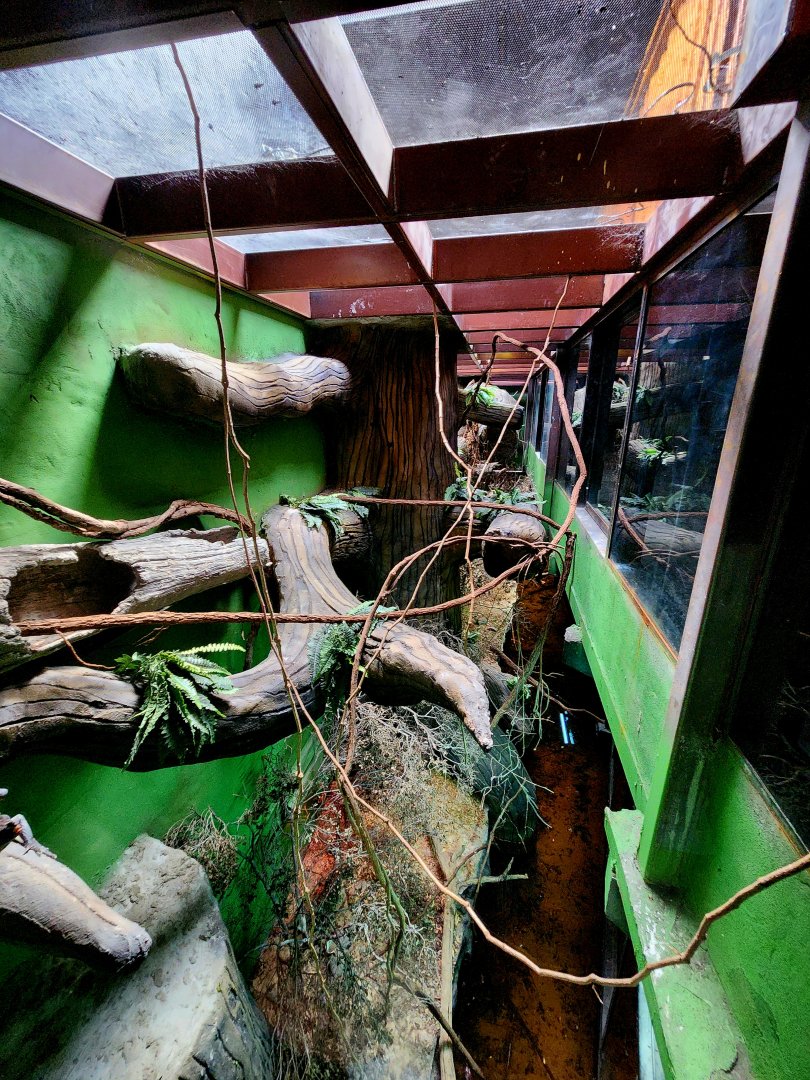
  • What is likely the largest indoor reptile enclosure in the country can be found along the back wall of the Tropical Building, replicating a Papuan swamp forest. It measures 60 feet long, 20 feet from front to back (at its widest), and 30 feet tall and is visible from two stories.
  • Dozens of extremely rare species, whatever you take that to mean (endangered, rare in zoological collections, rare in herpetoculture, etc).
  • Over 100 large, naturalistic, biotope-style enclosures in total, the majority of which are mixed-species and several of which are visible from two stories. Every enclosure also has as large of a water feature as possible, while still remaining appropriate for the inhabitants (i.e., desert species don't have massive waterfalls).
  • If you're a serious reptile nerd, try to set aside a full weekday (10:00 AM to 5:00 PM) to really take this place in. The number of behaviors I witnessed for the first time in species I've personally worked with for over a decade was astounding.
  • To be fully transparent, if you aren't a huge reptile fan, this will likely be a quick trip (an hour or two tops) - plan accordingly.
  • Be sure to meet Quetzal, Ari, and/or Ryu if you get the chance! Three fantastic people :)
No reason to drag this out any further, let's jump into it! I will add the full species list in the next post, and then start on the review and walk-through. Please give me some time to work on this, as I'll be describing each exhibit in detail with embedded photos.
 
FULL SPECIES LIST:

TROPICAL BUILDING

Entrance Wall
  • Unsigned (unsure of plans)
  • Unsigned (unsure of plans)
  • Unsigned (unsure of plans)
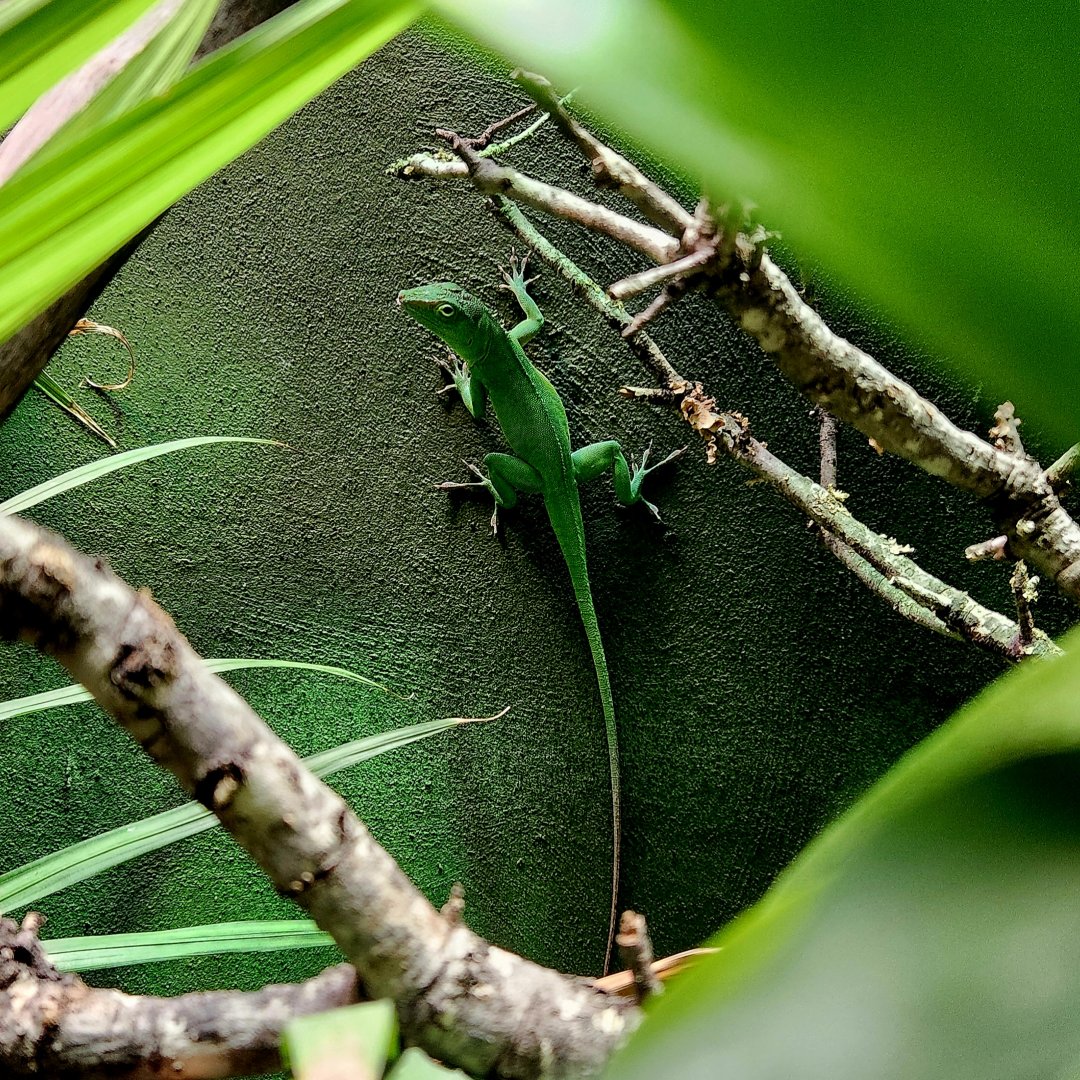
  • Unsigned (unidentified Anole; Anolis sp.)
  • Singapore (Mangrove Pit Viper; Trimeresurus purpureomaculatus)
  • Thailand (Wagler’s Pit Viper; Tropidolaemus wagleri)

Two-Story Exhibits
  • Northeastern Australia (2 species)
    • Eastern Water Dragon (Intellagama lesueurii lesueurii)
    • Mertens’ Water Monitor (Varanus mertensi)
  • Amazon Rainforest (3 species)
    • Yellow-Footed Tortoise (Chelonoidis denticulata)
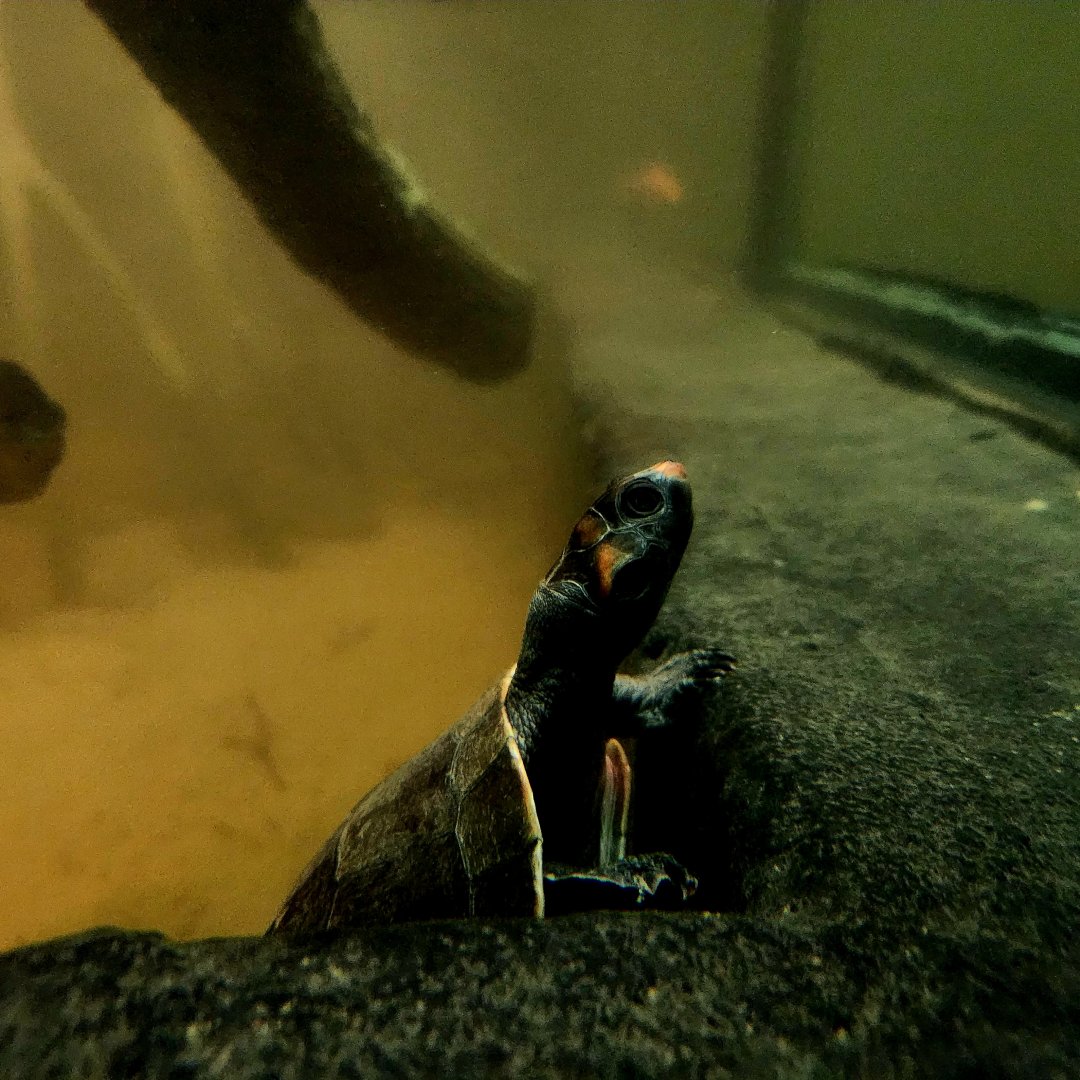
    • Yellow-Spotted River Turtle (Podocnemis unifilis)
    • Plumed Basilisk (Basiliscus plumifrons)
  • Batanta (2 species)
    • Blue Tree Monitor (Varanus macraei)
    • Indonesian Blue-Tongued Skink (Tiliqua gigas)
  • Cuba (3 species)
    • Cuban Slider (Trachemys decussata)
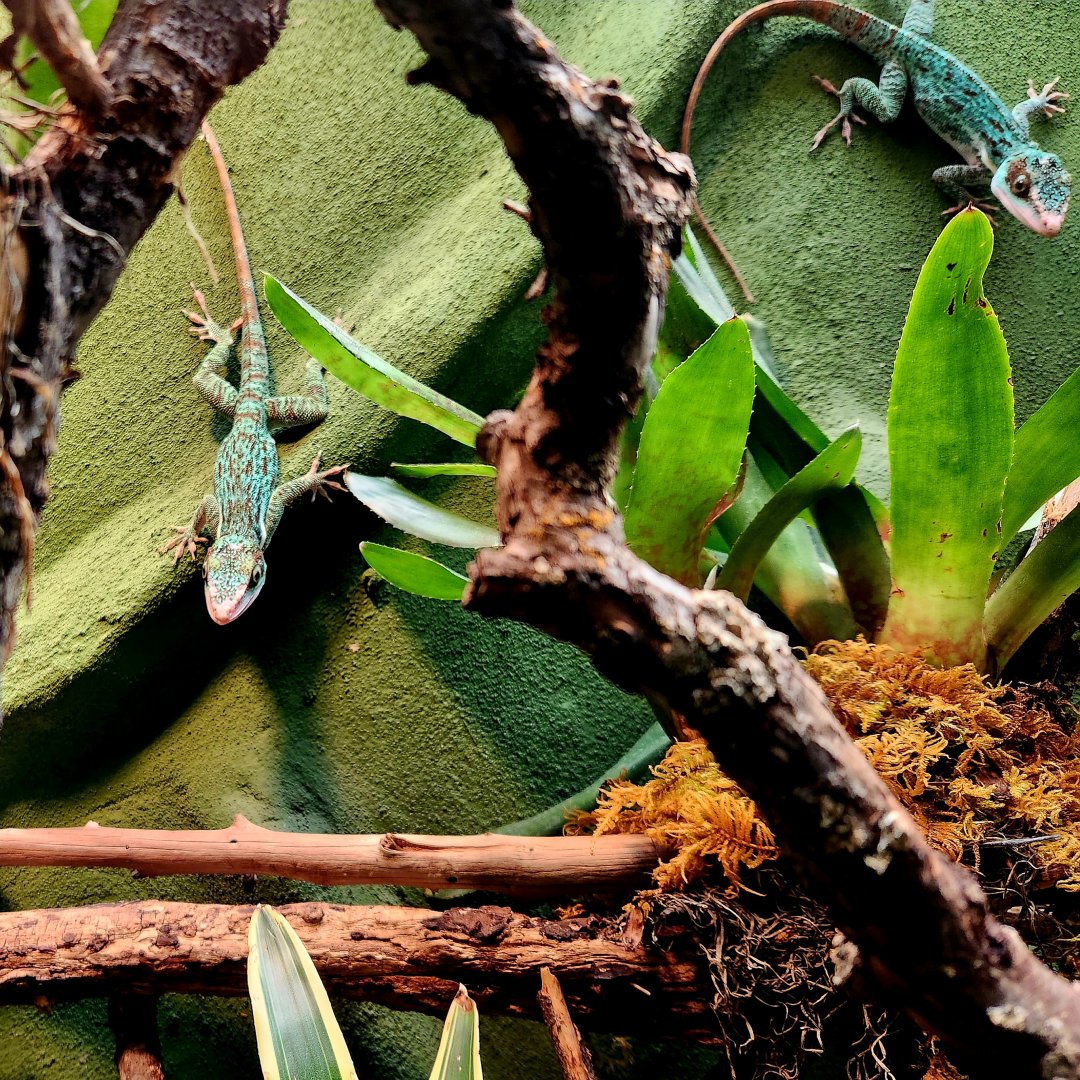
    • Smallwood’s Anole (Anolis smallwoodi)
    • Cuban Rock Iguana (Cyclura nubila)
  • Aru Islands (empty - future Black Tree Monitor; Varanus beccarii)
  • Tsingy Peaks (5 species)
    • Radiated Tortoise (Astrochelys radiata)
    • Madagascar Big-Headed Turtle (Erymnochelys madagascariensis)
    • Cuvier’s Madagascar Swift (Oplurus cuvieri)
    • Unidentified Day Gecko (Phelsuma sp.)
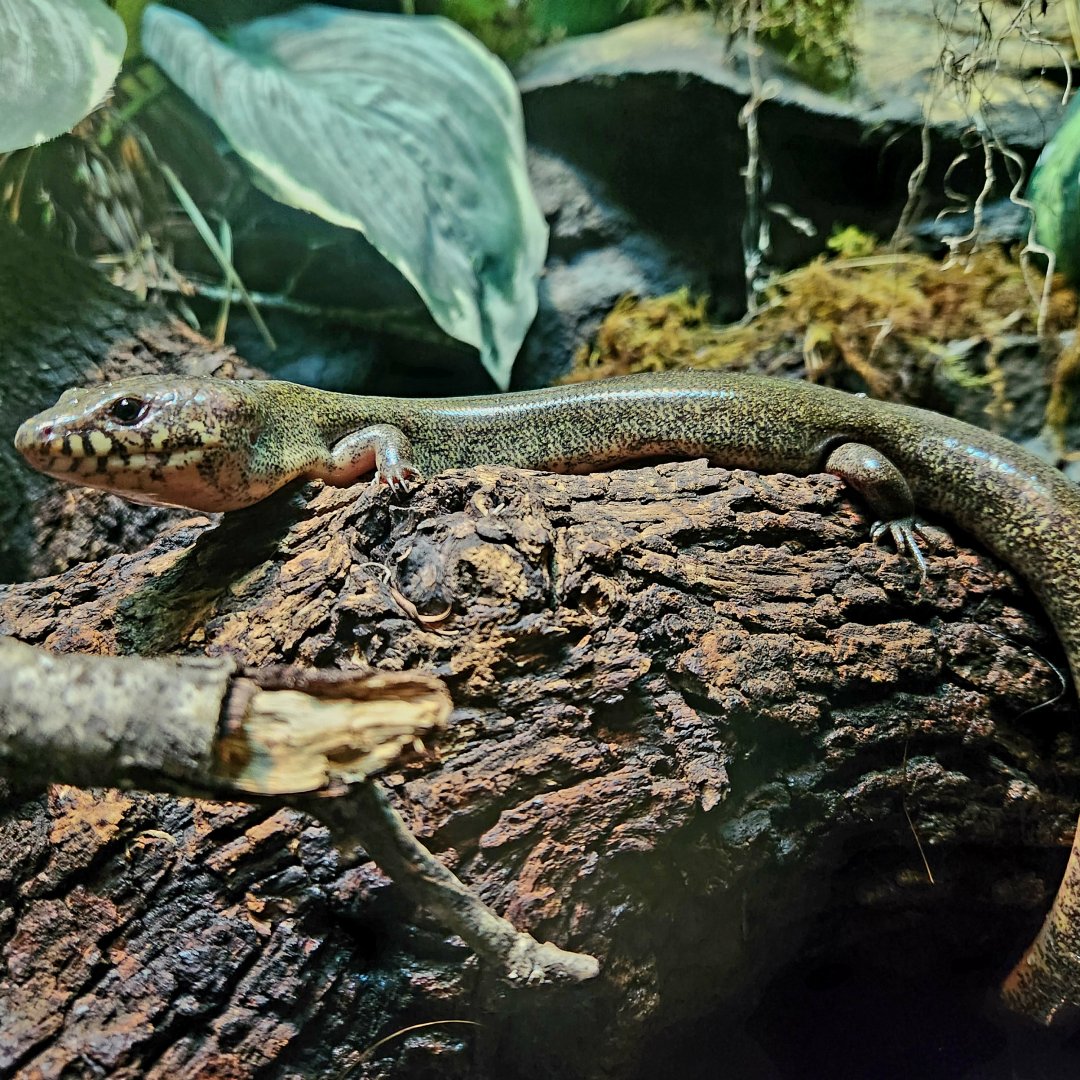
    • Southeastern Girdled Lizard (Zonosaurus maximus)
  • New Guinea (Angle-Headed Forest Dragon; Hypsilurus magnus)
  • New Guinea (4 species)
    • Fly River Turtle (Carettochelys insculpta)
    • Red-Bellied Short-Necked Turtle (Emydura subglobosa)
    • Philippine Sailfin Lizard (Hydrosaurus pustulatus)
    • Crocodile Monitor (Varanus salvadorii)
  • Southeastern Australia (Lace Monitor; Varanus varius)
  • New Guinea (2 species)
    • Fly River Turtle (Carettochelys insculpta)
    • Northern Snake-Necked Turtle (Chelodina rugosa)

Southern Wall
  • Komodo Island (Komodo Dragon; Varanus komodoensis)
  • Venezuela (Green Anaconda; Eunectes murinus)
  • Suriname (Northern Emerald Tree Boa; Corallus caninus)
  • Central Africa (3 species)
    • Dwarf Crocodile (Osteolaemus tetraspis)
    • African Helmeted Turtle (Pelomedusa subrufa)
    • Nile Softshell Turtle (Trionyx triunguis)
  • West Africa (3 species)
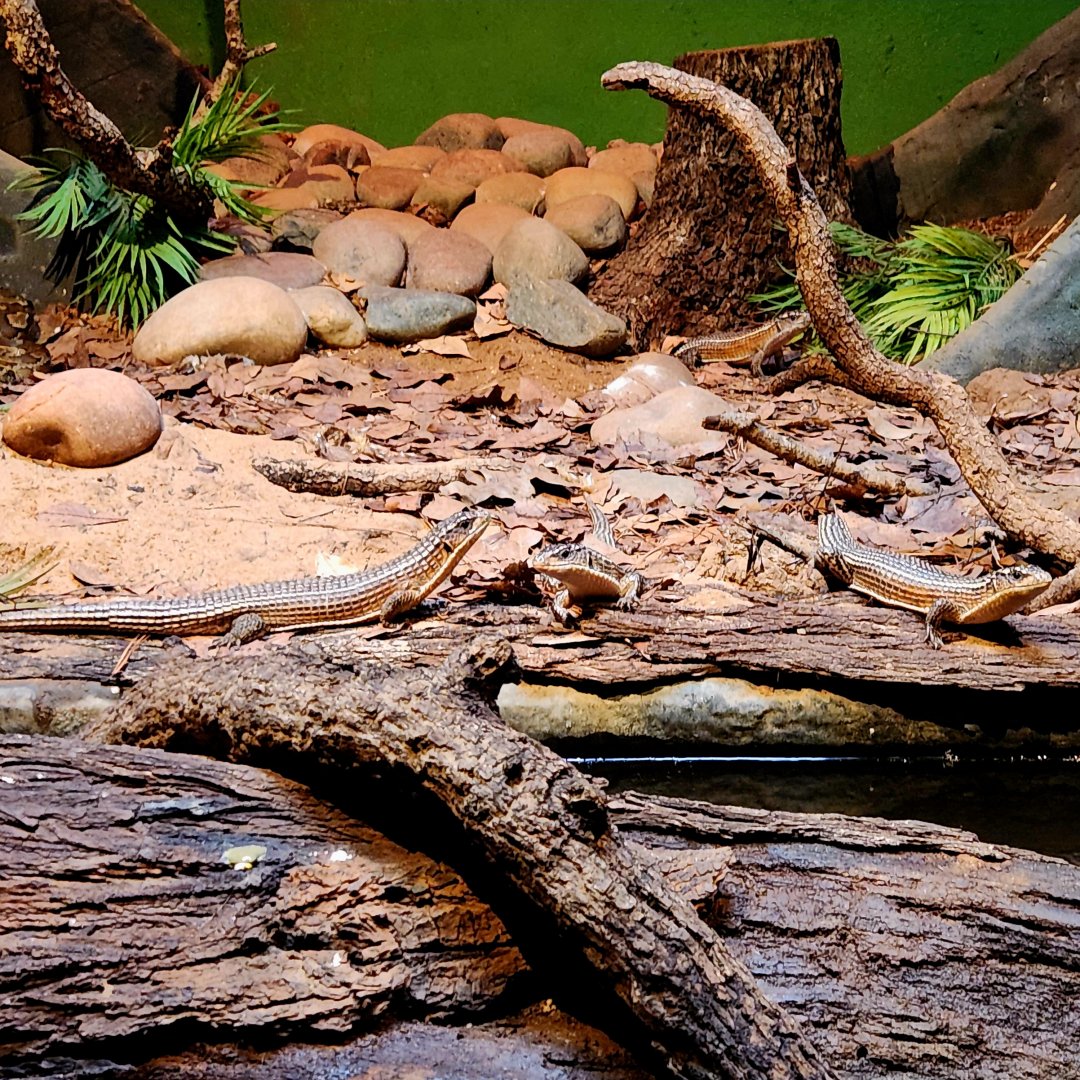
    • Sudan Plated Lizard (Broadleysaurus major)
    • Smith’s African Water Snake (Grayia smithii)
    • African Rock Python (Python sebae)
  • Rio Orinoco (3 species)
    • Orinoco Mata-Mata (Chelus orinocensis)
    • Red-Headed Amazon River Turtle (Podocnemis erythrocephala)
    • Crocodile Tegu (Crocodilurus amazonicus)

First Alcove
  • Latin American Cave (2 species)
    • Western Cliff Anole (Anolis bartschi)
    • Axolotl (Ambystoma mexicanum)
  • Cuba (Cuban Boa; Chilabothrus angulifer)
  • Hispaniola (Dominican Red Mountain Boa; Chilabothrus striatus striatus)
  • Bahamas (Bahamian Boa; Chilabothrus strigilatus)
  • Chihuahua (Western Chihuahuan Ridge-Nosed Rattlesnake; Crotalus willardi simus)
  • West Texas (Broad-Banded Copperhead; Agkistrodon laticinctus)
  • Chihuahuan Desert (Rock Rattlesnake; Crotalus lepidus)
  • Chihuahuan Desert (Rock Rattlesnake; Crotalus lepidus)
  • Western Mexico (Mexican West Coast Rattlesnake; Crotalus basiliscus)
  • New Mexico (Desert Massasauga; Sistrurus tergeminus edwardsii)
  • Greece (Milos Viper; Macrovipera lebetinus schweizeri)
  • New Guinea (Scrub Python; Simalia amethistina)
  • Halmahera (Odd-Chinned Skink; Eugongylus mentovarius)
  • Argentina (Argentine Boa; Boa constrictor occidentalis)
  • New Guinea (Viper Boa; Candoia aspera)
  • Jamaica (Jamaican Boa; Chilabothrus subflavus)
  • Vietnam (Rhino Rat Snake; Gonyosoma boulengeri)
  • South Asia (Green Bush Rat Snake; Gonyosoma prasinum)
  • Southeast Asia (White-Lipped Pit Viper; Trimeresurus albolabris)

Second Alcove
  • Madagascar (Madagascar Giant Water Skink; Amphiglossus reticulatus)
  • Vietnam (2 species)
    • Giant Asian Pond Turtle (Heosemys grandis)
    • Chinese Crocodile Lizard (Shinisaurus crocodilurus)
  • South Asia (2 species)
    • Common Green Forest Lizard (Calotes calotes)
    • Tentacled Snake (Erpeton tentaculatum)
  • Unsigned (unknown snake, likely a Drymarchon sp.)
  • Oman (Jayakar Lizard; Omanosaura jayakari)
  • Latin America (Unidentified Bushmaster; Lachesis sp.)
  • Angola (Angolan Coral Snake; Aspidelaps lubricus cowlesi)
  • Northern Australia (Spotted Python; Antaresia maculosa)
  • Aru Islands (Green Tree Python; Morelia viridis)
  • Lesotho (Drakensberg Crag Lizard; Pseudocordylus subviridis)
  • Saharan Desert (Saharan Horned Viper; Cerastes cerastes)
  • Mexico (Unidentified Cantil; Agkistrodon sp.)

Third Alcove
  • Solomon Islands (2 species)
    • Prehensile-Tailed Skink (Corucia zebrata)
    • Solomon Island Ground Skink (Eugongylus albofasciolatus)
  • Solomon Islands (Spiny-Neck Monitor; Varanus spinulosus)
  • Solomon Islands (Solomon Island Ground Skink; Eugongylus albofasciolatus)
  • Malaysia (Blood Python; Python brongersmai)
  • Cayos Cochinos (Northern Boa; Boa imperator)
  • African Swamp (Dwarf Crocodile; Osteolaemus tetraspis)

Exit Exhibits
  • Madagascar (Madagascar Ground Boa; Acrantophis madagascariensis)
  • Northern Australia (Olive Python; Liasis olivaceus)
  • West Africa (West African Gaboon Viper; Bitis rhinoceros)
  • Amazon Rainforest (South American Bushmaster; Lachesis muta)

Upper Floor
  • Cuba (2 species)
    • Western Bearded Anole (Anolis barbatus)
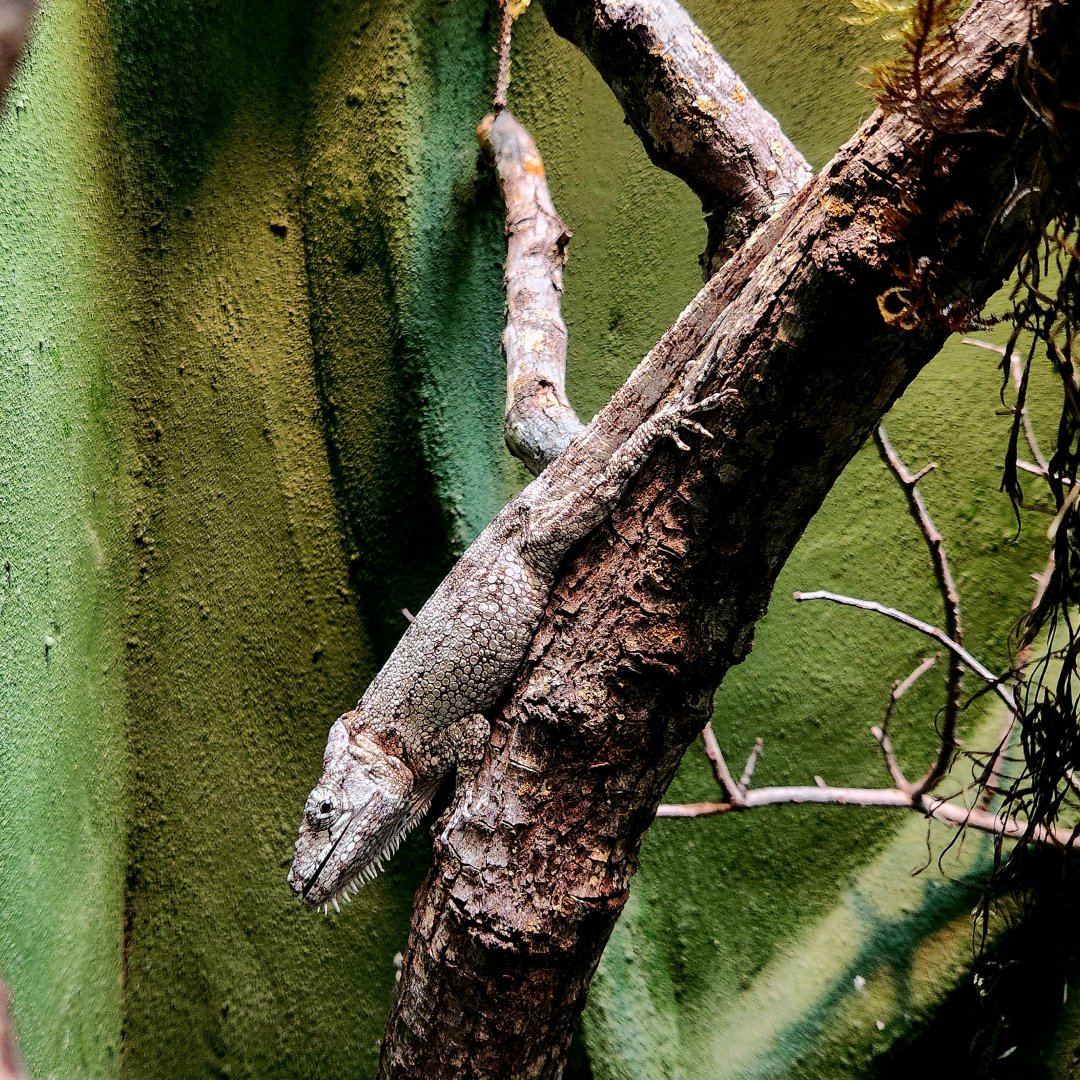
    • Western Giant Anole (Anolis luteogularis)
  • Jamaica (Jamaican Giant Anole; Anolis garmani)
  • Central Africa (Western Black Tree Snake; Thrasops occidentalis)
  • Vietnam (Giant Butterfly Lizard; Leiolepis guttata)
  • Costa Rica (Central American Tree Boa; Corallus ruschenbergerii)
  • Guatemala (Guatemalan Beaded Lizard; Heloderma charlesbogerti)
  • Arabian Peninsula (Veiled Chameleon; Chamaeleo calyptratus)
  • Honduras (Yellow-Backed Spiny-Tailed Iguana; Ctenosaura flavidorsalis)
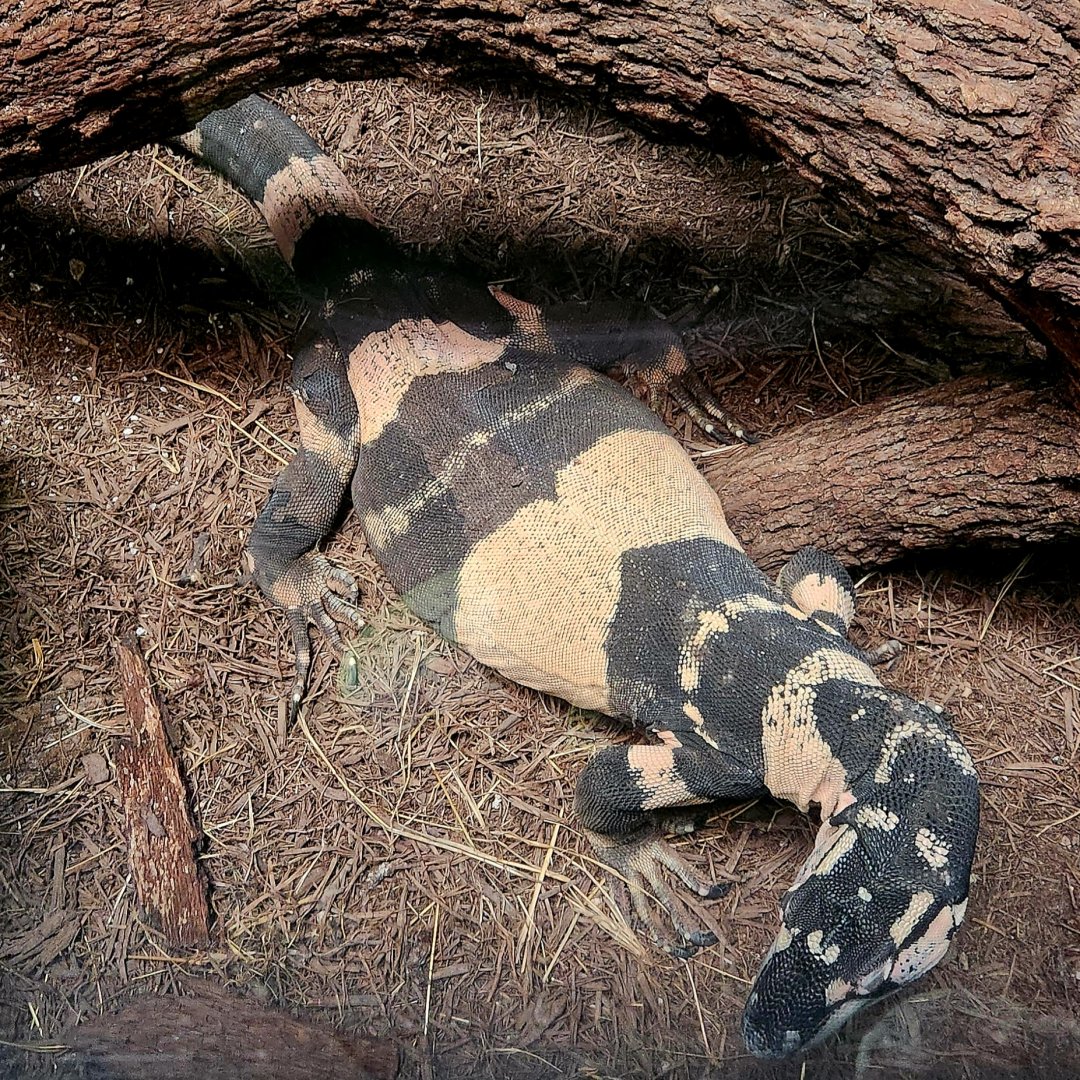
  • Sonoran Desert (Gila Monster; Heloderma suspectum)
  • Western Australia (Woma Python; Aspidites ramsayi)
  • American Southwest (Western Coachwhip; Masticophis flagellum testaceus)
  • Barkly Tableland (Spencer’s Monitor; Varanus spenceri)
  • African Kopje (2 species)
    • Pancake Tortoise (Malacochersus tornieri)
    • Giant Girdled Lizard (Smaug giganteus)
  • Australian Outback (Perentie; Varanus giganteus)

TEMPERATE BUILDING

Left Side
  • South-Central Europe (5 species)
    • European Pond Turtle (Emys orbicularis)
    • Hermann’s Tortoise (Testudo hermanni)
    • European Green Lizard (Lacerta viridis)
    • Sheltopusik (Pseudopus apodus)
    • Dice Snake (Natrix tessellata)
  • Blue Mountains (Diamond Python; Morelia spilota spilota)
  • South Florida (6 species)
    • Diamondback Terrapin (Malaclemys terrapin)
    • Northern Curly-Tailed Lizard (Leiocephalus carinatus)
    • Eastern Glass Lizard (Ophisaurus ventralis)
    • Eastern Diamondback Rattlesnake (Crotalus adamanteus)
    • Mangrove Salt Marsh Snake (Nerodia clarkii compressicauda)
    • Eastern Rat Snake (Pantherophis alleghaniensis)
  • Angola (Angolan Python; Python anchietae)
  • Southeastern Wetland (6 species)
    • Spotted Turtle (Clemmys guttata)
    • Northern Map Turtle (Graptemys geographica)
    • Florida Box Turtle (Terrapene carolina bauri)
    • Red-Eared Slider (Trachemys scripta elegans)
    • Banded Water Snake (Nerodia fasciata)
    • Gray Rat Snake (Pantherophis spiloides)
  • Texas Greenbelt (Texas Alligator Lizard; Gerrhonotus infernalis)
  • Mangshan Mountains (Mangshan Pit Viper; Protobothrops mangshanensis)
  • Papuan Highlands (Boelen’s Python; Simalia boeleni)

Right Side
  • West Texas (4 species)
    • Broad-Banded Copperhead (Agkistrodon laticinctus)
    • Trans-Pecos Rat Snake (Bogertophis subocularis)
    • Western Diamondback Rattlesnake (Crotalus atrox)
    • Sonoran Gopher Snake (Pituophis catenifer affinis)
  • Pantanal (3 species)
    • Collared Treerunner (Plica plica)
    • Yellow Anaconda (Eunectes notaeus)
    • False Water Cobra (Hydrodynastes gigas)
  • Northwestern Madagascar (2 species)
    • Giant Day Gecko (Phelsuma grandis)
    • Madagascar Ground Boa (Acrantophis madagascariensis)
  • Balkan Mountains (Nose-Horned Viper; Vipera ammodytes)
  • Canary Islands (Tenerife Lizard; Gallotia galloti)
  • Huachuca Mountains (Northern Black-Tailed Rattlesnake; Crotalus molossus)
  • Western Mexico (Mexican West Coast Rattlesnake; Crotalus basiliscus)
  • Rio Fuerte (Rio Fuerte Beaded Lizard; Heloderma exasperatum)
  • Texas Pineywoods (Timber Rattlesnake; Crotalus horridus)
  • South Texas (3 species)
    • Desert Box Turtle (Terrapene ornata luteola)
    • Western Diamondback Rattlesnake (Crotalus atrox)
    • Western Coachwhip (Masticophis flagellum testaceus)
  • Northeastern Mexico (Taylor’s Cantil; Agkistrodon taylori)
  • Itafi Spiny Forest (3 species)
    • Oustalet’s Chameleon (Furcifer oustaleti)
    • Merrem’s Madagascar Swift (Oplurus cyclurus)
    • Dumeril’s Boa (Acrantophis dumerili)
  • Sulawesi (2 species)
    • Sulawesi Forest Turtle (Leucocephalon yuwonoi)
    • Moluccan Sailfin Lizard (Hydrosaurus amboinensis)
There are TONS of additional species behind-the-scenes and in the works, but this was the collection on display during my visit. Next posts will be the review and walk-through, which will include further discussion on additional species for each exhibit :)
 
I should note before continuing, the tortoises in the South-Central European exhibit should actually be Greek Tortoises (Testudo graeca), not Hermann's.

For the first part of the review/walk-through, I'll give a bit of background and touch on the entrance area, as it is quite interesting.

Reptilandia Reptile Lagoon is not the first iteration of Reptilandia - Quetzal Dwyer founded a park in the Canary Islands before moving onto Parque Reptilandia in Costa Rica in 2004, which still stands today (though I believe under new ownership). Construction on Reptilandia Reptile Lagoon has only been in the past few years, with the Temperate Building being about 3.5 years old and the Tropical Building about 9 months as of this writing. Quetzal especially has tons of experience with breeding rare reptiles, including Boelen's Pythons (only about 1 clutch per year produced worldwide in the past 5-10 years, virtually none before that) and Crocodile Tegus (incredibly rare in the herpetological trade, still only a few dozen individuals in the country).

Pulling off of a state highway into a dirt lot, you arrive in front of a set of three dark green buildings and enter the first, which serves as the visitor's center, nursery, ethnographic museum, art gallery, and zoological museum. While they used to bring their personal birds into the ticketing booth (which include a Hyacinth Macaw and a Palm Cockatoo), that unfortunately requires USDA getting involved (unlike herps), so there are no major avian plans in the works.

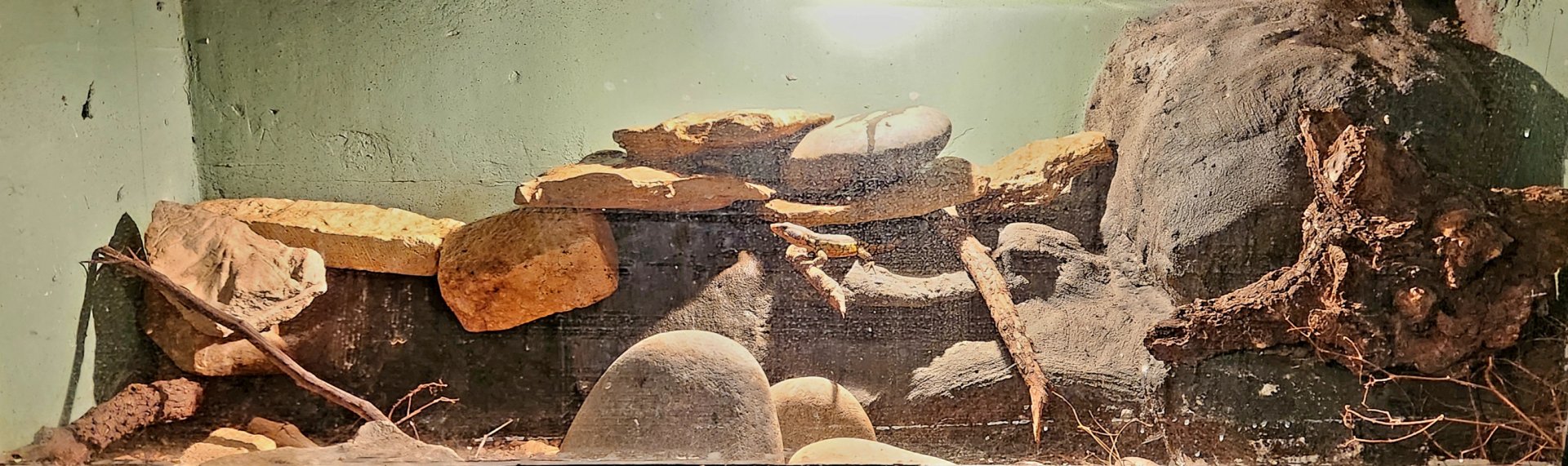
The visitor's center has several pieces of animal-related artifacts and artwork, collected by Ari. I would say the majority come from New Guinea, although there are pieces from around the world. I didn't take many photos of this section, but highlights include the bow of a canoe carved into a crocodile's head and several traditional masks from West Papua. Knowing how Ari performs his field work, everything in this gallery has been ethically obtained, but I agree with @Kudu21 's earlier sentiment that things could be labeled a bit better. Paintings and photo prints adorn the walls, including a large photo of a female Boelen's Python watching over her hatching babies in-situ. I did snag a picture of one of the zoological displays, which included jarred two-headed snakes, the skulls of several reptile species, an Echidna skeleton, and more.

full


The nursery is also in this section, which consists of a shelf of 10 gallon aquariums behind glass used for temporarily rearing babies, most of which were born on-exhibit. The zoo has had a tremendous amount of success with producing animals on-exhibit already, likely due to the extremely natural conditions provided for each animal. No pictures again, but on my visit species included Madagascar Giant Water Skinks (Amphiglossus reticulatus), Spotted Turtles (Clemmys guttata), Blue Spiny Lizards (Sceloporus cyanogenys), Tentacled Snakes (Erpeton tentaculatum), various Water Snakes (Nerodia sp.), and Sidewinders (Crotalus cerastes).

This section is probably best used to discuss ticket prices, hours, all that jazz. General admission is $20/pp, which feels about right for a die-hard herp fan, but maybe a dollar or two too high for the average visitor. Kids, seniors, and veterans get in for $15, and kids under 3 are free. Hours are 10:00 AM to 5:00 PM, Tuesday through Sunday - I went for a full day on a Wednesday, so I ended up with the facility literally to myself. Given how new the facility is, it'll likely be a while before numbers really start to pick up, but for now this is a GEM for anyone who really enjoys when the herpetarium starts to empty out.

For those that may be interested in making a trip out but don't want to spend all day looking at reptiles, you've got some options nearby. There's a nice little "downtown" area that my girlfriend spent most of the day at, with several local shops and restaurants. I ended up driving down after spending the day at Dallas World Aquarium (about a 3, 3.5 hour drive), so that's always an option as well. The Best Western about 5 minutes up the road is pretty decent and affordable.

That should cover all the "boring" stuff, within the next few days I'll have some updates on the exhibit buildings typed up :)
 
The walk-through will begin in the lower level of the Tropical Building, working in a loop from left to right, then doubling back to the middle alcoves, up to the top level, and finishing in the Temperate Building. Without further ado...

Exhibits 1-3: Empty
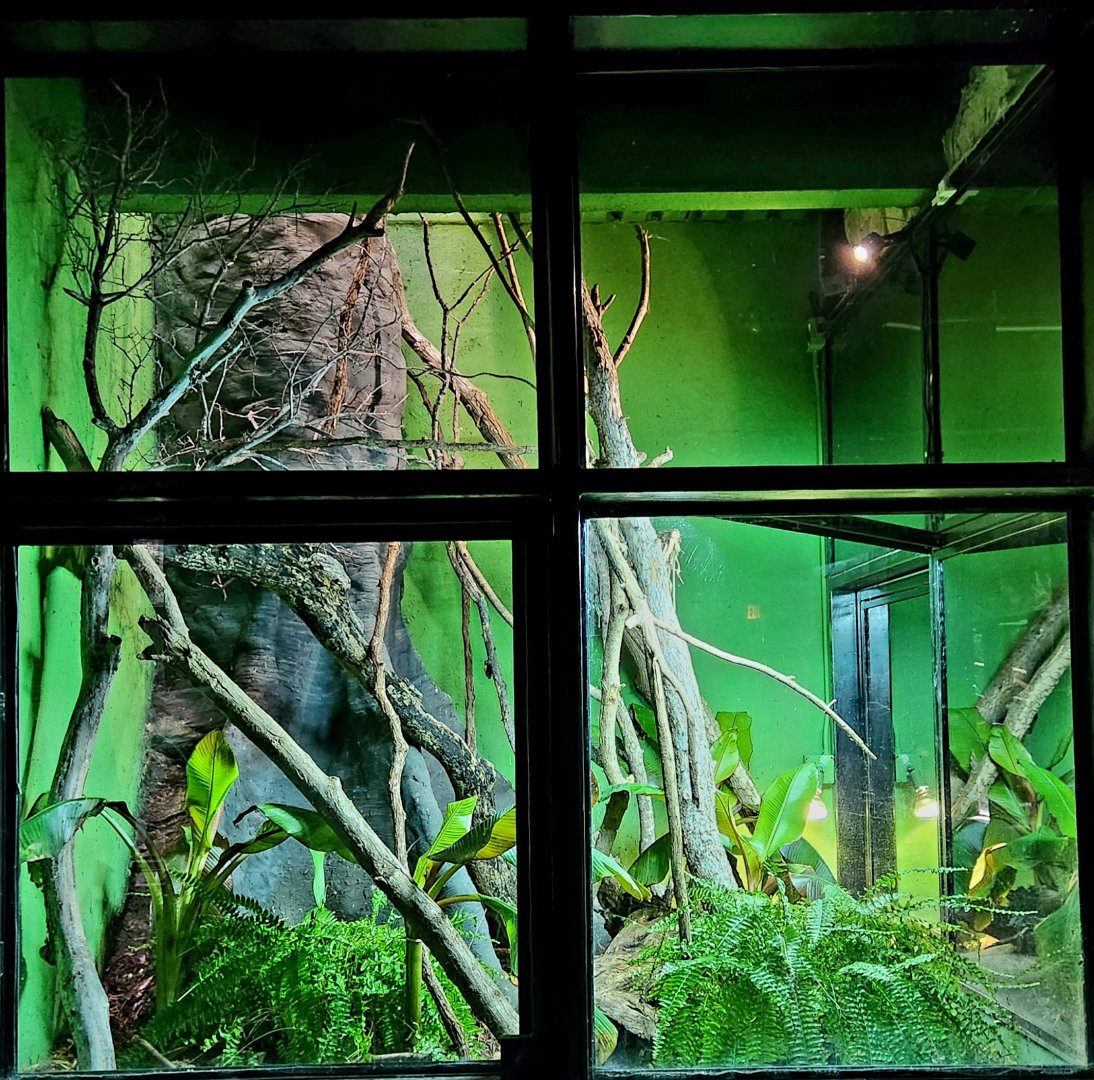
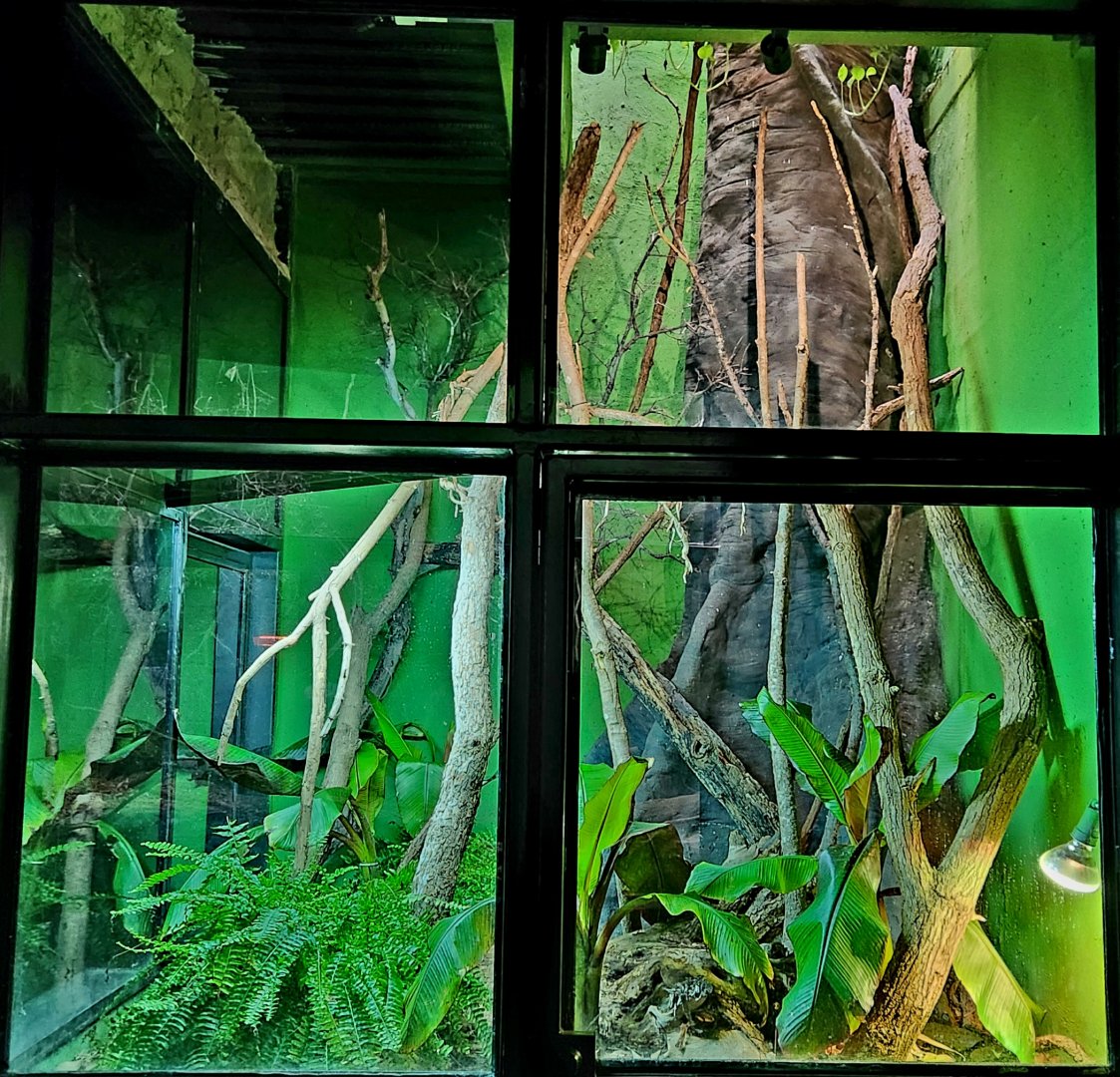
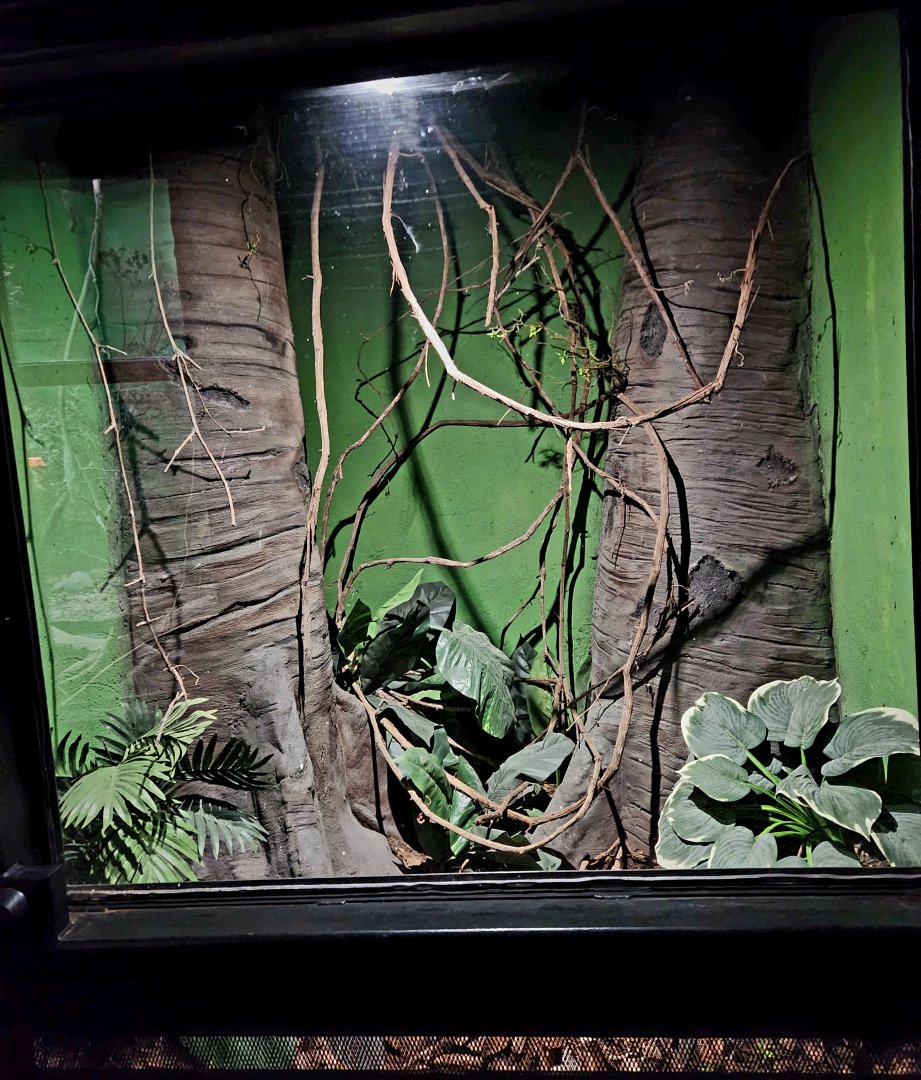
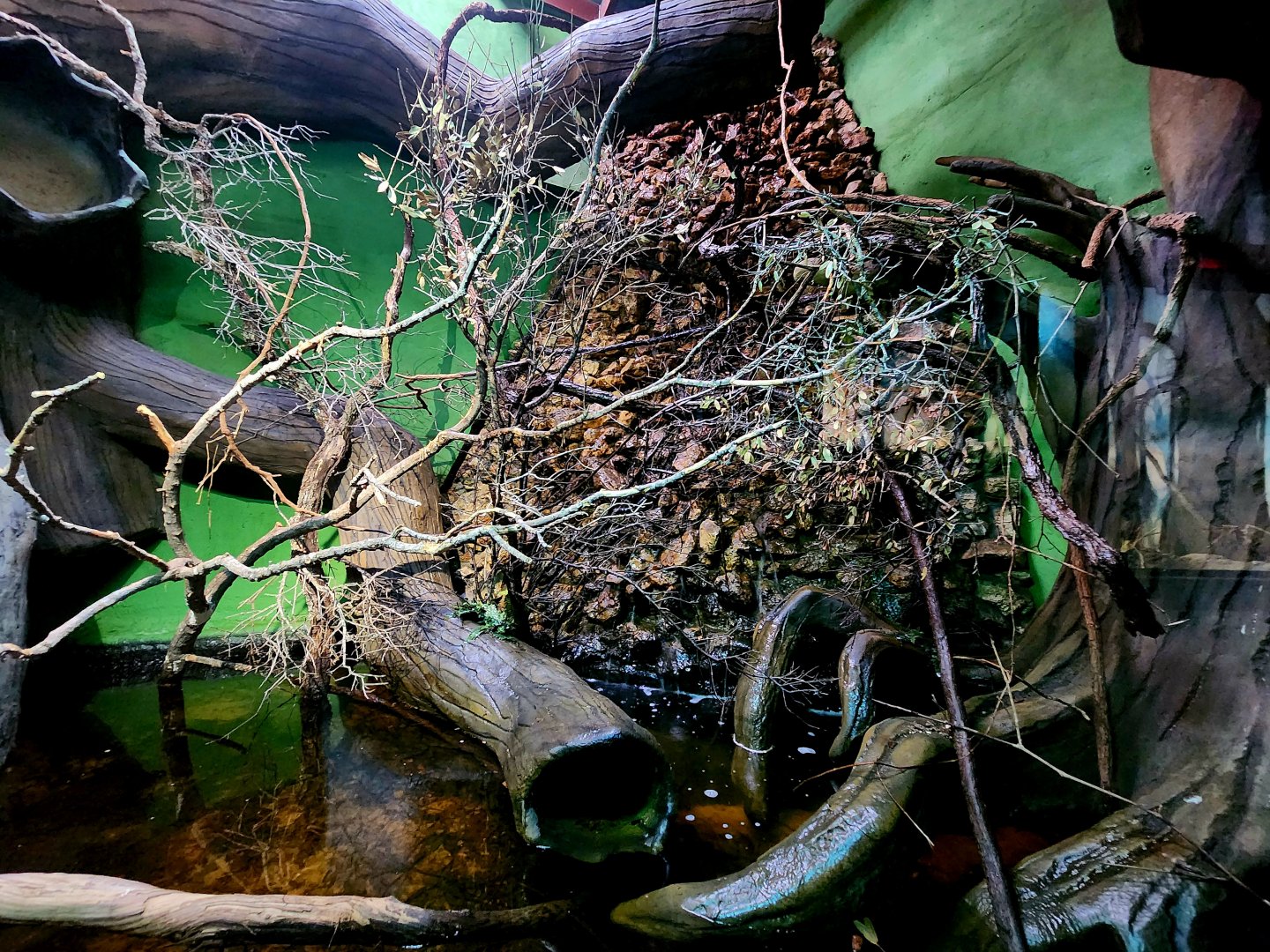
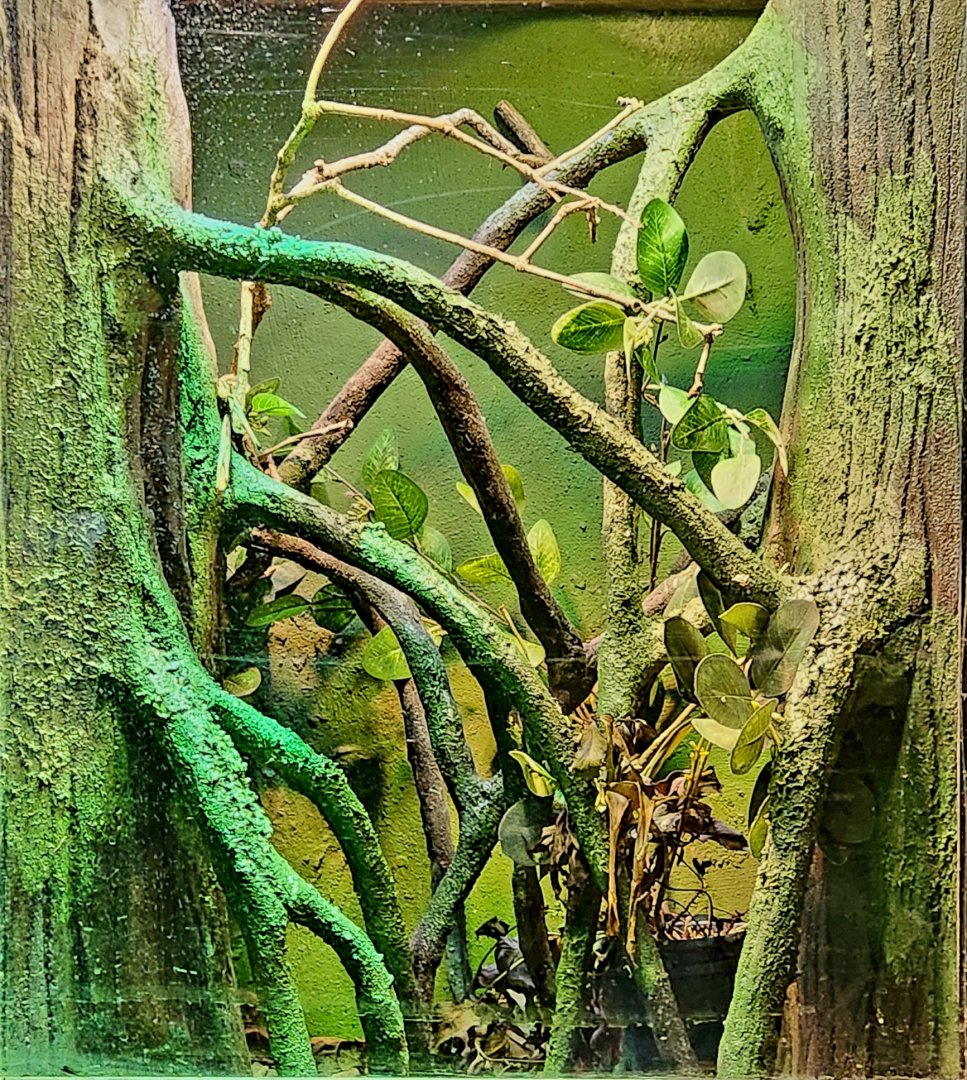
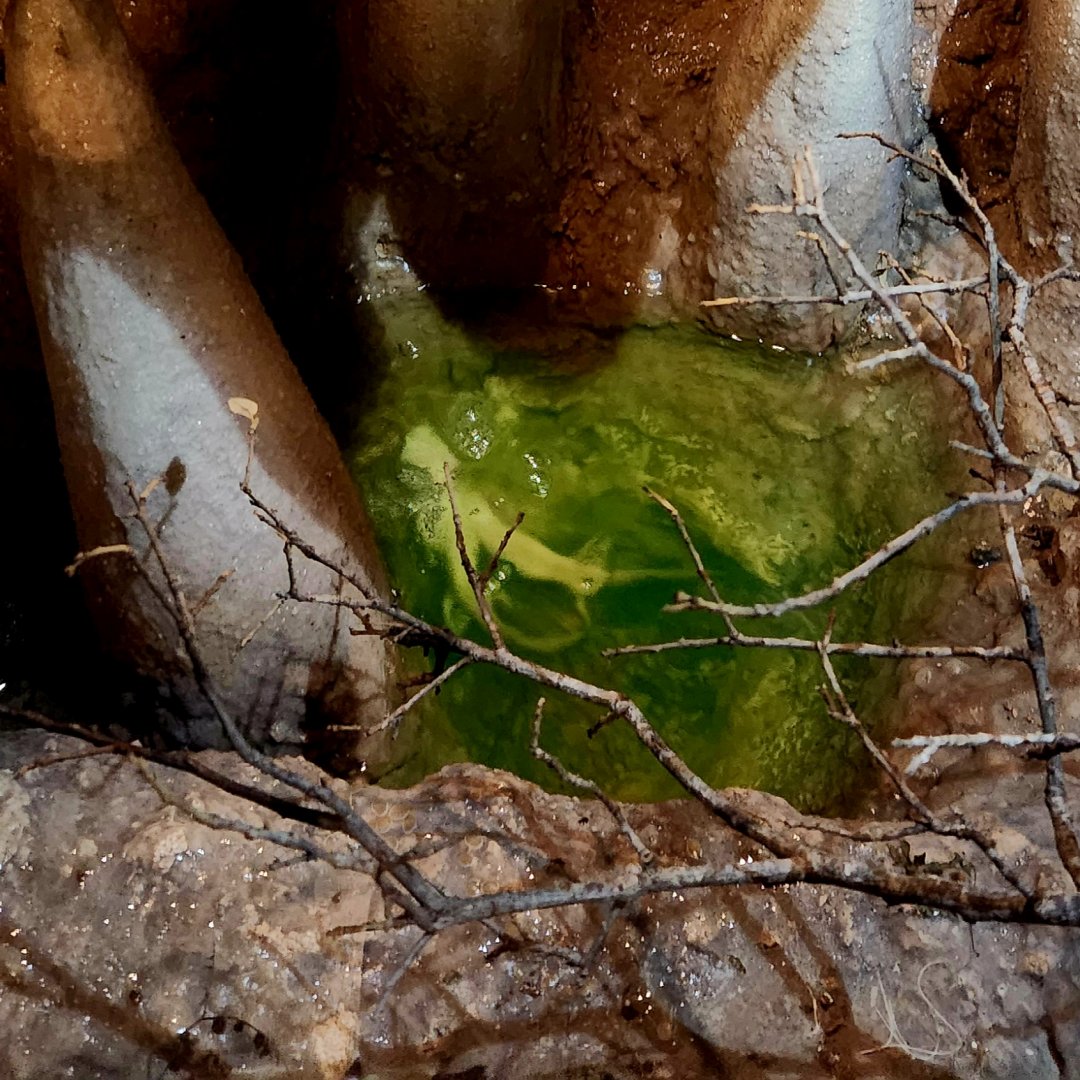
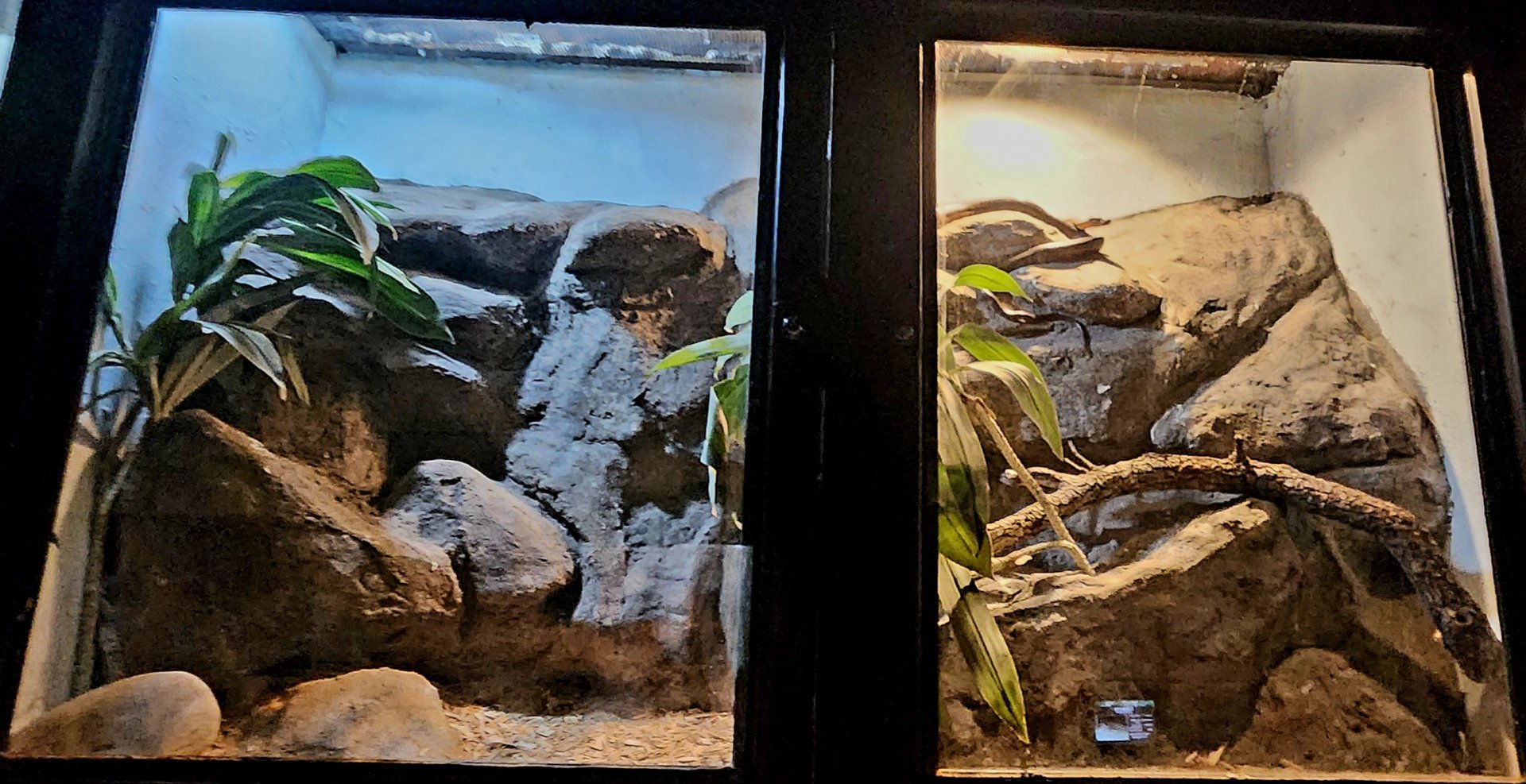
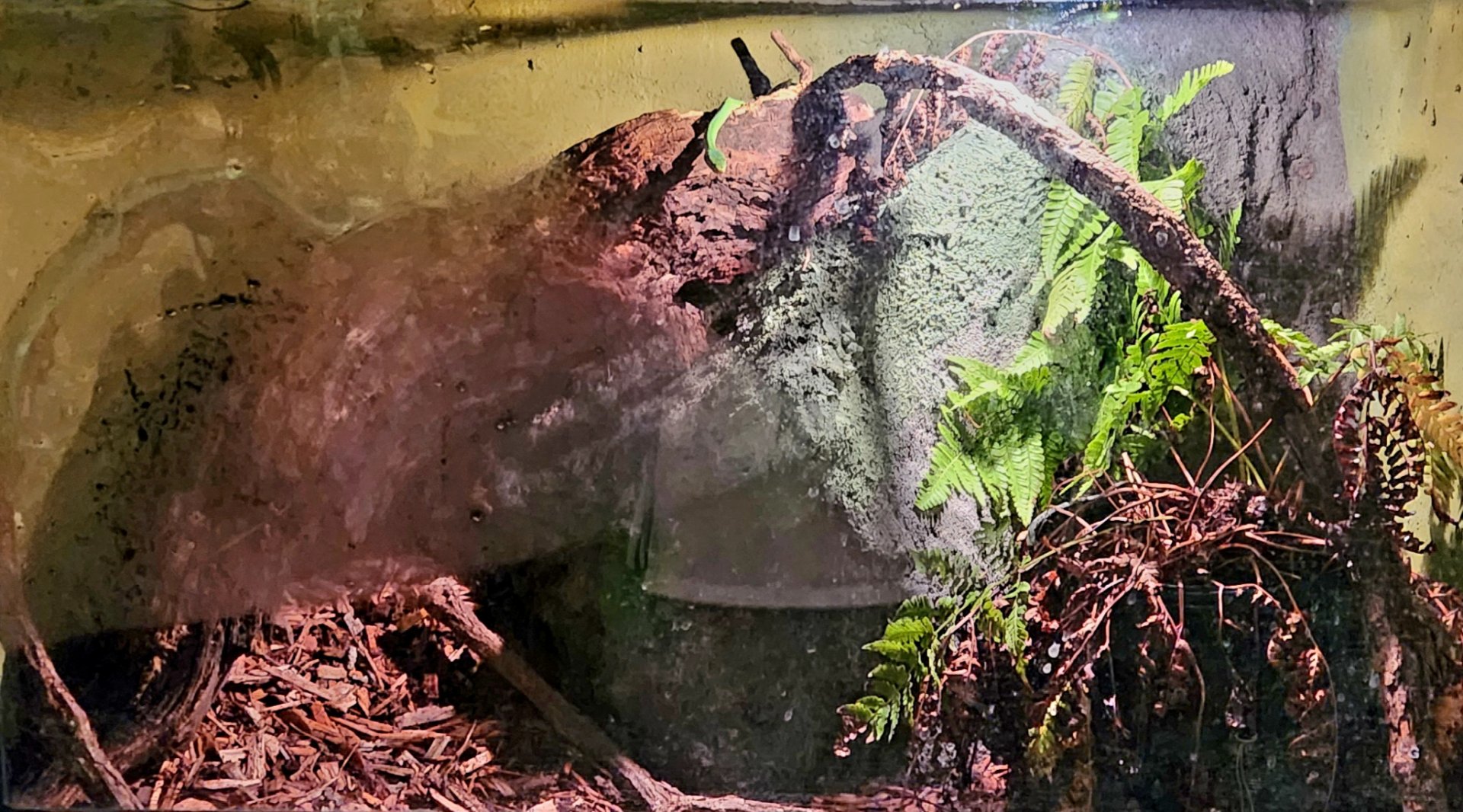
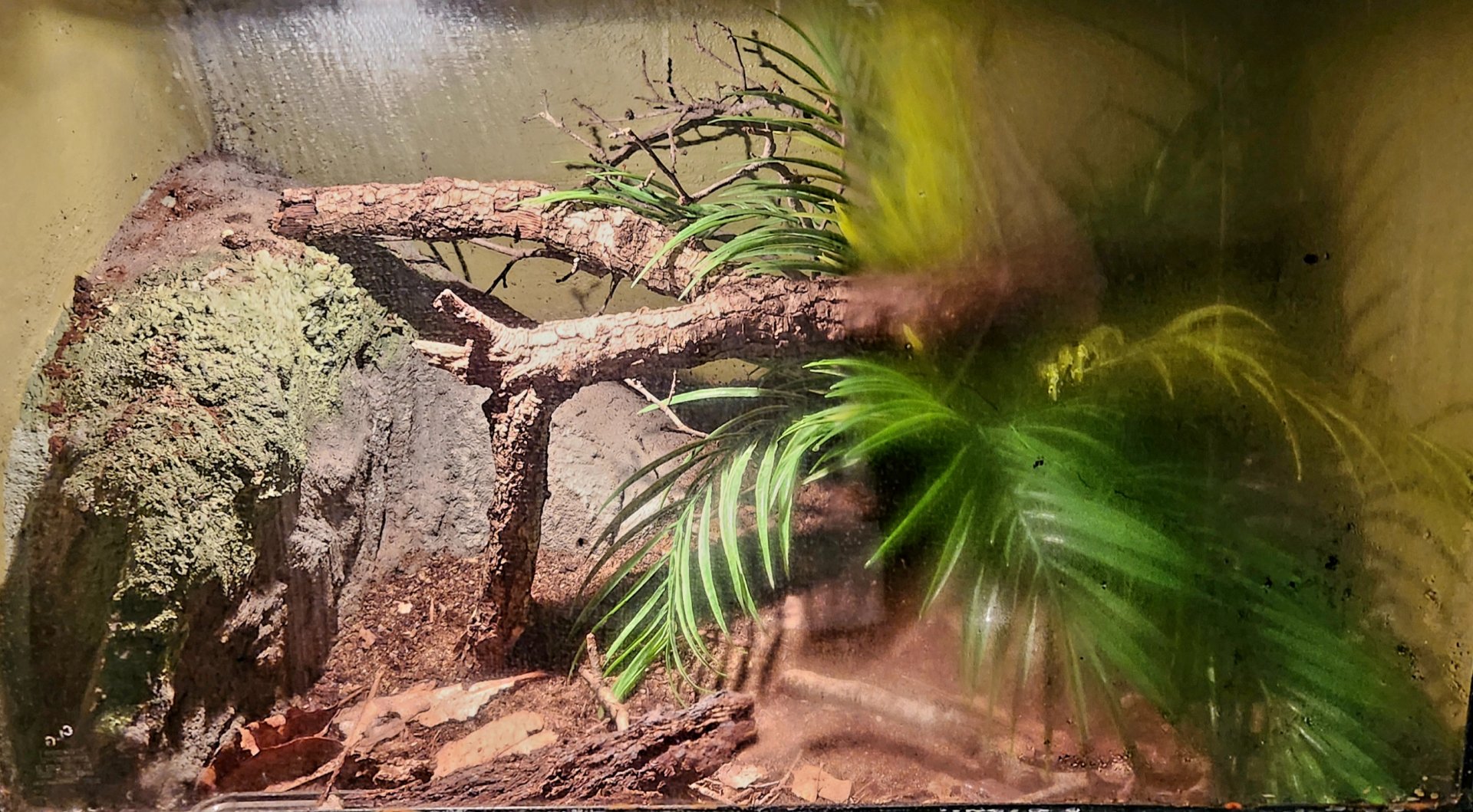
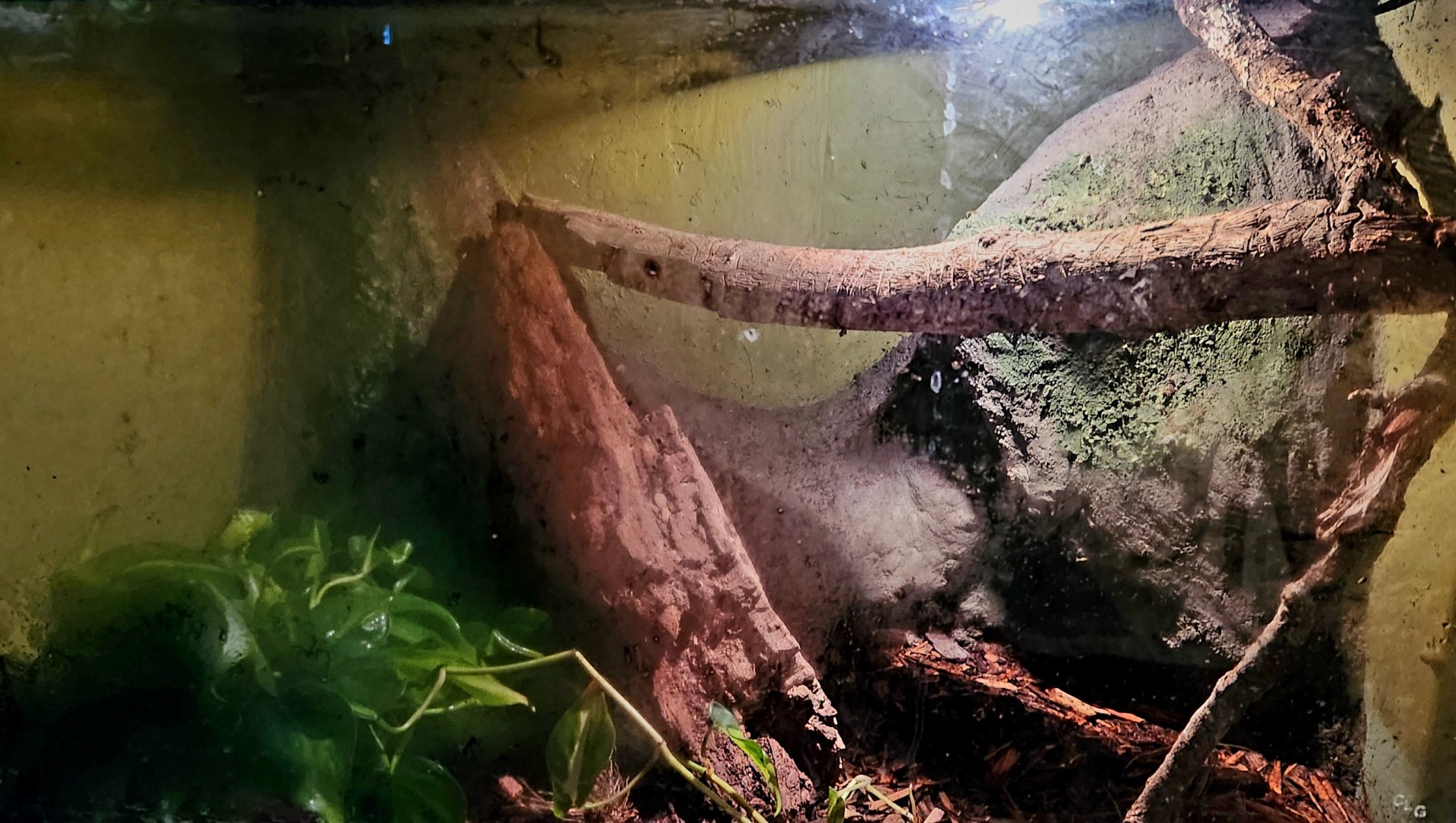
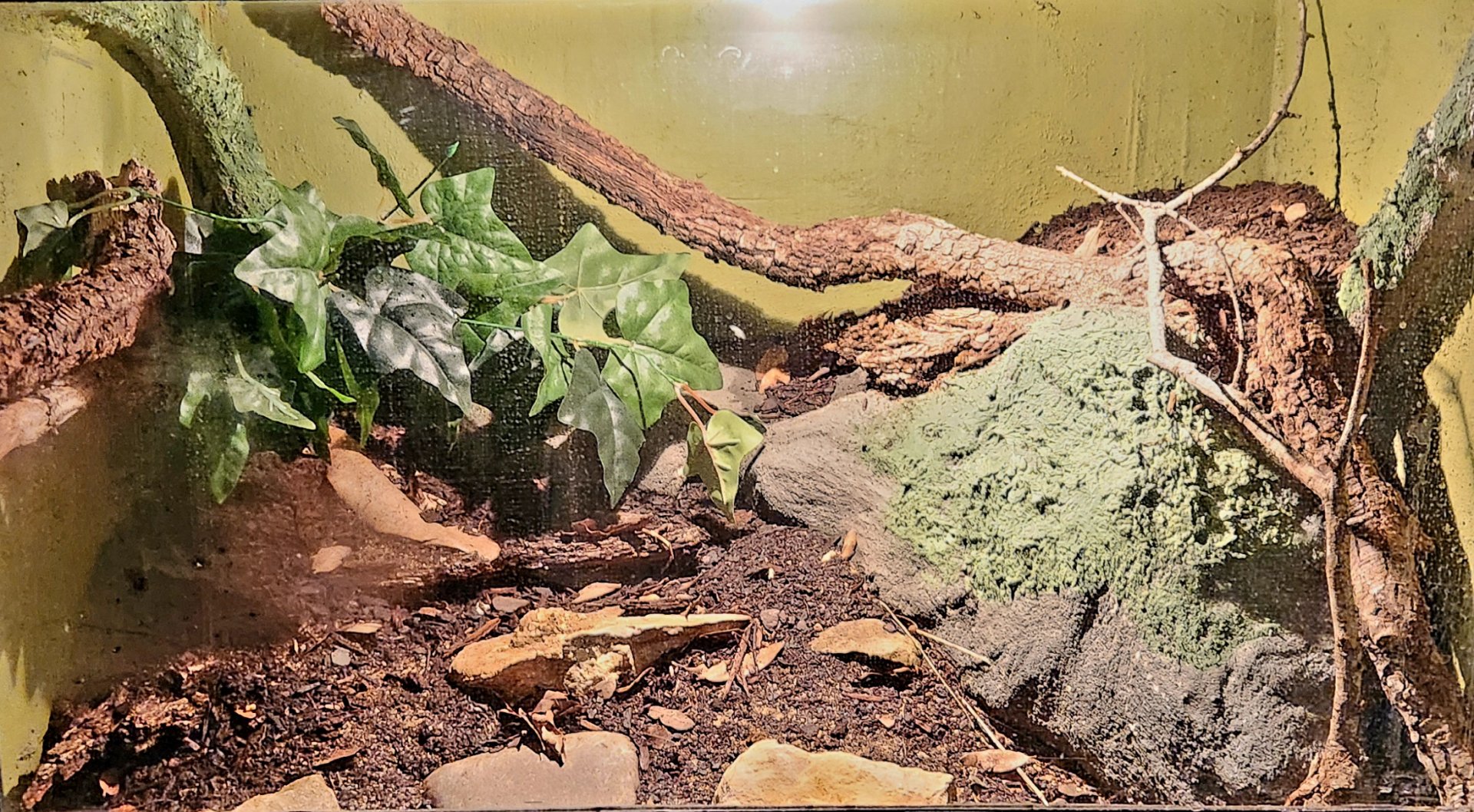
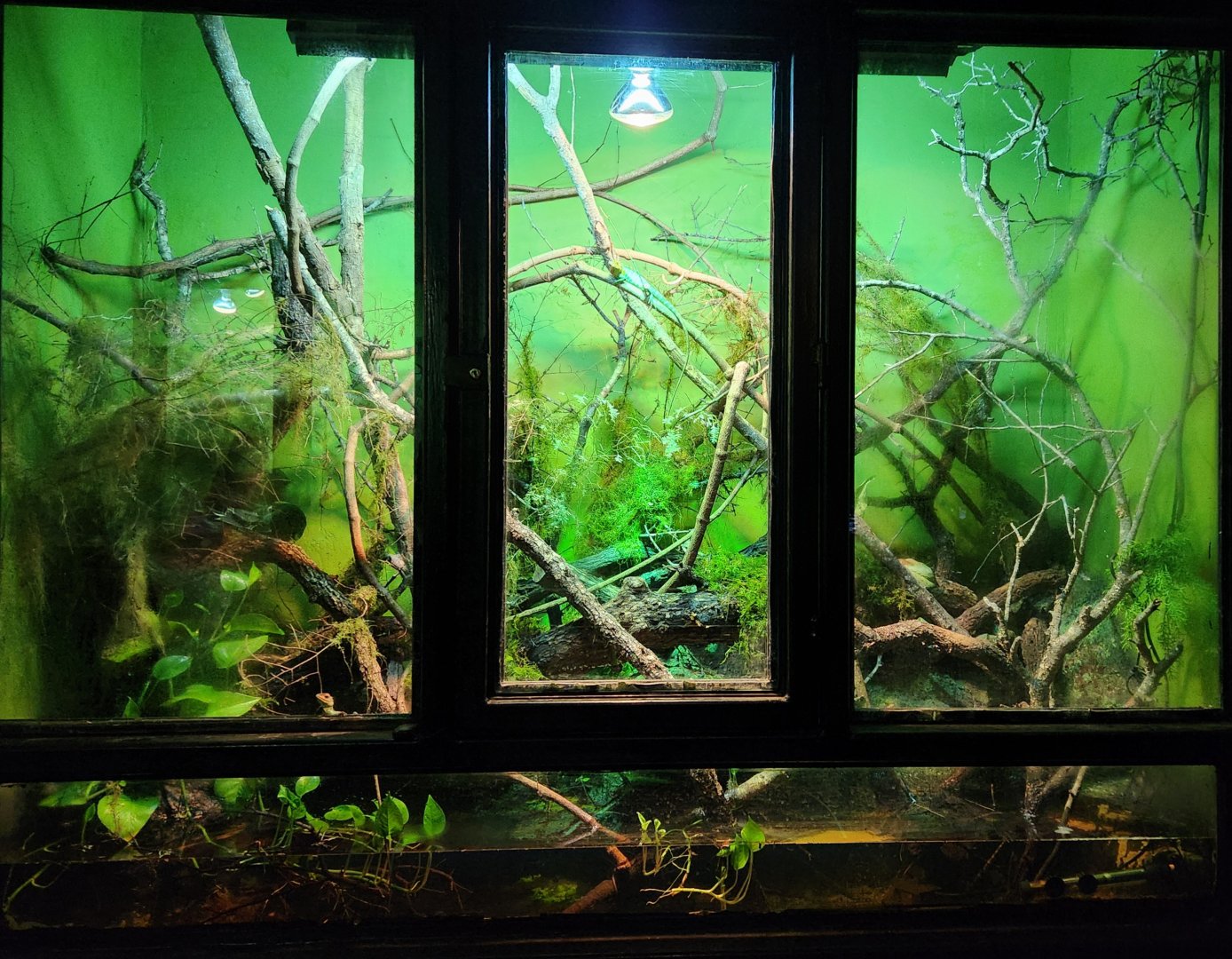
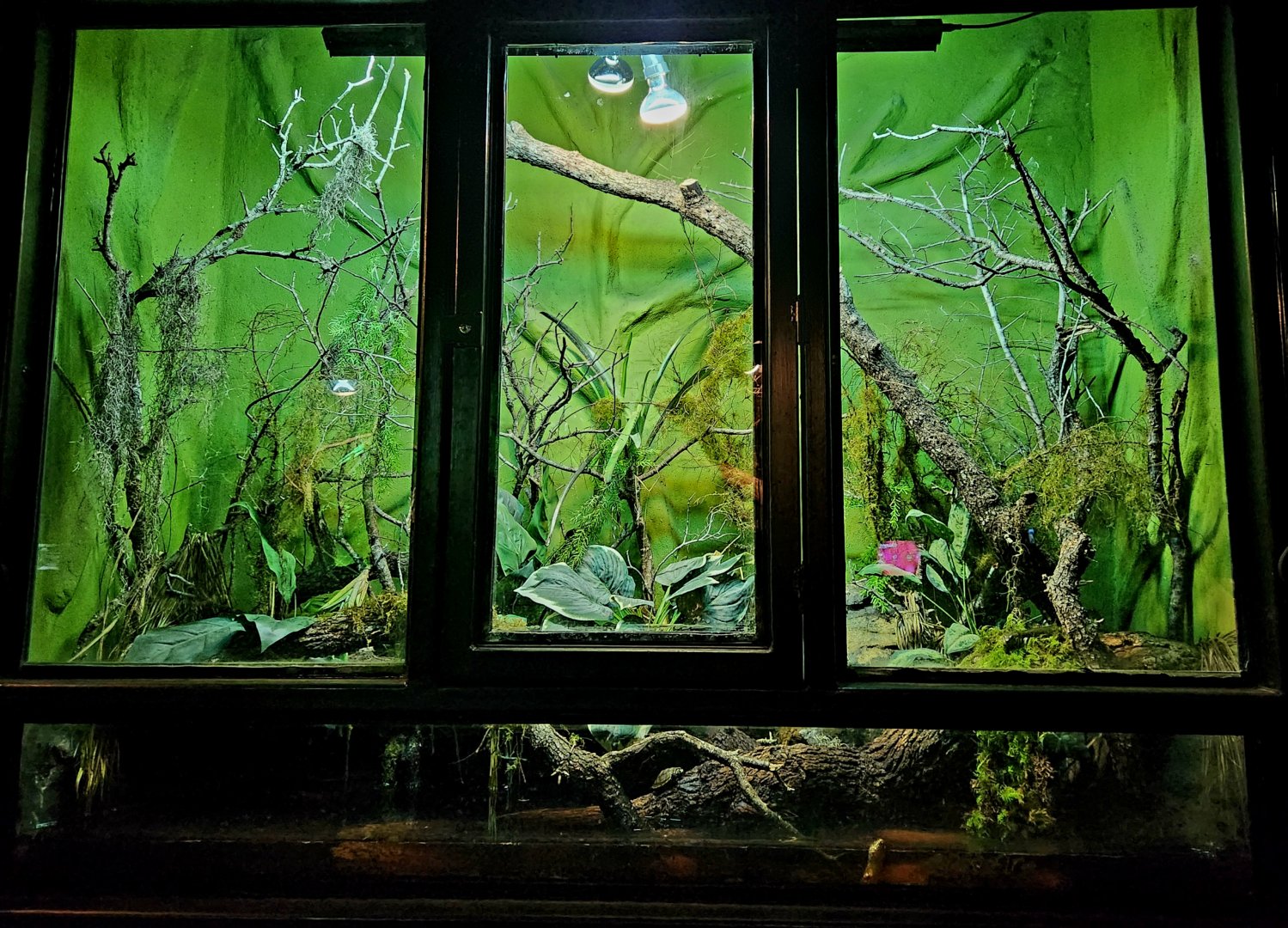
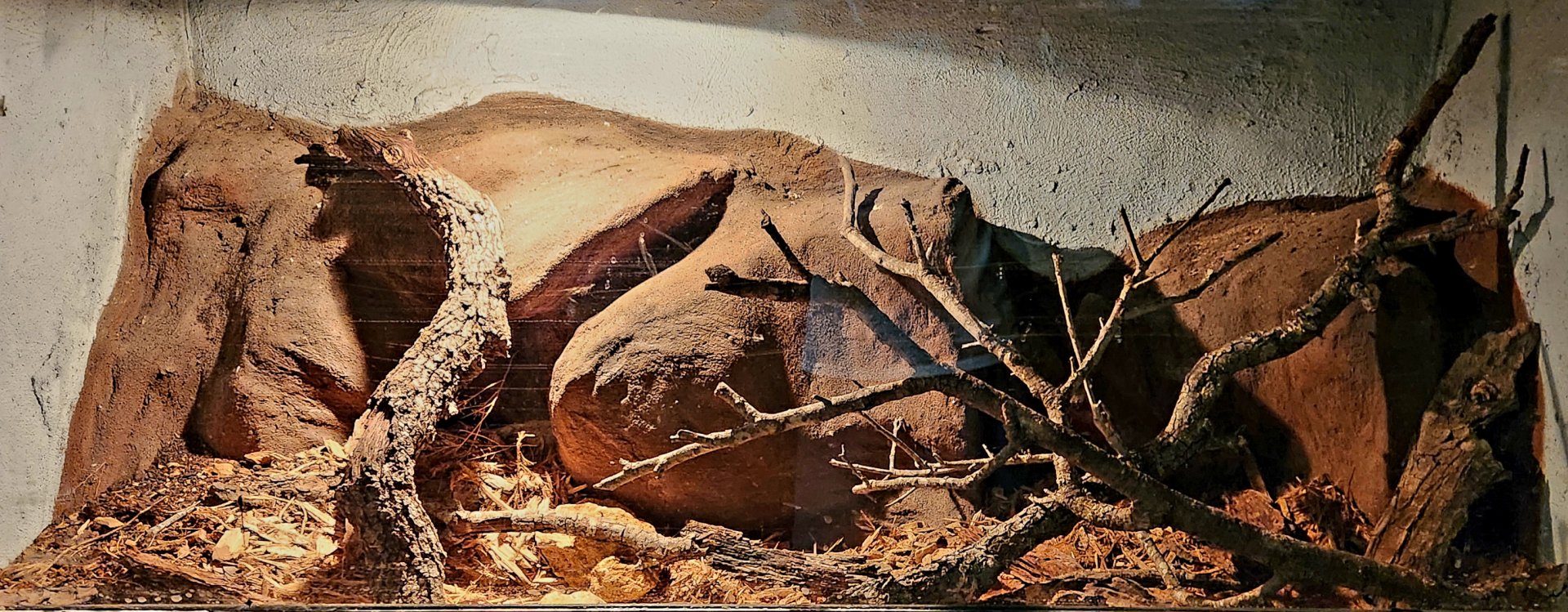
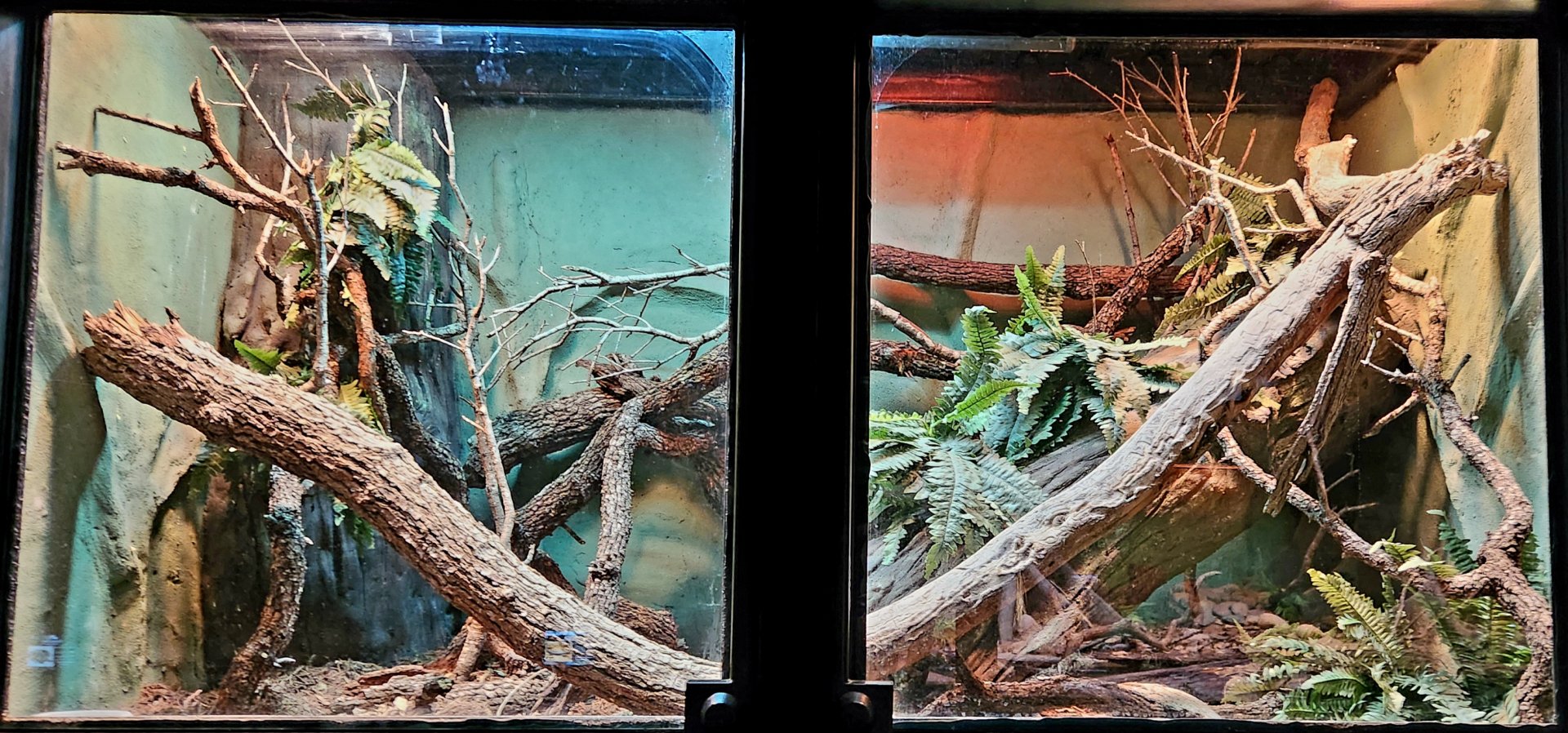
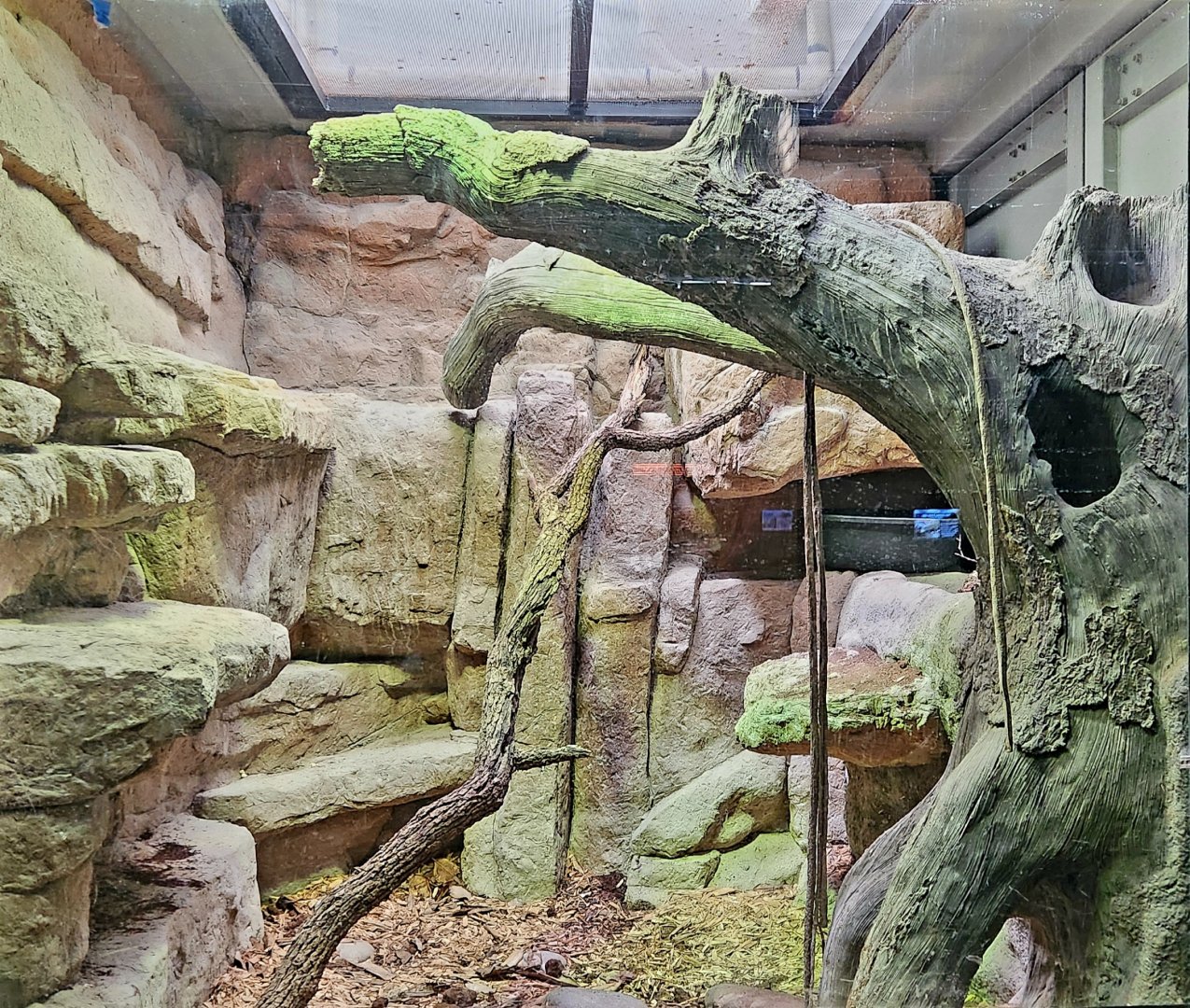
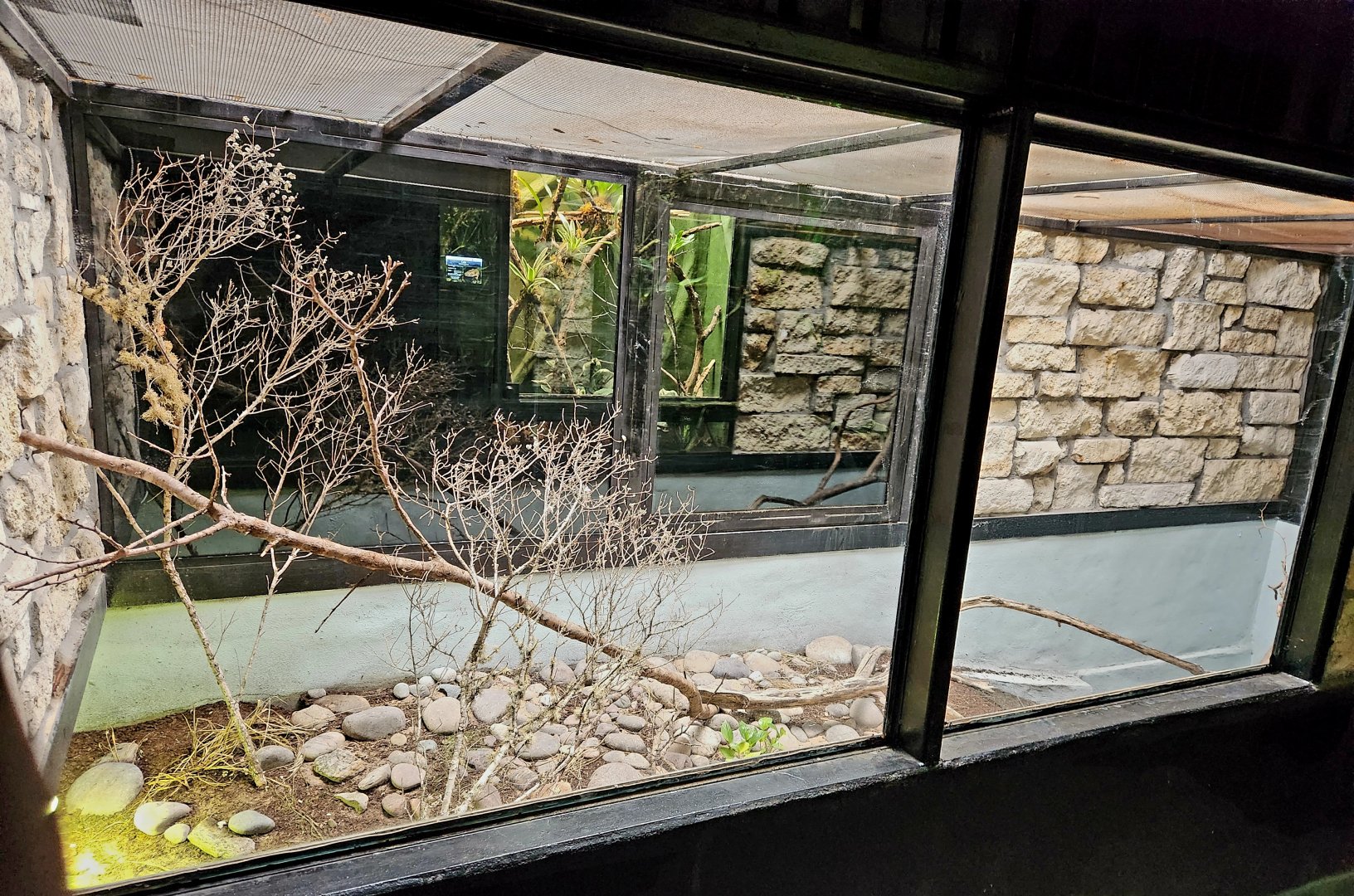
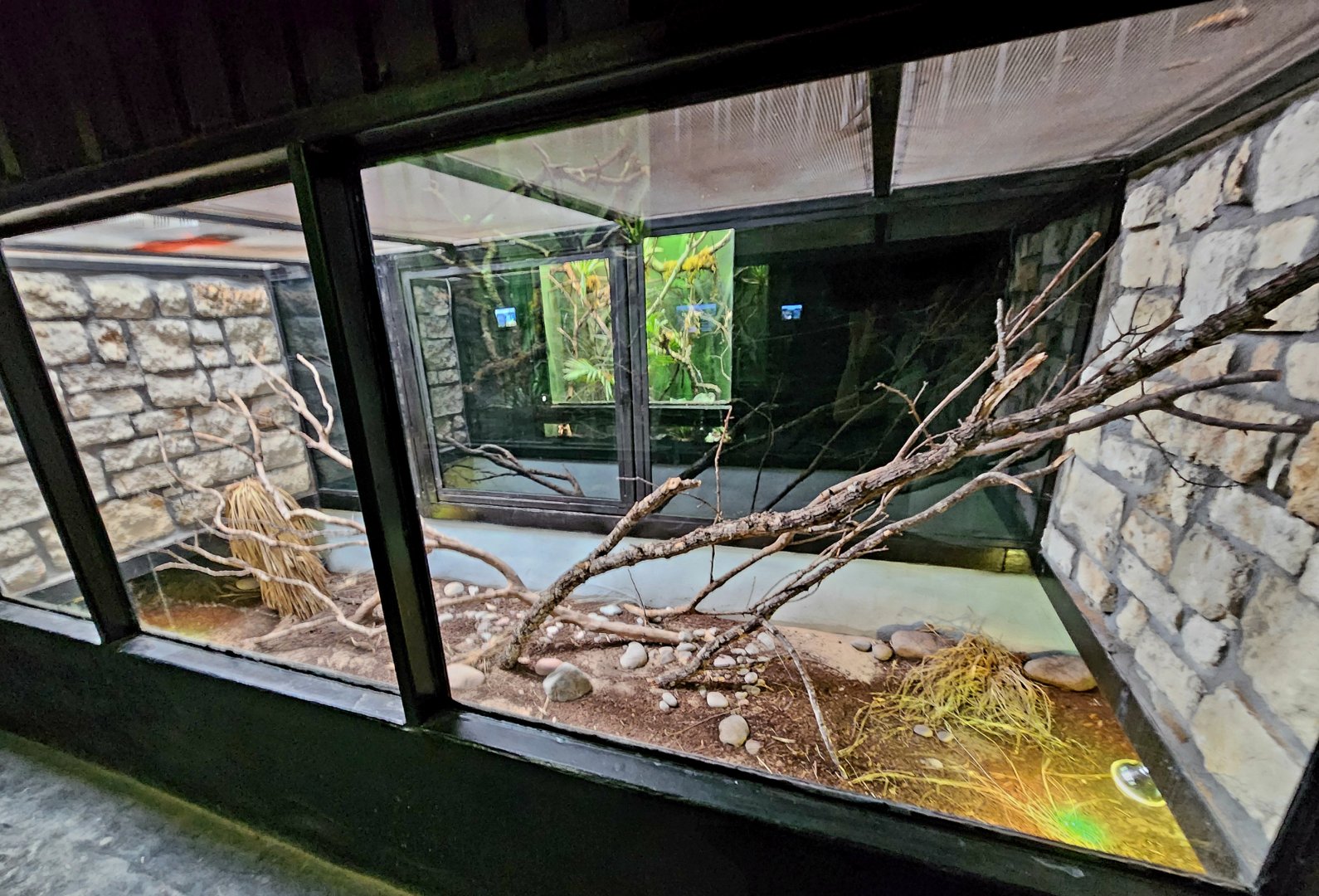
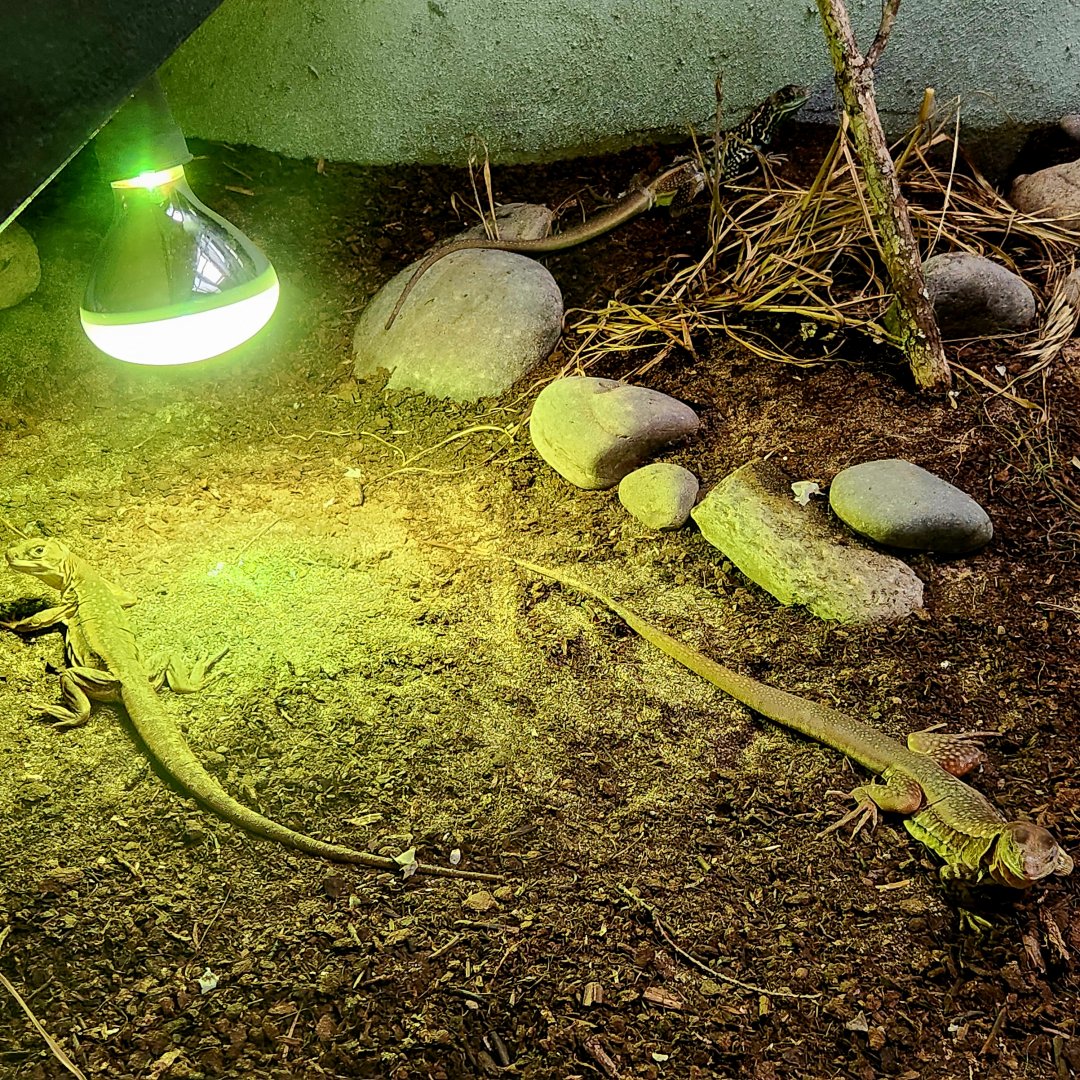
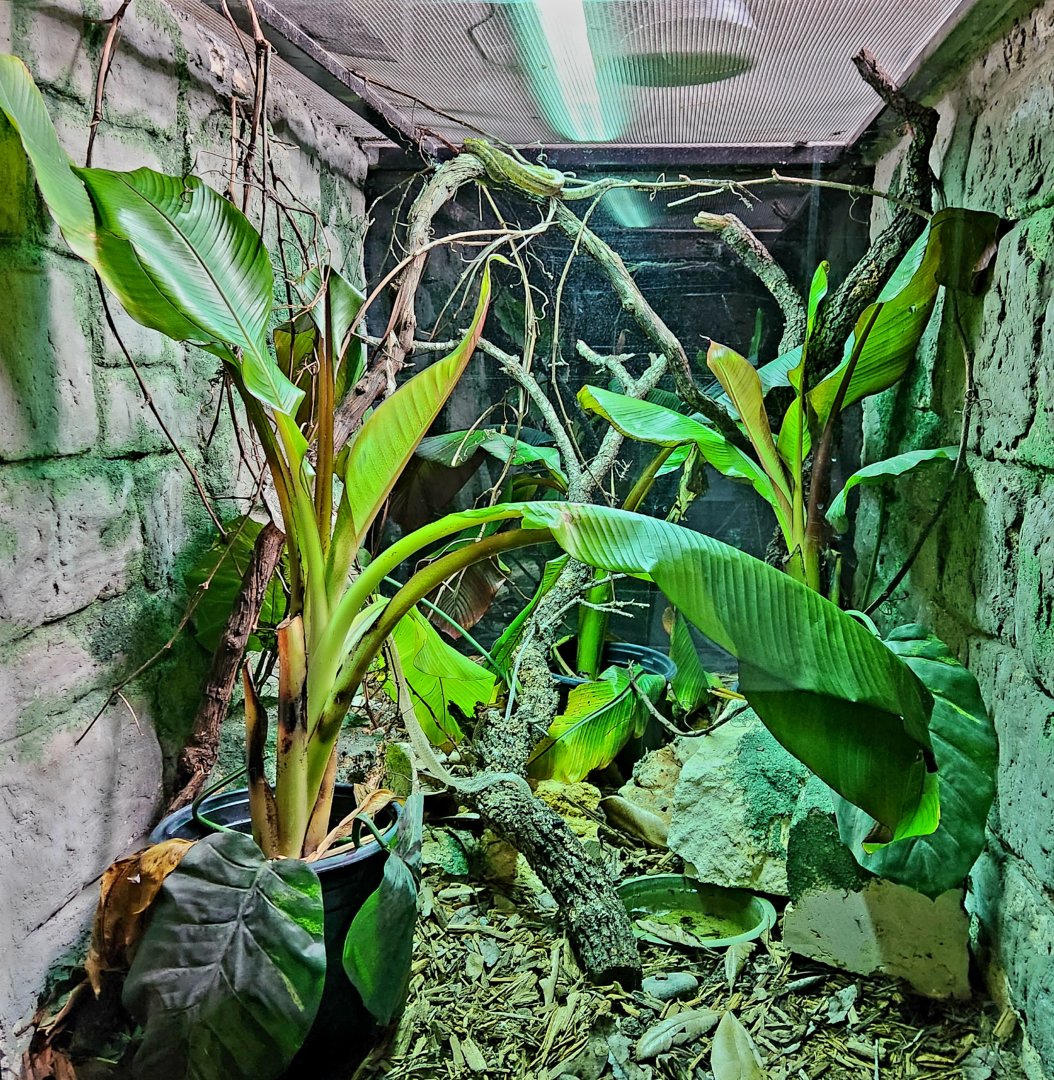
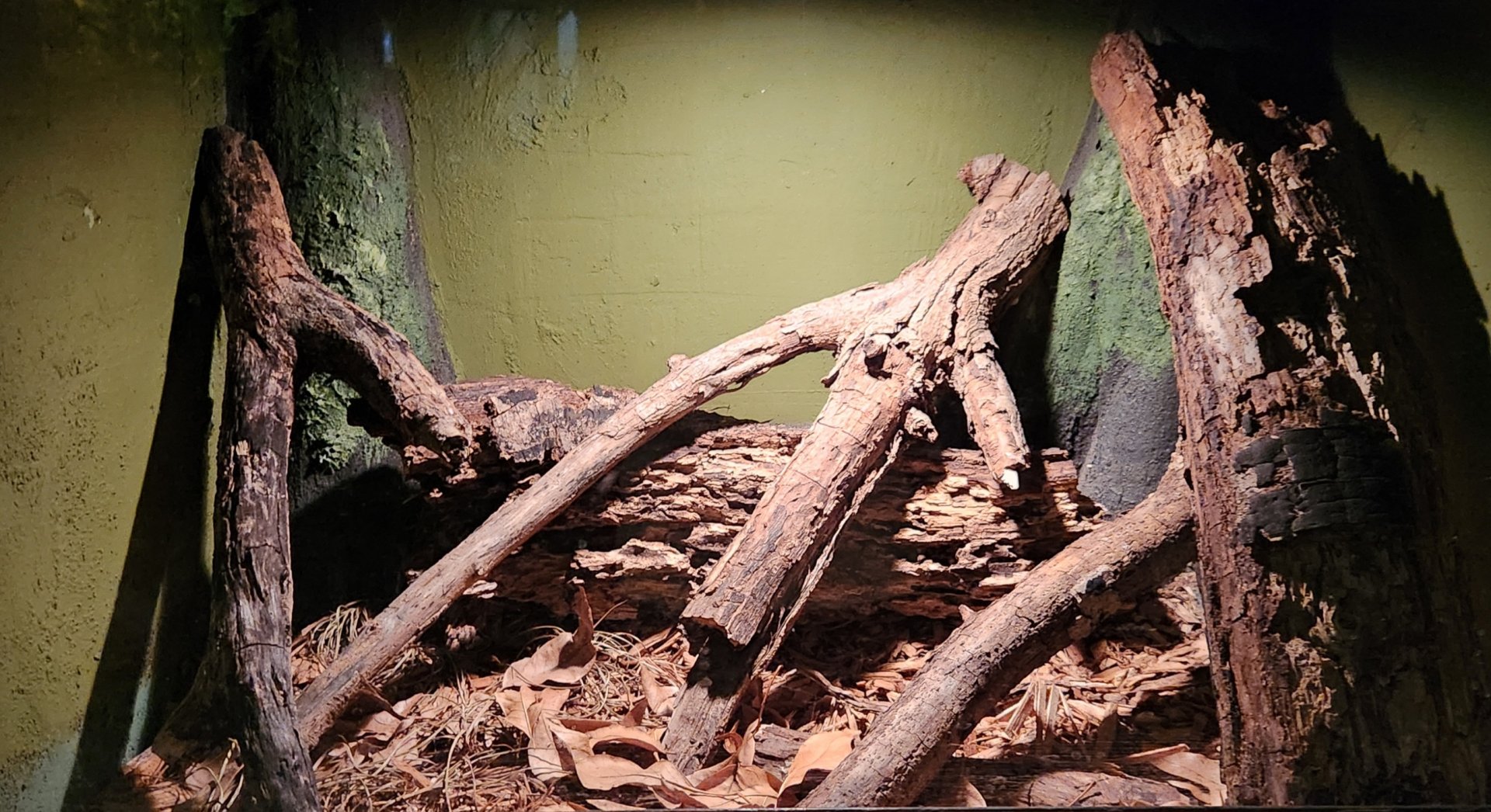
Okay, admittedly a kind of rough way to start this, lol. The first three exhibits are paludariums (exhibits with terrestrial and aquatic portions) that appear to have been formerly used for some smaller lizard species, but were empty on my visit. They are nicely-designed, and some of the smaller enclosures at the zoo measuring probably 4 feet long, 2 or 3 feet front to back, and 5 feet high. Without knowing what's planned for them, though, I don't have much else to add - enjoy the pictures.


Exhibit 4: Northeastern Australia
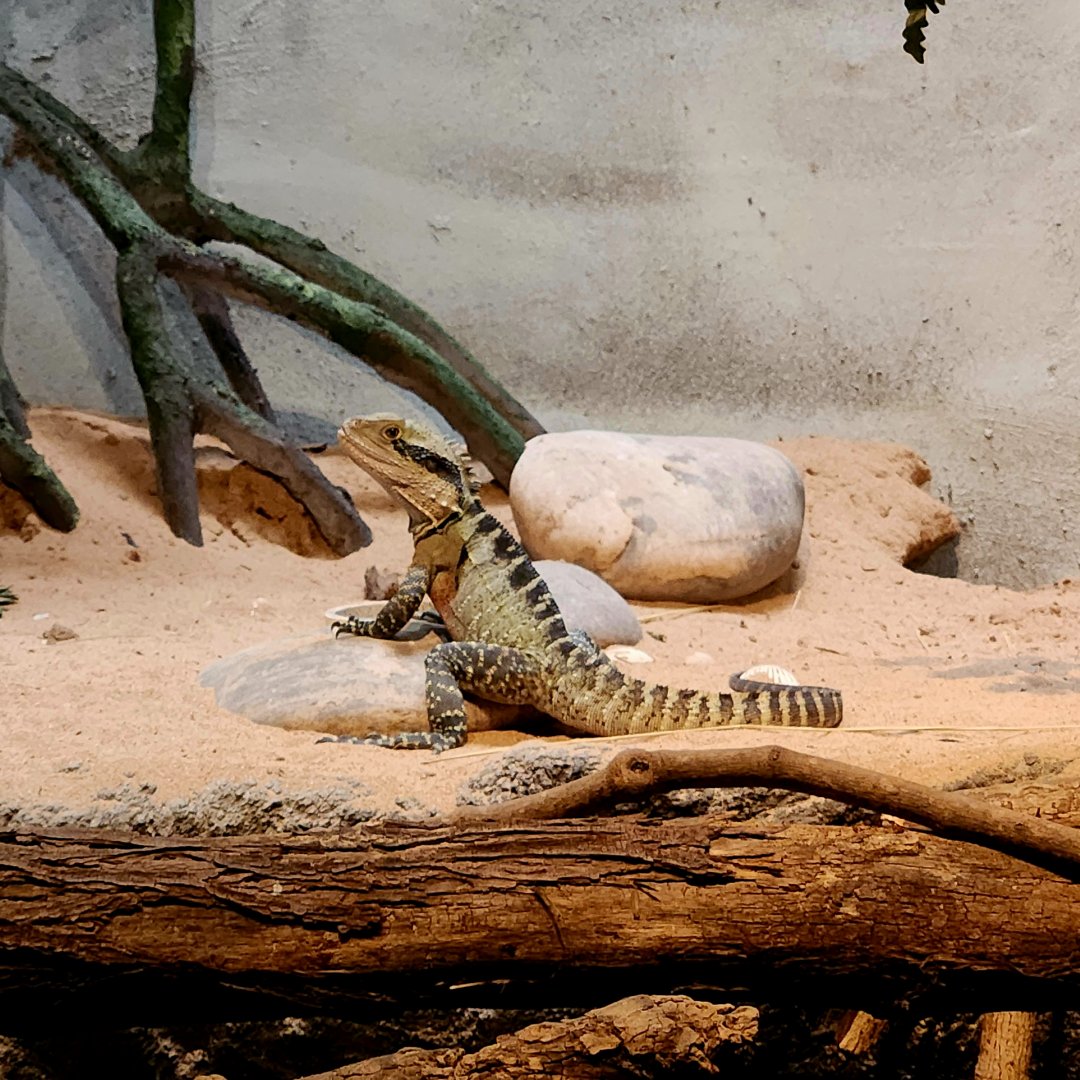
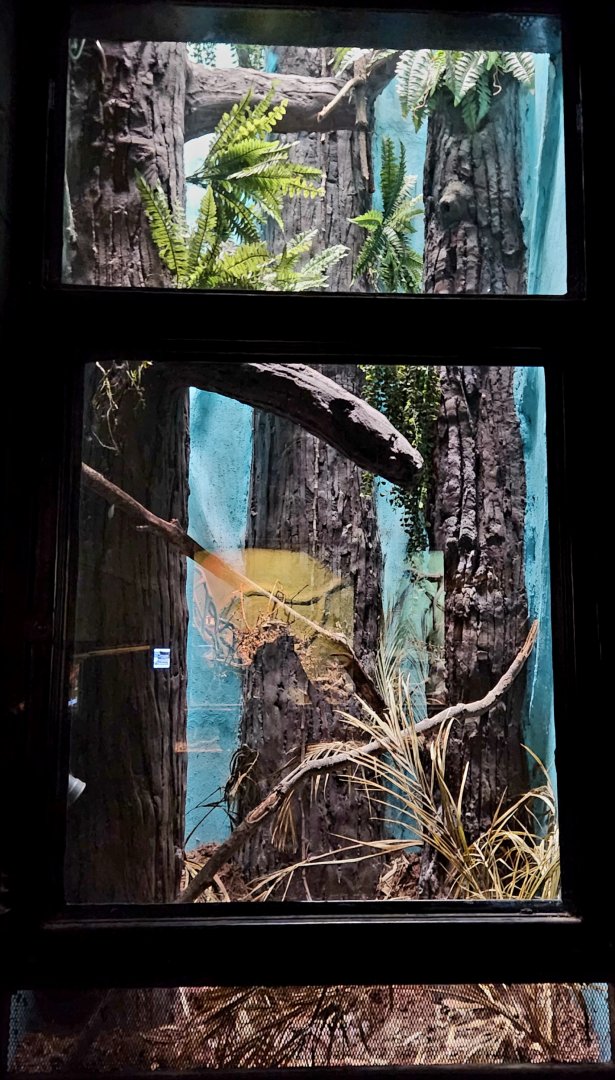
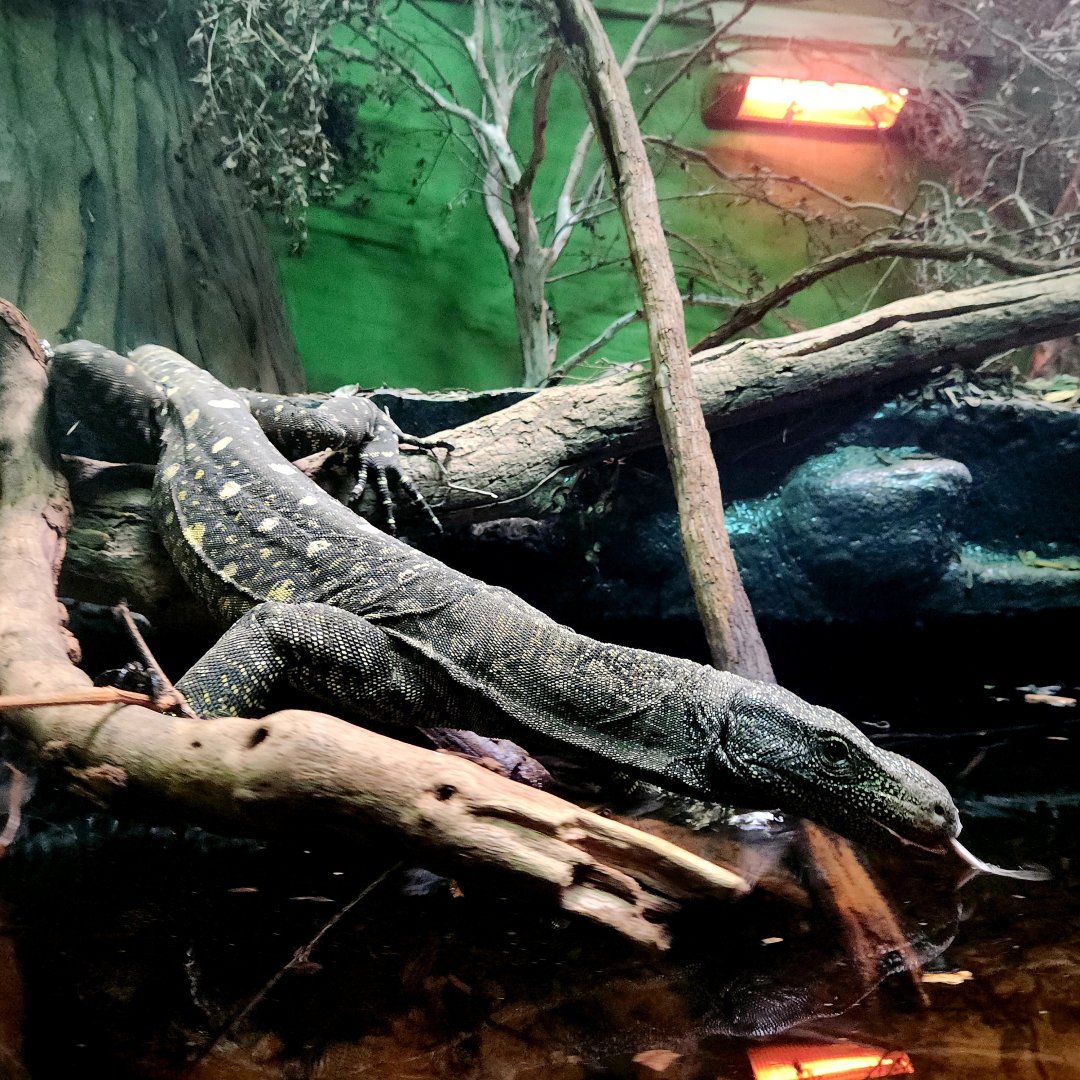
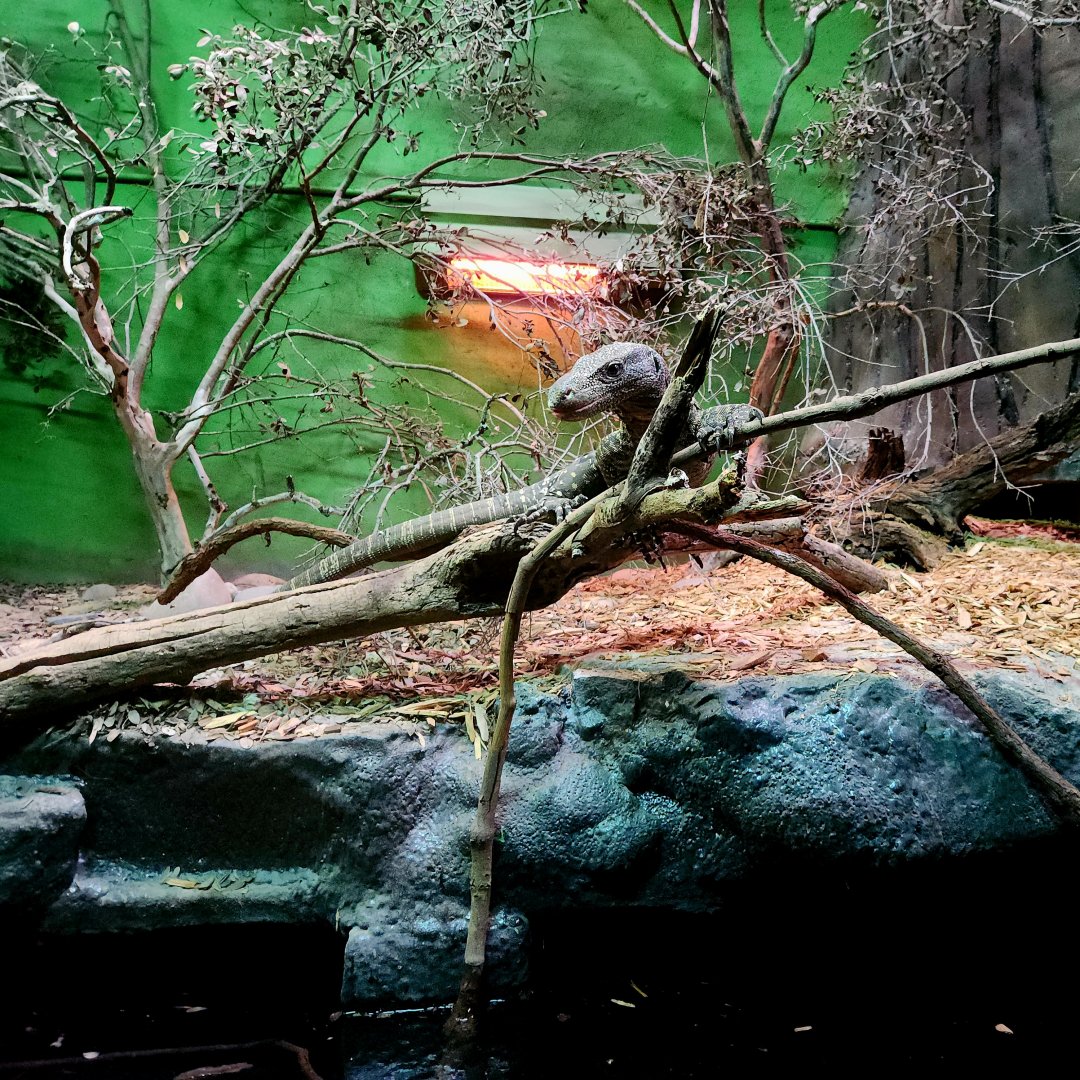
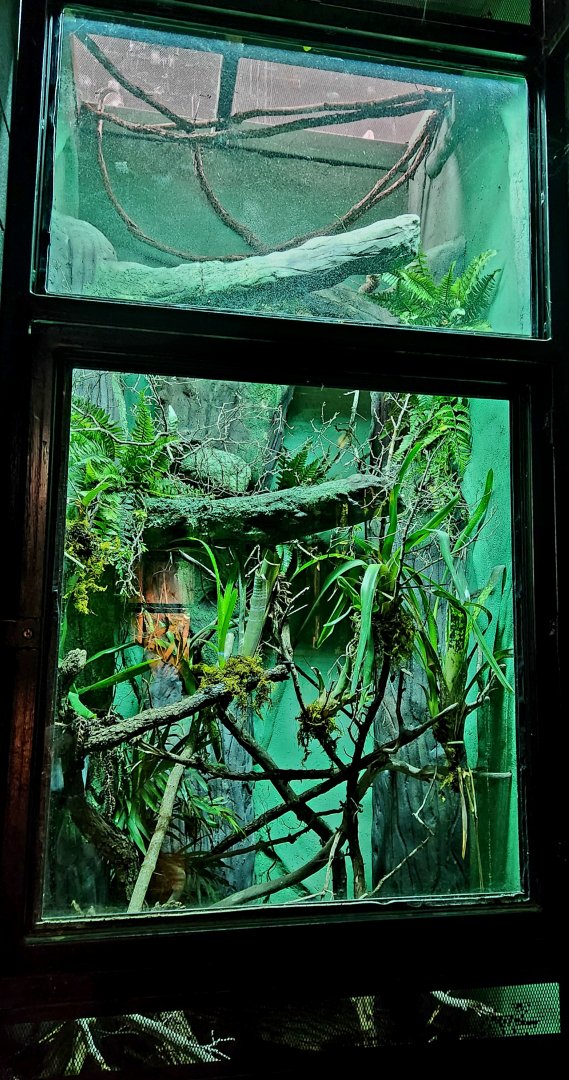
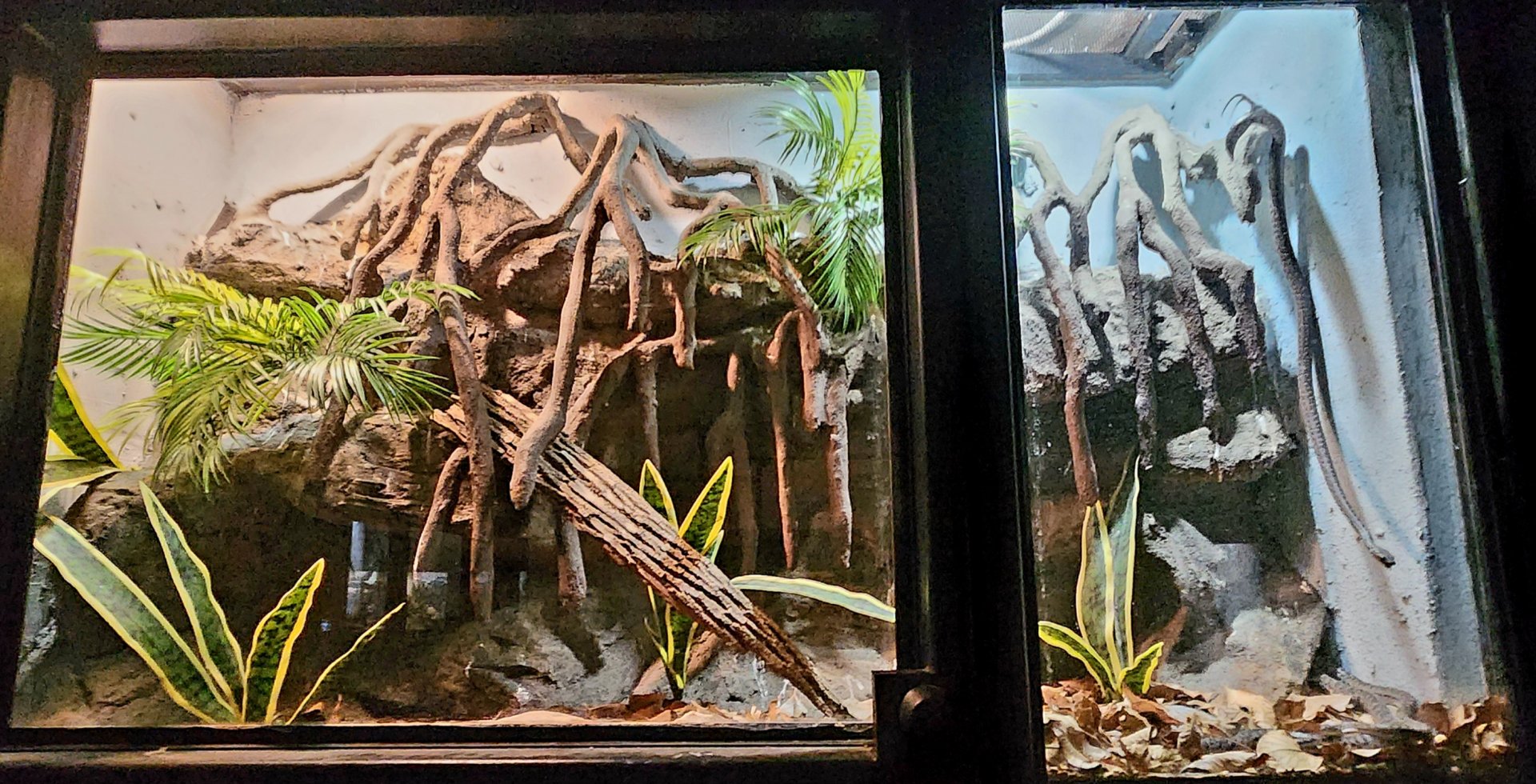
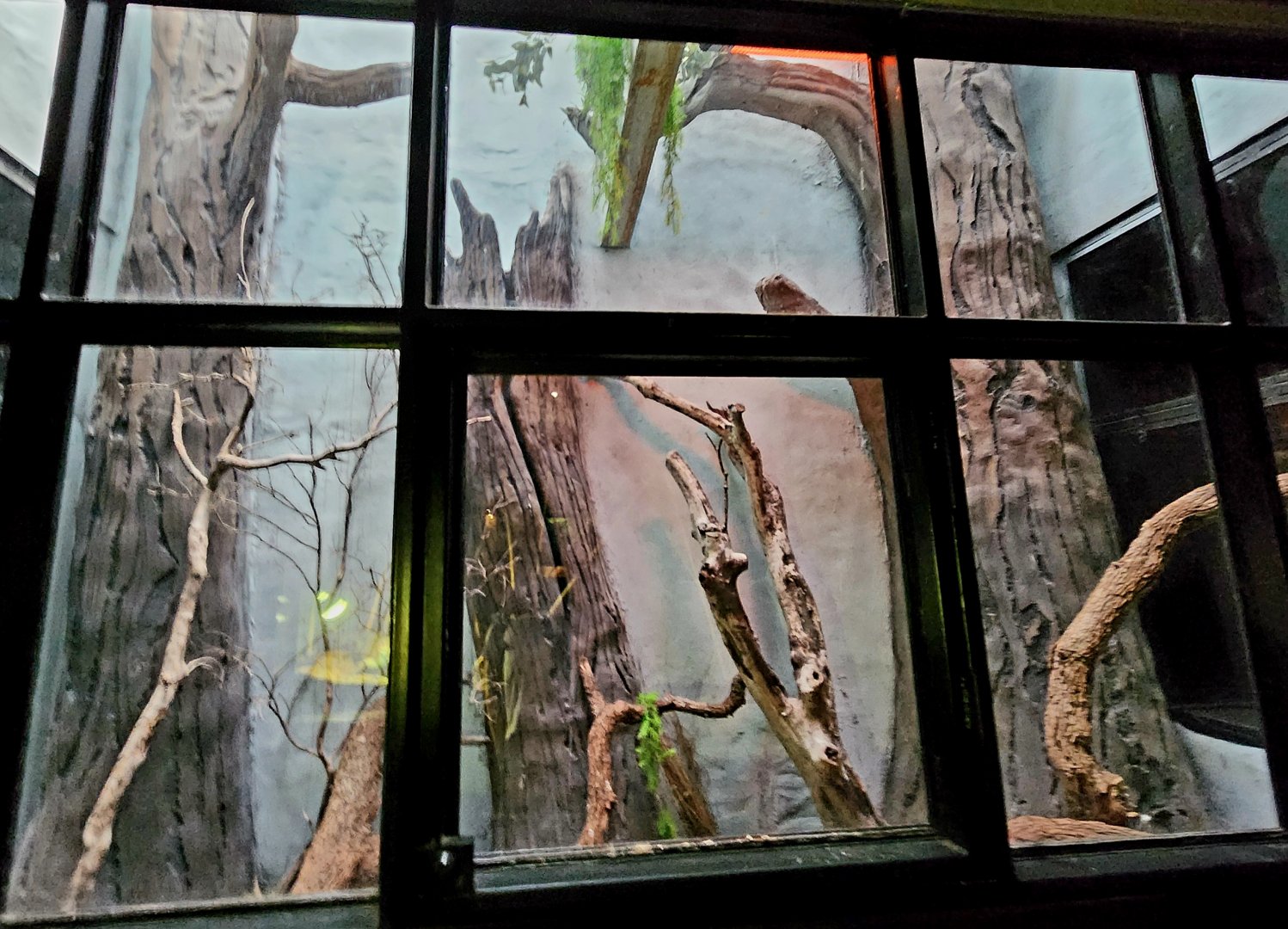
Finally getting into some animals, this exhibit is two stories, visible from both the upper and lower level (as all of the two-story enclosures at the facility are, for future reference), and features a massive running water system. I believe I remember this exhibit being about 20' long, 10' front to back, and 30' high - plenty of space for the lizards housed inside. Artificial trees reach from the bottom of the enclosure to the very top, where the Mertens' Water Monitors (Varanus mertensi) can often be seen. Meanwhile in the lower reaches, a large group of Eastern Water Dragons (Intellagama lesueurii lesueurii) is quite active around, you guessed it, the water. While these are the only two species currently housed in the exhibit, several turtles would make for excellent additions, including Chelodina sp. and Elseya sp.. For future reference, all of the aquatic exhibits have fish in them, but they are local natives. This exhibit doesn't currently offer a great underwater view, but if the water level were to be raised, fish like Barramundi (Lates calcarifer) and Jardini Arowana (Scleropages jardinii) would be big enough to hold their own in here and fit the biotope.


Exhibit 5: Amazon Rainforest
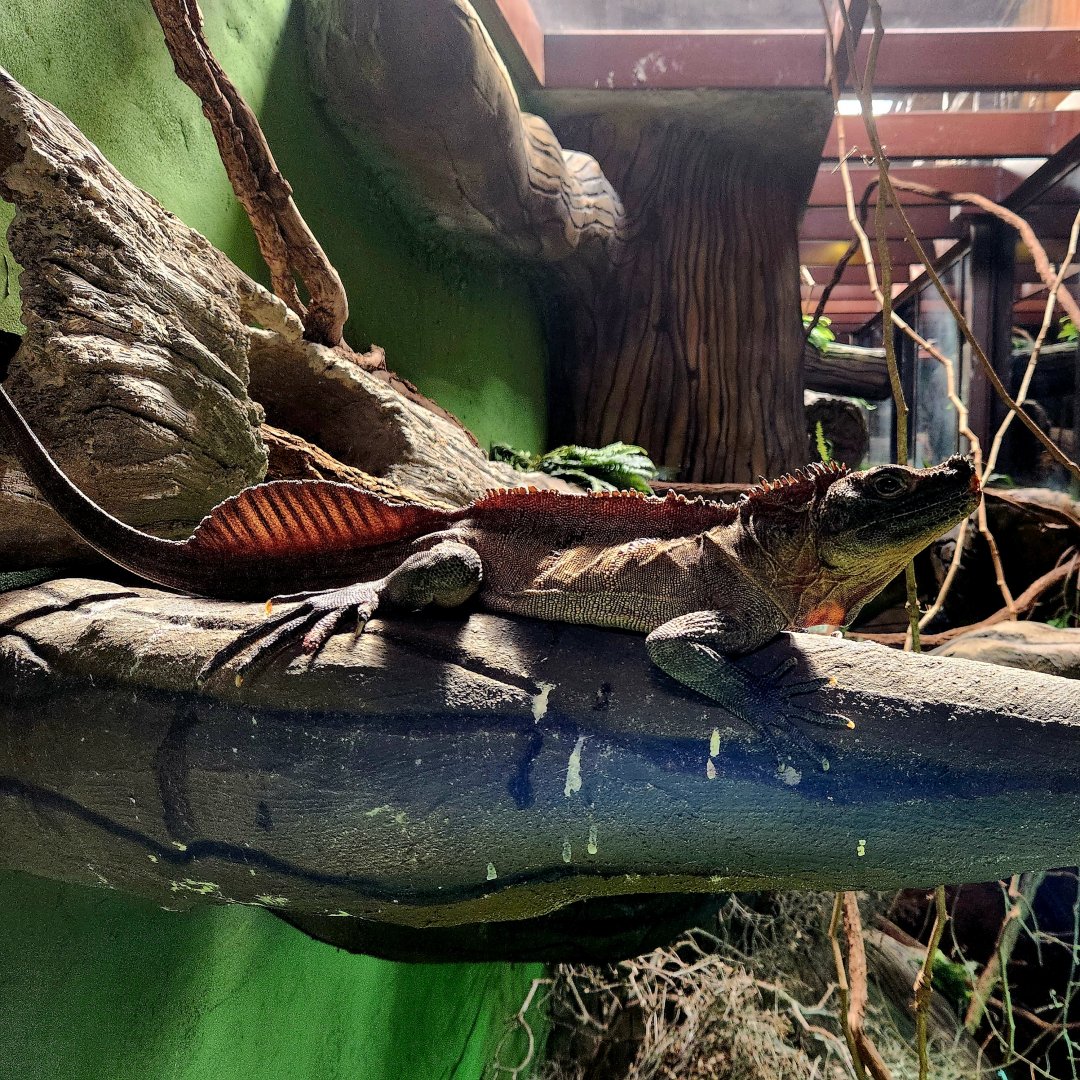
Another two-story exhibit measuring roughly 20' by 10' by 30', this one replicates a stream bank in the Amazon Rainforest, complete with turtles and lizards. Again, several artificial trees reach from bottom to top, giving the inhabitants access to the enclosure's full height. Currently, those include Yellow-Footed Tortoises (Chelonoidis denticulata), Yellow-Spotted River Turtles (Podocnemis unifilis), and Plumed Basilisks (Basiliscus plumifrons). I do know that Caiman Lizards (Dracaenea guianensis) are in the works as well, and I'll admit I was slightly disappointed to see they're not on exhibit yet, given they're one of my favorites. All the more reason to visit in the future, though ;). The exhibit is teeming with activity, and I even watched one of the tortoises swim clear across the entire enclosure - not wading, full-on swimming in almost 4 feet of water. While I think the reptile choices for this exhibit are phenomenal, I have a few improvements that come to mind immediately. First would be another smaller species of lizard to fill the upper levels - Blue-Lipped Treerunners (Plica umbra) would fit perfectly. The amount of space in this exhibit would also be perfect for showcasing the jumping abilities of Smoky Jungle Frogs (Leptodactylus pentadactylus), which are all too often crammed into tiny exhibits. In the fish department, this tank would be a great contender for some of the "staple" large species, like Black Pacu (Colossoma macropomum), Redtail Catfish (Phractocephalus hemioliopterus), Tiger Shovelnose Catfish (Pseudoplatystoma tigrinum), and River Stingrays (Potamotrygon sp.). Arapaima sp. would probably get too large for this exhibit, but Silver Arowanas (Osteoglossum bicirrhosum) are another must-have, IMO.
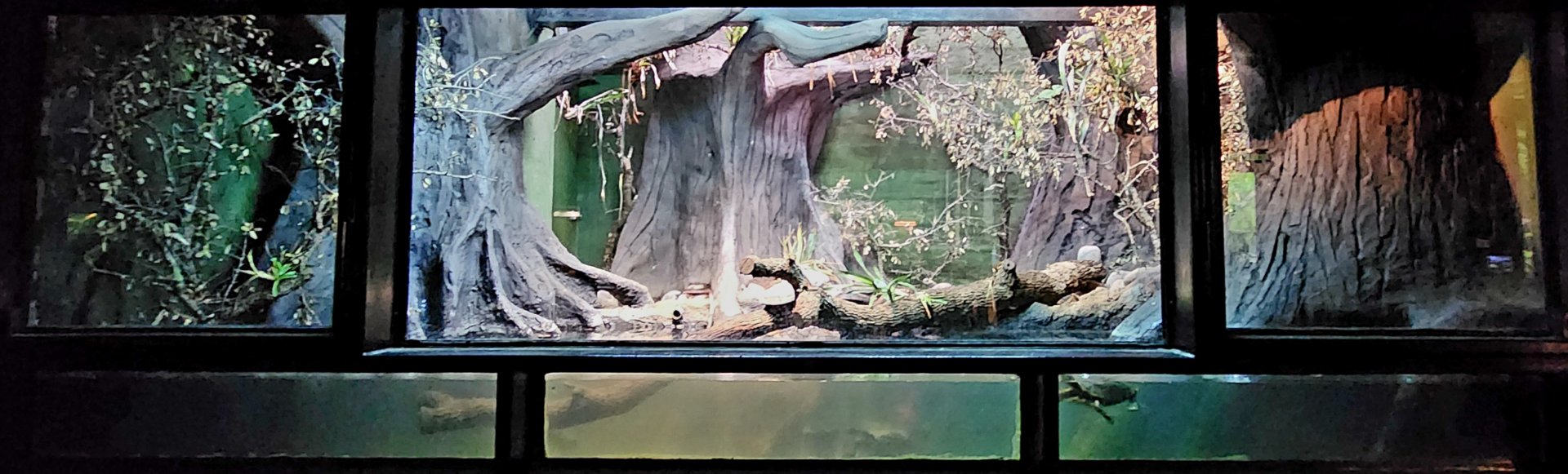
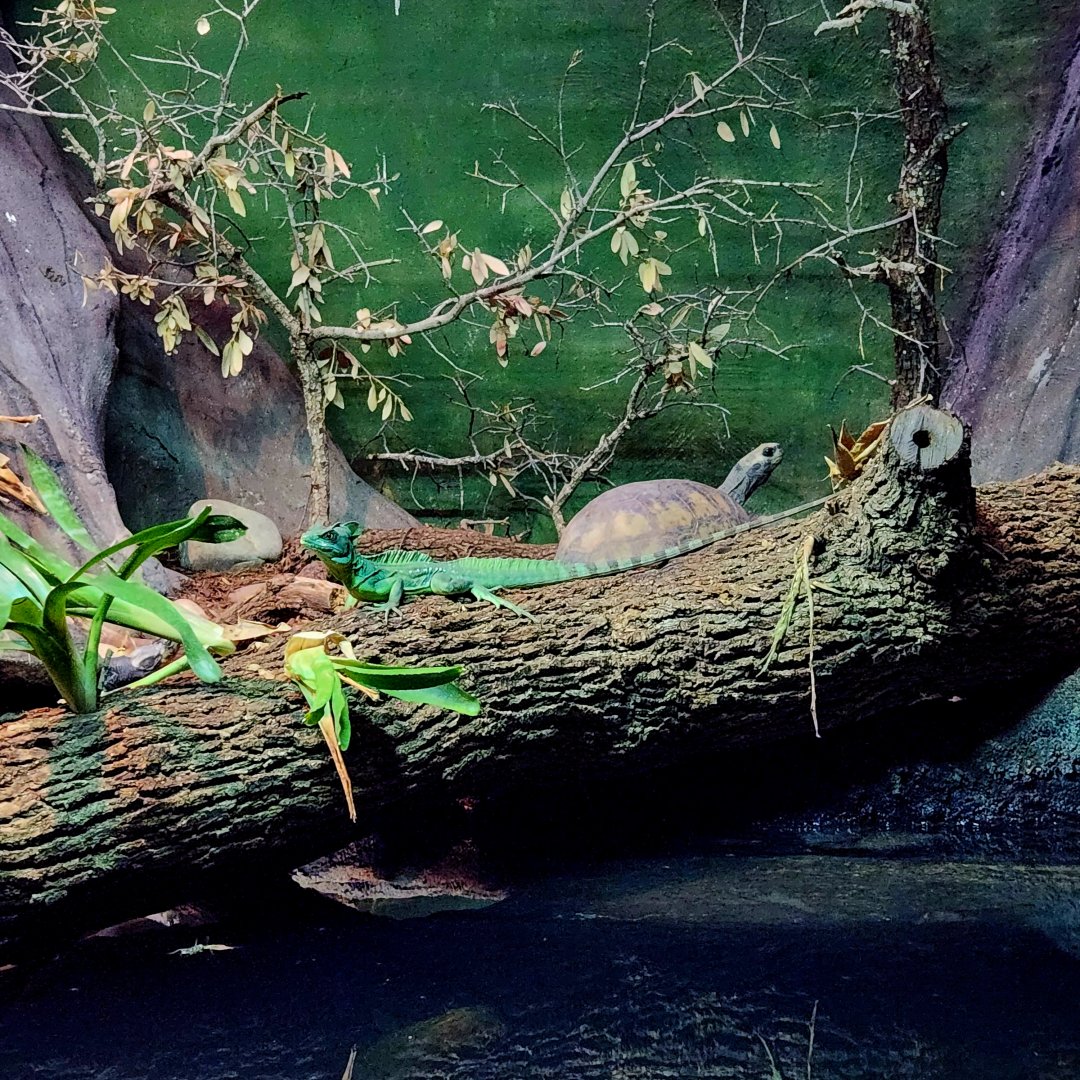
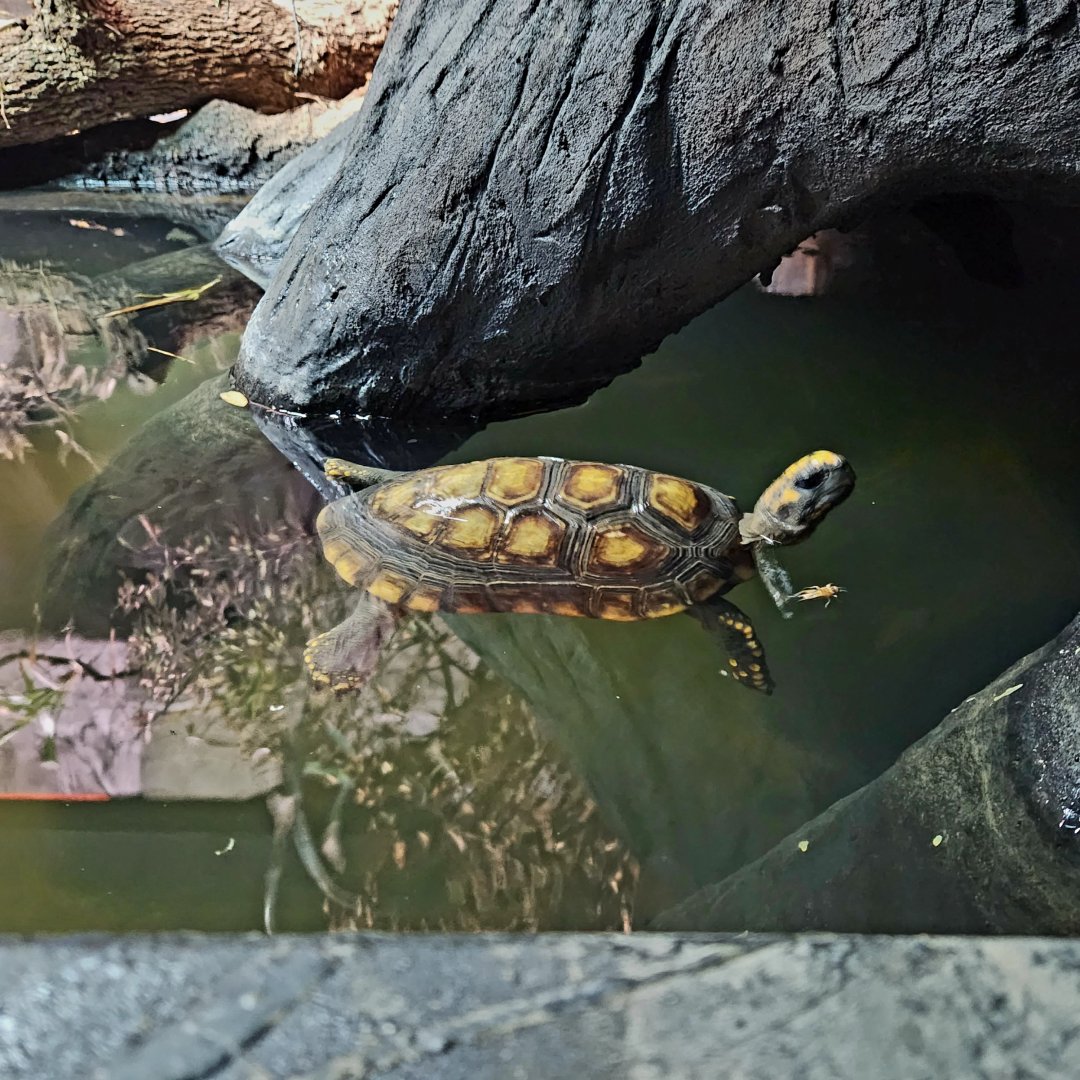
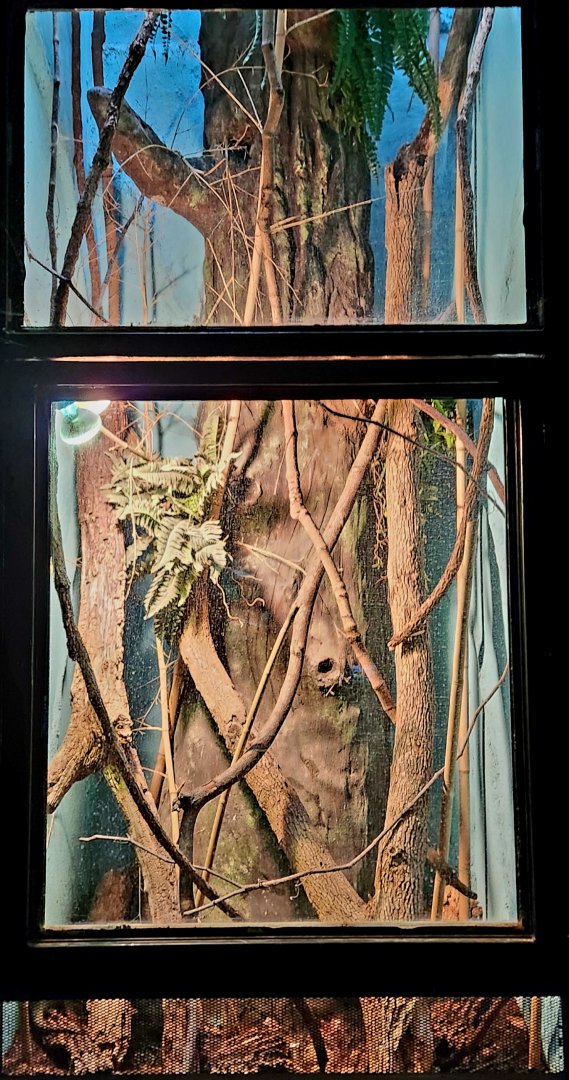
Exhibit 6: Batanta
Another two-story exhibit, this time for another of my personal favorite species groups to work with - tree monitors. The Batanta exhibit is home to a pair of Blue Tree Monitors (Varanus macraei), who have a maze of branches and foliage to climb in their 30' tall exhibit. The floor space in this enclosure is much smaller than the previous two, I'd guess around 4 feet by 4 feet. Sharing the exhibit's lower portion is an Indonesian Blue-Tongued Skink (Tiliqua gigas), a great choice. Not too much to add about this enclosure, but seeing tree monitors use a two-story exhibit is pretty cool :)
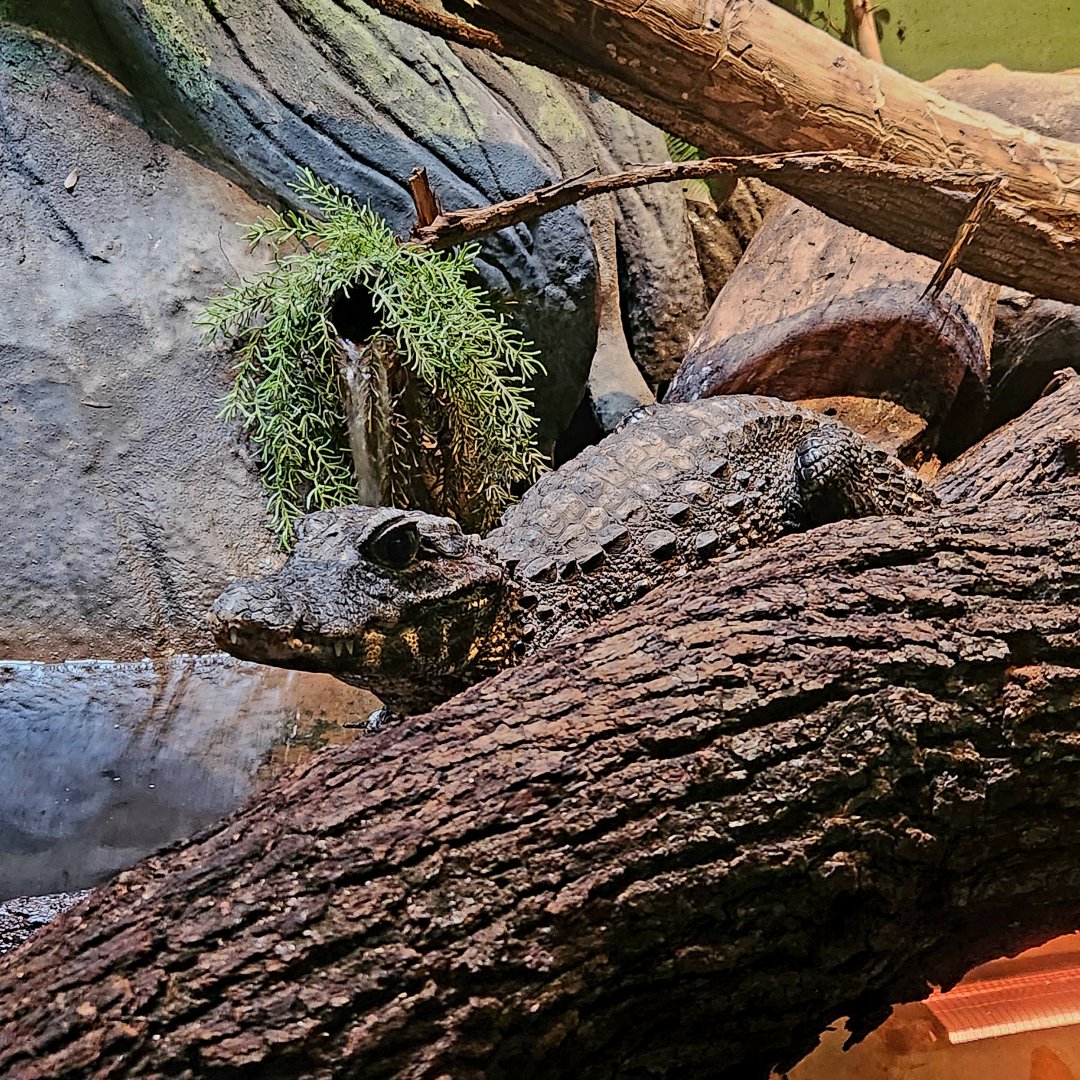

Exhibit 7: Cuba
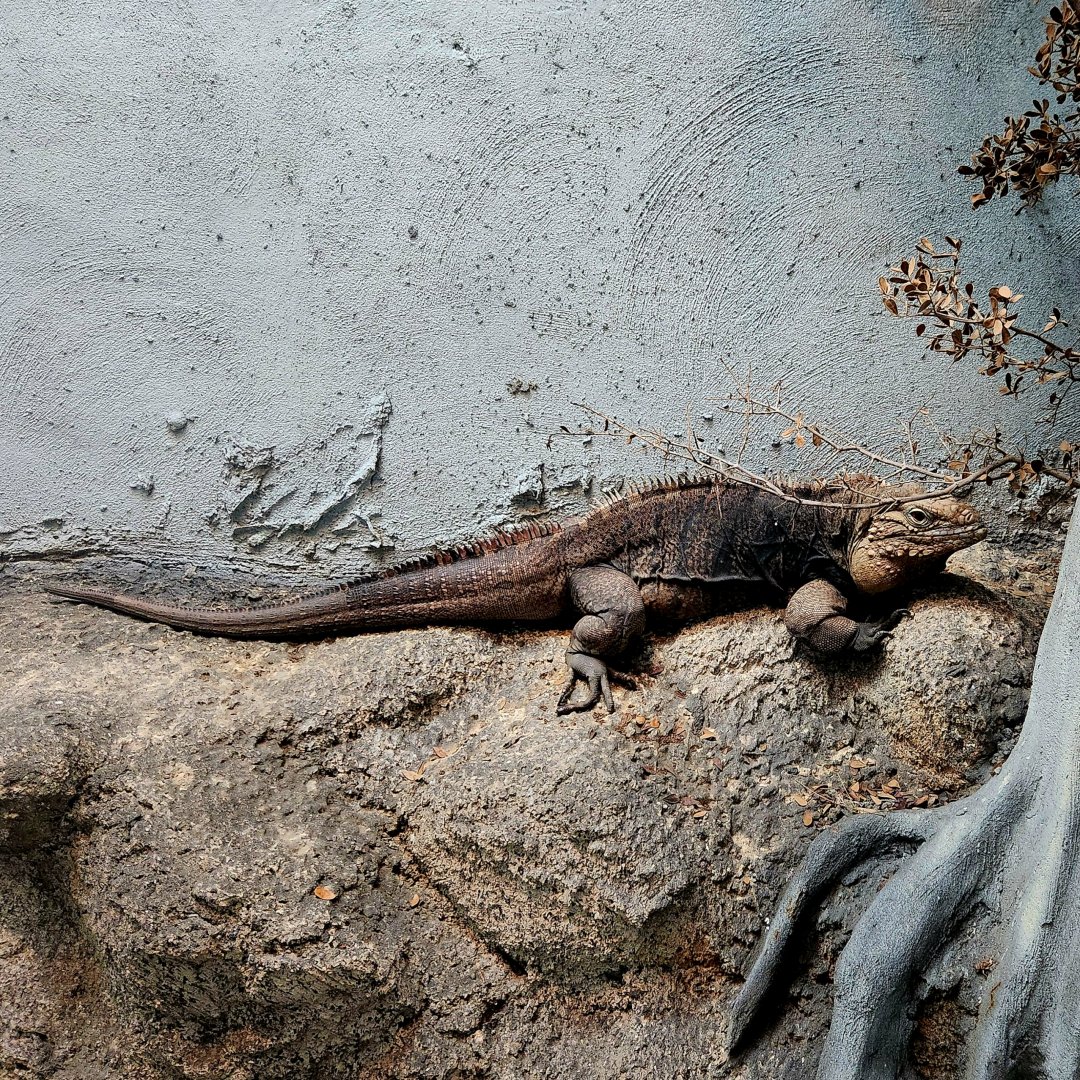
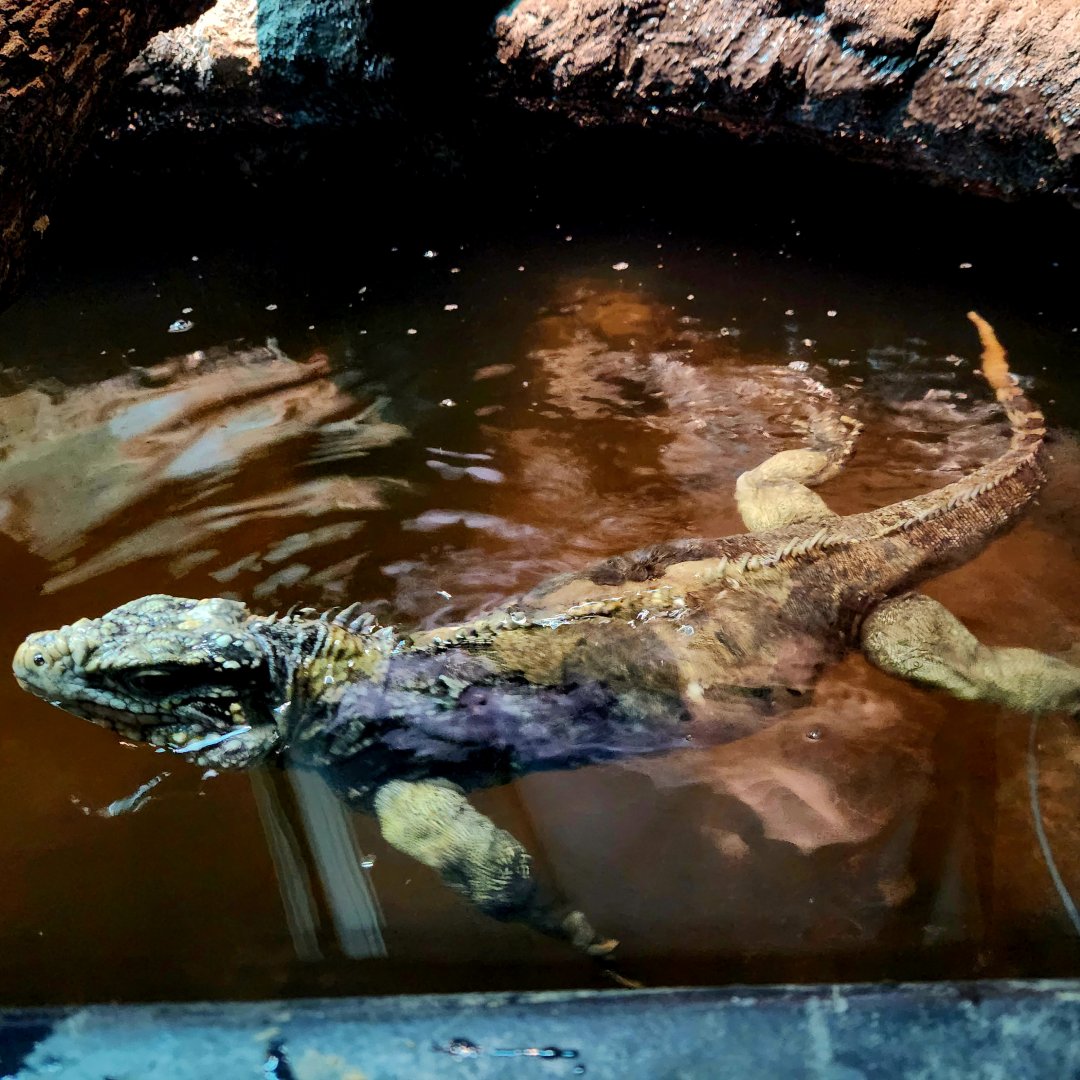
Yet another two-story exhibit, this is another of the roughly 20' by 10' by 30' enclosures, this time replicating a rocky coastal area of Southern Cuba. The stars of the show here are a bonded pair of Cuban Rock Iguanas (Cyclura nubila), who make full use of the rock wall that protrudes up to nearly the top of the exhibit. I also watched the female not only swim across her entire exhibit, but proceed to rest in the water for several additional minutes - yet another new behavior out of a species I've worked with quite a bit. In the aquatic portions of the exhibit, a group of Cuban Sliders (Trachemys decussata) is quite active, and up top there is a 1.2 trio of Smallwood's Anoles (Anolis smallwoodi) that provide a good bit of activity. I think the Northern Curly-Tailed Lizards (Leiocephalus carinatus) found in a later exhibit would be a great touch in here, as would Cuban Gar (Atractosteus tristoechus) and Cuban Cichlid (Nandopsis tetracanthus).


Because of the length this thread will inevitably reach, I'm going to end this post here as a test run and try to break things up into roughly this length. Hope you've enjoyed the first parts so far, more to come :)
 
Exhibit 8: Aru Islands
Very similar to exhibit #6, this exhibit features an additional tree structure and has the same roughly 4' by 4' by 30' dimensions. There were no inhabitants on my visit, but a pair of Black Tree Monitors (Varanus beccarii) are planned for the future. In keeping with the mixed-species theming, an additional Indonesian Blue-Tongued Skink (Tiliqua gigas) of the opposite sex would make for a good inhabitant.


Exhibit 9: Tsingy Peaks
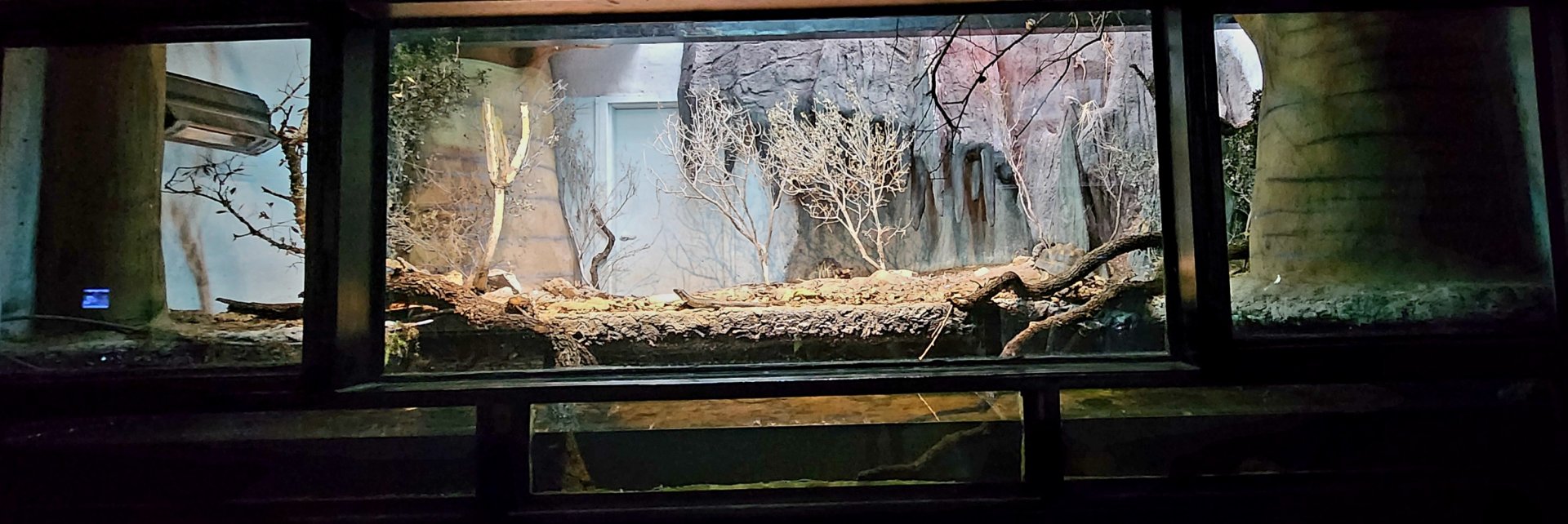
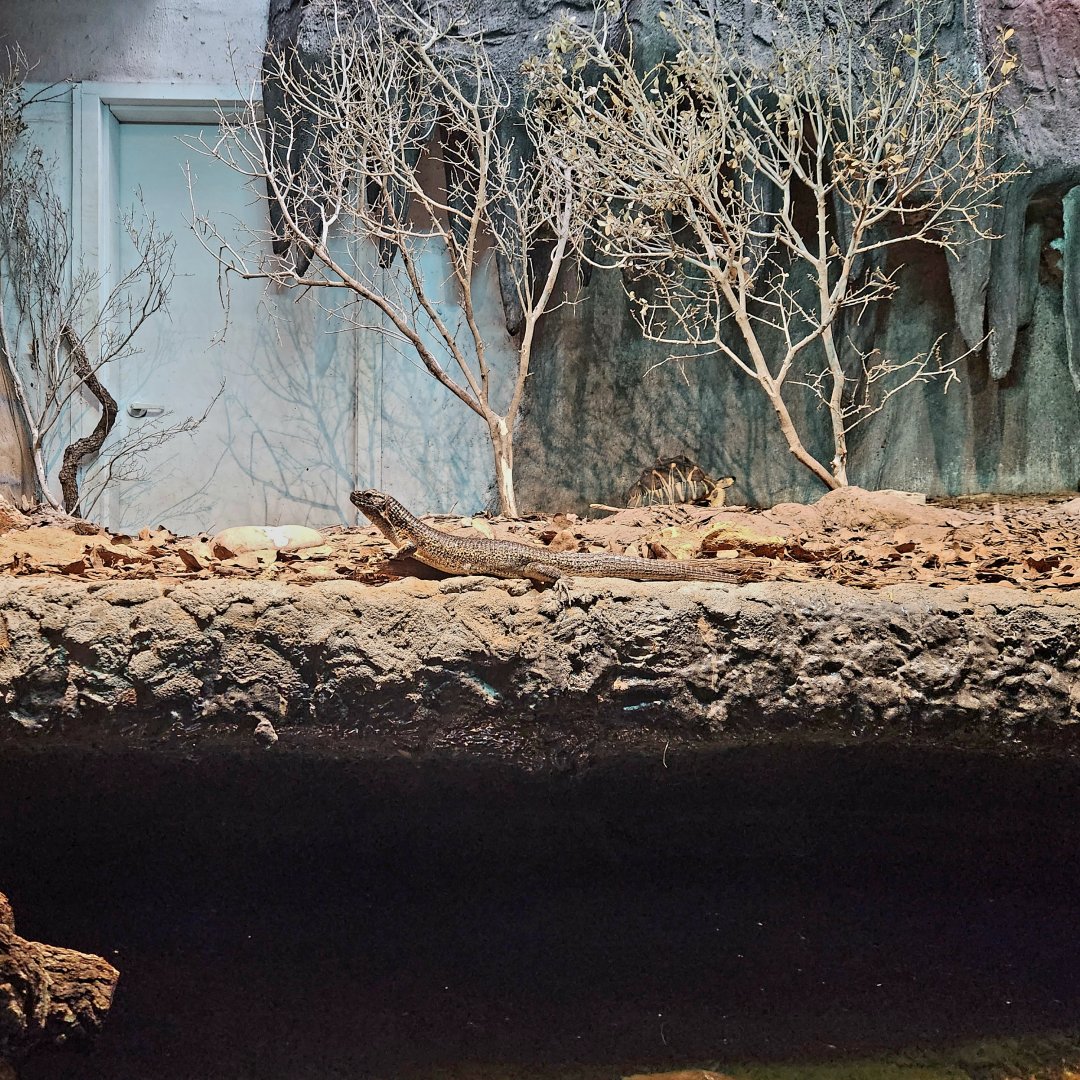
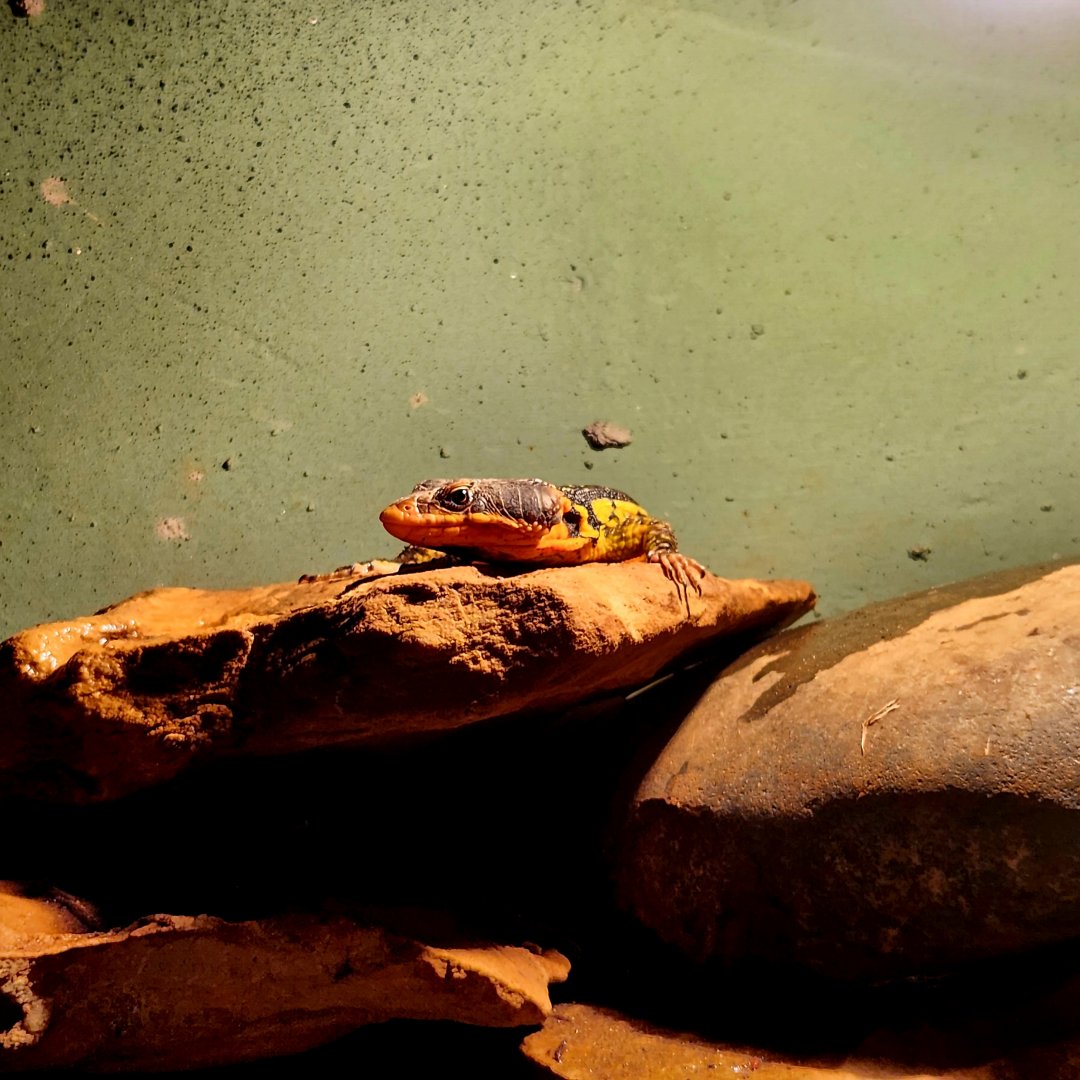
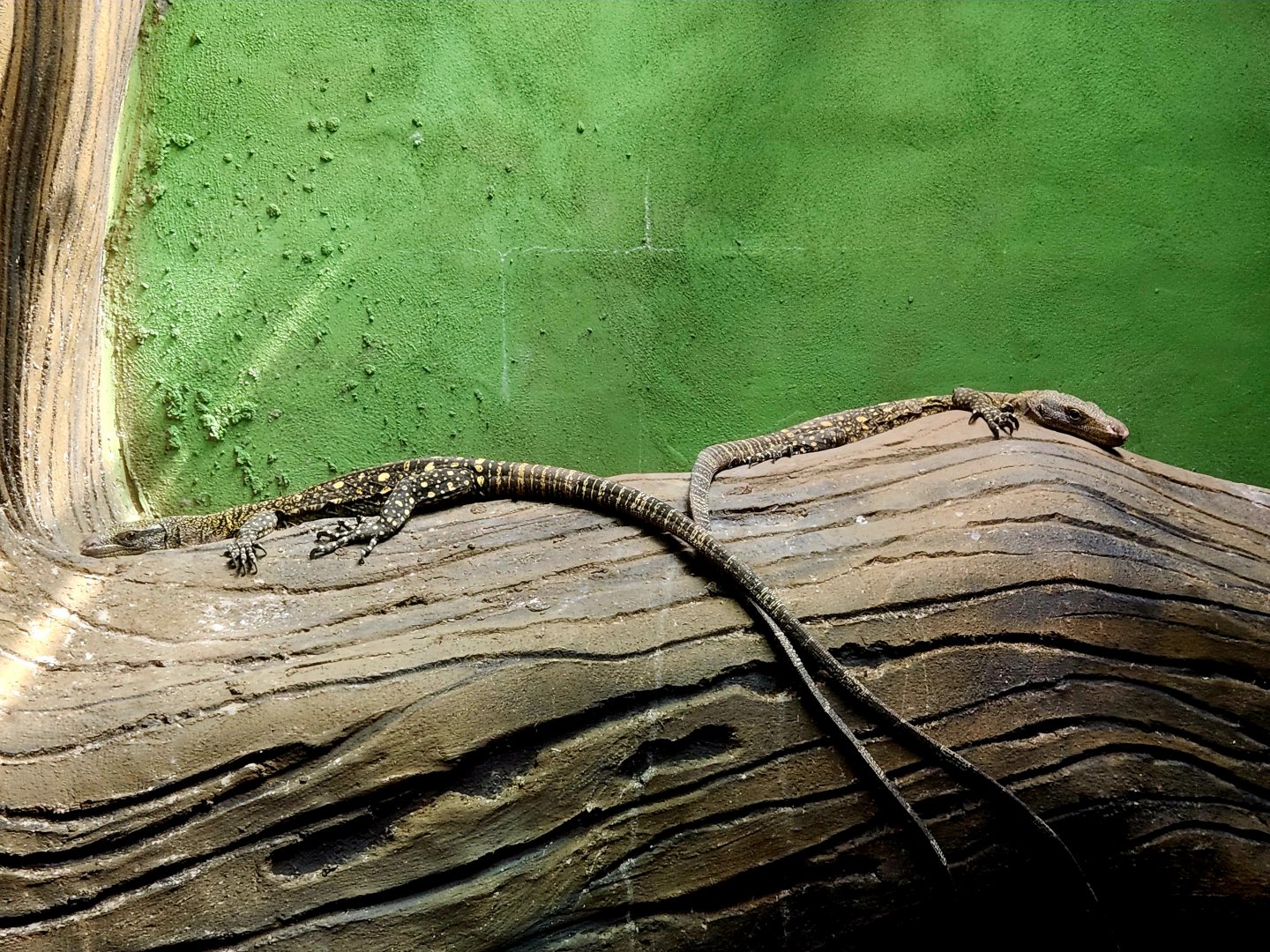
Another of the 20' by 10' by 30' exhibits, this is the largest of several Madagascan exhibits at the zoo. Giant artificial Baobab trees fill the exhibit's corners, while rock structures at the back provide additional elevation and near-perfectly replicate the peaks found on the island. This enclosure is filled with activity, with the Southeastern Girdled Lizards (Zonosaurus maximus) making the biggest appearance. As your eyes drift back, you'll notice the large group of Radiated Tortoises (Astrochelys radiata), who spent most of their day near the base of the cliff structure. Additional lizards include Cuvier's Madagascar Swifts (Oplurus cuvieri) and an unidentified species of Day Gecko (Phelsuma sp.) - given the size of the exhibit, P. grandis seems most likely, but I only caught a glimpse of one. The aquatic portion of the exhibit currently holds a single Madagascar Big-Headed Turtle (Erymnochelys madagascariensis). The reptile species in this exhibit are pretty much perfect - I think snakes would get lost too easily given the size, and the major lizard groups of the island (save for chameleons) are covered. I would simply add fish, including cichlids like Paretroplus menarambo and Paratilapia polleni, and smaller schooling species like Bedotia geayi and Pachypanchax sakaramyi.


Exhibit 10: New Guinea
This is another two-story exhibit, slightly larger than those for the tree monitors. It measures roughly 6' by 6' square, and again gives the full height of the building to its inhabitants. This exhibit was signed with Angle-Headed Forest Dragons (Hypsilurus magnus), but I didn't see them at any point throughout the day. I'd love to see these lizards moved into a different Papuan exhibit, and this larger exhibit used instead for the Blue Tree Monitors (Varanus macraei) and Indonesian Blue-Tongued Skinks (Tiliqua gigas). A pair of each would be perfectly-sized for this exhibit.


Exhibit 11: West Africa
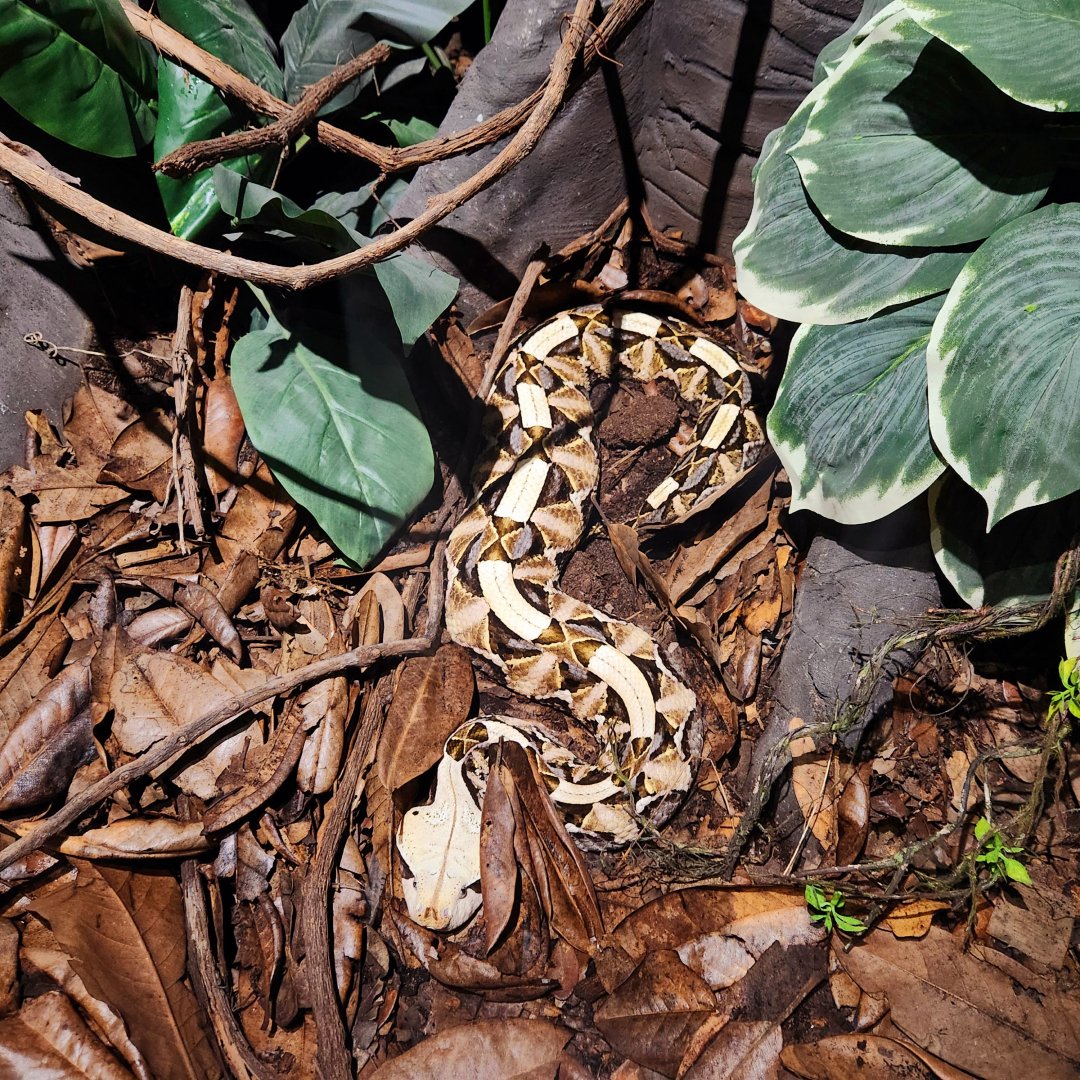
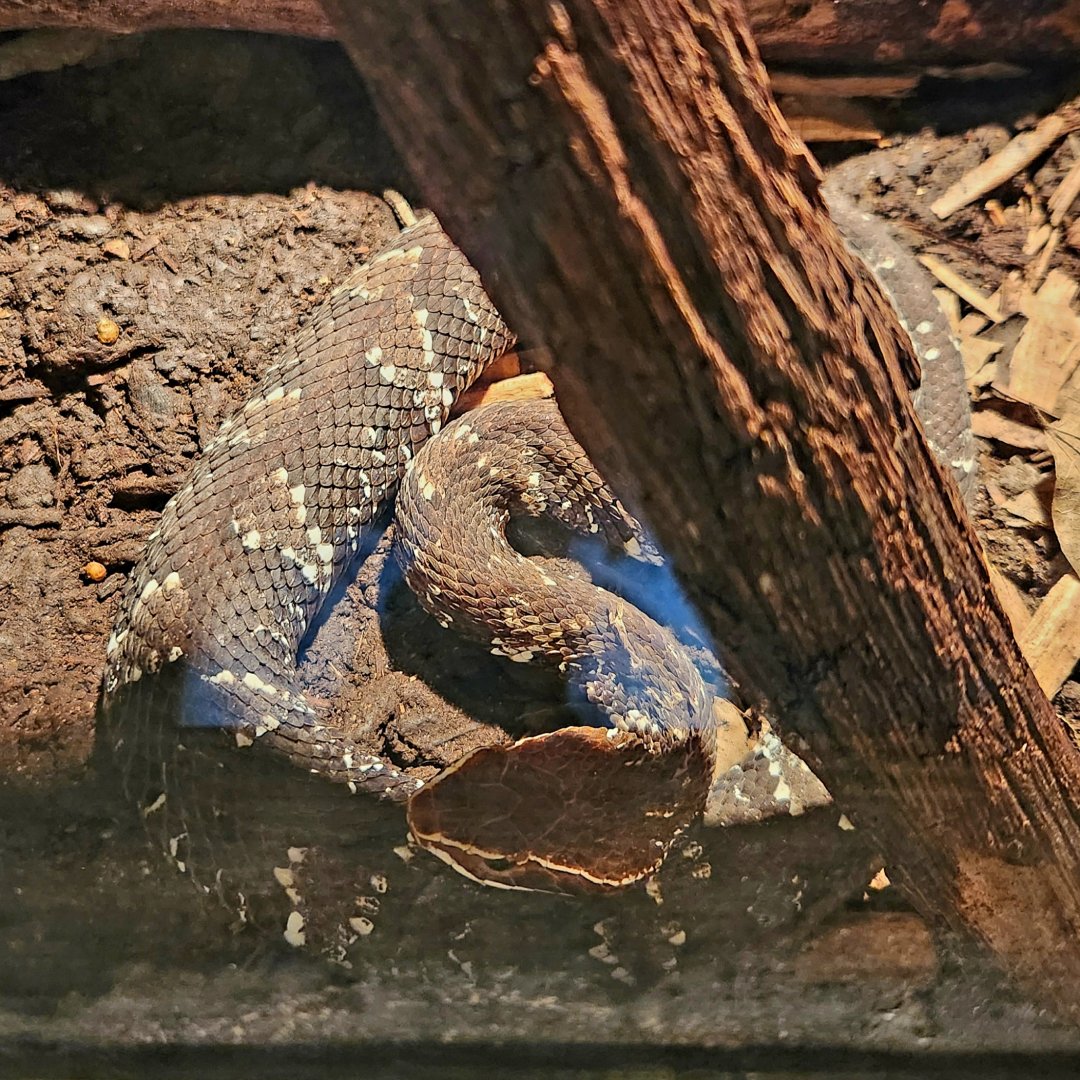
This exhibit measures maybe 5 feet long, 3 feet front to back, and 5 feet high, and is used to house a single West African Gaboon Viper (Bitis rhinoceros). The tree work done at the back of the exhibit, as well as the choice in leaf litter, makes this a very aesthetically pleasing exhibit. The leaves are near-perfect for helping the snake camouflage, one of the most familiar features of the species. Adding a small species of plated lizard might allow the top of the enclosure to be better utilized, but overall this is a great exhibit for a staple species.


Exhibit 12: Amazon Rainforest
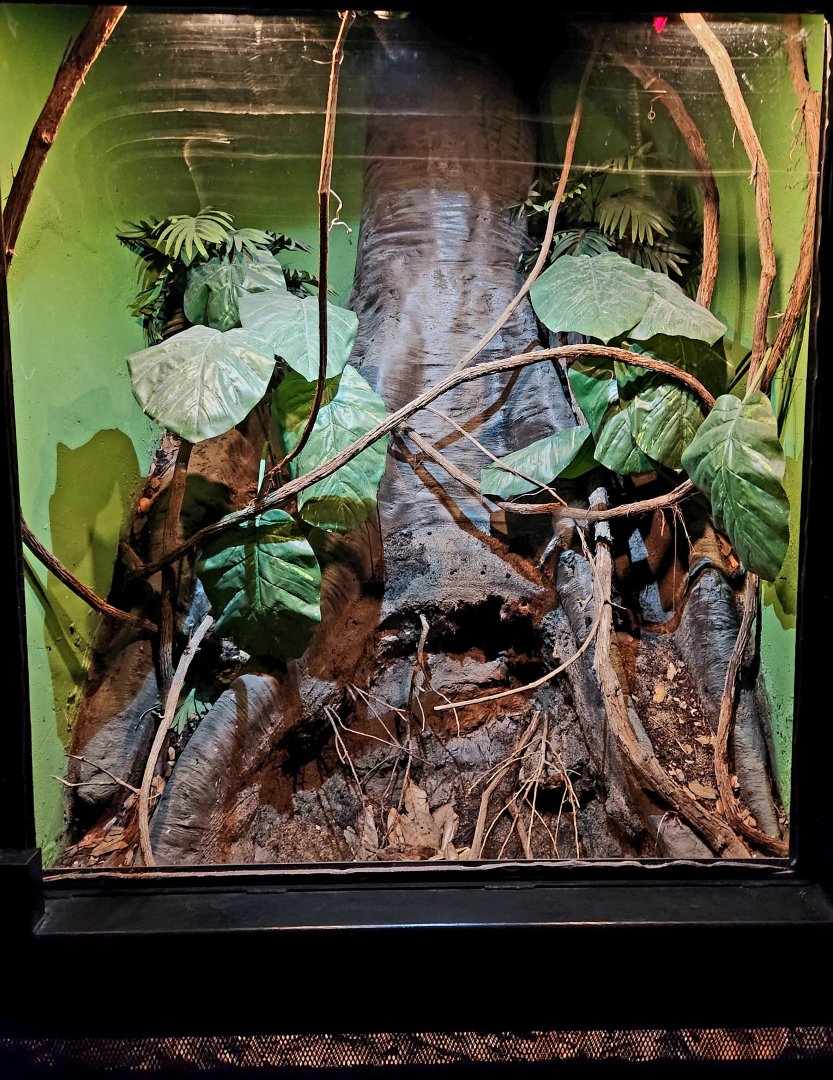
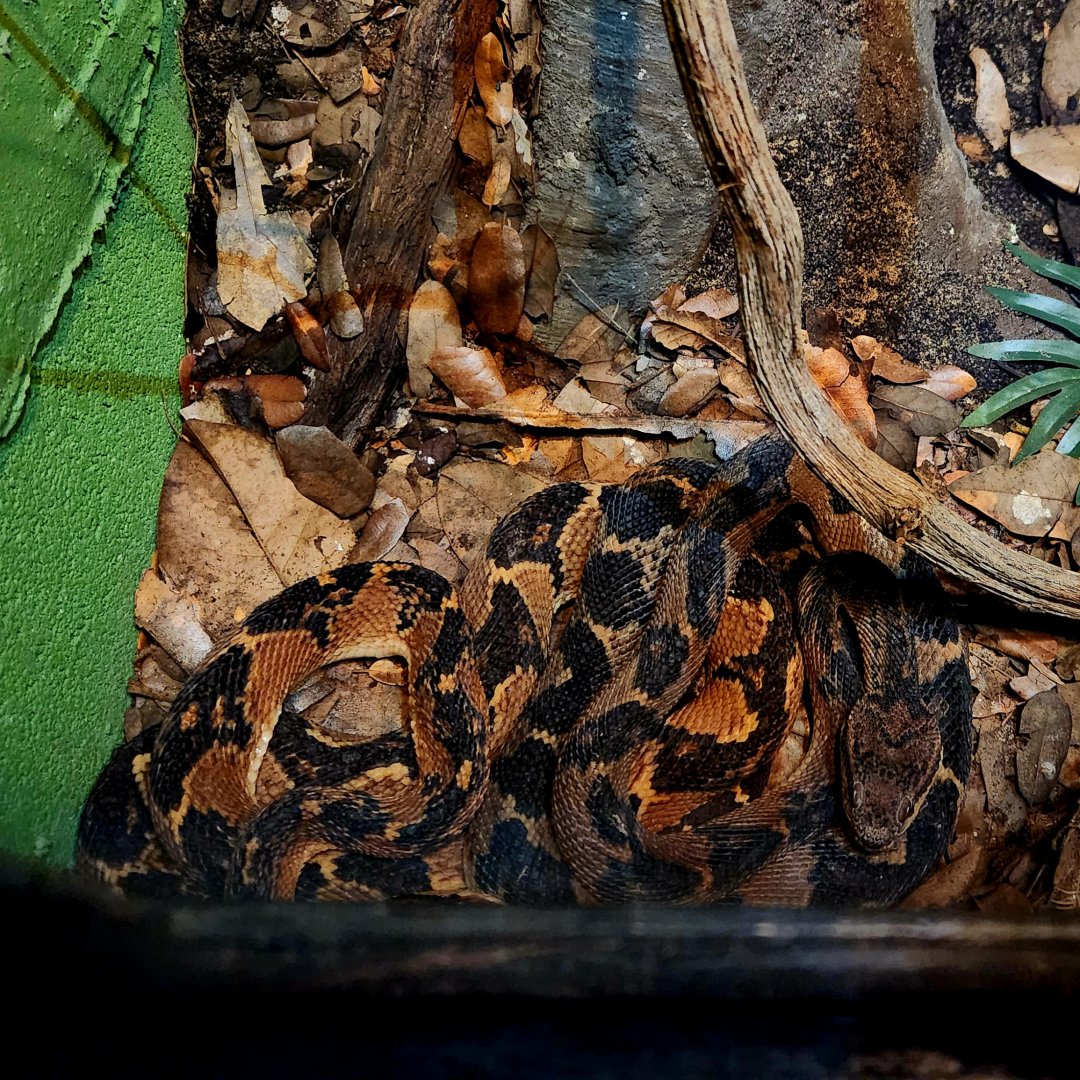
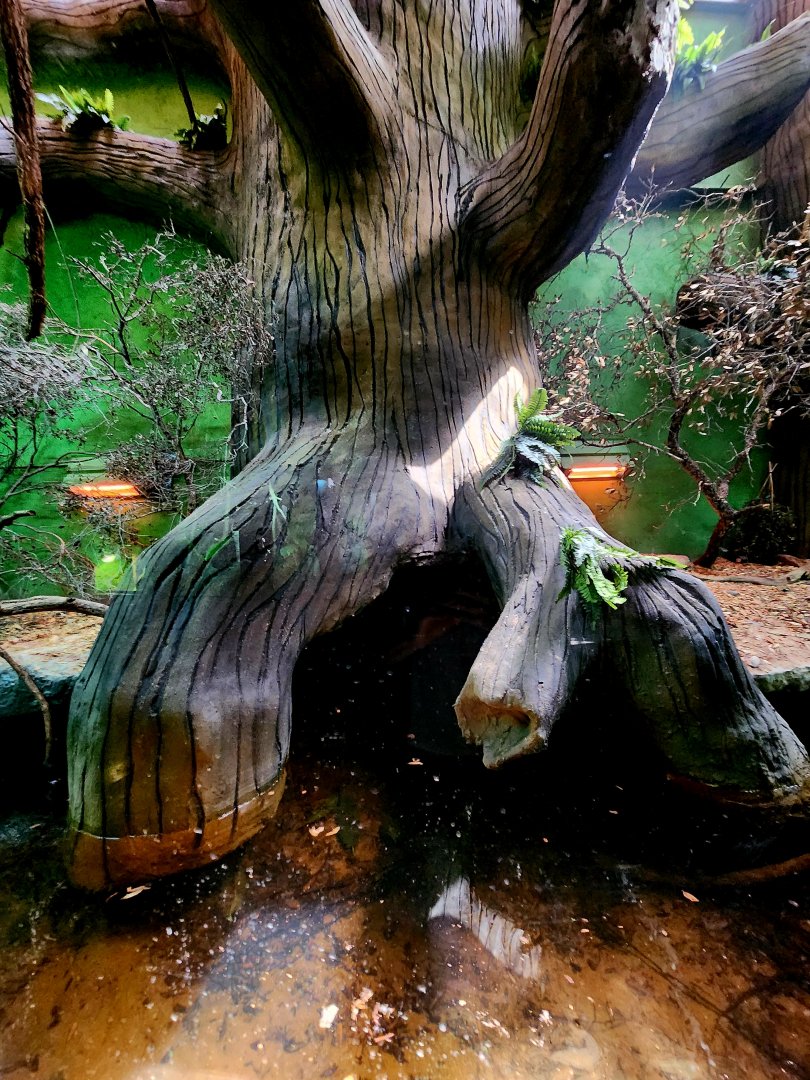
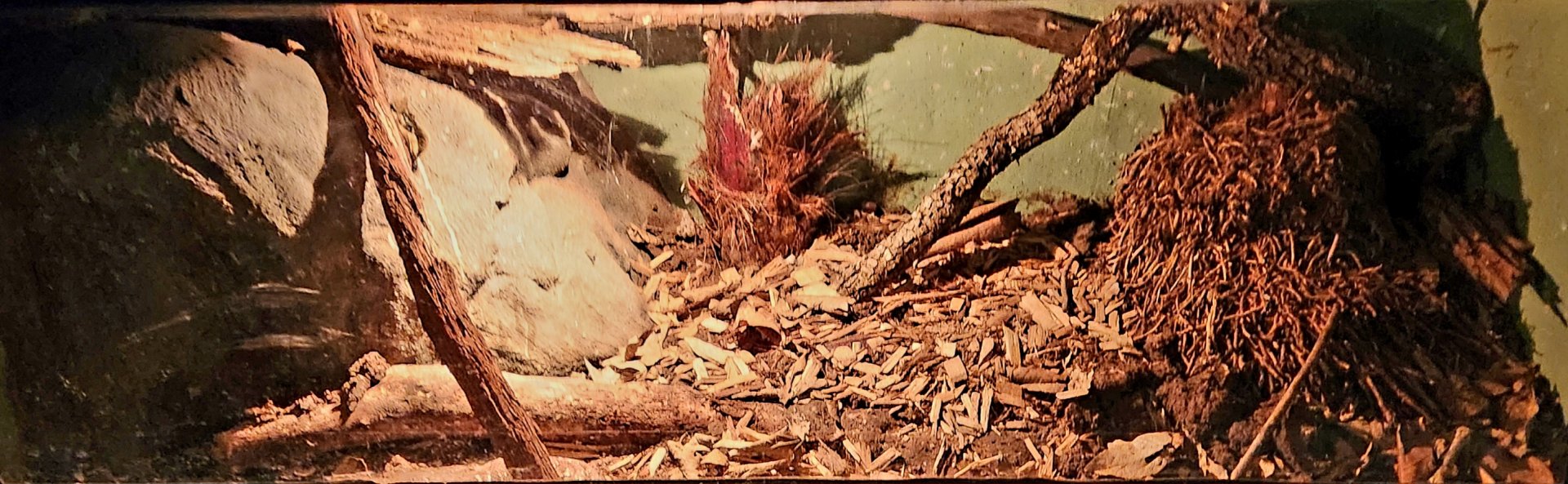
This exhibit is right next to and the same size as the previous one, and beautifully recreates the eroded stump of a tree in the heart of the Amazon. I actually like this exhibit a bit better than the previous, just because of the authenticity of that tree base. In my mind, the pair of South American Bushmasters (Lachesis muta) would be best displayed along another toxic Amazonian classic - poison dart frogs. This exhibit calls for a hardy, readily-available species that is bold and lives in groups - Adelphobates galactonotus, Dendrobates leucomelas, and, if geography isn't a huge concern, Dendrobates auratus all come to mind.

 
Exhibit 13: The Crocodile Monitor Kingdom
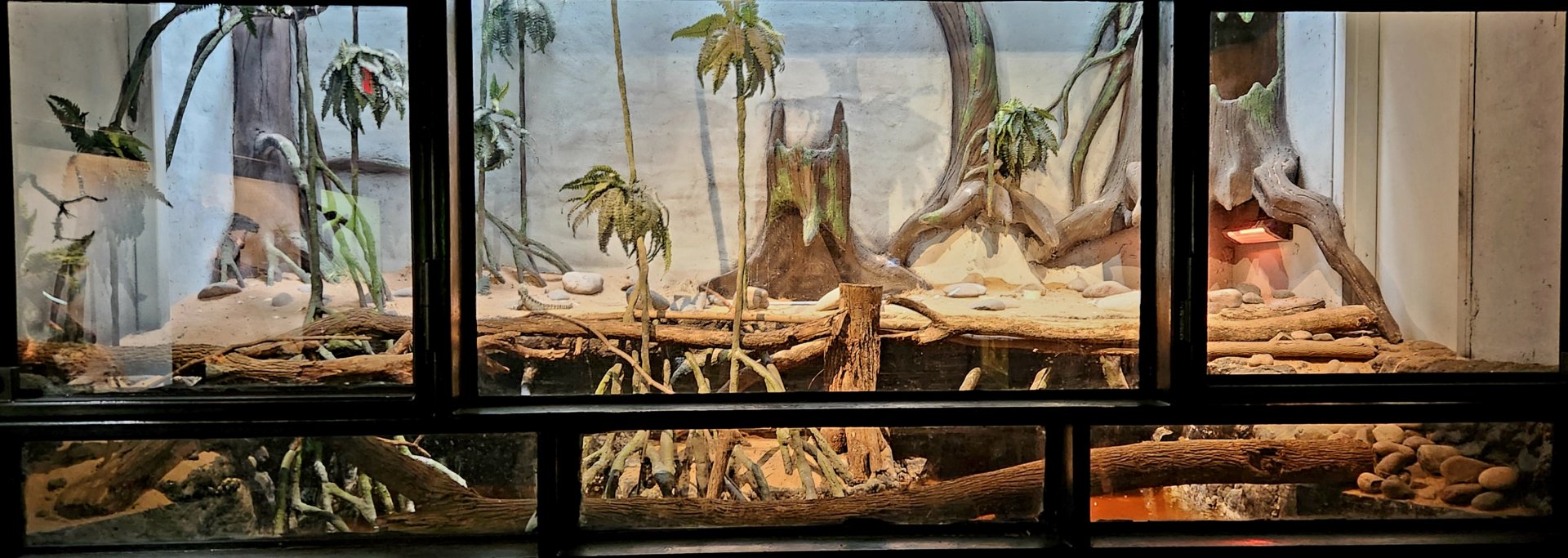
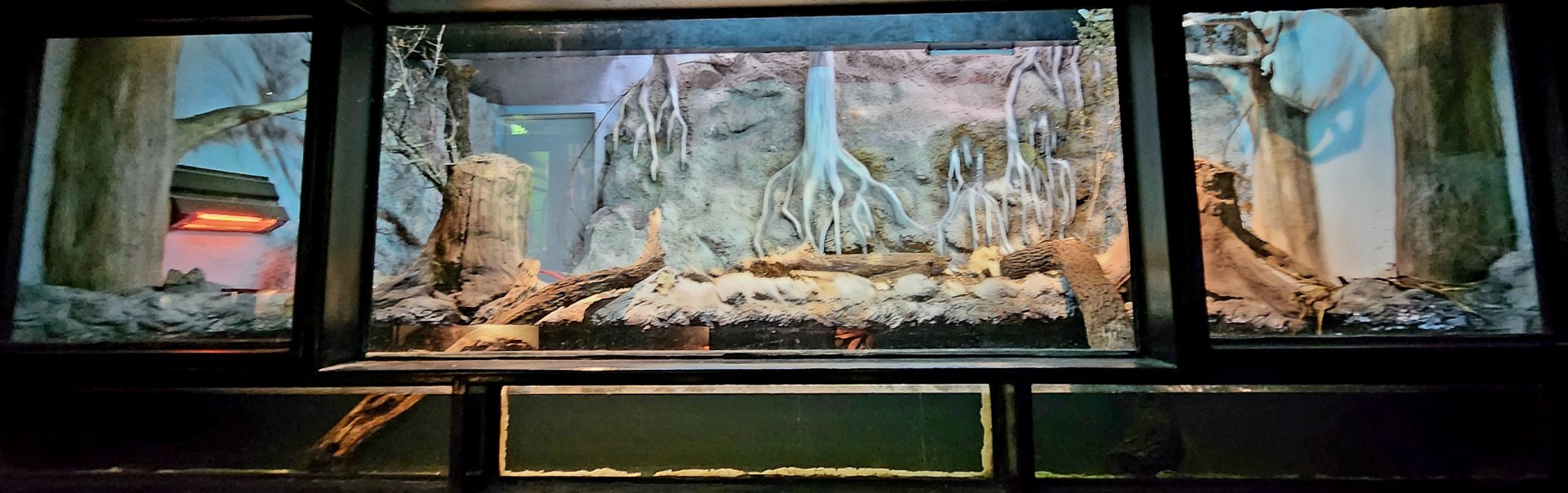
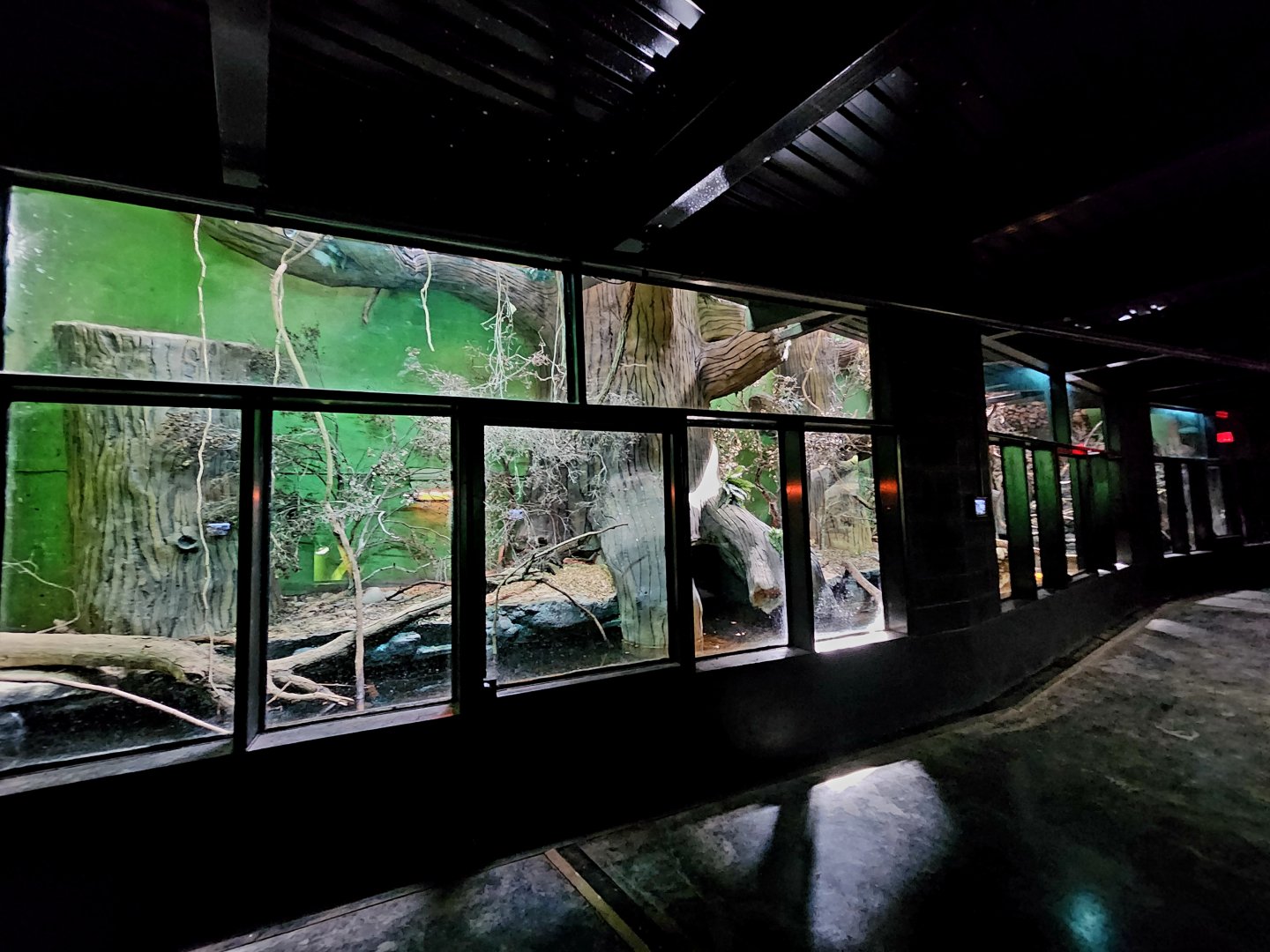
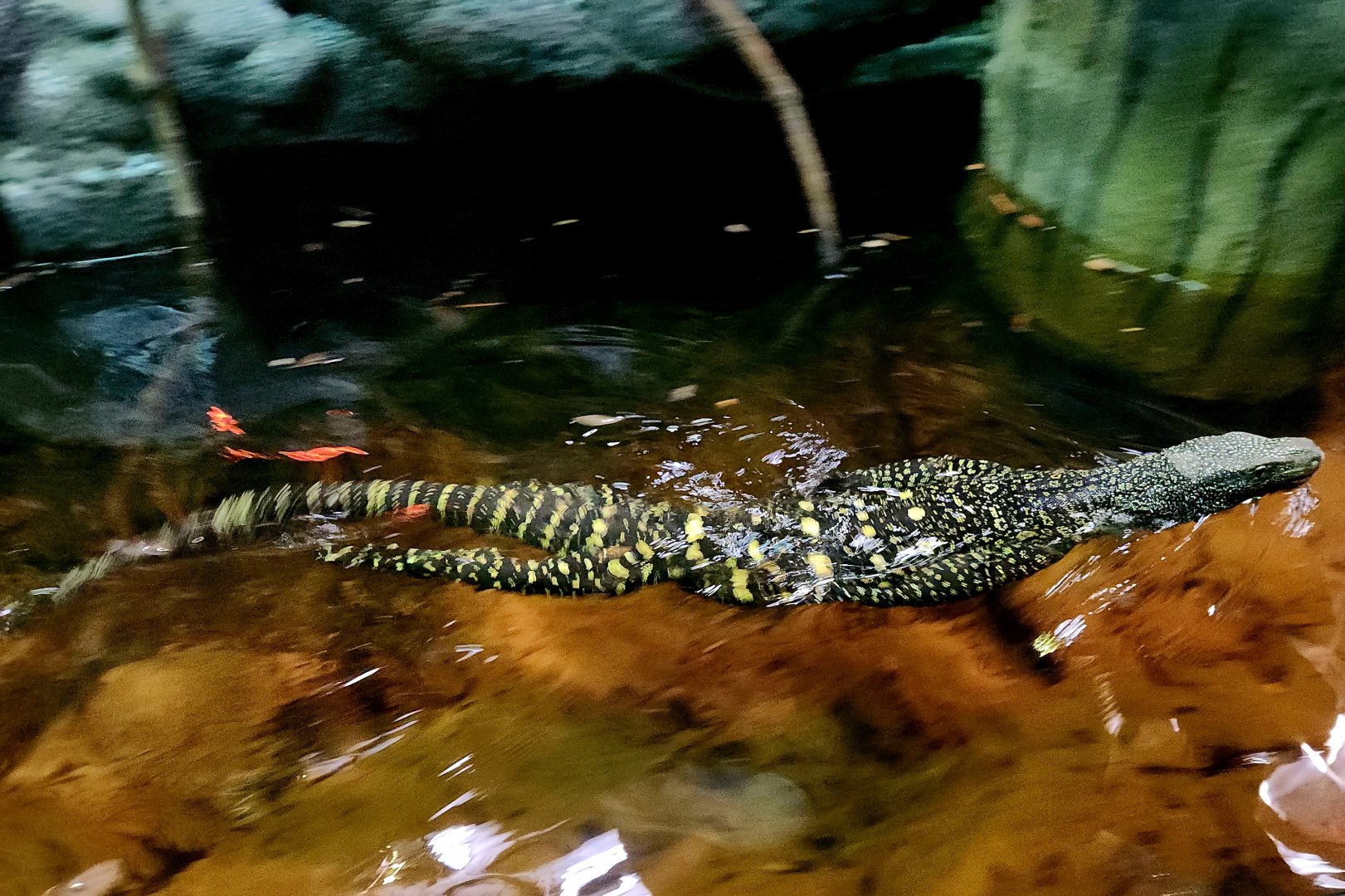
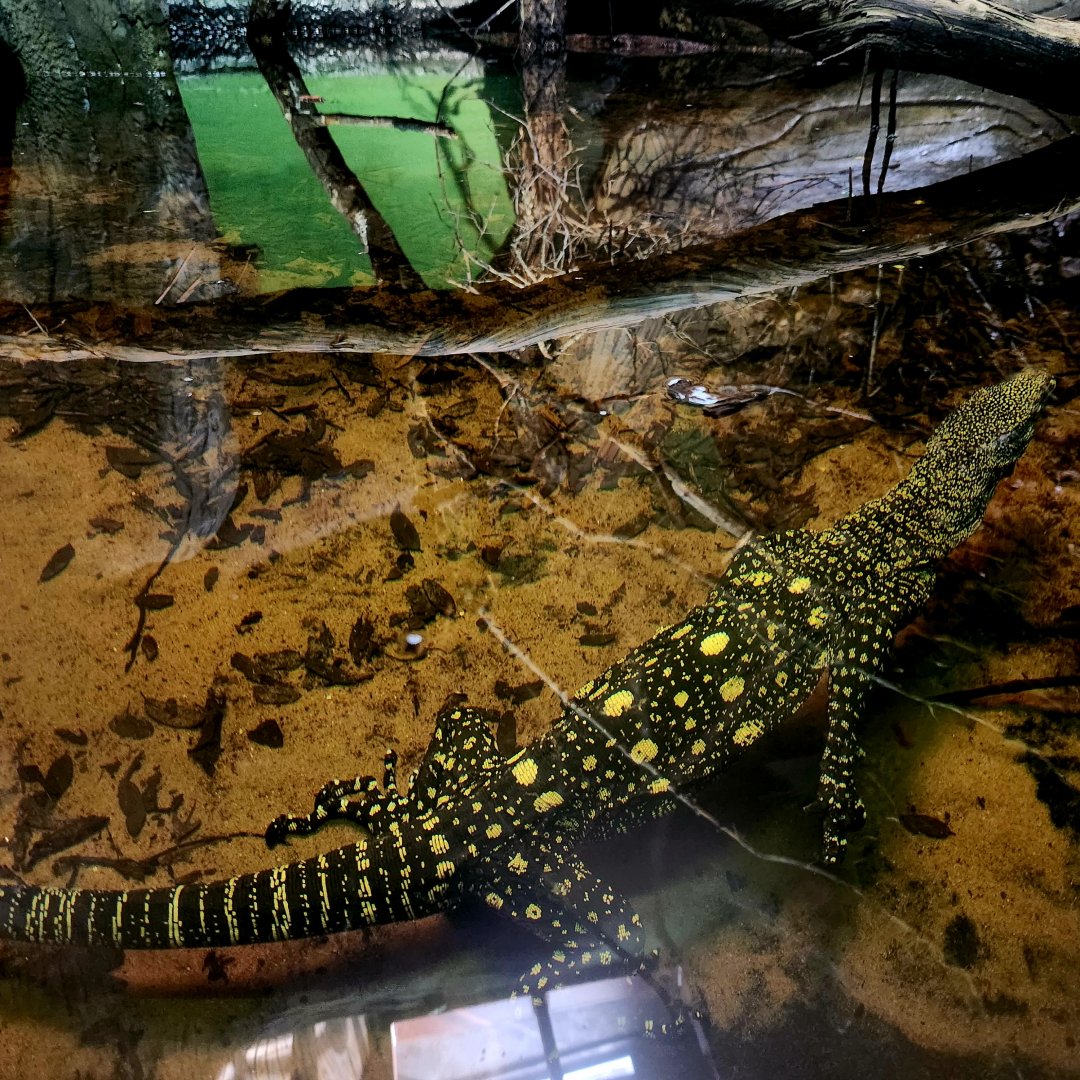
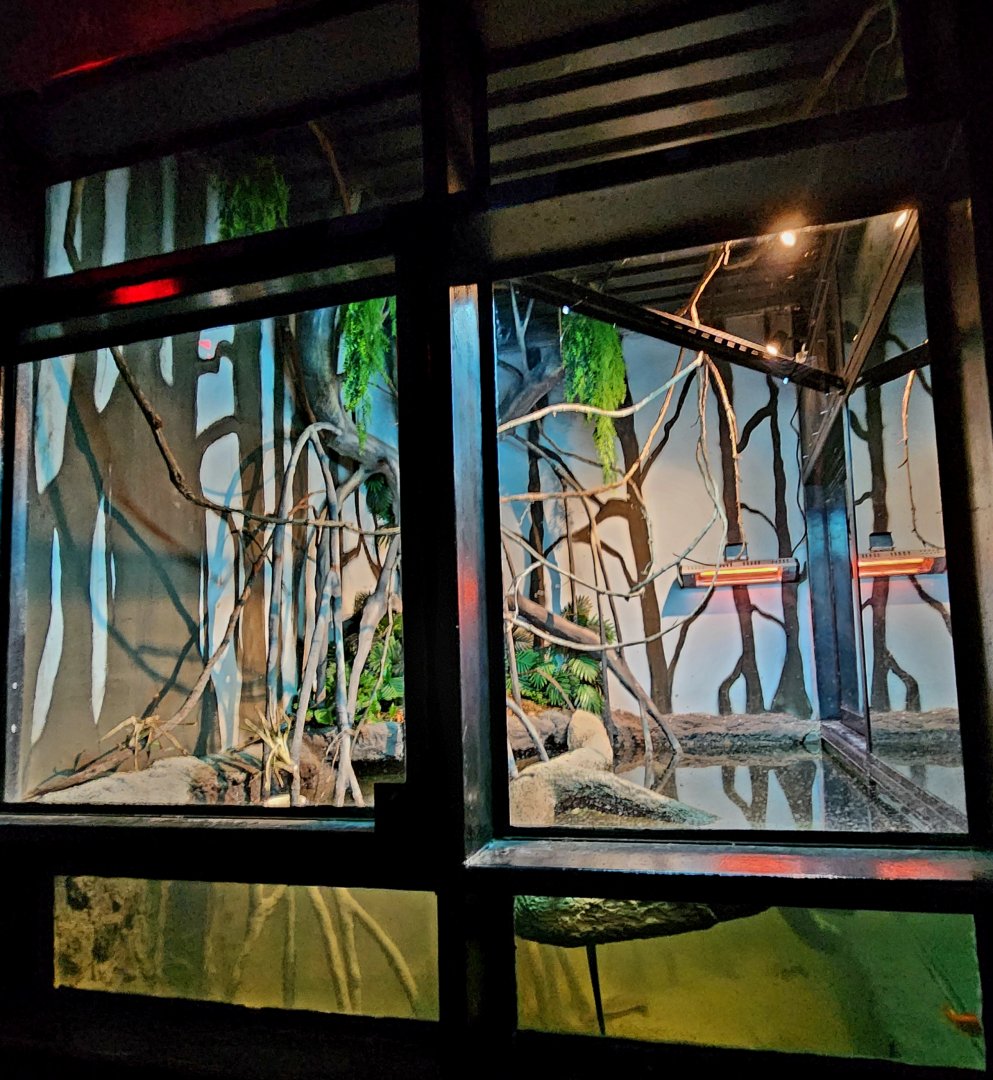
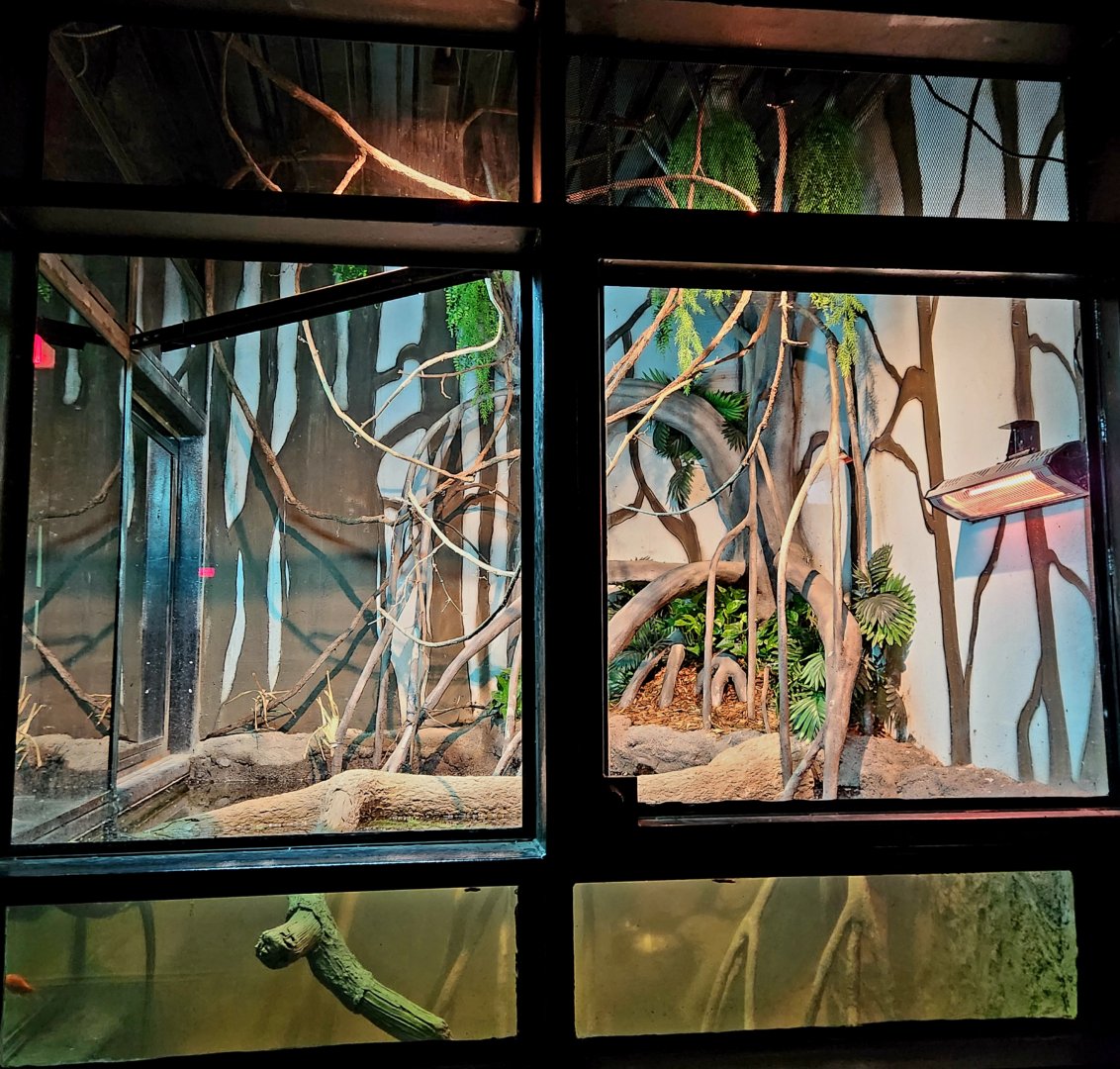
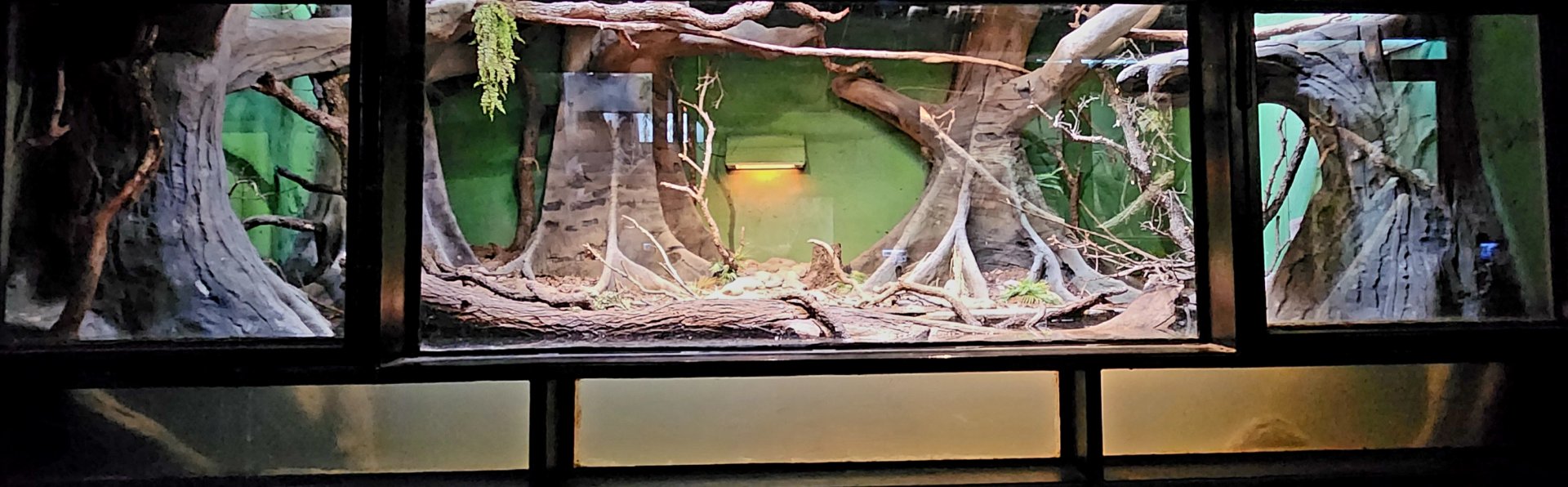
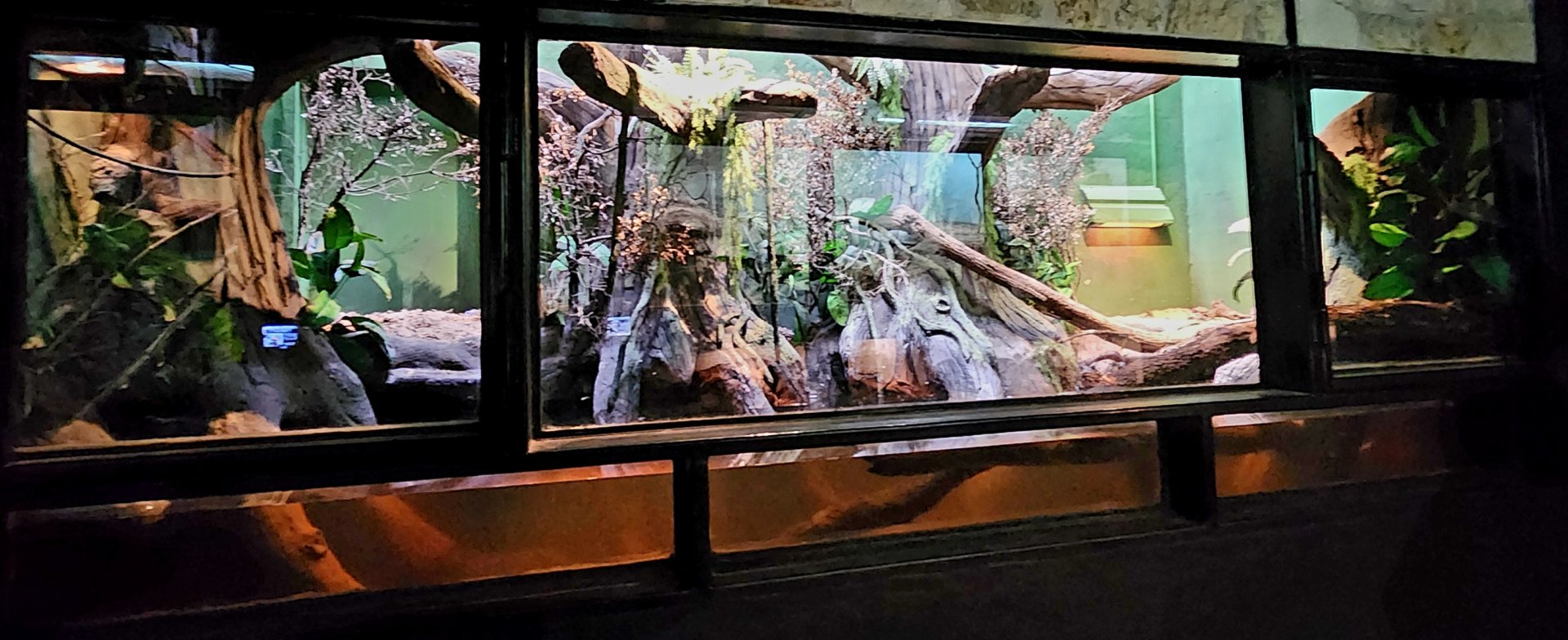
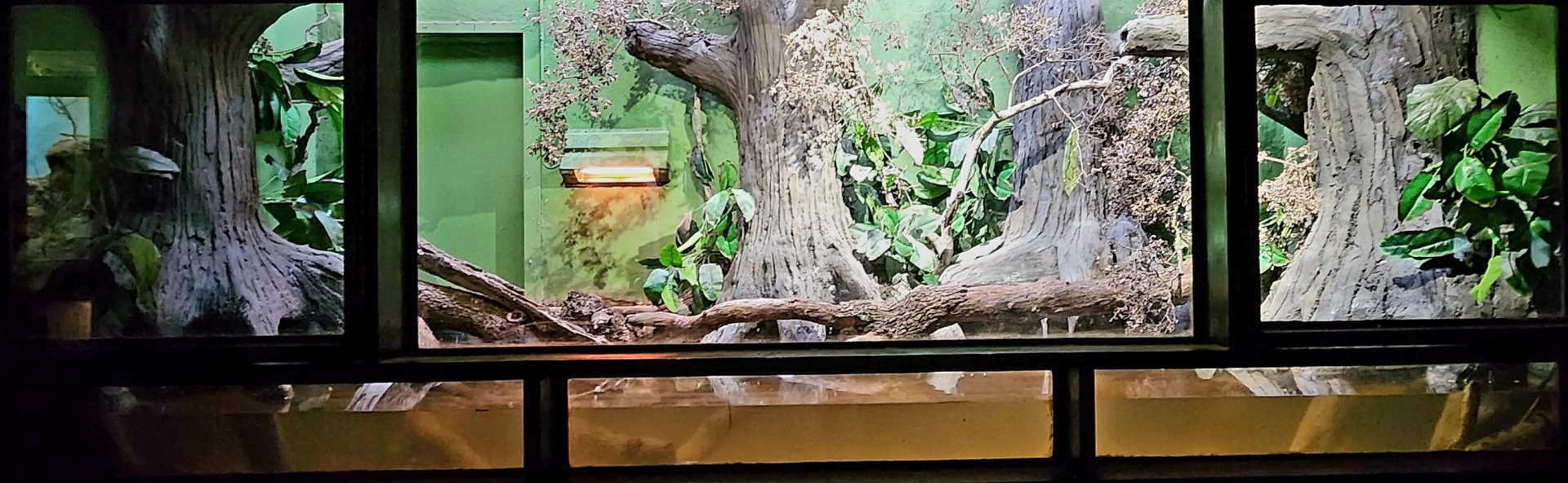
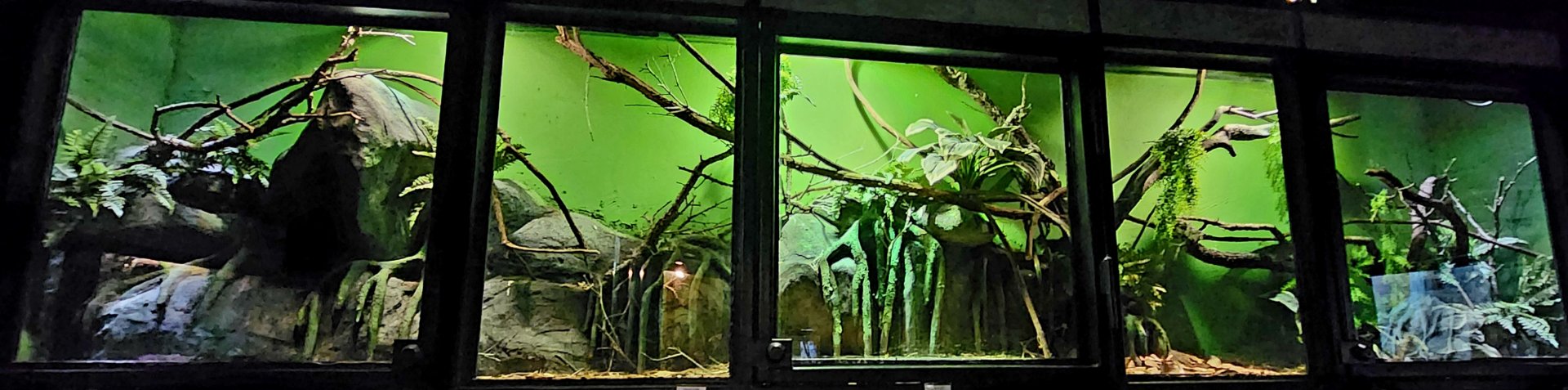
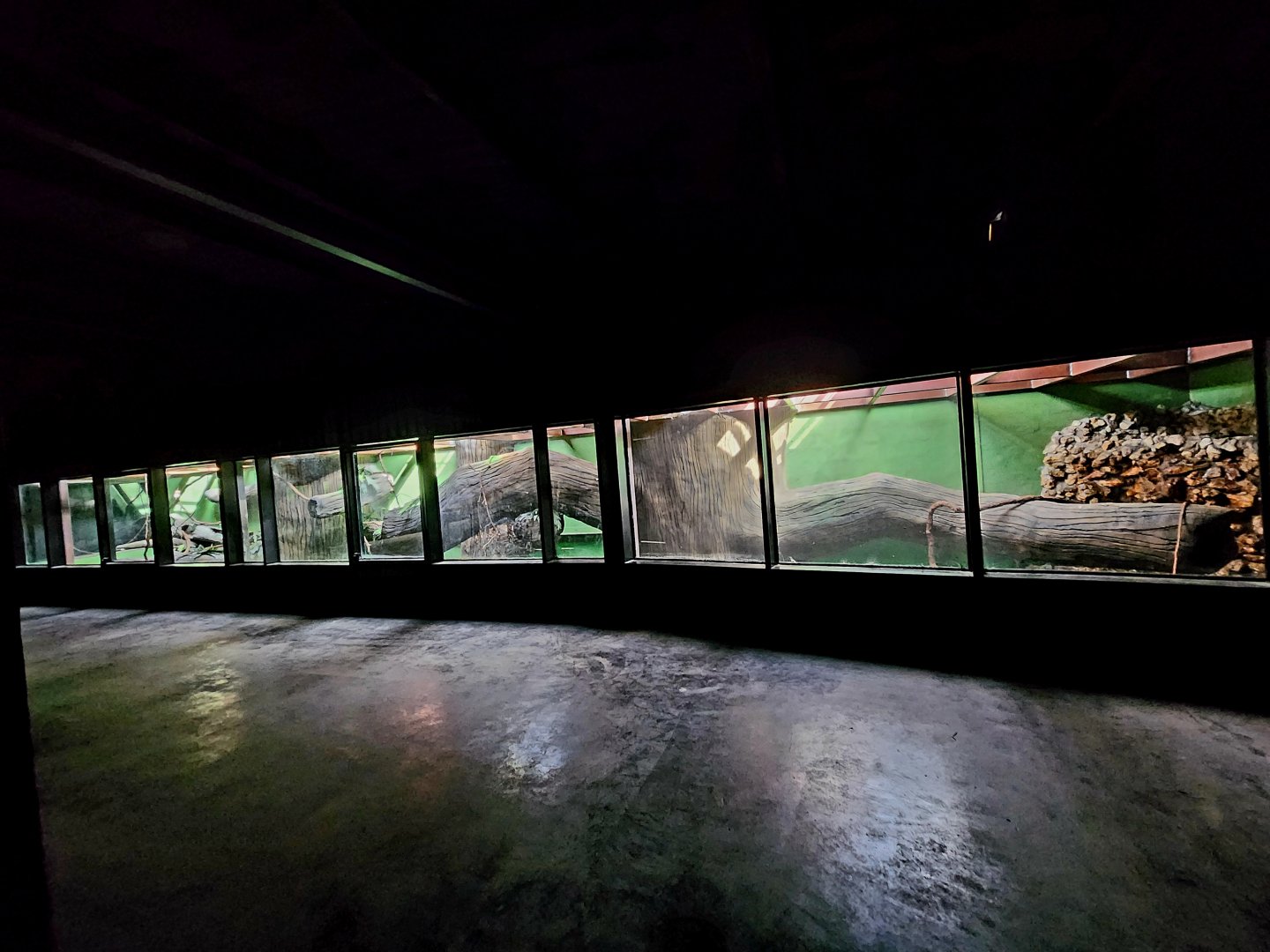
This is it. The exhibit I've hyped up on here for years now, one of the, if not THE biggest indoor reptile enclosure in the United States, even the world. I can confirm the dimensions on this enclosure being 60 feet long, 20 feet front to back at its widest, and a staggering 30 feet tall. The terrestrial portions of the exhibit are built on platforms, giving the aquatic turtles within access to nearly the entire exhibit's floorspace. The water stands roughly 3 feet deep, with a full-height waterfall providing circulation. Five massive artificial trees were constructed with an armature of steel pipes, wrapped in lathe wire, coated in concrete, carved, and painted. At one point, the plan was to incorporate sheets of roofing metal onto the tops of the branches to provide extremely hot basking areas, but unfortunately that didn't prove possible. Plenty of natural branches, shrubbery, and foliage provide additional texture throughout the exhibit. UV-penetrating skylights provide plenty of natural lighting, which seems to be a major key to breeding the species in captivity. Between the height and the natural lighting, this enclosure is PERFECT for eventually breeding Crocodile Monitors - a feat that's still only been accomplished a few dozen times at most. They've gotten 2 infertile eggs from their female so far, so fingers crossed.

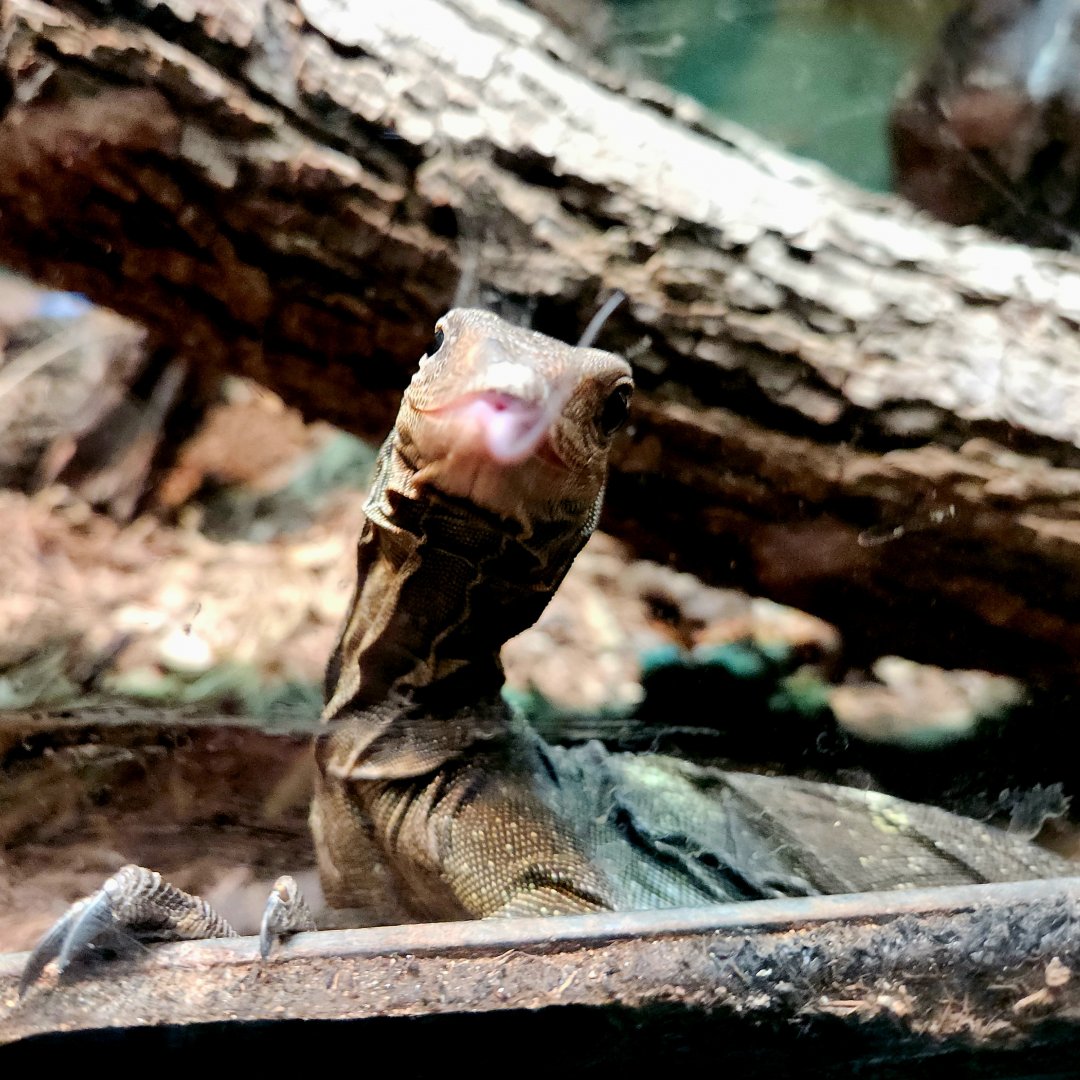
As far as animals, the stars of this exhibit are a 2.1 group of Crocodile Monitors (Varanus salvadorii). The large male is every bit of 9' in total length, while the smaller male and female are roughly 6'-7'. The amount of different behaviors seen in these animals during just a single day was astounding. While these animals are powerful swimmers, they rarely get the chance to showcase this in captivity - here, they swim 60 feet in a single stride. I got to witness the female jump from 20+ feet in the air, where she crashed down into the water and swam off as if nothing happened. On one of my stops at the exhibit, a male was napping underwater for at least 10 minutes.

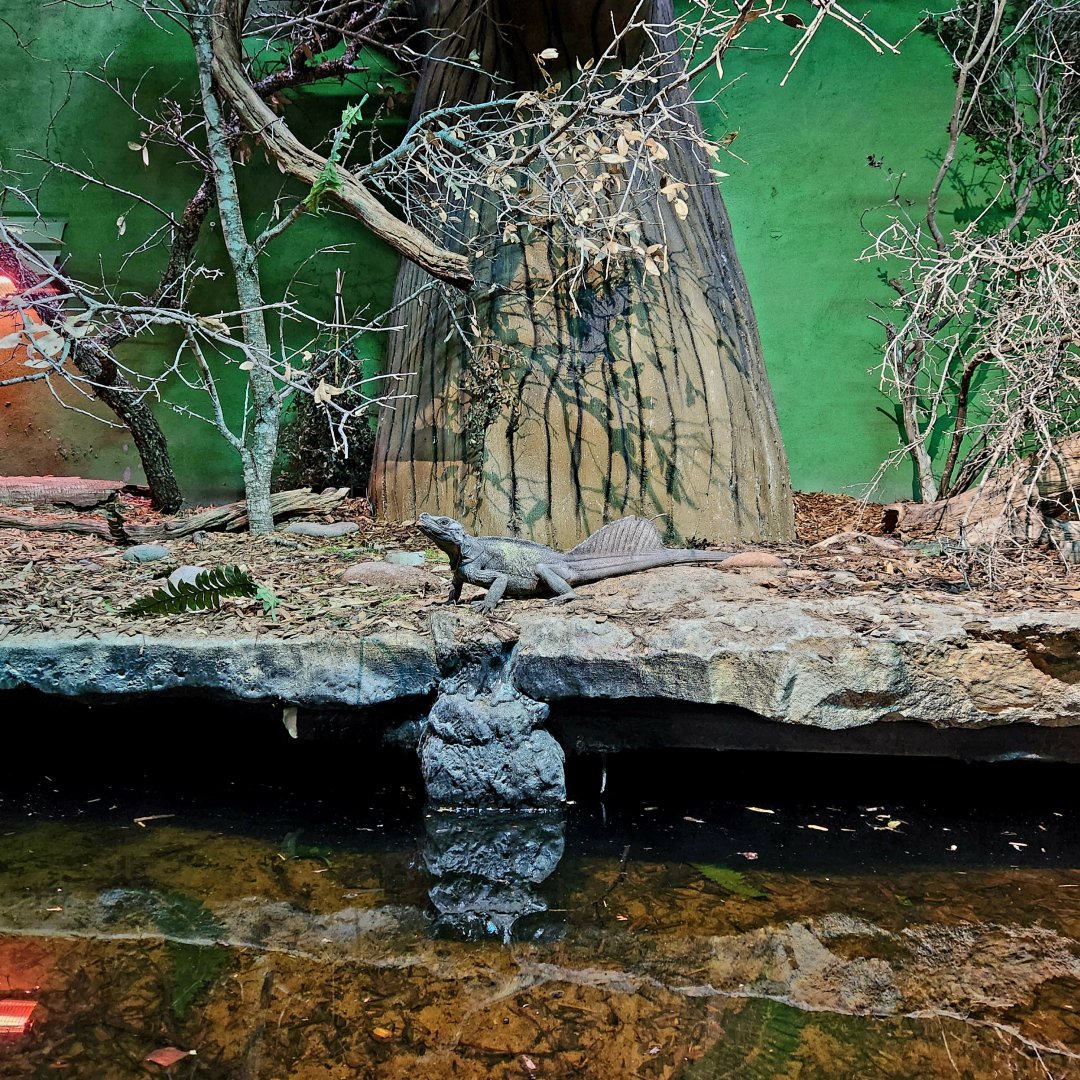
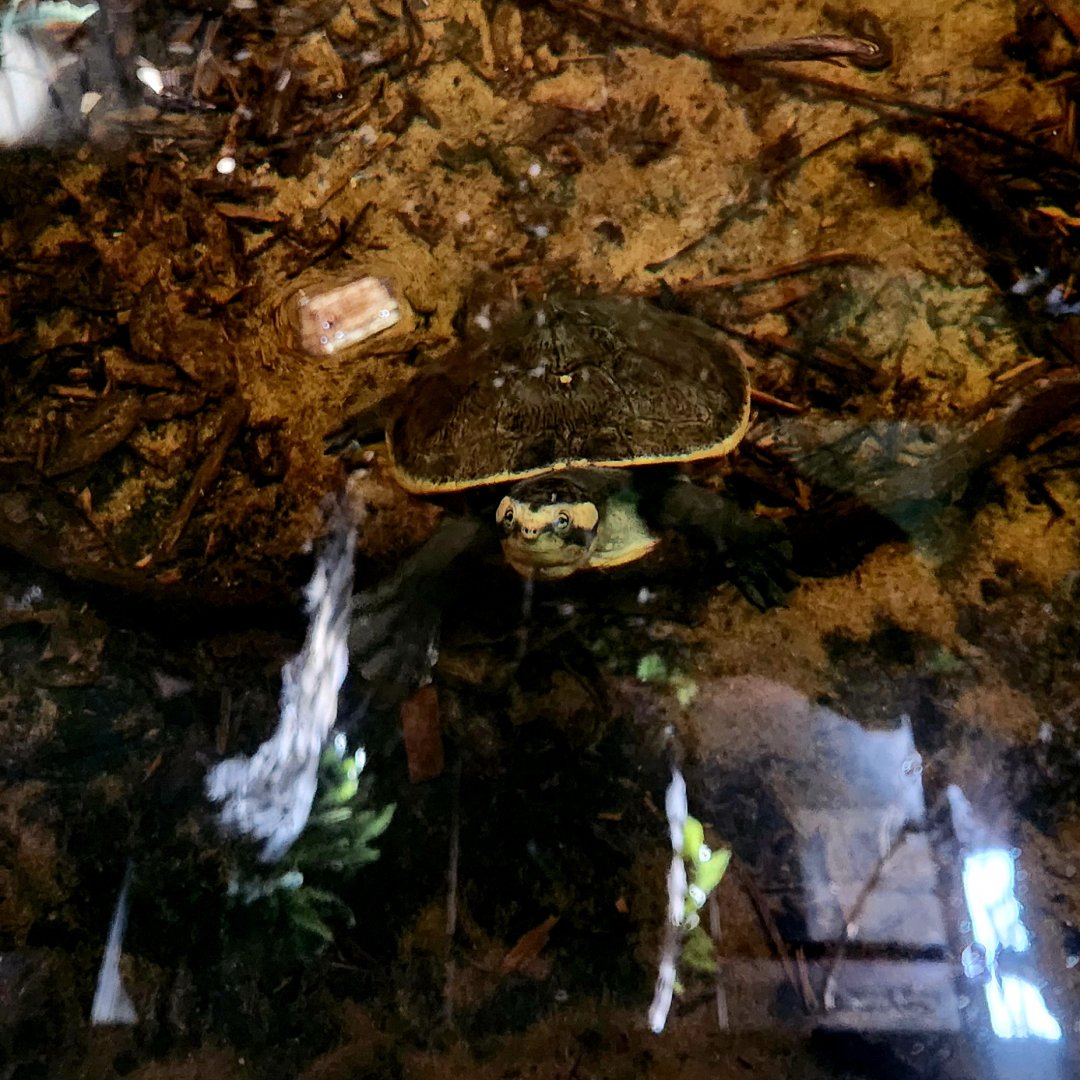
Crocodile Monitors aren't the only species to be found here - currently, they share the space with a group of Philippine Sailfin Lizards (Hydrosaurus pustulatus), a Fly River Turtle (Carettochelys insculpta), and Red-Bellied Short-Necked Turtles (Emydura subglobosa). Surprisingly and delightfully, the monitors have played nice with the sailfins. I missed the photo, but caught one of the sailfins basking on top of the biggest male monitor. According to their head keeper, that's a pretty regular occurrence. I would imagine the difference in prey items and of course the exhibit size play a large part in their compatibility. To date, I don't know of any other facility to ever mix Crocodile Monitors with any other species (except other monitors temporarily for hybrid breedings). Shoot, a lot of the time housing even two individual croc monitors together ends in one or two deaths.

As far as changes I'd personally make, I would love to see the sailfins swapped for H. amboinensis, which is reported from New Guinea. While they aren't Papuan natives, I think the planned Flying Lizards (Draco sp.) would still make for an amazing addition, with this being one of the only exhibits of its kind that could feasibly sustain them and their gliding abilities. They are native to Southeast Asia, so not too far off geographically. There is definitely room for more turtles in this display, and the Red-Bellied Short-Necks would be moved to a later exhibit in my "master plan". Instead, New Guinea Snapping Turtles (Elseya novaeguineae) would be added here, alongside the current surplus Fly River Turtle and potentially New Guinea Giant Softshells (Pelochelys bibroni). While Freshwater Crocodiles (Crocodylus johnstoni) were considered for this exhibit at one point, I think they would prove to be too aggressive with the other inhabitants, especially given how much they all use the water.

Talking about fish for this exhibit, one comes to mind immediately - Archerfish (Toxotes sp.). Watching them shoot crickets off of the branches overhanging in this exhibit would be amazing, and they'd be easily visible hanging out at the surface. The water level doesn't come up to the glass in this exhibit, so Rainbowfish (Melanotaeniidae sp.) might go unnoticed unless they are one of the largest species. Jardini Arowana (Scleropages jardinii) would make for another great surface-dwelling fish to round out this exhibit.

Enough talk, enjoy the pics. This post won't include any other enclosures, they'll come next.

 
Exhibit 14: Rio Orinoco
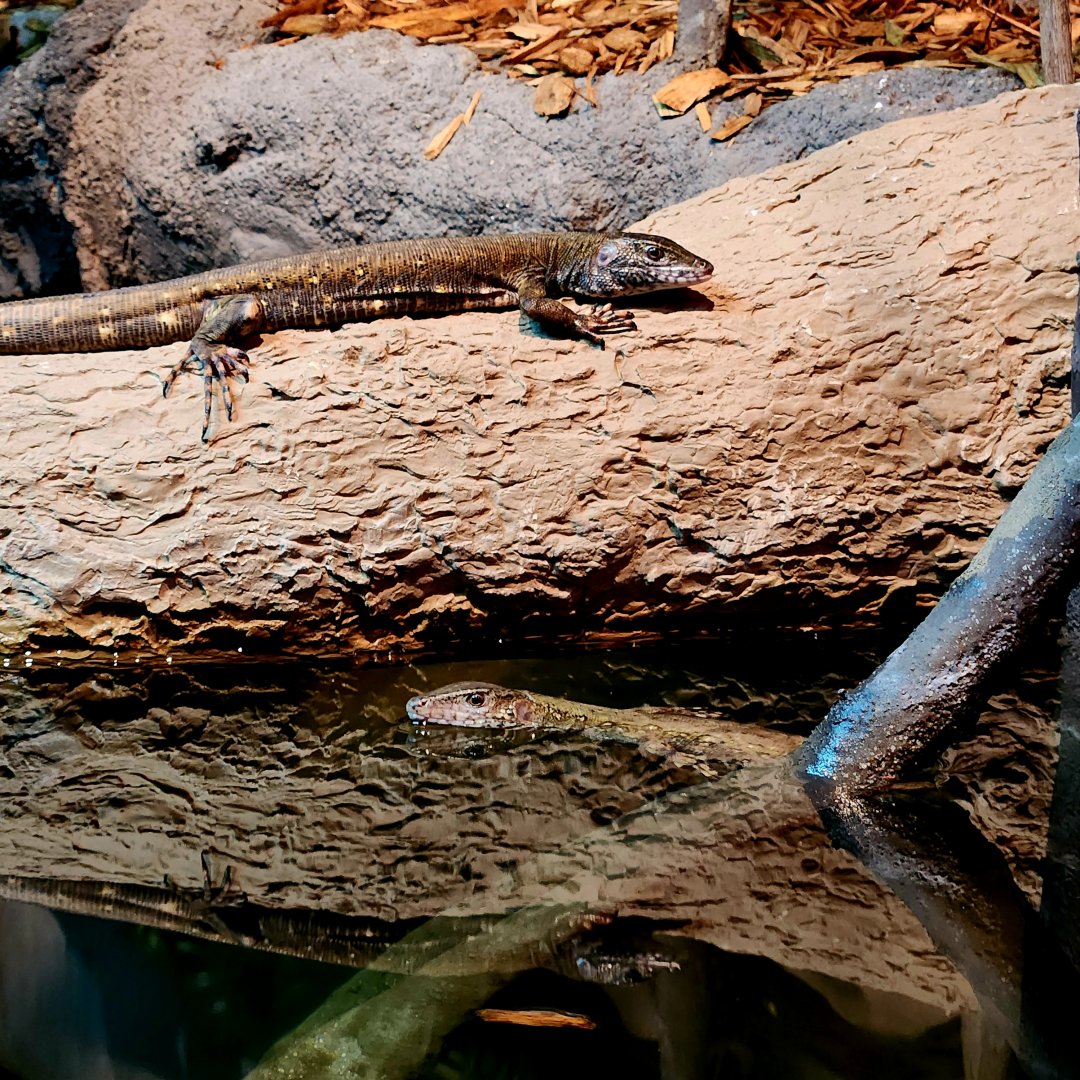
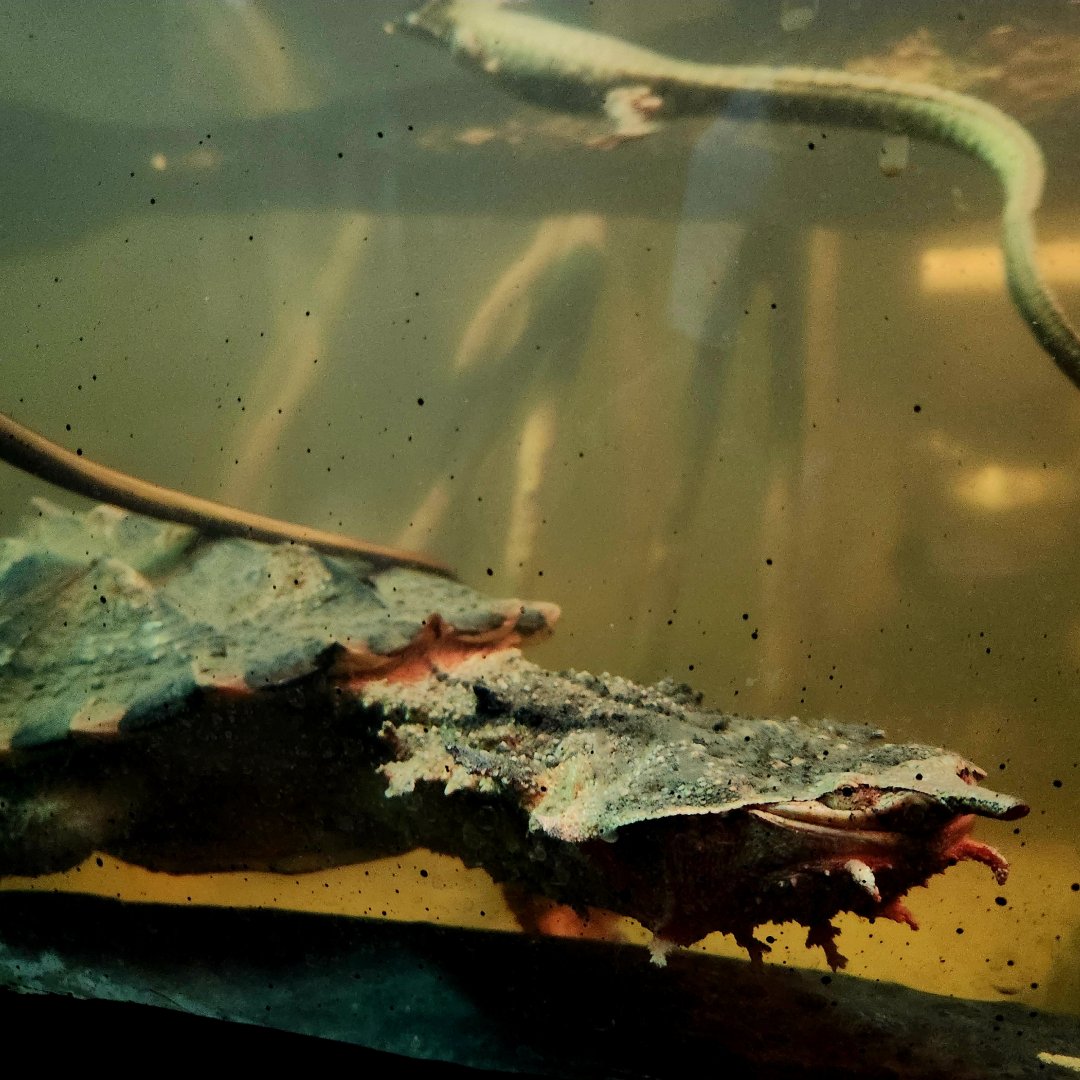
A solid contender for my top three favorite exhibits here, I've posted about this one before as well. This (and all others from here out, except where noted) is a single-story exhibit, but still probably 10 feet in every direction. The exhibit features several artificial tree root structures butting into the water, with the trees reaching to the top for the lizards to climb. The Crocodile Tegus (Crocodilurus amazonicus) are the stars of this exhibit, as they're the only ones on display in the USA for quite some time (second ones ever), and they are some charming little lizards. Imagine a 2-3 foot caiman lizard that almost never sits still. These animals were actually grown from babies produced in captivity by Quetzal, and there is a gravid female on display meaning that F2 CBB Crocodile Tegus could be around the corner. Another star of this exhibit is the Orinoco Mata-Mata (Chelus orinocensis), a rarer relative of the fimbriatus species. There are a few morphological differences between the two species, namely the Orinoco version having a rounder shell. A healthy-sized group of Red-Headed Amazon River Turtles (Podocnemis erythrocephala) round out the mix, making this a beautiful, attractive, and rare trio of species. I'd have a hard time suggesting herps to add here, as I think the stocking is truly perfect. Fish options are limited with the Mata-Mata, but some readily-available mid-sized Characins would add activity without being missed if they were to become food. Species like Spotted Silver Dollars (Metynnis lippincottianus), Redtail Hemiodus (Hemiodus gracilis), and Serpae Tetras (Hyphessobrycon eques) come to mind. A schooling catfish like Corydoras aeneus might assist with detritus clean-up, while Ancistrus sp. are useful for algae.


Exhibit 15: West Africa
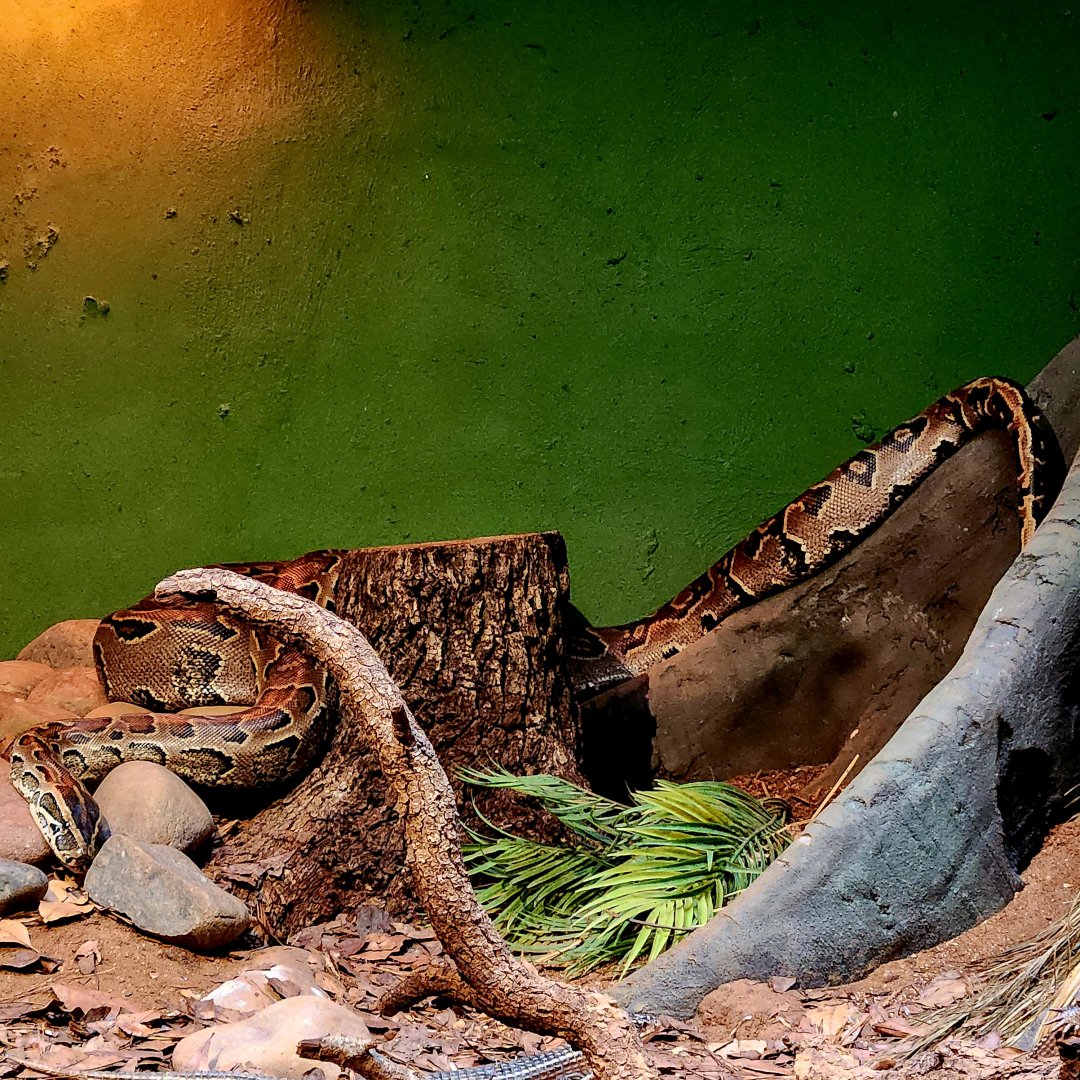
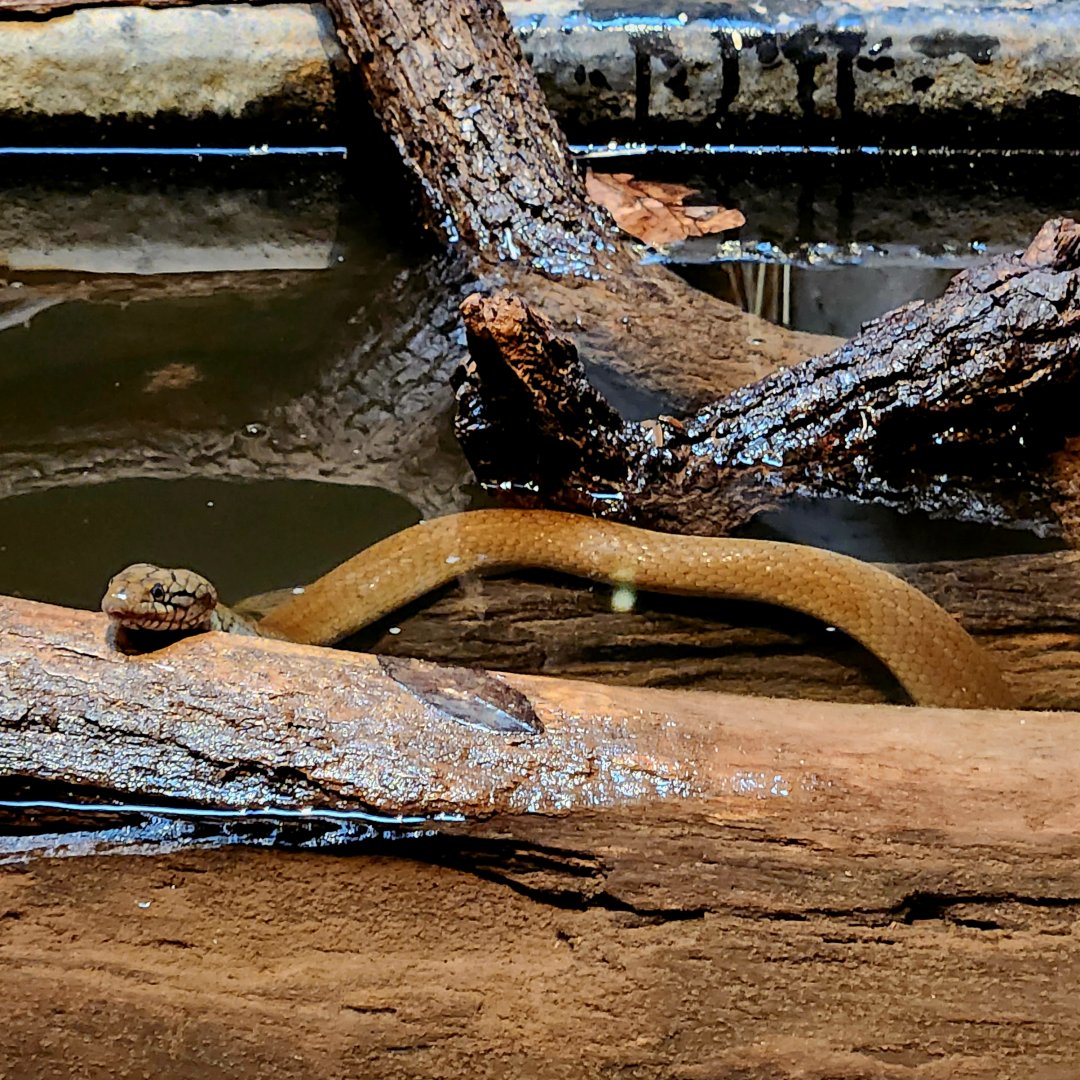
One of the larger exhibits along the southern wall, I'd call this one about 20 feet by 10 feet by 10 feet. It is built similarly to the bottom levels of the previous two-story exhibits, with a large water feature spanning the entire front. Several large artificial trees throughout are designed so the inhabitants can rest atop them - it's not too often that you get to see a snake as large as an adult African Rock Python (Python sebae) scale a tree to take a nap. While the terrestrial portion of the exhibit is shared by Sudan Plated Lizards (Broadleysaurus major), the aquatic portion includes a species I doubt most have seen - a group of four Smith's African Water Snakes (Grayia smithii). These are a pretty interesting species, rarely found in captivity and I'm not aware of them being kept on display at any other facility. Roughly a third of this snake's length is tail, which I find pretty cool. I distinctly remember Mambas (Dendroaspis sp.) being planned for here at one point, not sure what happened there - my guess is an exhibit this size with Mambas got... interesting to say the least. Regardless, the current mix is impressive and active. Another small species of plated lizard might make a nice addition, as would a smaller turtle of the Pelusios genus. A small selection of West African cichlids like Hemichromis sp. would finish off this exhibit nicely.


Exhibit 16: Central Africa
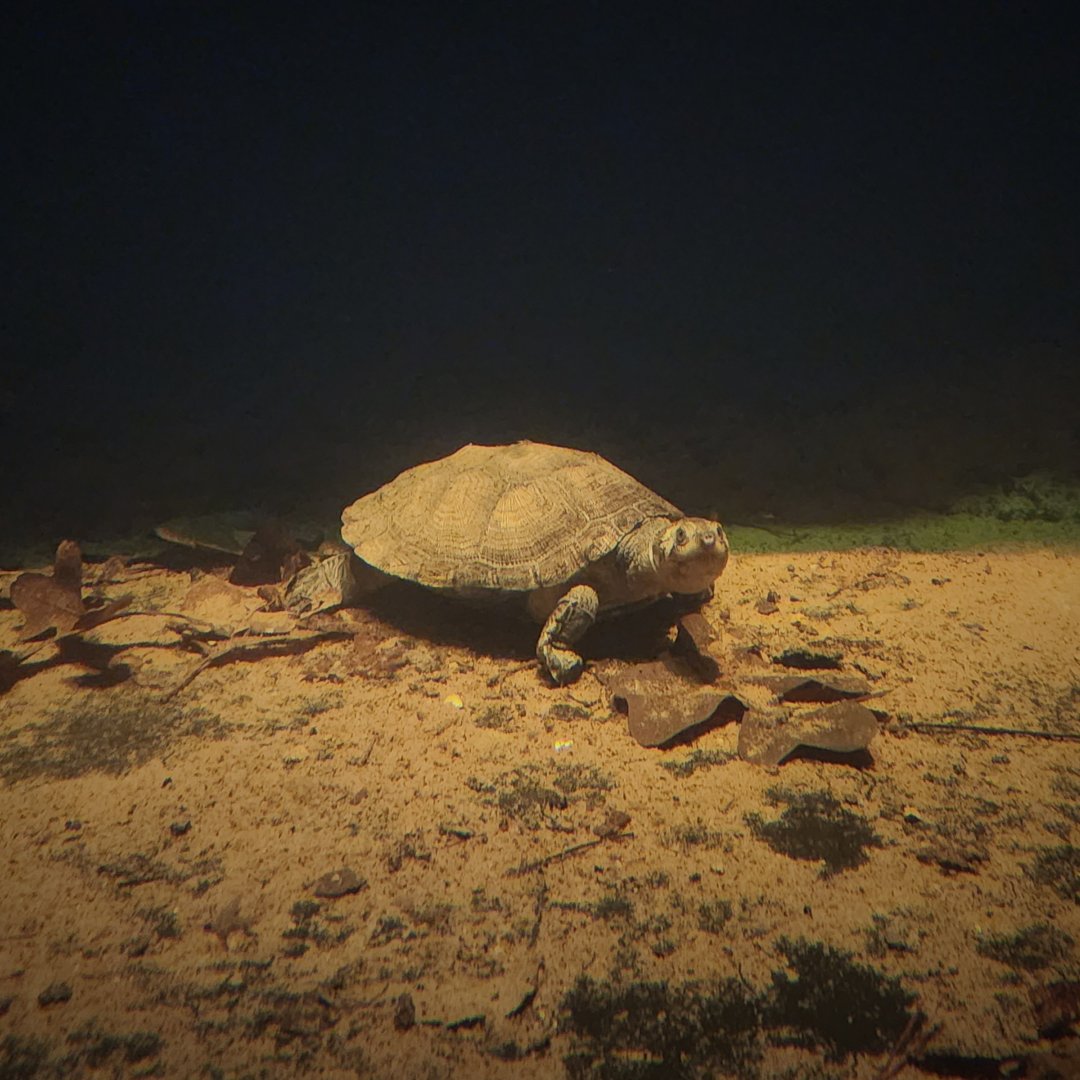
Another large African exhibit along the southern wall, this one also measures roughly 20 feet by 10 feet by 10 feet, with a slightly larger water feature. This enclosure is set aside for a lone female Dwarf Crocodile (Osteolaemus tetraspis), alongside African Helmeted Turtles (Pelomedusa subrufa) and a Nile Softshell (Trionyx triunguis). This mix works quite nicely, and I was surprised at just how well the turtles can hide in this exhibit in particular. It's built in a similar style to the Crocodile Monitor exhibit, with the terrestrial portions built on a large platform so that the turtles have access to nearly the entire floorspace. While the top of the enclosure is beautifully designed and planted, there is no activity, with the crocodile being the only one to frequently bask. It's begging for a small, fast species of lizard - any number of Agama species would fit well. No need to get complicated with the fish given all the predators, the same Hemichromis sp. kept in the previous exhibit would work fine.


Exhibit 17: Suriname
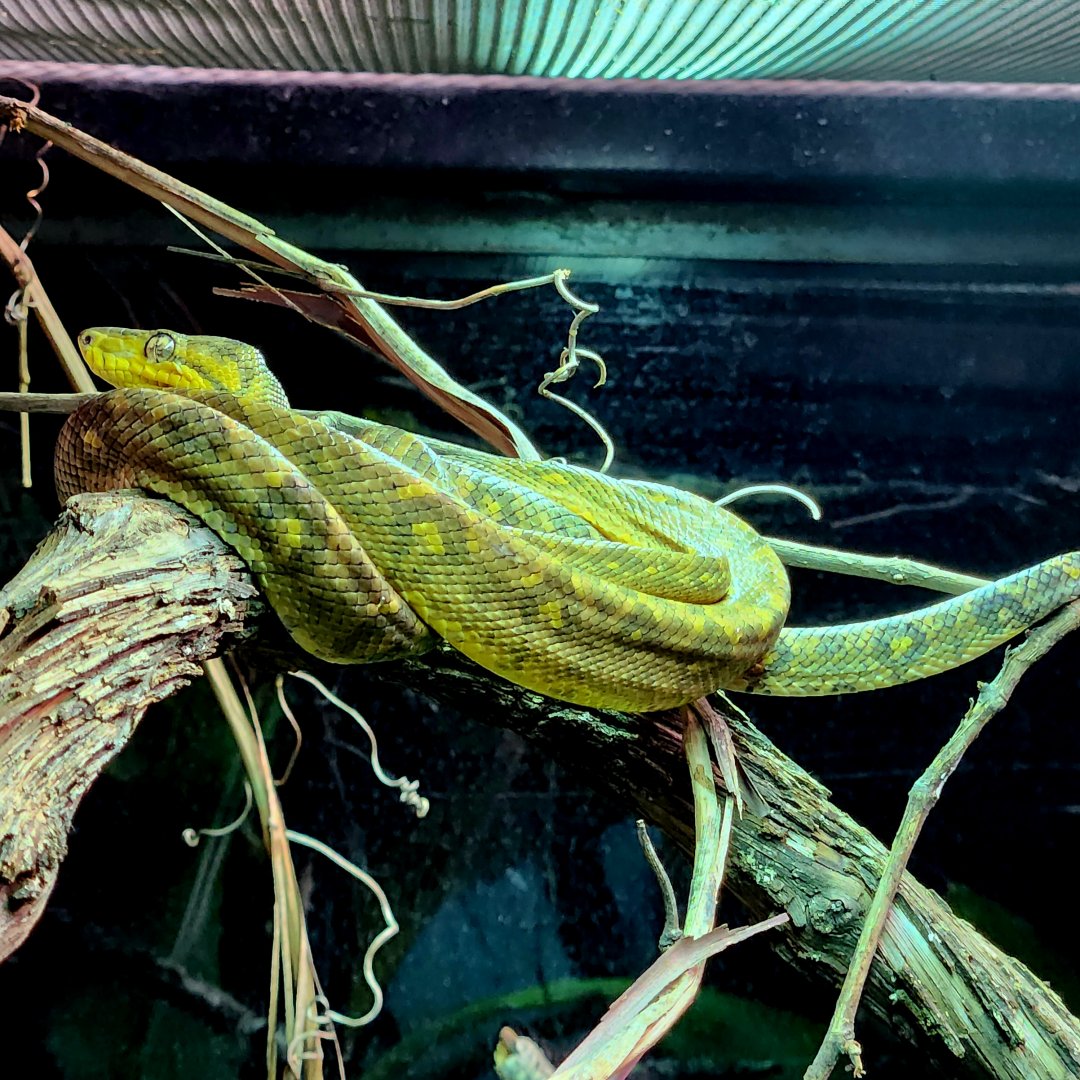
This is the largest Emerald Tree Boa (Corallus caninus) exhibit I have personally seen, reaching to the ceiling of the lower story - probably 10 feet. The base of this exhibit is probably 4 feet square, similar to the tree monitor exhibits. Plenty of live plants make this exhibit incredibly lush, and in typical Emerald fashion they spend their time on the thinnest perch available to them. Unfortunately, this means the very top of the exhibit - something I would hope to see fixed with additional thin perching options at the lower levels of the exhibit. While no species share the exhibit currently, it's begging for frogs, like Dendrobates leucomelas or Phyllomedusa bicolor.


Exhibit 18: Venezuela
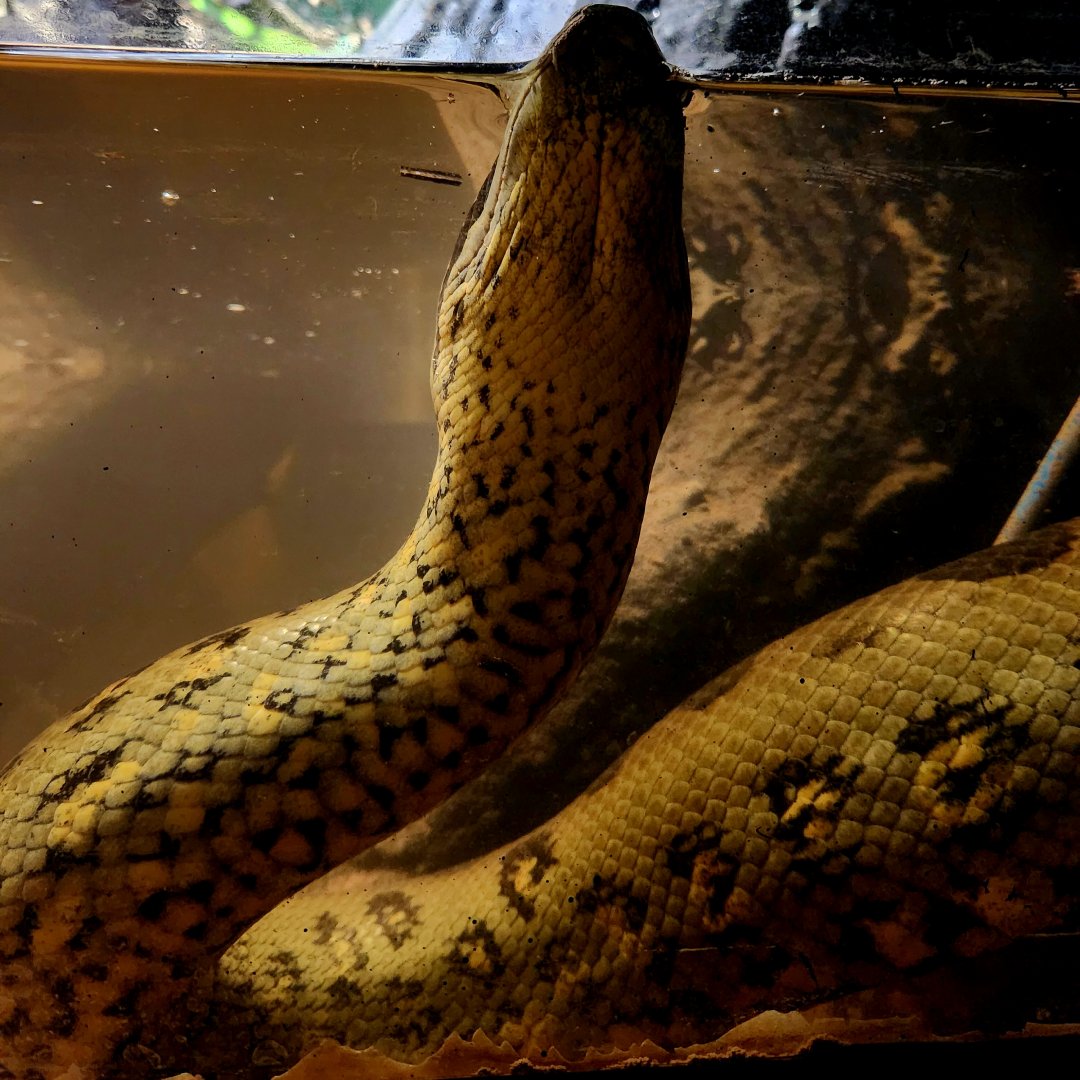
This exhibit is home to the zoo's Green Anacondas (Eunectes murinus), which includes one large female and an individual I'm not sure of. While it's quite nice, at the same 20-by-10-by-10-or-so dimensions as the previous few exhibits, this exhibit isn't as much of a stand out simply because Anacondas are often afforded large spaces in general. Still, the tree work is beautifully done, the plant choices are aesthetically pleasing, and the aquatic view is nice. It's begging for some Diving Lizards (Uranoscodon superciliosus), and an interesting aquatic community. Given this is the one of the top predators of the Amazon, it seems fitting to display them alongside Red-Bellied Piranhas (Pygocentrus nattereri) and Bucktooth Tetras (Exodon paradoxus) - a mix that has been successful at a number of institutions.

 
Exhibit 19: Komodo Island
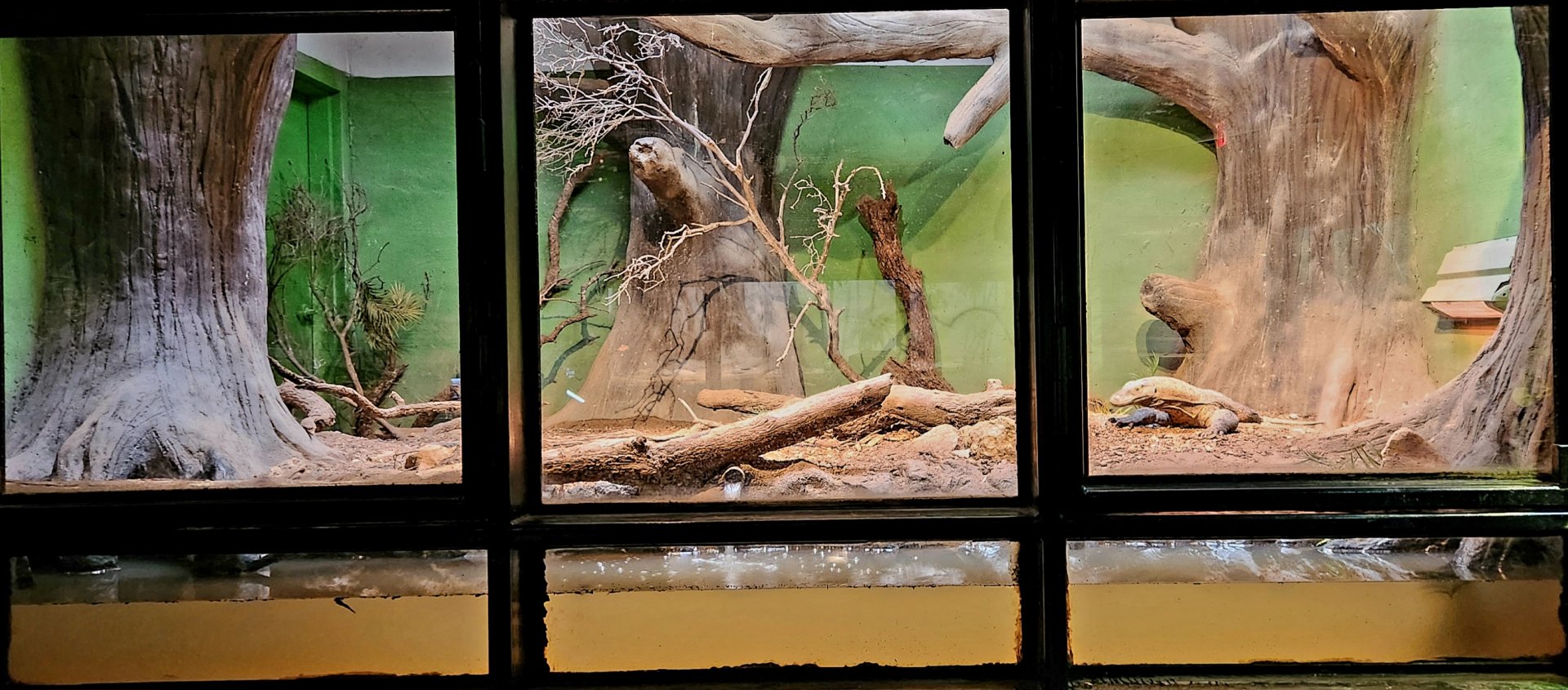
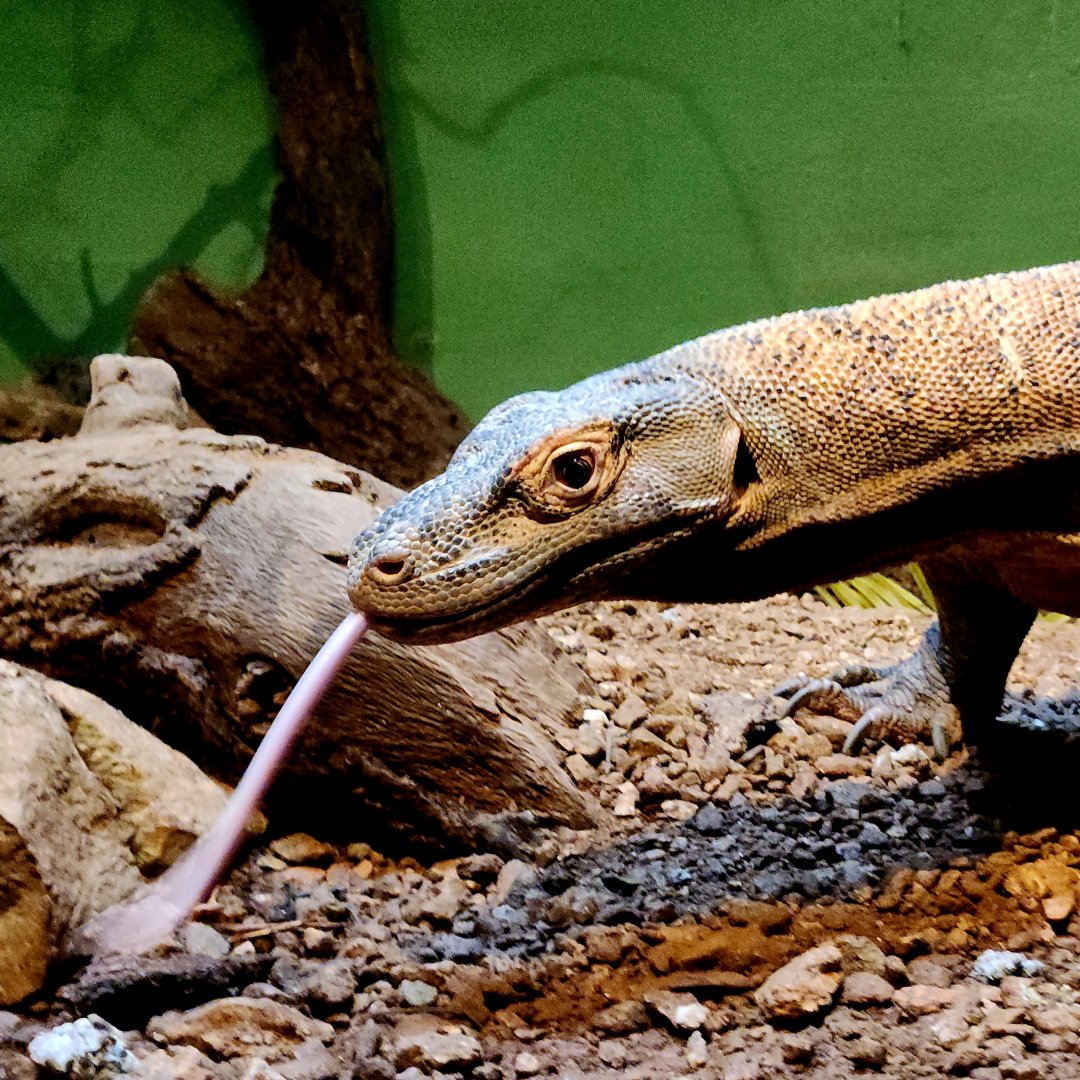
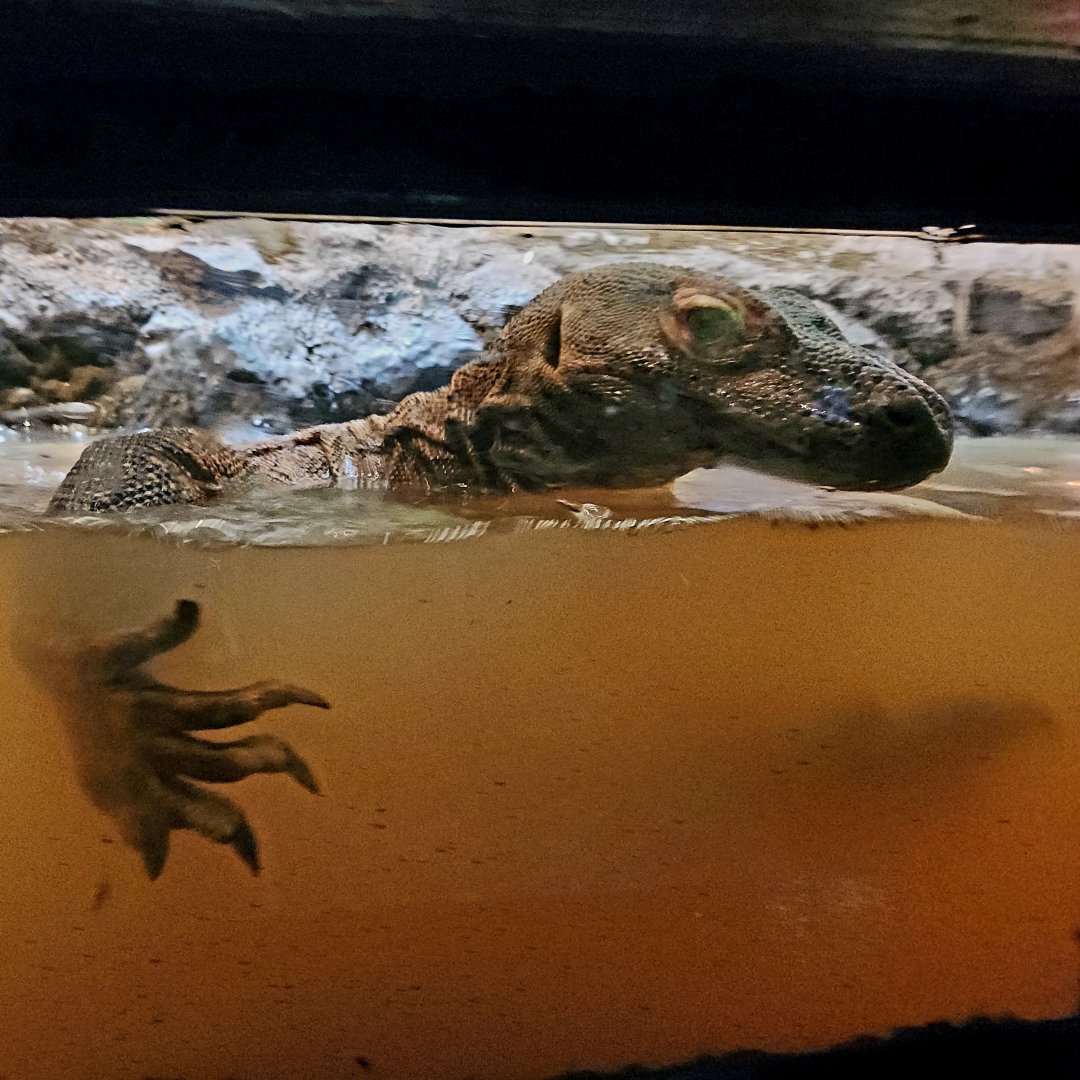
Another star exhibit at Reptilandia, the Komodo exhibit is spacious and includes the largest water feature I've ever seen for an indoor Komodo Dragon (Varanus komodoensis) exhibit. Their male, named Bumi, came from a parthenogenesis clutch, meaning his mother laid his egg without ever being fertilized by a male. He rotated through several zoos before ending up at Reptilandia, where he'll be for the rest of his lifespan. I know the crew hopes to make that as long as possible, taking him on regular walks around the entire facility and challenging him physically and mentally everyday. You can tell a lot of work has been put into socializing this animal, as he came up to the glass within seconds of me first walking up to his exhibit in the morning. Lots of long side tongue flicks, some curious head nods, and a few moments later he was surfing the front glass at the door thinking I would let him out. Not often that you get to see a Komodo full-on swim, yet it's just another day at this place. Nothing that I would change about this exhibit - it's perfect for its inhabitant, and needs nothing else.


Exhibit 20: Empty
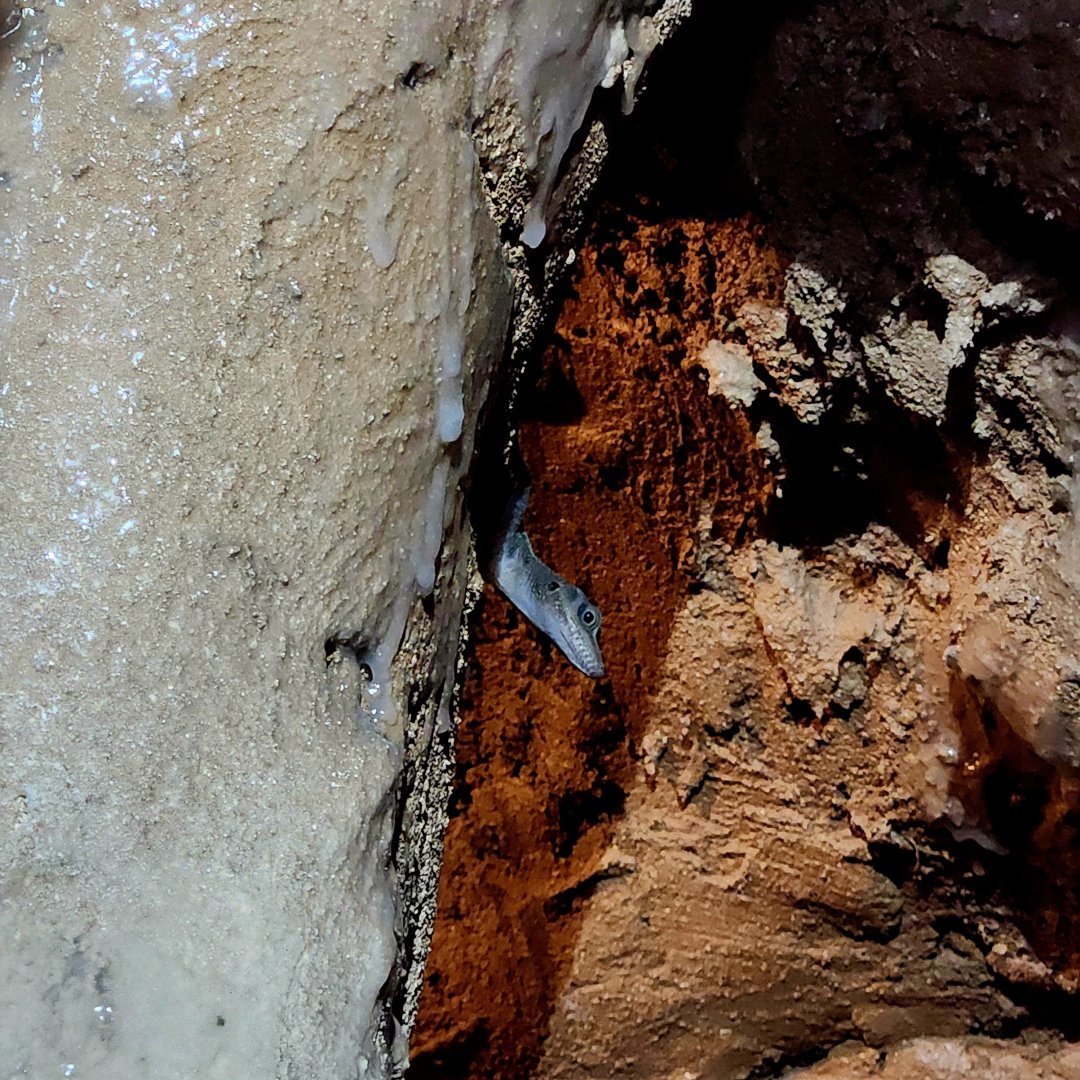
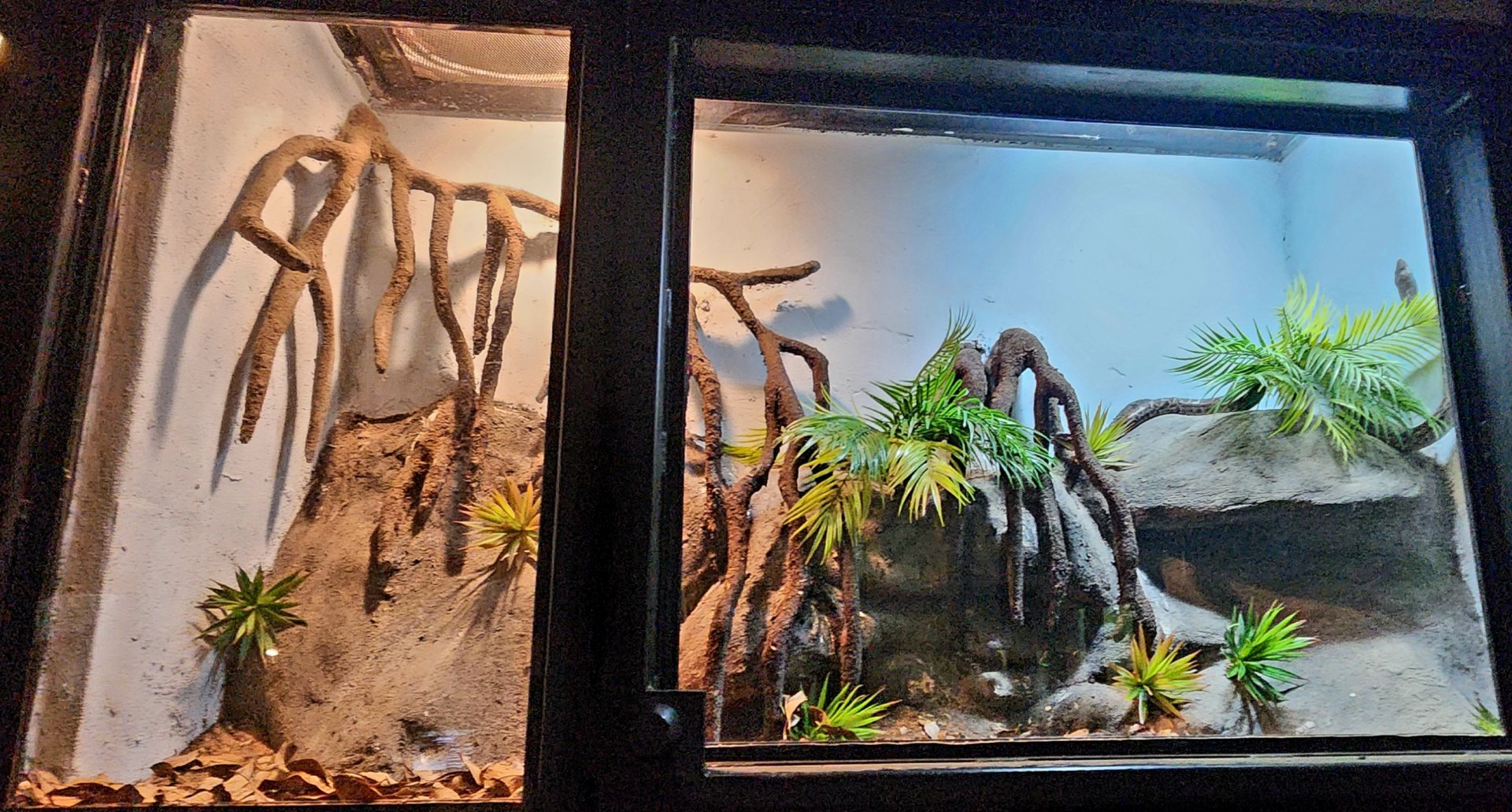
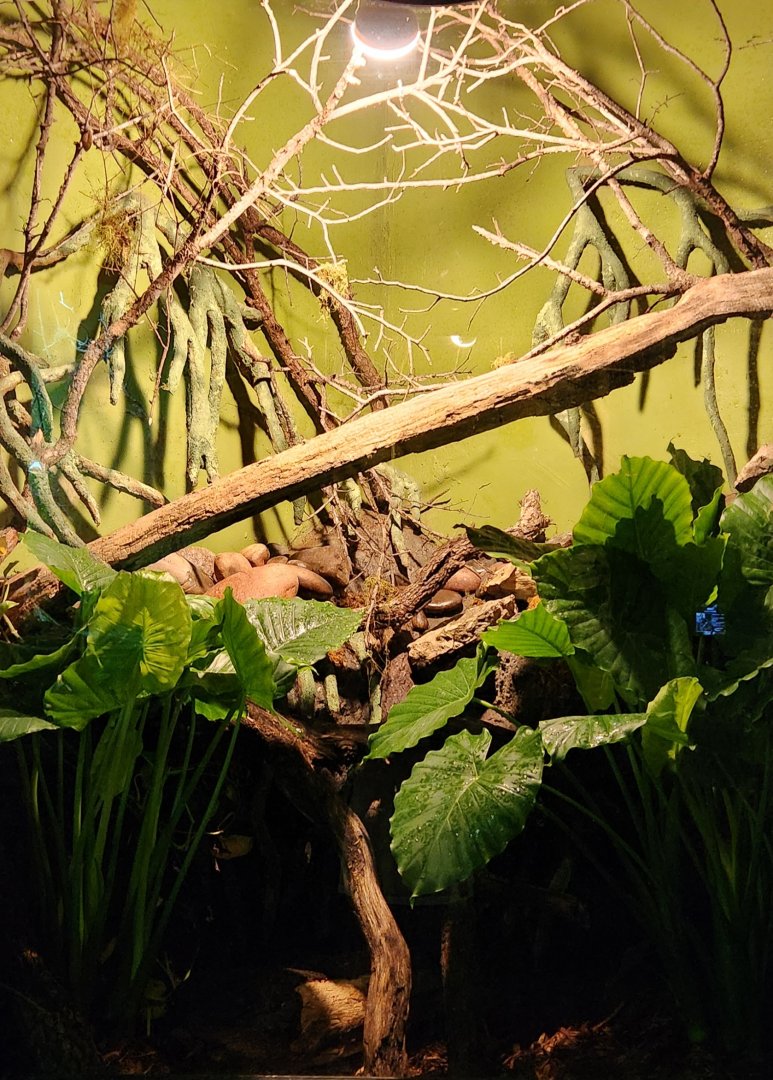
Not technically empty, this exhibit holds some species of Anolis, unsure of which one (I only saw one individual for a few seconds). Without knowing what's really in here, it's a nice exhibit in general, but another plant or two wouldn't hurt. This is a smaller exhibit, maybe 3 feet by 2 feet by 3 feet.


Exhibit 21: Singapore
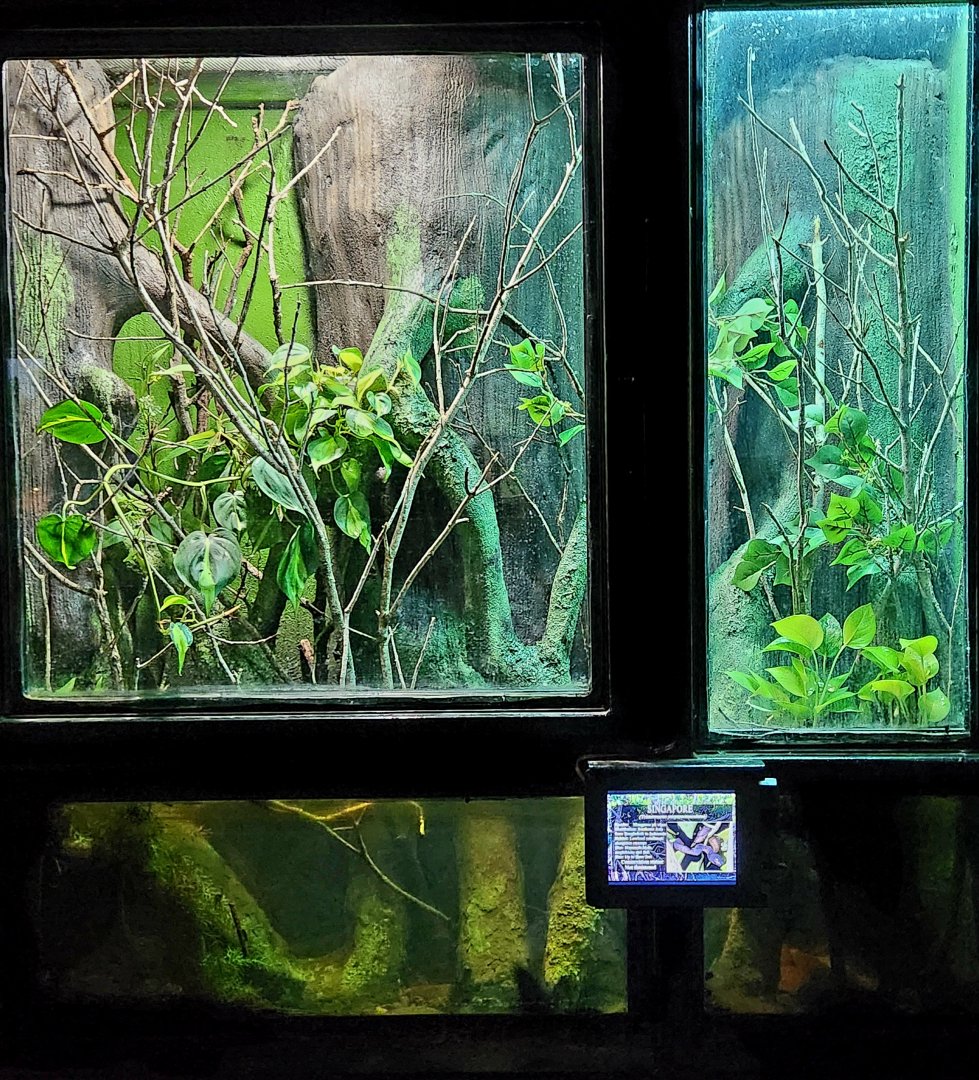
This is the first of two paludariums for Southeast Asian arboreal pit vipers along this wall, and serves as a beautiful representation of a mangrove forest off the coast of the island. The exhibit is mid-sized, probably 4 feet by 2 feet by 4 feet. Unfortunately the Mangrove Pit Vipers (Trimeresurus purpureomaculatus) never made an appearance on my visit, but they are a beautiful dark maroon to purple-colored viper. I love the way the artificial work blends with the natural foliage, it feels very authentic - and the root system underwater looks amazing as well! Other inhabitants in here could include Vampire Crabs (Geosesarma dennerle), a charismatic little Southeast Asian species that inhabits very similar habitats, and Chili Rasboras (Boraras brigittae), tiny fish that mix well with the crabs.


Exhibit 22: Thailand
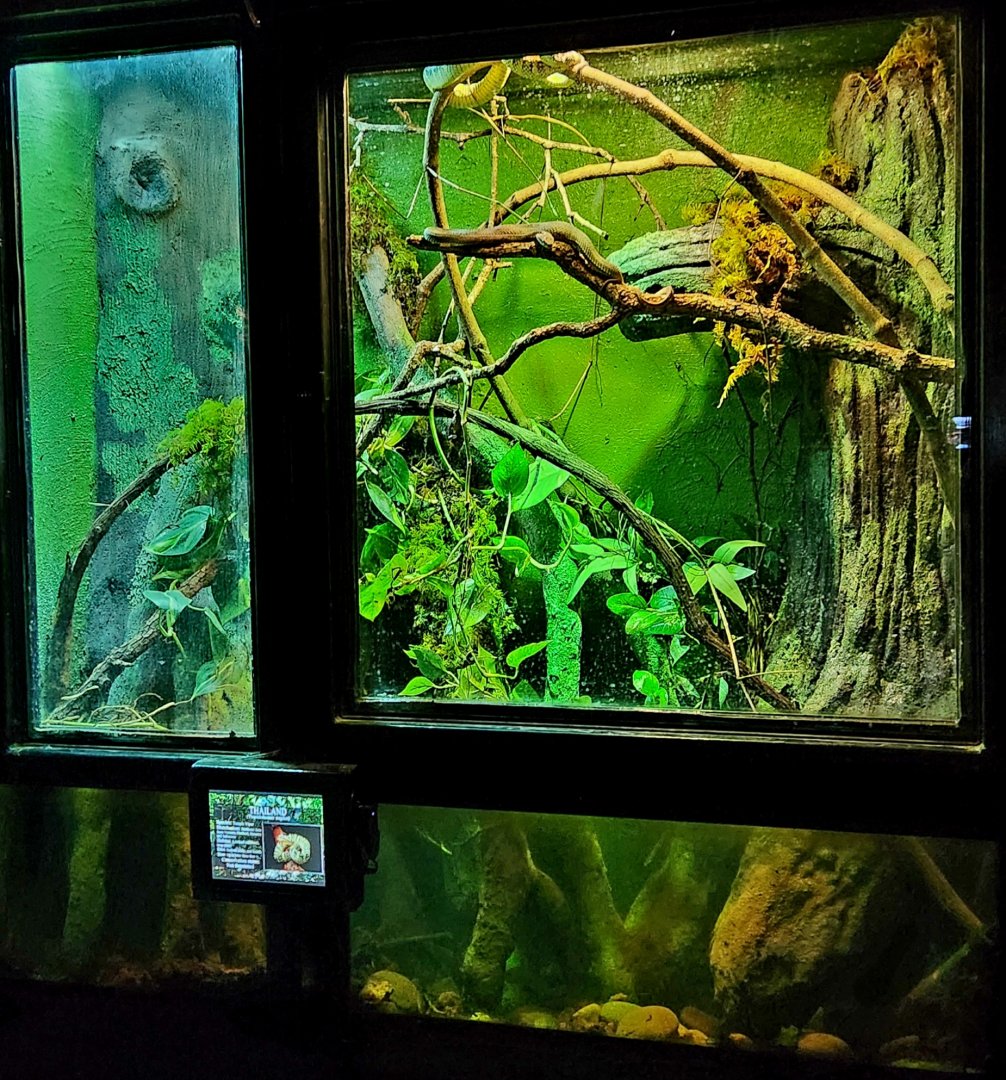
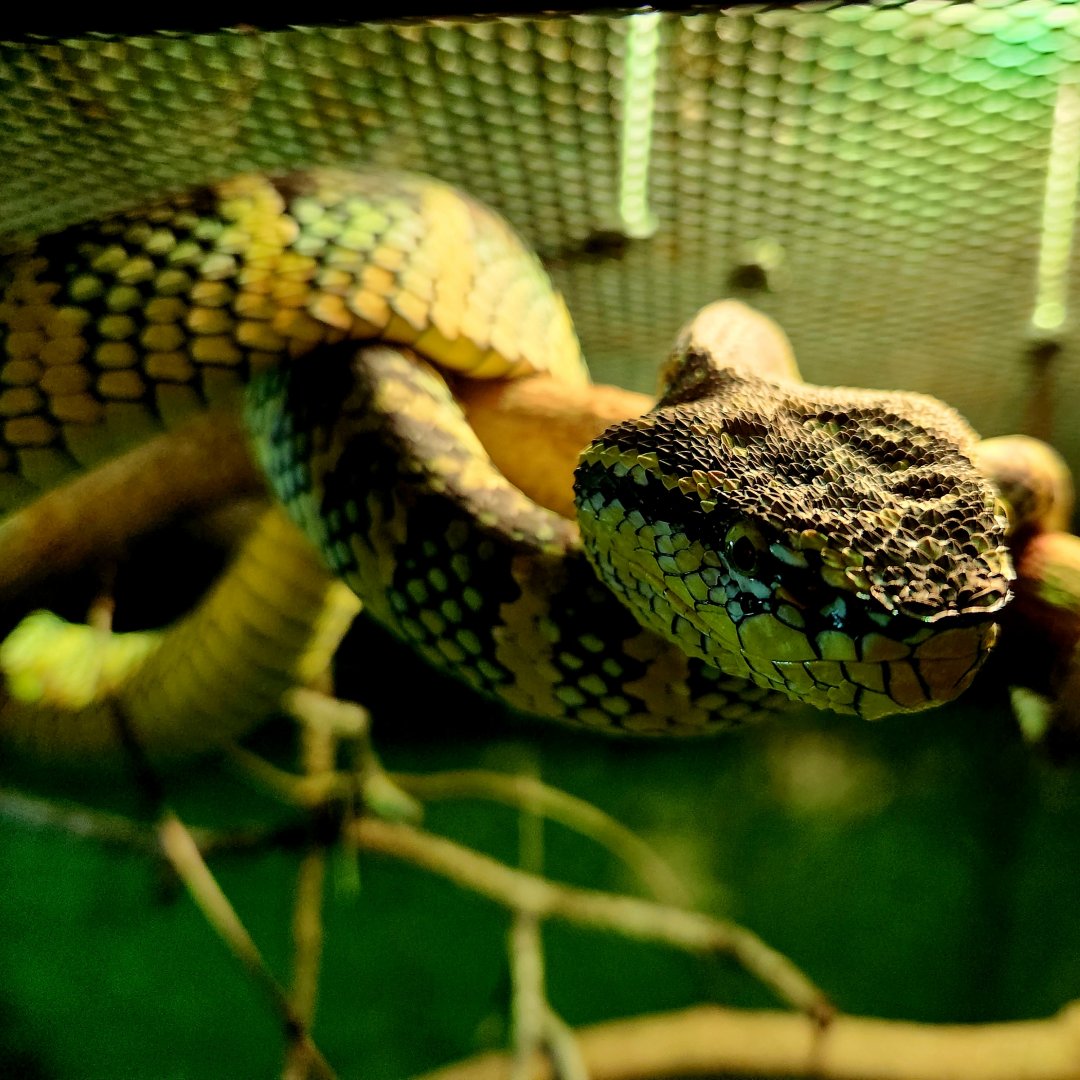
This is the last exhibit you'll see making a loop around the Tropical Building from left to right, and is inhabited by a pair of Wagler's Pit Vipers (Trimeresurus wagleri). The exhibit is lush, artificial work well-done, and the aquatic feature is nice, maybe even moreso than the previous one. Some Southeast Asian community fish would complement it nicely, such as Dwarf Gouramis (Trichogaster sp.), mid-sized Rasboras (Trigonostigma sp.), and Kuhli Loaches (Pangio kuhlii).


That finishes the main loop, next we'll double back to the middle row of exhibits.
 
Exhibit 23: Carettochelys River
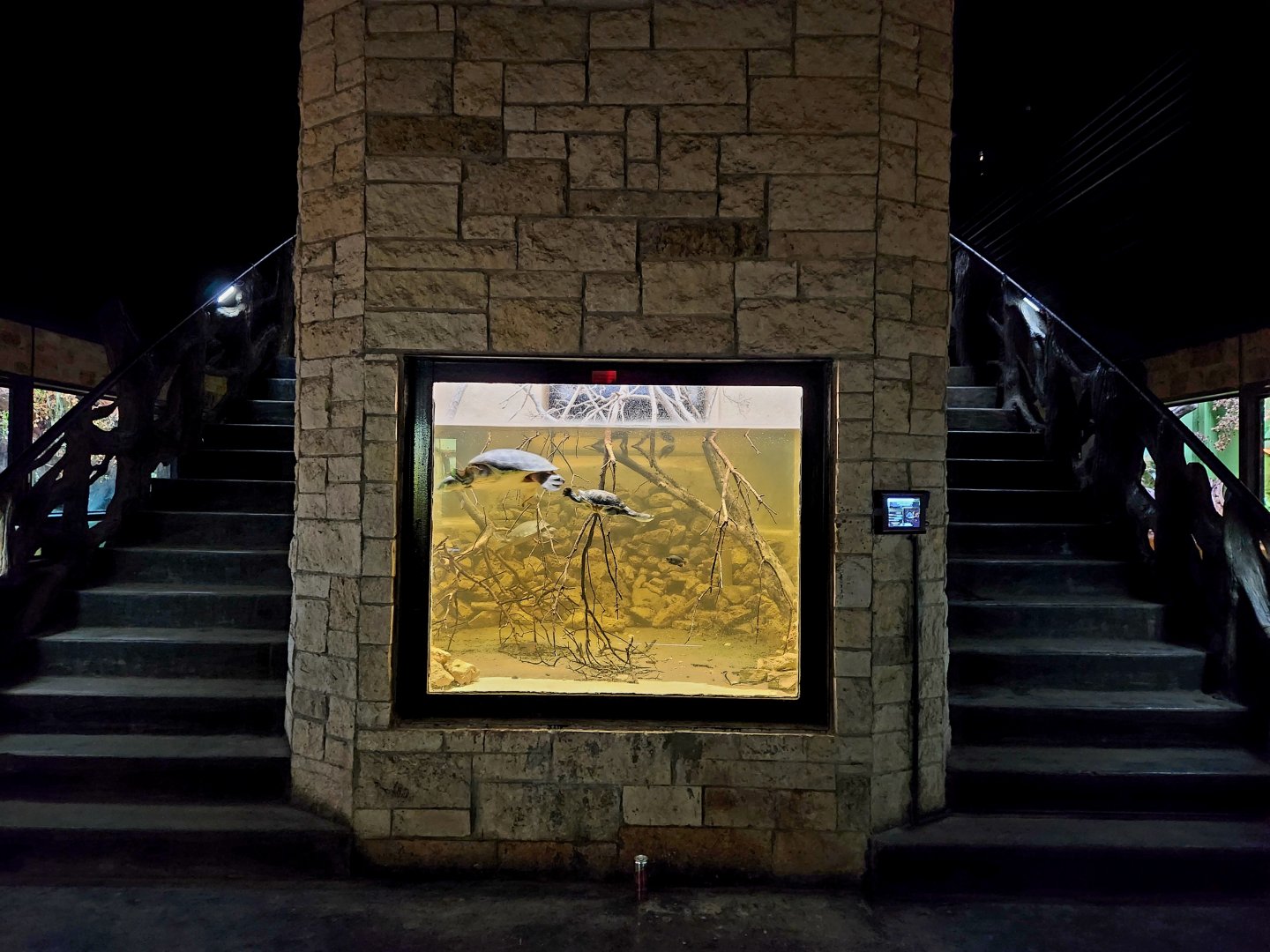
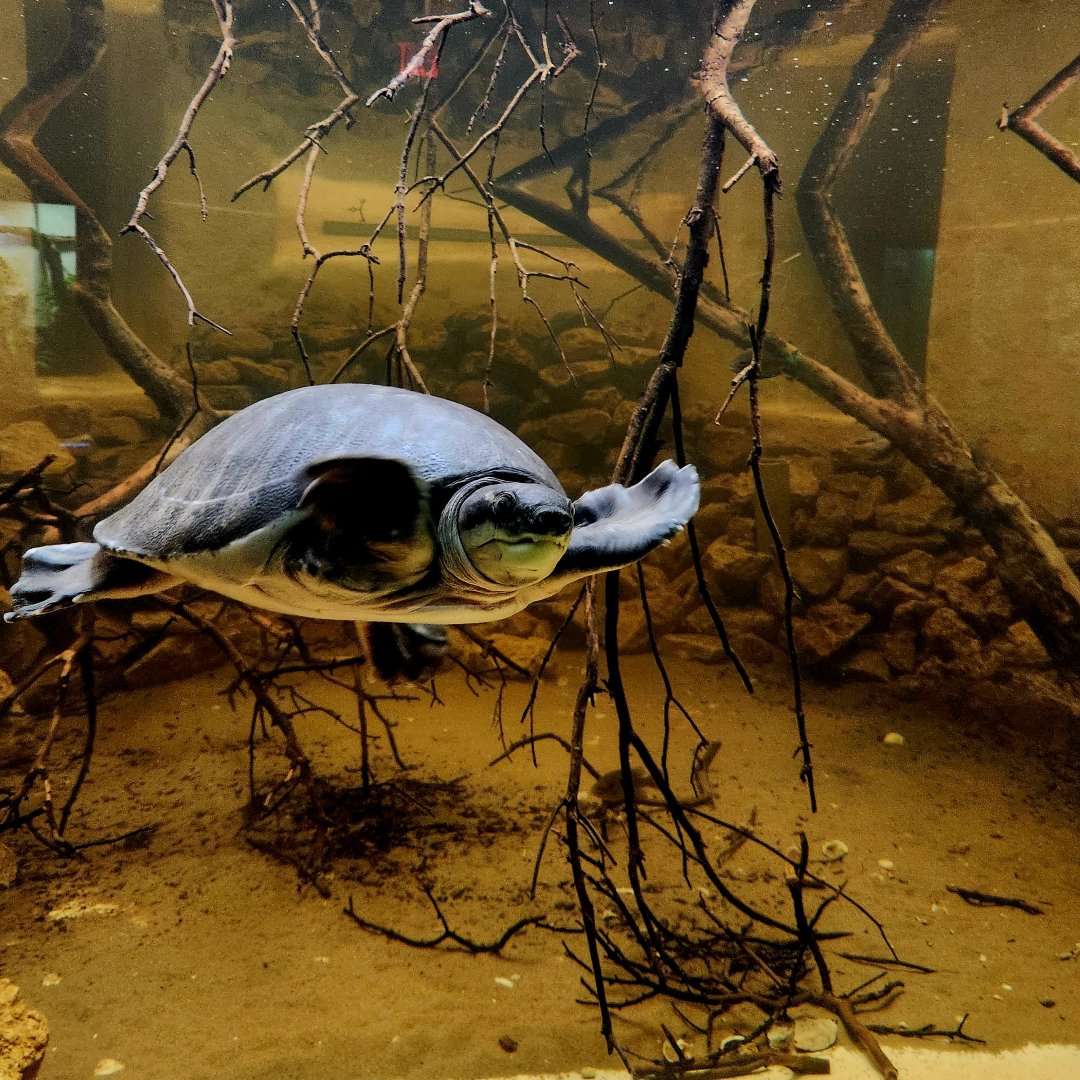
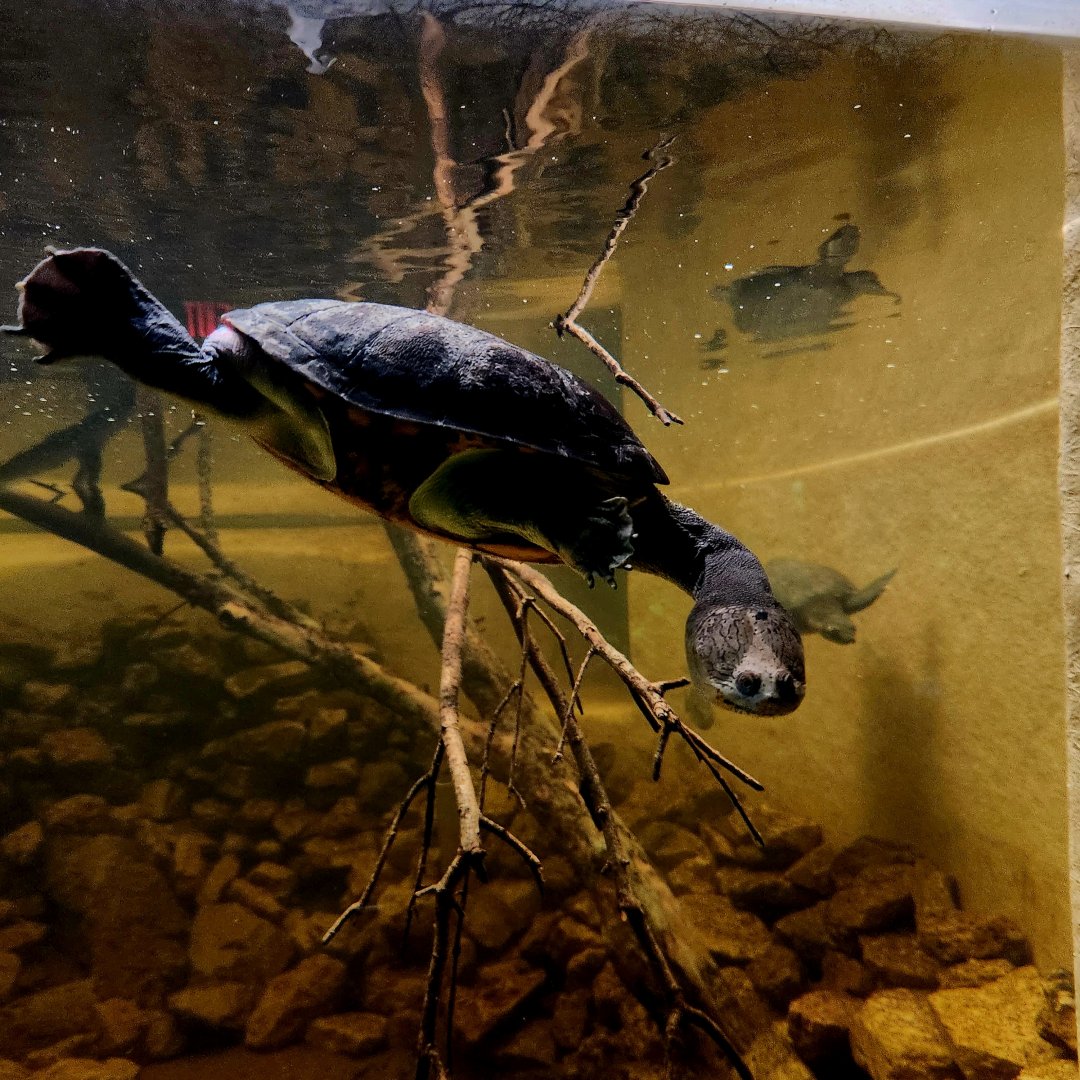
While not quite as large as the Crocodile Monitor Kingdom, this exhibit is every bit as impressive in my opinion, for its inhabitants, its ingenious design, and how in-your-face it is as soon as you walk into the Tropical Building. While I started the walk-through with the loop, this is the first exhibit you will see, facing directly at the entrance doors. Fun fact - the outer design of the exhibit, the stairs and custom log rails leading up to the second floor, were inspired by Scarface, for any movie buffs out there. The bottom reservoir of this probably 15' round tank can be viewed from the large front window, or either of two smaller side windows that have tunnels for the turtles to rest in. The most impressive aspect of this exhibit's design is the river system - seasonally, the tank's water level can be raised, giving the inhabitants access to enclosures on the top floor to use as haulouts. This, in my mind, is going to be the best chance anybody has at breeding Fly River Turtles (Carettochelys insculpta) in captivity - which has only been done a very small handful of times, to date. They already have a compatibile 1.1 pair (the female is HUGE, she came from Moody Gardens), and these turtles reproduce in the dry season by coming out of the water to lay their eggs - something they're afforded the ability to do as naturally as possible here. This enclosure is also home to a Northern Snake-Necked Turtle (Chelodina rugosa), who adds a nice touch to the display. Personally, I'd love to see this exhibit turned into a closer Fly River biotope, with Parker's Snake-Necked Turtles (Chelodina parkeri) brought in, as well as the Red-Bellied Short-Necked Turtles (Emydura subglobosa) moved over from the Crocodile Monitor Kingdom. This exhibit, perhaps more than any other, is begging for native Papuan fish - massive schools of Rainbowfish (Melanotaeniidae sp.) would be perfect.


Exhibit 24: Latin American Cave
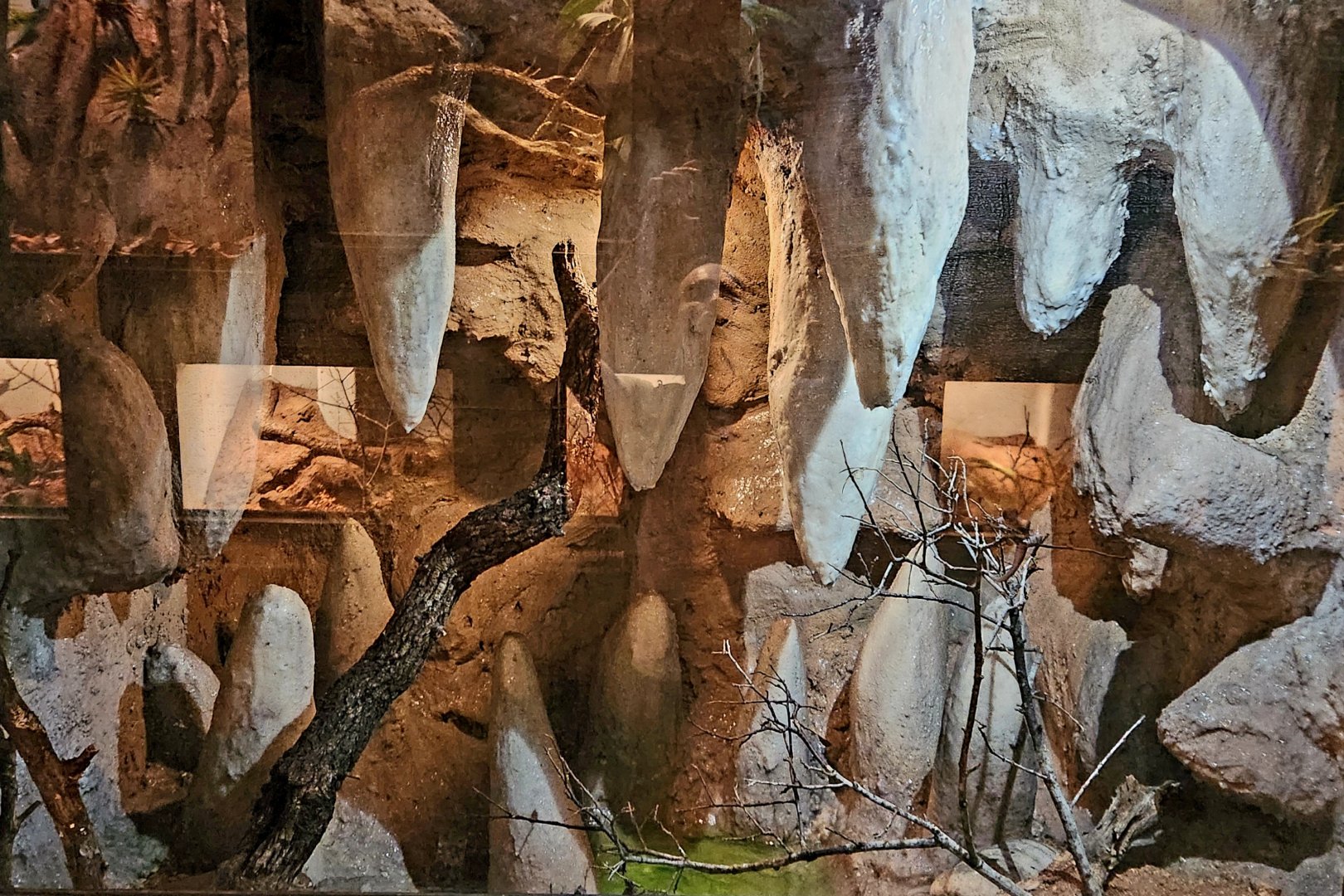
A mid-sized exhibit measuring probably 6 feet long, this is a great take on a cave system, with artificial stalactites and stalagmites providing the main cover for the inhabitants, and a small central pool with water dripping down giving the cave an even more authentic feel. I know most herp fans aren't the biggest fans of Axolotls (Ambystoma mexicanum), especially albinos, but this is at least a pretty unique way to display them. The Western Cliff Anoles (Anolis bartschi) in here are a unique species that are rarely seen, and Cave Anoles (Anolis lucius) would make for another great addition. Any number of Sphaerodactylus sp. geckos would also make for an interesting addition, and watching them dart between all the nooks and crannies of this exhibit would be pretty entertaining. The view into the water feature isn't the best, but I still think a group of Blind Cave Tetras (Astyanax mexicanus) would be an interesting addition to round out this exhibit.


Exhibits 25-27: Caribbean Boas
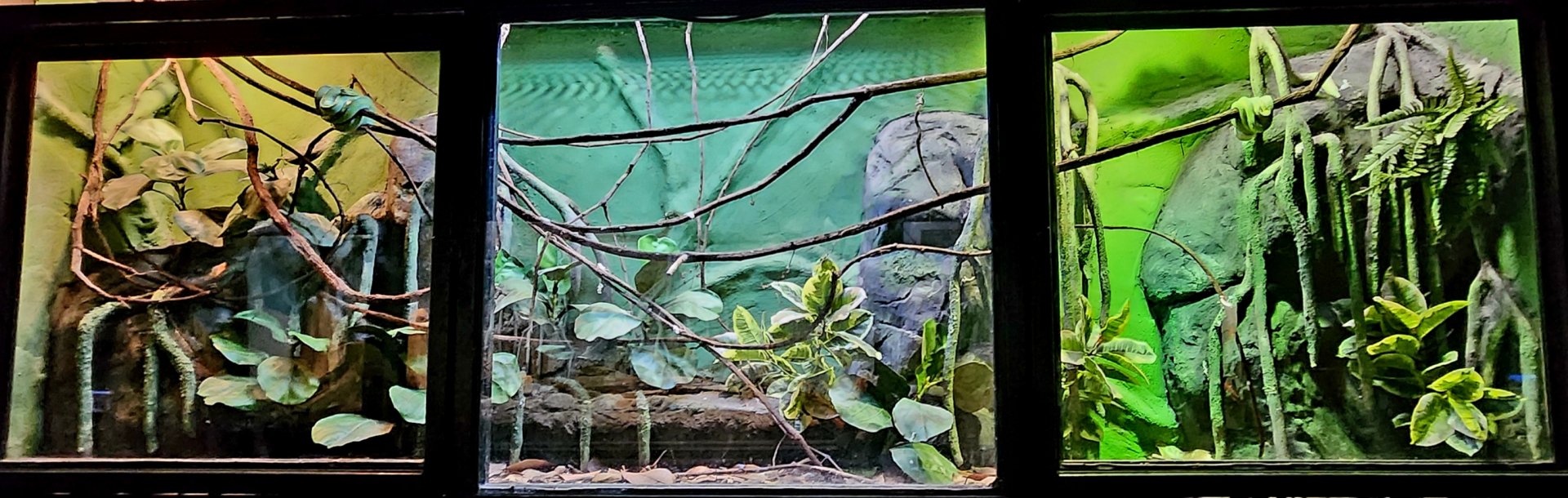
These three exhibits measure approximately 5' by 2' by 5' each if I had to approximate them, a great size for the Chilabothrus boas housed inside. I do think they increase in quality as you go from right to left (last pic to first), but realistically all three are quite good for their inhabitants. The branches look nice, but the rockwork is what really stands out to me here as nicely-done. The Bahamian (C. strigilatus), Dominican Red Mountain (C. s. striatus), and Cuban Boas (C. angulifer) housed in these exhibits all made an appearance on my visit, with the pair of Bahamian Boas being the most active by far. It's worth noting that Cuban Boas are one of the largest constrictors on the planet, verified at over 18 feet in length - so a slightly more sparse exhibit for this species makes sense. The Dominican Red Mountain Boa had no signage on my visit, and these exhibits would also benefit from some sort of raised platform in front of them (like in most herpetariums) for younger and shorter visitors to get a better view of things. Little to nothing I would add in terms of species, although noting the subspecific status of the Bahamian Boas would be nice.


Exhibits 28-34: Small Vipers
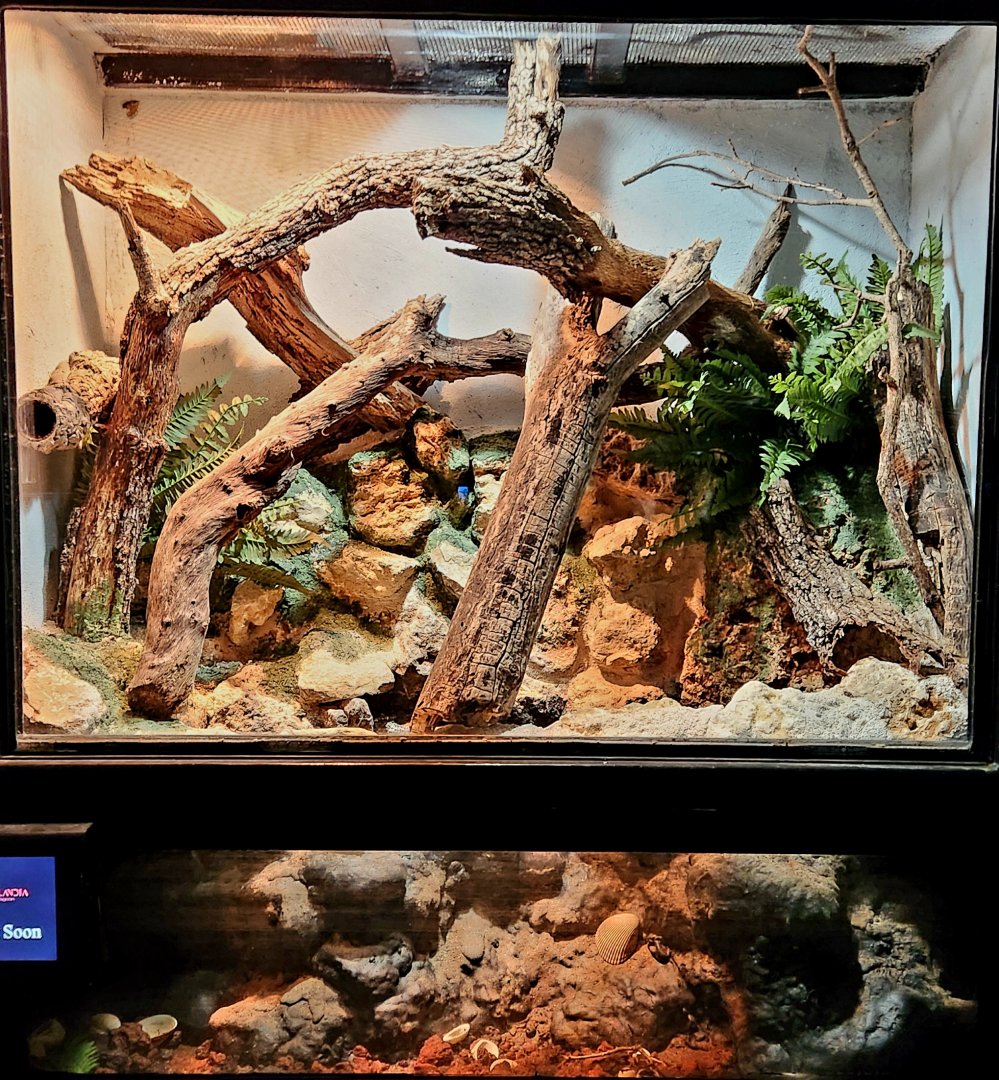
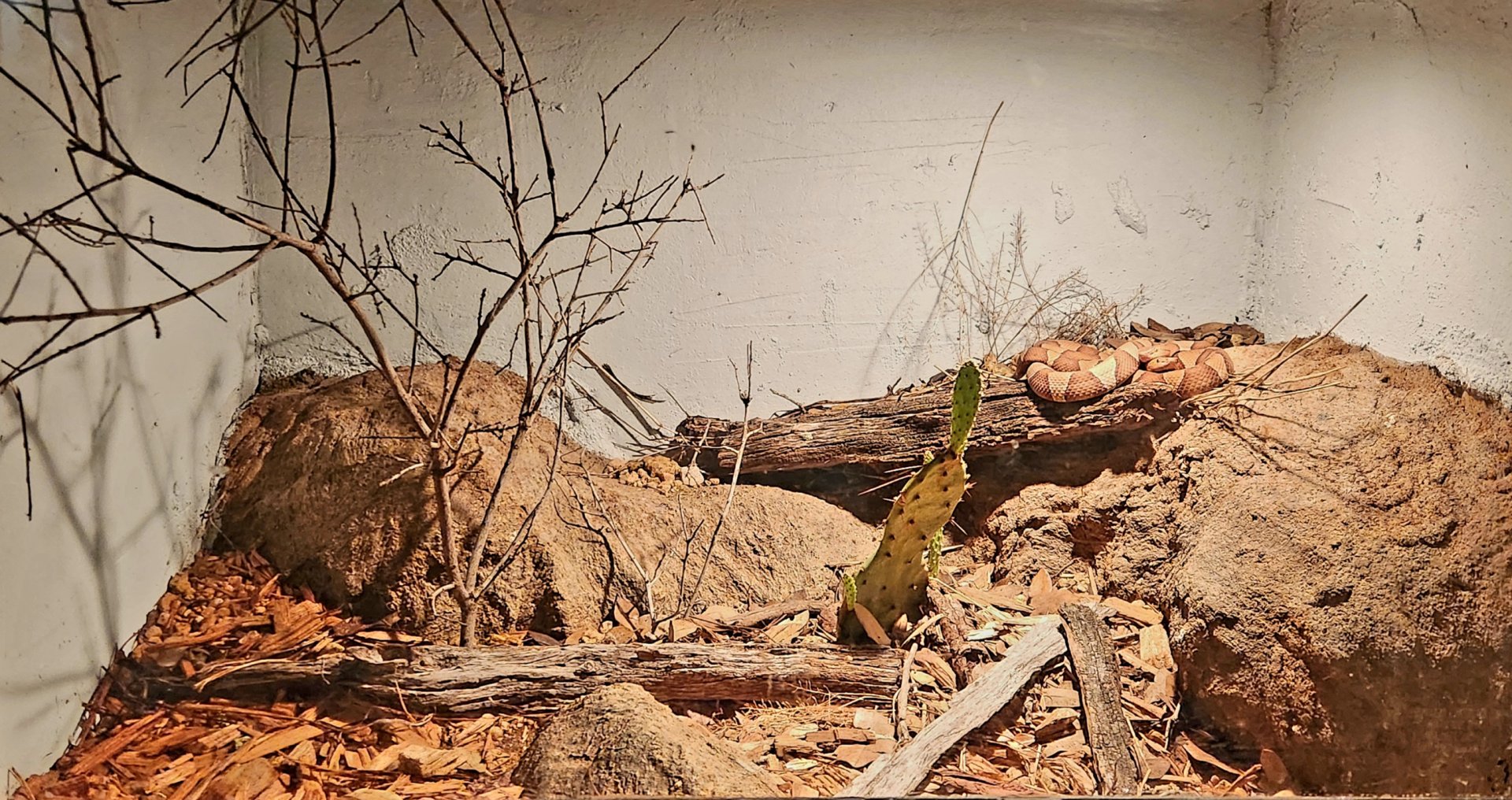
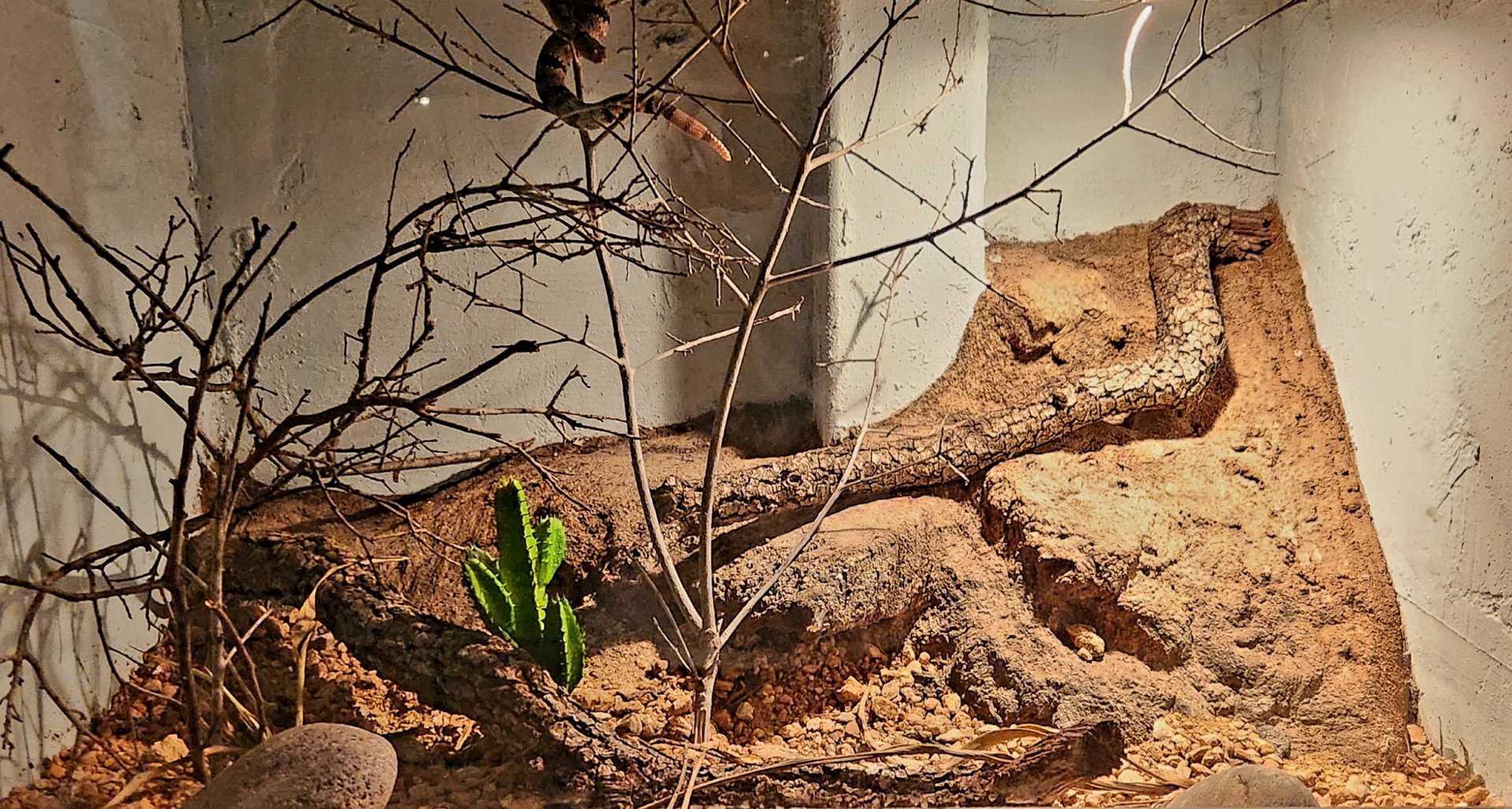
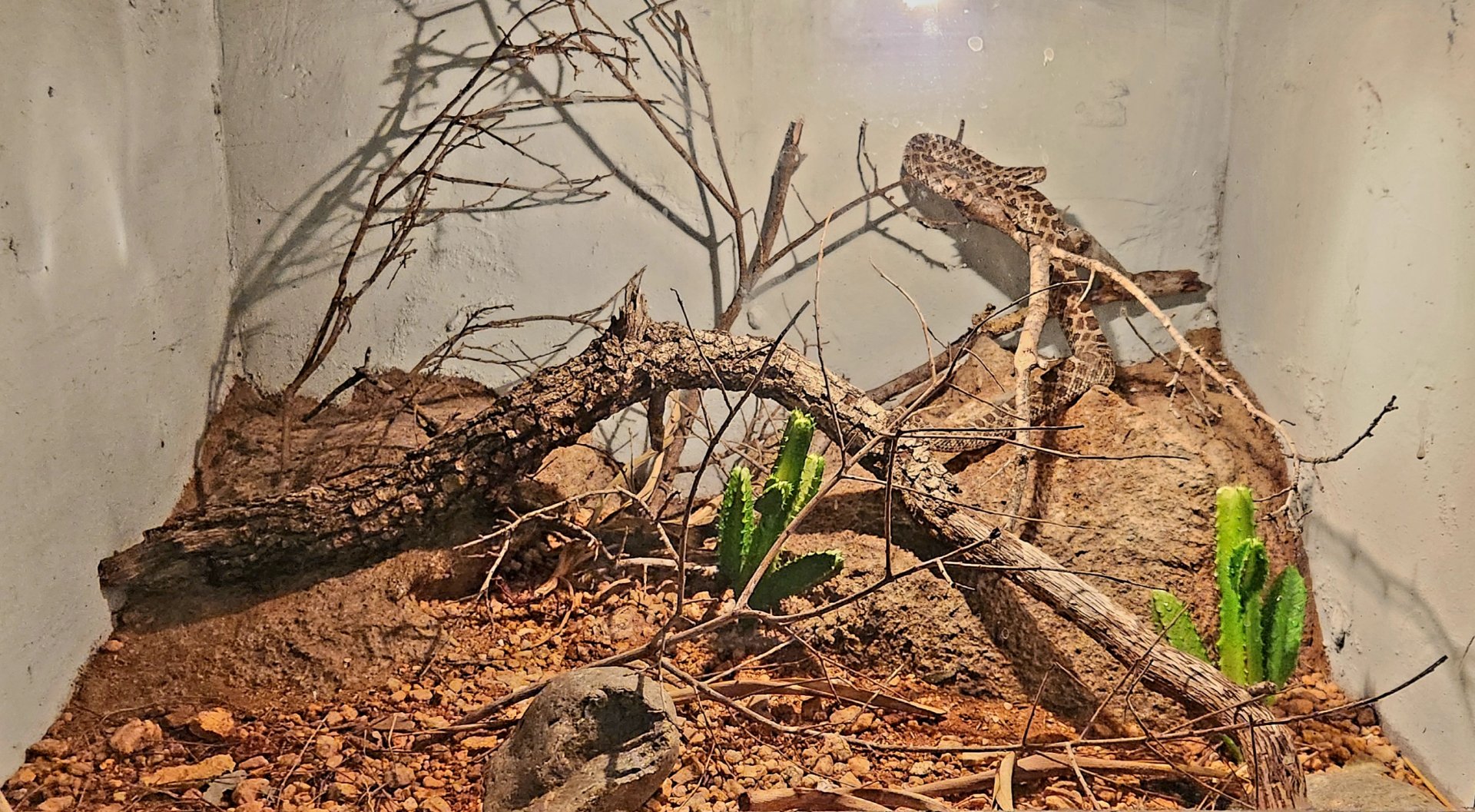
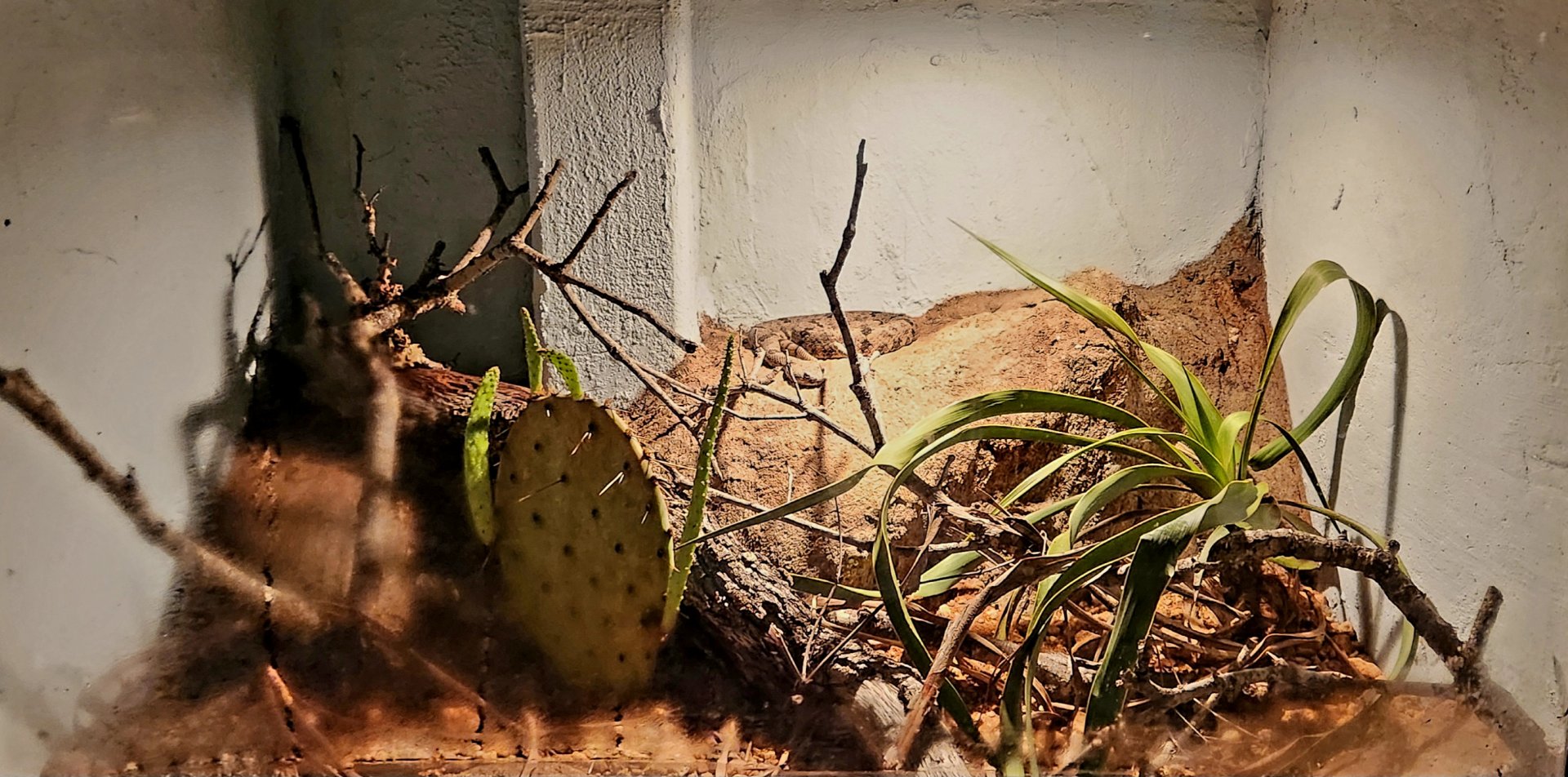
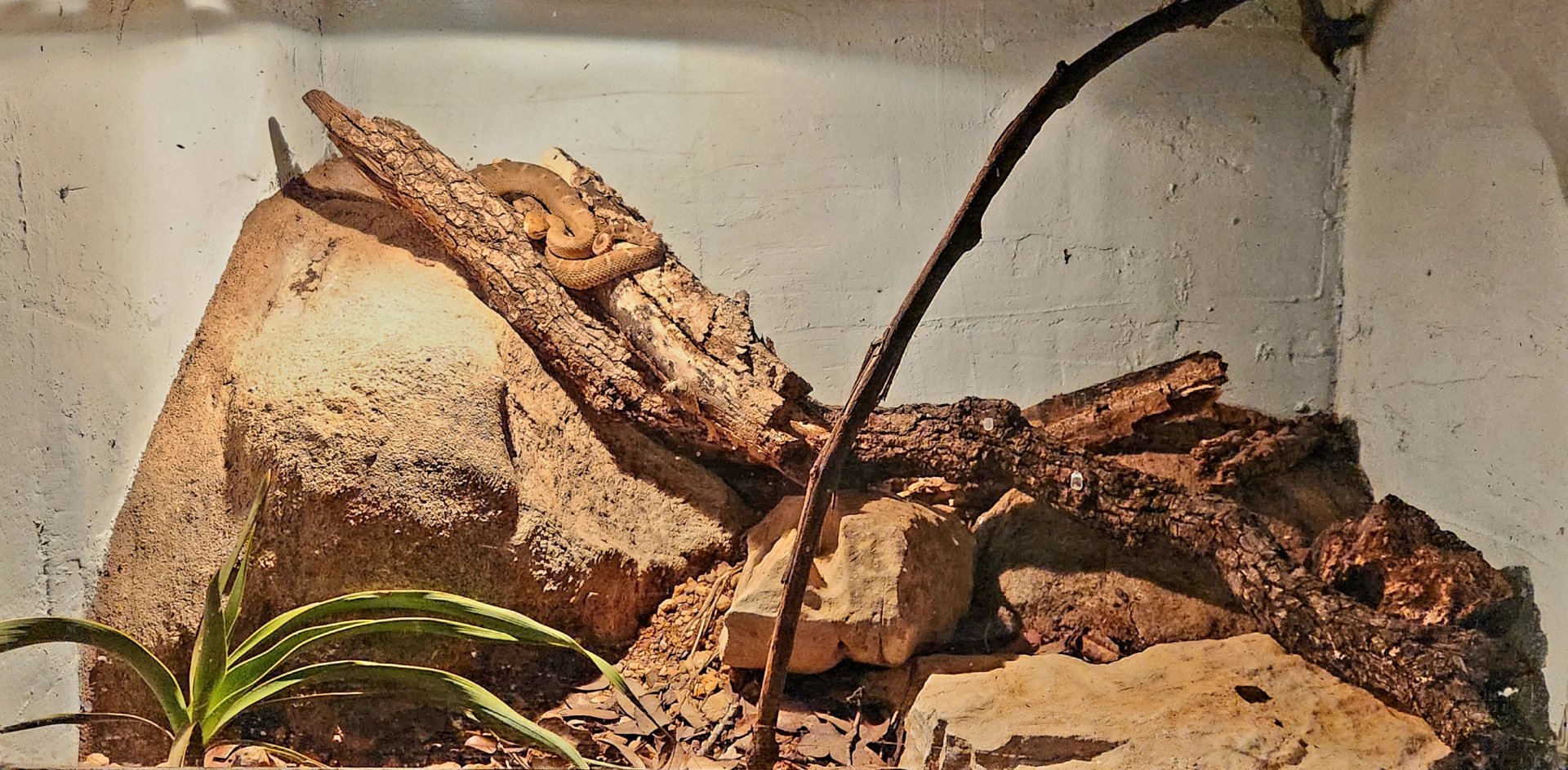
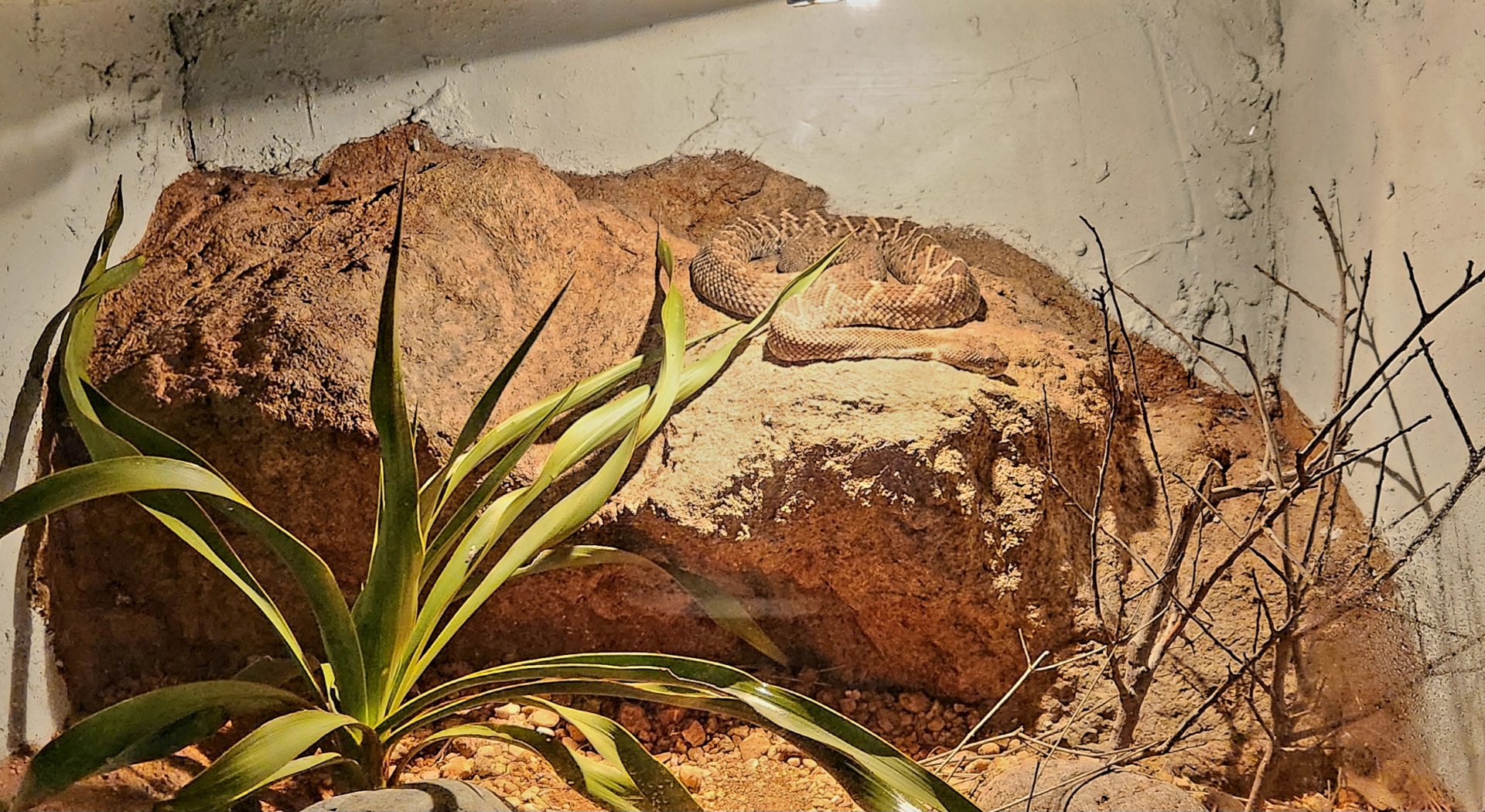
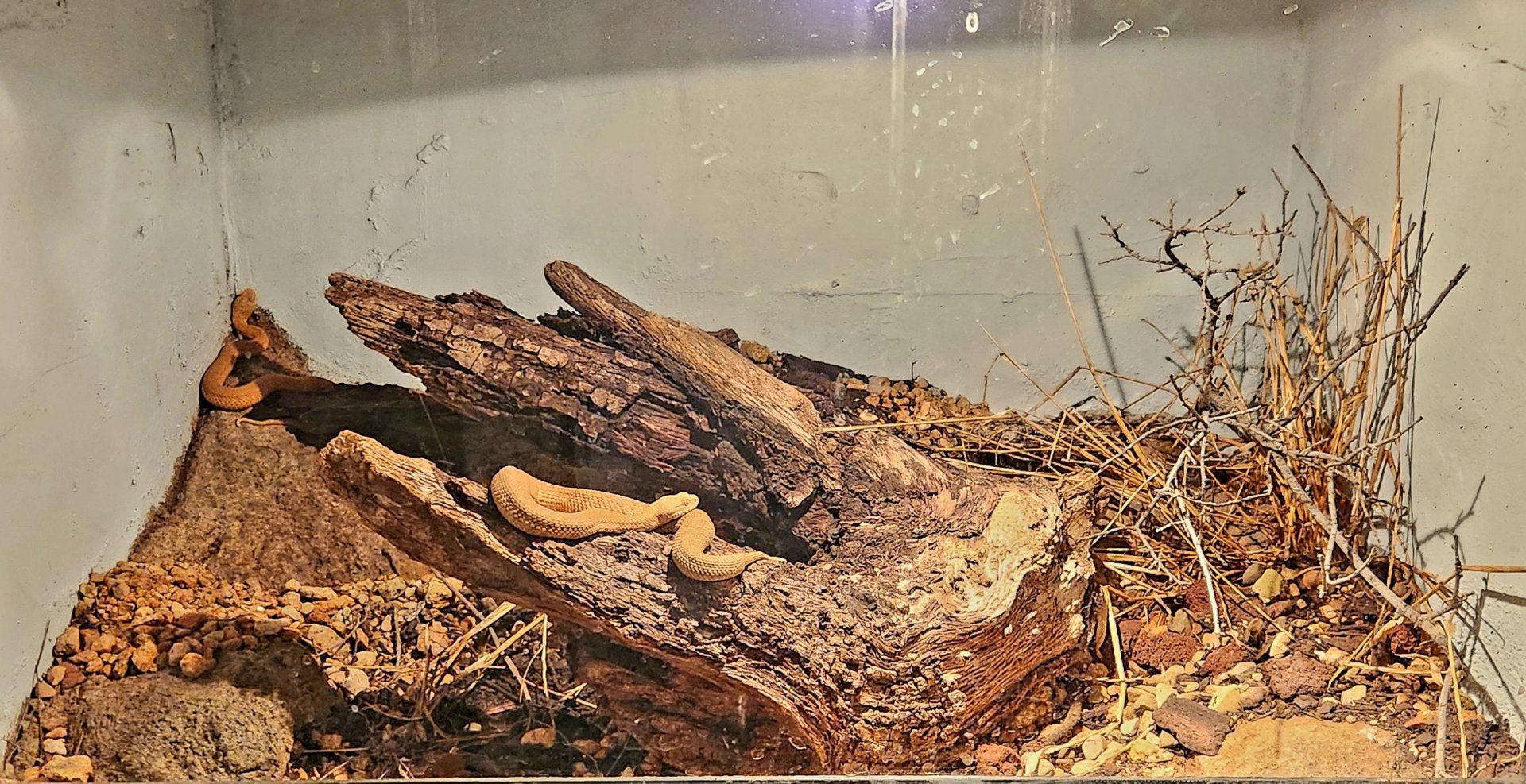
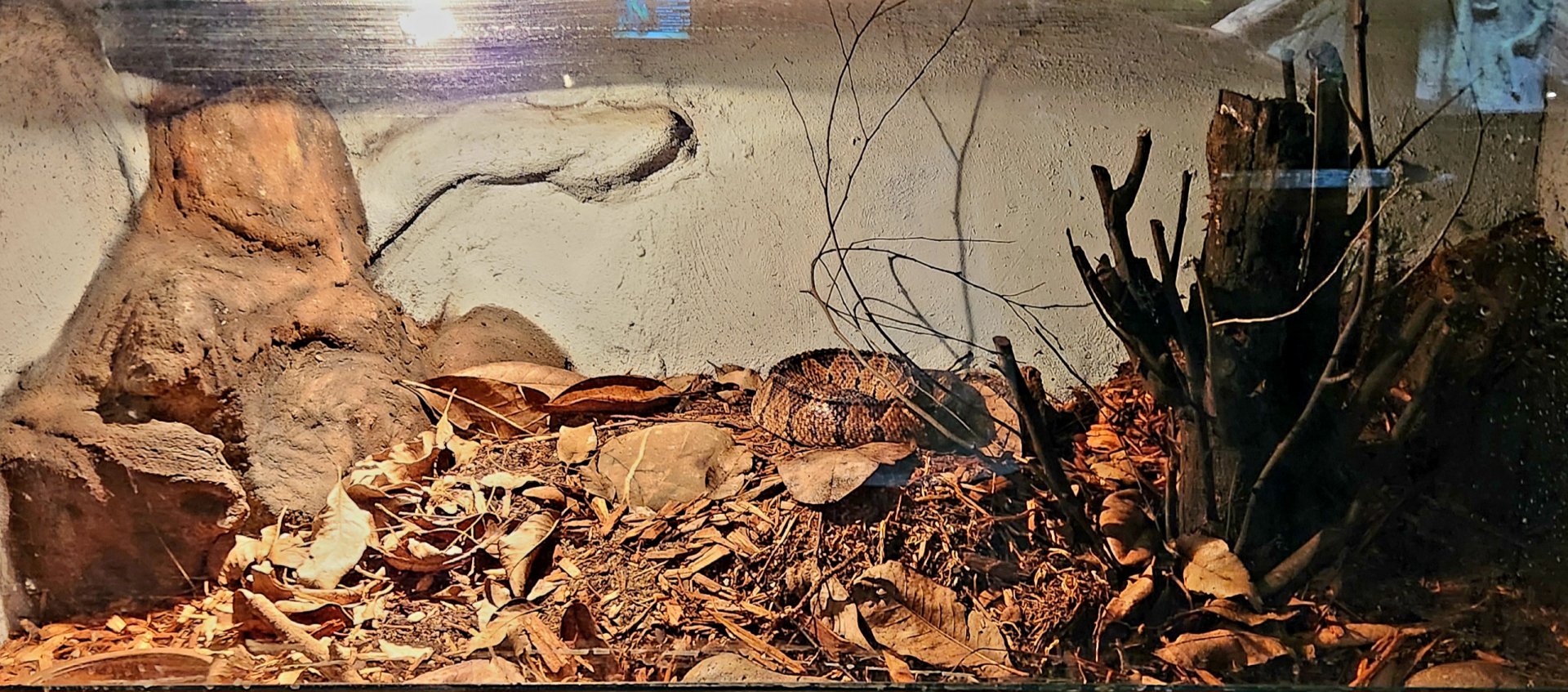
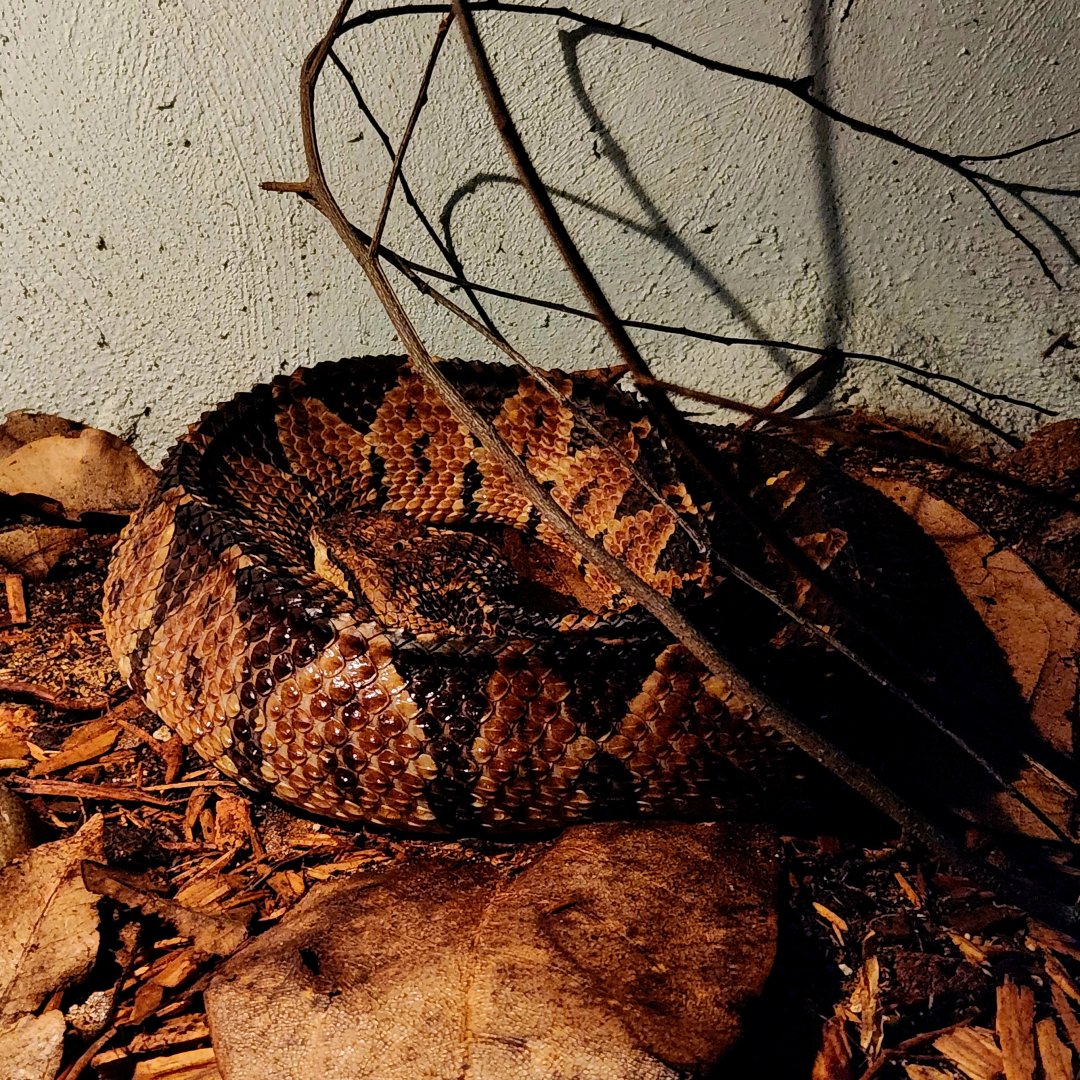
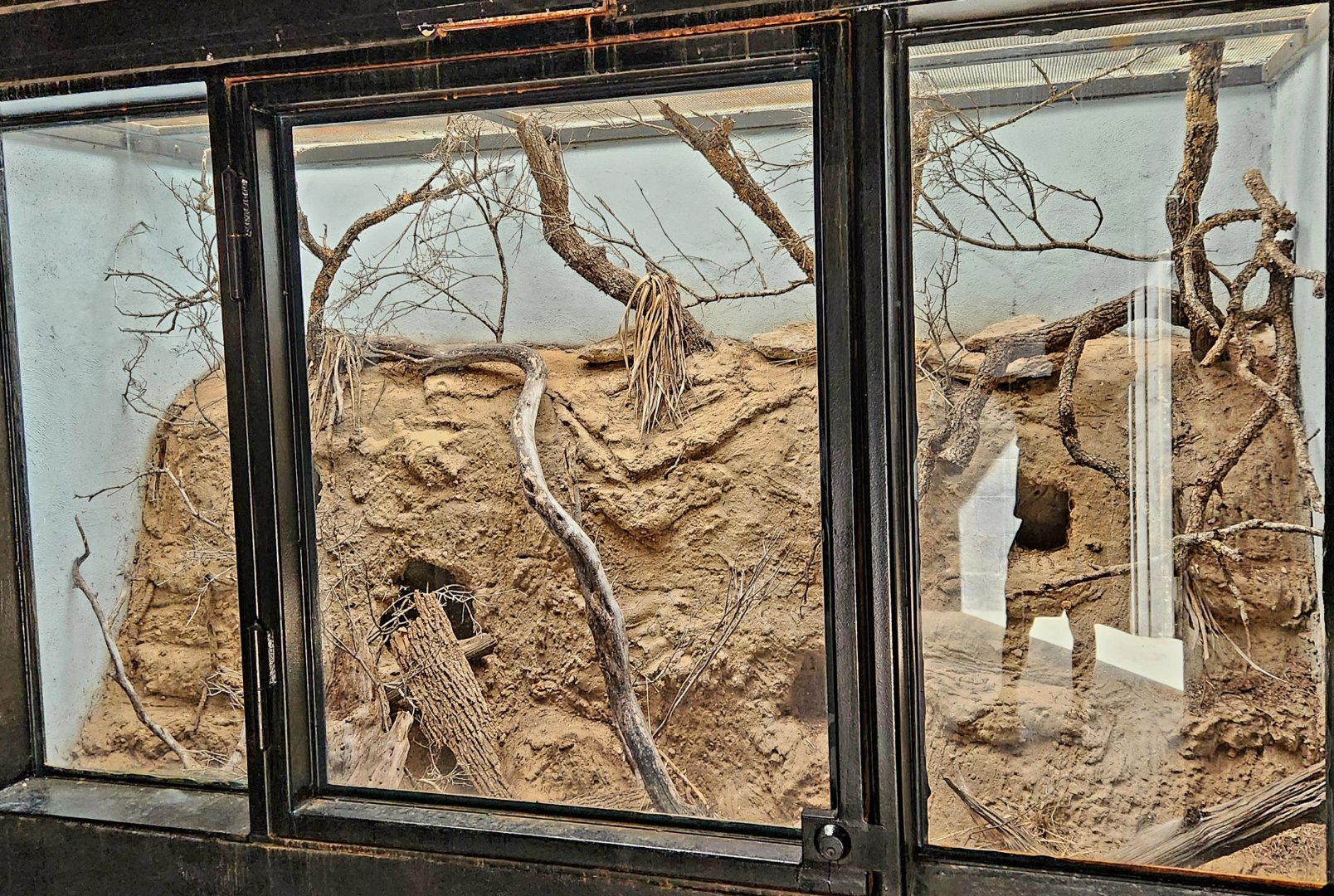
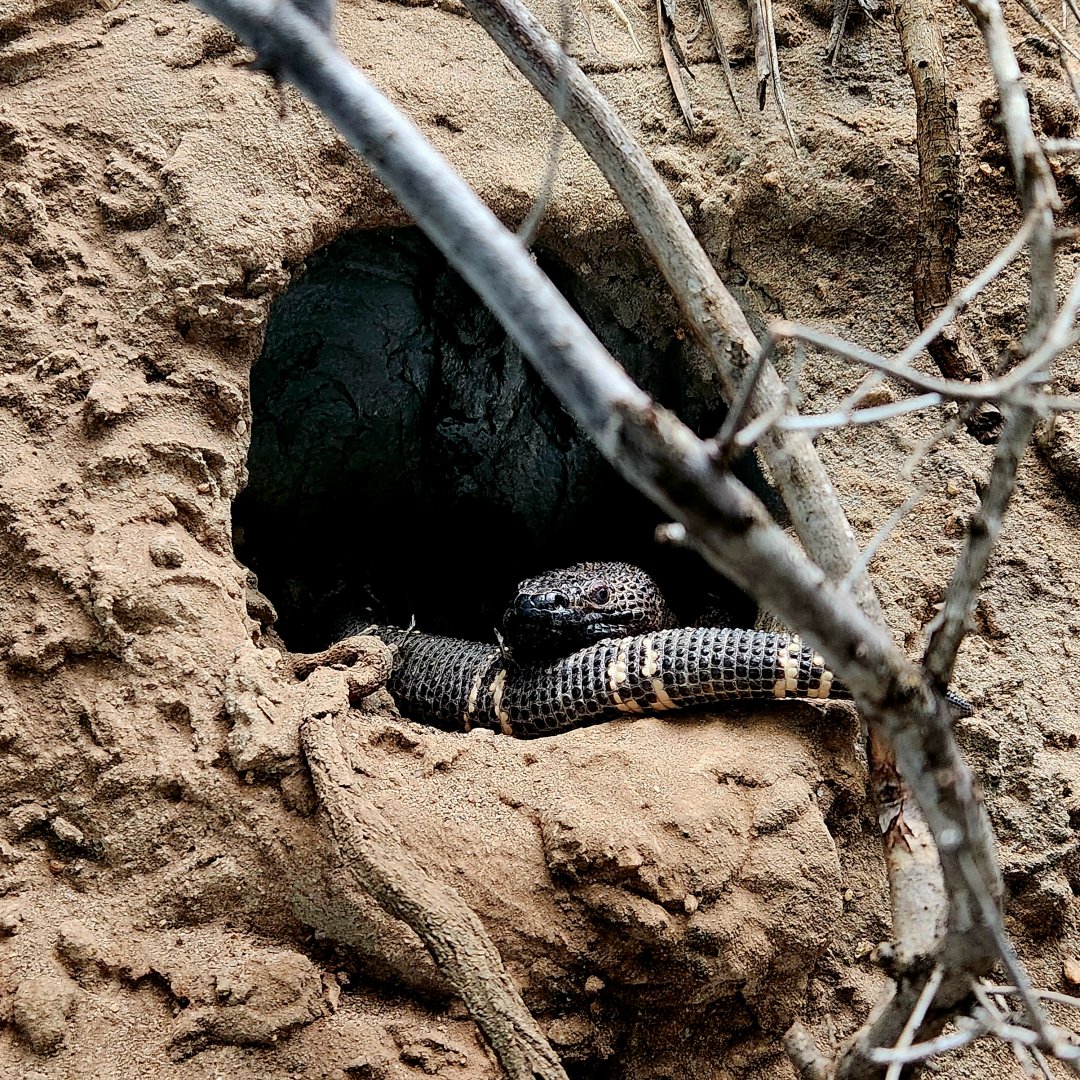
These seven exhibits represent the smallest enclosure size used at the zoo, and they are still probably 2 foot cubes. This section is mostly used to house small/juvenile rattlesnakes, with a few other viperids mixed in. The Desert Massasauga (Sistrurus tergeminus edwardsii), Western Chihuahuan Ridge-Nosed Rattlesnake (Crotalus willardi simus), Milos Vipers (Macrovipera lebetinus schweizeri), and two Rock Rattlesnakes (Crotalus lepidus) are all perfect inhabitants for this space, although the real estate taken up by the young Broad-Banded Copperheads (Agkistrodon laticinctus) and juvenile Mexican West Coast Rattlesnake (Crotalus basiliscus) seems like it could be put to better use, as the adults of these species are already displayed elsewhere. In keeping with the montane rattlesnake/viper theme, Twin-Spotted Rattlesnakes (Crotalus pricei) would be a must-have, and there are a number of smaller Eurasian vipers that could make the cut for these exhibits as well. As far as the exhibits themselves go, they are simple but well-designed, each featuring a decent-sized rock outcrop to serve as a main basking spot, and a bit of desert foliage to add texture. Only thing I would add is better signage, including subspecific status on the Rock Rattlesnakes (I was shocked to see them missing it).


Exhibit 35: New Guinea
Yet another exhibit representing the giant Melanesian island, this exhibit has to be at least 15' long and 5' tall, and plays home to a large Scrub Python (Simalia amethistina). Unfortunately, this animal was off-exhibit on my visit, but I've seen videos of the snake on exhibit - it's a very healthy-sized animal to say the least. I enjoyed the way the branch and rock work blended together in this exhibit, it felt very natural. The foliage is also lush, making this a beautiful exhibit. Nothing much I'd add here, except for the same raised viewing platform for shorter/younger guests and of course the animal back on exhibit ;)
 
This is a highly detailed, informative thread. Thanks for taking the time to type out this epic review. Texas already has some zoos with incredible reptile and amphibian collections and now there's yet another zoo in the area with loads of herps. Over 100 exhibits is into Fort Worth Zoo and Dallas Zoo territory. Impressive!
 
This is a highly detailed, informative thread. Thanks for taking the time to type out this epic review. Texas already has some zoos with incredible reptile and amphibian collections and now there's yet another zoo in the area with loads of herps. Over 100 exhibits is into Fort Worth Zoo and Dallas Zoo territory. Impressive!
I appreciate that, especially from you! Always read through the road trip threads for years before making an account :)

This place has gotten a lot of animals from both Dallas and Fort Worth, including their Perentie. Exciting to see what the future will hold for them, lots of lifers for the vast majority of guests!
 
I touched on it in another thread (@jayjds2 beat me here by a day :p, great job with listing this place out btw), but I want to talk a little bit about signage here while I'm at it. I should've done this in the intro, but here we are.
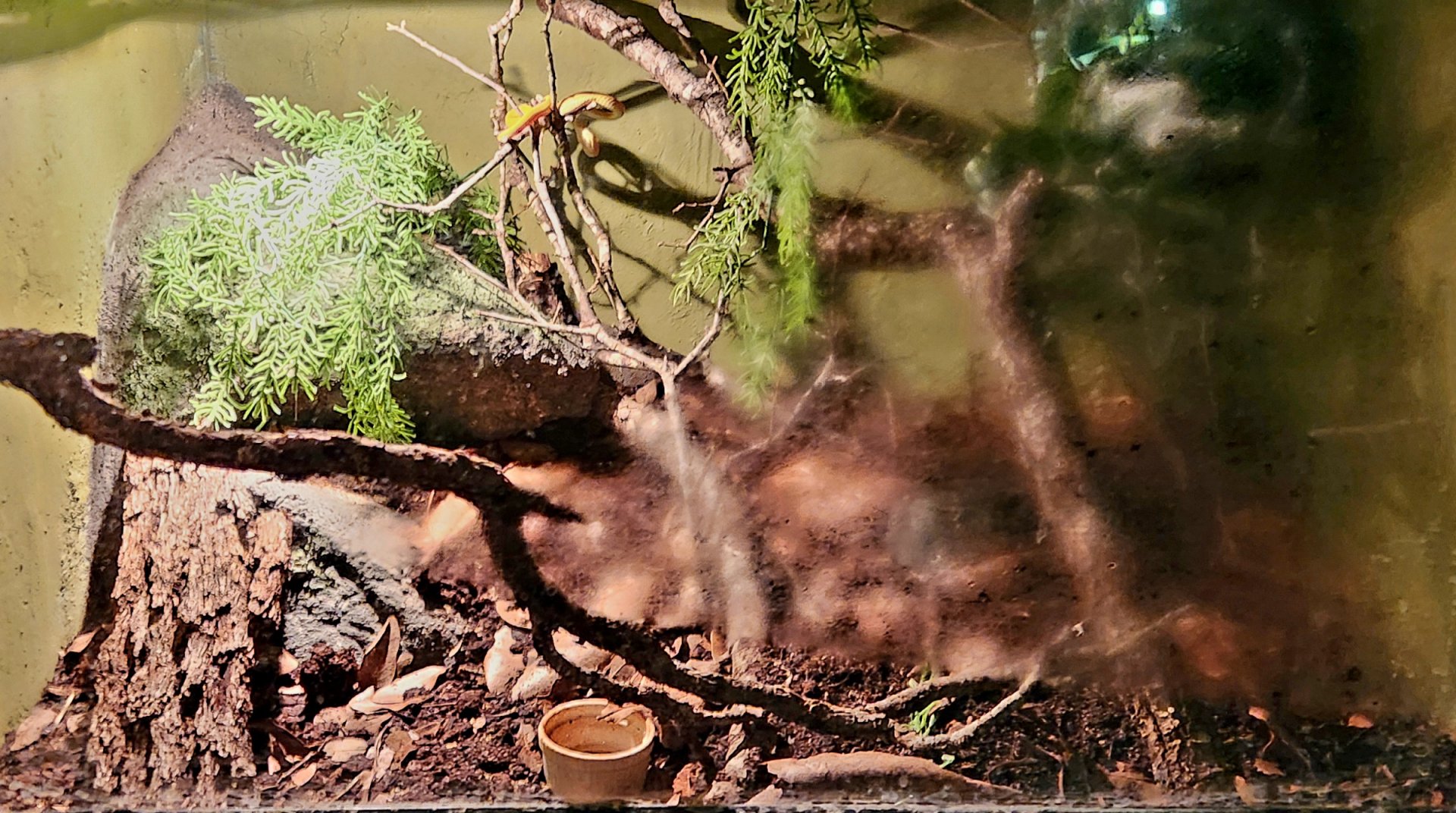
This isn't the worst facility I've been to in terms of signing animals, but it's far from the best. I am probably in the minority being someone that appreciates electronic signage, but not necessarily the way it's done here. In my mind, the most ideal situation for zoo signage (at least on ectotherms, which rotate constantly) is a touch screen next to the exhibit that guests can view EVERY animal in the exhibit on. This would be connected to ZIMS, or whatever program the facility is using to manage its collection, to ensure that everything in the exhibit is signed. Animal moves on display, digital sign card gets added. Animal gets taken out, it goes away. Simple.
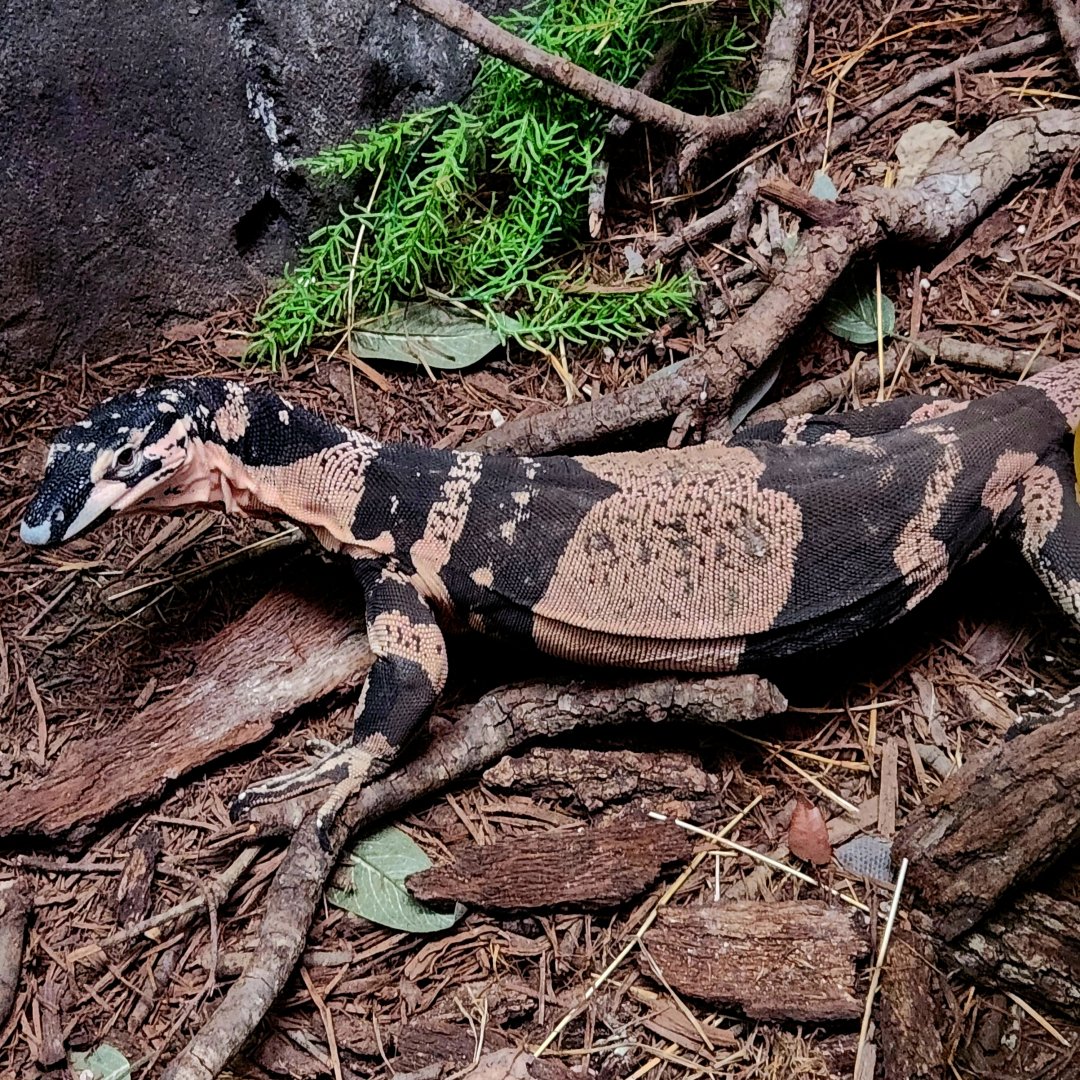
Probably 2/3 of the signs here are elecronic, with cards cycling every 10-15 seconds. Unfortunately these aren't touch screens, but I'm perfectly happy with seeing that money go back into the animals instead. The main issue here is the amount of missing signage for animals - plenty of species I confirmed without signage, and given the size of the exhibits there's surely a species or two missing from every list. The rest of the exhibits are either signed with a paper card or no signage at all. No issues with the paper cards, especially for exhibits with a single species - that's probably easiest.
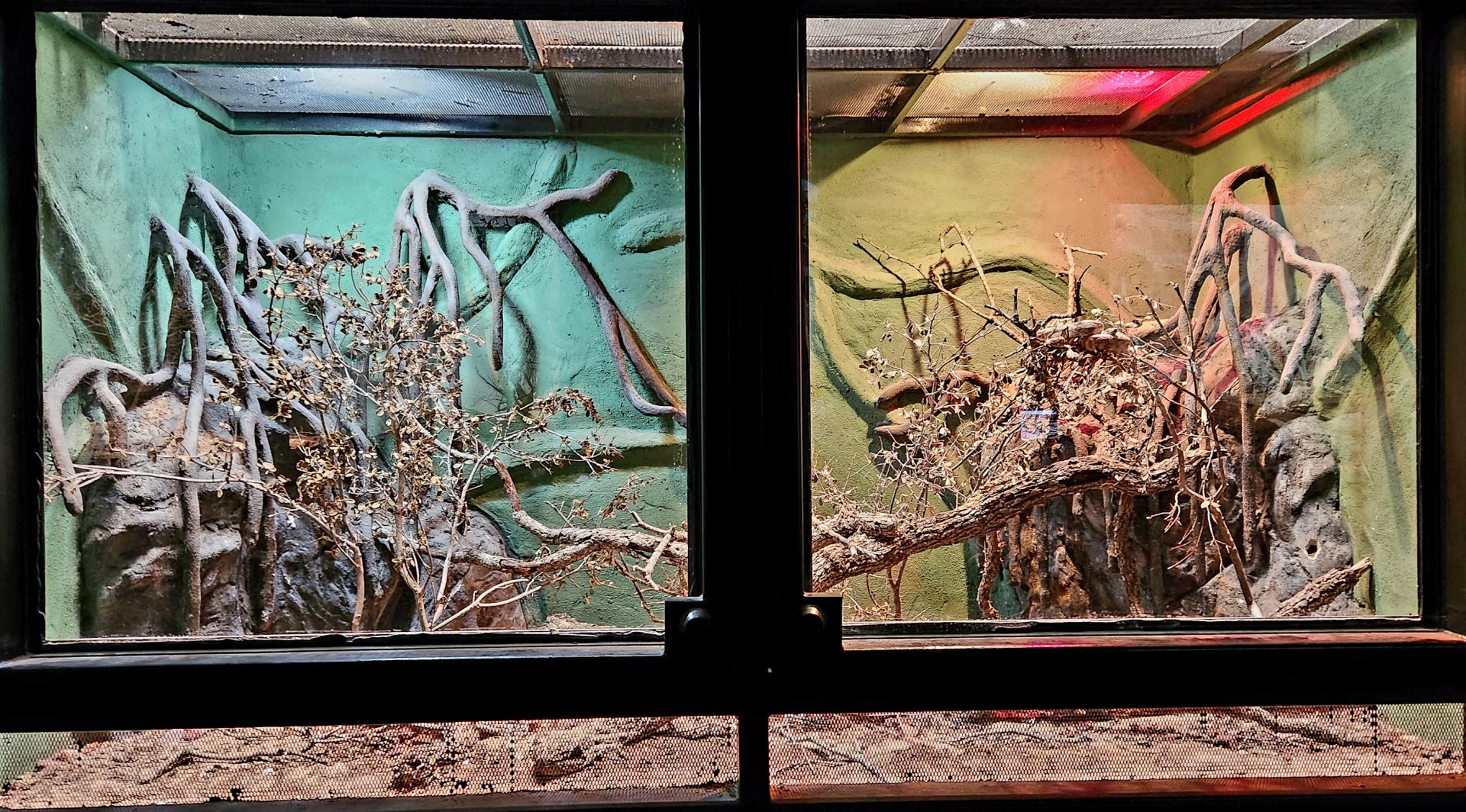
In short, my biggest recommendation here (and to any facility, really) as an uber zoo nerd is to develop some sort of program to integrate signage and collection management. With no technological background, I can't begin to say how easy or hard this would be, but that's my most ideal scenario.

Of course this is just an overly long rant from a massive nerd about something that ultimately doesn't matter, but it feels worth mentioning in here. Enough of that, back to animals :)
 
Exhibits 36-42: Assorted Tropical Species
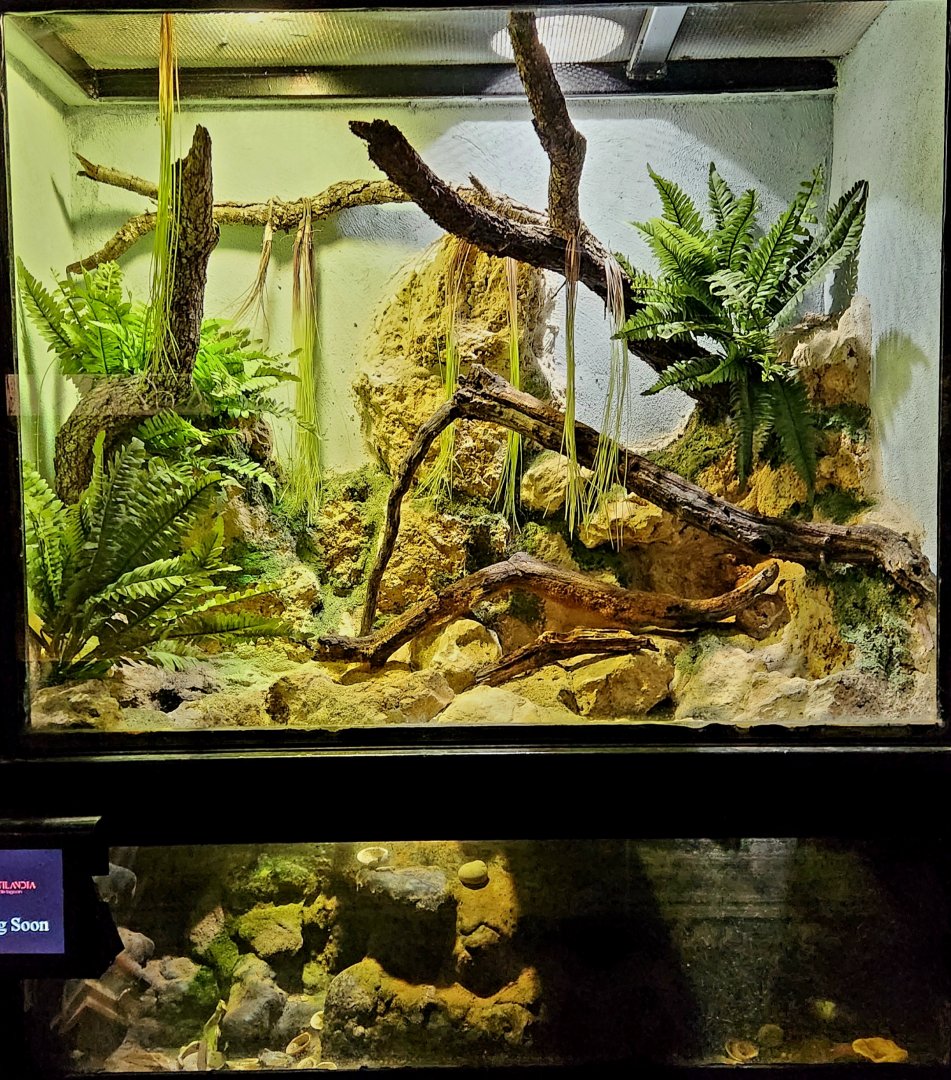
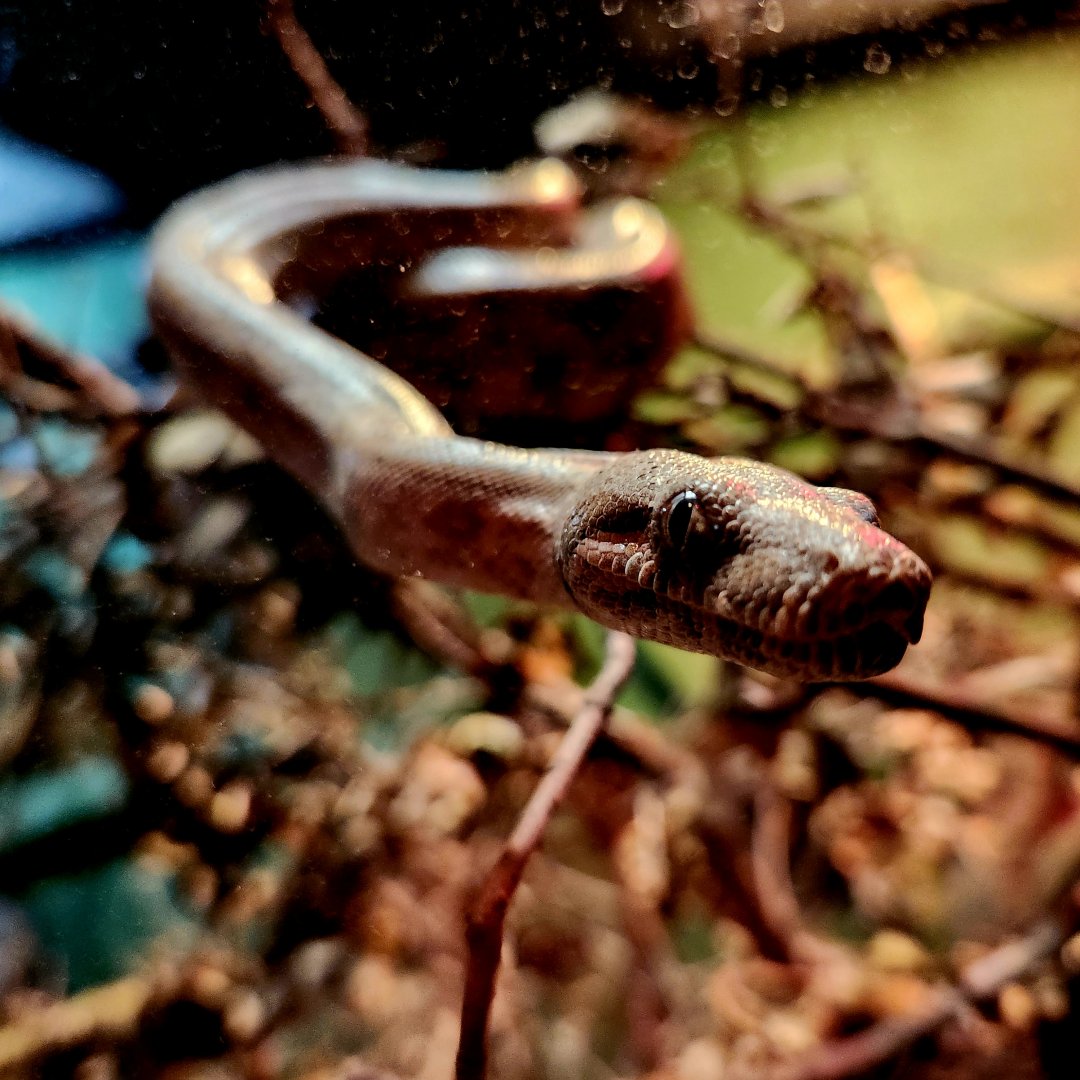
Another bank of seven smaller exhibits similar to the previous ones, these exhibits are built instead to house various tropical species, primarily snakes. These are primarily from Southeast Asia, with a few exceptions. The Viper Boa (Candoia aspera) exhibit was the best of the bunch, mostly because it was the one of the only ones I could see fully into throughout the day. These enclosures desperately need some small PC fans positioned at the front of the exhibit to draw condensation off the glass, but otherwise they are pretty nicely-built for their inhabitants. These include a young Jamaican Boa (Chilabothrus subflavus, a personal favorite), a pair of Green Bush Rat Snakes (Gonyosoma prasinum), an albino White-Lipped Pit Viper (Trimeresurus albolabris), and an Odd-Chinned Skink (Eugongylus mentovarius). I never managed to see the signed Rhino Rat Snakes (Gonyosoma boulengeri) or Argentine Boa (Boa constrictor occidentalis), but they should both be in there. I'll be interested to see what species the Argentine Boa gets mixed with as it grows, for anyone unfamiliar they are a GORGEOUS snake. In the future, replacing the albino albolabris with the blue, green, and yellow color variants of T. insularis could be interesting.


Exhibit 43: South America
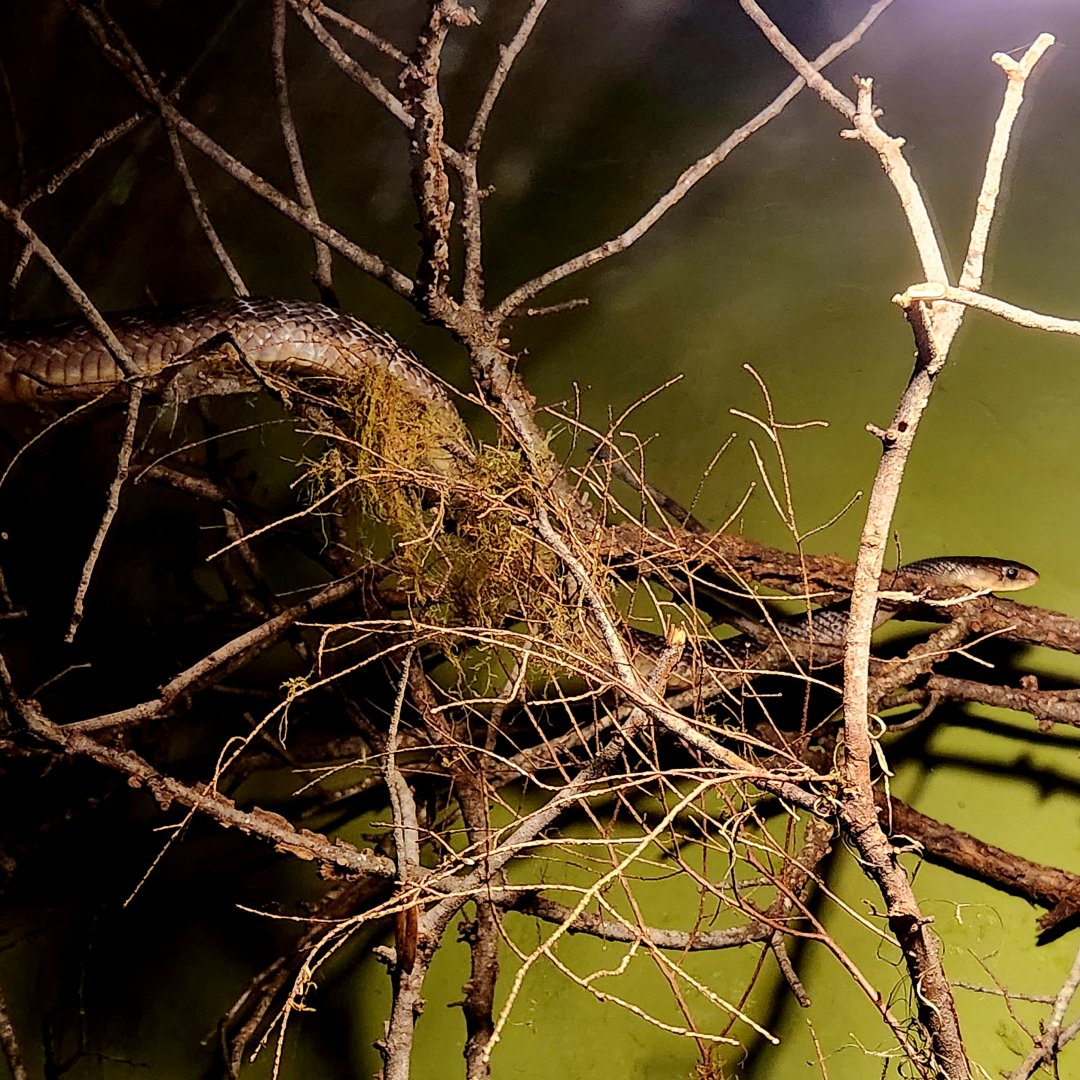
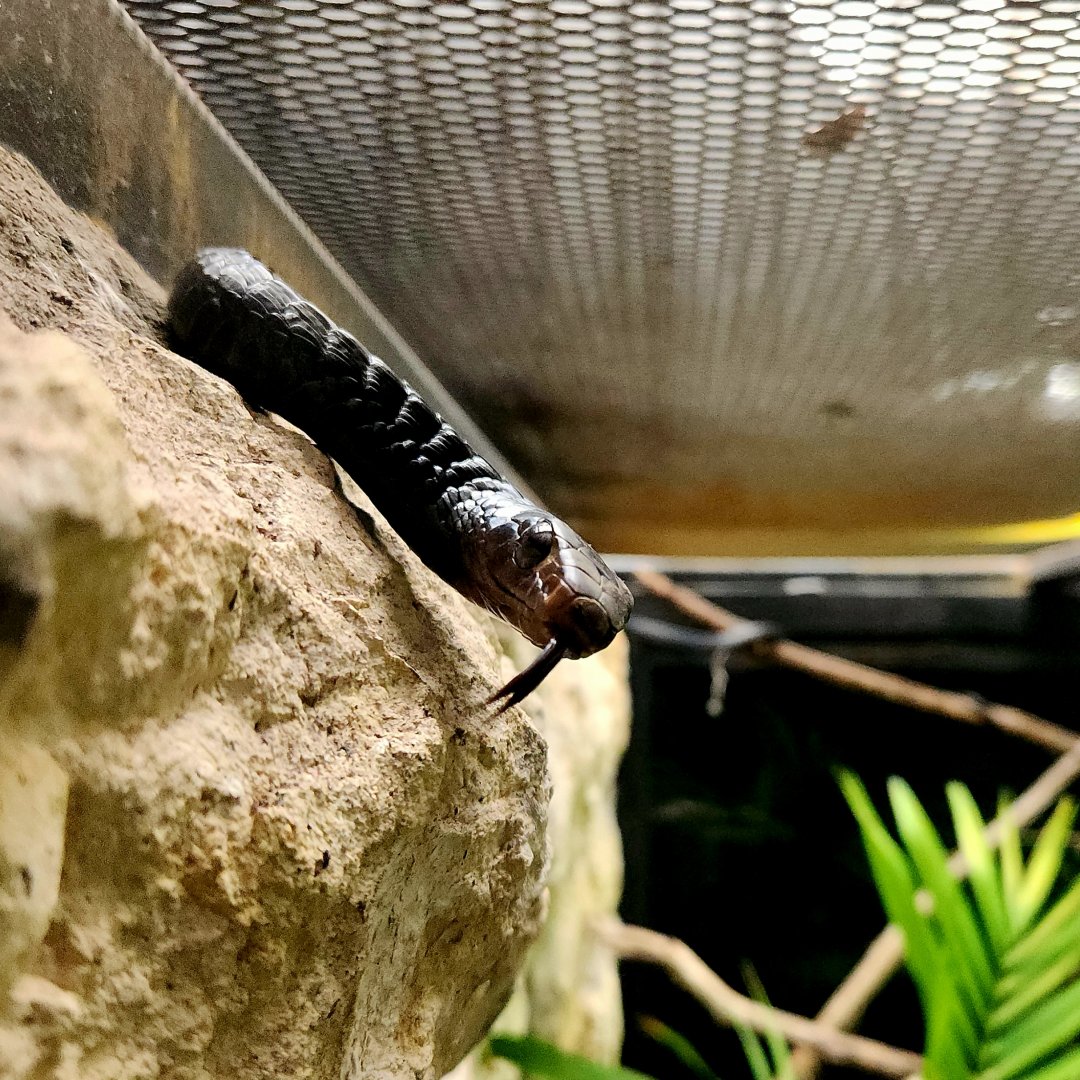
This is a taller exhibit for a single Yellow-Tailed Cribo (Drymarchon corais), a South American relative of the Eastern and Texas Indigo Snakes. I had mentioned it as unidentified earlier, but just received confirmation on its ID. Hopefully the individual on exhibit is still acclimating, because it spent all but a few minutes of the day of my visit at the very top of the enclosure, out of view. Because of the pretty voracious nature of these snakes (they aren't even constrictors - they just strike and eat things), a mixed-species enclosure is probably out of the question. This is a beautiful snake in a well-designed exhibit, although my one change would involve staggering the plant growth rather than a flat midline canopy.


Exhibit 44: Southern Asia
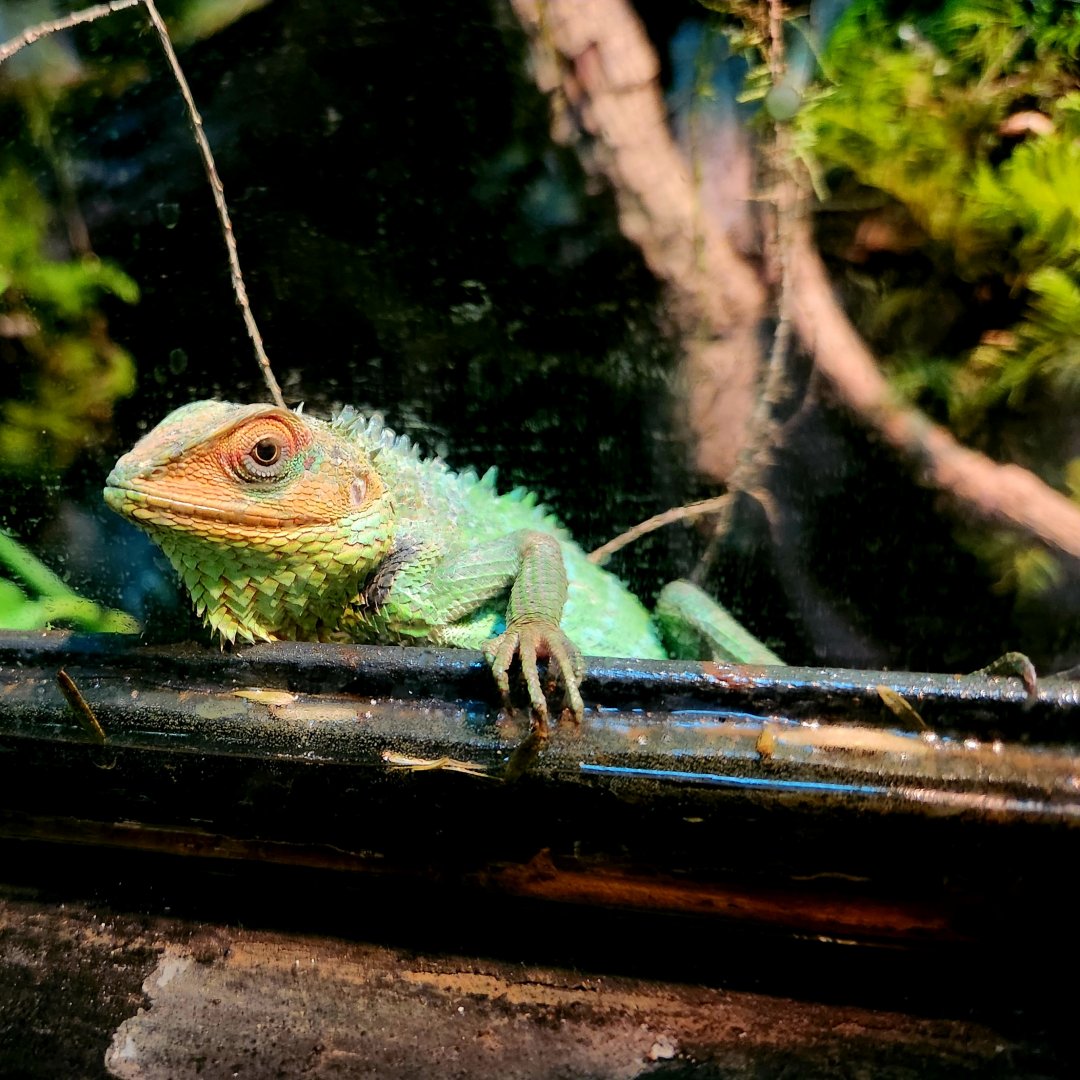
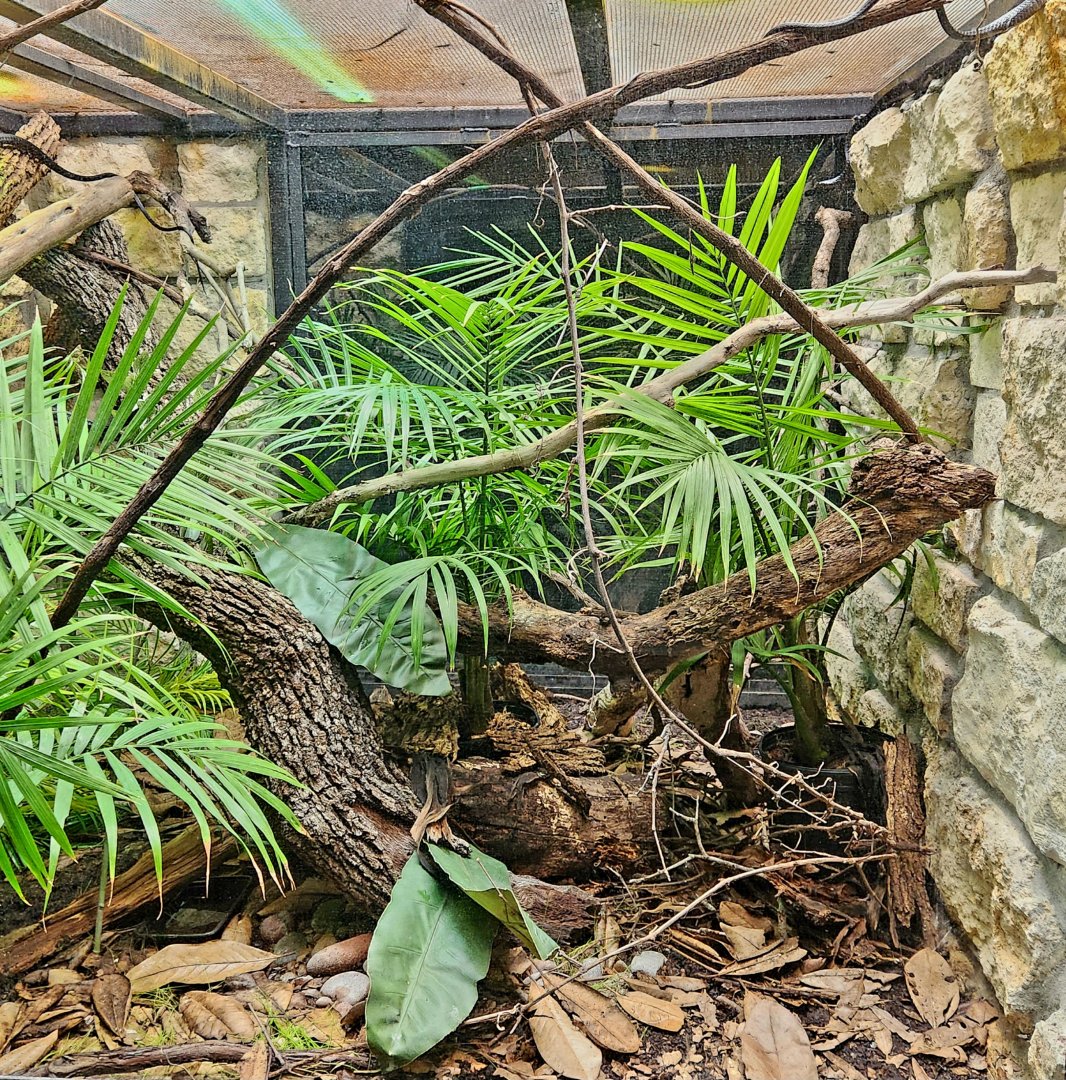
This was an exhibit I didn't know about prior to my visit, so it was a welcome surprise when I first saw it. This is probably a 6 foot long, 2 foot wide, 5 foot high paludarium housing Common Green Forest Lizards (Calotes calotes) and Tentacled Snakes (Erpeton tentaculatum). While the lizards are one of the most common species in India and Sri Lanka, they're pretty uncommon in the US trade. The bright reddish-orange on green color scheme is pretty tough to beat. Tentacled Snakes, for those unfamiliar, are a fully aquatic species of rear-fanged venomous snake named for the two "tentacles" coming off of their snout. They're pretty charming little snakes, even for those with a phobia. This combination works extremely well together, and the exhibit looks nice. The only thing I would do differently is add more foliage in the upper portions, but I'm sure that will grow in with time. The heater at the bottom right of the tank was also a bit distracting, I'm not sure how the filtration system here is set up but surely an inline heater can be added. Any fish added in here would essentially have to serve as feeders for the snakes, so an easily-obtained species like White Cloud Mountain Minnows (Tanichthys albonubes) would work well.


Exhibit 45: Vietnam
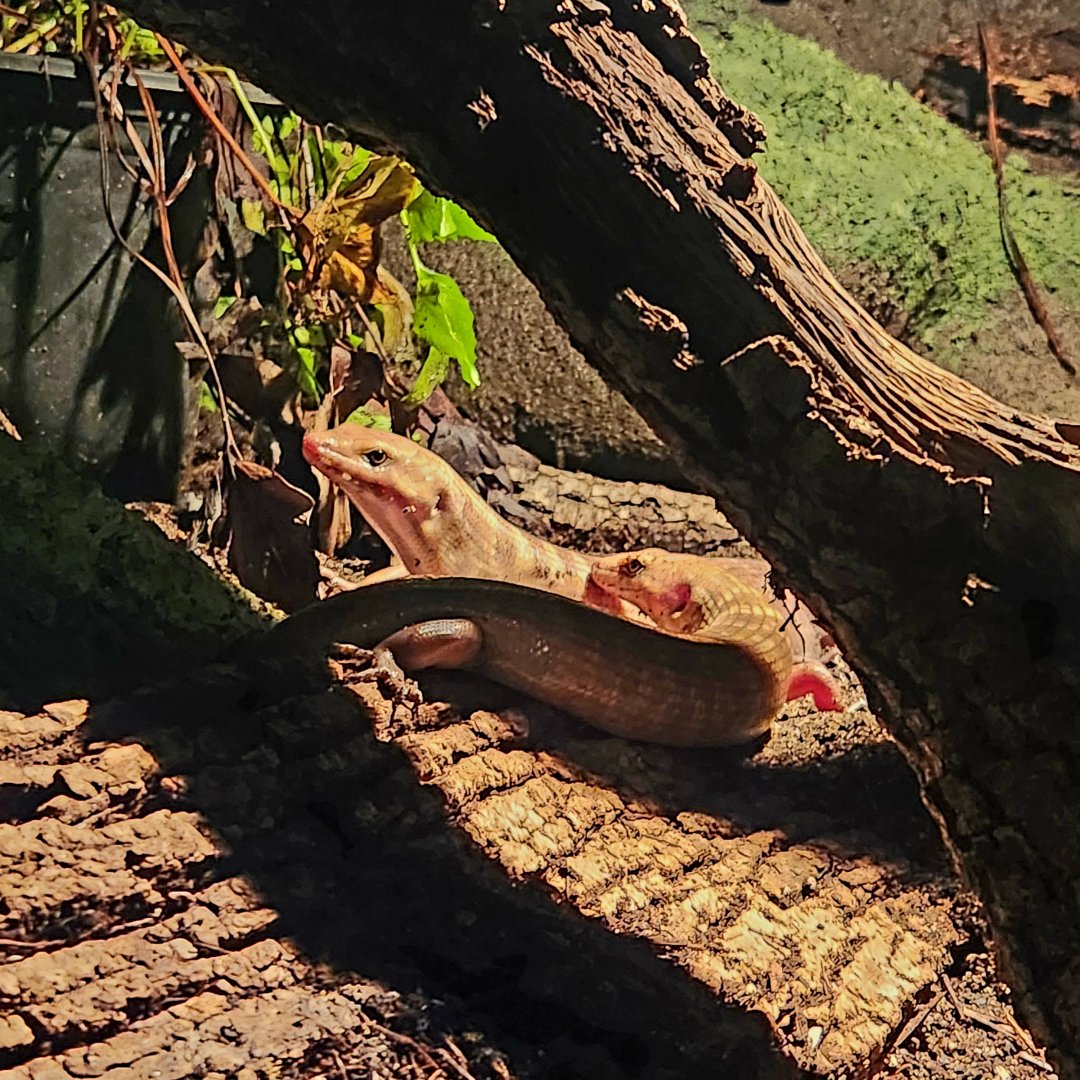
This is another corner exhibit in the second center alcove of exhibits, with a front viewing window measuring maybe 4' by 6'. This is one of my favorite Southeast Asian representations at the zoo, both for the species and the way the exhibit is built. The water feature takes up nearly the entire bottom of the exhibit, and is largely shaded by various branches and foliage. The rockwork, while subtle, is also very well-done in this exhibit. The hanging moss and traces of flowers are also great additions that really make this enclosure pop. The Chinese Crocodile Lizards (Shinisaurus crocodilurus) in here seem quite comfortable, and climbed higher than any Shinisaurus I've seen. The bottom houses a healthy-sized group of young Giant Asian Pond Turtles (Heosemys grandis), which will inevitably outgrow this exhibit. Once they do, Black-Breasted Leaf Turtles (Geoemyda spengleri) are almost the quintessential cohab with Crocodile Lizards. These are tiny, active, highly terrestrial turtles from the same vicinity as the lizards. Vietnamese Mossy Frogs (Theloderma corticale) might be worth a shot in this enclosure, and they're always crowd favorites. As far as fish, there isn't a great view into the water feature of this exhibit, so they would likely go unnoticed.


Exhibit 46: Madagascar
This is the last paludarium in the second alcove of exhibits, and it's the same size as the Calotes/Erpeton one mentioned earlier. Rather than mixing species, this exhibit is dedicated to a breeding group of Madagascar Giant Water Skinks (Amphiglossus reticulatus), a seldom-seen species from the island that specializes in feeding on crustaceans. As with the previous exhibit, I really like this one - the moss, various foliage, and the branch structure at the waterline all come together to make a beautiful exhibit. As with the South Asian exhibit, I think a bit more could be done with the background, but it'll take time for the foliage to mature. Given that the top 80% or so of the exhibit isn't being utilized, I would love to see some sort of chameleon introduced, possibly alongside a day gecko. A Panther Chameleon (Furcifer pardalis) would be the obvious cham choice, while Gold Dust Day Geckos (Phelsuma laticauda) are also readily-available and fit the biotope. It may even be possible to take this exhibit a different route and add some of the Madagascan reed frogs (Heterixalus sp.), though I'm not too familiar with the skinks so there may be predation. For the water feature, the smaller Madagascan fish mentioned earlier such as Bedotia geayi and Pachypanchax sakaramyi would make excellent choices.

 
Last edited:
Exhibit 47: Aru Islands
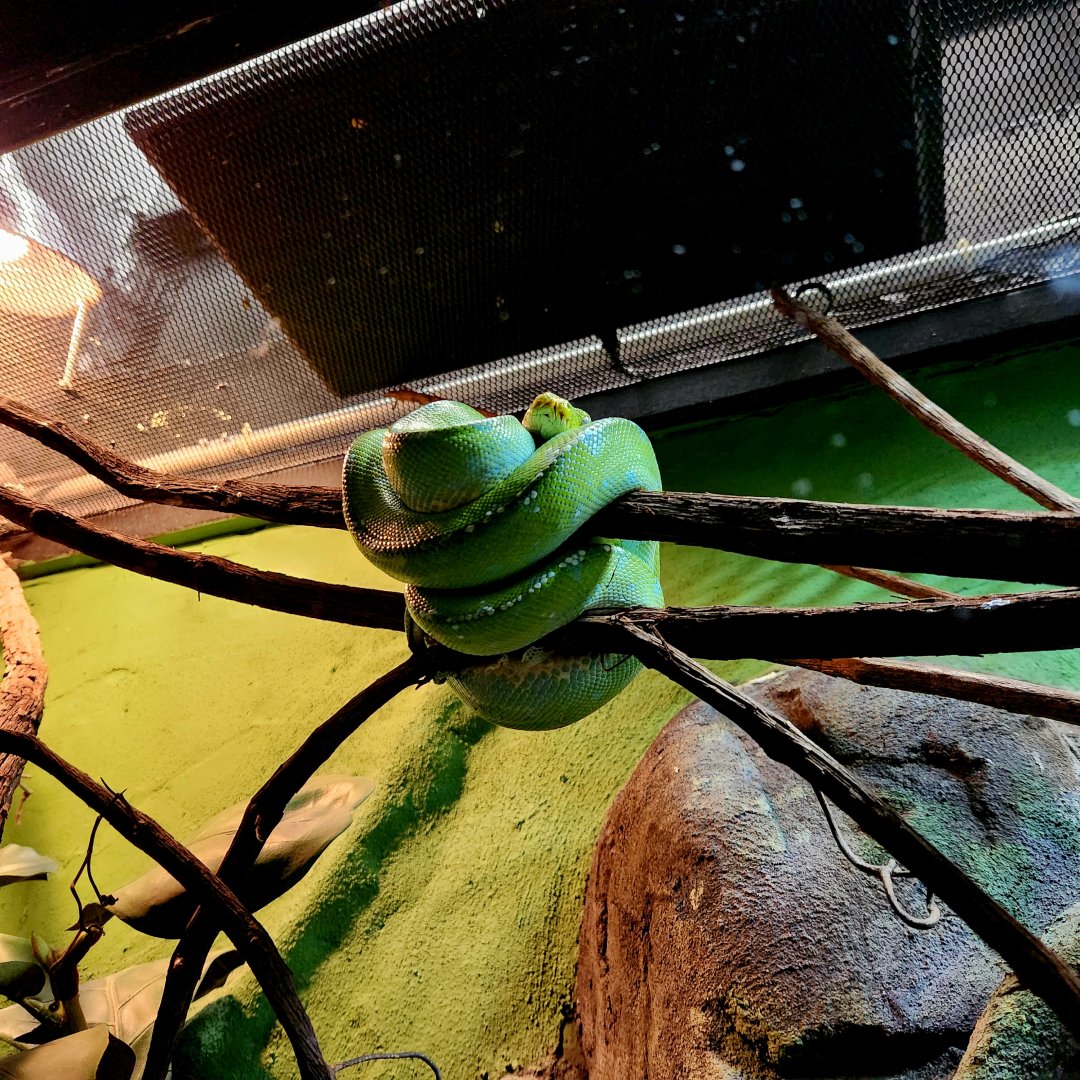
This is the largest Green Tree Python (Morelia viridis) exhibit that I've personally seen, and this enclosure must be 12' long, 3' wide, and 5' tall at minimum. It's got some great proportions, I really like this display size for a variety of different inhabitants. All the hanging vines look great, and the foliage fills in the bottom nicely. I think it could use a bit more plant life, but all-around this is a solid exhibit for a staple species. It's worth noting that these are TRUE Green Tree Pythons, M. viridis, from the Aru Islands Regency. The majority of Green Tree Pythons in the trade are from north of the Central Papuan Highlands, and are now classified as M. pulcher. Not much that I would add here in the way of other species, but you might be able to convince me to try White's Tree Frogs (Ranoidea caerulea) if I were running the show.


Exhibits 48-50: Assorted Species
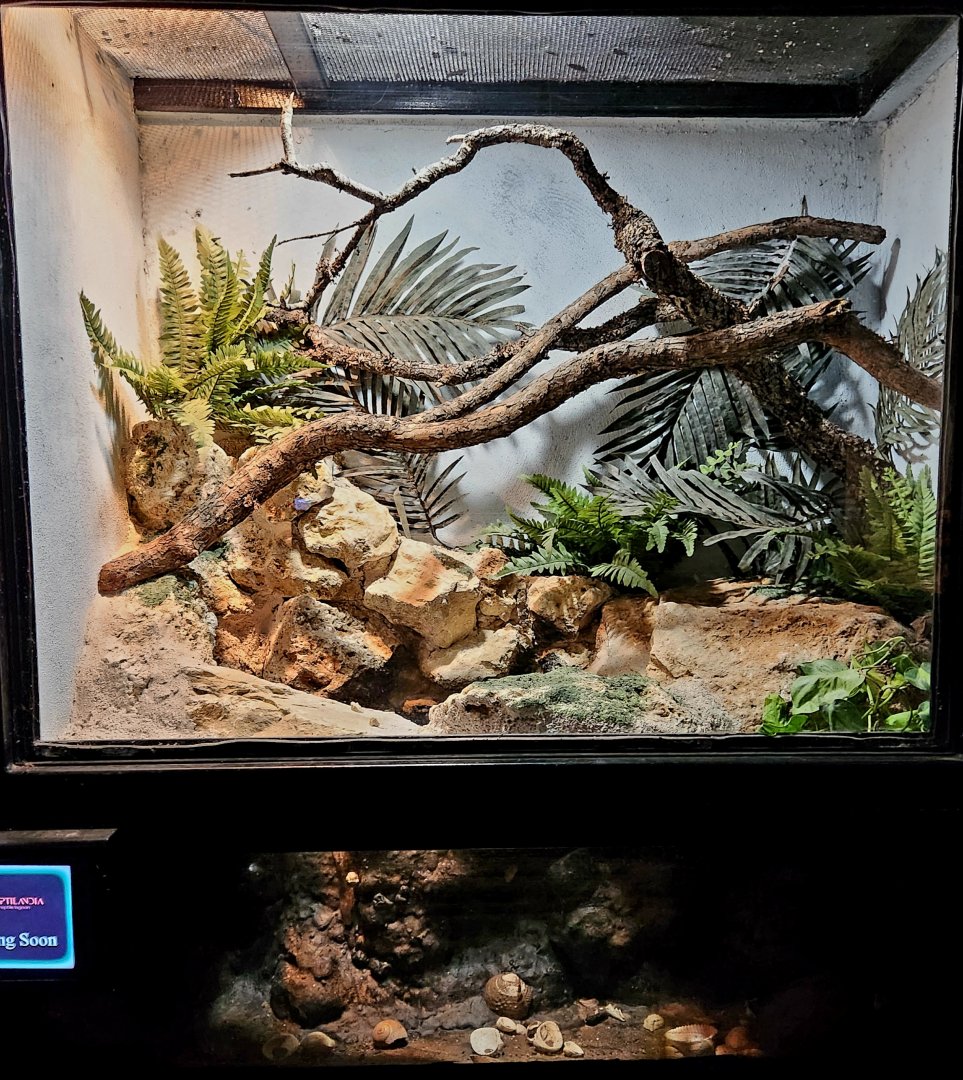
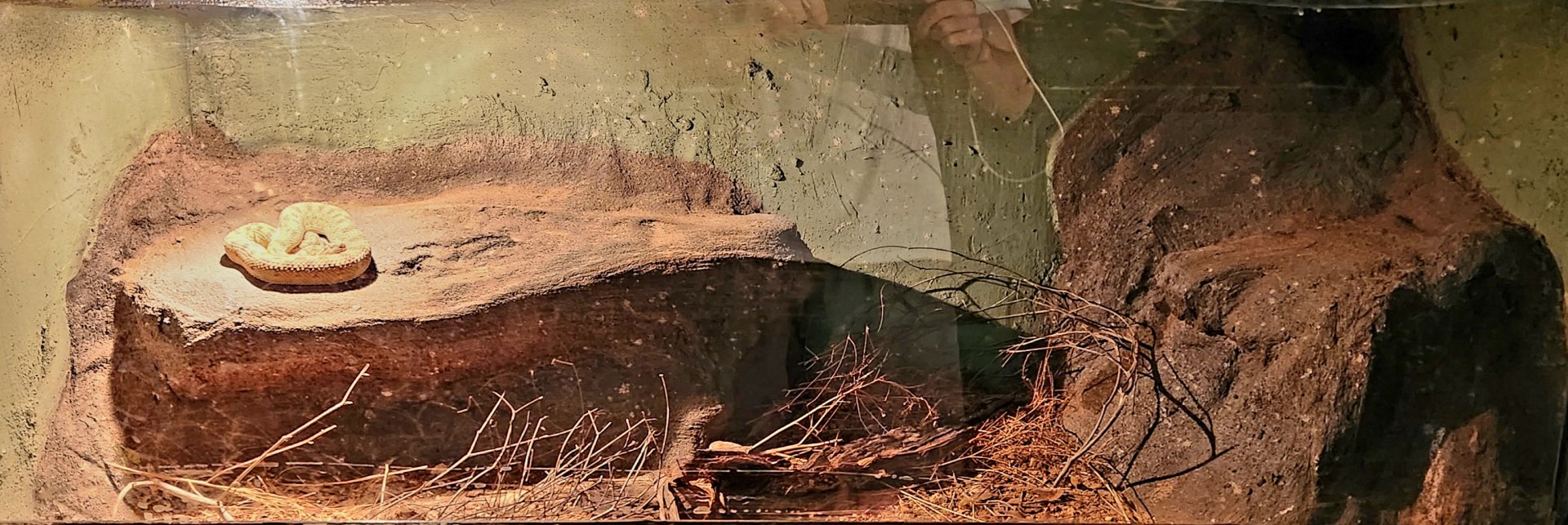
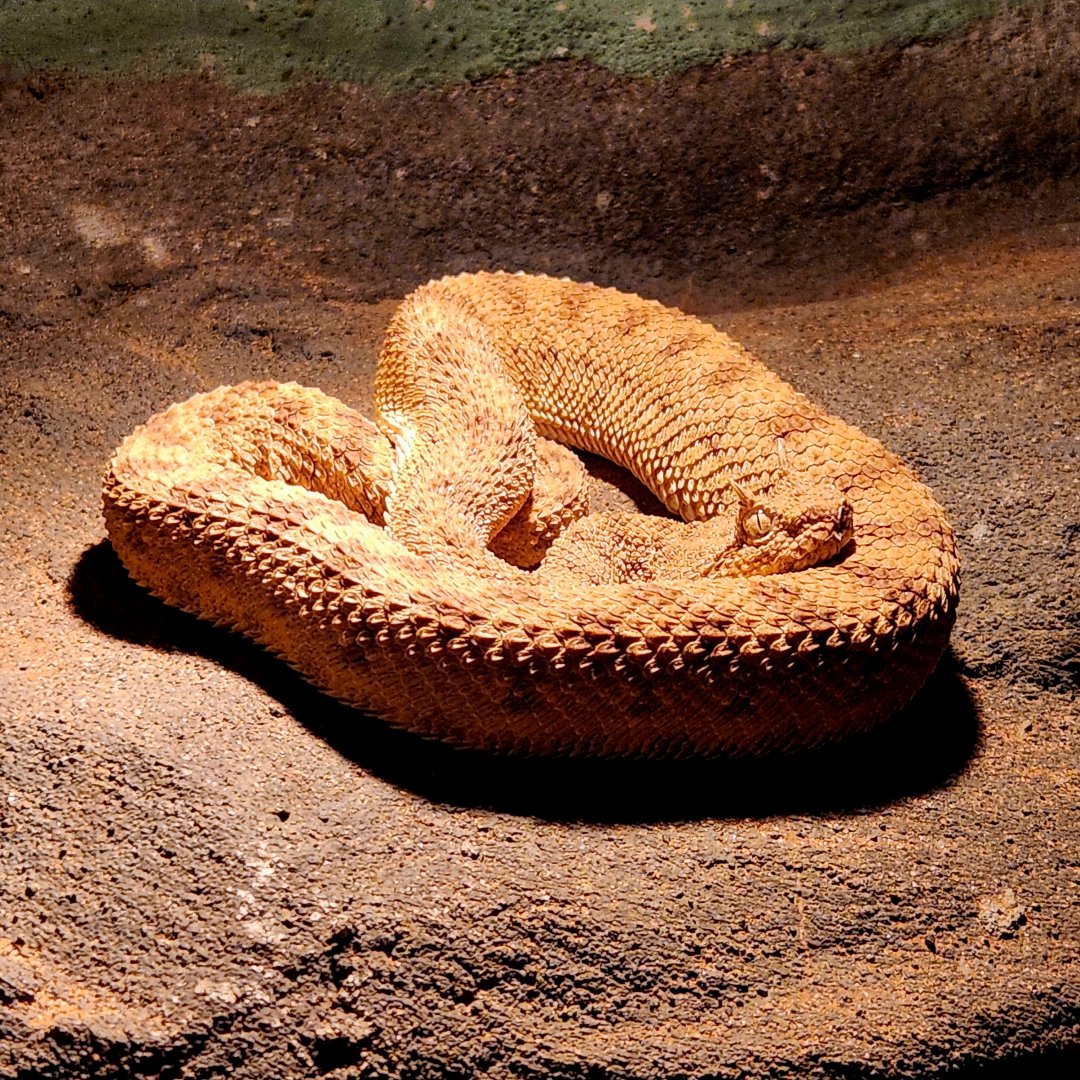
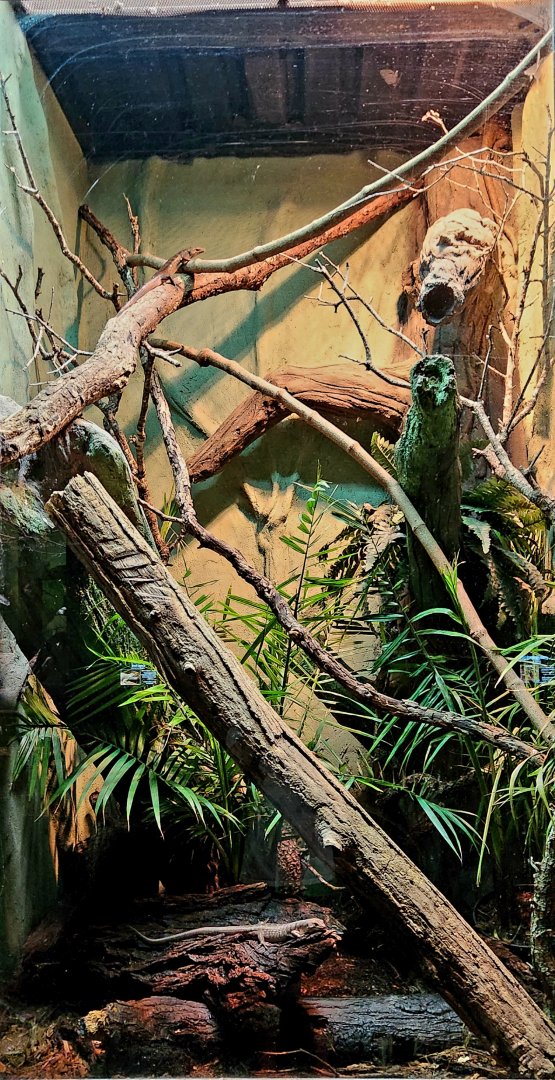
These three exhibits are small by Reptilandia's standards, maybe 3 feet by 2 feet each. Not too much rhyme or reason to what's in these, and they are simple and work well for the inhabitants, which are the real stars of the show here. First is an undescribed species of Cantil (Agkistrodon sp.), confirmed by the crew. This snake is NOT bilineatus or taylori, too many subtle differences - it's a shame this wasn't signed on my visit, but hopefully that changes soon. Also here is a Saharan Horned Viper (Cerastes cerastes) and a pair of Drakensberg Crag Lizards (Pseudocordylus subviridis), a rare species from Lesotho. These are pretty skittish lizards, but if you can catch a glimpse of them, the male is beautiful.


Exhibit 51: Oman
This exhibit is the same size as that for the Green Tree Pythons, probably 12' long and 5' high. The blue hue to the lights is a nice touch that varies things a bit, and the way the rockwork comes out of the wall and meshes with the branches coming out looks very authentic. The cluster at the left corner is especially naturalistic. This exhibit is home to 2.2 Jayakar Lizards (Omanosaura jayakari), a Middle Eastern lacertid that seems to be disappearing from the trade as of late. Other potential lizards to share this enclosure might include Rainbow Uromastyx (Uromastyx benti) and/or Bosc's Lizards (Acanthodactylus boskianus).


Exhibits 52-54: Assorted Species
Again similar to the last enclosures, these are roughly 3 feet by 2 feet each and hold a small selection of random species. The viper that I had identified as a Bushmaster (Lachesis sp.) is actually a Jumping Viper (Metlapilcoatlus nummifer), a short, stout, feisty species from Mexico. An Angolan Coral Snake (Aspidelaps lubricus cowlesi) is on display in the second, but despite their various common names, these elapids aren't related to coral snakes nor cobras. The final exhibit was set aside for Spotted Pythons (Antaresia maculosa), although I didn't see them on my visit. My favorite out of this trio is the Angolan exhibit, the vertically-placed branches and rock arrangement makes it feel pretty natural.


Exhibit 55: African Swamp
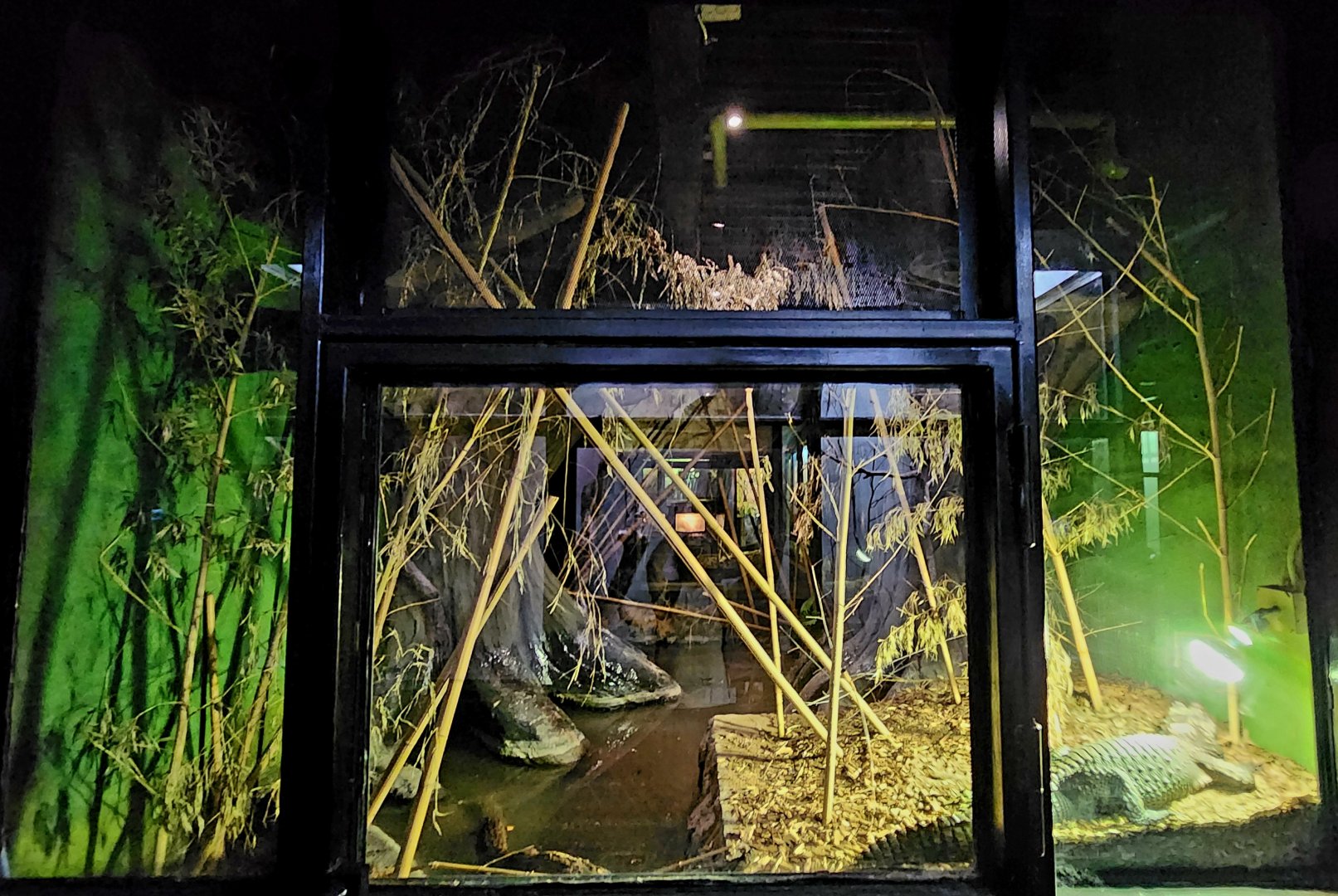
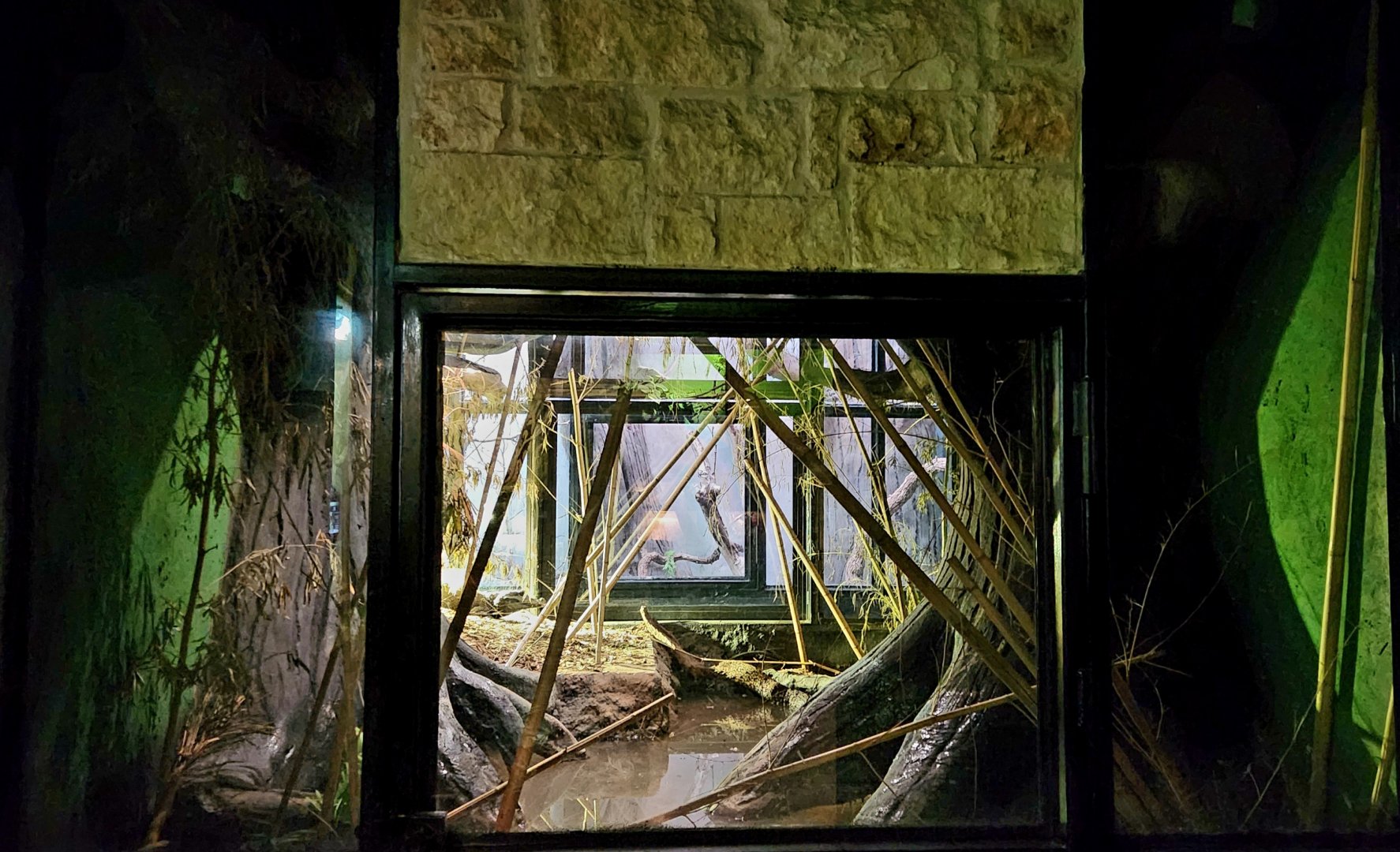
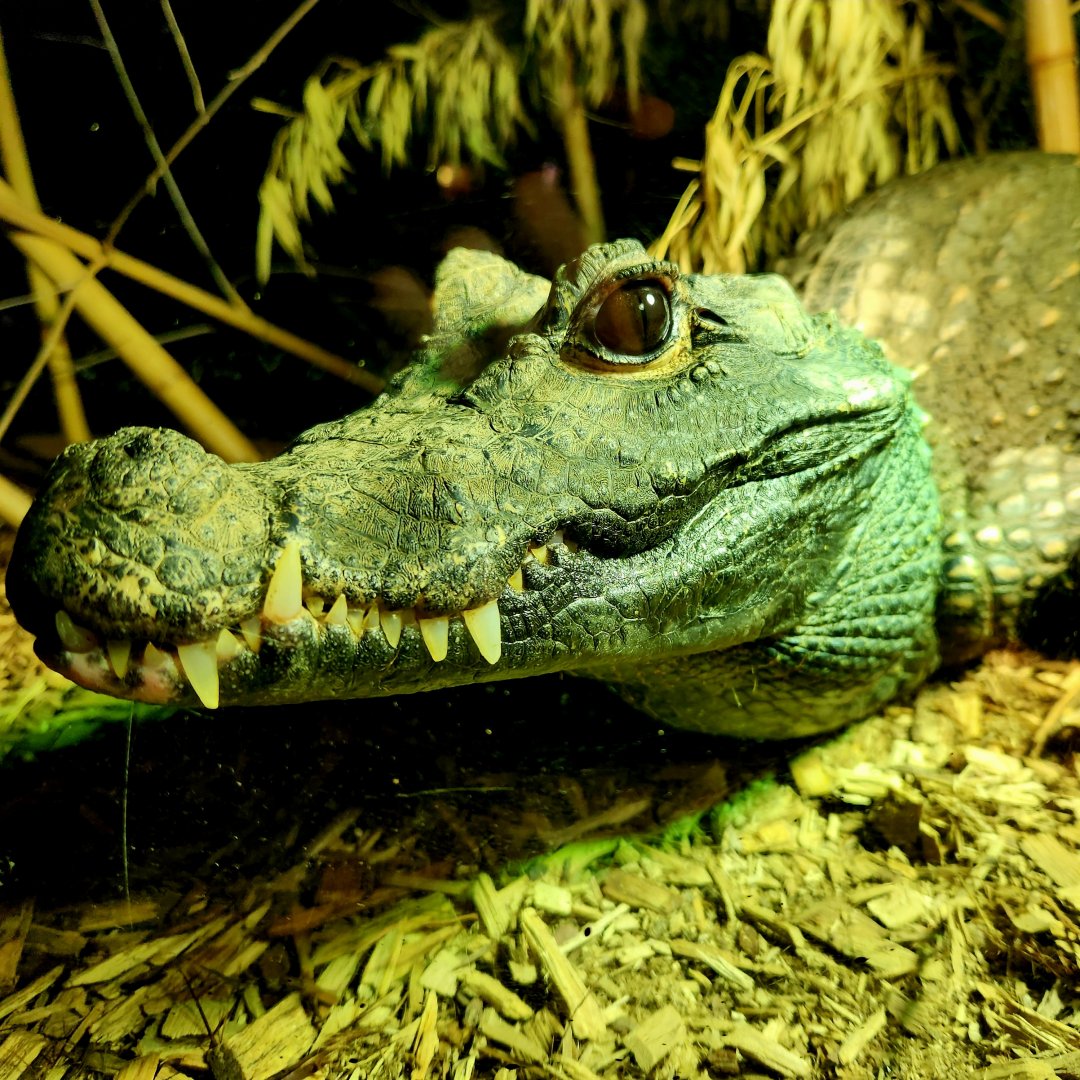
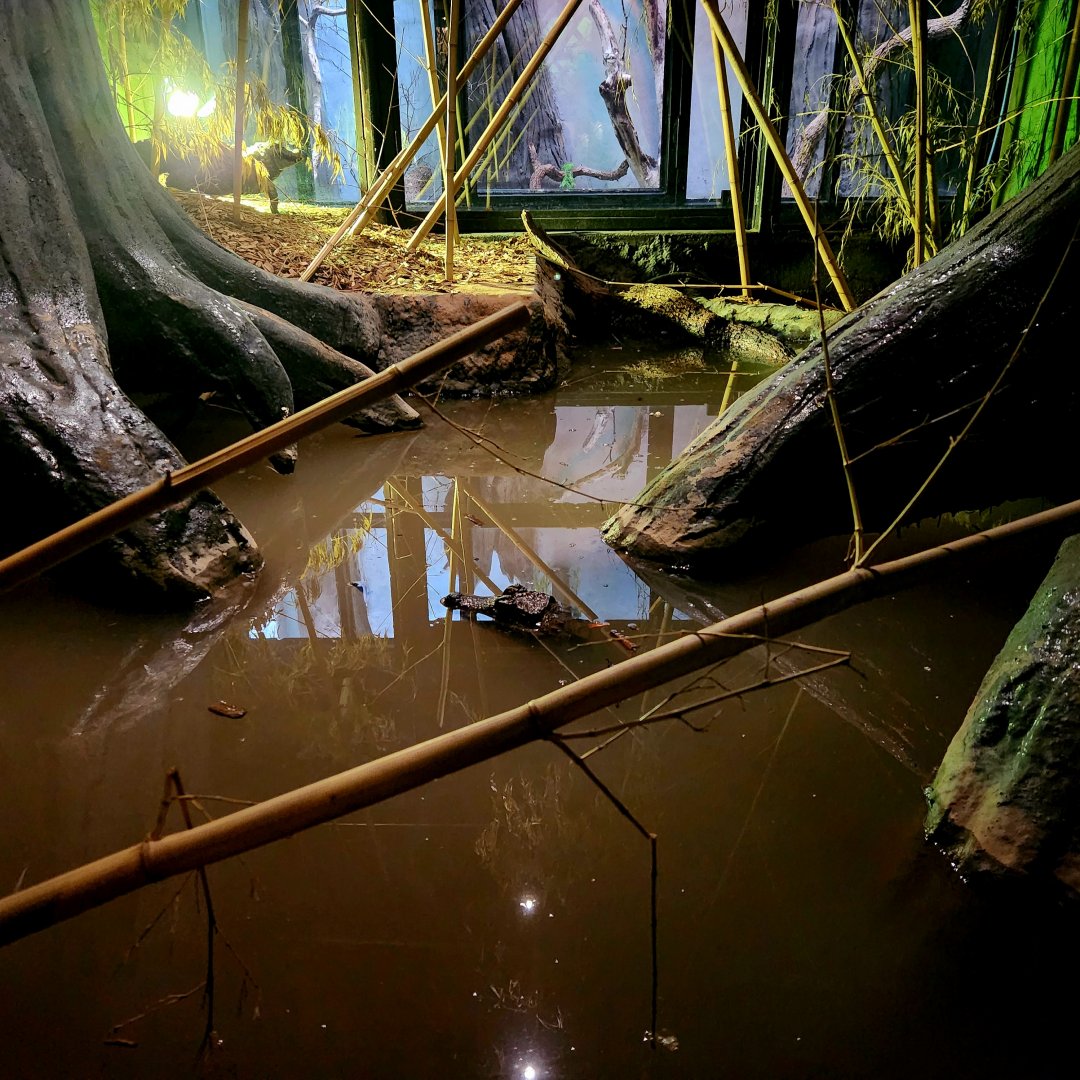
This larger exhibit (15' by 15' or so?) fills the third alcove of the lower floor, and currently houses a pair of Dwarf Crocodiles (Osteolaemus tetraspis). The male, Gimli, has shown some promising signs of eventually breeding his female, so baby crocs might be in the not-too-distant future. The exhibit has a large central water feature, deep enough for the crocs to comfortably submerge and completely hide underwater, behind artificial tree roots. A large platform provides a haulout and basking spot for the crocs, where I got some great pics of the male. I love the bamboo reeds placed at all different angles in this exhibit, and I'd love to see that idea expanded upon with more grassy plants. There isn't a great underwater view in this exhibit, so fish would likely go unnoticed. As well as turtles might do in this exhibit in general, a breeding pair of Dwarf Crocodiles may prove to be too aggressive for most smaller species. Still, the Nile Softshell (Trionyx triunguis) from an earlier exhibit might be able to hold its own in here. The upper reaches of the land area could use some activity as well - whatever species is chosen would need to be too small for the crocs to care about and/or too fast for them to catch. To me, that screams skink, and any number of Mabuyas (Trachelypis sp.) would be appropriate.

 
Exhibit 56: Southeastern Australia
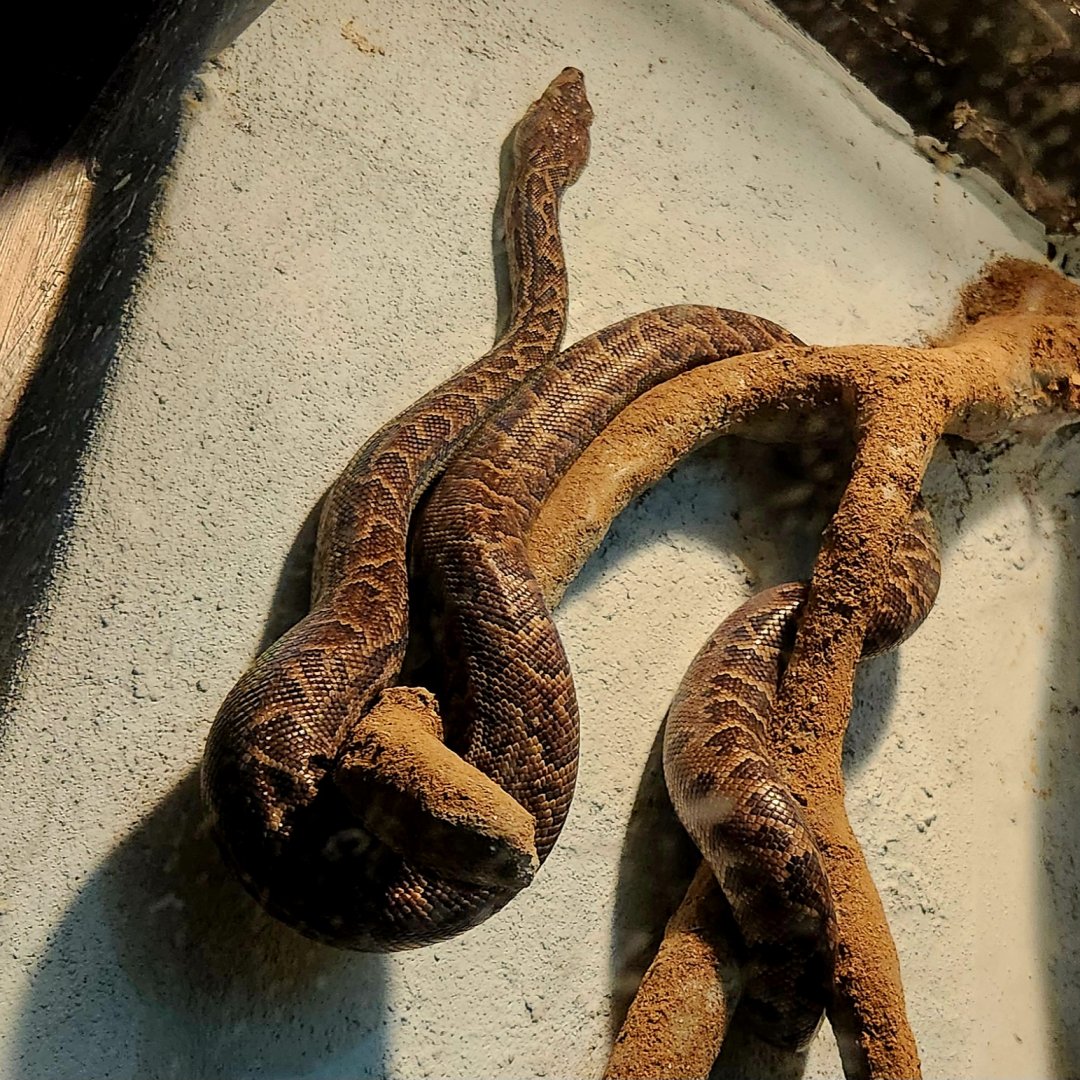
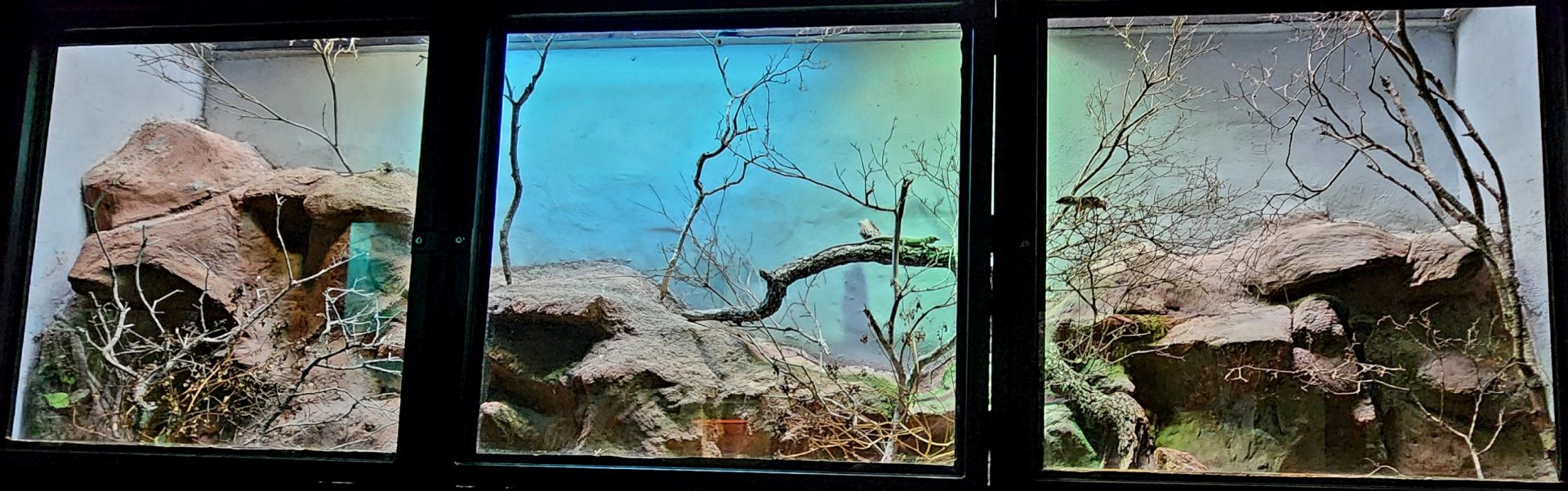
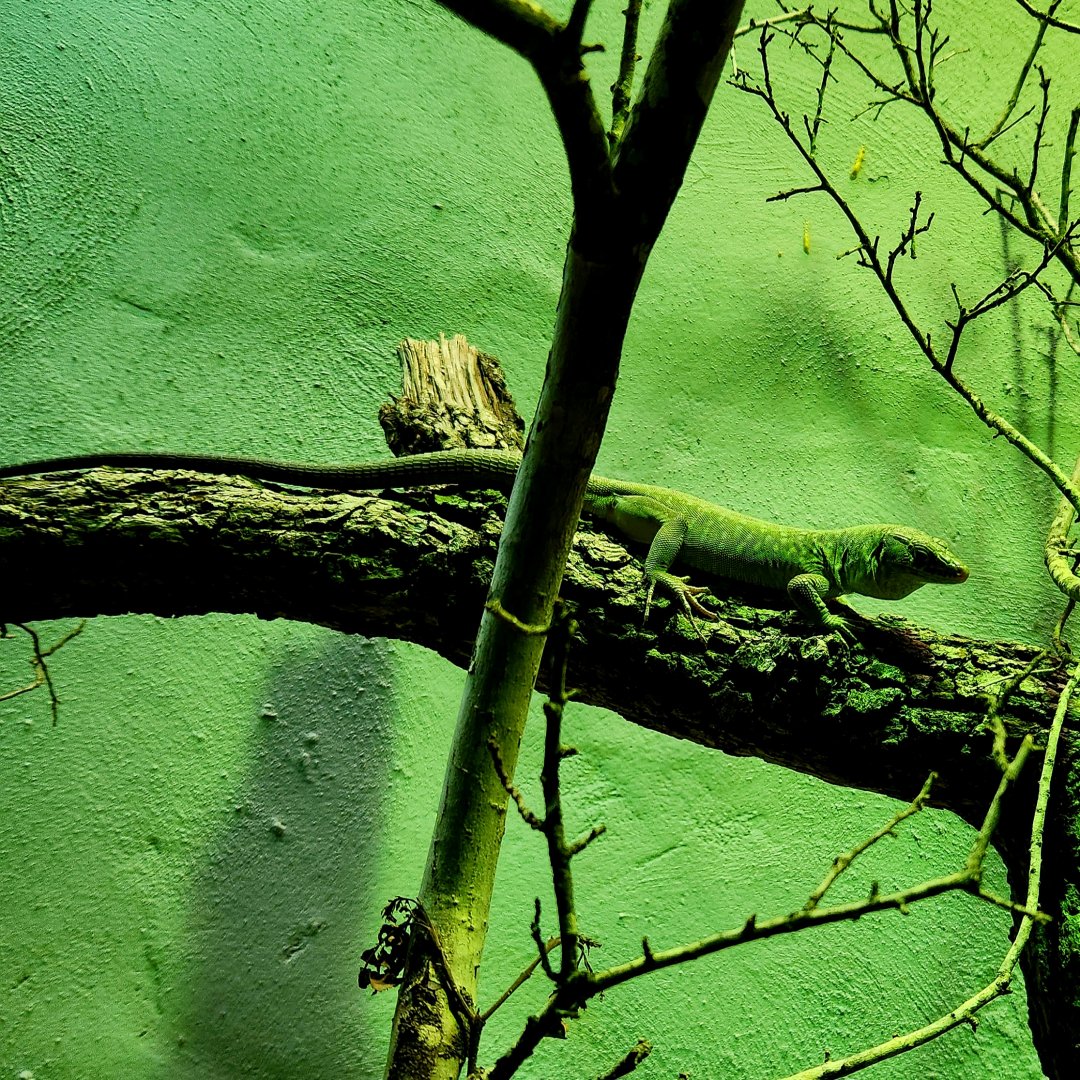
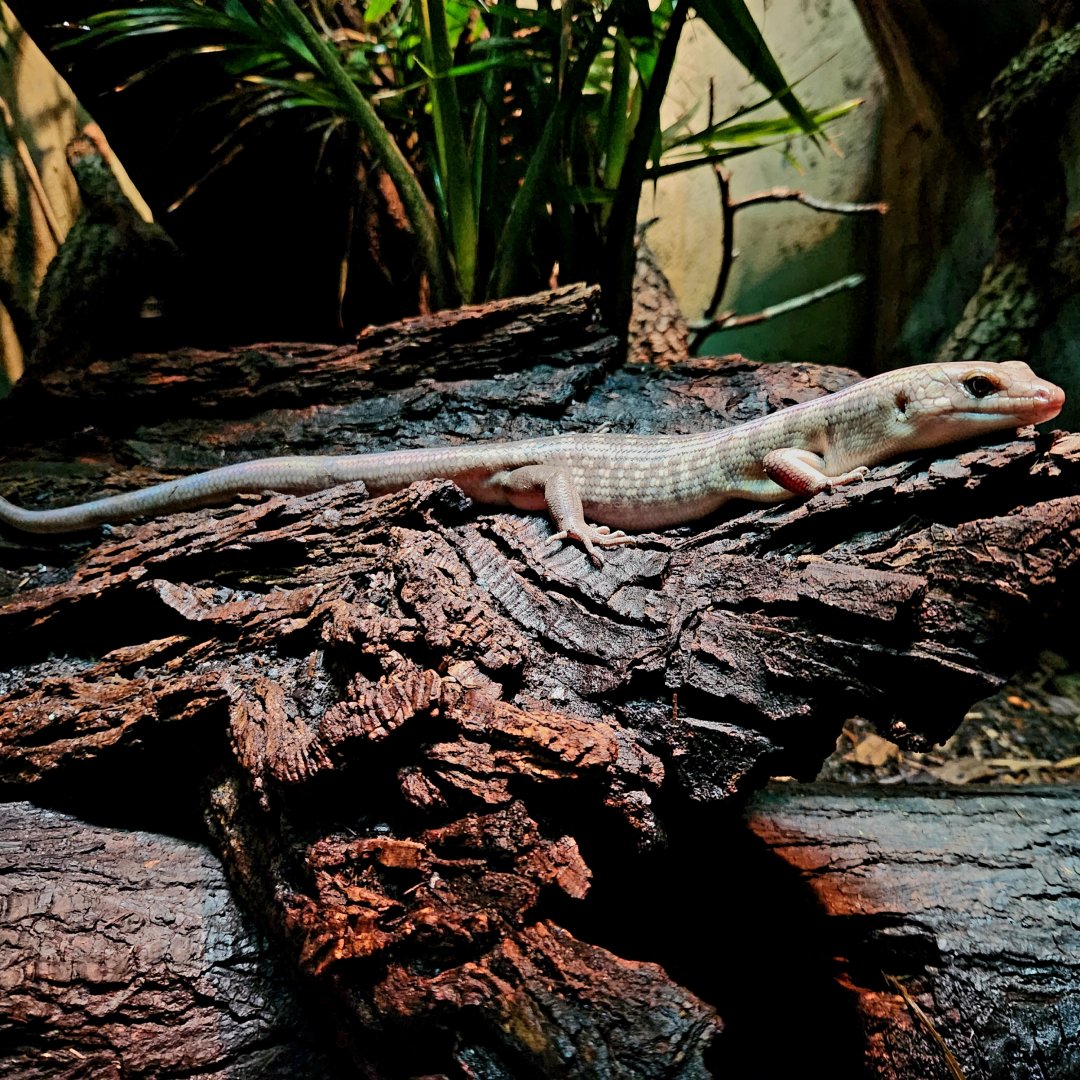
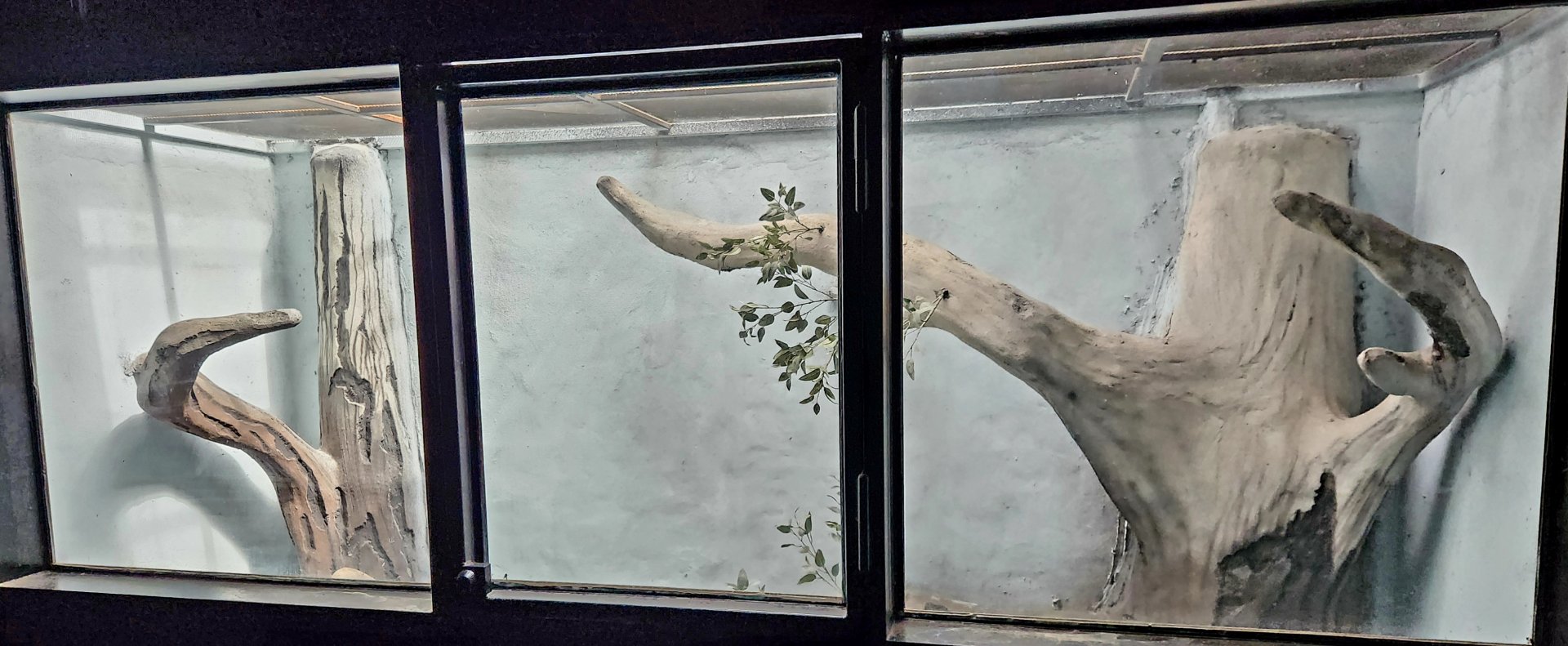
The final two-story exhibit in the collection, this replicated Eucalyptus forest features multiple full-height trees that appear as if they were struck by lightning, complete with real branches in the lower levels and hanging artificial plants placed strategically throughout. The plain gray background on this exhibit makes it feel a bit more like an old zoo enclosure from the last century than one of Reptilandia's exhibits, though I'm not sure if any additional paint is planned or not. Overall, this is a great exhibit for the pair of Lace Monitors (Varanus varius) that inhabit it, giving them multiple options for every major need (basking spots, water, etc). This is one of the keys to all the successful mixed-species exhibits at the facility, as the need for competition is eliminated - it's especially important when cohabitating Varanids. Both of the two monitors in this exhibit are considered "Bell's Phase", in that they possess a codominant gene that gives them a beautiful black and pink banded pattern as opposed to the typical finer pattern. There was some breeding activity going on throughout the day while I was there, so fingers crossed for some baby lacies. This exhibit is solid as far as its stock, I can't think of a species I would want to mix in here.


Exhibit 57: Cayos Cochinos
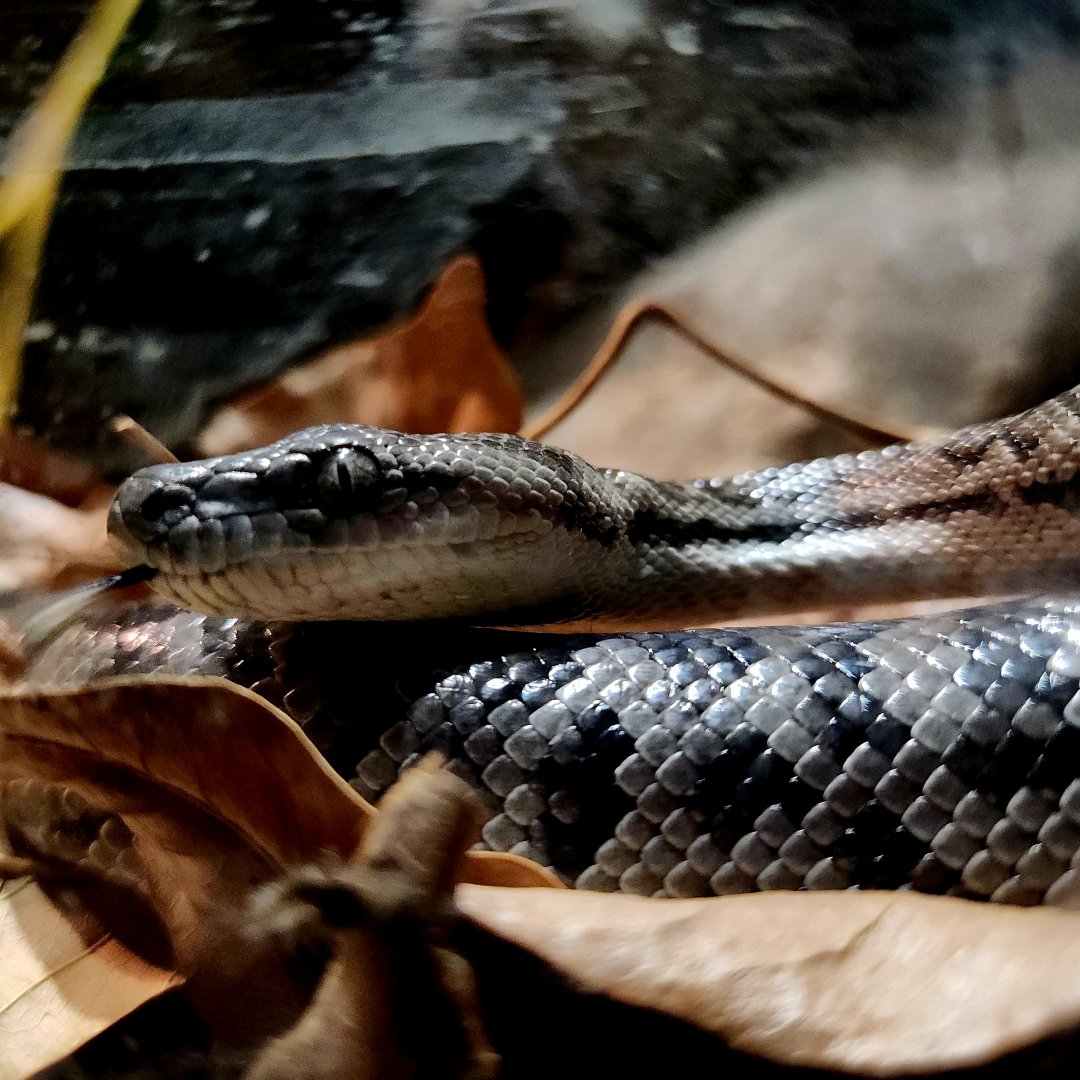
Honduras' "Hog Islands" are a series of just over a dozen tiny islands located about 20 miles off the nation's coast. The waters around the islands are protected, and the reefs are teeming with life, but onshore lives a population of Northern Boas (Boa imperator) that are well-renowned within herpetoculture. Hog Island Boas needed to evolve to tackle avian prey instead of their typical mammalian-based diet, so they shrunk significantly. Adult females rarely surpass 6 feet in length, with males staying even smaller. Their main appeal to collectors is that they're naturally hypomelanistic, making them much lighter than other boas. The pair in this exhibit have an elaborate series of roots, branches, and shrubbery to climb in, and were especially active on my visit. While the male is still pretty small and might show an interest in lizards as prey, he should eventually outgrow this and Allison's Anoles (Anolis allisoni) would make for a beautiful addition that fits the Cayos Cochinos biotope. It does feel a bit empty now with the pair of small boas, but that's not necessarily a bad thing for their sake.


Exhibit 58: Solomon Islands
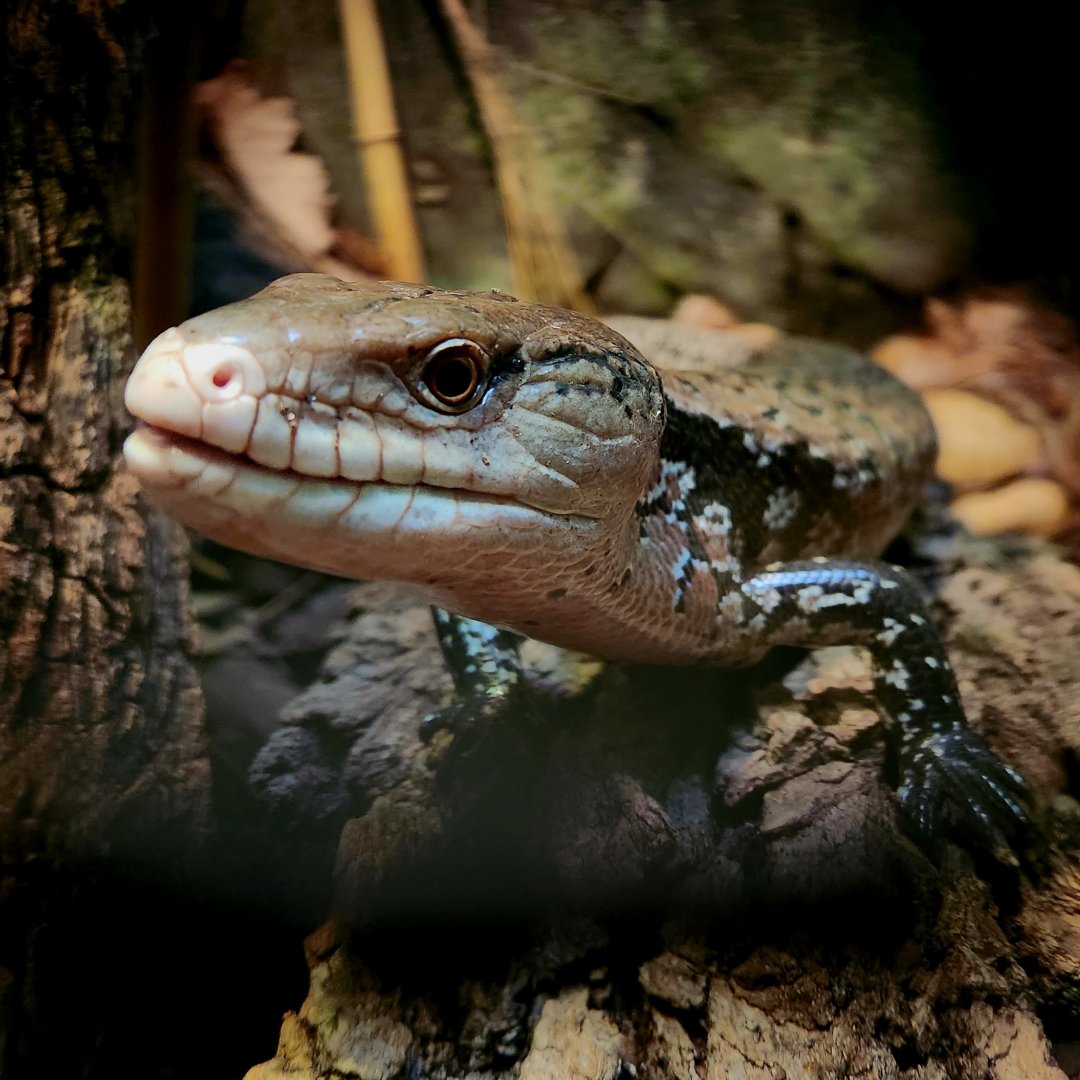
The tallest of the Solomons exhibits at the zoo, this exhibit measures roughly 4 feet square at the base and 8 feet high. The artificial logs are well-done, and I'm always a huge fan of live palms in any enclosure. It plays home to a group of maybe four or five Solomon Island Ground Skinks (Eugongylus albofasciolatus), and a pair of Prehensile-Tailed Skinks (Corucia zebrata). This is a beautiful combination, and Solomon Island Leaf Frogs (Cornufer guentheri) would be an excellent final addition. The Prehensile-Tailed Skinks are an especially interesting species, for those unfamiliar they are the largest described skink species and one of the only reptiles that is known to form family groups. It will be especially exciting to see this pair raise their babies together in this exhibit. They do seem to have a favorite spot at the back right corner of the exhibit, which makes photographing them a bit difficult, but that's a minor nitpick.


Exhibit 59: Solomon Islands
This exhibit flips the previous one, measuring roughly 8 feet long, 4 wide, and 4 high. This is the Spiny-Neck Monitor (Varanus spinulosus) exhibit, and it's one of the ones that could benefit from a step stool the most. The fact that looking back in my pictures, I can't tell whether most of the branches are real or artificial says a lot, and the ferns are a nice touch. These monitors are dead still when they're relaxed, but when they are active it's like a squirrel on crack. One individual gladly chased me from one side of the exhibit to the other, rapidly flicking its tongue trying to figure out what was happening when I snapped my fingers. Because of their wild temperaments, I wouldn't risk adding anything in with them, but they're a wonderful species to have on display.


Exhibits 60-61: Australasian Species
These two exhibits measure roughly 4 feet by 3 feet by 2 feet each, and both hold a single species. I really don't have too much to add on these exhibits, they're pretty simple and don't really stand out much. The first holds another pair of the same E. albofasciolatus seen earlier, while the second holds a juvenile Blood Python (Python brongersmai). Not sure why the skinks are displayed twice, but the Blood Python is a nice little snake to have. I'd like to see the skinks replaced with another species, and I'm sure as the collection grows (animal growth and population growth) some more interesting species will fill these two exhibits.

 
Exhibit 62: Madagascar
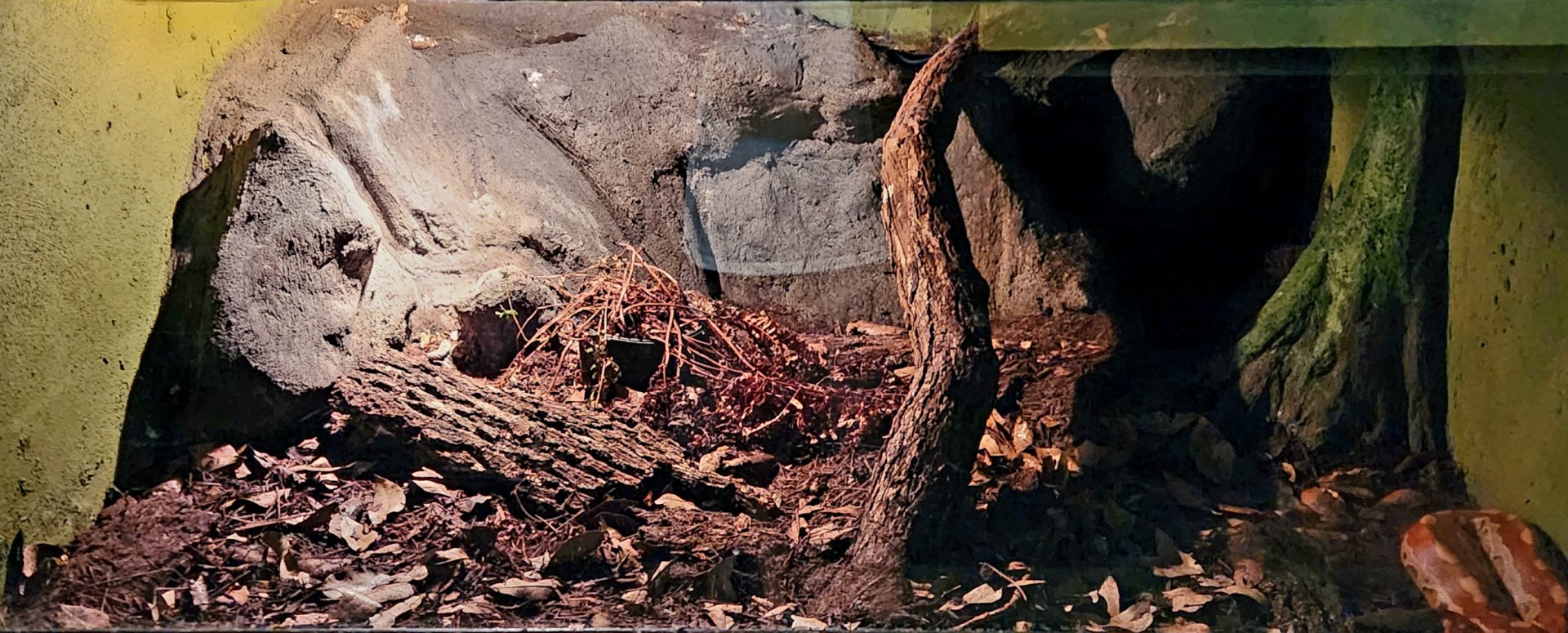
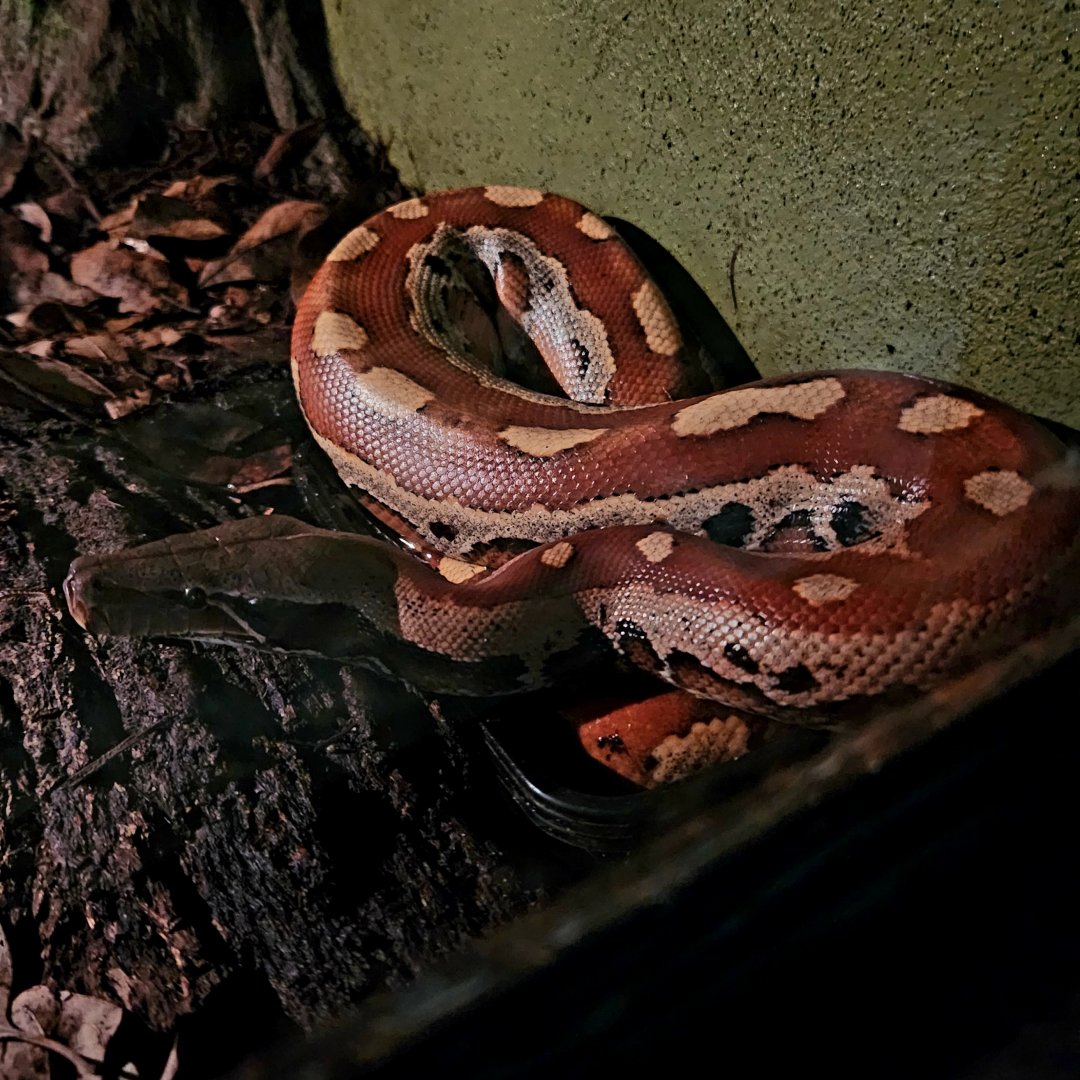
This exhibit was only stocked the morning of my visit, with the largest pair of Madagascar Ground Boas (Acrantophis madagascariensis) I have personally seen. They should fill this exhibit nicely, though it definitely needs some more foliage and branches. I don't want to comment too much on it with it being such a new exhibit, but I will say the artificial work in here is some of the best in the entire zoo. I believe they are fiberglass or epoxy, they are definitely way more detailed than most of the concrete structures (not that they don't look great!) As far as additional stock, filling in the upper levels of the exhibit would make this great for a larger chameleon like the Oustalet's (Furcifer oustaleti) kept in a later exhibit. There's also the possibility of a number of smaller lizards, such as Giant Day Geckos (Phelsuma grandis) or surplus Cuvier's Madagascar Swifts (Oplurus cuvieri).


Exhibit 63: Northern Australia
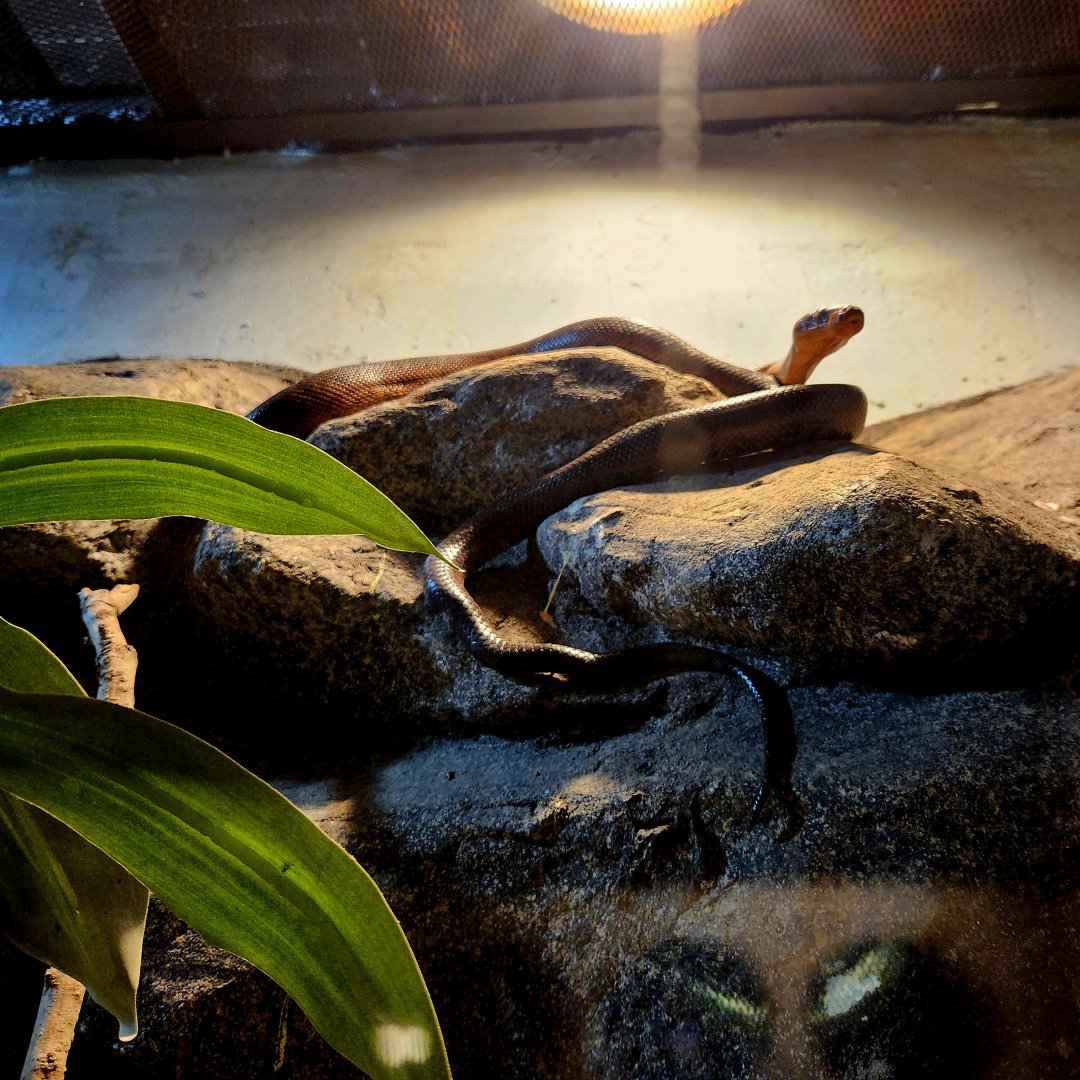
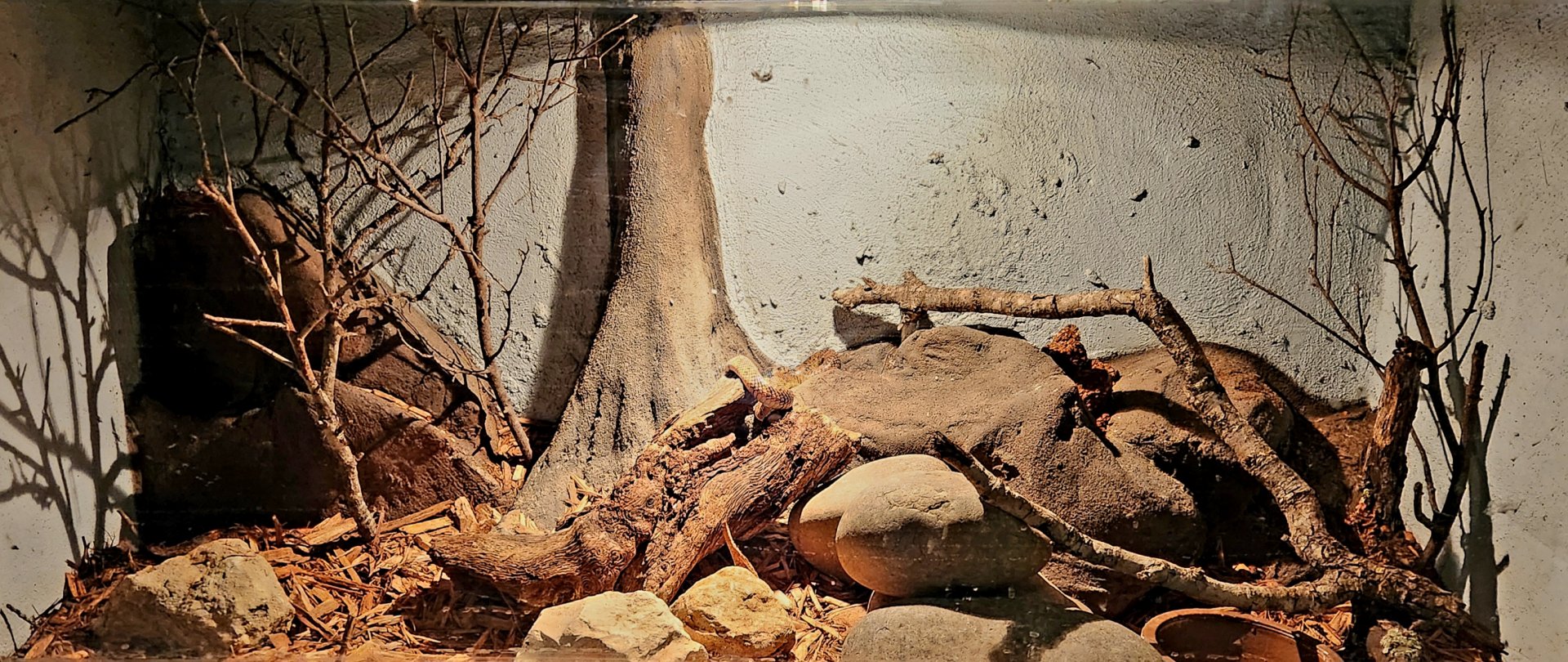
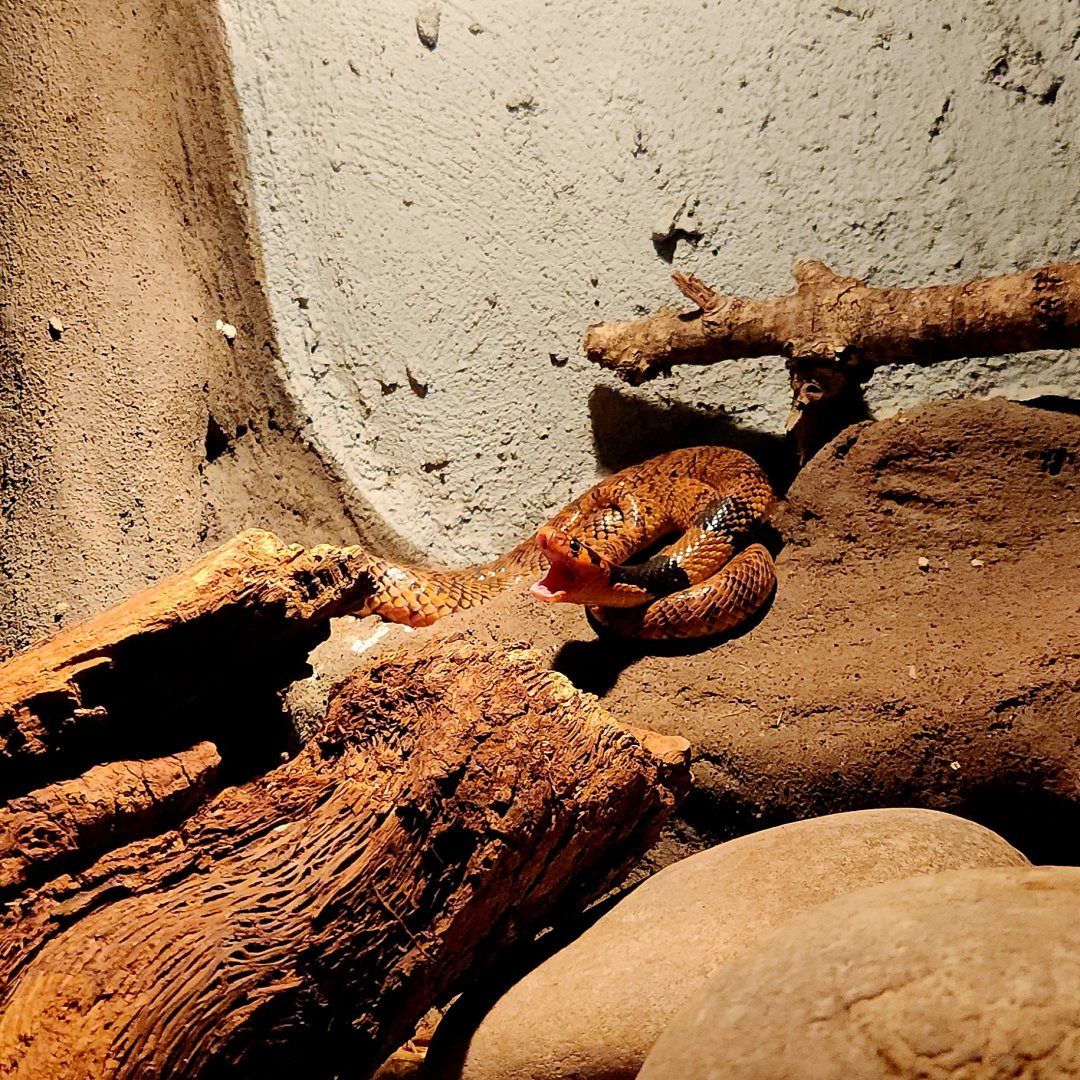
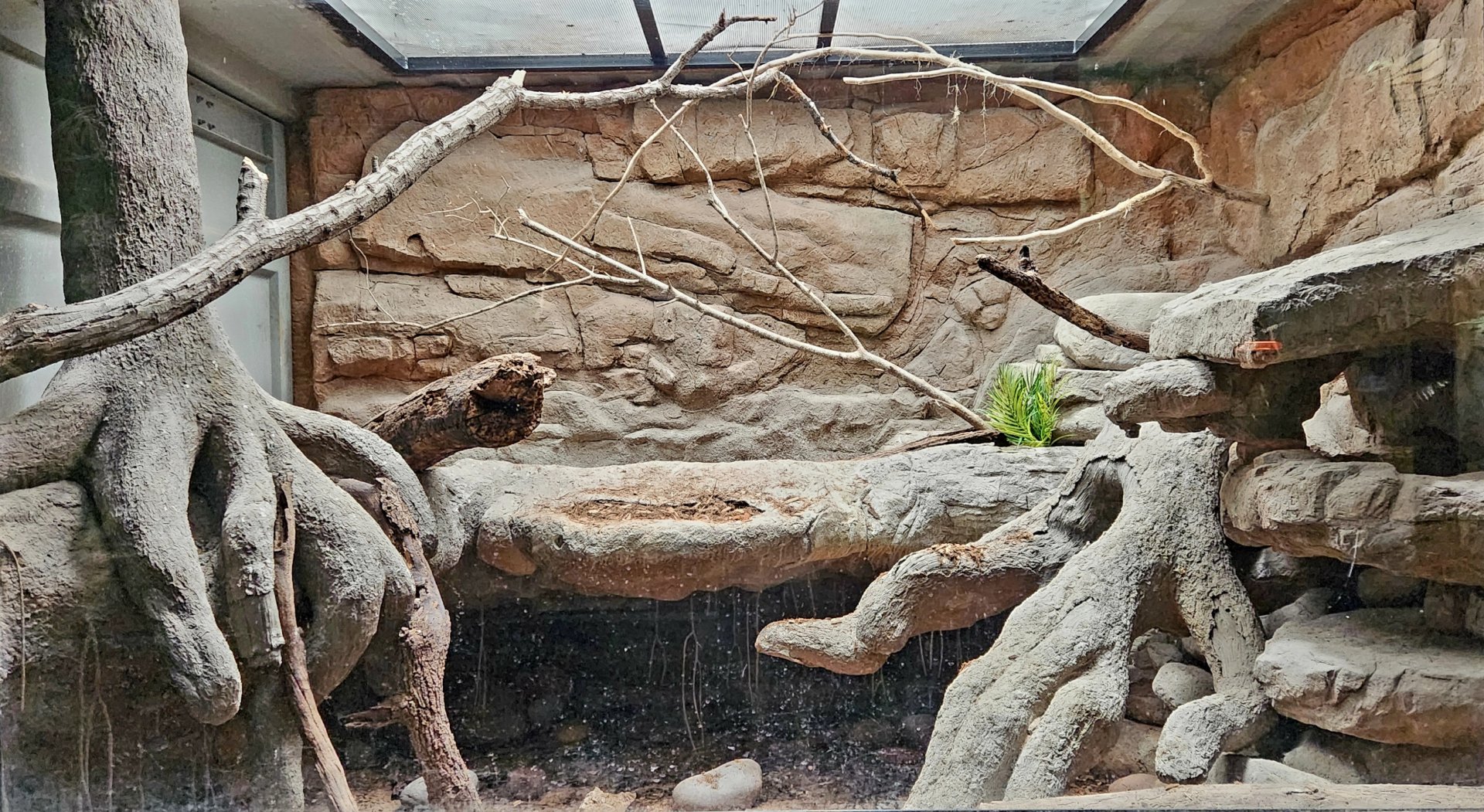
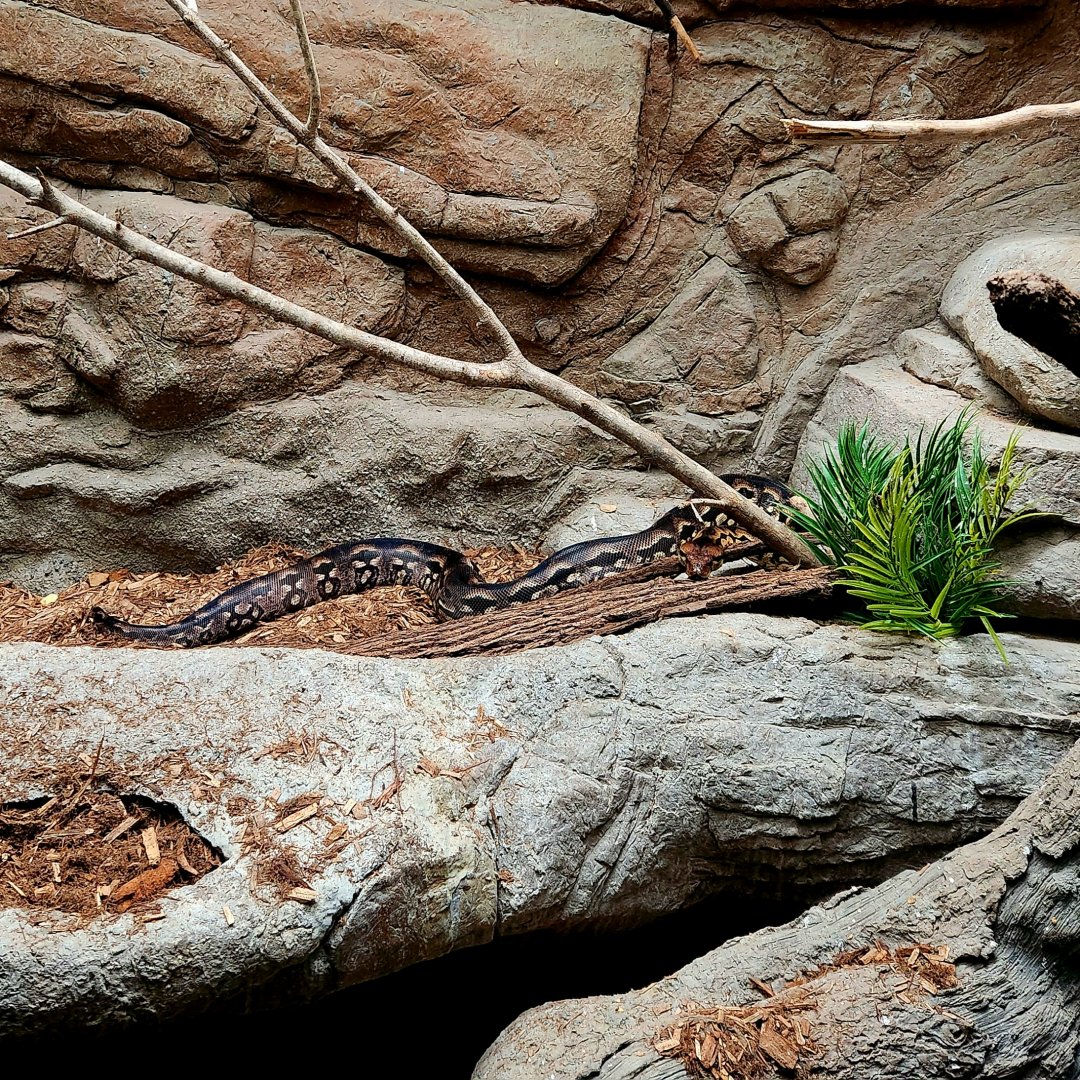
The final exhibit on the Tropical Building's lower floor, this plays home to a pair of Olive Pythons (Liasis olivaceus). This and the previous exhibit are actually built out of a repurposed shipping container, which makes me wonder how many others were constructed the same way. They are each roughly 10' long, 8' wide, and 8' high, a perfectly-sized space for a pair of large snakes. This one features the same fiberglass or epoxy material seen to its left, and it creates a pretty nice Australian-themed exhibit. The relative lack of color and visible water bowl are my minor perfectionist nitpicks that I'd change, but I can't say there are any species I would have to have in here. I've always liked the idea of mixing these snakes with Egernia sp. skinks, as they'd probably go unnoticed, but given their relative rarity in the United States it may not be worth the risk. I'm sure Ari wanted to do Papuan Olive Pythons (Apodora papuana) in here to keep with the New Guinea-heavy theming, but my guess is that having a pair of snakes was more important (Papuans have some pretty cannibalistic tendencies - still, a single would make for an INCREDIBLE display specimen).


This wraps up the lower level of the Tropical Building! 63 exhibits in total, with at least a dozen more upstairs (plus the upper levels of the two-story exhibits) and almost twice that in the Temperate Building :)
 
Moving onto the top floor...

Exhibit 64: Guatemala
Home to one of Reptilandia's rarest species, this exhibit holds Guatemalan Beaded Lizards (Heloderma charlesbogerti) and features several dens built into an artificial hillside, which look as authentic as they possibly could. The grassy plants throughout the exhibit are a great touch, but I think a few more of those branches could be added to fill things in a bit. A very high quality exhibit that near-perfectly replicates the natural habitat of its species, the most endangered of the venomous lizards. Given the slow nature of this species, a smaller lizard could cohabitate perfectly with them in theory. Giant Whiptails (Aspidoscelis motaguae) fit the biotope perfectly, and are an attractive choice.


Exhibit 23.5: Carettochelys River (Top Floor)
Bear with me on the numbering system of these, this is technically part of the Carettochelys River, so I'll count it as the same exhibit. The upper portion consists of a ramp leading up to a sand bank that makes its way all the way to the back of the building, giving the turtles at least an additional 50 feet when they have access to it. There's not much to say about its contents, it's essentially sand and a few rocks. Currently, this houses Giant Butterfly Lizards (Leiolepis guttata), an interesting choice given that they don't coincide with the range of the Fly River Turtles. There are two taller areas that could be portioned off here for a more arboreal species - the Angle-Headed Forest Dragons (Hypsilurus magnus) from earlier would be a great candidate, given that they live on New Guinea. The Eastern Water Dragons (Intellagama lesueurii lesueurii) from earlier could occupy the larger arboreal portion of the exhibit, allowing the Mertens' to be moved to a different exhibit and the first two-story exhibit to be repurposed entirely. I'm especially excited to see the Fly River Turtles (hopefully) use the land area provided to them, I'm sure there will be cameras monitoring them if/when it happens.


Exhibit 65: Costa Rica
A smaller exhibit measuring maybe 5 or 6 feet in every direction, I definitely like the brick walls on either side - they'd look even better with the cracks filled with moss. This exhibit currently holds a Central American Tree Boa (Corallus ruschenbergerii), a seldom-seen species that might not be as bright as its Emerald cousins, but is equally beautiful. The plants are nice, but the visible pots are a bit distracting. More of them definitely wouldn't hurt either, and moving the display in the direction of a mangrove forest would replicate an interesting habitat these boas are known from. Of course, frogs are always a welcome addition in an exhibit designed around Central America or Corallus - given the size and the arboreal nature of the snakes, Cane Toads (Rhinella horribilis) might be a great choice, and these giants are always popular with guests. They can even tolerate salinity, which plays into the mangrove forest idea.


Exhibit 66: West Africa
Another 5 or 6 foot exhibit, this one holds a pair of Western Black Tree Snakes (Thrasops occidentalis). These are a diurnal rear-fanged venomous colubrid rarely seen in captivity, and the pair on display are very active. The combination of various real branches, natural brick walls, and live palms makes this an extremely attractive exhibit in my book. There are so many different textures going on at the substrate level, I love it. There are two directions this exhibit can go in my mind as far as cohabitants. First would be a small tortoise, like one of the Hingebacks (Kinixys sp.). There's a chance they may outgrow this exhibit, but the West African Gaboon Vipers (Bitis gabonica) from earlier would be comfortable in here for life and might play nice, freeing up another downstairs exhibit.


Exhibit 56.5: Southeastern Australia (Top Floor)
Not much to say here, just the upper view of the Lace Monitor exhibit. There's a few artificial trees reaching to the top, and I forgot to take a looking-down shot unfortunately. I never got to see either of them use the full height of their enclosure, but I'm sure it's an exciting experience. A bit of fresh-pruned tree limbs up here from time to time wouldn't hurt, but at the end of the day a two-story reptile exhibit (let alone ten) is pretty darn impressive.

 
Last edited:
Exhibit 67: Arabian Peninsula
One of four mid-sized exhibits built on the top floor, these next enclosures all measure roughly 4 feet long, 2 feet front to back, and 6 feet tall. This one has a nice hardscape, the large log crossing the middle is a piece I would LOVE for some personal builds. The tall shrubs are great, and tough to pull off in anything smaller than this. The lower plantings are minimal, but tie everything together nicely - this enclosure is home to a Veiled Chameleon (Chamaeleo calyptratus) that I never got a great picture of. The Bosc's Lizards (Acanthodactylus boskianus) I suggested earlier for the Oman exhibit would fit nicely in here as well, as would Sinai Agamas (Pseudotrapelus sinaitus).


Exhibit 68: Honduras
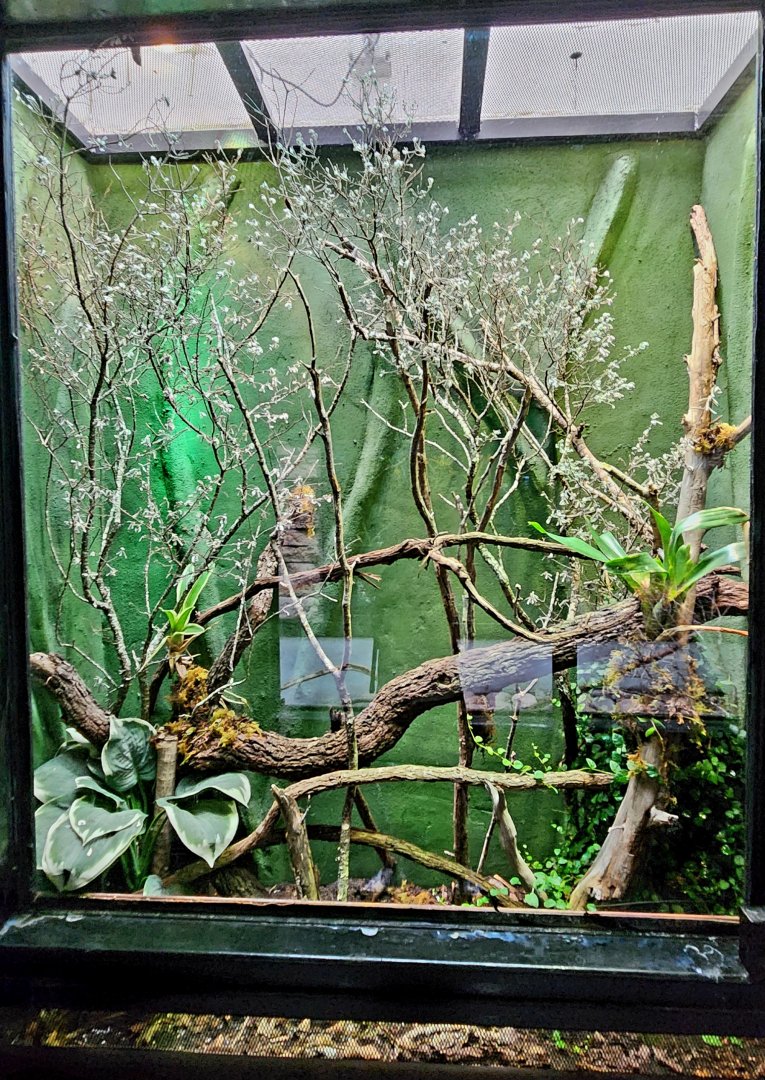
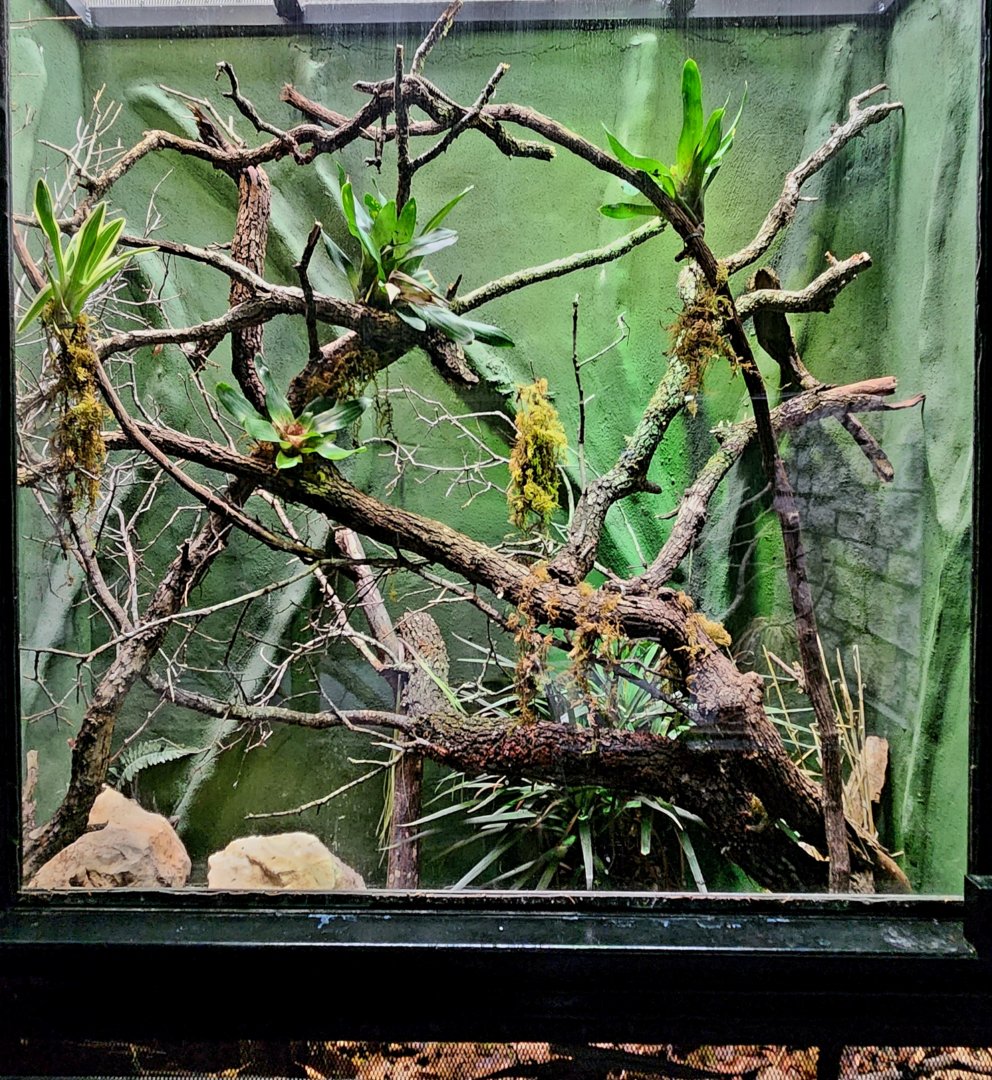
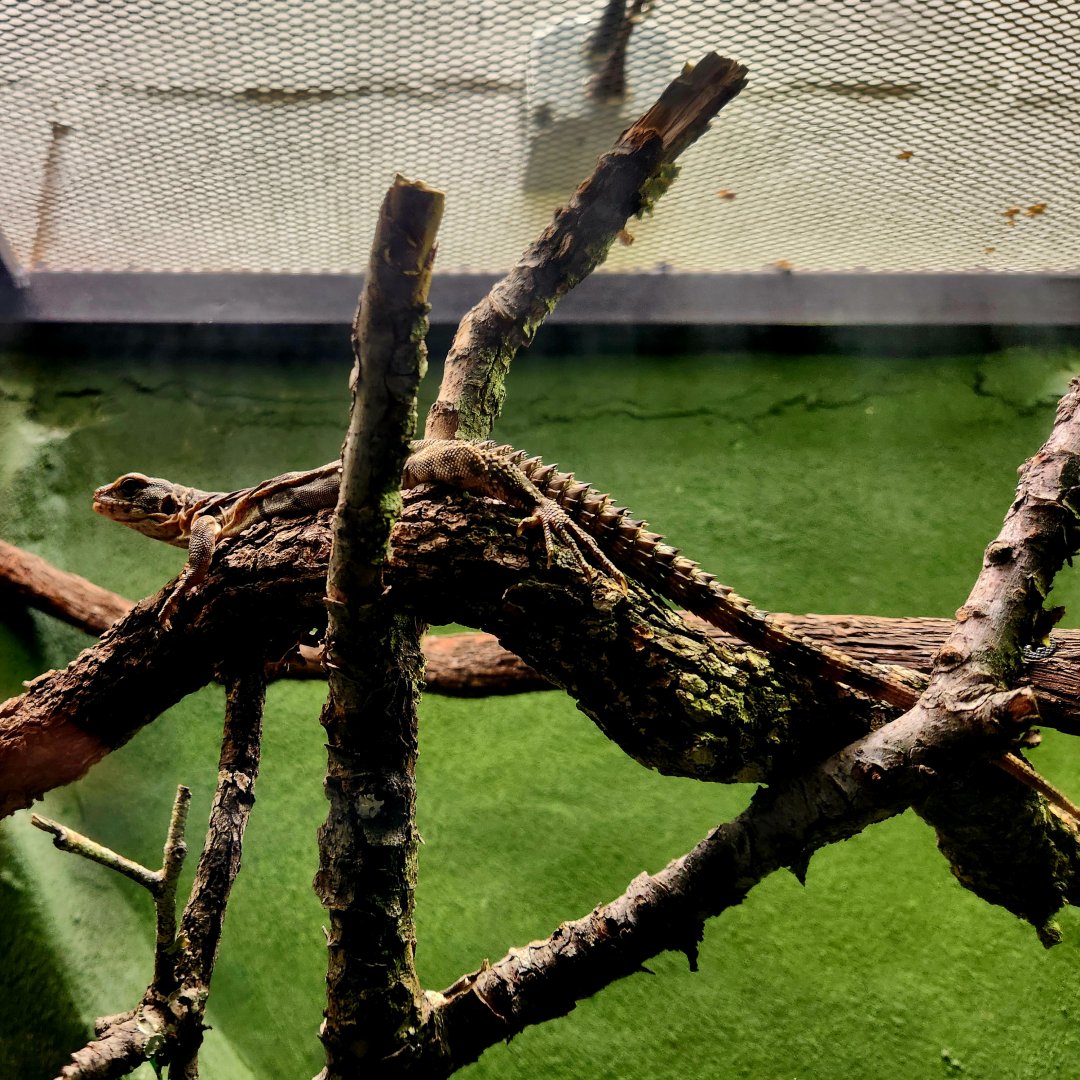
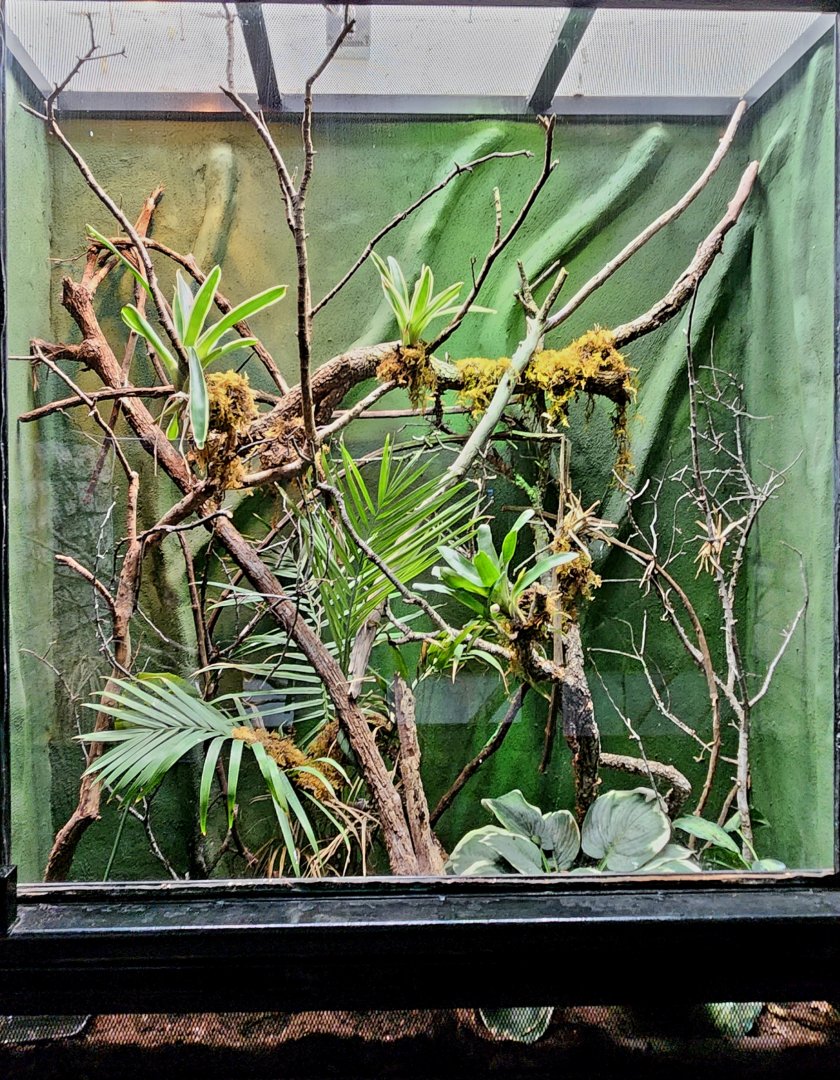
Again, the hardscape in this exhibit is great, some really nice branches in here that serve the small lizards inside very well. We've hit the point in this thread where I'm complementing sticks... you're a real reptile nerd if you're still here ;). I love the bromeliads planted throughout, and more of them certainly wouldn't hurt. Excited to see whatever that bottom plant is grow in as well. The hanging moss is also beautiful, the more the merrier. As far as other species, Emerald Swifts (Sceloporus malachiticus) come to mind immediately from the area, as do Rainbow Ameivas (Holcosus undulatus).


Exhibit 69: Jamaica
This exhibit is one of my favorites of the smaller ones upstairs, featuring live palms and several live bromeliads, amongst other foliage. Again, the branches provide a variety of climbing surfaces for the inhabitants, and the exhibit is well-built. My biggest nitpick is that it needs to fill in more, but once again this will simply take time. There is at least a pair of Jamaican Giant Anoles (Anolis garmani) in this exhibit, which are renowned for their long tails that can reach over 8". One look at them and they're certainly more impressive than our native Green Anoles (Anolis carolinensis), and I was surprised at how well they managed to camouflage themselves in this exhibit given their size and activity level. While there aren't too many Jamaican lizards in the hobby that would be compatible in this exhibit, Haitian Giant Galliwasps (Caribicus warreni) could be added as a stand-in for the native Jamaican Galliwasps (Celestus sp.).


Exhibit 70: Cuba
Unfortunately I missed a photo of this exhibit, so I'll make this short so my OCD doesn't dwell on it. It's very similar to the Jamaican exhibit, with several angles and diameters of branches and various foliage. There are two species on display here - the Western Giant Anoles (Anolis luteogularis) are my favorite of the two, just a beautifully-patterned lizard that seems to realize its size relative to other lizards. Something about the way they move around the exhibit has a very bold presence to it, I'm excited to see the large Cuban anoles becoming more popular in the trade. The other species is the Western Bearded Anole (Anolis barbatus), also known as a "false chameleon" in the pet trade. These are definitely an interesting animal, but far less active than the Giants. This enclosure is well-stocked as-is, but Cuban Tree Frogs (Osteopilus septentrionalis) could probably hold their own if desired.


Exhibit 13.5: The Crocodile Monitor Kingdom (Top Floor)
Along the back wall is the full 60-foot-long view of the Crocodile Monitor Kingdom in all its glory. The artificial trees reach up to here, where the monitors typically bask. The sailfins can be found up here from time to time as well, although they're more often in the lower reaches. A bit of artificial plant growth up here would be nice, but I understand the need to allow as much sunlight in as possible. Perhaps adding plants draping down overhead on the outside of the exhibit would be a fair compromise there. Regardless, the views are spectacular, and the exhibit is incredible.

 
Last edited:
Back
Top