You are using an out of date browser. It may not display this or other websites correctly.
You should upgrade or use an alternative browser.
You should upgrade or use an alternative browser.
Brookfield Zoo Master Plan Discussion and Speculation
- Thread starter pachyderm pro
- Start date

I really think the entire southern end of Pachyderm House would be too big strictly for a crocodile exhibit. The building's length is 260 feet and the space of the current yards would be longer as they extend past the entrance and exit of the building itself - so you'd maybe be looking at 300ft of crocodile space.See, on the other hand, I question the zoo's need for nile hippos all together and would rather see the space dedicated for crocodiles. Brookfield's new master plan is heavy on the charismatic megafauna: calling for African elephants, giraffes, black rhinos, nile and pygmy hippos, okapi, gorillas and orangutans, at least three bear species, most of the big cats, etc. Surely the zoo could be fine with one less of these megafauna species, and hippos seem like an obvious choice for a species that could be cut.
I think the master plan appears more rigidly focused on charismatic megafauna because it is focused on 'headlining' species that will be resource-intensive, requiring custom spaces suited to their needs, and those that will attract the most press attention and funding. There are smaller habitats included in the plans that are not labeled, presumably for unmarked small species, and references to birds and reptiles are very generic, so it's hard to know which will be in the final, completed exhibits.
The Conservation Framework page still mentions painted dogs so they may likely stick around, at least, despite the odd lack of mention in the plan... and I expect camels will return somehow, not sure how, but they're so easily kept, I can't imagine them being gone. The big question mark is the already absent kilpspringer and the saltwater fish, imoAfter looking at the plan again, I'm starting to become curious as to what us happening to certain animals, mainly species like Klipspringer, African Painted Dog, most of the Saltwater fish, and Bactrian Camels
I am fascinated by this, as I thought I had once looked up why Cape Buffalo were not as widely kept in zoos and thought several users had claimed that they were considered too ill tempered and strong, "difficult to work with", while requiring the same level of investment as rhinoceros and therefore viewed as in direct competition with valuable, conservation-reliant rhinoceros holdings and programs, and therefore too much trouble. The were exactly the kind of species I would have suggested until that conversation.There are still some forest buffalo knocking around in private hands, specifically in Florida, but not very many. As much as I love forest buffalo, I think that if Brookfield is committed to having buffalo (and I think they should be!), I would implore them to chose Cape buffalo instead. There is already an active Cape buffalo consortium, the facilities housing them are actively breeding (B Bryan, Denver, SDZSP, White Oak), and there is interest within the AZA Sustainability Partner private sector, so additional holders coming on in the near future would really help secure the future of the program and these animals in the United States. They are very impressive animals and recognizable to the general public, and there are a lot of stories you can tell with them about the African savannas, about prey species that are able to fight back against predators, about dynamic social structures and familial relationships in unexpected taxa (Cape buffalo are matriarchal and the care that they show for their offspring and fellow herdmates into adulthood is incredible). They are very intelligent and not as difficult to work with as I think people might imagine.

This all feels like my childhood is coming back to me, but bigger and better in every way. The plan for a better North American exhibit while the old one is for Tundras work so well when conservation efforts for the polars need to be better than before.
While I do have concerns about the shifting ungulates, the new African complex is better than I’ve imagined (elephants included). Part of me wish Warthogs were part of the plan, but the other massive diversity of Africas Crown Jewels impress me enough.
Also, get ready for the countless Taz jokes when the Australian renovation is done.
While I do have concerns about the shifting ungulates, the new African complex is better than I’ve imagined (elephants included). Part of me wish Warthogs were part of the plan, but the other massive diversity of Africas Crown Jewels impress me enough.
Also, get ready for the countless Taz jokes when the Australian renovation is done.

"Southwest Australian Provinces" is such a weird pick-a-name-out-of-a-hat choice. Species like Koala don't occur anywhere near southwest Australia, and some like the Raggiana Bird of Paradise don't even occur in Australia itself.Southwest Australian Provinces: A series of new outdoor habitats are being added to the North side of the Australia House, consolidating the zoo’s collection of Oceanian wildlife. An elevated boardwalk trail will primarily overlook a large mixed-species enclosure with kangaroo, wallaby and emu. Tasmanian devils will be added with both outdoor and indoor exhibits, while the koalas will receive two new outdoor exhibits and become a permanent addition. Various aviaries will also be included along the trail for kookaburra, galah, tawny frogmouth, and Raggiana bird-of-paradise. The existing Australia House will be extensively renovated, including new/upgraded exhibits for wombats, echidnas, owls, reptiles and insects.
I definitely agree with this- I'd hope that by the time the exhibit is built the name changes to either simply "Australia", or "Australasia" if they plan to include species such as birds of paradise, tree kangaroos, kiwi, etc. that aren't strictly Australian."Southwest Australian Provinces" is such a weird pick-a-name-out-of-a-hat choice. Species like Koala don't occur anywhere near southwest Australia, and some like the Raggiana Bird of Paradise don't even occur in Australia itself.
That said, I suspect using "Southwest Australian Provinces" as the name stems from the CEPF biodiversity hotspots. https://www.cepf.net/our-work/biodiversity-hotspots/southwest-australia
I love the ambition of this plan. I get that the final product may not quite match what we see here, but I can't be upset that they are shooting for the moon.
I echo the Cape buffalo sentiment that was previously mentioned. It's. a better species fit for the biome. They may not be as rare as forest buffalo, but they are extremely difficult to find in major US collections.
I also agree with Neil about hippos. Too many zoos try to wedge them in with less-than acceptable holding. If this complex is as outstanding as it appears in the renderings, nobody will miss them. My preference would be hippos OR elephants and not both.
I really hope they keep the crocs.
My last visit really reminded me of just how big the yards at the pachyderm building are. They may be older, but there's still a lot of potential there, and this plan seems to realize it.
I echo the Cape buffalo sentiment that was previously mentioned. It's. a better species fit for the biome. They may not be as rare as forest buffalo, but they are extremely difficult to find in major US collections.
I also agree with Neil about hippos. Too many zoos try to wedge them in with less-than acceptable holding. If this complex is as outstanding as it appears in the renderings, nobody will miss them. My preference would be hippos OR elephants and not both.
I really hope they keep the crocs.
My last visit really reminded me of just how big the yards at the pachyderm building are. They may be older, but there's still a lot of potential there, and this plan seems to realize it.
I love the ambition of this plan. I get that the final product may not quite match what we see here, but I can't be upset that they are shooting for the moon.
I echo the Cape buffalo sentiment that was previously mentioned. It's. a better species fit for the biome. They may not be as rare as forest buffalo, but they are extremely difficult to find in major US collections.
I also agree with Neil about hippos. Too many zoos try to wedge them in with less-than acceptable holding. If this complex is as outstanding as it appears in the renderings, nobody will miss them. My preference would be hippos OR elephants and not both.
I really hope they keep the crocs.
My last visit really reminded me of just how big the yards at the pachyderm building are. They may be older, but there's still a lot of potential there, and this plan seems to realize it.
After losing the gators from The Swamp exhibit, the Nile crocs would be more an acceptable replacements for crocodilians. That is a concept I'd like to stay.
Some slight adjustments and more room would certainly be needed for the hippos however. San Diego probably is something they should take inspiration from.
We'll see how the buffalo situation goes. As much as I missed the old one, it's better for them to find a more suitable species they can house in the zoo.

As someone who has not followed Brookfield closely until recently, holy moly, this is the best master plan I've seen in a long time. Really excited for all of this to come to fruition. I also think that the zoo should scrap the African forest buffalo for Cape buffalo, another holder of this species would be wonderful, due to its relative rarity despite its iconic status.
I don't see why the zoo needs to choose between elephants or hippopotamus nor between cape or congo buffalo. The elephants and hippopotamus are not competing for the same space in the zoo by any means and the exhibits will probably be constructed at different times -- in fact, I am fairly certain the hippopotamus exhibit will be constructed sooner than the elephant exhibits, which will not be on the site of the Pachyderm House at all. The existing pachyderm space is huge and there will be plenty of room to develop a world-class hippopotamus exhibit without infringing on the space for any other animal. The only competition is the crocodiles and I think dedicating the entire southern half of the building to crocodiles would be far too much.
I'm surprised by the strong preference for Cape Buffalo over Congo Buffalo, as previous discussions, such as this one suggested that Cape Buffalo are particularly difficult to manage and viewed as competing with rhinoceros for space, and the space allotted for the Congo buffalo looks on the smaller side, aligned with the forest biome space. I'd certainly welcome either buffalo.
I can only imagine how few zoo guests would understand what provinces are.
I'm surprised by the strong preference for Cape Buffalo over Congo Buffalo, as previous discussions, such as this one suggested that Cape Buffalo are particularly difficult to manage and viewed as competing with rhinoceros for space, and the space allotted for the Congo buffalo looks on the smaller side, aligned with the forest biome space. I'd certainly welcome either buffalo.
It won't be the final name of the complex thankfully. The plan is using biogeographic names rather than exhibit titles which are yet to be finalized and I think @Neil chace is correct that they are probably drawing from the CEPF terminology."Southwest Australian Provinces" is such a weird pick-a-name-out-of-a-hat choice. Species like Koala don't occur anywhere near southwest Australia, and some like the Raggiana Bird of Paradise don't even occur in Australia itself.
I can only imagine how few zoo guests would understand what provinces are.

I think the reputation Cape buffalo carry (largely rooted in stories from African exploration and big game hunting) precedes them a little too often… This is not to say that they are not powerful and potentially aggressive animals, but they are just not as bad as people I like to think  They are not animals to push your luck with, but they are usually quite placid unless they feel that they or their herdmates are directly threatened. I would say they do not need any additional containment requirements beyond what American bison would require, although they would require heated holding for Chicago winters (although they are very cold-hearty animals, overall). When managed more closely, they can develop strong relationships with their keepers, and their intelligence means they are quick learners and are willing participants in training. They’re one of my favorite animals I’ve ever worked with.
They are not animals to push your luck with, but they are usually quite placid unless they feel that they or their herdmates are directly threatened. I would say they do not need any additional containment requirements beyond what American bison would require, although they would require heated holding for Chicago winters (although they are very cold-hearty animals, overall). When managed more closely, they can develop strong relationships with their keepers, and their intelligence means they are quick learners and are willing participants in training. They’re one of my favorite animals I’ve ever worked with.
Mr.Ivory
Well-Known Member
This is my speculation of species that could be housed in Phase II for the Gateway to Africa
South African Forests animal species list
South African Forests animal species list
- African Bush elephant
- Eastern black rhino
- African Lion
- Bontebok
- African forest buffalo (replace with Cape buffalo if not able to obtain)
- Aardvark
- Common Impala
- Greater Kudu
- Grevy's Zebra
- Gerenuk
- African silverbill
- Helmeted guineafowl
- Blue-naped mousebird
- Emerald-spotted wood dove
- Golden-breasted starling
- Namaqua dove
- Orange-breasted waxbill
- Purple grenadier
- Red-cheeked cordon-bleu
- Red-faced lovebird
- Splendid sunbird
- Violet-backed starling
- White-bellied go-away-bird
- White-headed buffalo-weaver
- Von Der Decken’s hornbill
- Meller’s Chameleon
- Mozambique Spitting Cobra
- Black-throated Monitor
- Generic Giraffe
- Blue wildebeest
- Cheetah
- Common Dwarf Mongoose
- Lowland Nyala
- Southern White Rhino
- Addax
- Hartman's Mountain zebra
- Common Waterbuck
- Springbok
- Common Ostrich
- Bat-eared Fox
- Cape Porcupine
- Damaraland Mole-Rat
- Naked Mole-Rat
- Kirk's Dik-Dik
- Klipspringer
- Violet-backed Starling
- Taveta Golden Weaver
- East African gray crowned crane
- Emerald Starling
- Common Bulbul
- Red-crested Turaco
- Speckled Mousebird
- Blue-bellied Roller
- Violaceous Turaco
- Eastern Paradise Whydah
- Pancake Tortoise
- Giant Plated Lizard
- African Spurred Tortoise
- Leopard Tortoise
- White-throated Monitor
- Nile hippopotamus
- Nile tilapia
- African cichlid
- Red empress cichlid
- Red fin hap
- Cape teal
- Fulvous whistling duck
- Hadada ibis
- Blue-billed teal
- African sacred ibis
- Nile Crocodile
- Mountain Bongo
- Okapi
- Yellow-backed Duiker
- African Dwarf Crocodile
- Blue-bellied Roller
- Red-billed Hornbill
- Congo Peafowl
- Home's Hinge-backed Tortoise
- White-bellied Pangolin
- Red-flanked Duiker
- Yellow-backed Duiker
- Red River Hog
- Pygmy Hippopotamus
- Slender-snouted crocodile
- West African mud turtle
- West African cichlid
- Lake Oku clawed frog
- African bullfrog
A lot of this seems more like wishful thinking than well-reasoned speculation, such as:This is my speculation of species that could be housed in Phase II for the Gateway to Africa
Bontebok
Given the emphasis on mixed-species exhibits in this proposal, I doubt that Brookfield would acquire a valuable antelope species known to do poorly in mixed-species over some of the more successfully mixed antelope like elands, wildebeest, Thomson's or Addra gazelles, etc. Even though the zoo had a long history with gerenuk, this is similarly a fractious species that doesn't fit in the mixed-species direction Brookfield appears to be moving.Gerenuk
African silverbill
Blue-naped mousebird
Emerald-spotted wood dove
Orange-breasted waxbill
Purple grenadier
Splendid sunbird
White-bellied go-away-bird
This is *a lot* of bird species that are held in extremely small numbers in AZA zoos. While I wouldn't put it past Brookfield to acquire a rare bird or two for this project, the sheer number of rare birds listed here is unlikely to happen. Some of them- specifically the go-away-birds, are also directly competing for space with AZA-managed species so Brookfield would likely be dissuaded from acquiring them.
- Damaraland Mole-Rat
- Naked Mole-Rat
Red-crested Turaco
Violaceous Turaco
Leopard Tortoise
African Spurred Tortoise
While none of these species are inherently unrealistic, I doubt the zoo will opt for so many similar species. Space in zoos is limited, and I doubt the zoo wants to utilize that space for multiple mole-rat species, multiple turaco species, multiple tortoise species, etc., rather than having a more diverse collection. Specifically with the turacos, having multiple turacos in an exhibit can be done, but typically is difficult due to their aggressive nature- so acquiring two species seems unlikely to me.
Similar to above, I doubt a third crocodile species will make the cut. Nile crocs were a publicized addition to the plan, and dwarf crocs are currently in the collection, but adding three species just seems like overkill.
- Slender-snouted crocodile

All of the species listed in the part you are responding to here are already in the zoo's collection.While none of these species are inherently unrealistic, I doubt the zoo will opt for so many similar species. Space in zoos is limited, and I doubt the zoo wants to utilize that space for multiple mole-rat species, multiple turaco species, multiple tortoise species, etc., rather than having a more diverse collection. Specifically with the turacos, having multiple turacos in an exhibit can be done, but typically is difficult due to their aggressive nature- so acquiring two species seems unlikely to me.

Craig Billington
Well-Known Member
Here is a link to a Riverside Brookfield Landmark article about the Next Century Plan
Bold Brookfield Zoo plan reinvents visitor experience - Riverside-Brookfield Landmark
There are a few things in the article that I found interesting:
1. It mentions that the plan has 4 phases. I also read this somewhere else but I can't remember where. What we have seen released officially from BZC so far only mentions 3 phases but it wouldn't surprise me if there is a fourth more speculative phase.
2. This article refers to the plan we have seen so far as an executive summary. I'm not surprised as I would imagine there is a more detailed, extensive, and robust full plan. My question is if and when the public will be able to have access to it? I know with the Forest Preserves we would release executive summaries of many of our plans but also eventually release the full plan. Of course the Forest Preserves is a government entity that is subject to FOIA requests and there is an expectation of transparency. I'm not sure if the same applies to the Zoo but they do receive a substantial amount of tax payer money. Also potential donors would like to know.
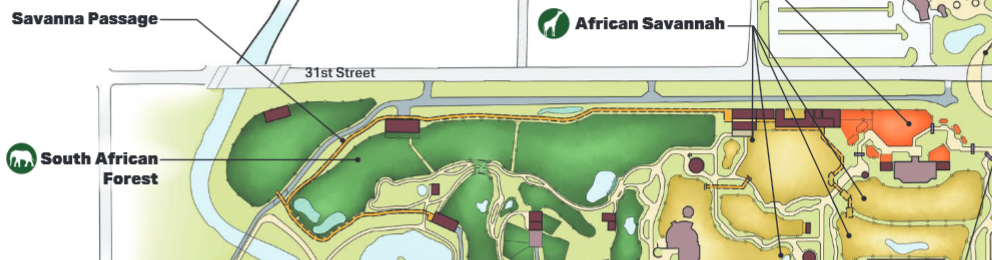
3. The article describes the Savannah Passage as being "underground" . I am assuming that this is a mistake because the descriptions we have seen, read, and heard about all make it seem like visitors will be able to see animals traversing the Savannah Passage while also observing animals in main habitats. I suspect that this is either completely wrong, or the the writer meant below grade as the passage will be a sort of moat that is below the ground level of the public and perhaps the main exhibits, or there are some portions of the passage that are underground or under land bridges.
Bold Brookfield Zoo plan reinvents visitor experience - Riverside-Brookfield Landmark
There are a few things in the article that I found interesting:
1. It mentions that the plan has 4 phases. I also read this somewhere else but I can't remember where. What we have seen released officially from BZC so far only mentions 3 phases but it wouldn't surprise me if there is a fourth more speculative phase.
2. This article refers to the plan we have seen so far as an executive summary. I'm not surprised as I would imagine there is a more detailed, extensive, and robust full plan. My question is if and when the public will be able to have access to it? I know with the Forest Preserves we would release executive summaries of many of our plans but also eventually release the full plan. Of course the Forest Preserves is a government entity that is subject to FOIA requests and there is an expectation of transparency. I'm not sure if the same applies to the Zoo but they do receive a substantial amount of tax payer money. Also potential donors would like to know.
3. The article describes the Savannah Passage as being "underground" . I am assuming that this is a mistake because the descriptions we have seen, read, and heard about all make it seem like visitors will be able to see animals traversing the Savannah Passage while also observing animals in main habitats. I suspect that this is either completely wrong, or the the writer meant below grade as the passage will be a sort of moat that is below the ground level of the public and perhaps the main exhibits, or there are some portions of the passage that are underground or under land bridges.

As seen in the designs, one part of trail through the elephant/rhino flex habitats will go underneath the actual exhibits allowing the animals to cross between exhibits, so perhaps this is what it relates too. The design seems to be similar to the underground section of the path in Elephant Odyssey at San Diego.The article describes the Savannah Passage as being "underground" . I am assuming that this is a mistake because the descriptions we have seen, read, and heard about all make it seem like visitors will be able to see animals traversing the Savannah Passage while also observing animals in main habitats. I suspect that this is either completely wrong, or the the writer meant below grade as the passage will be a sort of moat that is below the ground level of the public and perhaps the main exhibits, or there are some portions of the passage that are underground or under land bridges.
Thanks for posting the article, I'd seen it the other day and intended to but forgot all about it.3. The article describes the Savannah Passage as being "underground" . I am assuming that this is a mistake because the descriptions we have seen, read, and heard about all make it seem like visitors will be able to see animals traversing the Savannah Passage while also observing animals in main habitats. I suspect that this is either completely wrong, or the the writer meant below grade as the passage will be a sort of moat that is below the ground level of the public and perhaps the main exhibits, or there are some portions of the passage that are underground or under land bridges.
To centralize the "data" we have:
The executive summary has two major descriptions of Savannah Passage:
This flexibility is the result of the new Savannah Passage, a half mile long, multi- species transfer corridor that allows for rotational habitat expansion and variety. The Savannah Passage provides flexibility between habitats and allows for changing scenery from within the renovated Pachyderm Building into the mixed species savannah habitat to the north.
andInnovation in animal shifting capabilities will allow for flexibility between the various habitats, linking together four distinct ecoregions: South African Forests, African Savannah, East African Forests, and Central African Forests. This will be possible thanks to the creation of the new Savannah Passage, a half-mile long, multi- species transfer corridor that allows for rotational habitat expansion and variety. The Savannah Passage links multiple habitats across the northwest quadrant of the Zoo, facilitating a changing landscape for the animals and guests to experience
andThe renovated Pachyderm Building reverses the current animal-guest relationship by replacing indoor animal space with exciting guest and event space and offering expansive views to the flexible, mixed species habitat north of the building. Large picture windows create a seamless integration of human and animal spaces, while the Savannah Passage that links multiple habitats across the northwest quadrant of the Zoo facilitates a changing view of animals on view and an exciting habitat for the species to engage with.
The Landmark describes:
The ecoregions, which will take up a majority of the zoo’s campus, will be connected by the underground Savannah Passage, a half-mile corridor that will allow zoo staff to move animals between environments on a daily basis.
Here is our image, narrowed to focus on the relevant section of the zoo:
Last edited:
Yikes. This alone sounds/looks like a hoofstock keeper’s worst nightmare… Whether the animals are the ones moving underground (though this would still somehow be worse) or notThe Landmark describes:
The ecoregions, which will take up a majority of the zoo’s campus, will be connected by the underground Savannah Passage, a half-mile corridor that will allow zoo staff to move animals between environments on a daily basis.Here is our image, narrowed to focus on the relevant section of the zoo:

Craig Billington
Well-Known Member

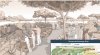

The animals will not be moving underground, that's almost certainly a typo in the article. Also worth noting the longest portion of the passage will just be for the elephants and rhinos who will be much easier to move through the system. With that said, I do hope the idea is refined more as the set-up for savanna region is rather convoluted in this current iteration. It seems the zoo has not settled on a final design as the concept art pictured above shows a corridor with an open-view, while another rendering shows giraffes being moved between taller cable fences.Yikes. This alone sounds/looks like a hoofstock keeper’s worst nightmare… Whether the animals are the ones moving underground (though this would still somehow be worse) or not
Also want to add that a lot of the descriptions of this savanna passage from the executive summary seem largely conceptual. It mentions the passage linking four African regions, but the Central African Forest (pygmy hippo, bongo, pangolin) and Eastern African Forest (hippo, crocodile) aren't connected at all. This seems like an idea the zoo still needs to put a lot more thought into in order for it to be successful and I doubt they will actually rotate so many different species into different enclosures on a daily basis -- sounds way too complicated for keepers to manage.
Last edited: