What next for the bucket list?

Kr15

Active Member
For a long time I’ve always had a bucket list animal to see, historic ones have been Koalas, Duck Billed Platypus, Panda and the most recent one was Polar Bears.

Today I ticked the final one off after visiting Highland Wildlife Park, but now I can’t think of what’s next?

Anyone else had any ‘bucket list’ animals they can suggest?

Otherwise I’ll have e to save all my pennies to go Whale Watching.
 
More achievably in Europe:

Chinese pangolin and mountain anoa?

If you do decide to go whale-watching, the Brittany Ferries/Orca cruise from Plymouth to Santander (and back) was exceptional when I did it (though we were very lucky with sea state and sightings).
 
For a long time I’ve always had a bucket list animal to see, historic ones have been Koalas, Duck Billed Platypus, Panda and the most recent one was Polar Bears.

Today I ticked the final one off after visiting Highland Wildlife Park, but now I can’t think of what’s next?

Anyone else had any ‘bucket list’ animals they can suggest?

Otherwise I’ll have e to save all my pennies to go Whale Watching.

It depends of course what species you find interest in, as there are many species on my bucket list that many people not on this forum and also just very few people in general have heard of at all.

One of my big bucket list ticks was seeing shoebill when I travelled down to Exmoor Zoo in 2022. When I heard they had acquired an individual I knew this was my chance to see the species and in the UK too!
 
I want to speak up for whale watching - although it can be sometimes be utterly disappointing - there is something very special about seeing whales and dolphins. Next month I hope to see Southern right whales and perhaps a Bryde's whale in South African waters, and I hope to see wandering albatross, giant petrels, Cape pigeons (which are petrels too) and other seabirds as well.The tour should let us see more familiar species such as black-footed penguins and South African fur seals too. I want to visit the Two Oceans Aquarium in Cape Town, to see some local sharks and Knysna seahorses and more marine life. Of course I will be looking out for land birds and there is just a chance of seeing Cape clawless otters (I still regret that I did not photograph the species when I saw them at Basle in 1971).
 
My higher priorities recently are:
Kiwi
Tuatara
Markhor
Red-Capped Mangabey
Black Crested Mangabey
Brown Collared Lemur
Sable Antelope
Pronghorn
Kodiak Bear
Saltwater Crocodile
Cuban Crocodile
Little Penguin
Buff-Cheeked Gibbon
Mueller’s Gibbon
Agile Gibbon
Hamadryas Baboon
Blue-Eyed Black Lemur
Greater/Sunda Slow Loris
Gelada
Nubian Ibex
Spot-Necked Otter
California Condor

A lot of these with one or two exceptions, are species I could reasonably see within near future trips, but haven't organized yet. I've been focused a lot lately on primates.
 
I do not wish for my life to end before seeing a zebra duiker.
As unlikely as that may well be.
Good luck with that.
They are particular favourites of mine too but, regrettably, I doubt I'll ever see another zebra duiker.
 
I'm aware this is rather ... individualistic... but anyways
upload_2024-10-23_23-21-2.jpeg

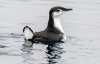
Guadalupe Murrelet

I recall I had a sketchbook as a child with a page for each letter of the alphabet. And for 'X' the only 'X'-named bird in the bird-encyclopaedia was found... and of course it was before the nominate Guadalupe split from the newly-hailed Scripps'; so 'Xantus' Murrelet'. Sometimes I still refer to this bird by its original 'X' name... it's a problem of mine!
Though I do find it fitting that with 'X' one of the scarcest beginning-letters in the English language that this auk is the scarcest of all; that is, the Guadalupe Murrelet is. And so it has always been a dream of mine to see this particular bird in the flesh - as much as a kakapo, quetzal or shoebill!
 

Attachments

  • upload_2024-10-23_23-21-2.jpeg
    upload_2024-10-23_23-21-2.jpeg
    79 KB · Views: 69
I would love to see Douc Langurs again. In the early 90's I got to see them at the San Diego Zoo, and I fell in love with them then. At the time, I had no idea how rare they were.
 
One of my (perhaps modest) bucket list items is to see every kind of great ape. I'm at 3/4 right now. Orangutans and Gorillas were pretty easy (and broadly seem the most common, at least in the US) as they're both held at a zoo local to me. I saw bonobos for the first time over the summer in Wisconsin. Now I'm just missing chimpanzees! Might be worth considering if you haven't seen all four varieties.
 
One of my (perhaps modest) bucket list items is to see every kind of great ape. I'm at 3/4 right now. Orangutans and Gorillas were pretty easy (and broadly seem the most common, at least in the US) as they're both held at a zoo local to me. I saw bonobos for the first time over the summer in Wisconsin. Now I'm just missing chimpanzees! Might be worth considering if you haven't seen all four varieties.
Aren't there only three types since bonobos are a species of chimpanzees?
 
And of course it depends on how you split them. I have seen Chimpanzee, Mountain Gorilla and Bornean Orang in the wild, and Bonobo, Western Lowland Gorilla and Sumatran Orang in captivity, so guess I “just” need Tapanuli Orang! Mind you, if you split further to subspecies…
 
And of course it depends on how you split them. I have seen Chimpanzee, Mountain Gorilla and Bornean Orang in the wild, and Bonobo, Western Lowland Gorilla and Sumatran Orang in captivity, so guess I “just” need Tapanuli Orang! Mind you, if you split further to subspecies…
That is true, although, Filovirus seems to be counting them as a 'type' of ape and counting orangutan and gorilla species together so it would make sense to count common chimps and bonobos as one.
 
Whoops, started a debate.

The ultimate answer is just that that's how I'm most familiar with discussing great apes and is how I prefer to classify them personally. I don't care to go digging for a ton of examples but at least one source I can find, The Ape Initiative, splits great apes into five varieties- chimpanzees, bonobos, orangutans, gorillas, and people. It's obviously not the most in-depth understanding and I'm well aware that there are multiple varieties of gorilla and orangutan, AND that bonobos and chimps are both part of the same genus.

I'd say on the whole there are a lot of educational materials (edit- designed for laypeople, that is, people who don't care to discuss the nuances of genera and species) that classify great apes into those five categories... I don't think it's like completely out-of-nowhere for me to casually group them like that lol.

Just my personal preference/how I was taught. Not everything has to make perfect taxonomical sense- sometimes it's just for fun!
 
Back
Top