Brookfield Zoo Brookfield Zoo news 2025

A new tank in Living Coast was installed where the moon jellyfish and upside-down jellyfish were located. It is long but not deep so its for jellyfish.
View attachment 776428
It could be an upgrade for the Moon Jellies, however this definitely screams some species of Sea Nettle given it's length, which is pretty cool to see. I'm guessing unless the Upside Down Jellies are / were moved to another part of the Aquarium, they could be getting phased out since that tank isn't ideal for them. Curious to see what species they go with for this tank since I don't know much about Brookfield's Aquarium.
 
Spent a few hours at the zoo yesterday during the late afternoon. Not enough notable for my usual "visit reports" but still a few things I wanted to touch on.

-The expanded swamp aviary really is wonderful. This was my first time seeing it in it's full glory with all of the birds introduced. The ibises, egrets and spoonbills were flying from one end of the exhibit to the other, bickering for positioning up high on the rafters. Yellow-billed storks are a striking species and a perfect headliner when the flamingos are out during the summer. Took what were three already nice aviaries and created one of the best exhibits in the zoo right now without question -- it's one of those things I never knew needed to be changed until they did it.
-Lots of activity from the small mammals: the bettong, sengis, dwarf mongooses and wombat were all up and active. This was my first time seeing the bettong who was jumping throughout the space; incredibly endearing little species and it's nice to finally see this enclosure occupied again.
-The Australia House has also seen a few other minor changes: improved lighting in the wombat exhibit, a layer of mulch substrate on the floor of the echidna/kookaburra exhibit, and the former crawfish tank has be redone for a new species that isn't on-exhibit yet.
-Still several notable species off-show across the zoo: pangolin, sandhill cranes, freshwater rays, lungfish, etc.
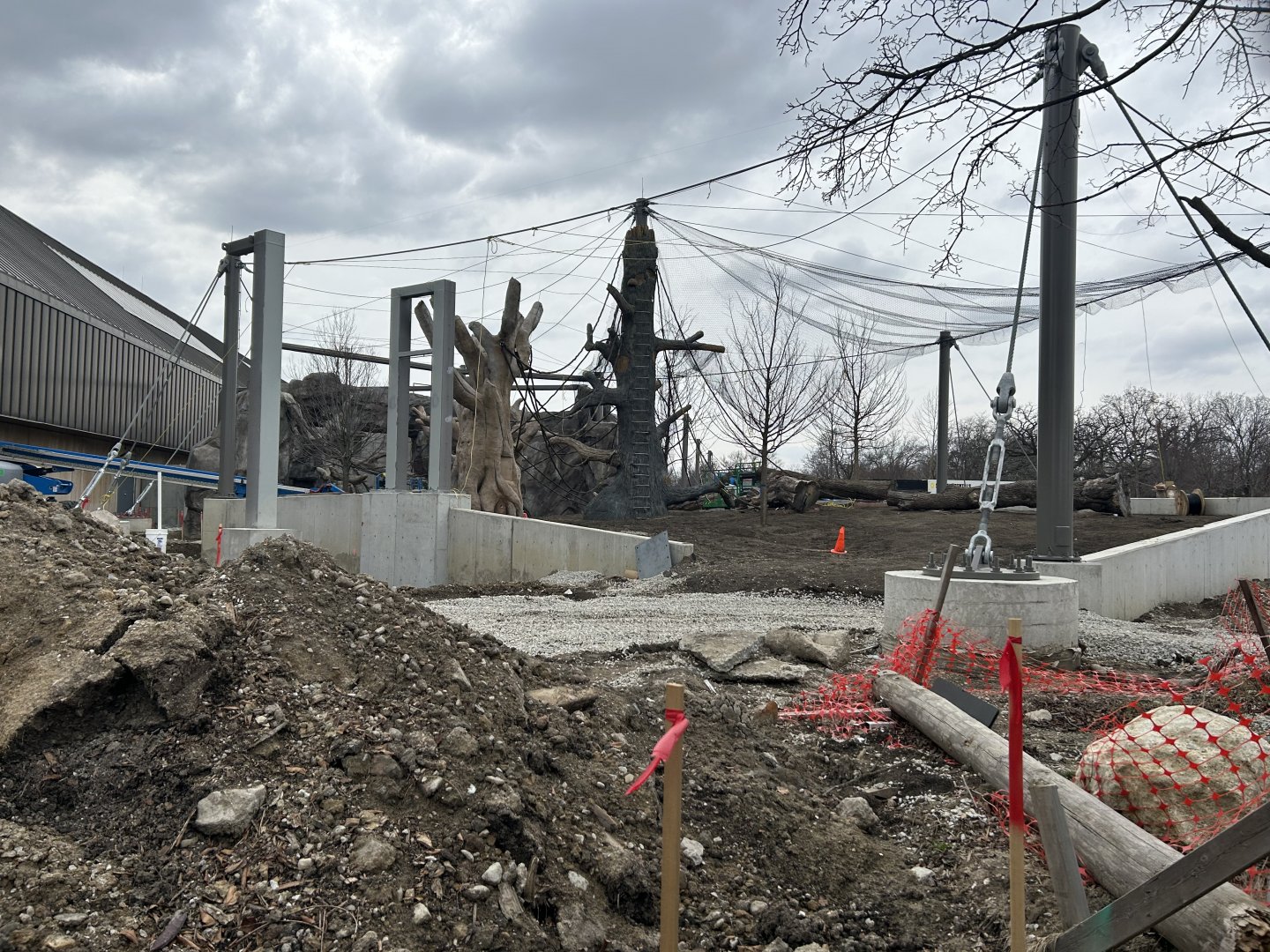
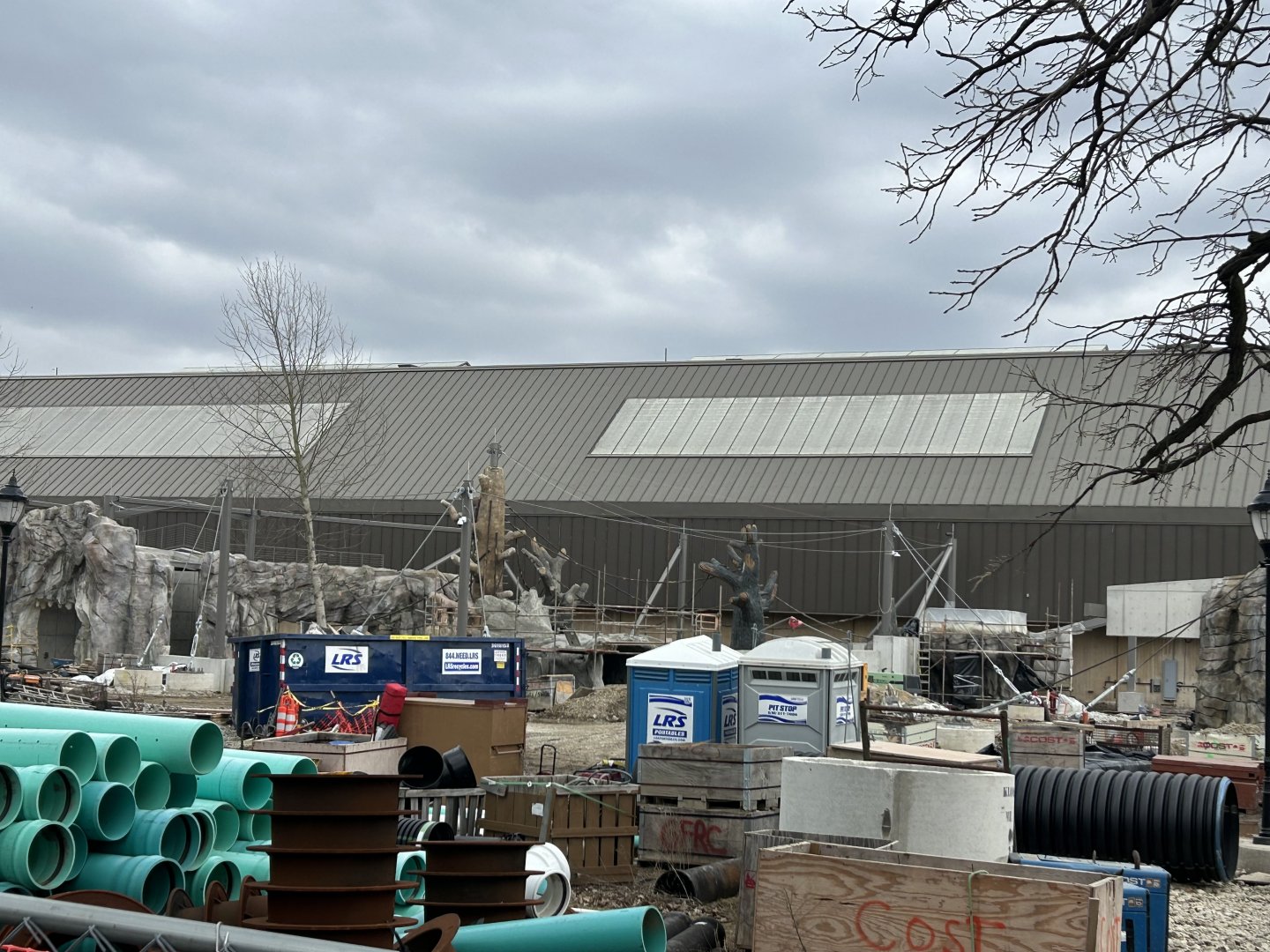
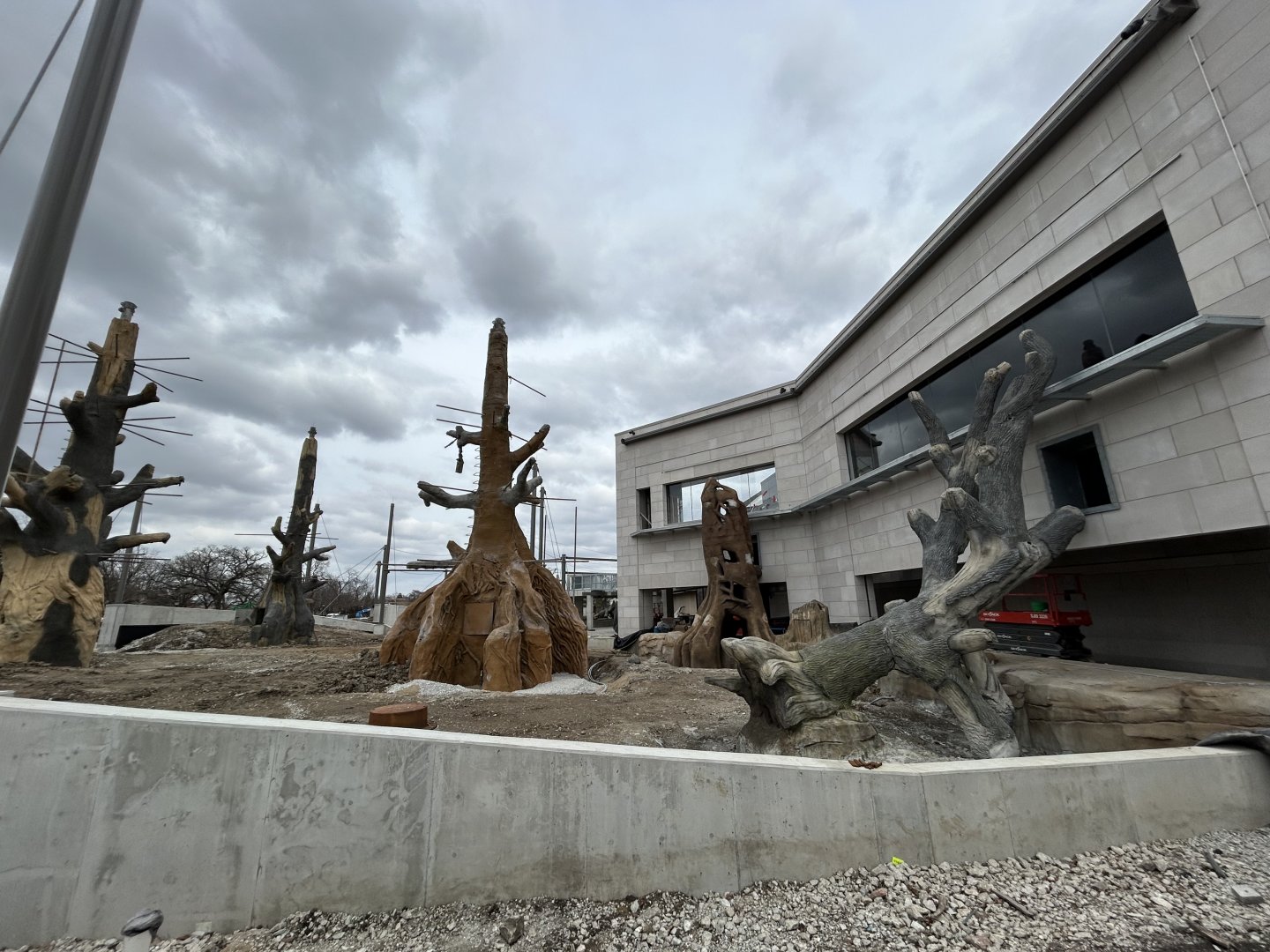
-And of course, Tropical Forests construction. Several major milestones in the process have been reached. All of the fake trees are done, as is most of the rockwork. Work has commenced on the transfer chutes for the orangutans and monkeys while the chutes for the gorillas are already complete. In the monkey enclosure, various ropes have been strung and the mesh is in the process of going up. I also noticed for the first time what appears to be some sort of walkthrough fallen tree in the orangutan exhibit -- you can see it in one of the photos I've attached below if you look closely. Also worth noting that original pathway leading to Tropic World's entrance has been completely torn up along with all of the signage. Looks promising overall!


One last note; I actually saw one of the gorillas walking around their new indoor exhibit while peering into the building. It was only for a moment, but it was enough to reinforce just how close this once mythical project is to completion.
 
The Australia House has also seen a few other minor changes: improved lighting in the wombat exhibit, a layer of mulch substrate on the floor of the echidna/kookaburra exhibit, and the former crawfish tank has be redone for a new species that isn't on-exhibit yet.

Not sure if this is still the case, but during my visit a couple weeks ago, according to zoo staff, the former crawfish tank now houses carnivorous plants.
 
Spent a few hours at the zoo yesterday during the late afternoon. Not enough notable for my usual "visit reports" but still a few things I wanted to touch on.

-The expanded swamp aviary really is wonderful. This was my first time seeing it in it's full glory with all of the birds introduced. The ibises, egrets and spoonbills were flying from one end of the exhibit to the other, bickering for positioning up high on the rafters. Yellow-billed storks are a striking species and a perfect headliner when the flamingos are out during the summer. Took what were three already nice aviaries and created one of the best exhibits in the zoo right now without question -- it's one of those things I never knew needed to be changed until they did it.
-Lots of activity from the small mammals: the bettong, sengis, dwarf mongooses and wombat were all up and active. This was my first time seeing the bettong who was jumping throughout the space; incredibly endearing little species and it's nice to finally see this enclosure occupied again.
-The Australia House has also seen a few other minor changes: improved lighting in the wombat exhibit, a layer of mulch substrate on the floor of the echidna/kookaburra exhibit, and the former crawfish tank has be redone for a new species that isn't on-exhibit yet.
-Still several notable species off-show across the zoo: pangolin, sandhill cranes, freshwater rays, lungfish, etc.
-And of course, Tropical Forests construction. Several major milestones in the process have been reached. All of the fake trees are done, as is most of the rockwork. Work has commenced on the transfer chutes for the orangutans and monkeys while the chutes for the gorillas are already complete. In the monkey enclosure, various ropes have been strung and the mesh is in the process of going up. I also noticed for the first time what appears to be some sort of walkthrough fallen tree in the orangutan exhibit -- you can see it in one of the photos I've attached below if you look closely. Also worth noting that original pathway leading to Tropic World's entrance has been completely torn up along with all of the signage. Looks promising overall!


One last note; I actually saw one of the gorillas walking around their new indoor exhibit while peering into the building. It was only for a moment, but it was enough to reinforce just how close this once mythical project is to completion.

My optimistic hopes that this would be a breakthrough project have been greatly diminished by these photos. The absolutely hideous concrete “trees” clearly demonstrate that no one involved is really trying very hard to create realistic, beautiful habitats. No question getting the primates out of the concrete pit of Tropic World is a positive move, but these hard-edged cages and ham-handed attempts at “immersion” will in no way evoke the “Tropical Forest” promised by the name. Disappointing to say the least.
 
My optimistic hopes that this would be a breakthrough project have been greatly diminished by these photos. The absolutely hideous concrete “trees” clearly demonstrate that no one involved is really trying very hard to create realistic, beautiful habitats. No question getting the primates out of the concrete pit of Tropic World is a positive move, but these hard-edged cages and ham-handed attempts at “immersion” will in no way evoke the “Tropical Forest” promised by the name. Disappointing to say the least.

Yes, truly dreadful and hideous. Why DO exhibit designers keep producing these? I don't think they will diminish the enjoyment of the apes of the exhibit though, they are just aesthetically unpleasing for us apes on Zoochat... :D
 
My optimistic hopes that this would be a breakthrough project have been greatly diminished by these photos. The absolutely hideous concrete “trees” clearly demonstrate that no one involved is really trying very hard to create realistic, beautiful habitats. No question getting the primates out of the concrete pit of Tropic World is a positive move, but these hard-edged cages and ham-handed attempts at “immersion” will in no way evoke the “Tropical Forest” promised by the name. Disappointing to say the least.

So what alternative do you propose? Wait 40 years to grow live trees in the site ( then inevitably hot-wire them after one summer when the apes destroy most of the branches? As happens with live trees in any enclosed space with apes?)
 
I'm also very glad to see that they went all out and created new indoor spaces as well for at least the gorillas (not sure on the orangs?)

All too often, you see it where zoos create a beautiful new outdoor area while leaving the dreadful indoors untouched. Still an improvement obviously, but if they're going to be spending 6+ months a year inside or you're managing multiple groups who use the space regularly... it still has that falling short feeling.
 
So what alternative do you propose? Wait 40 years to grow live trees in the site ( then inevitably hot-wire them after one summer when the apes destroy most of the branches? As happens with live trees in any enclosed space with apes?)
On a functional basis, it's a marked improvement for the apes. It could look like Howletts' gorilla exhibits, and it would be an improvement in terms of access to the elements/fresh air. Considering Brookfield will also plant the exhibits as lushly as possible (though if they're aiming for a Summer 2025 opening the plants will need some time to grow in/hotwire), that'll help matters considerably.

Consider Lincoln Park's Regenstein Center for African Apes, designed by the same firm that designed Tropical Forests, PJA.

full

(Photo by @Milwaukee Man)

13329f_1955386888664c2da76f08ef46578f18~mv2.jpg

(Photo by Grayson Ponti)

Another similar exhibit (also by PJA) would be Gorilla Grove at Franklin Park Zoo.

full

(Photo by @Zoo-Lover-1-2-3)
 
-The expanded swamp aviary really is wonderful. This was my first time seeing it in it's full glory with all of the birds introduced. The ibises, egrets and spoonbills were flying from one end of the exhibit to the other, bickering for positioning up high on the rafters. Yellow-billed storks are a striking species and a perfect headliner when the flamingos are out during the summer. Took what were three already nice aviaries and created one of the best exhibits in the zoo right now without question -- it's one of those things I never knew needed to be changed until they did it.
The panoramic shot you posted is fantastic. I really look forward to checking this out.

I would miss the alligator/crocodile section more but the upcoming crocodile exhibit will probably blow it out of the water so now I don't mind. ;)

-Lots of activity from the small mammals: the bettong, sengis, dwarf mongooses and wombat were all up and active. This was my first time seeing the bettong who was jumping throughout the space; incredibly endearing little species and it's nice to finally see this enclosure occupied again.
-The Australia House has also seen a few other minor changes: improved lighting in the wombat exhibit, a layer of mulch substrate on the floor of the echidna/kookaburra exhibit, and the former crawfish tank has be redone for a new species that isn't on-exhibit yet.
I look forward to seeing the wombat and echidna changes mentioned here, but glad the wombat and bettong were visible. I'm really glad they added the bettong, it's great to add another energetic little species to the lineup there.

Also worth noting that original pathway leading to Tropic World's entrance has been completely torn up along with all of the signage. Looks promising overall!
Is the pathway being given a refresh/redo to the existing entrance or will we be getting a new entrance?

One last note; I actually saw one of the gorillas walking around their new indoor exhibit while peering into the building. It was only for a moment, but it was enough to reinforce just how close this once mythical project is to completion.
I think I see one in the Gorilla construction image?? That's amazing.

My optimistic hopes that this would be a breakthrough project have been greatly diminished by these photos. The absolutely hideous concrete “trees” clearly demonstrate that no one involved is really trying very hard to create realistic, beautiful habitats. No question getting the primates out of the concrete pit of Tropic World is a positive move, but these hard-edged cages and ham-handed attempts at “immersion” will in no way evoke the “Tropical Forest” promised by the name. Disappointing to say the least.
This seems a little excessive to me. This is an unfinished and unplanted exhibit months away from opening that still has construction gravel. I think it's a bit soon to criticize it for lacking realism, naturalism and immersion entirely. The concrete trees are not attractive but are not a surprise at this point, as they were visible in concepts and remain in use in some of the better gorilla exhibits in the US.

Where are you pulling "hard-edged cages" from? That one little part of the gorilla building? The same thing is done at the Regenstein Center for African Apes at Lincoln Park Zoo, based on research the apes actually like corners.

On a functional basis, it's a marked improvement for the apes. It could look like Howletts' gorilla exhibits, and it would be an improvement in terms of access to the elements/fresh air. Considering Brookfield will also plant the exhibits as lushly as possible (though if they're aiming for a Summer 2025 opening the plants will need some time to grow in/hotwire), that'll help matters considerably.

Consider Lincoln Park's Regenstein Center for African Apes, designed by the same firm that designed Tropical Forests, PJA.

full

(Photo by @Milwaukee Man)

13329f_1955386888664c2da76f08ef46578f18~mv2.jpg

(Photo by Grayson Ponti)

Another similar exhibit (also by PJA) would be Gorilla Grove at Franklin Park Zoo.

full

(Photo by @Zoo-Lover-1-2-3)
I was originally going to say in this post that I imagined Lincoln Park's outdoor gorilla habitat would have probably looked similar to this at the same point in construction. It's lushly planted now but there are fake trees and rockwork, too, and before the plantings took place it was probably just as hideous, maybe worse because the exhibit is also moated.
 
So what alternative do you propose? Wait 40 years to grow live trees in the site ( then inevitably hot-wire them after one summer when the apes destroy most of the branches? As happens with live trees in any enclosed space with apes?)
1. Add more large living trees to start (it does look like several are already installed, which will be good.). Weave them into and around subtle artificial climbing structures, as in Aukland’s orangutan habitat.
2. Create climbing opportunities using real deadfall trees (select species resistant to primate destruction and rotting, such as black locust trees as used at LPZ, Bronx, Cleveland etc.)
3. If you are going to build “fake trees,” use photo references and decently talented fabricators to at least try to make them look like actual trees. This HAS been done, very well in some cases (Dublin, Bronx) or at least attempted elsewhere (Leipzig, Omaha). Brookfield itself has better examples (albeit 40+ years old) of well-executed artificial tree exhibitry in the Fragile Forest and Desert exhibits, and even in Tropic World.

These crude lumps of concrete indicate no one with any appreciation of real tropical forests was involved in designing, building or overseeing this important aspect of a long-awaited project.
 
Although I don't think of all of the trees look as poor as some make them out to be (some are certainly better than others though), @reduakari is right. The faux trees definitely could've looked more realistic with closer attention to detail. Early on I was hoping for tree detailing that would be on par with Bronx and Woodland Park, but it became evident several months ago that wasn't going to be the case. However, live trees are being planted as well in each exhibit (already in place in the monkey enclosure) and I'm optimistic that they will soften the appearance of the fake trees in conjunction with the finished landscaping.
Is the pathway being given a refresh/redo to the existing entrance or will we be getting a new entrance?
Same entrance, just redoing the pathway leading up to the entrance.
I think I see one in the Gorilla construction image?? That's amazing.
Whatever you're seeing is definitely not a gorilla. :p I only saw her for a moment by looking through the windows on the lower level of the house.
 
My optimistic hopes that this would be a breakthrough project have been greatly diminished by these photos. The absolutely hideous concrete “trees” clearly demonstrate that no one involved is really trying very hard to create realistic, beautiful habitats. No question getting the primates out of the concrete pit of Tropic World is a positive move, but these hard-edged cages and ham-handed attempts at “immersion” will in no way evoke the “Tropical Forest” promised by the name. Disappointing to say the least.
What are you even talking about. Of course the habitats look ugly now. they've just been constructed. as the greenery comes in and time takes its course they will look more naturalistic.
 
Back
Top