You are using an out of date browser. It may not display this or other websites correctly.
You should upgrade or use an alternative browser.
You should upgrade or use an alternative browser.
Australasian Orangutan Population
- Thread starter Zoofan15
- Start date


I too would hope that Melur will be allowed to breed again. Not only would that tie in nicely with Daya producing her first infant, but Melur's paternal line is under-represented - Melur is the only one of her sire Laki's living descendants who has produced offspring.
Daya is well-placed for motherhood, as she is well used to youngsters and their antics due to having two younger siblings back in the Netherlands, and therefore she is remarkably patient with Bahmi's testing her limits. She also has a role model for maternity in Melur. I hope that Auckland Zoo will not delay Daya breeding too much longer, given Charlie's advanced aged. It's unlikely we'll see a situation like the one at Dudley Zoo, where a young female who conceived rejected her infant and handed the baby over to her own mother (although if such a thing happened, Melur could be a possible foster mother).
As you know, I strongly disagree with the rule about not breeding from female orangutans and chimpanzees until their mid-teens. Within the region, I’ve seen zero evidence it leads to better mothering.
These were the first births within Auckland Zoo’s Bornean orangutan colony:
0.1 Intan (17/03/1989) to Indra aged 8 years 6 months 10 days
1.0 Datuk (18/05/1989) to Dara aged 11 years 11 months 2 days
1.0 Isim (15/06/1994) to Indra aged 13 years 9 months 8 days
Indra and Dara were both exceptional mothers according to keepers. I could also name countless examples within the region’s chimpanzee population of females who produced young between 8-12 years and raised them well; and females who bred for the first time aged mid-teens or older and rejected their young.
Charlie is 44 years old and one of the most genetically valuable Bornean orangutan males in captivity (ranked second last time I asked keepers in 2021). That’s two good reasons not to delay breeding him further.
Surely there is "best practice" information available from some of the best overseas zoos
The problem is defining "best practice".
The term means different things to different practioners.
Surely there is "best practice" information available from some of the best overseas zoos could follow with much bigger populations?
Looking at orangutan birth overseas, I’ve found two orangutans that gave birth at 12 years at the Audubon Zoo in 2021; and one orangutan that gave birth at 11 years at Dudley Zoo in 2022. However, there have also been several births to first time mothers aged in their late teens across the world. The lack of urgency could be more around extending intergenerational gaps (as we’ve seen with Sumatran tigers and other species regionally).
Presumably Auckland Zoo’s long term plan is to pair Daya with Bahmi, but since he won’t be sexually mature for at least 5-8 years, it’d be good to see her breed with Charlie (her intended mate) in the interim - especially if that can be tied in with Melur producing an infant around the same time to provide their offspring with the benefits of peer socialisation (which is actually a husbandry recommendation).

ApeLadyNZ
Well-Known Member
As you know, I strongly disagree with the rule about not breeding from female orangutans and chimpanzees until their mid-teens. Within the region, I’ve seen zero evidence it leads to better mothering.
These were the first births within Auckland Zoo’s Bornean orangutan colony:
0.1 Intan (17/03/1989) to Indra aged 8 years 6 months 10 days
1.0 Datuk (18/05/1989) to Dara aged 11 years 11 months 2 days
1.0 Isim (15/06/1994) to Indra aged 13 years 9 months 8 days
Indra and Dara were both exceptional mothers according to keepers. I could also name countless examples within the region’s chimpanzee population of females who produced young between 8-12 years and raised them well; and females who bred for the first time aged mid-teens or older and rejected their young.
Charlie is 44 years old and one of the most genetically valuable Bornean orangutan males in captivity (ranked second last time I asked keepers in 2021). That’s two good reasons not to delay breeding him further.
Agreed - younger mothers can prove exceptionally good parents for their own young. Yasmin was already doing this at the age of 10, and it was as an adult and a very experienced mother to multiple infants that she failed to bond with her son Kecil due to medical complications, and Kecil had to be fostered out at Brookfield Zoo, where he remains to this day (most likely as the future breeding male).
From my own point of view, I have every confidence in Daya's ability to parent at this very point in time, due to her gentle nature and her patience with Bahmi and his antics.
ApeLadyNZ
Well-Known Member
Looking at orangutan birth overseas, I’ve found two orangutans that gave birth at 12 years at the Audubon Zoo in 2021; and one orangutan that gave birth at 11 years at Dudley Zoo in 2022. However, there have also been several births to first time mothers aged in their late teens across the world. The lack of urgency could be more around extending intergenerational gaps (as we’ve seen with Sumatran tigers and other species regionally).
Presumably Auckland Zoo’s long term plan is to pair Daya with Bahmi, but since he won’t be sexually mature for at least 5-8 years, it’d be good to see her breed with Charlie (her intended mate) in the interim - especially if that can be tied in with Melur producing an infant around the same time to provide their offspring with the benefits of peer socialisation (which is actually a husbandry recommendation).
The 11-year-old at Dudley Zoo, Sprout, was the one who gave up her infant for her own mother to raise (her mother Jazz, who already had an infant son of her own, successfully took over as foster mother, leading to many thinking that Jazz had twins). Sprout, however, seems very temperamentally different to Daya and may not have been used to infants - Sprout, incidentally, is now interacting positively with both babies, taking on more of an older sister role to her son than a motherly one, with Jazz remaining the primary caregiver. Dudley Zoo staff, I've heard, are optimistic she'll do better with a subsequent infant should she get a breeding recommendation.
Daya, on the other hand, has had a lot of experience with infants and has witnessed their care firsthand, so she is, in my opinion at least, extremely unlikely to react as Sprout did.
I am hoping that Auckland won't delay breeding from Daya too long - Charlie is showing a lot more interest in her as she matures, so things look promising!
The 11-year-old at Dudley Zoo, Sprout, was the one who gave up her infant for her own mother to raise (her mother Jazz, who already had an infant son of her own, successfully took over as foster mother, leading to many thinking that Jazz had twins). Sprout, however, seems very temperamentally different to Daya and may not have been used to infants - Sprout, incidentally, is now interacting positively with both babies, taking on more of an older sister role to her son than a motherly one, with Jazz remaining the primary caregiver. Dudley Zoo staff, I've heard, are optimistic she'll do better with a subsequent infant should she get a breeding recommendation.
Daya, on the other hand, has had a lot of experience with infants and has witnessed their care firsthand, so she is, in my opinion at least, extremely unlikely to react as Sprout did.
I am hoping that Auckland won't delay breeding from Daya too long - Charlie is showing a lot more interest in her as she matures, so things look promising!
All good points. I can accept the argument of Auckland Zoo wanting Daya time to assimilate into their colony, but two years on from her import and she has well and truly achieved that. She’s built up a good relationship with Melur, who realistically was going to be her biggest hurdle since they’re both unrelated adult females. Fortunately both Melur and Daya seem good natured and there’s been no drama reported between them.
Auckland could have nicely staggered the births with Melur producing an infant six years after Bahmi and Daya producing an infant this year (three years either side of each). However allowing Melur to breed again; and then Daya to give birth the same year (ideally 3-6 months after) would promote Melur being in a position to rear the infant of Daya, should she reject it for whatever reason. Even experienced mothers will sometimes reject an infant if health complication present at delivery or during the neonate phase.
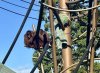
Melur and Daya:

Attachments
ApeLadyNZ
Well-Known Member
All good points. I can accept the argument of Auckland Zoo wanting Daya time to assimilate into their colony, but two years on from her import and she has well and truly achieved that. She’s built up a good relationship with Melur, who realistically was going to be her biggest hurdle since they’re both unrelated adult females. Fortunately both Melur and Daya seem good natured and there’s been no drama reported between them.
Auckland could have nicely staggered the births with Melur producing an infant six years after Bahmi and Daya producing an infant this year (three years either side of each). However allowing Melur to breed again; and then Daya to give birth the same year (ideally 3-6 months after) would promote Melur being in a position to rear the infant of Daya, should she reject it for whatever reason. Even experienced mothers will sometimes reject an infant if health complication present at delivery or during the neonate phase.
Melur and Daya:
View attachment 791721
Yes, you also make good points! Melur and Daya have indeed established a harmonious relationship, even more so than Melur had with Wanita (I witnessed occasional scuffles over food between those two, which Charlie broke up). The only time I've ever seen any drama between Melur and Daya was when an overly excited Bahmi bit Daya's hand, and she cuffed him away from her. Melur saw, and chased Daya off, but there was no physical altercation and things calmed down very fast. Most time when I see them together, they're relaxing and eating in each other's company or Melur will be grooming Daya as in your photo (with Bahmi occasionally joining in by grooming one or both females).
And I am in full agreement with what you've stated re staggering the births, that would be most beneficial for the mothers and the infants.
Update on Indra
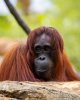
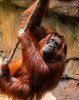
I thought those who have followed Auckland Zoo’s orangutan colony over the years would be interested to see these photos of Indra (courtesy of Busch Gardens Tampa Bay), posted during an announcement Indra will be transferring to Cameron Park Zoo. Presumably this is to afford Busch Gardens more space following the birth of a female infant last year (sired by Auckland bred orangutan Madju, son of Charlie and Melur).
Indra was born at Rotterdam Zoo in September 1980; imported by Auckland Zoo in 1983; and later exported again to the US in 2009. She was a central figure of Auckland Zoo’s colony, producing the first Bornean orangutan infant born in New Zealand (Intan) in March 1989; and a second infant (Isim) in June 1994. I hope to eventually hear news Isim and his mate Gangsa (who also resided at Auckland Zoo from 2001-2015) have welcomed a surviving infant after their long and difficult journey to parenthood. Following Intan’s passing in 2013, Isim is Indra’s sole living descendant.


I thought those who have followed Auckland Zoo’s orangutan colony over the years would be interested to see these photos of Indra (courtesy of Busch Gardens Tampa Bay), posted during an announcement Indra will be transferring to Cameron Park Zoo. Presumably this is to afford Busch Gardens more space following the birth of a female infant last year (sired by Auckland bred orangutan Madju, son of Charlie and Melur).
Indra was born at Rotterdam Zoo in September 1980; imported by Auckland Zoo in 1983; and later exported again to the US in 2009. She was a central figure of Auckland Zoo’s colony, producing the first Bornean orangutan infant born in New Zealand (Intan) in March 1989; and a second infant (Isim) in June 1994. I hope to eventually hear news Isim and his mate Gangsa (who also resided at Auckland Zoo from 2001-2015) have welcomed a surviving infant after their long and difficult journey to parenthood. Following Intan’s passing in 2013, Isim is Indra’s sole living descendant.
Attachments
ApeLadyNZ
Well-Known Member
Update on Indra
I thought those who have followed Auckland Zoo’s orangutan colony over the years would be interested to see these photos of Indra (courtesy of Busch Gardens Tampa Bay), posted during an announcement Indra will be transferring to Cameron Park Zoo. Presumably this is to afford Busch Gardens more space following the birth of a female infant last year (sired by Auckland bred orangutan Madju, son of Charlie and Melur).
Indra was born at Rotterdam Zoo in September 1980; imported by Auckland Zoo in 1983; and later exported again to the US in 2009. She was a central figure of Auckland Zoo’s colony, producing the first Bornean orangutan infant born in New Zealand (Intan) in March 1989; and a second infant (Isim) in June 1994. I hope to eventually hear news Isim and his mate Gangsa (who also resided at Auckland Zoo from 2001-2015) have welcomed a surviving infant after their long and difficult journey to parenthood. Following Intan’s passing in 2013, Isim is Indra’s sole living descendant.
View attachment 791723
View attachment 791724
Thank you for the update! I hope Indra will be happy at Cameron Park Zoo and settle in well - I had hoped she could be integrated with Madju and his family, but perhaps they decided it would be better for Madju and Luna to be able to concentrate on little Stella without any outsiders being brought in - Madju and Indra were never housed together and would be strangers to each other. I noticed on socials that she's being transferred as part of the SSP, so I am wondering if they are considering breeding from her? I know she's no youngster, but older females have received breeding recommendations before.
I too hope that there will be an infant sired by Isim, either with Gangsa or Kalim. Isim is not only the sole descendant of Indra, but of Horst, who was very genetically valuable, and never sired any offspring at Busch Gardens since Luna rejected him and the staff there for some reason decided not to breed from Indra again.
Thank you also for the amazing photos, @Zoofan15 ! It's nice to see sweet Indra's face again!
Last edited:
Thank you for the update! I hope Indra will be happy at Cameron Park Zoo and settle in well - I had hoped she could be integrated with Madju and his family, but perhaps they decided it would be better for Madju and Luna to be able to concentrate on little Stella without any outsiders being brought in - Madju and Indra were never housed together and would be strangers to each other. I noticed on socials that she's being transferred as part of the SSP, so I am wondering if they are considering breeding from her? I know she's no youngster, but older females have received breeding recommendations before.
I too hope that there will be an infant sired by Isim, either with Gangsa or Kalim. Isim is not only the sole descendant of Indra, but of Horst, who was very genetically valuable, and never sired any offspring at Busch Gardens since Luna rejected him and the staff there for some reason decided not to breed from Indra again.
Thank you also for the amazing photos, @Zoofan15 ! It's nice to see sweet Indra's face again!
I’m inclined to believe the comment regarding the SSP was a throwaway comment rather than an indication she would be breeding, but I agree it was somewhat vague.
Indra is 45 years old and presumably not considered genetically valuable considering she came to the US as a 29 year old and they haven’t seen fit to breed from her to date (even after the passing of Intan in 2013), which reduced her lineage to just Isim.
Indra’s sire sired many offspring, so she’s well represented on her paternal side across Europe.

I noticed on socials that she's being transferred as part of the SSP, so I am wondering if they are considering breeding from her? I know she's no youngster, but older females have received breeding recommendations before.
Recommendations can be made for transfers, even if they aren't specifically 'breeding recommendations'.I’m inclined to believe the comment regarding the SSP was a throwaway comment rather than an indication she would be breeding, but I agree it was somewhat vague.
They still help contribute to the regional breeding program anyhow; freeing up space, providing different social groupings ect.
Since the facilities are operated under the SSP, the move was made in coordination with the SSP (they would have recommended which facility was best for Indra).
ApeLadyNZ
Well-Known Member
I’m inclined to believe the comment regarding the SSP was a throwaway comment rather than an indication she would be breeding, but I agree it was somewhat vague.
Indra is 45 years old and presumably not considered genetically valuable considering she came to the US as a 29 year old and they haven’t seen fit to breed from her to date (even after the passing of Intan in 2013), which reduced her lineage to just Isim.
Indra’s sire sired many offspring, so she’s well represented on her paternal side across Europe.
Thanks for clearing that up! It is likely to be a throwaway comment, but I found it vague as well. Isim siring offspring would be of more genetic value than Indra bearing any, although Yasmin, who is well represented, was allowed to conceive her ninth (and likely final) offspring in Akyli, although that decision probably had more to do with the genetic value of her mate, Boomer, and Yasmin's proven track record as a capable mother. I personally don't think she was sent away to breed, but again, who knows?
ApeLadyNZ
Well-Known Member
Recommendations can be made for transfers, even if they aren't specifically 'breeding recommendations'.
They still help contribute to the regional breeding program anyhow; freeing up space, providing different social groupings ect.
Since the facilities are operated under the SSP, the move was made in coordination with the SSP (they would have recommended which facility was best for Indra).
That does make more sense re Indra's transfer. Busch Gardens are probably looking at more space for the breeding group and possibly even bringing in another breeding female for Madju in the future. I would think they would also look at transferring out Willie when Joy eventually passes away.
As I said earlier, I think it's unlikely they will breed from Indra, although she could possibly serve as a foster mother someday if one was ever needed.
Last edited:
Recommendations can be made for transfers, even if they aren't specifically 'breeding recommendations'.
They still help contribute to the regional breeding program anyhow; freeing up space, providing different social groupings ect.
Since the facilities are operated under the SSP, the move was made in coordination with the SSP (they would have recommended which facility was best for Indra).
That does make more sense re Indra's transfer. Busch Gardens are probably looking at more space for the breeding group and possibly even bringing in another breeding female for Madju in the future. I would think they would also look at transferring out Willie when Joy eventually passes away.
As I said earlier, I think it's unlikely they will breed from Indra, although she could possibly serve as a foster mother someday if one was ever needed.
Like I said, I’m assuming it’s as much about freeing up space at Busch Gardens, who may even have long term intentions of brining in another female to breed with Madju. He’s genetically valuable via Charlie and Madju’s sole surviving offspring is a female who may not breed for another decade and a half.
Recommendations can provide companionship, as we’ve seen recently at Hamilton Zoo (acquiring a female to pair with their male meerkat).
ApeLadyNZ
Well-Known Member
Like I said, I’m assuming it’s as much about freeing up space at Busch Gardens, who may even have long term intentions of brining in another female to breed with Madju. He’s genetically valuable via Charlie and Madju’s sole surviving offspring is a female who may not breed for another decade and a half.
Recommendations can provide companionship, as we’ve seen recently at Hamilton Zoo (acquiring a female to pair with their male meerkat).
I think you're right, and that another breeding female for Madju is on the cards. Luna will not be ready to breed again for quite some time yet while she is preoccupied with Stella.
Regarding their other orangutans, Joy is of a very advanced age, and it's likely Willie will be transferred elsewhere when she passes away, so that Busch Gardens can focus on the breeding colony.
I think you're right, and that another breeding female for Madju is on the cards. Luna will not be ready to breed again for quite some time yet while she is preoccupied with Stella.
Regarding their other orangutans, Joy is of a very advanced age, and it's likely Willie will be transferred elsewhere when she passes away, so that Busch Gardens can focus on the breeding colony.
They have decent sized facilities, which like Auckland’s, promote housing the orangutans in small groups. Housing infants, juveniles and adolescents with elderly females would likely prove incompatible in any setting, but a long term aspiration to hold 1.2 adults (plus young) would probably serve them well.
Though it drew criticism for its design (basically a grassed field with telegraph poles), Auckland’s Orangutan Park was undeniably the best in the region when it opened in 1987. Though conflicts arose between the males as the older juvenile Horst entered adolescence, the two juvenile females (Dara and Indra) remained close into adulthood. It’s probably been the closest friendship (for want of a better word) between any two females (bar the mother and daughter Indra/Intan) in Auckland’s colony, followed by Melur and Daya. Wanita was apparently a moody female on the whole, so Melur (who didn’t give aggression back as Gangsa did) was their best option for maintaining a cohesive group.
ApeLadyNZ
Well-Known Member
They have decent sized facilities, which like Auckland’s, promote housing the orangutans in small groups. Housing infants, juveniles and adolescents with elderly females would likely prove incompatible in any setting, but a long term aspiration to hold 1.2 adults (plus young) would probably serve them well.
Though it drew criticism for its design (basically a grassed field with telegraph poles), Auckland’s Orangutan Park was undeniably the best in the region when it opened in 1987. Though conflicts arose between the males as the older juvenile Horst entered adolescence, the two juvenile females (Dara and Indra) remained close into adulthood. It’s probably been the closest friendship (for want of a better word) between any two females (bar the mother and daughter Indra/Intan) in Auckland’s colony, followed by Melur and Daya. Wanita was apparently a moody female on the whole, so Melur (who didn’t give aggression back as Gangsa did) was their best option for maintaining a cohesive group.
1.2 adults plus infants/juveniles does seem to be an ideal setup for orangutans - not only Auckland Zoo has this pattern, but Ouwenhands Dierenpark, where Daya came from, had Bako set up with 2 females and their young before his passing. Dudley Zoo and others also seem to be arranged this way.
With the old orangutan habitat, and it became necessary to separate the orangutan groups, it was unfortunate that in the end, after much rearranging of the group and various conflicts, Charlie and Gangsa had to be separated as they had a very strong bond, noted by yourself and others who have commented here. And as you've pointed out, housing Melur with Wanita worked out better than when Wanita was placed with Gangsa and Isim and conflict broke out.
Zoo staff have told me Daya was chosen for Auckland Zoo not only for her genetic value, but that her temperament was taken into account - she is very gentle and easygoing, like Melur, and so they have bonded better than Melur has done with previous females.
1.2 adults plus infants/juveniles does seem to be an ideal setup for orangutans - not only Auckland Zoo has this pattern, but Ouwenhands Dierenpark, where Daya came from, had Bako set up with 2 females and their young before his passing. Dudley Zoo and others also seem to be arranged this way.
With the old orangutan habitat, and it became necessary to separate the orangutan groups, it was unfortunate that in the end, after much rearranging of the group and various conflicts, Charlie and Gangsa had to be separated as they had a very strong bond, noted by yourself and others who have commented here. And as you've pointed out, housing Melur with Wanita worked out better than when Wanita was placed with Gangsa and Isim and conflict broke out.
Zoo staff have told me Daya was chosen for Auckland Zoo not only for her genetic value, but that her temperament was taken into account - she is very gentle and easygoing, like Melur, and so they have bonded better than Melur has done with previous females.
It would have been interesting to have seen how the groupings had evolved had Auckland Zoo built the original two exhibits they had planned (basically a dividing wall separating Orangutan Park into two; and a second night house/day room). Though the obvious pairings would have been Horst/Indra and Charlie/Dara, the harmonious relationship between Dara and Indra presumably would have led them to manage the colony as we saw them into the 2000’s of the females and young in one group, rotating between the males. Although it meant one male had to be without females for two weeks at a time, it enabled the juveniles greater socialisation opportunities.
Once the Sydney females arrived, the second exhibit would have really come into its own; and indeed the zoo jumped at the chance to transfer Indra and Intan across to the old chimpanzee exhibit. Though no factions had evolved amongst the females at that point, Indra and Intan had the closest bond as mother and daughter and both favoured Horst over Charlie. Gangsa’s infatuation with Charlie was evident from early on, which would have been a novelty to him at that point to have such keen female interest.