I believe so as well. Yorkshire Wildlife Park has capybara in a walkthrough exhibit as well with callitrichids, mara, tamandua, and agouti.Hagenbeck had free-roaming capybara until recently. I imagine that a walkthrough certainly would be achievable.
You are using an out of date browser. It may not display this or other websites correctly.
You should upgrade or use an alternative browser.
You should upgrade or use an alternative browser.
ZSL London Zoo ZSL London Zoo News 2025
- Thread starter aquilla1
- Start date

Lafone
Well-Known Member
I believe so as well. Yorkshire Wildlife Park has capybara in a walkthrough exhibit as well with callitrichids, mara, tamandua, and agouti.
The Capybara are free roaming in the YWP Amazonas walkthrough with the silvery marmoset, golden lion tamarin, coppery tit monkeys agouti and Mara but it doesn’t hold Tamandua.
The Capybara stay off the visitor path and seem fine wandering around. Key to most walkthroughs is space and clear paths and people seem well behaved in it.
ZooNews2024
Well-Known Member
So long as the animals can get away from the visitor path, and have the choice to approach or not - what is the problem?
This is all spot on, and thank you for concisely summarising it.
To go on further, the Spanish population was never self-supporting without being fed by the public, so the species was illegally listed in the first place as it did not meet the criteria of an invasive species, which by default has to be self-supporting and sustainable. There has already been a legal challenge to this illegal listing, but this will be a while before it comes into force. When the species is de-listed, zoos will be free to import new stock, or obtain animals which continue to be bred and traded 'underground' by private breeders.
Nasua nasua was on the list of invasive species as of 2016; as a result of escaped cases in the north of England and on warmer Spanish islands. Although the feral UK populations survived only a few years at most, the Spanish populations managed to thrive for several years from being fed by tourists. Though I am not sure if they are still there. These laws prohibit the breeding of listed species; but allow the keeping and regulated display of individuals of the species until the end of their natural life.
Obviously since the UK is no longer part of the EU [currently, anyways] this means in theory the list could be changed to include/exclude other things... but as of yet there has been no motivation to do such a thing.
This is all spot on, and thank you for concisely summarising it.
To go on further, the Spanish population was never self-supporting without being fed by the public, so the species was illegally listed in the first place as it did not meet the criteria of an invasive species, which by default has to be self-supporting and sustainable. There has already been a legal challenge to this illegal listing, but this will be a while before it comes into force. When the species is de-listed, zoos will be free to import new stock, or obtain animals which continue to be bred and traded 'underground' by private breeders.
Last edited:
ZooNews2024
Well-Known Member
This is rubbish. The UK did not need to do a 'simple trapping program' for a population which had already died out. The Spanish animals are(were?) accustomed to the tourists, and dependent on public feeding' so this eradication programme could have, or could be, perfectly 'simple'. It was the Spanish that chose not to do it (not the UK) leaving their population unchecked because it had become a tourist attraction.Whenever these directives come into force ... I get the feeling they are just window dressing and be seen to be doing "something", however with a captive-breeding operation ban for Nasua nasua the authorities in EEC countries and UK are doing nothing to combat the actual released invasives .... where a simple trapping program would have sufficed. FFS..., I would say.
It is mainland countries which are doing little or nothing to combat the problem, just look at the number of Coypu on the mainland - a species which was eradicated in the UK, from a well established and large naturalised population - although the trapping programme was concerted and not at all 'simple'.
Last edited:
ZooNews2024
Well-Known Member
With the coatis, I think its due to the fact of the EU regulations that forbid breeding of the South American species due to them being on the invasive list? Someone will have to correct me on the exact specifics...
It does make me wonder if over the next decade we might see a massive decline in the South American species in favour of the White-Nosed.
It is already happening. The interesting thing is that the new-blood imports of White-nosed now breeding rapidly on the mainland, are producing very variable coloured youngsters. They are nothing like the males held by Battersea and Hamerton.
Could they have Ring-tail blood in them, and where would that leave their legality? Using EU logic the White-nosed part of their make up would not be able to sustain istlef in Europe, whereas the the Ring-tail genes could.
This is shambolic.

This is great news, fingers crossed he gets on with the current female. Hopefully whipsnade can find a suitable female as well and both collections end up with a successful breeding pair.A new male pygmy hippo arrives in September, hence the need to move the capybara on by then.

So long as the animals can get away from the visitor path, and have the choice to approach or not - what is the problem?
This is all spot on, and thank you for concisely summarising it.
To go on further, the Spanish population was never self-supporting without being fed by the public, so the species was illegally listed in the first place as it did not meet the criteria of an invasive species, which by default has to be self-supporting and sustainable. There has already been a legal challenge to this illegal listing, but this will be a while before it comes into force. When the species is de-listed, zoos will be free to import new stock, or obtain animals which continue to be bred and traded 'underground' by private breeders.
Sorry for the off topic, but I'm a Spanish naturalist and I've never listen about wild coatis feeding by public in my country
It's true that in Mallorca they are a problem, but it's not a problem for the peninsula (yes for the racoons). One proof that this kind of situation doesn't exist is that if social media isn't filled with videos of people feeding coatis (and influencers love to show off with situations like that) in Mallorca, which is full of tourists...
Of the unused areas currently I would have thought the former Tortoise House and enclosue could be an option for Capybara , The path/access from the Komodo House exit to the side of the African aviary will presumary reopen once the ZooTown (former Reptile House constuction ) completes this year.

Of the unused areas currently I would have thought the former Tortoise House and enclosue could be an option for Capybara , The path/access from the Komodo House exit to the side of the African aviary will presumary reopen once the ZooTown (former Reptile House constuction ) completes this year.
Wasn’t there rumblings a few years ago that the old Giant Tortoise area would be given to the bird department presumably for an aviary? I assume this has gone by the way side with bird-flu etc as we’ve not heard anything since. (Or am I miss remembering)
I went to the Zoo Nights last Friday and had a really nice time.
I had avoided all spoilers of the new Reptile house so was excited to finally see it. I will say it was a little disappointing from the guest side, quite sterile and lacking character (especially if you look up at the ceiling). Saying this I enjoyed seeing the behind the scenes areas which I don’t mind being more sterile. Most of the enclosure on the other hand were really nice in terms of size, planting and layout. Some however seemed like they need a good refresh with planting. The highlight was the giant salamanders for sure!
I had avoided all spoilers of the new Reptile house so was excited to finally see it. I will say it was a little disappointing from the guest side, quite sterile and lacking character (especially if you look up at the ceiling). Saying this I enjoyed seeing the behind the scenes areas which I don’t mind being more sterile. Most of the enclosure on the other hand were really nice in terms of size, planting and layout. Some however seemed like they need a good refresh with planting. The highlight was the giant salamanders for sure!

Perhaps you might consider further imports at Hamerton?It is already happening. The interesting thing is that the new-blood imports of White-nosed now breeding rapidly on the mainland, are producing very variable coloured youngsters. They are nothing like the males held by Battersea and Hamerton.
Could they have Ring-tail blood in them, and where would that leave their legality? Using EU logic the White-nosed part of their make up would not be able to sustain istlef in Europe, whereas the the Ring-tail genes could.
This is shambolic.
A few observations from a visit this week
A number of young penguins were visible in their nursery area.
Both Okapi had access together to their outside paddocks .
A bit of a tidy up of the nettles etc in the front of their enclosure means the (3) dikdiks are easier to spot. (note i said easier not easy).
A number of young penguins were visible in their nursery area.
Both Okapi had access together to their outside paddocks .
A bit of a tidy up of the nettles etc in the front of their enclosure means the (3) dikdiks are easier to spot. (note i said easier not easy).
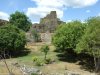
I finally managed to visit ZSL this week for the first time since 1966! The heat and numerous school parties were a little overwhelming but I thoroughly enjoyed my day. I can remember very little from my previous visit, apart from the crushing disappointment of not seeing the giant panda which was visiting the Russian panda at the time. The giraffe house looked vaguely familiar and also the backdrop to the Bennett's wallaby enclosure (see below) - might it have been a polar bear enclosure in the 1960s?
Highlights for me were the gorillas, the pygmy hippo, the Reptile house, the Colobus monkeys, the Blackburn pavillion, nocturnal house, squirrel monkeys and being able to watch the penguins underwater.
Highlights for me were the gorillas, the pygmy hippo, the Reptile house, the Colobus monkeys, the Blackburn pavillion, nocturnal house, squirrel monkeys and being able to watch the penguins underwater.
Attachments

Kalaw
Well-Known Member
Yes, the giraffe house would be familiar, as it has existed since the 1830s. If I'm not mistaken, it's actually the oldest zoo building in the world which still holds the same animal it was originally built for, although there have been intervals in between where it has held other species.The giraffe house looked vaguely familiar and also the backdrop to the Bennett's wallaby enclosure (see below) - might it have been a polar bear enclosure in the 1960s?
And yes, the background of the wallaby enclosure (a series of artificial mountains known as the Mappin Terraces) has been home to Polar Bears, as well as other bears and mountain goats, over the years. The last bears to live here were Sloth Bears who left in 2008.

Haliaeetus
Well-Known Member
Kalaw
Well-Known Member
That is adorable and worth a visit in and of itself.
Whereabouts are the gentle lemurs kept nowadays? I haven't got round to the Clore in a couple of visits now, but I remember reading something about how some of the bokies moved to their enclosure. Is it the old spider monkey enclosure in Rainforest Life?

cerperal
Well-Known Member
The former spider monkey enclosure indeed, it's a lovely spot for them - quiet enough that they spend a lot of time outside while allowing visitors to pretty much always see them. As you say, a few of the bokibokys were moved into their former exhibitThat is adorable and worth a visit in and of itself.
Whereabouts are the gentle lemurs kept nowadays? I haven't got round to the Clore in a couple of visits now, but I remember reading something about how some of the bokies moved to their enclosure. Is it the old spider monkey enclosure in Rainforest Life?
It's incredible news that they have another birth, following the previous one in November. Hopefully the breeding success continues, I'll be over at Regent's Park next week hopefully so another new arrival to look forward to

equidae
Well-Known Member
Noticed that the giraffe and zebra had been separated when I passed the zoo yesterday. Giraffe have half their original enclosure and the zebra have access to the remaining two thirds of the total space.
I presume this means there have been issues with the species mixing, but has anyone heard any other reasons for this?

I presume this means there have been issues with the species mixing, but has anyone heard any other reasons for this?