ZooChat Big Year 2013

Status
Not open for further replies.
Birds
61. Welcome Swallow
62. Wedgetail Shearwater
63. Fleshfooted Shearwater
64. Pomarine Jaeger
65. Greatwinged Petrel
66. Satin Bowerbird
67. Olive-backed Oriole
68. Eastern Whipbird
69. Red-browed Firetail Finch

Mammals
1. Brown Rat
2. Bottlenose Dolphin
 
48. Royal Spoonbill
49. Yellow-billed Spoonbill
50. Latham's Snipe
51. Black-winged Stilt
52. Eastern Yellow Robin
53. Crested Shrike-tit
54. Grey Fantail
55. Grey Currawong
56. Silvereye
 
48. Royal Spoonbill
49. Yellow-billed Spoonbill
50. Latham's Snipe
51. Black-winged Stilt
52. Eastern Yellow Robin
53. Crested Shrike-tit
54. Grey Fantail
55. Grey Currawong
56. Silvereye
where have you been birding? I wouldn't mind seeing a snipe, and I somehow keep missing yellow-billed spoonbills!
 
I went to Banyule Flats, which according to Birdlife (http://www.birdlife.org.au/all-about-birds/birdwatching):

Banyule Flats Reserve, Viewbank
25 minutes north-east of Melbourne CBD. From Rosanna Road, turn into Banyule Road, and then left into Somerset Drive. For the best birdwatching results, follow the dirt track past the billabong (don’t use the main Yarra Trail — there are too many people and cyclists). See numerous waterfowl in the billabong and adjacent river, as well as Latham’s Snipe, resident waders, crakes and rails. Also look for Crested Shrike-tits and Mistletoebirds in the River Red Gums. This is one of the few places in Melbourne where you may find a Red-whiskered Bulbul.


I don't have a scope, so I use my camera and then zoom in. :D I have attached a pic from my phone though. As you can see, houses are very near to the billabong, but in a shot similar to that, I had both species of spoonbills next to each other on that tree with a straw neck ibis, plus a myriad of ducks, moorhens, the snipe, and the stilt in the water - all in one frame!! As you may realise, we are experiencing a drought at the moment, which is a bit of a bummer....
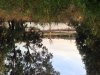
Here is a list of species recorded there (not by me of course): http://www.eremaea.com/SiteSpeciesList.aspx?Site=578
 

Attachments

  • Banyule Flats.JPG
    Banyule Flats.JPG
    1.8 MB · Views: 13
Last edited:
The drought is good for birding - it means the birds are forced to congregate at the main bodies of water.

Must visit this place next time I'm in Melbourne.

:p

Hix
 
The drought is good for birding - it means the birds are forced to congregate at the main bodies of water.

Must visit this place next time I'm in Melbourne.

:p

Hix

Absolutely! Hence the 10 species in one pic! ;) The drought isn't good for my lawn though, which is dead.
 
I have been to Banyule Flats. Red-rumped parrot was a highlight there. However I did not see snipe or yellow-billed spoonbill at that time.
 
I have been to Banyule Flats. Red-rumped parrot was a highlight there. However I did not see snipe or yellow-billed spoonbill at that time.

I guess the water level was higher when you visited, and you probably weren't there late enough. (I was there about 7:30pm)

Although I visited before and saw a gang gang cockatoo, I want to visit here again because that was the only noteworthy bird that I saw:

Rifle Range Reserve, Smiths Gully
1 hour north-east of Melbourne CBD. Head north-east along Kangaroo Ground–St Andrews Road, and 3 kilometres past Panton Hill, turn right into Clintons Road, and then immediately left onto Smiths Gully Road. Then turn left into Salters Rush Road, and right into Rifle Range Road. Park at the locked gate. See White-winged Choughs and a variety of other bush birds.
 
64. Brent goose
65. Velvet scooter
66. Tundra bean goose
67. Common gull
68. Stock dove
69. Sparrowhawk
70. Eurasian woodcock

and now 6 mammals, added European hare and harvest mouse this week.

71. Crested tit
72. Marsh tit
73. Willow tit

Mammals:
7. Red deer
 
Over the past couple of days I have seen some more new species:

Birds:
59- Red kite
60- Marsh harrier
61- Red-legged partridge

Mammals:
5- Fallow deer
6- Least weasel
7- Chinese water deer (Lifer)
 
74. Little grebe
75. Common shelduck
76. Eurasian teal
77. Common pochard
78. Gadwall
79. Eurasian bullfinch
80. Brambling

apart from that many traces of beaver today and my first amphibian of the year, the smooth newt :)
 
1) Common Raven
2) Black-Billed Magpie
3) Rock Dove
4) Bohemian Waxwing
5) Mallard
6) European Starling
7) Black-Capped Chickadee
8) Steller's Jay
9) Bald Eagle
10) Common Redpoll

Mammals:
1) Red Squirrel
2) Red Fox
3) Arctic Fox
 
81. Smew
82. European Oystercatcher
83. Song trush

Spring is finally coming here, within a few weeks many birds will return from Africa :)
 
A few more additions:
122) Least Sandpiper
123) Northern Saw-whet Owl

I also picked up an Eastern Towhee in Missouri, #127 overall. THey are abundant during migration though.
 
1) Common Raven
2) Black-Billed Magpie
3) Rock Dove
4) Bohemian Waxwing
5) Mallard
6) European Starling
7) Black-Capped Chickadee
8) Steller's Jay
9) Bald Eagle
10) Common Redpoll

Mammals:
1) Red Squirrel
2) Red Fox
3) Arctic Fox

11) Red-breasted Nuthatch
 
Status
Not open for further replies.
Back
Top