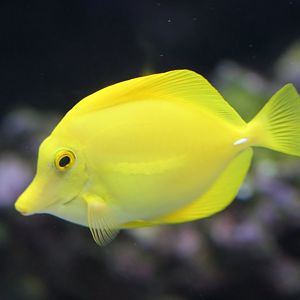
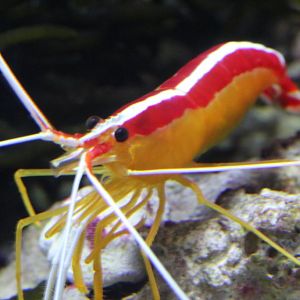
Are there new species of angelfish being discovered with some frequency?
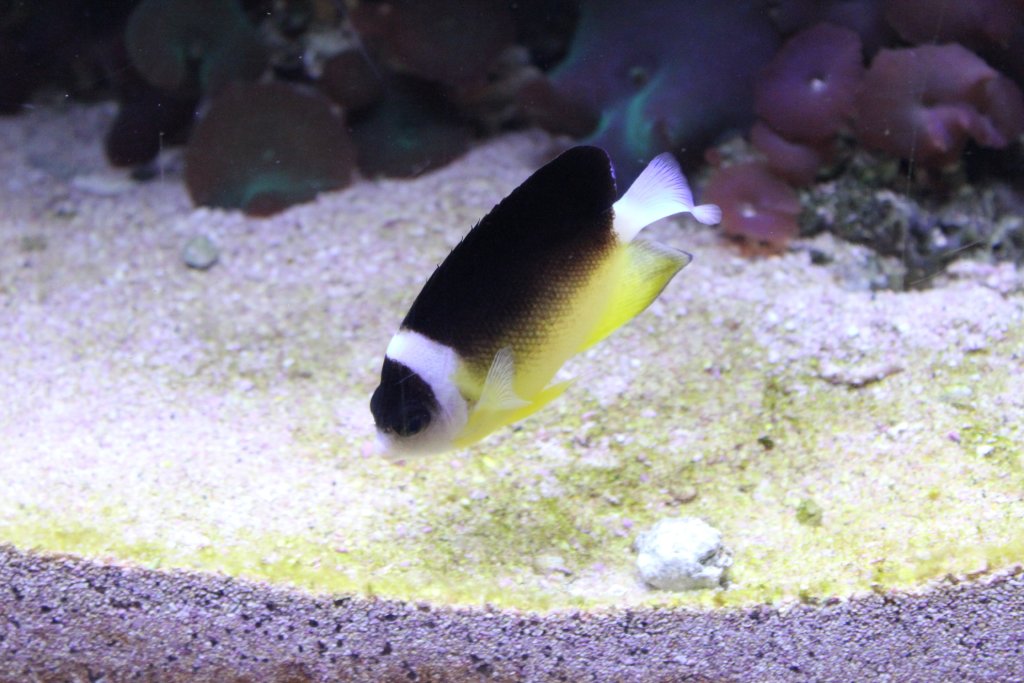
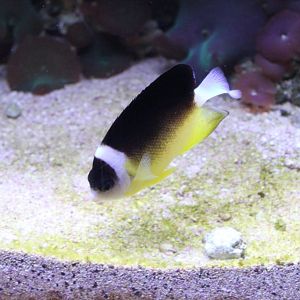
Between this species and the peppermint angelfish that it shares a tank with it seems surprising that such colorful and prominent species have gone undiscovered, and would be rather like discovering new species of parrots on a regular basis.
Is it because their habitat is remote and unexplored?
new fish species are discovered and described regularly (an average of over 100 new species every year), largely because the ocean is an inhospitable place for human exploration. Most new species are the result of various types of trawling, rather the equivalent of throwing a butterfly net up in the air and hoping to catch something. There really isn't a comparison to parrots at all.
With regards to the Abe's and peppermint angelfish (specifically the depths they live at and the abilities of human diving) see this Wikipedia page on diving depths: [ame=http://en.wikipedia.org/wiki/Deep_diving]Deep diving - Wikipedia, the free encyclopedia[/ame]
This might help you to visulaise it: look at a straight stretch of road 30 metres (100ft) long. That's the maximum depth that more than 99% of the world's scuba divers can get to. Compare that to a typical coastline and you can understand why so much of the undersea world is little or unknown.
Thanks for the information and the visualization aide Chlidonias and Hix. I have been out on the ocean several times to go whale watching, but have never been under the sea.
I didn't realize that there was such a narrow band of exploration that divers can access...I have read much about deep sea exploration, but not paid much attention to where most of the human action is. You are right Chlidonias; it is nothing like bird watching.
David, get yourself scuba certified - it is an ENTIRELY different world down there, even only 5 metres down. TV and movies are a poor substitute for drifting along a reef watching fish go about their business.
There are two primary reasons that new angelfish continue to be described: Remoteness of their habitat and taxonomic confusion. Remoteness includes both depth (as describe in previous posts) and just a small range in a remote region. The angelfish of deeper waters that have been described in recent years have all been found by deep water divers using trimix and other systems that allow access to 100 m. and more. One angelfish described in 1993, Centropyge narcosis, even has a name that hints to the depth it was collected at (the diver that collected it experianced nitrogen narcosis during the dive). Though it is true that many new fish species are the result of trawling, they still represent a minority of the fish species described every year. About half the fish described are freshwater which usually involve hand nets, and in marine fish the majority described every year are collected by divers from reefs at depths to 100 m. and often much less. The video on this page is worth a look. If for nothing else, the discussion between two divers on helium at around 10.30 is laughable. If you don't care about the technical stuff in deep diving, skip the part between 3.00 and 8.45.
In angelfish, cases where range (not depth) is the primary reason it had been overlooked include Chaetodontoplus vanderloosi (described in 2004). It is found in shallow waters that are well within normal scuba diving, but has a tiny range off Papua New Guinea, so it is very easy to miss.
Three other angelfish that were described recently were mainly overlooked because they had been confused with other species before: Chaetodontoplus meredithi (described in 1990) had been confused with C. personifer, C. poliourus (described in 2009) had been confused with C. mesoleucus, and Centropyge deborae (described in 2012) had been confused with C. nox. A fourth species, C. woodheadi (described in 1998) had been confused with C. heraldi, but some still believe it is only a variant of that species. Comparably, "C. eibli" from Rowley Shoals differ from normal C. eibli and it could be a new species. In total, 8 (9 if you recognize C. woodheadi) new angelfish have been described since 1990.
Sorry for getting a bit off topic, but noticing that discoveries of parrots was suggested as a comparison, I thought I'd do a fast check of this family. In the following, I am only listing taxa that are widely recognized (e.g. Aratinga hockingi and Pyrrhura parvifrons are recent parrot descriptions, but neither is widely recognized):
I believe this specimen is the only Centropyge abei on public display in the world. Did they have their Peppermint Angelfish (also the only on public display) on your visit? I believe it is in the same tank as the Abe's.