KevinB

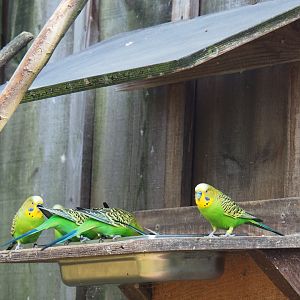
Alien species aviary, 2019-03-30

  • Media owner KevinB
  • Date added
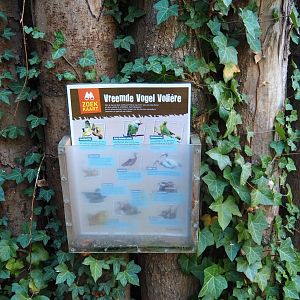
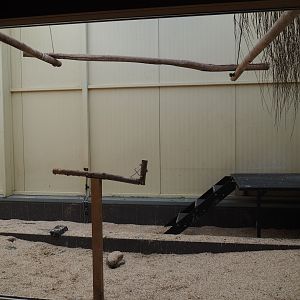
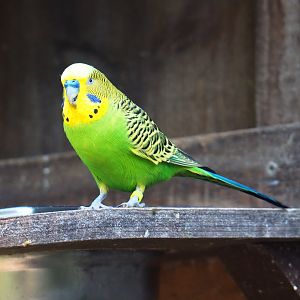
The 'Vreemde Vogel Volière' or translated 'Alien species aviary' is an aviary housing alien species that have been released or introduced into the Netherlands or Western Europe. Some of these have been declared invasive alien species, some are on the EU list of banned alien species.

Species list of the 'Vreemde Vogel Volière' or Alien species aviary:
- Ring-necked parakeet or Rose-ringed parakeet (Psittacula krameri)
- Alexandrine parakeet (Psittacula eupatria)
- Monk parakeet or Quaker parrot (Myiopsitta monachus)
- North American wood duck (Aix sponsa)
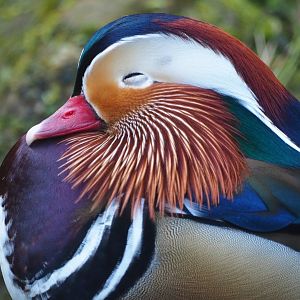
- Mandarin duck (Aix galericulata)
- Ruddy duck (Oxyura jamaicensis)
- Common pheasant or Ring-necked pheasant (Phasianus colchicus)
- Eurasian collared dove (Streptopelia decaocto decaocto)
- Sacred ibis (Threskiornis aethiopicus)
- Glossy ibis (Plegadis falcinellus)
- Blue-and-yellow macaw (Ara ararauna)
- Red-eared slider (Trachemys scripta elegans)
- Yellow-bellied slider (Trachemys scripta scripta)

Several of these species have been seen living as feral introduced populations in Belgium, the Netherlands and elsewhere in Western Europe, some like the parakeets are also present as introduced populations on other continents. Not all of these species are present in large numbers and probably not all have truly established populations.

Some, like the ring-necked parakeet and the quaker parrot, have, at least in urban areas, become a fairly common sight with a large, self-sustaining, established and spreading population. Introduced species of ducks and geese (not kept in this aviary) are also a common sight around here outside urban areas in any area where there they can find water and food.

Slider turtles are commonly present in all kinds of bodies of water both in urban areas and natural areas because people who kept them as pets ended up dumping them when they got too big or boring for them. And while the turtles are environmentally damaging as they do eat lots of fish, amphibians and invertebrates, to my knowledge so far it hasn't been possible for them to breed in the low countries.

Of these, the sacred ibis, red-eared slider, yellow-bellied slider and ruddy duck are currently on the EU-list of banned invasive alien species.
List of Invasive Alien Species of Union concern - Environment - European Commission

The glossy ibis is not really an invasive species but more a vagrant that has been showing up more and more often in the low countries as populations in southern Europe has started to increase.

The common pheasant isn't commonly regarded as an alien species, as it has been around for such a long time already - in fact it was the Romans who first brought these birds to Northwestern Europe, presumably because they bred them for hunting and eating as they are pretty tasty.

The Eurasian collared dove is uncommon among the list of introduced or alien species in the low countries as it didn't arrive here by human hands, but in fact expanded its range across Europe from the Balkan region on its own force during the 20th century. It first arrived in the low countries in the 1950s and has now become a very common bird here.

The blue-and-yellow macaws were only introduced to the aviary in 2018. While macaws have so far not formed an established introduced population in the Netherlands, there have actually been some cases of macaws surviving (even during winter) and even breeding feral in the Netherlands. The article linked below discusses one such case.
https://benthamopen.com/contents/pdf/TOOENIJ/TOOENIJ-5-1.pdf
 

Media information

Category
GaiaZOO Kerkrade
Added by
KevinB
Date added
View count
379
Comment count
1
Rating
0.00 star(s) 0 ratings

Image metadata

Device
OLYMPUS CORPORATION E-M10 Mark III
Aperture
ƒ/6.3
Focal length
14.0 mm
Exposure time
1/160 second(s)
ISO
200
Flash
Auto, did not fire
Filename
40 Alien species aviary.jpg
File size
1.5 MB
Date taken
Sat, 30 March 2019 10:15 AM
Dimensions
1440px x 1080px

Share this media

Back
Top