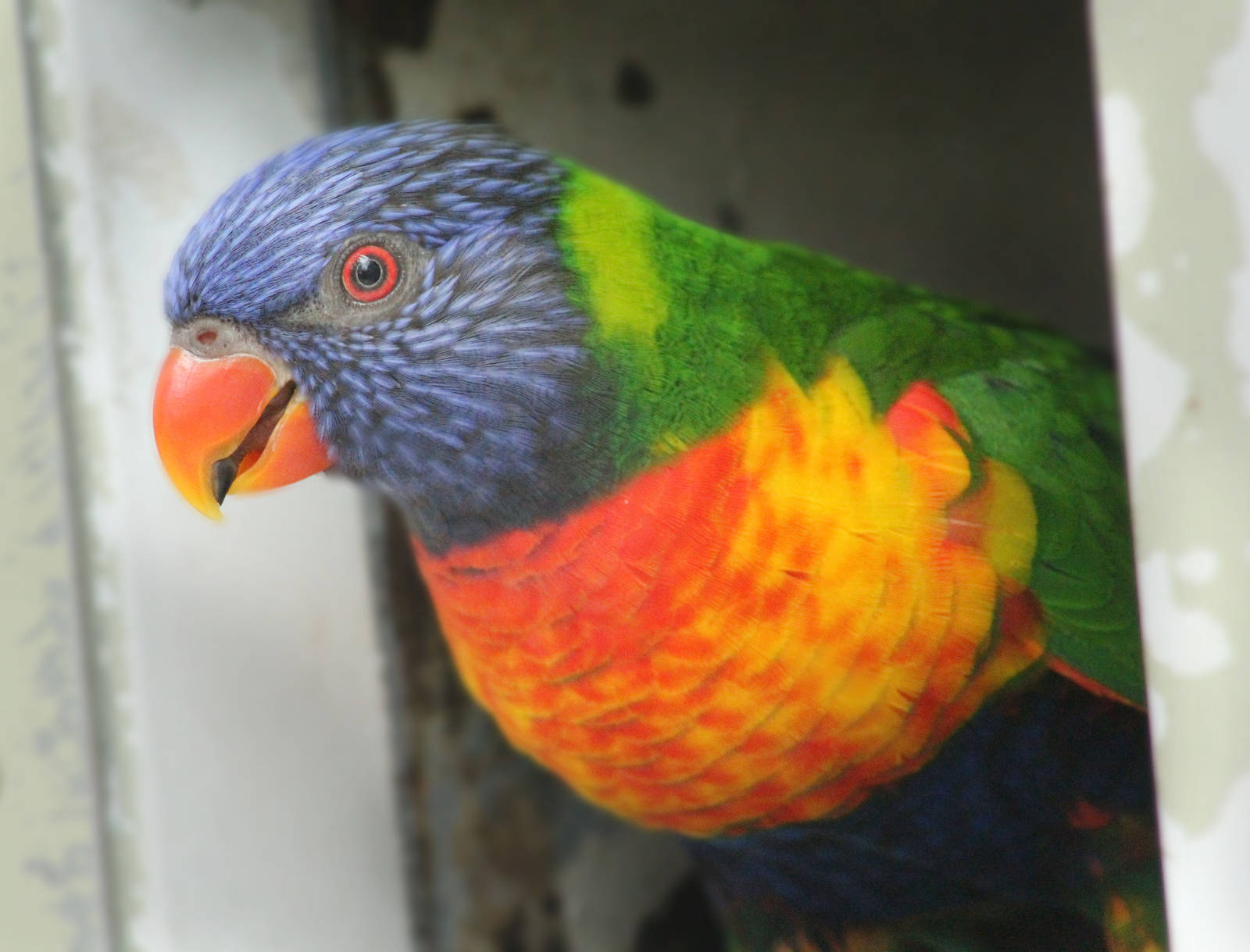
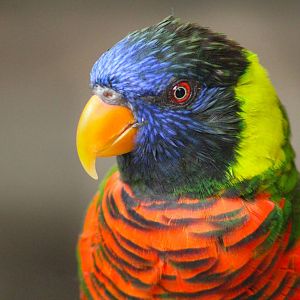
I don't really notice this from zoos but I've heard quite a few people who know a thing or two about animals in general that refer to Green-naped Lorikeets as Rainbow Lorikeets. They aren't entirely wrong but they aren't 100% right. Possibly to avoid confusion, zoos give refer to the brighter birds by a different name. I've seen this at every zoo or aquaria that exhibits both species.
I don't really notice this from zoos but I've heard quite a few people who know a thing or two about animals in general that refer to Green-naped Lorikeets as Rainbow Lorikeets. They aren't entirely wrong but they aren't 100% right. Possibly to avoid confusion, zoos give refer to the brighter birds by a different name. I've seen this at every zoo or aquaria that exhibits both species.
So do you call Trichoglossus moluccanus the Blue Mountain Lorikeet?
And by Green-naped Lorikeets do you mean the lumped Trichoglossus haematodus (sensu lato)?
I must say I've never heard of, or seen, the name 'Blue Mountain Lorikeet' before, even in zoos that exhibit multiple species of the formerly lumped haematodus.
Also, I've always heard 'Rainbow Lorikeet' used to refer to the whole un-split group. I definitely see how this can cause confusion, however calling them 'Green-naped Lorikeets' rather than 'Rainbow Lorikeets' doesn't actually solve the problem because Green-naped Lorikeet can refer to T. h. haematodus.
And finally to the above point I would add that even the Handbook of Birds of the World, which should be a fairly good source for information like this, uses 'Rainbow Lorikeet'.
See this quotation about Trichoglossus haematodus:
"...present species has hitherto been treated as a group of subspecies within the widespread Rainbow Lorikeet T. haematodus complex..."
Blue Mountain Lorikeet is an oooold name, dating from the 1800s - the Blue Mountains refer to those in New South Wales. It hasn't really been used in Australia for probably a century or more. If it were to be used (say, by strange aviculturists or backwards zoos) then it could refer only to the Australian subspecies of Rainbow Lorikeet.