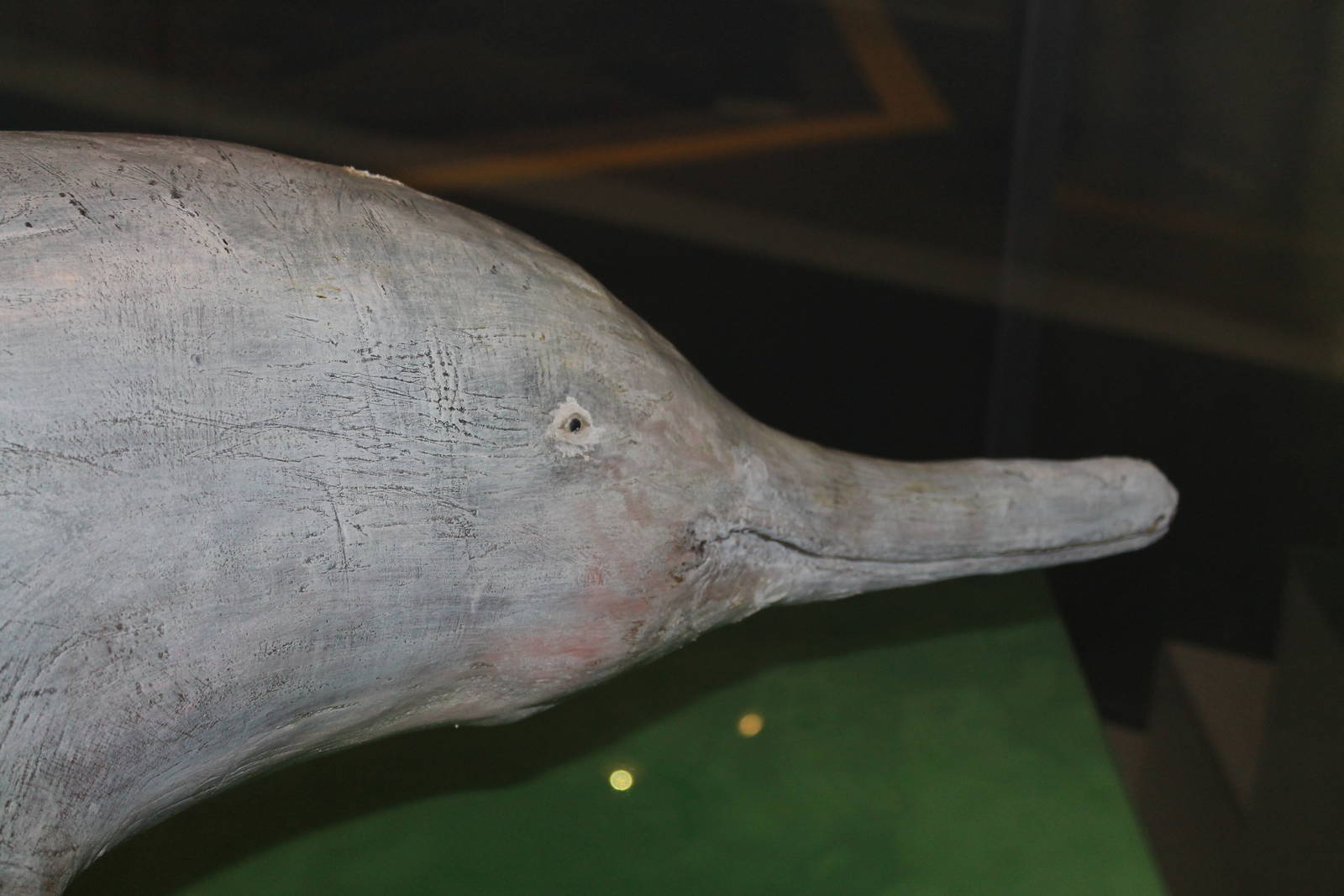
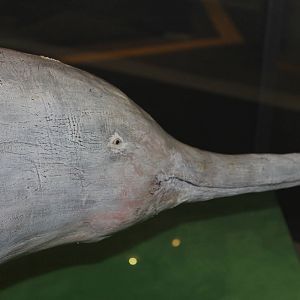
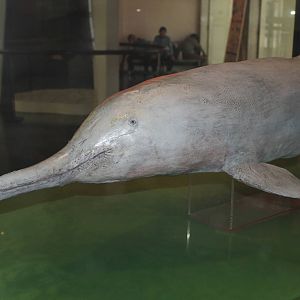
it was the only one on display Carlos, although they may have had other specimens not on show. I doubt it was any of the captive ones, because it was only a young animal (it is in the middle of the photo I will link below, so you will be able to gauge its size). I didn't take a photo of the sign, but baboon may come along later and have some information.
There are 89 Baiji specimens in the world, 2 in the US, 1 in UK, the others are all in China. This is the only one at National Zoological Museum of China. It was catched on 1973.10.12 at the Echeng, Hubei Province, middle reaches of Yangtze River, male, 2.06m, 95kg.
I think taxidermy of cetaceans is a shame - it can never be done properly, without shrinkage, deformities, cracks, discoloration and ugly seams. Such animals should be preserved as skeletal or wet specimens (they look realistic), and displayed along with cast replicas.
I think taxidermy of cetaceans is a shame - it can never be done properly, without shrinkage, deformities, cracks, discoloration and ugly seams. Such animals should be preserved as skeletal or wet specimens (they look realistic), and displayed along with cast replicas.
There are 89 Baiji specimens in the world, 2 in the US, 1 in UK, the others are all in China. This is the only one at National Zoological Museum of China. It was catched on 1973.10.12 at the Echeng, Hubei Province, middle reaches of Yangtze River, male, 2.06m, 95kg.
There is only one preserved Vaquita porpoise in the world, which i photographed at the aquarium at the Centro Cultural de Tijuana. The Vaquita has always been rare. The fact that there are many more preserved specimens of Baiji illustrates how the population decline of this species was so marked and abrupt.