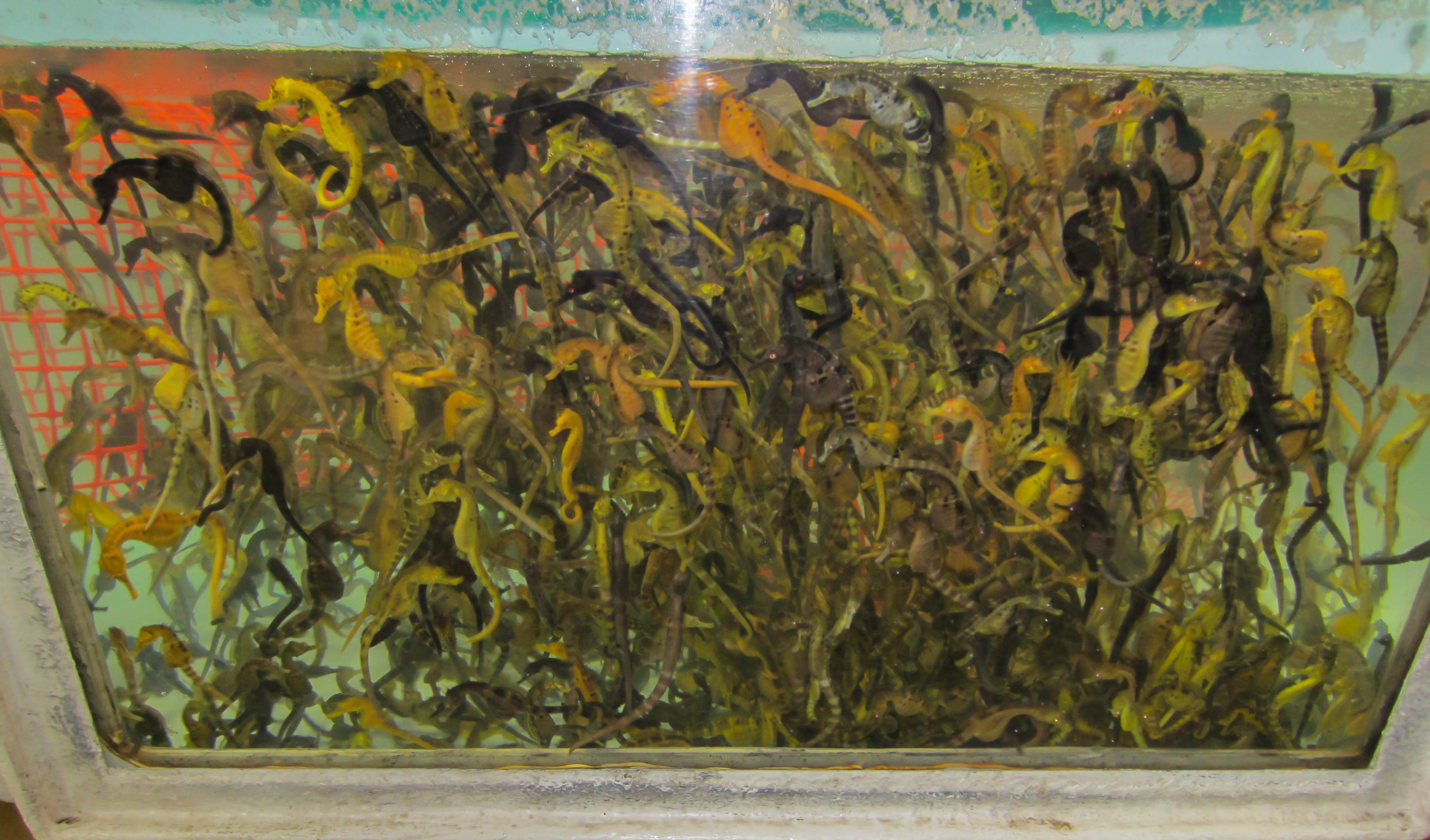
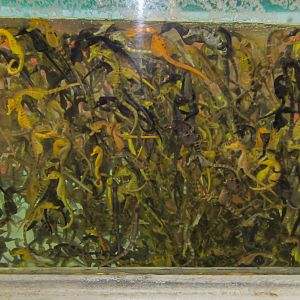
That looks ridiculously overstocked. Is this normal for the facility or am I seeing things wrongly? Also, @Hix, what are your thoughts on the facility?
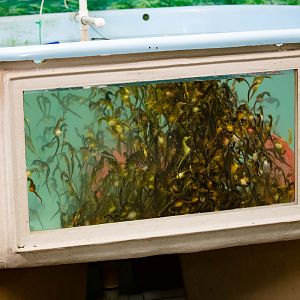
The tank they're in is reasonably large ( as can be seen in other photos) but the seahorses seem to clump together in a mass like this. You can see on the left some orange plastic netting that the horses like to wrap their tails around - it's actually the width of the tank but you can't really see it in this photo because the horses are blocking it. And on top of that, they've just been fed.
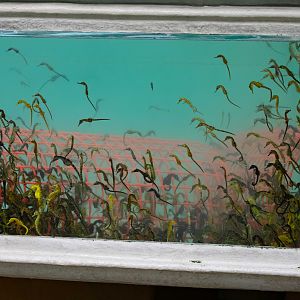
Overall, I found the facility interesting in that I only ever seen seahorses on display in groups of up to half a dozen at a time. But clearly this species doesn't mind crowds because there were five or six tanks like this one, all full of Big-bellied seahorses. Plus the dozen or so rearing tanks with the fry.
@Hix Is this the only species of seahorse they house? I would expect more from a place called "Seahorse World".
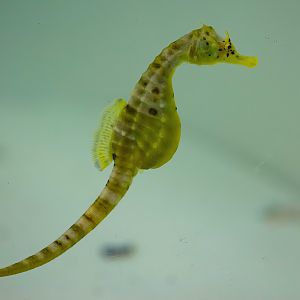
EDIT: I have now seen your photo of a West Australian Seahorse.
They have on display all six of the Australian species, but because of the light and the limitations of photographing through glass, and the seahorses themselves not being in photogenic positions, the only decent shot was of the West Australian species. That's in the first room.
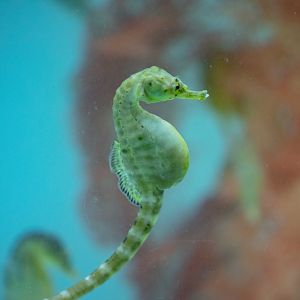
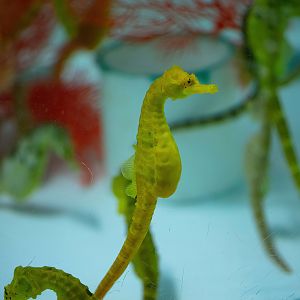
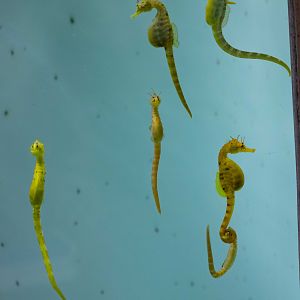
The second room is where they breed their Big-Bellies, the largest species of seahorse in Australia and one of the largest in the world. And found in Tasmanian waters. The tank above is one of a few, the others being just as heavily stocked. There are also several other tanks in a different style where they keep their breeding stock, and the rearing tanks for the fry. All up, the second room probably has several thousand individuals.
The facility breeds them and ships them to aquaria and laboratories around the world.
@Osedax no, they have multiple species (on my most recent visit (June 2025), H. kuda/taeniopterus, reidi, breviceps, whitei, subelongatus and barbouri were on display in addition to abdominalis), but the only breeding facilites on view to visitors are those for H. abdominalis.