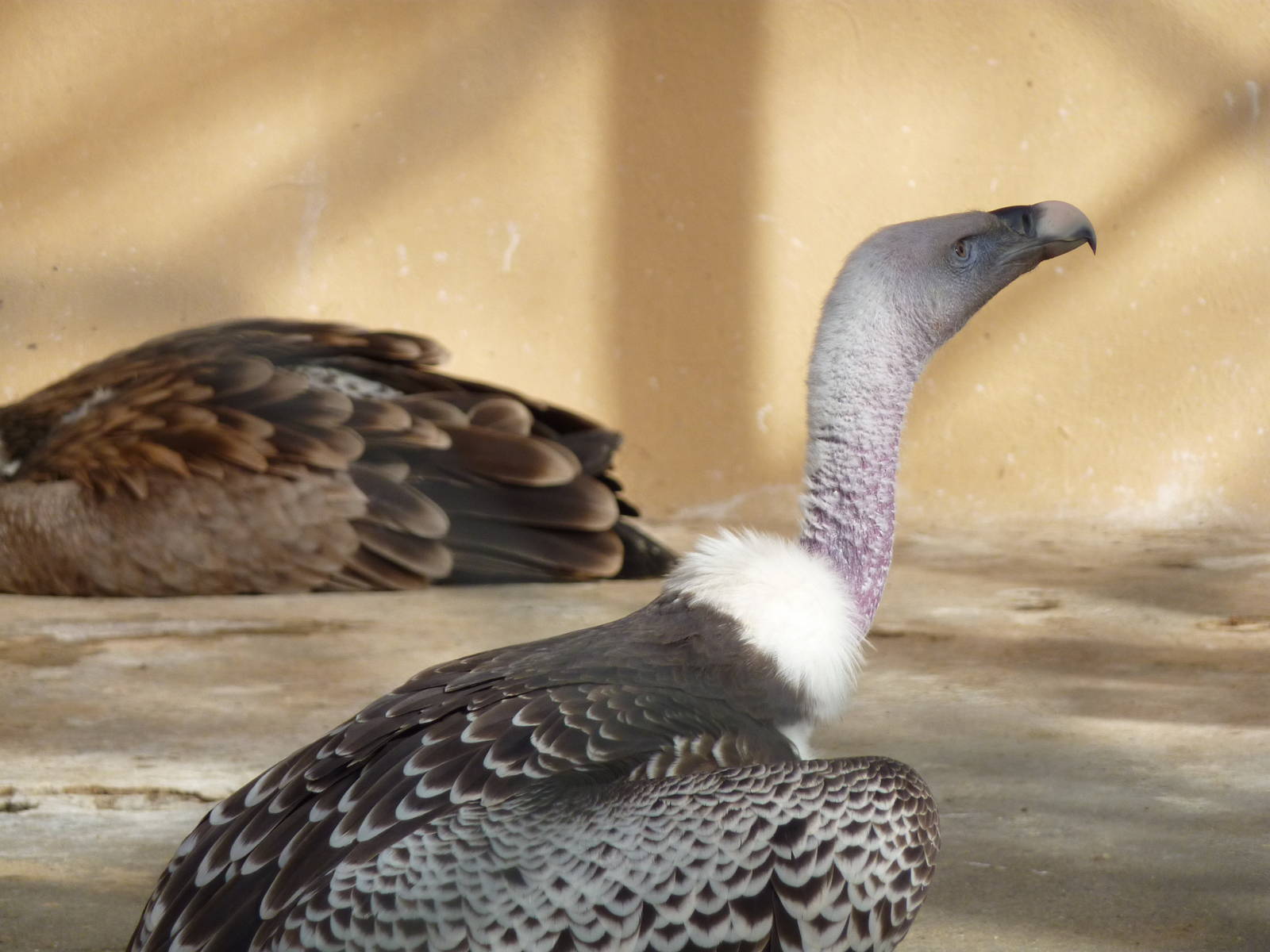
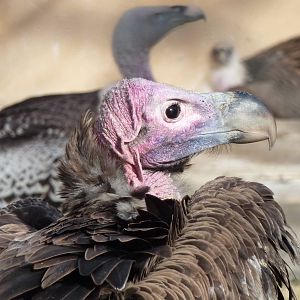
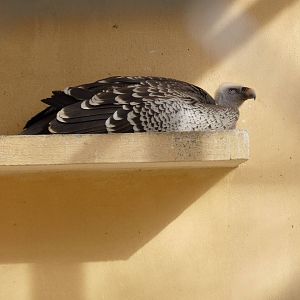
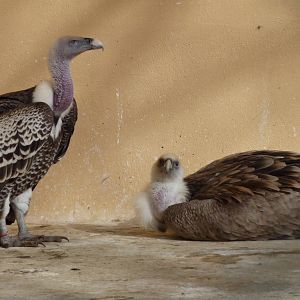
I have my doubts that the species in front of the picture should be a Griffon Vulture (maybe the one in the back is it). According to its pattern and the white plumage arround its neck/collar I would term it as a Rueppells Vulture.
I have my doubts that the species in front of the picture should be a Griffon Vulture (maybe the one in the back is it). According to its pattern and the white plumage arround its neck/collar I would term it as a Rueppells Vulture.
I think you're right in that the front bird is Gyps rueppellii, but it's often (usually?) referred to in English as a Rueppell's Griffon Vulture, so I don't think calling this photo 'Griffon vultures' is wrong.
(I would call Gyps fulvus, which I think is the bird at the back, a European Griffon Vulture and Gyps himalayensis a Himalayan Griffon Vulture)
Yes, your Language is really a little ...aehm... special.
Teal, Duck, Pochard, Scaup and other terms what German speaking people just call "Ente", Pigeon, Dove and whatever what is just a "Taube".
I think English speaking people like it making live a little complicated, don't they?
An Italian nature reserve warden complimented me on English names for animals, which he thought were highly apposite. He particularlly liked Grass Snake, Little Owl and Black-winged Stilt, all of which do what it says on the tin. A lot of Italian names were apparently a bit flowery and didn't give much idea of the animal.