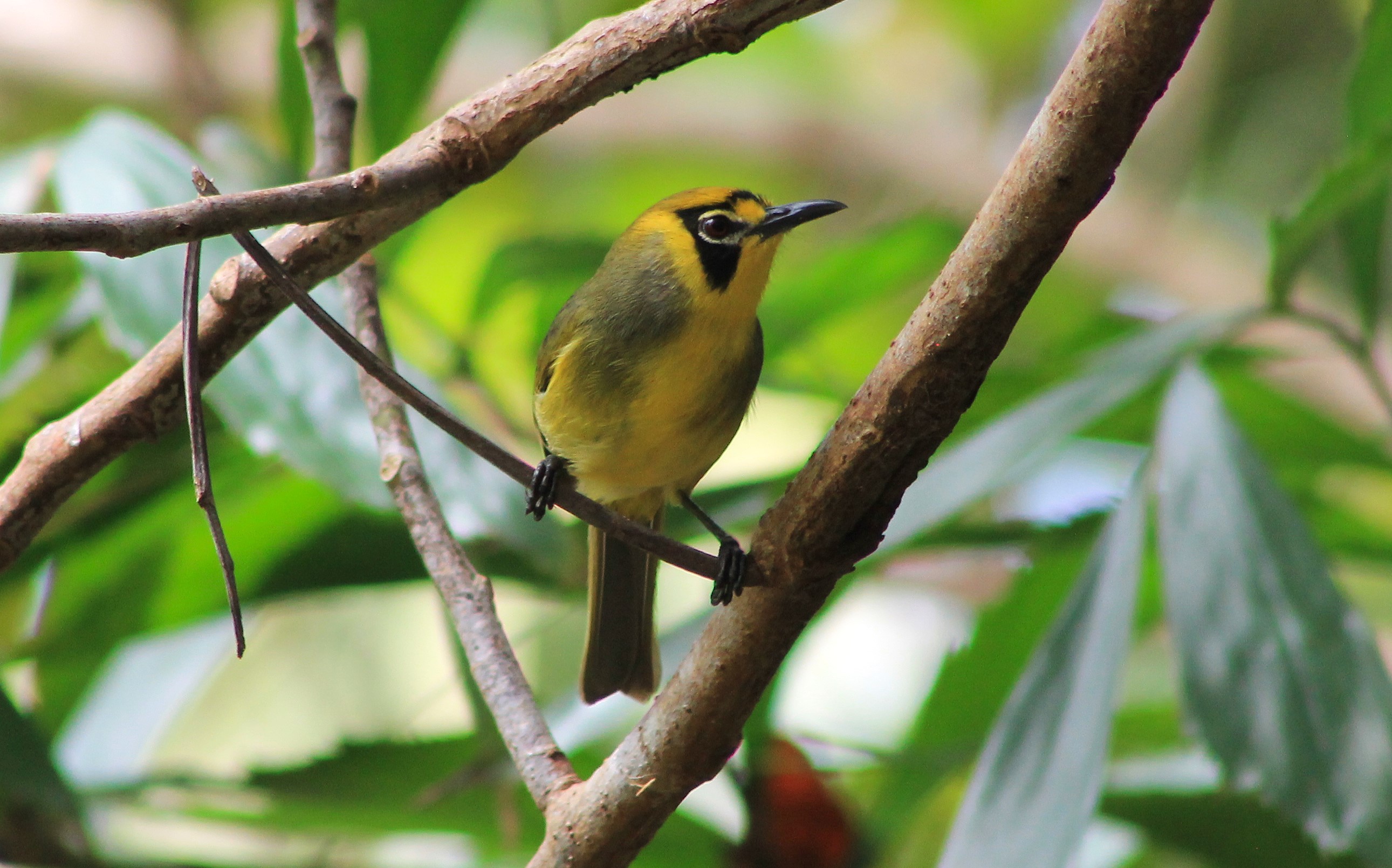
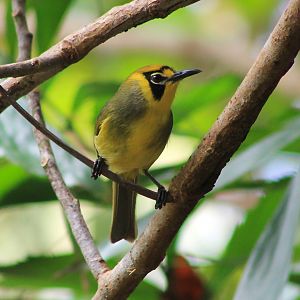
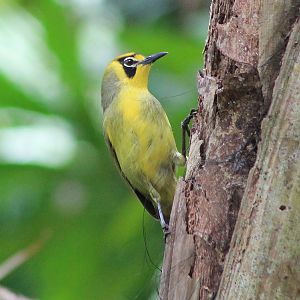
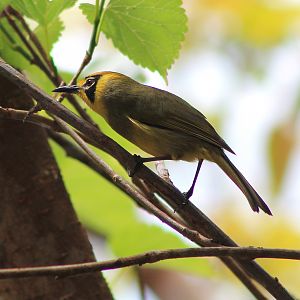
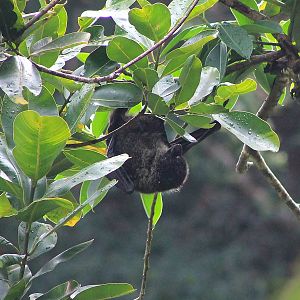
@Veno I wasn't going to be in Japan without going to see this species! It was probably my number one must-see. It was a quite expensive side-trip, but it had to be done. I couldn't get accommodation on Hahajima (and had to wait two weeks for accommodation to be available on Chichijima), so I was restricted to just a four hour visit to the island from Chichijima and for a while it seemed like I wasn't going to find a cooperative bird for photography.
@Chlidonias
Wow, you must have been incredibly lucky to get the perfect shot of this little bird in just four hours!
Since Apalopteron is the only surviving bird genus endemic to Japan, I’d say it’s even more symbolic of Japan than the pheasant from a taxonomic perspective.
If only the Chichijima subspecies were still around...
Terrific photo! I've not seen photos of this species before, so I didn't realize how beautiful it is or how different it looks from the typical white-eyes! This looks more like the Wood Warblers that we have in the Neotropics - sort of a cross between a white-eye and a Kentucky Warbler. Congratulations on getting these fantastic photos! It sounds like the trip of a life time, even it it was only four hours!
@Summer Tanager
They were formerly known as Bonin Honeyeaters. They are related to the Golden White-eye Cleptornis marchei of the Mariana Islands (which was itself formerly known as the Golden Honeyeater). Their taxonomic history has been confusing.
I had no idea! I can see why the early taxonomists would struggle with those. The Golden White-eye of the Mariana Islands is very different from other white-eyes as well, but I hadn't made the connection with the Bonin White-eye. I've heard of Golden Honeyeater before, but never thought of it as anything other than a honeyeater. I just pulled out my 1974 copy of Clements Checklist of the Birds of the World, and sure enough there is the "Golden Honeyeater (Cleptornis marchei) and the Bonin Island Honeyeater (Apalopteron familiare) listed in sequence in the honeyeater family! Thank you for teaching me something new today!
@Summer Tanager
Interestingly, on the islands they still use Bonin Honeyeater - or just "the honeyeater" - as the English name (which I like to do as well, even though I know it is wrong).