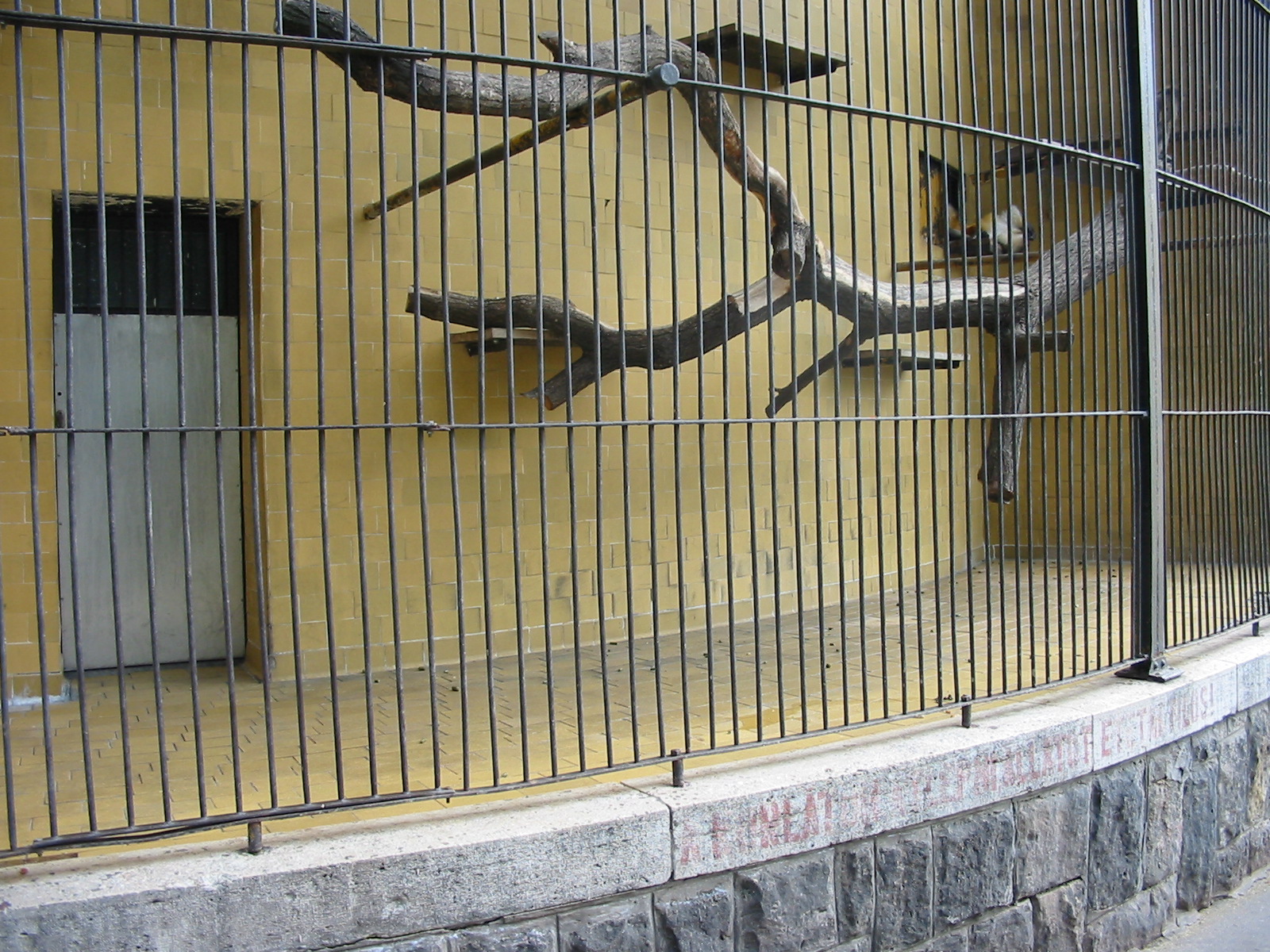
Yes, it is an old zoo - you're right there - but it is one which has been doing a brilliant job of making itself over since the mid 1990s. Its director, Dr Miklos Persanyi, is someone who has managed to take on the dual responsibilities of providing a modern zoological garden while, at the same time, preserving the culture on which the zoo has developed.
Ironically, given the negative nature of your post, last week a conference was held at the zoo in which were addressed the issues facing "ivy zoos" (their term for long-established zoos). I would very much like to have been able to attend...
Thanks for the link Sooty, and I am fascinated by the idea of preservation in the face of modern thinking. This line in the program is the most intriguing: "How can historic zoos meet the expectations of the public in the 21st century?" In North America there is a tendency to tear things down, as for example in a few years Point Defiance Zoo in Tacoma will be approximately 110 years old and yet other than the soon-to-be-dramatically renovated North Pacific Aquarium practically nothing in the zoo will be older than 30 years of age. Nearby Woodland Park is over 110 years of age and yet other than a couple of hoofstock paddocks that are practically off-exhibit and the old Feline House (which also is mainly off-exhibit holding areas) barely anything in the zoo is older than about 35 years. Outdated enclosures are bulldozed and new, naturalistic habitats are erected in their place, and yet in Europe many zoos are full of historic, beautiful architecture and there is a mixture of old and new. I'm always interested in how the famous European zoos combine those two designs/eras/mindsets into one tangible, modern facility.
Outdated enclosures are bulldozed and new, naturalistic habitats are erected in their place, and yet in Europe many zoos are full of historic, beautiful architecture and there is a mixture of old and new. I'm always interested in how the famous European zoos combine those two designs/eras/mindsets into one tangible, modern facility.
It really just a different mind-set, which, I think, goes well beyond zoos. On a personal level, I absolutely applaud the idea of conserving the old, as I think it is that "old" which provides the character, the culture, of a place. It is why, in America, I love, for example, the Bronx Zoo (even if I fear that the desire to maintain the old there is, possibly, not what it once was). Of course, animal well-being must come first, but a zoo which can embrace its past, while being thoroughly modern and forward-looking at the same time, is a wonderful place. In Europe, I'd number (amongst others), such zoos as Hamburg, Vienna, Leipzig, Frankfurt, Antwerp and Amsterdam as being very good examples of this - with Vienna possibly the best example.