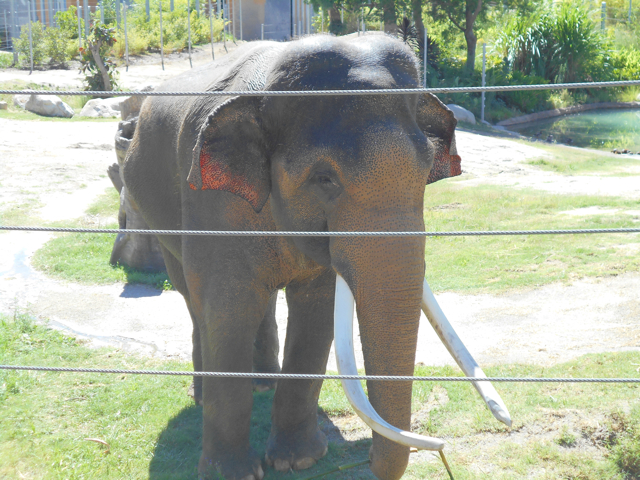
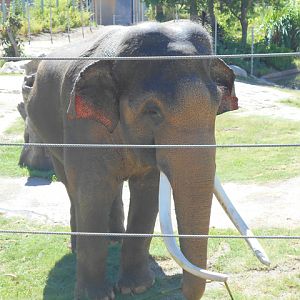
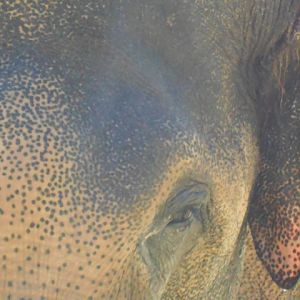
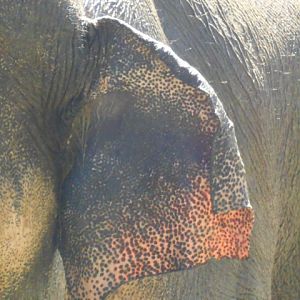
The LA Zoo's bull elephant was getting browse from his keepers and standing right next to the fence by the main viewing area - seems like about 10 feet away. I have never seen him this close-up and it was amazing. The crowd watching him was awed.
The LA Zoo's bull elephant was getting browse from his keepers and standing right next to the fence by the main viewing area about 10 feet away. I have never seen him this close-up and it was amazing. The crowd watching him was awed.
And also @mstickmanp, I was also hoping that the Los Angeles Zoo obtain females of breeding age for Billy, I know this idea of mine will not happen but ideally I would want those females to be (Elephas maximus hirsutus) instead of the usual (Elephas maximus indicus), just to keep the (Elephas maximus hirsutus) bloodlines strong and pure
And also @mstickmanp, I was also hoping that the Los Angeles Zoo obtain females of breeding age for Billy, I know this idea of mine will not happen but ideally I would want those females to be (Elephas maximus hirsutus) instead of the usual (Elephas maximus indicus), just to keep the (Elephas maximus hirsutus) bloodlines strong and pure
I thought that there were three sub-species of Asian elephant (mainland, Sri Lankan and Sumatran) or four if you count the Borneo pygmy elephant? Or am I wrong?
Thanks Jbnbsn99, there is another reason why I should get the Handbook to Mammals of the World (specifically volume 2), and in Groves and Grubb Ungulate Taxonomy does it explain more specific details as to why Hirsutus and Indicus are synonymys, if so id like to see what it says!
So is it possible that Malayan elephants like billy are more of an Ecotype as a opposed to true subspecies because I think that is the case between Wood bison and Plains bison, and even between Altai wapiti and many other subspecies of Cervus canadiensis, and even between Bornean bearded pigs and Sumatran bearded pigs, this is also the case with different North american moose subspecies eg. Alces alces shirasi and Alces alces andersoni
And I could go on and on naming examples...
With ecotypes specifically cervids, it has to do more with where body mass and antler shape and size have more to do with available forage than with genetics