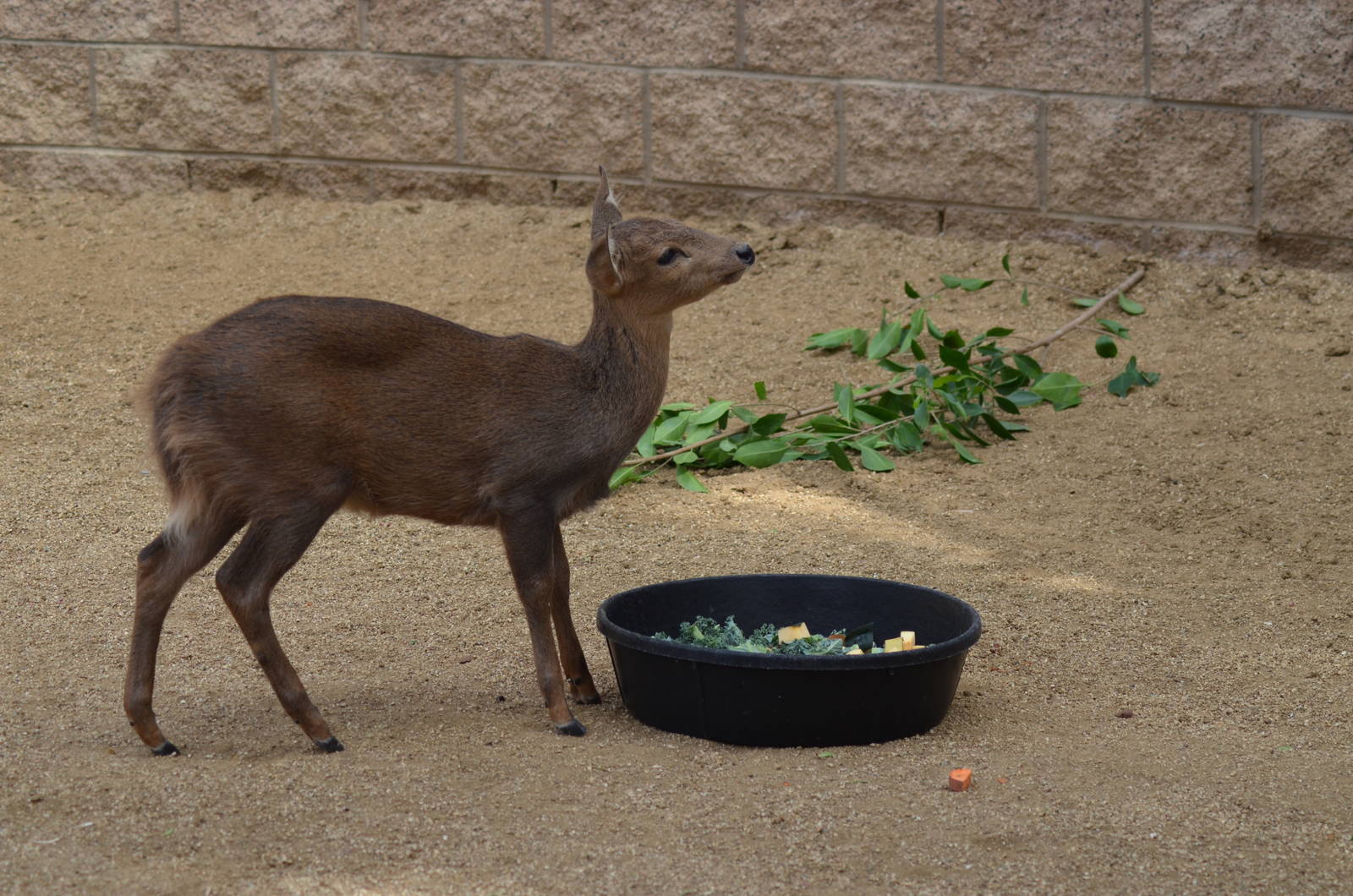
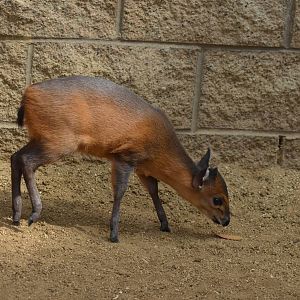
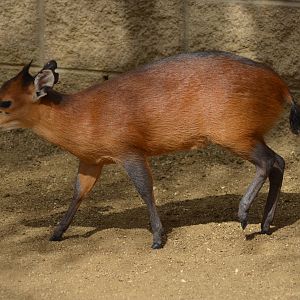
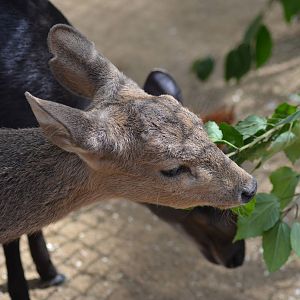
This visit, on Friday March 4th, marked my first outing to the zoo in 10 months due to health (3 herniated discs) issues. I greatly enjoyed myself as evidenced by the large amount of photos posted. There's more where these came from! LOL
Why do the LA Zoo, as well as San Diego WAP and presumably other North American zoos have "nurseries"? They are almost non-existent in Australasia, and I don't recall seeing them in Europe or Asia.
Why do they most often contain hoofstock? Just because they are easiest to display? Are the zoo's hoofstock really bad at rearing their young successfully? Are hand-reared antelope and deer better than parent-reared animals in some way? One would generally think that hand-reared hoofstock would be more dangerous than parent-reared ones, as they tend to lose their fear of humans and can be too friendly as adults. This happens with domestic sheep and cattle anyway. On the other hand, I guess hand-reared animals may make better display animals, for the same reasons.
I read somewhere in the LA Zoo gallery that most of their hoofstock species are skittish, and tend to injure themselves, so they are taken out of those enclosures and hand raised. Of course, I'm not sure if that is true, but it sounds reasonable to me.
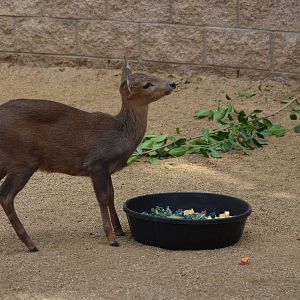
I haven't heard of many zoos exhibiting Calamian deer, let alone breeding them. Can anyone chime in with more knowledge on the population size in the US?
I haven't heard of many zoos exhibiting Calamian deer, let alone breeding them. Can anyone chime in with more knowledge on the population size in the US?
It is very small. They are a phase out species. The LA Zoo just went against the deer TAG for breeding them. All three species of hog deer are on the way out (one's already gone). I believe the LA Zoo has four now.
Bronx has two small nurseries in their reptile and bird houses. They use them to showcase some newly bred species that either have had to be hand raised or that are usually kept off-show. Both nurseries also give views into the zoo's off-exhibit areas.