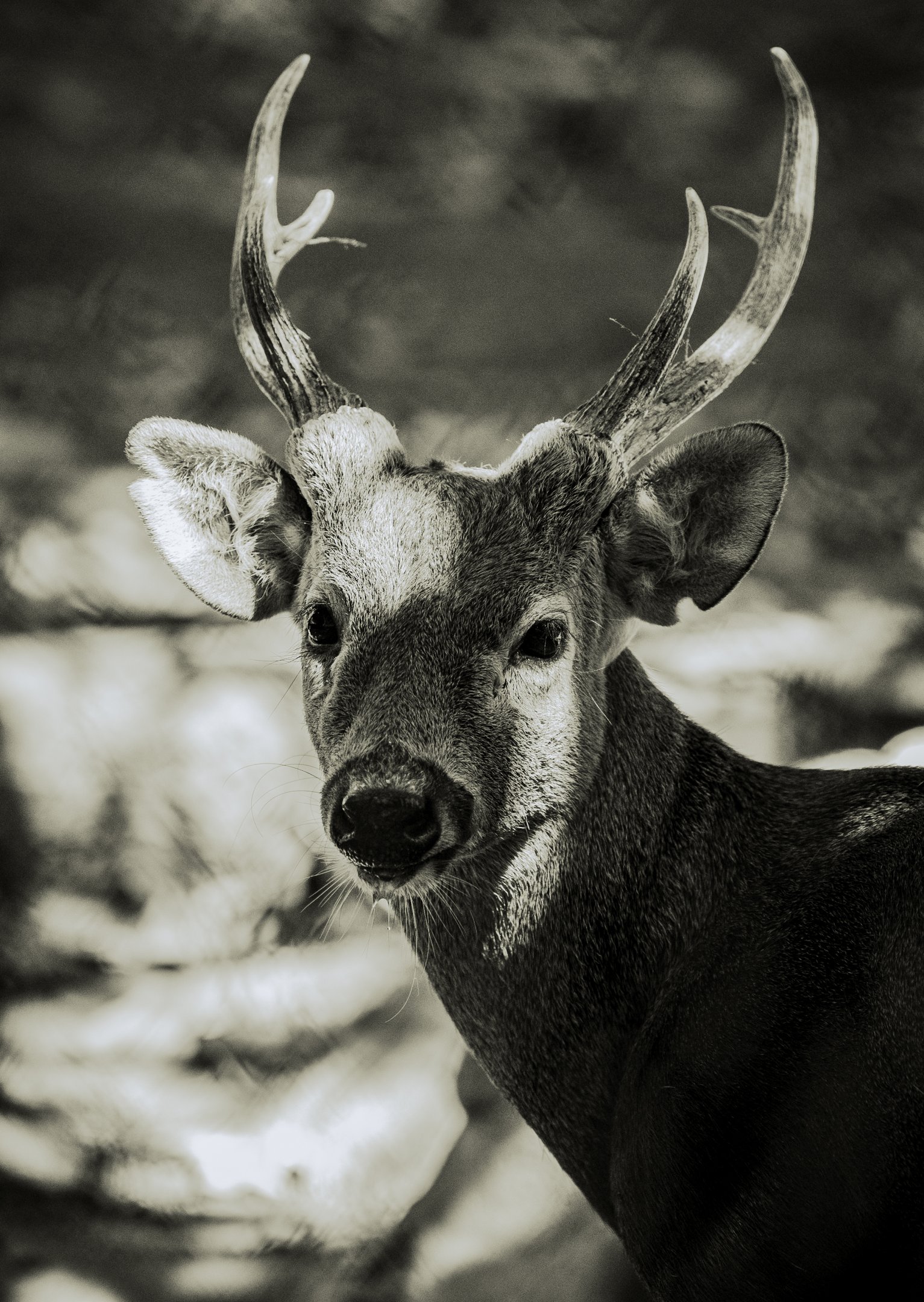
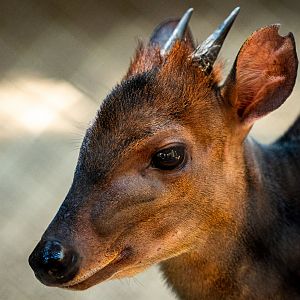
How many Calamian deer (Axis calamianensis) did you see on your last visit? Unfortunately their captive population is now on thin ice. I used to work with the group at the Los Angeles Zoo. Now Phoenix Zoo is down to one male, and I believe he came from Los Angeles Zoo.
@Julio C Castro thank you for letting me know. I remember it like it was yesterday when they had females and calves. I am not sure if you knew this, but the first Calamian deer were brought into the United States in 1995 by the Zoological Society of San Diego when Dr. James M Dolan was the Director of Collections. These animals were imported from the Philippines with the intention of establishing a captive breeding program. As you would guess, the San Diego Zoo and the San Diego Wild Animal Park were the first holders of this species. Unfortunately even early on they ended up having to put them on birth control, because the Philippines as a part of the agreement didn't want them to leave the ZSSD (Zoological Society of San Diego) Parks, but luckily Los Angeles Zoo and Phoenix Zoo were able to eventually acquire them. I will also say that Fresno Chaffee Zoo and Oklahoma City Zoo were interested in acquiring them, but the plans didn't come to fruition for either collection. The studbook keeper for the Calamian deer was based out of the Los Angeles Zoo. She was their former Senior Hoofstock Keeper.
I will also say that when the Zoological Society of San Diego started their Calamian deer program, they essentially abandoned their Bawean deer (Axis kuhlii) breeding program. It would have been nice if they found a way to keep both, being that both taxa are endangered. Both the San Diego Zoo and the San Diego Wild Animal Park kept Bawean deer as far as I know. Also, as far as I know, the founder stock of their Bawean deer were imported from Singapore Zoo, which unfortunately no longer keeps them.
@UngulateNerd92 well that sucks regarding the politics of it all, what is the issue with now importing newer founders into the US? I know there has been in general a lack of interest or space regarding many cervid species within AZA zoos although some are still dedicated to their programs. I do like how unique the Calamian Deer are but they are reclusive from the public especially being at the far end of the zoo.
@Julio C Castro the main reason as far as I understand it is USDA regulations. The United States Department of Agriculture was easier to deal with when trying to import ungulates (specifically members of the suborder Ruminantia) back in the day, but they have gotten exponentially harder to work with as years went on. The agriculture industry was lobbying the USDA to pass import restrictions and regulations to protect cattle from disease, but unfortunately the zoo lobby has made little progress. I will say, whatever diseases the agricultural lobby is worried about, they should probably step up and start making vaccines for. Not to make this political, but on the note of the agriculture lobbies activities, this is why I believe we need not just separation of church and state, but separation of for-profit business and state. These people and companies that always yell "free market free market", that lobbying activity seems like an antithesis to a free market... On that note, we also to make it so all elections and political campaigns are publically funded. The USDA often perplexes me, when it comes to meats, they over-inspect certain cuts, but others that include "pink slime" which has pathogens, no inspection at all. I am sure this isn't the only aspect of their backwards incompetence. I don't think this is what Upton Sinclair envisioned when he came up with the USDA as his brainchild, but that is another conversation... this also shines light on why I believe all corporate/industry lobbyists should be mandated to wear body cameras when interacting with legislators and government agency employees. Back to the Calamian deer, this assinine and might I add idiotic over-regulation is harming them as they are a species that could most definitely benefit from a captive insurance population, as are Bawean deer as mentioned earlier. I am personally of the belief that every wild animal and plant species, subspecies, and ecotype/distinct population segment needs to have a captive insurance population when and where possible. I see species conservation pertaining to in-situ vs. ex-situ conservation as like a yin and yang symbol in that both serve different purposes but need each other. I believe most species need a good solid combination of both to get optimal results. In-situ is obviously most important, but having ex-situ alongside it creates a stronger foundation for the continued survival of that taxon.