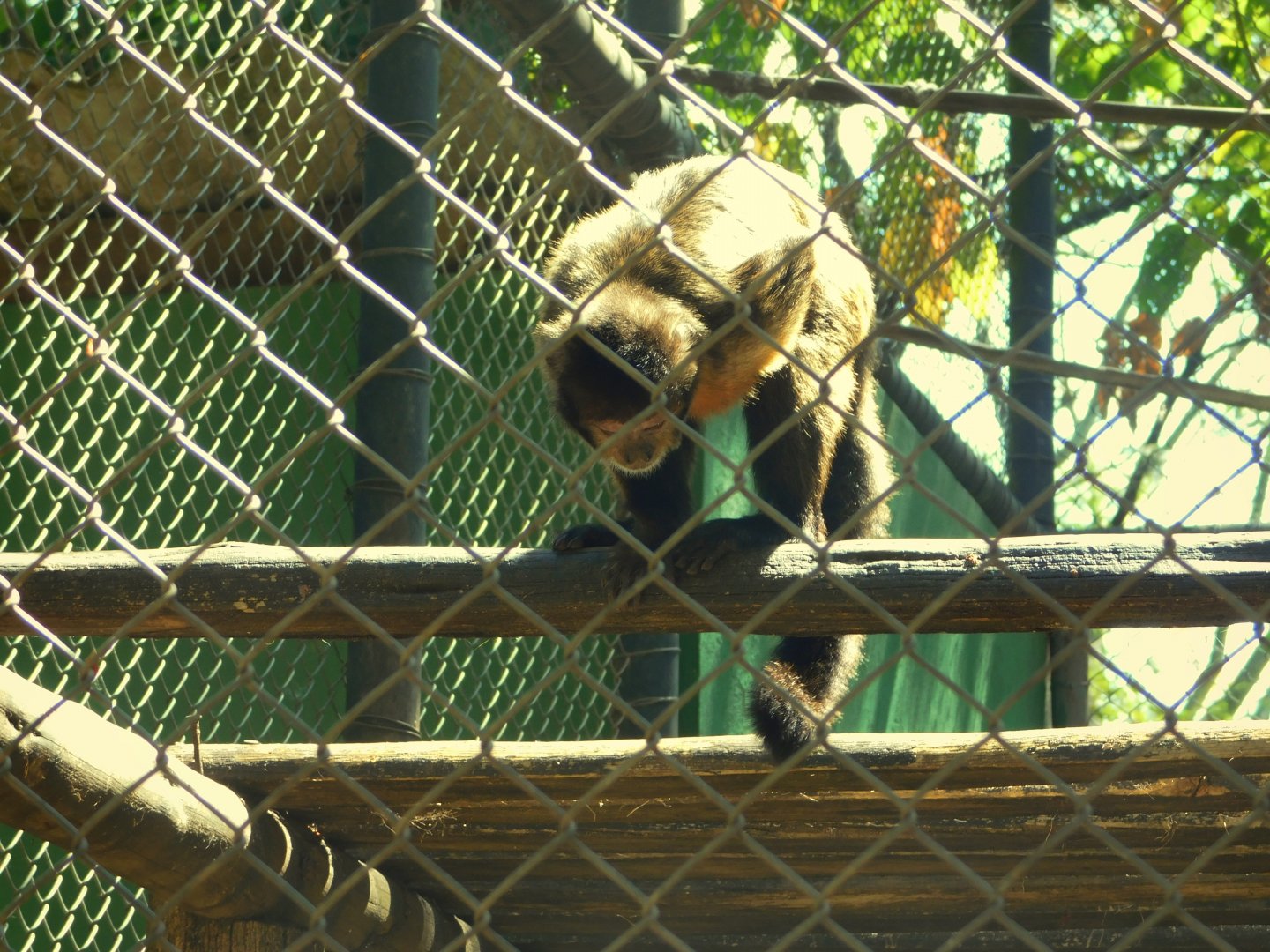
Capuchin monkey looking down in his large aviary exhibit. The zoo houses a considerably big number of these animals, but only two individuals are for display
Capuchin monkey looking down in his large aviary exhibit. The zoo houses a considerably big number of these animals, but only two individuals are for display
@Onychorhynchus coronatus Not sure... I only know they left their previous enclosure because it was very outdated in terms of bareers, and offered a very direct contact with the public, once the water moat was very narrow and shallow. A few months after they moved to this present habitat, I could see the rest of the capuchin group in an off display aviary behind the national mammals area... Not sure why they are not in the same exhibit, nor why they are living in this weirdly located home, once off display animals are usually housed in the "setor extra". My main guess would be that maybe they have been contaminated with some kind of disease that forced the zoo to separate them from the other two...
Still not sure why not to renovate the old enclosure... It was very roomy and already very well enriched. Just an improvement in the bareers would be already pretty fine.
@David Matos Mendes Yes it could be, but it may also be something related to the dynamics of the group as sometimes within captive environments it is necessary to separate the individuals of a group into smaller groups when social conflict arises.
@Onychorhynchus coronatus Yes, I thought about this too, but why would most of the animals be away from the public while only two would be visible? Gonna ask someone that works at the zoo about it, cause now I'm curious
@David Matos Mendes I was thinking it could have been something related to toxoplasmosis but then as you've said why would there be two individuals kept within the cage while the rest moved?
It is odd, and yes that would be really interesting to find out.