On a related note, I guess, there used to be a thing in zoos where particular animals were often kept in "culturally-appropriate" buildings (temples and what-not) which fell out of favour because they were kind of racist or imperialistic or colonial or something. But now it really seems to be coming back in fashion under the guise of "immersion".
Because they're sort-of standing in for Asian Cheetahs in a sort-of central Asian steppe section of the zoo (with Onagers and Bactrian Camels adjoining) and yurts (or gers to a Mongolian) are sort-of central Asian as well. Simple as that.
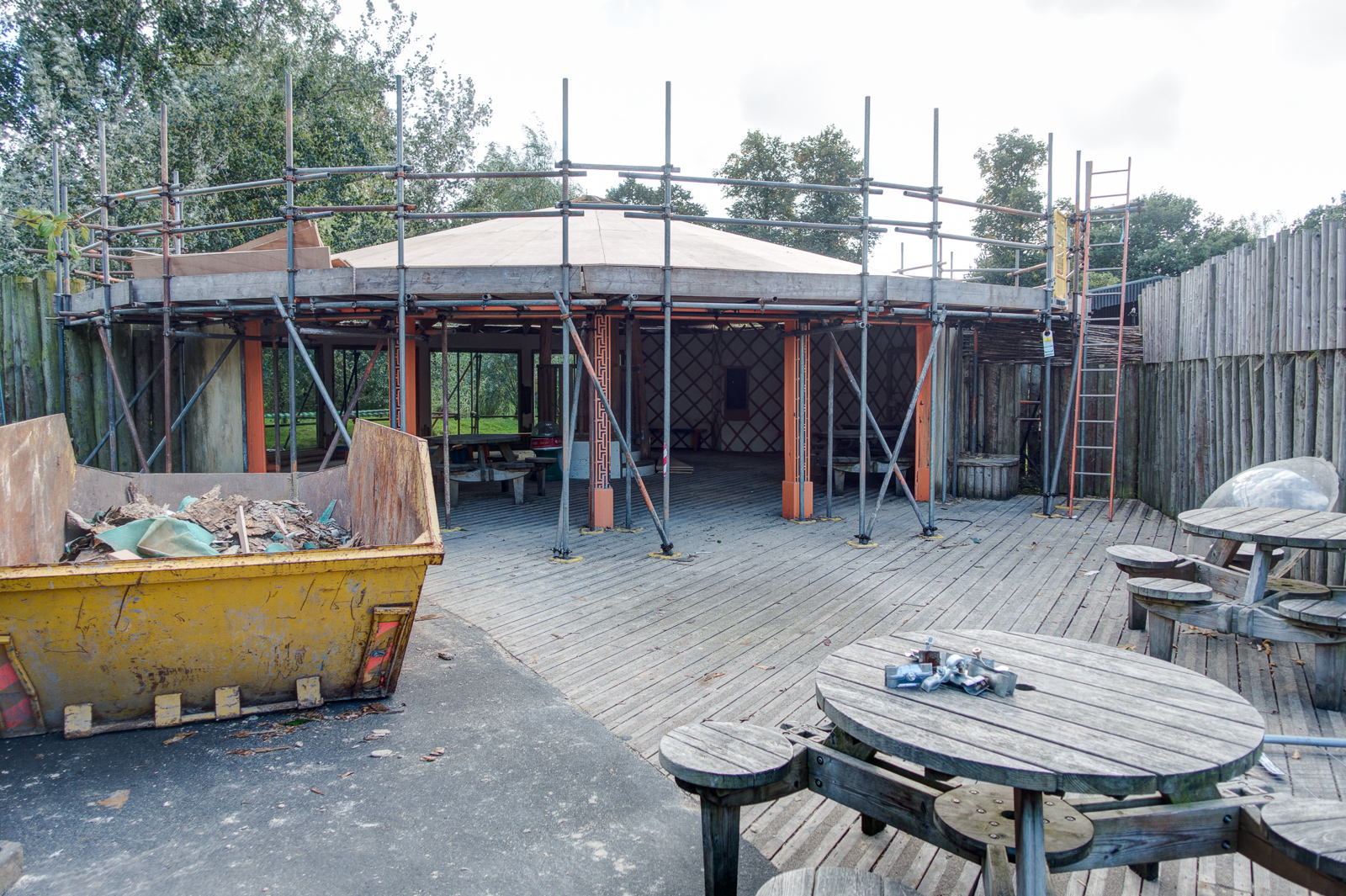
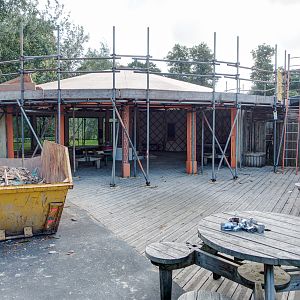
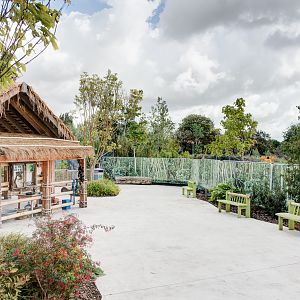
The yurt is for the visitors rather than the cheetahs - actually it isn't a tent, so it's a yurt-shaped shelter. It provides some covered viewing of the cheetah paddock which is in a fairly open area of the zoo (and it does rain sometimes in beautiful Cheshire ). There are also a few picnic tables outside, as shown in the photo.
On a related note, I guess, there used to be a thing in zoos where particular animals were often kept in "culturally-appropriate" buildings (temples and what-not) which fell out of favour because they were kind of racist or imperialistic or colonial or something. But now it really seems to be coming back in fashion under the guise of "immersion".
I think we are already over the hump of this second wave. At least with 'traditional' dwellings and places of worship. You can see how London and Chester went for a much more modern twist with their buildings in Land of the Lions and Islands. If zoos go down the traditional route and use authentic patterns they risk being accused of cultural appropriation, if they just use patterns that 'look tribal' they risk being called racist. Also I think in general people are quite wary now of using mud huts or whatnot to represent developing countries. It's just an inaccurate stereotype in most cases.
This might be a trend confined to the UK, I was quite surprised to see the 'African' village in Dvur Kralove. I don't think we will see many more developements like that.