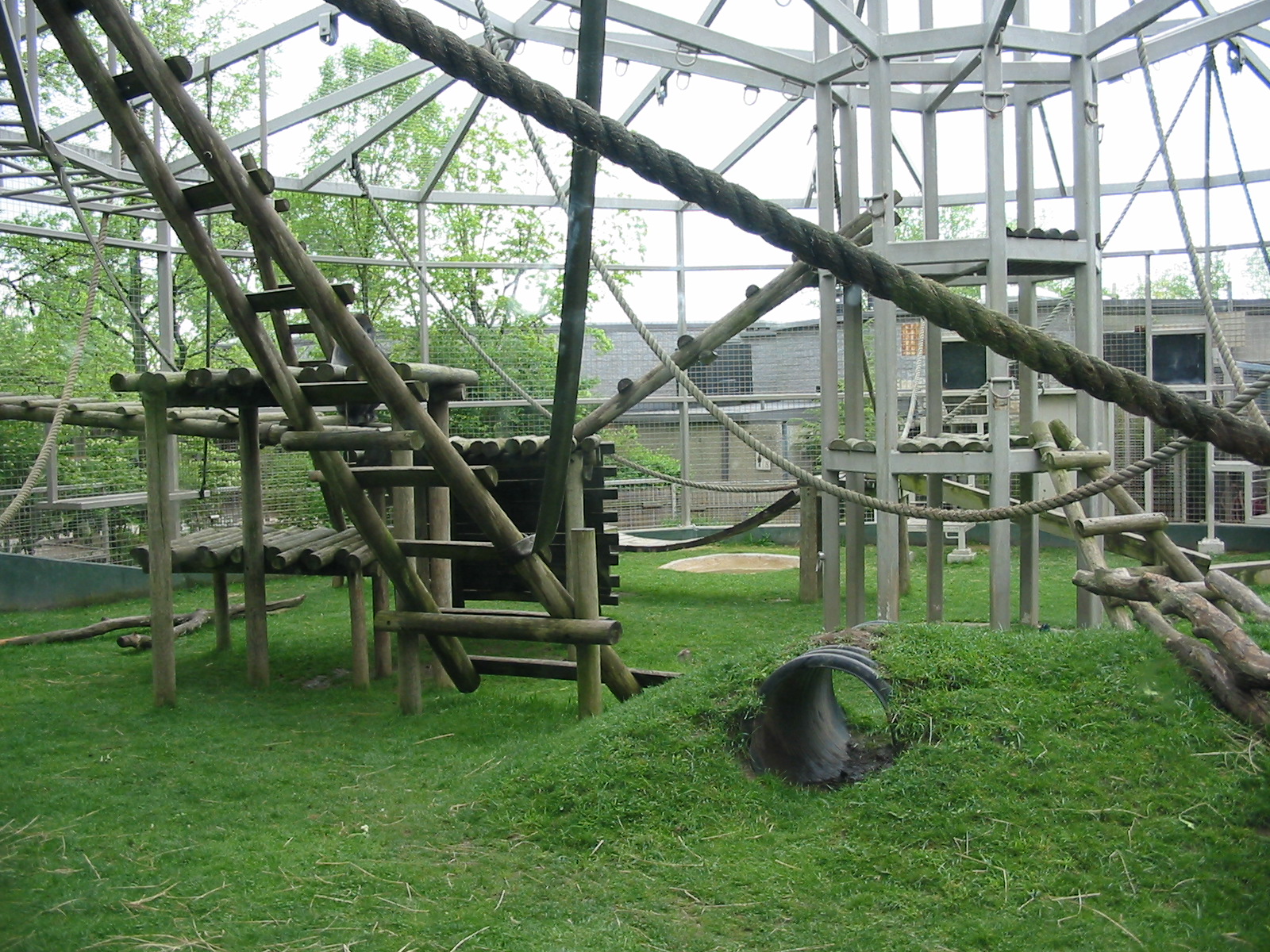
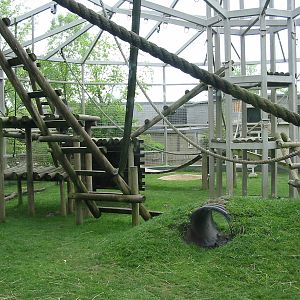
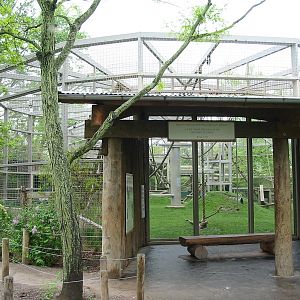
I believe it was modelled on the Howletts(UK) Animal Park 'gorillariums', but they've used grass for the floor instead of deep-litter straw, while there is less climbing structure, particularly high up in the roof.
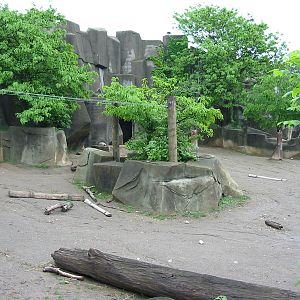
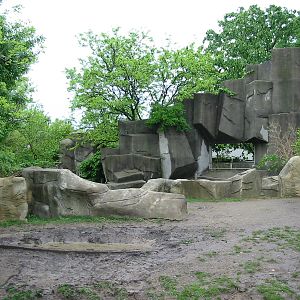
It is quite disappointing and while the overall effect is obviously not meant to be natural-looking, nor does it appear quite as effective (without the straw) as a Howletts-style enclosure either. I'd call it adequate rather than excellent. I think I'd rather see something naturalistic like they have done for the Bonobos here instead.
I believe it was modelled on the Howletts(UK) Animal Park 'gorillariums', but they've used grass for the floor instead of deep-litter straw, while there is less climbing structure, particularly high up in the roof.
It is quite disappointing and while the overall effect is obviously not meant to be natural-looking, nor does it appear quite as effective (without the straw) as a Howletts-style enclosure either. I'd call it adequate rather than excellent. I think I'd rather see something naturalistic like they have done for the Bonobos here instead.
Columbus was heavily influenced by Howletts regarding its Gorilla- keeping, hence the cage-type design of this structure, though they stopped short of the deep litter system. Despite having been the first in the world to breed Gorillas and nearly twenty years ahead of Howletts (in1956 compared to 1975) they went to Howletts for advice on management, particularly in keeping social groupings and getting mother-reared infants- so despite their early start they were in fact way behind management-wise.
Columbus also took a spare male 'Mumbah' from Howletts and though he was never to breed I think he is still at Columbus today.