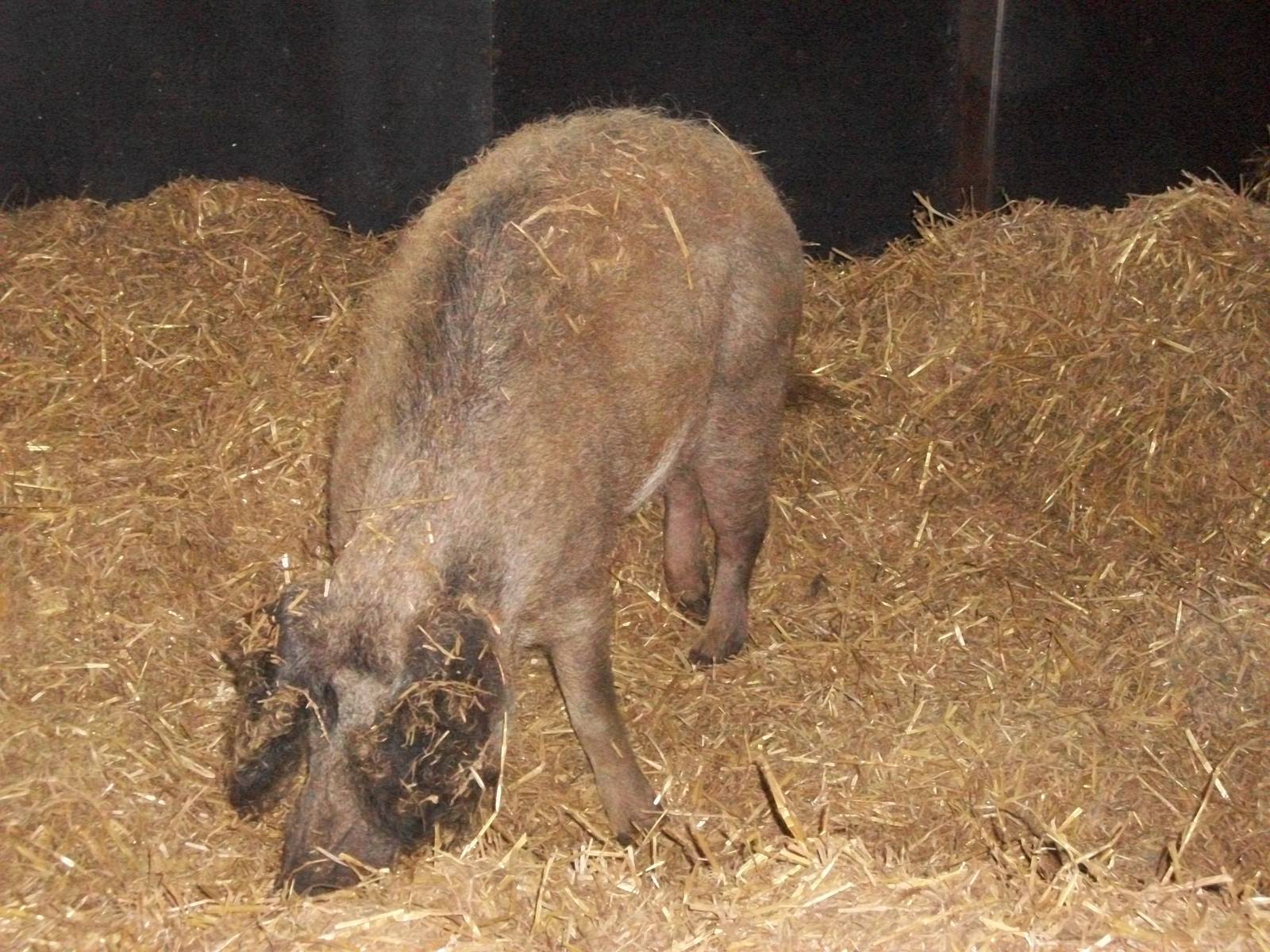
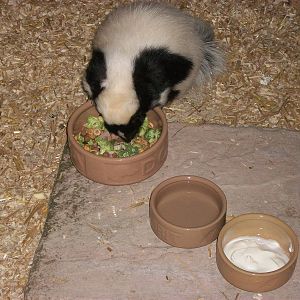
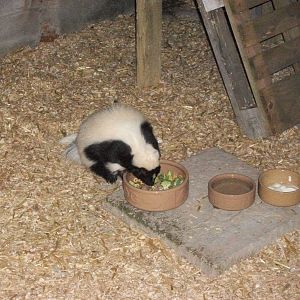
If Hungarian, its a Mangalitza , or Woolly Pig which seems apparent in the photo. They carry some genes of the extinct Lincolnshire Curly Coated Pig that sadly died out in the UK.
That's the one Pertinax, thank-you. I had seen Hungarian Woolly Pigs at Sufflok in 1997, but they were darker than this (I suppose it must be one of those domestic breeds where a variety of colours are acceptable). These were labelled with a word beginning with "M"!!
Kune Kune Pigs are from New Zealand Dean. I think Playdale had some, but I have not noted all of the breeds I saw. I did see Kune Kunes at Filey Bird Garden a couple of hours later.
I had seen Hungarian Woolly Pigs at Sufflok in 1997, but they were darker than this (I suppose it must be one of those domestic breeds where a variety of colours are acceptable).
Afaik Magalitzas come in three colour varieties- this one, a darker blackish with pale underneath, called 'swallow' and a third I can't quite remember, probably white/pale.
I think Curly coats, which were white, were exported from UK and crossed with Mangalitzas in Hungary- so some strains at least contain genes of the now-extinct CC pig.
hanks for the info on Kune Kune pigs Pa I couldn't recall their country of origin I looked up the Lincolnshire curly coat pig in my copy of the book The Chance to survive rare breads in a changing world, there is a photograph of one which had won the Supreme breads champion at the Lincolnshire show in 1958 the last ones ever were sent to slaughter surprisingly lately in 1972
By all accounts they were a hardy and undemanding species, sorry to have gone off topic a bit.
Kune Kune means "fat and round" in Maori - presuming zoo labels have got it right. Then there are the "well-attached piri piri" on their chins, although one of the Filey animals has lost one - not so well-attached any more.
Kune Kune means "fat and round" in Maori - presuming zoo labels have got it right. Then there are the "well-attached piri piri" on their chins, although one of the Filey animals has lost one - not so well-attached any more.
I first saw these in New Zealand- in a wildlife park. They seemed enormous in comparison to what I was expecting- not small or miniature in any way. The ones in the UK actually seem a little smaller. Some of them lack either one or both of the 'toggles'(or whatever the correct term is in pigs) under the neck- its usually genetic if they have them or not.
I looked up the Lincolnshire curly coat pig in my copy of the book The Chance to survive rare breads in a changing world, there is a photograph of one which had won the Supreme breads champion at the Lincolnshire show in 1958 the last ones ever were sent to slaughter surprisingly lately in 1972
Ironically this was just a year or so before the Rare Breeds Survival Trust was created- had it been earlier those last pigs might have been saved and the breed still be with us now. And unfortunately I doubt that you could ever recreate them from the Mangalitzas, their genes have probably been diffused too much by now.
Ironically this was just a year or so before the Rare Breeds Survival Trust was created- had it been earlier those last pigs might have been saved and the breed still be with us now. And unfortunately I doubt that you could ever recreate them from the Mangalitzas, their genes have probably been diffused too much by now.
Hence the formation of the trust i would suppose if it had waited another 5 10 or 20 years what else would farming have lost? my sister in law runs a rare breed farm in Buckinghamshire, and you can see why the breeds died out, they are slow to mature and especially the chickens, fail to reproduce in any numbers. It has been said they are breeding themselves to extinction. You certainly couldn't turn over enough money from them to keep a farm sustainable in the modern world. It's sad so many wonderfull looking animals have been allowed to die out though.