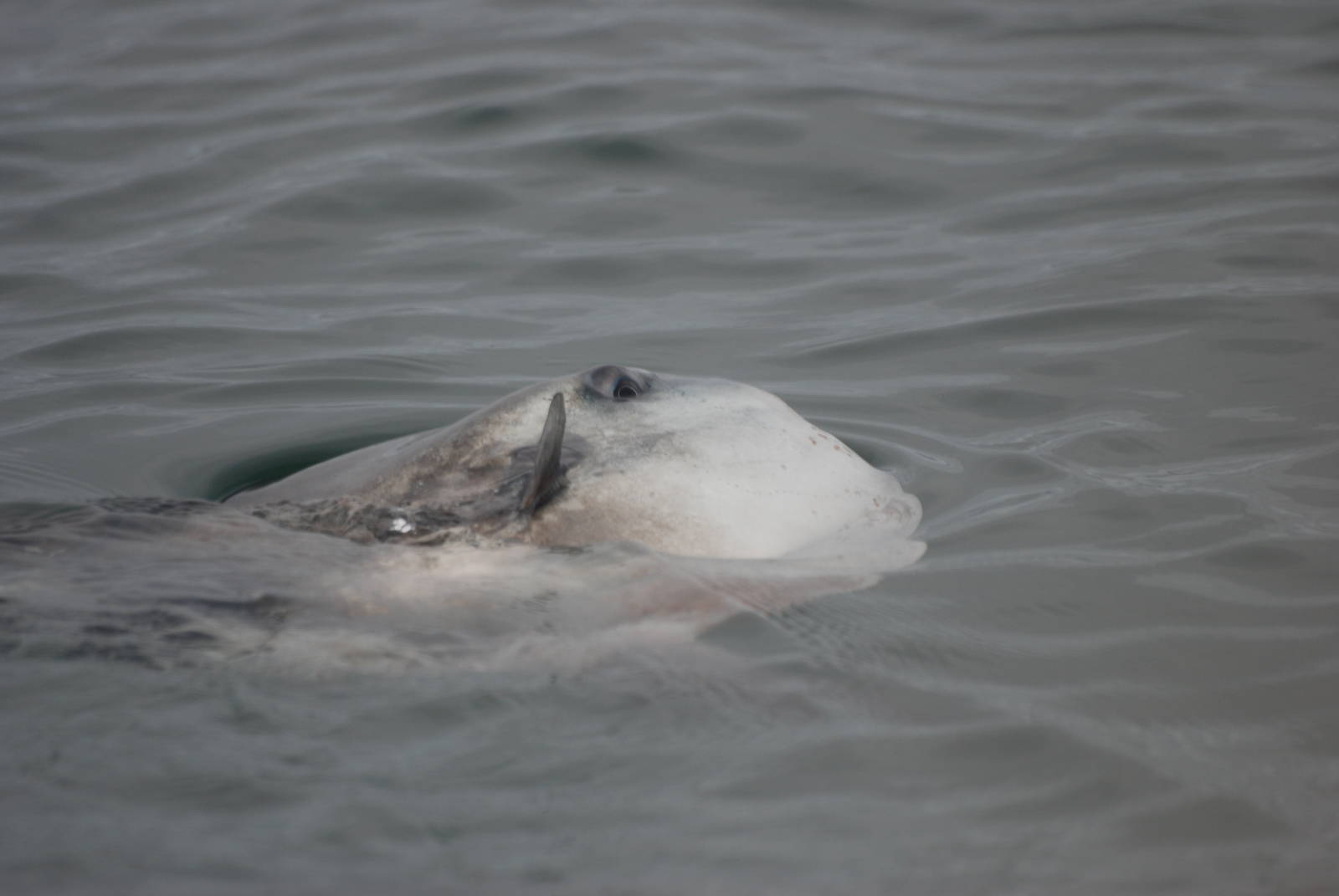
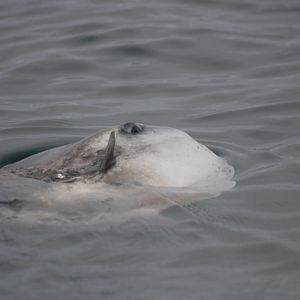
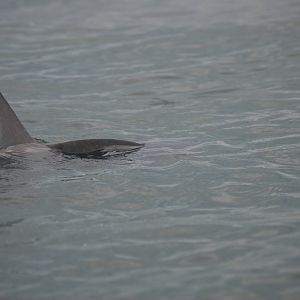
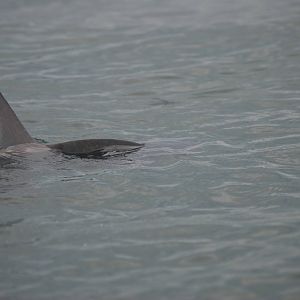
Actually, just as an aside - the most memorable thing about the fish isn't captured by the photos - it's the sound. When you're sat in a boat with the engine off in the middle of the ocean the 'flip-flap' of the fish's dorsal fin when it is out of the water is rather eerie!
There are no puffins nesting on Ramsey due to rat infestation. I think that the rats may have been cleared, and plastic puffins are placed on the clifftops to try and attract the real thing. There are very large numbers of puffins on nearby Skomer which are approachable to within a couple of metres.
There are no puffins nesting on Ramsey due to rat infestation. I think that the rats may have been cleared, and plastic puffins are placed on the clifftops to try and attract the real thing. There are very large numbers of puffins on nearby Skomer which are approachable to within a couple of metres.
Its my memory playing up. I meant Skomer as I have never been on Ramsey. I remember lines of Puffins perched on the warden's house on Skomer, this was 1960's. Lets hope they now come to Ramsey too.
Do you know if they were Brown or Black Rats on Ramsey?
Actually, just as an aside - the most memorable thing about the fish isn't captured by the photos - it's the sound. When you're sat in a boat with the engine off in the middle of the ocean the 'flip-flap' of the fish's dorsal fin when it is out of the water is rather eerie!
A bit like Whale-watching, but with a fish shaped like an oversized Dinner plate. Maybe they can still benefit from 'rays' even in less than optimum conditions, or maybe they just like to rest at the surface anyway?
one of the theories as to why sunfish would come to the surface the way they do is that seabirds pick parasites from their bodies. This has never seemed very likely to me, but I have just today been completely turned around on that: Land of the rising Sunfish | News | Birdwatch Magazine (with photos)
31 January 2012
New observations of Sunfish behaviour have revealed an intriguing symbiotic relationship with Laysan Albatross.
When Japanese researchers in the western North Pacific observed a school of Sunfish appearing to actively follow Laysan Albatrosses resting on the sea, they were soon to discover that this behaviour was mutually beneficial. The juvenile Sunfish, measuring about 40 cm across, were heavily infested with a parasitic worm-like copepod Pennella, a kind of crustacean, which held somewhat of an attraction for the birds. It soon became apparent that the albatrosses were feeding on the worms, as one was photographed doing just this.
The observers suggest that this cleaning behaviour may be frequent in the lifestyle of Sunfish, as the fish seem to actively seek out the birds, which then relieve them of their parasitic. the Sunfish school numbered about 57 individuals and were swimming right at the surface, exhibiting no defensive or evasive behaviour. The feeding actions of one Laysan Albatross soon attracted more, including a black-footed Albatross too. Some of the Sunfish appeared to present themselves by swimming sideways next to the birds, the better to show their parasites.
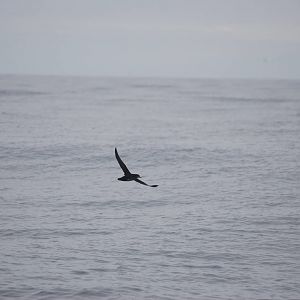
On a pelagic birding trip, Sunfish are often one of the major non-avian attractions a they swim on or near the surface, and it had been suggested that this behaviour might be due in some respect to their parasitic load. It would now appear that this might actually attract seabirds to remove the parasites. sunfish have also been noted to have associations with Sooty Shearwaters for possibly the same reason, and are attended by cleaner fish species.
Sunfish is the largest marine bony fish species, growing up to 2.7 m in length and weighing up to 2.3 tonnes. Laysan Albatross is a wide-ranging seabird in the North Pacific, with an estimated global population of over 1,180,000, though it is classed as Near Threatened by BirdLife International due to historical declines, but there are also signs that there has been a recent range expansion.
Reference
Abe, T, Sekiguchi, K, Onishi, H, Muramatsu, K and Kamito, T. 2012. Observations on a school of ocean sunfish and evidence for a symbiotic cleaning association with albatrosses. Marine Biology DOI 10.1007/s00227-011-1873-6