Only in a limited area on the east coast of Victoria. I believe they are the only legally huntable population of Hog Deer in the world and they have a one month hunting season.
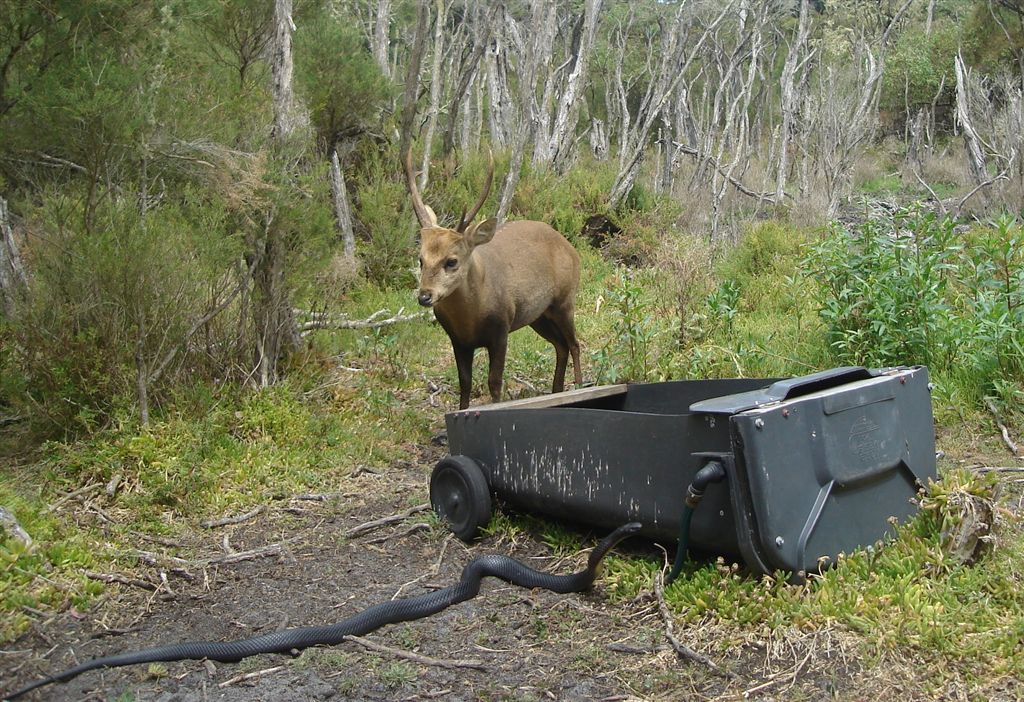
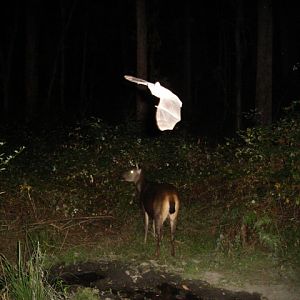
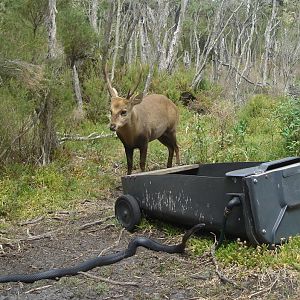
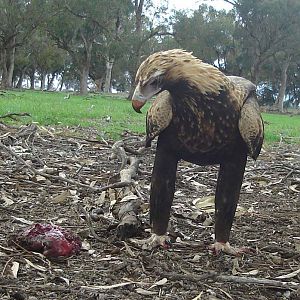
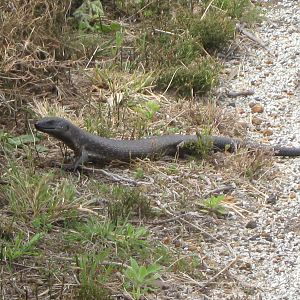
The bloke who took this photo put the trough on a privately owned island in an estuary. The Hog deer had naturally swum there but fresh water was not always available year round. As that is the only reliable fresh water he gets photos of all the wildlife. He even got a photo of a Sambar which had swum to the island, but it must have kept going as he only got one photo of him. The Hog deer also regally move onto and off the island as he knows all the residents and new ones come and go.
Sadly, I can't see how they'd fail to. Australian plants didn't evolve to deal with hard hooved ungulates and Australian soil organisms didn't evolve to deal with their waste products.
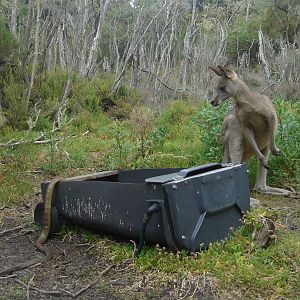
In large numbers all animals will always do damage. Hog deer though are in low numbers and I dont think anyone could show they were doing any more than The Kangaroos, as they browse the same plants. Here is what the bloke who took the photos and installed the trough has seen coming to the trough on a hot day
Last Saturday I spent 7 hours in my high-seat watching the trough with my handheld camera and it was a constant source of activity on a day that the temps went to 38C. Lots of birds dropping in for a drink and a splash-about, several wombats, 3 echidnas, several wallabies, 2 foxes, 5 hog deer and about 20 'roos coming-in for some water over that time.....but no snakes
The National Parks and Wildlife service would like them eradicated though. They have poisoned hundreds (or more) in the Wilsons Promontory national park, but keep very quiet about it.
Is that a problem. There are well over 25 million kangaroos and possibly over 40 million.
I do not agree that just because an animal is not native it should be exterminated. Hog deer are one of the best examples of a species which should be valued as an asset. They were released in the 1860's near Wilsons Promontory and in 150 years have not become a problem or spread very far.