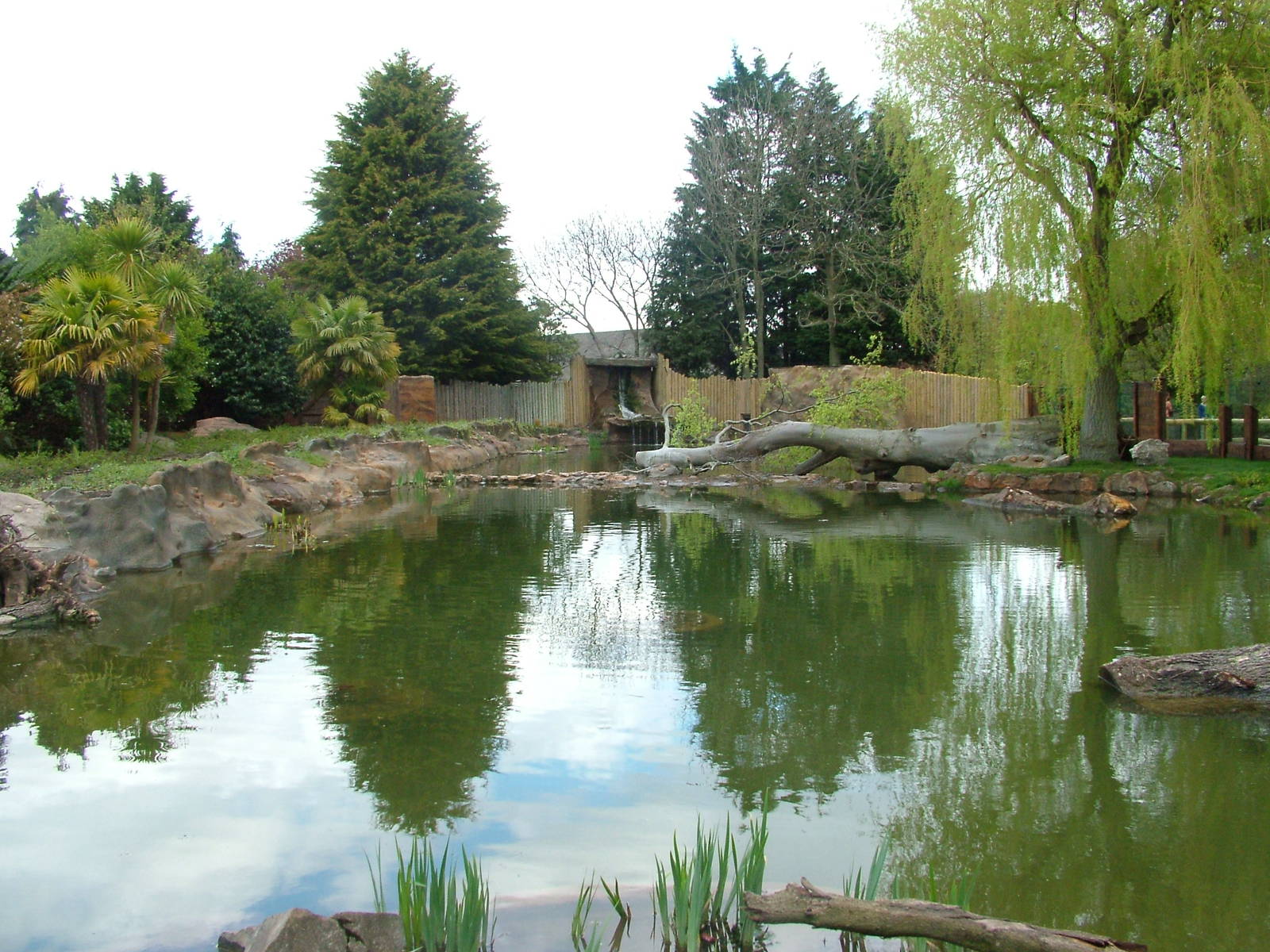
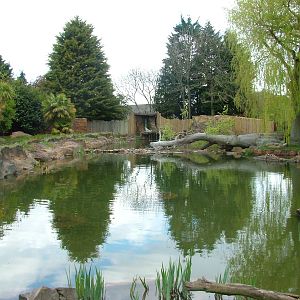
Curator of Mammals Tim Rowlands informed us that although occupied the exhibit is not yet quite in its final state - in particular there are several large [i]Gunnera[/i] to be planted (love [i]Gunnera[/i]!).
Saro;323038 One big advantage at Chester is the size said:
Don't forget the size here was governed by the enclosure's former residents- Sealions. But I think a larger area like this is desirable for these very large otters, in order to allow them to be shown to best advantage.
I don't think the size of an enclosure has a lot of bearing on the animals' general visibility (for any species). How it is landscaped/planted may do, but generally speaking I think it has more to do with each species' natural behaviour patterns as to whether it is easily visible or not.
This looks like it could be an outstanding enclosure in a couple of years time when the vegitation has grown, mind you I like it now.
On the other issue brought up in this thread I would put animal privacy above humans being able to see the animals anyday
I agree with the approval of Gunnera! What a marvellous landscaping plant.Mind you, in temperate zones, it is very important to cover it over during winter once it has died away with straw or well-rotted compost, leaves etc to protect the new growth for the following season.This covering also helps protect fragile new growth from being trampled by geese in lakeside locations.Needs to be well-fed too.You will see exceptionally well-cared for specimens in Dublin Zoo and also National Botanic Gardens, Glasnevin, Dublin.
Mind you, in temperate zones, it is very important to cover it over during winter once it has died away with straw or well-rotted compost, leaves etc to protect the new growth for the following season.
There is a gunnera not thirty yards from the giant otter exhibit that has been in place for many years. Although in a slightly more sheltered location, it hasn't been covered or protected in any way for a long time and it does just fine. The otters, rather than the weather, are likely to be the new planting's biggest threat.
Gunnera is giant South American rhubarb (it looks as if it's trying to become a triffid). Big round leaves on long thick stems, the undersides of the leaves are quite spiky. The stems can get 2 m tall and the clump can be 3 m wide - but as European Fauna says, it dies back in winter.
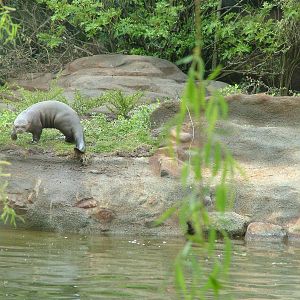
I wondered if the otters were damaging the waterlilies specifically. When I was watching they were both diving between the leaves as if they were investigating the tubers (perhaps these had been covered with stones which the otters were playing with). Sometimes all that was visible was a long flat tail waving in the air between the lily leaves.
Giant otters are supposed to need a deep digging area and a lot of land in which to dig, so one would think any plants are at risk, especially new ones.
Now having said that, I've not seen the giant otters at Chester digging at all, and the grass on the east side of the enclosure, which we thought wouldn't last long, is just as pristine as it was when it was laid.
Giant otters digg a lot - if given the opportunity. Hard packed soil or golf course grass are not such good substrates for giant otters (still much better than concrete of course). Soft loose substrates (a bit sparse at Chestnut and seemingly Chester as well) are by far the best for giant otters to reduce stress and to exercise. Look at Dortmund and especially Brasilia (their enclosure looks like a swiss cheese from all the digging!).
Giant otters digg a lot - if given the opportunity. Dortmund and especially Brasilia (there enclosure looks like a swiss cheese from all the digging!).
I suspect they prefer soft soil/substrate for digging in, like the riverbanks in the wild, in the same way Scottish otters tunnel into peat hags to make holts. So if mulch or peaty soils are put in certain areas of an enclosure, they would probably choose those to dig in.