Ah, yes. Rhinos (or rhinoceroses). Like good old Indian Rhinos. Sorry, Great Indian Rhino. Oh, no - Greater One-horned Asian Rhino. Or just Greater One-horned Rhino?
Matter of opinion, I'd say (particularly if your first language wasn't English). There's no black magic about scientific names - they're only names - if you use them you'll remember them.
Matter of opinion, I'd say (particularly if your first language wasn't English). There's no black magic about scientific names - they're only names - if you use them you'll remember them.
That is a good point. I suppose because I research cats/apes/rhinos/other big mammals, they have just stuck, whereas I have spent no time really researching inverts and such. Though I always struggle with Giant Panda , I know it but can never think of the exact term:
Ailuropoda Melanileuca? Is that close? (I know the last part is a mix between 'Melanistic and Leucistic).
Cool, I was only a letter out . If 'poda' means foot and 'melano' means black and 'ailuro' means cat, why does a Black-footed cat have its scientific name as Felis nigripes? That is where it gets confusing for me.
Cool, I was only a letter out . If 'poda' means foot and 'melano' means black and 'ailuro' means cat, why does a Black-footed cat have its scientific name as Felis nigripes? That is where it gets confusing for me.
Because 'ailurus' is Greek for cat and 'felis' is Latin for cat. Same with the 'melano-' and 'nigri-' prefixes. They don't all come from the same language*.
*which is something English speakers should be used to, as our vocabulary often has pairs of words, one of French/Norman origin and one of Saxon/German origin that mean the same - 'commence' and 'start', for example.
Because 'ailurus' is Greek for cat and 'felis' is Latin for cat. Same with the 'melano-' and 'nigri-' prefixes. They don't all come from the same language*.
*which is something English speakers should be used to, as our vocabulary often has pairs of words, one of French/Norman origin and one of Saxon/German origin that mean the same - 'commence' and 'start', for example.
Language is confusing :S. I thought all scientific names were Latin, (infact I sometimes refer to them as their latin names). Ahhh well, what is, is. From now on I'm gonna try and use the scientific names more to get a feel. I'm good to go with apes, big cats, rhinos etc. (though a little less confident on subspecies).
I always call them 'scientific names' for exactly that reason - they're not necessarily Latin. They can use words or stems from any language, but the majority are formed from Latin or Greek.
I always call them 'scientific names' for exactly that reason - they're not necessarily Latin. They can use words or stems from any language, but the majority are formed from Latin or Greek.
Ahhh, cool. I shall have to remember that in future. Anyway, we are somewhat off-topic here but I have one last question. What about something that has TWO scientific names? For example: Pygmy Hippopotamus is either 'Choeropsis liberiensis' or 'Hexaprotodon liberiensis' is one just out-dated?
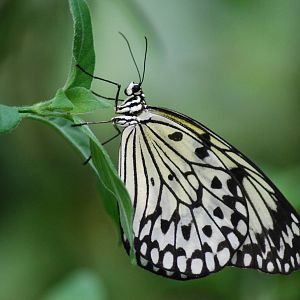
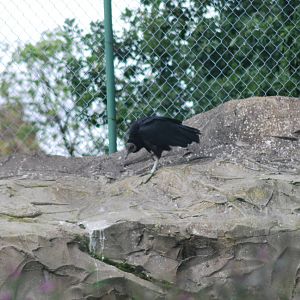
Also, I think I should mention what I was thinking before, great capture
Ahhh, cool. I shall have to remember that in future. Anyway, we are somewhat off-topic here but I have one last question. What about something that has TWO scientific names? For example: Pygmy Hippopotamus is either 'Choeropsis liberiensis' or 'Hexaprotodon liberiensis' is one just out-dated?
Basically, yes - one is out of date; either because two animals were described separately but later turned out to be the same thing, or if the species has been moved to a different genus after new data was found. In this case, you've picked a contentious one, as IUCN has recently switched back to Choeropsis after years of favouring Hexaprotodon. I'm not quite sure what the story is there.