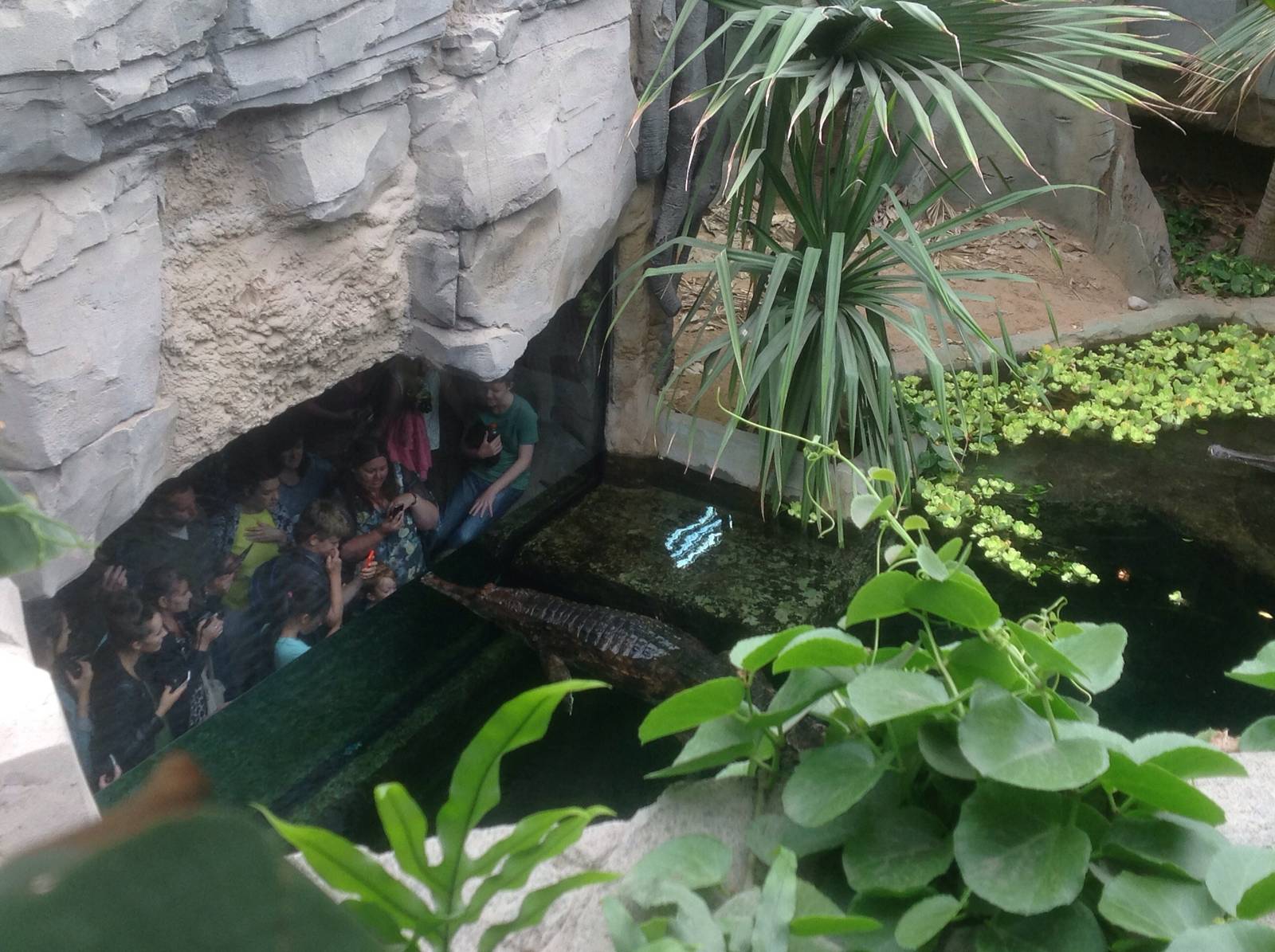
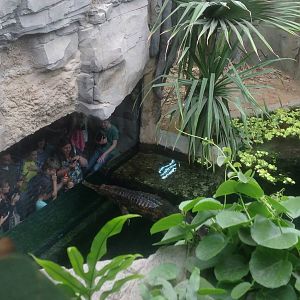
In one of the promotional videos for this exhibit there was footage of a gharial swimming right up to the glass like this and I remember thinking 'how long did they wait for that footage?' But it seems that this must be a favourite spot for them.
In one of the promotional videos for this exhibit there was footage of a gharial swimming right up to the glass like this and I remember thinking 'how long did they wait for that footage?' But it seems that this must be a favourite spot for them.
Agreed. It was an almost heart stopping moment to be face to face. Frankie is clearly in her element choosing to spend approx 80% of her time in full view (based on my observations returning to this exhibit 3 times and viewing for approx 50 minutes cumulatively). She disappeared every so often underneath this viewing window, making a dramatic appearance rising into full view.
You could not have an animal deliver better behaviours for this exhibit. The zoo must be VERY pleased she is so keen to make herself visible. The male spent all his time motionless in the shallow waters hiding in the aquatic plants - although it was clear to see his snout poking out of the water in no way did it rival the full view Frankie offered. I hope she continues to display like this!!
My only concern could be for her long term welfare... I noticed the end of her nose had started to look a little tender, with some scales peeling off slightly. She presses herself against the glass and rubs it over the glass. I wondered if this may be an issue going forward? I thought they may have to put a tree branch across the glass if this becomes a problem. But I'm clearly no expert on how tough her scales/skin is??
I always wonder whether tomistomas are not chronically stressed by living in clear water, given that they prefer obscure waters in their natural habitat.
I always wonder whether tomistomas are not chronically stressed by living in clear water, given that they prefer obscure waters in their natural habitat.
I have often wondered about this sort of thing (not with Tomistoma specifically though) and the same with rainforest species displayed in a more open environment and I think it would depend on what the animal has been raised with.
I doubt a captive bred Tomistoma that has always lived in clear water would be 'chronically stressed' for its whole life, but a wild born animal that came from murky water to clear water may be?
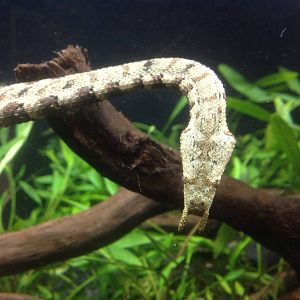
@LD: I think this might depend on the physiological and psychological innate habitat adoption of a species. An ambush predator such as a tomistoma or a gaboon viper might be captive-born, but they will still show behaviour (and thus needs) based on their lifestyle in the natural habitat, and suffer if those are needs (such as cover) are not met. Of course, there can be individual differences, as displayed in these very two tomistomas. Still, given the rarity of the species and its low reproduction rate in such "clear" tanks, I wonder whether such a presentation is optimal for this species.
This isn't limited to animals, btw. Us modern humans show certain innate habitat preferences, too, which also reflects in our architecture, way of life etc.
My only concern could be for her long term welfare... I noticed the end of her nose had started to look a little tender, with some scales peeling off slightly. She presses herself against the glass and rubs it over the glass. I wondered if this may be an issue going forward? I thought they may have to put a tree branch across the glass if this becomes a problem. But I'm clearly no expert on how tough her scales/skin is??
I can tell from these comments that you never saw her previous home or any pictures of her there,because if you had you would know that the 3 False Gharial kept there are probably the most battered deformed animals in Europe,and Chester bought the best looking 2 of the 3 over to live in the Monsoon Forest!I suspect given time her nose will start to look better given time,as for the peeling scales this could have something to do with her age,as she is no spring chicken!