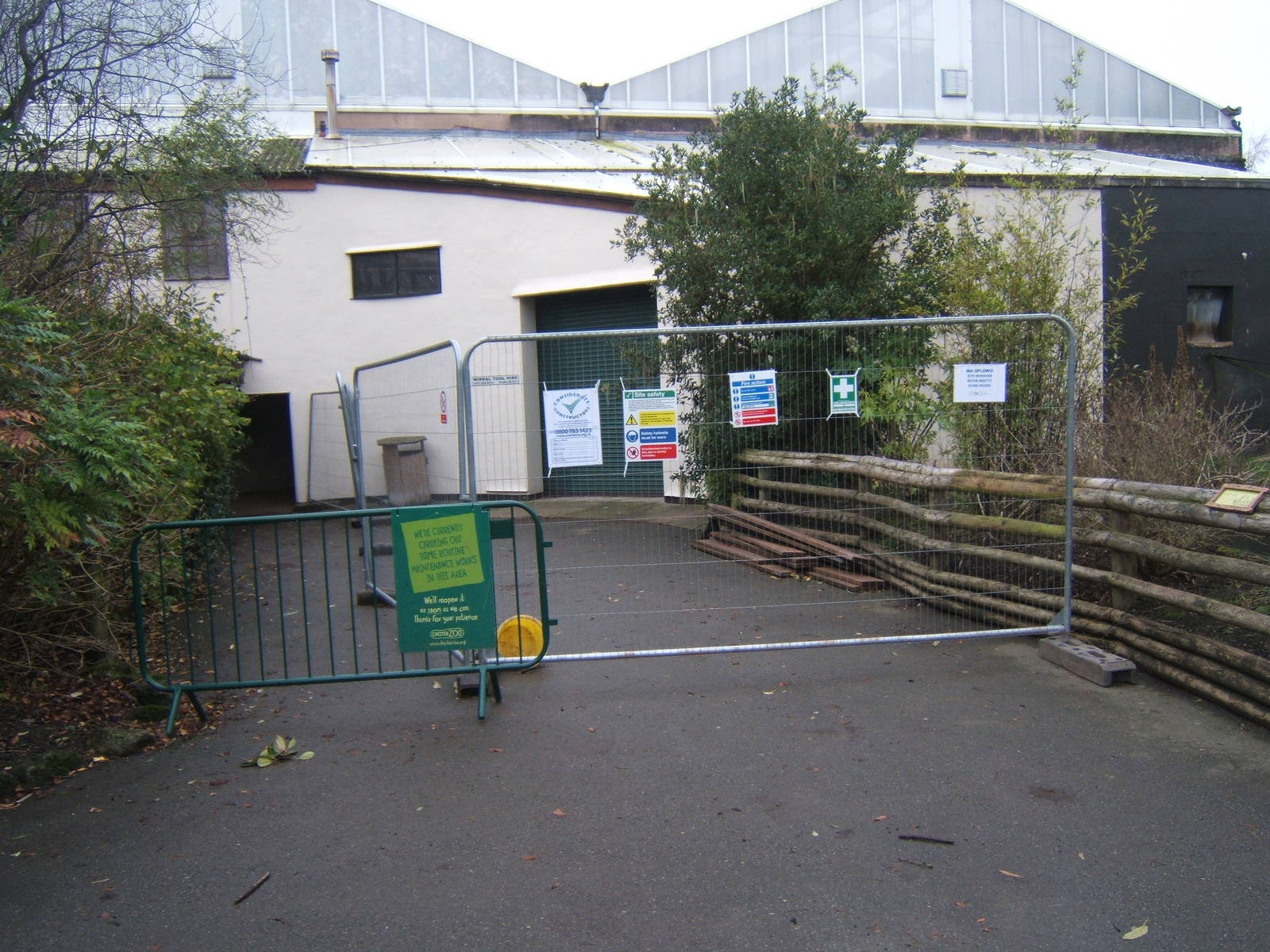
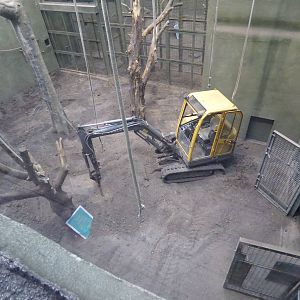
The hyacinthines do not use their aviary much, so that's not a great problem. Does anyone know details of the plans for the aye-aye acomodation? I wonder if they will have outdoor access - the ones at Edinburgh used to, although I never saw them using it.
The hyacinthines do not use their aviary much, so that's not a great problem. Does anyone know details of the plans for the aye-aye acomodation? I wonder if they will have outdoor access - the ones at Edinburgh used to, although I never saw them using it.
So how will they work that then? 'Night-time' indoors while its daytime outside, or indoors set to normal UK daylight too? If both indoor and outside are 'day' at the same time no-one might ever see them during the zoo opening hours. If not they will have 24 hours of 'night' half indoors and half out...
So how will they work that then? 'Night-time' indoors while its daytime outside, or indoors set to normal UK daylight too? If both indoor and outside are 'day' at the same time no-one might ever see them during the zoo opening hours. If not they will have 24 hours of 'night' half indoors and half out...
The aye-ayes have been off-show at the zoo for some time now and the staff will have assessed how to display them. If they had wanted to keep them on a reversed lighting cycle they could have constructed a new enclosure inside or adjoining the Fruit Bat Forest. So I expect they will be on a normal daylight cycle, as the aye-ayes at Edinburgh were. The indoor enclosure is not brightly lit, so I don't expect that will be changed. They should be active at some time during the day, particularly if they are fed at appropriate times, as Edinburgh's animals were. It will be interesting to see if they will make much (or any) use of the outdoor exhibit. I just hope they can't swim
They could have special 'Madagascar Night Excursions' for people to come in to this part of the Zoo at night and view them if they are active outside- it might be a winner!
That got me thinking, when the Komodo dragons move into islands they could turn dragons in danger into a new tropical house with the few species that aren't moved into the monsoon forest and turn the tropical realm into a Madagascar exhibit, would make a change from the normal lemur walk through.
That got me thinking, when the Komodo dragons move into islands they could turn dragons in danger into a new tropical house with the few species that aren't moved into the monsoon forest and turn the tropical realm into a Madagascar exhibit, would make a change from the normal lemur walk through.