Much as I adore ROTRA, I probably prefer the outdoor enclosures in Monkey Islands as they are so lush and don't have the ugly green fence; this, in my opinion, makes Chester the better place to observe mandrills. Still, each to their own.
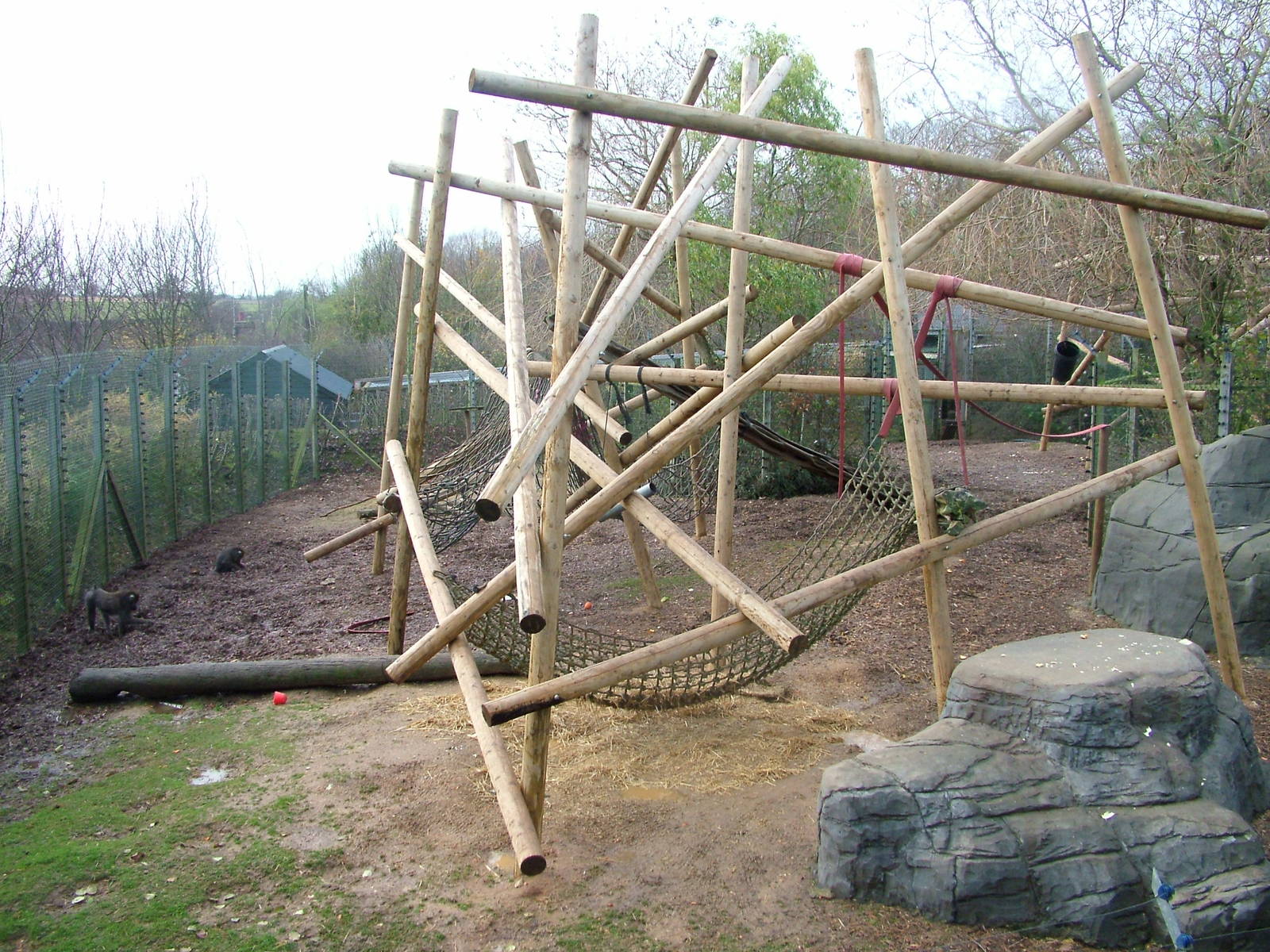
Large open area.
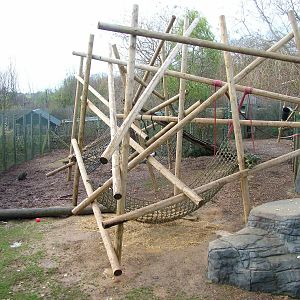
Plenty of climbing equipment.
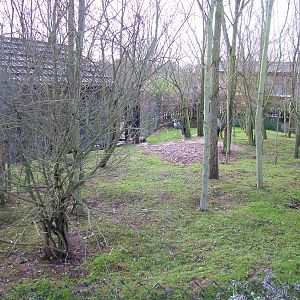
Hotwired clumps of trees break up the enclosure.
Large group (largest in UK) are socially ideal and very visible.
Excellent viewing from raised balcony-style public areas.
Bad points;
No indoor viewing.
Still an artificial-looking enclosure with electric fencing and fake rock.
Overall, and in keeping with Colchester's style generally, it is a pretty good/functional enclosure for a strong, destructive species difficult to maintain in such a large group under natural-looking conditions. I do prefer Chester's far more natural enclosure, but you can see the animals better outdoors at this one.
Yes but these were from colchester, the move was featured in the first series of zoo days! (If they arrived near the start of 2008)
If they arrived after this then they're obviously from a different zoo!
Chester have had female Mandrills from Colchester on two occassions. twice. First, the initial two females(a mother & daughter) at the formation of their group, then the more recent addition of 3(or 4?) more females. The rest of those at Chester were bred from these.
Chester have had female Mandrills from Colchester on two occassions. twice. First, the initial two females(a mother & daughter) at the formation of their group, then the more recent addition of 3(or 4?) more females. The rest of those at Chester were bred from these.
Prolific breeding does not necessarily mean the group is in a better facility (remember Southport?).
Aren't Colchester's group shut out on display during the day?
Ideally a group as large or larger than colchesters would be kept under trees as a safari park species, or in a large reserve with vantage points. I think the Chester animals would grow in confidence with a larger group structure, and not being surrounded by water.
Very true. Colchester's group were already up to the dozen mark in the old rocky 'cage' which was the predecessor to their existing enclosure.
I think they are shut out during the day which is why they can always be seen- otherwise they would go inside and be invisible.
No-one has yet attempted a woodland-style display for Mandrills in the UK. Woburn's male Drills are the first step in that direction, I wish Port Lympne would follow suit.
Precicely. If you want to see mandrills I would strongly reccommened Colchester for that!
Yes, I agree we do have to also look at exhibit desihn but I think a good breeding group should be being applauded. If Chester's group are successful they should be grateful to Colchester!
Fineally does it really matter if there's no indoor viewing? Surely we want them to be active and outdoors so we should discourage them from using their indoor area for substantial amounts of time.
Precicely. If you want to see mandrills I would strongly reccommened Colchester for that!
Yes, I agree we do have to also look at exhibit desihn but I think a good breeding group should be being applauded. If Chester's group are successful they should be grateful to Colchester!
Fineally does it really matter if there's no indoor viewing? Surely we want them to be active and outdoors so we should discourage them from using their indoor area for substantial amounts of time.
Chester's have a large and well-furnished indoor exhibit, in which they seem to spend most of their time. It's very unusual not to see them, but if they decide to hide in the middle of the island you'll have no chance! The crucial point is that the Chester Mandrills are just as active indoors as out.
Why should we discourage them from using the indoor area? Surely it's better to allow them free access to move as they wish?