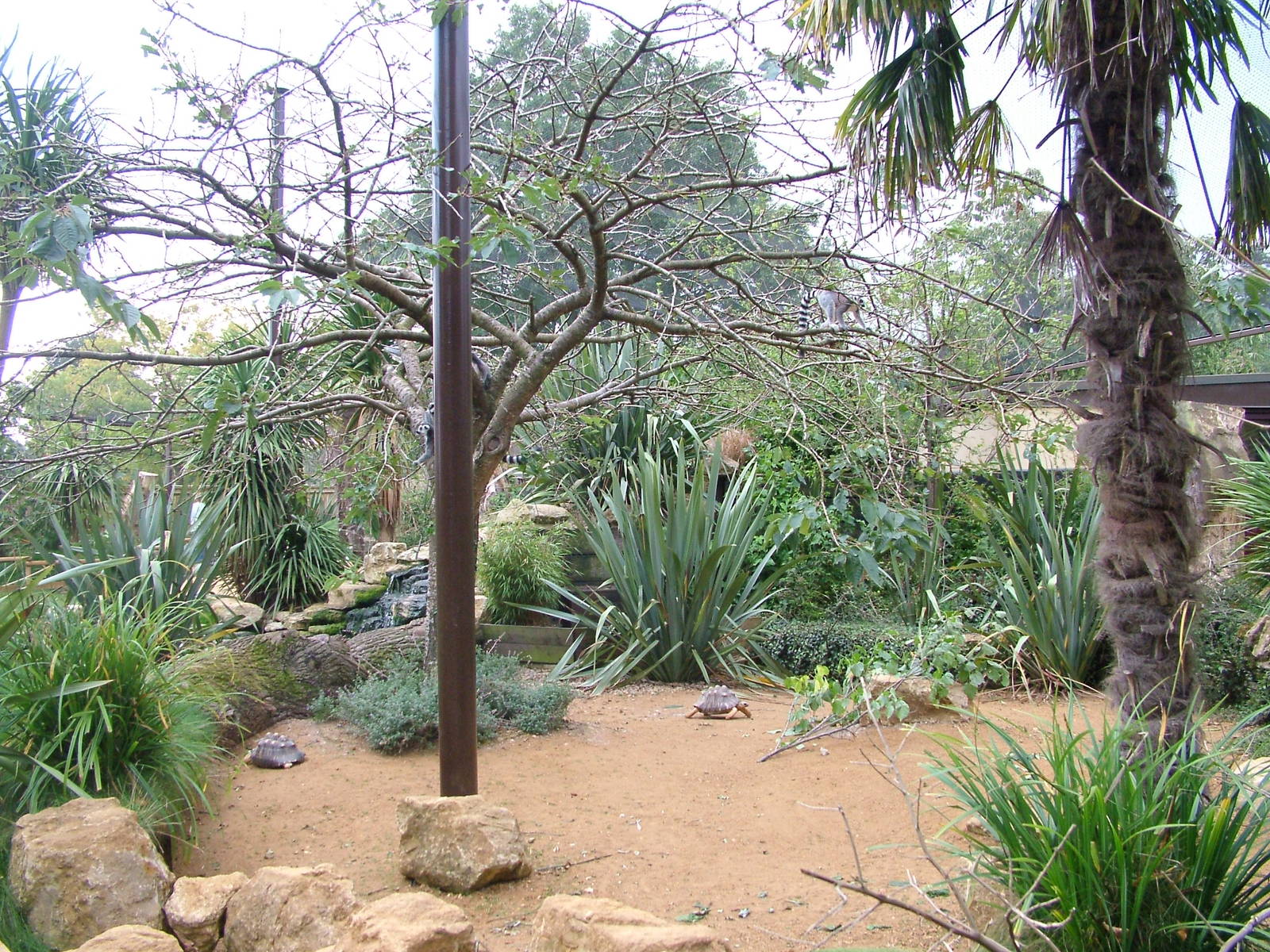
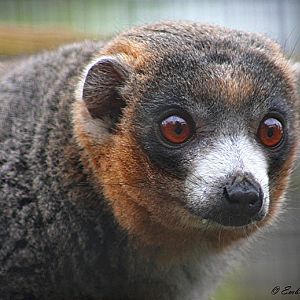
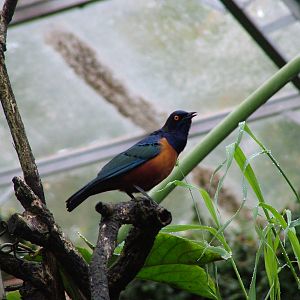
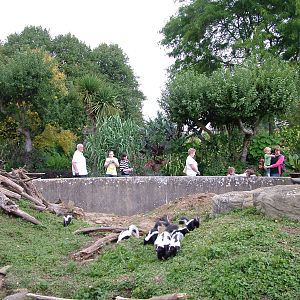
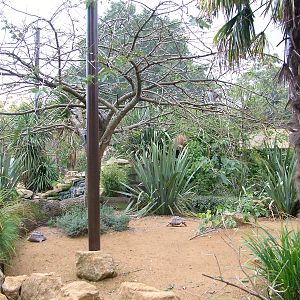
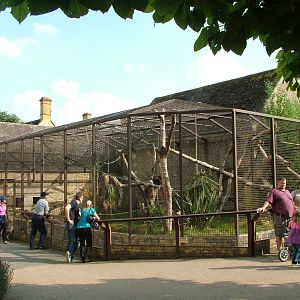
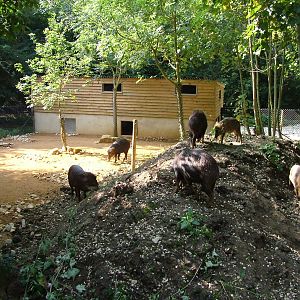
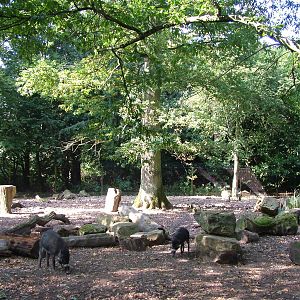
Currently home to Collared, Ring-tailed, Black and Red-bellied Lemurs, as well as Black-crowned Night Herons, Purple Swamphens and (on sunny days) Radiated Tortoises. Two side pens currently hold Mongoose Lemurs and Crowned Sifaka.
The sifaka wasn't mentioned by the (two) presenters in the enclosure either, so pretty sure it's moved out (or at the very least, wasn't on show that day).
I'd say it is one of the highlights of the collection, but there are so many other great things in the collection that it's actually a pretty close run thing - certainly it is the best walkthrough lemur exhibit I have seen.
It is a brilliant exhibit, very nicely landscaped and with the inspired addition of both muliple lemur species and non-lemur species, which made it seem busy and exciting. The only place I have seen a sifaka doing the "bipedal sideways hop", which is amazing to see.
I would say this is the second-best lemur walkthrough, as nothing compares to Zurich's Masaola, butits certainly far better than third place, which I would give to Melbourne, which I think is designed very well, just not stocked particularly well.
Its the only Lemur walkthrough in the UK where this has been done, and it does look good. The others are largely much simpler affairs allowing the public to get near Lemurs.
It looks a bit right but especially the Pandanus like plants I have only seen in the wetter parts of Madagascar and I do miss thorny scrubs and baobab on the photo .
A bit off topic, but with several species of Eulemur in this enclosure, how to they avoid hybridization? are they non-breeding groups, or are only certain species in the genus able to produce hybrids?
A bit off topic, but with several species of Eulemur in this enclosure, how to they avoid hybridization? are they non-breeding groups, or are only certain species in the genus able to produce hybrids?