I believe the original 'OS& B' may have actually died out and was later recreated, probably using Tamworth and Gloucester Old Spots among others. I beieve that to be correct anyway.
I believe the original 'OS& B' may have actually died out and was later recreated, probably using Tamworth and Gloucester Old Spots among others. I beieve that to be correct anyway.
I believe the original 'OS& B' may have actually died out and was later recreated, probably using Tamworth and Gloucester Old Spots among others. I beieve that to be correct anyway.
Seems the information has changed rather from what I remember, or alternatively, I'm just wrong... But it does seems it is a relatively modern breed created from two or more older recognized breeds-e.g. Berkshire & Tamworth. That's probably how I got the 'recreated' part. It also did nearly become extinct- but didn't.
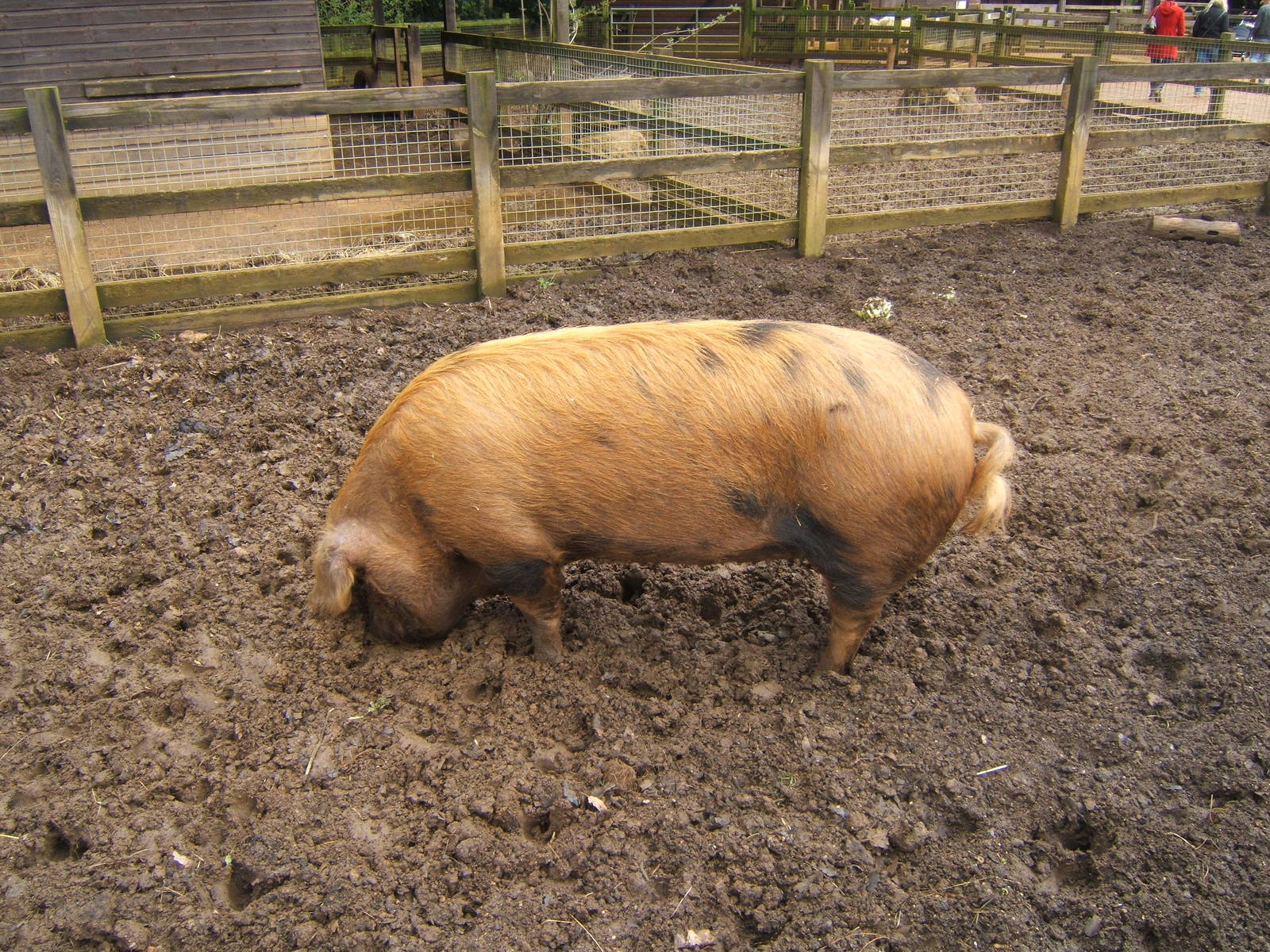
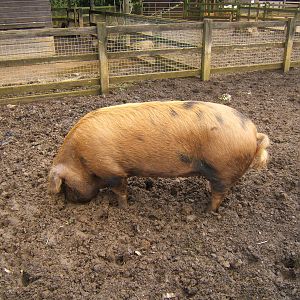
The Oxford Sandy & Black or OSB has reached crisis point at least twice in it’s past when numbers dropped so low that extinction was a real possibility. Unfortunately it had no Society or herd book to look after it’s wellbeing. As long ago as the 1940’s, boar licensing had dropped to one or two a year for OSB’s. If it wasn't for a few dedicated breeders, the breed would surely have been lost. In 1973, the Rare Breeds Survival Trust was formed giving hope for the breed, but the Trust decided not to recognise the OSB. Once again the dedicated breeders were on their own. The decline continued to the brink of extinction when in 1985, the current Breed Society was formed following contact with all known breeders of the OSB by the Society's founder secretary Steven Kimmins, ably supported and helped by Chairman Andrew J.Sheppy and President Geoffrey Cloke. The breed owes a great debt and its' survival to them.
The history of the OSB is very vague and there had not been any consistent registering until 1985 when the current Oxford Sandy and Black Pig Society was founded. It is clear the breed had almost come close to extinction many times in the past, with repeated efforts of regeneration.
.....
There is a great deal of inconsistency within the breed including colour, length of snout and position of ears, sometimes depending on the rarity of the bloodline.
Together those sites, plus what Pertinax says, suggest to me that although the breed did not become entirely extinct, it was probably "saved" by the inclusion of other pig breeds.
Together those sites, plus what Pertinax says, suggest to me that although the breed did not become entirely extinct, it was probably "saved" by the inclusion of other pig breeds.
The fact the RBST did not recognise/support the breed indicates they didn't regard it as a pure breed either, but made up from other, older breeds. It seems to have had a very chequered history.