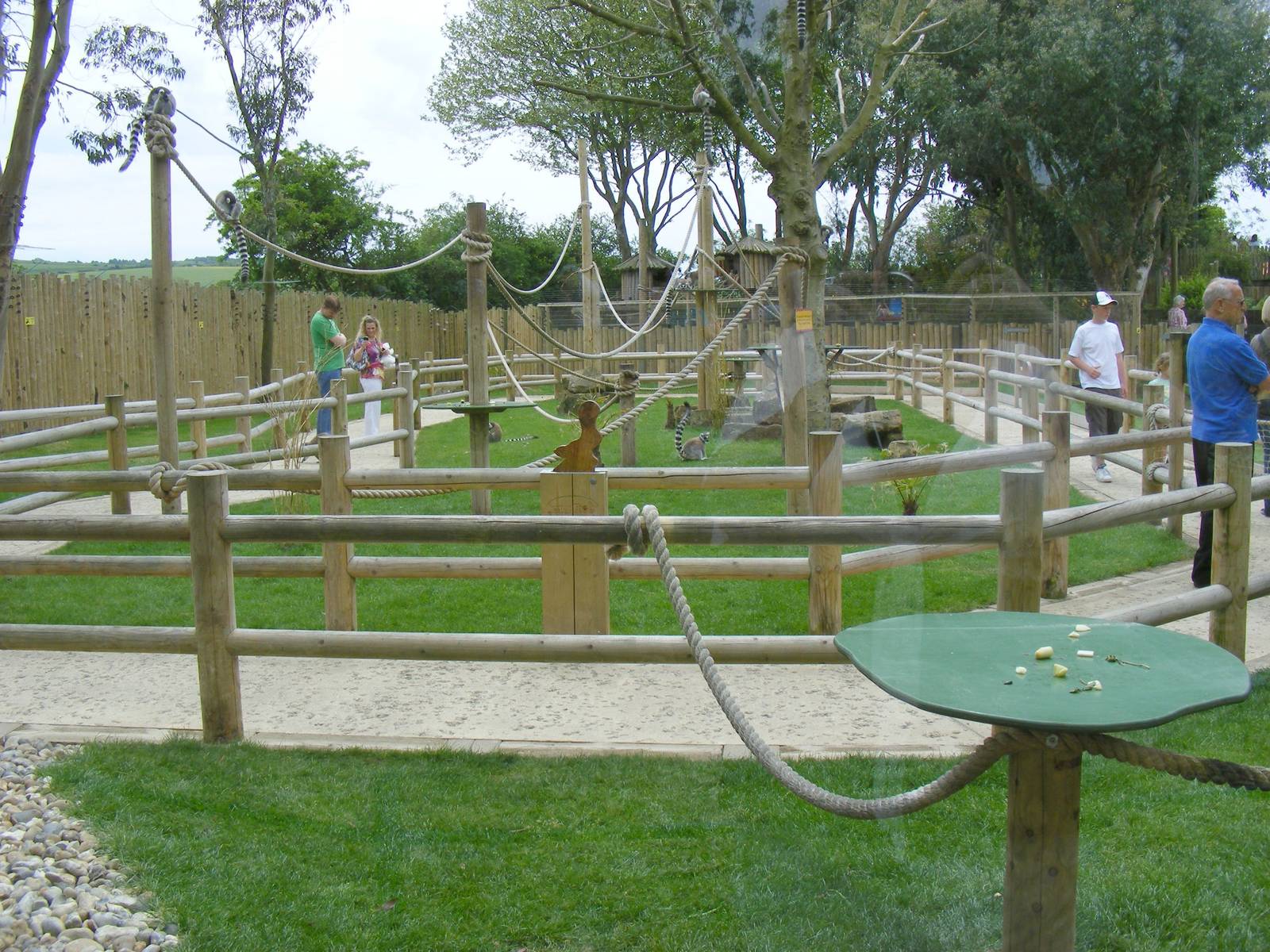
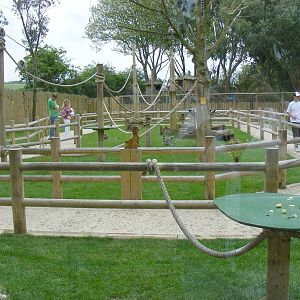
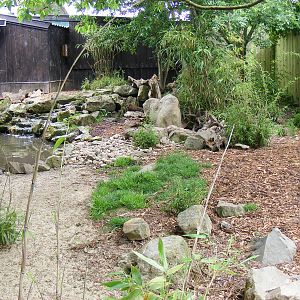
Is there more than just one little tree in there? The enclosure, judging strictly from this photo, appears to be many dead logs placed upright in the ground, and then a carefully mowed lawn around them.
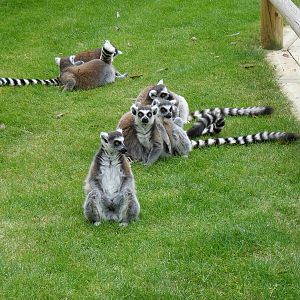
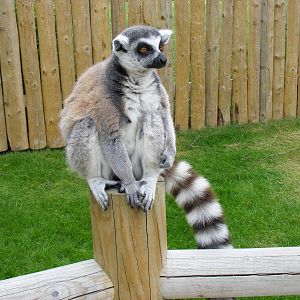
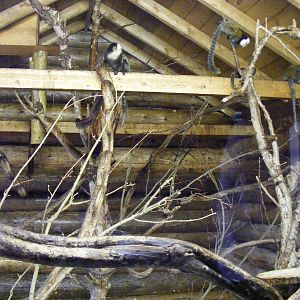
Zoos do their market research. I'm also wondering if there was some aggression between the ringtailed lemurs and the red ruffed lemurs, as the two species had only been mixed a year before in a new exhibit at the back of the penguin pool.
This used to be the 'Australian Outback', with wallaby, emu, and cereopsis goose at one point. Before this it mainly held farm livestock and black swans. In later years Mara and Wallaby were housed together and the Emus weren't replaced, so it was no longer referred to as the outback. Some of the area was used for a coati exhibit. When Lemurland was built in 2007, The wallabies went to Hamerton zoo in exchange for some Great Grey owls according to the website.
It's not a huge area, any trees would impact on keeping the lemurs in, but it is a larger area than both of the previous Ring-tailed lemur exhibits.
If trees would impact on keeping the lemurs in, then why is there a tree right against the fence line (left hand side of the picture, presumably the back of the exhibit)? Is this the same exhibit that a red-bellied lemur recently escaped from?
Yes this is the same exhibit and the red-bellied lemurs had not long been introduced to the enclosure.
I don't know why there is a live tree at the back, but there is hotwire around the trunk so its not meant to be accessible to the lemurs. When this was the 'Australian Outback', a number of trees were planted, especially eucalyptus, and photographs suggest some of these have been retained.
My point was, the space isn't really large enough to lend itself to the occupants having access to live trees. I don't think that makes it a bad enclosure.