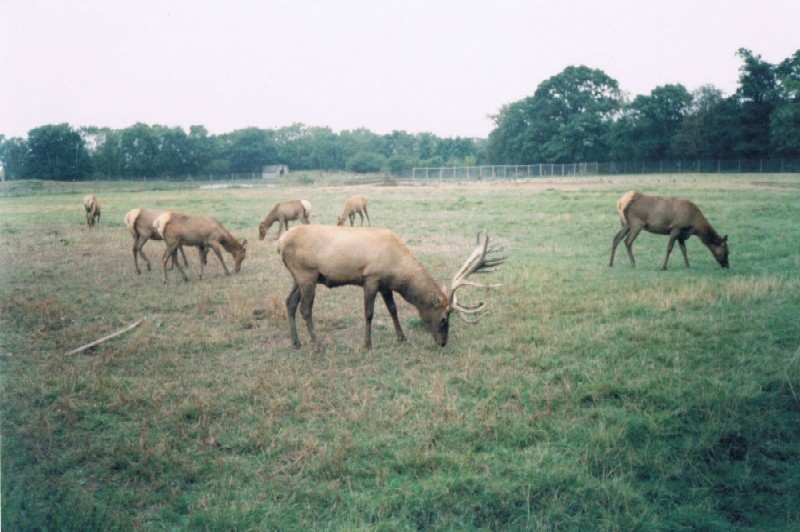
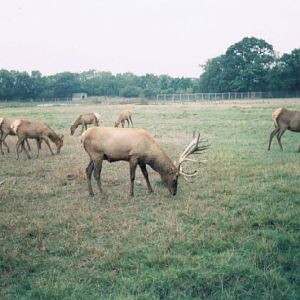
The wapiti left before this area was redeveloped for giraffe, rhino etc. There are private holdings of Wapiti in the UK, as well as at least one Bison Farm that breeds them for meat.
The Bactrian Wapiti held at Edinburgh/HWP are obviously not the same deer and arrived in the UK fairly recently.
The wapiti left before this area was redeveloped for giraffe, rhino etc. There are private holdings of Wapiti in the UK, as well as at least one Bison Farm that breeds them for meat.
The Bactrian Wapiti held at Edinburgh/HWP are obviously not the same deer and arrived in the UK fairly recently.
I think it's strange that Bactrian Wapiti get called that, surely Bactrian Deer, or Bactrian Red Deer seems more fitting? I do actually call them Bactrian Wapiti myself purely because that's what I heard first- but it just doesn't seem to make as much sense given wapiti is an American word.
I think it's strange that Bactrian Wapiti get called that, surely Bactrian Deer, or Bactrian Red Deer seems more fitting? I do actually call them Bactrian Wapiti myself purely because that's what I heard first- but it just doesn't seem to make as much sense given wapiti is an American word.
Interesting thought. Wapiti to me always signify the very largest, palest coloured of the Red deer subspecies and I think the Bactrian deer come into that category. The rutting call is a squeal very similar to the American Wapiti's bugle but quite how the name 'wapiti' which is American Indian, transferred to this Asian counterpart is a mystery.
Yeh deffo wapiti ,back in the 80's when i was looking after them there was no health n safety just jumped off tractor over the wall into paddock with a bag of food and made sure you fed the stag first then when he was eating you fed the doe's. Same with the red deers he came over with antlers pointing and you just gave him some food and he was ok.
In the Duke of Bedford's book, he refers to various Asian races of Cervus elaphus as 'wapiti', due to their similarities with the American rather than the Western European forms. Native Americans had a word for it, we didn't, so we use theirs. Simples, as the meerkat said.
Turns out that the Cervus elaphus group isn't closely related to the Cervus canadiensis group. Cervus canadiensis, senso stricto, is found on both sides of the Bering Strait. Wapiti can be used for C. canadiensis and C. xanthopygus (and possibly C. alashanicus).