I posted on another photo below but as I didn't see this better photo.
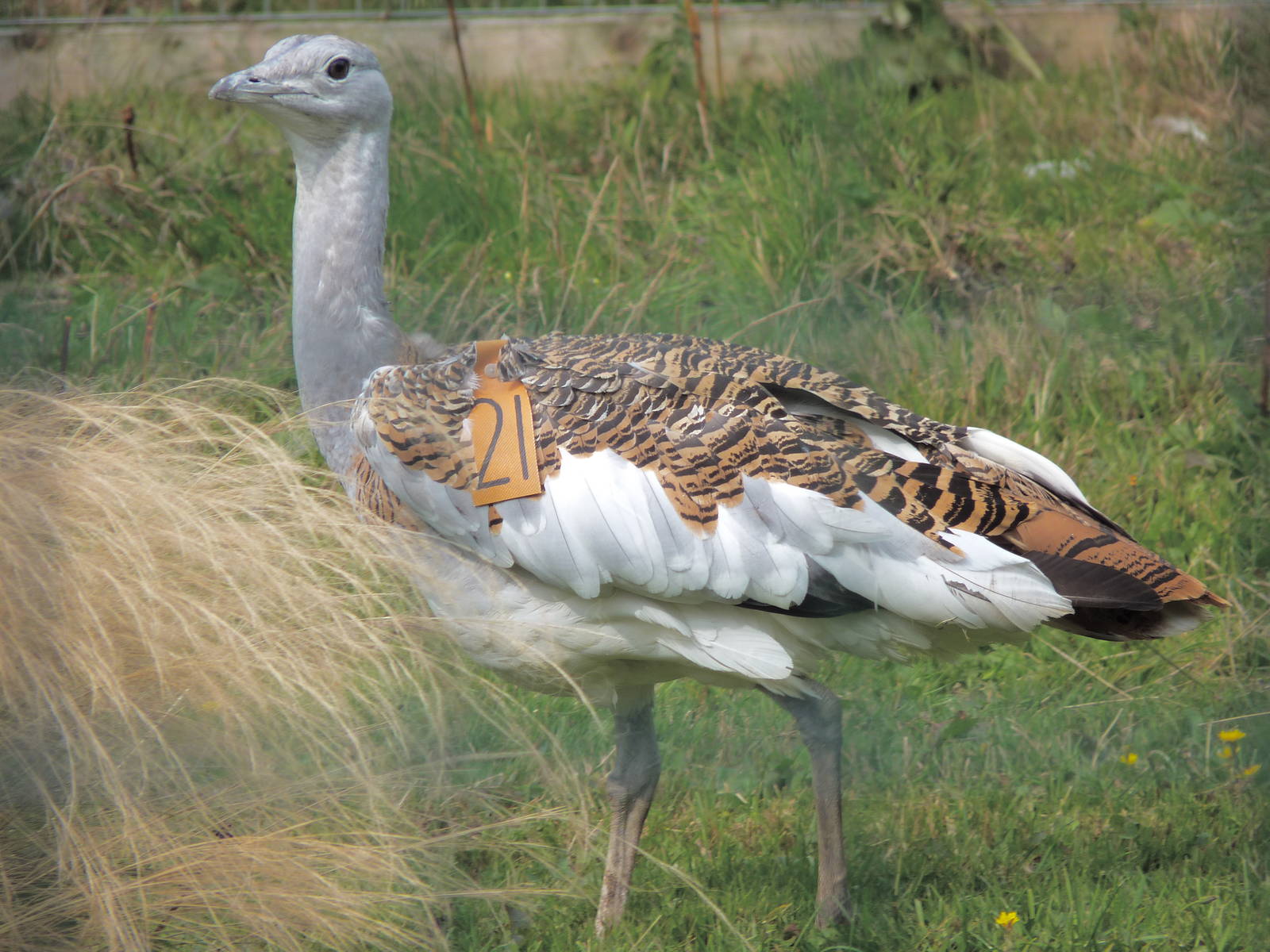
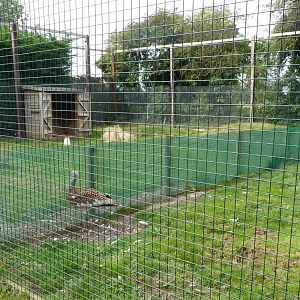
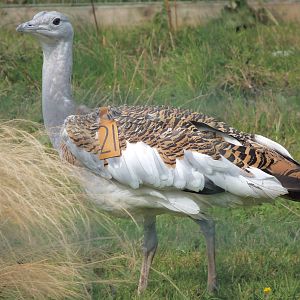
There were two adult males in an aviary at the Hawk Conservancy- one is a crippled bird from the release scheme- as it has a wing tag I'm pretty sure its this one(Fergus I think his name is) and he would be about 5 years old now(?)
The 2nd one was a much older bird which was confiscated from a Belgian bird collection-as it originated from the Spanish race it wasn't connected to the release project- which uses Russian birds. That bird died a couple of months ago.
As they have only 2 mature males in the release scheme, I'm wondering if they might place this male in the breeding pen(which is fox proof) during the spring so he could contibute something(his genes)to the programme.
The old Great Bustard Trust [1970s] found it very difficult to get pinioned Great Bustard males into breeding condition in open pens out on the Plain, and only eventually got fertile eggs [chicks hatched but never actually reared -- when they gave up the project, surviving bustards went to Whipsnade, where they may not have lasted very long....] via hormone implants.
The last one(a male) of that project died at Whipsnade about 1990.
Further breeding success seems dependant on the continued survival of the two mature males as they are the only ones of breeding age. If anything happens to them they would be scuppered breeding-wise at least for several years until further males mature. So maybe this 3rd bird- not sure if he's pinioned or just damaged wing- could still be valuable?
Although the releases have been successful, a high(too high?) proportion have been lost to foxes. There are something like 16-19 birds on the Plain at present. 2 nests in 2009- 3 chicks, one reared, at least 4 nests in 2010- number of chicks reared?
I suppose it's a balance between the display value of one bustard @ Andover [remember Joe Piublic has never seen one] and the contribution it might make to the breeding popluation; I didn't realise they were so short of breeding age males. factors to consider might be whether there is enough territory for the two resident males to tolerate a [non-flying and therefore unable to get away from an aggressor], and the difficulty of handling Bustards without injury, which I understand is considerable.
I didn't realise they were so short of breeding age males. factors to consider might be whether there is enough territory for the two resident males to tolerate a [non-flying and therefore unable to get away from an aggressor], and the difficulty of handling Bustards without injury, which I understand is considerable.
They don't mention it but it was quite clear to me there are only two mature males. As they are a Lek species the males congregate in one small area to display and mate. They do this in the release pen, though they are free to come and go. I agree they might be hostile to a stranger male though the release pen is several hectares in size, big enough for him to use a seperate part of it. As the others are freeflying and range far and wide, even away from the Plain sometimes, they could be liable to accidents etc in which case trying this male could be their only other option.