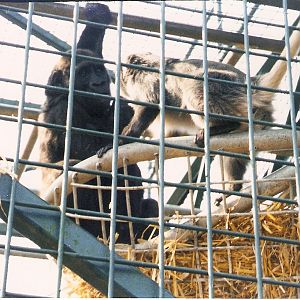
fascinating , i never knew a gorilla would do such a thing , do you have any idea why a gorilla would kill and eat a colobus monkey? stress of captivity maybe? pent up aggresion ? territorial dispute?
Simply because it wanted too! Just like we used to kill and eat other animals. I don't understand why people think Gorillas are any different from other apes? And would not bat an eye lid if we talking about Chimps or Orangutans?
Simply because it wanted too! Just like we used to kill and eat other animals. I don't understand why people think Gorillas are any different from other apes? And would not bat an eye lid if we talking about Chimps or Orangutans?
Well i thought because gorillas are vegetarians that very rarely supplement their diet in the wild with insects and larvae. I have never heard of gorrilas catching and killing small primate species in the wild , and the closest i have come to hearing of a gorrilla killing another animal was when i read Dian fosseys "Gorrillas in the mist". John Aspinall wrote in his very under appreciated book "best friends" that the Gorillas kept at Howletts often killed rats and mice which entered their cage , however left rabbits,sparrows and squirrels unharmed , this is also true of Londons famous Gorilla Guy.I remember Dian fossey documented 2 or 3 infantcides however she classed it as an abonormality in gorrila behaviour. It just seems bizarre why a gorrilla would behave in that way and although i love the Aspinall parks i believe this happened for some kind of trauma or aggresion in this individual gorrila perhaps a rush of tosterone in his adolescence prior to becoming a silverback . The way i see it Gorrillas and Orangutangs are very different from chimpanzees whose diet is heavily supplemented by meat. chimpanzees actively form primitive hunting groups to hunt bushpigs , colobus monkeys and guenons that kind of behaviour is simply not see in gorrillas in the wild , and its also non existant in orangutangs who will only occasionally eat nestling birds , eggs or lizards.
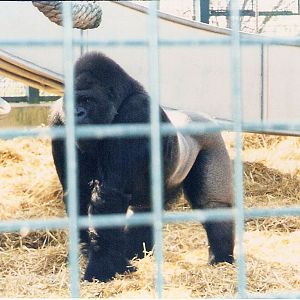
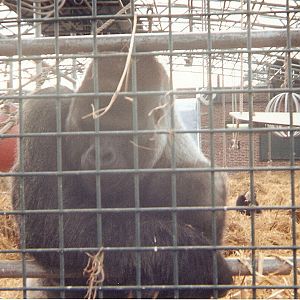
If memory is correct, Jomie was already a full silverback when this happened. Why he did it is anybody's guess but animals can behave very differently in captivity to how they do in the wild so it could have been the result of boredom, aggression or simply because he was able to do so..
It does(and the other incident at Melbourne) show adult Gorillas are not 100% safe with Monkeys sharing enclosures with them.
If you are taking here about Gorilla infanticides then she was probably wrong. More recent studies indicate its quite common in group living primates, including Gorillas when a new leader takes over and kills small offspring fathered by a previous male. It might have seemed abnormal to Dian Fossey but is now an acknowledged fact of Gorilla behaviour.
If you are taking here about Gorilla infanticides then she was probably wrong. More recent studies indicate its quite common in group living primates, including Gorillas when a new leader takes over and kills small offspring fathered by a previous male. It might have seemed abnormal to Dian Fossey but is now an acknowledged fact of Gorilla behaviour.
Thankyou friend that is a very interesting thing to know , yes i read that in "gorillas in the mist" but i think the book was written so long ago and was one of the first studies of gorrillas in the wild. so alpha male gorrillas act in the same way as a male lion when it comes to liquidating offspring of other males? hmmm somehow my view of the Gorrilla as a peaceful creature has changed slightly.
so alpha male gorrillas act in the same way as a male lion when it comes to liquidating offspring of other males? hmmm somehow my view of the Gorrilla as a peaceful creature has changed slightly.
Exactly. Of course behaviour varies between individual males, but its an established fact nowadays. Example; One of the Howletts' current groups-Kijo's- has no new male since he died last December. There are small young in the group at present, including Kijo's last offspring born after his death. They don't plan to add a new male until these young are weaned/older, for this very reason.
When a new male was added to Chessington's group recently, they took the two smallest young away for safety, and have kept them with their old father and another female ever since.
Some facets of Gorilla behaviour don't really fit with the 'Gentle Giant' tag though overall its fairly accurate.
Exactly. Of course behaviour varies between individual males, but its an established fact nowadays. Example; One of the Howletts' current groups-Kijo's- has no new male since he died last December. There are small young in the group at present, including Kijo's last offspring born after his death. They don't plan to add a new male until these young are weaned/older, for this very reason.
When a new male was added to Chessington's group recently, they took the two smallest young away for safety, and have kept them with their old father and another female ever since.
Some facets of Gorilla behaviour don't really fit with the 'Gentle Giant' tag though overall its fairly accurate.
very true , i think the "gentle gorrilla" stereotype should perhaps be re evaluated , still gorrillas are not near to being as aggressive as pan trogodylts
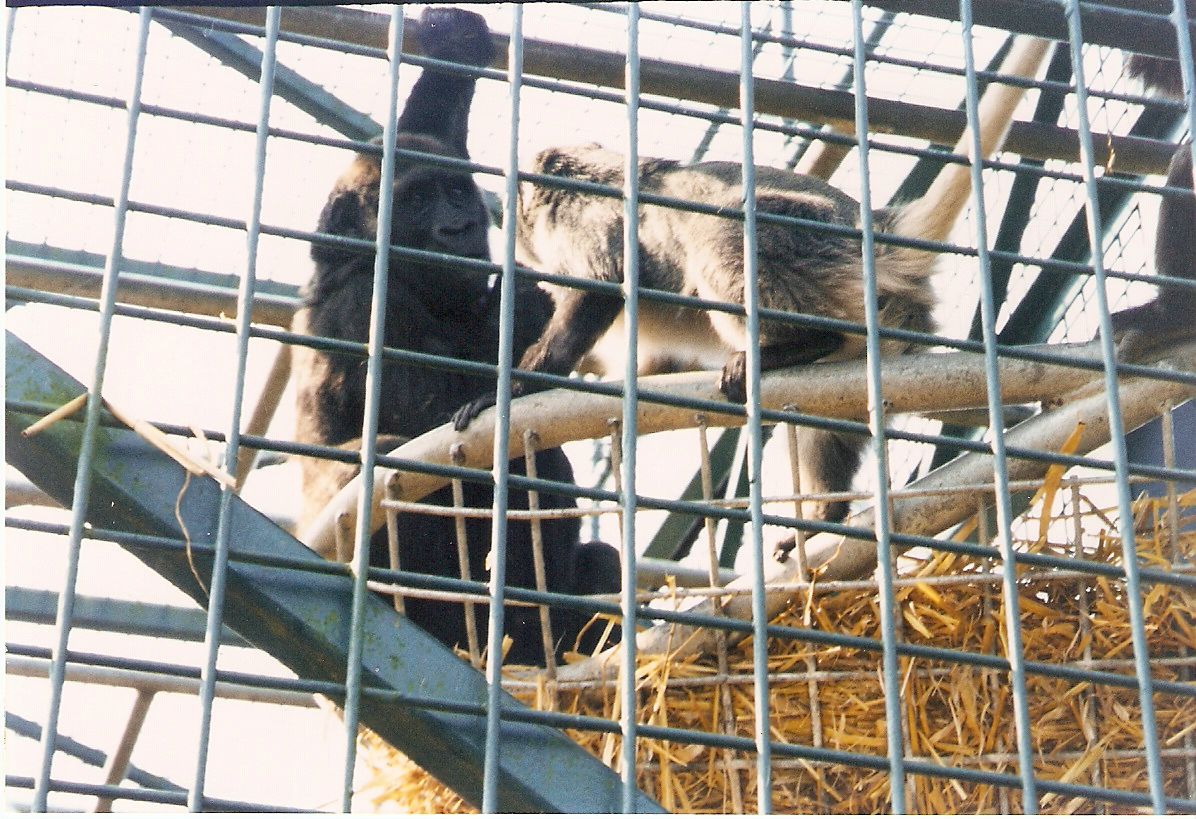
for a while during the 90s, and just before the newer gorilla complexes were opened at Port Lympne and Howletts, the parks acquired greater and lesser spot-nosed monkeys, and Samango monkeys. I don't know which of the spot-nosed monkeys were mixed in the newly-built gorilla enclosures but they never bred, and rapidly dwindled in number. The samangos were moved to Port Lympne fairly quickly as well. I seem to remember just 1.1 samango remaining and remember being surprised to see a group of 5 at PL a few years later, maybe they imported some more but they have never bred and I'm not sure PL even keep them anymore. Were they wild-caught?
As far as I know, Howletts retains just one, elderly pair of lesser spot-nosed guenons, which to my knowledge are off-exhibit and no longer mixed with the gorillas.
I think the issue at Port Lympne was that the monkeys were mixed with the bachelors, a diana monkey and a colobus monkey were killed in the process. There is a cage on top of the old chimp house where the monkeys were held for a while while this was being tried. Also, there is a small primate cage next to the palace of the apes where a small overhead walkway connects it to the large gorilla cage. It looks too small for guenons or colobus but it may have been used for attempting to mix one or the other with the breeding group. Last time I was there it housed some lemurs which, needless to say, did not have access to the gorilla exhibit.
for a while during the 90s, and just before the newer gorilla complexes were opened at Port Lympne and Howletts, the parks acquired greater and lesser spot-nosed monkeys, and Samango monkeys. I don't know which of the spot-nosed monkeys were mixed in the newly-built gorilla enclosures but they never bred, and rapidly dwindled in number. The samangos were moved to Port Lympne fairly quickly as well. I seem to remember just 1.1 samango remaining and remember being surprised to see a group of 5 at PL a few years later, maybe they imported some more but they have never bred and I'm not sure PL even keep them anymore. Were they wild-caught?
As far as I know, Howletts retains just one, elderly pair of lesser spot-nosed guenons, which to my knowledge are off-exhibit and no longer mixed with the gorillas.
I think the issue at Port Lympne was that the monkeys were mixed with the bachelors, a diana monkey and a colobus monkey were killed in the process. There is a cage on top of the old chimp house where the monkeys were held for a while while this was being tried. Also, there is a small primate cage next to the palace of the apes where a small overhead walkway connects it to the large gorilla cage. It looks too small for guenons or colobus but it may have been used for attempting to mix one or the other with the breeding group. Last time I was there it housed some lemurs which, needless to say, did not have access to the gorilla exhibit.